Inspiration
Recent reporting on the Venezuela earthquakes showed how fast disasters turn into information chaos: fragmented updates, missing people, overloaded responders, and uncertainty everywhere. We built CrisisRelay to help teams separate confirmed facts from assumptions and make safer decisions under pressure.
What it does
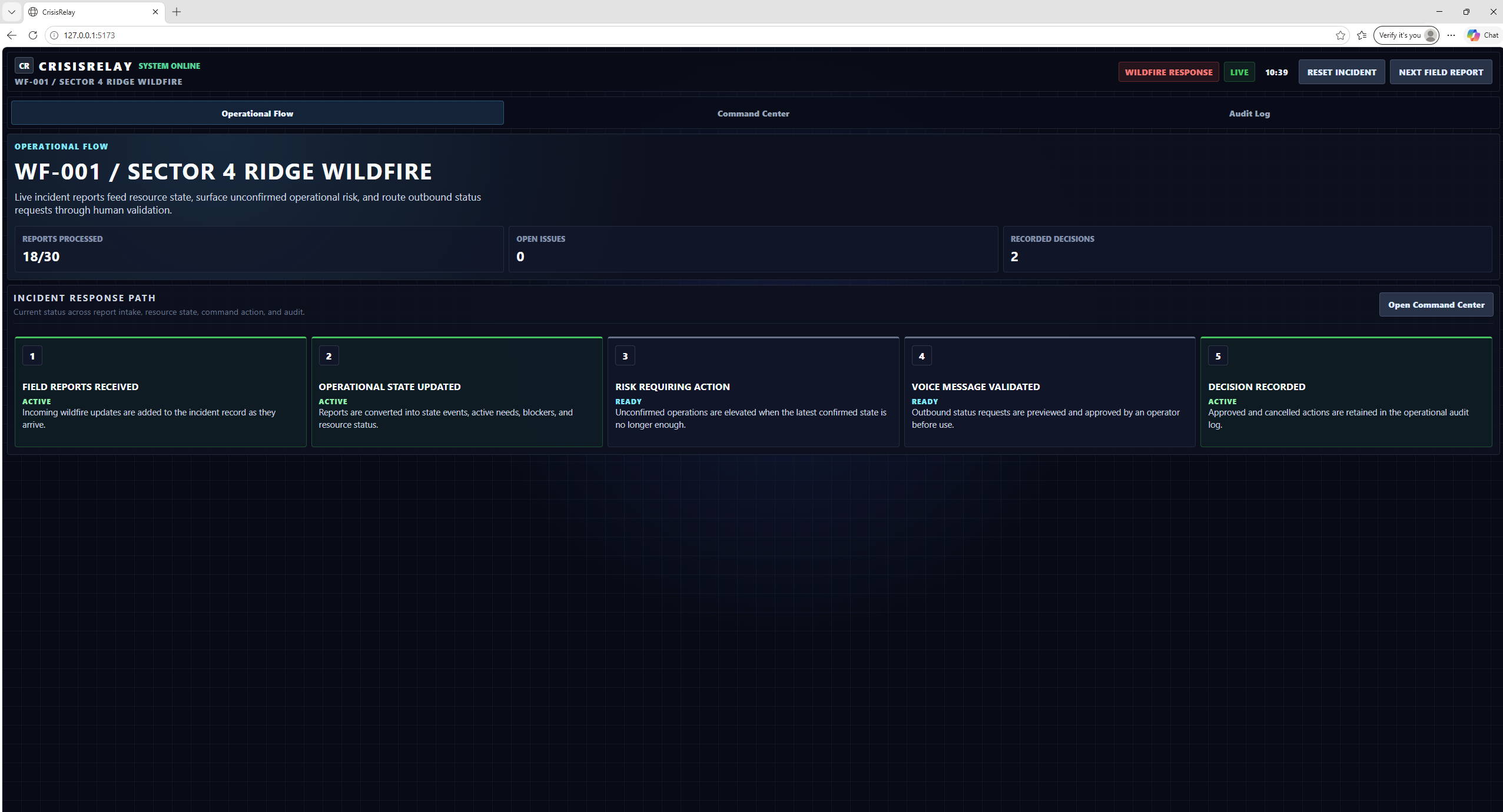
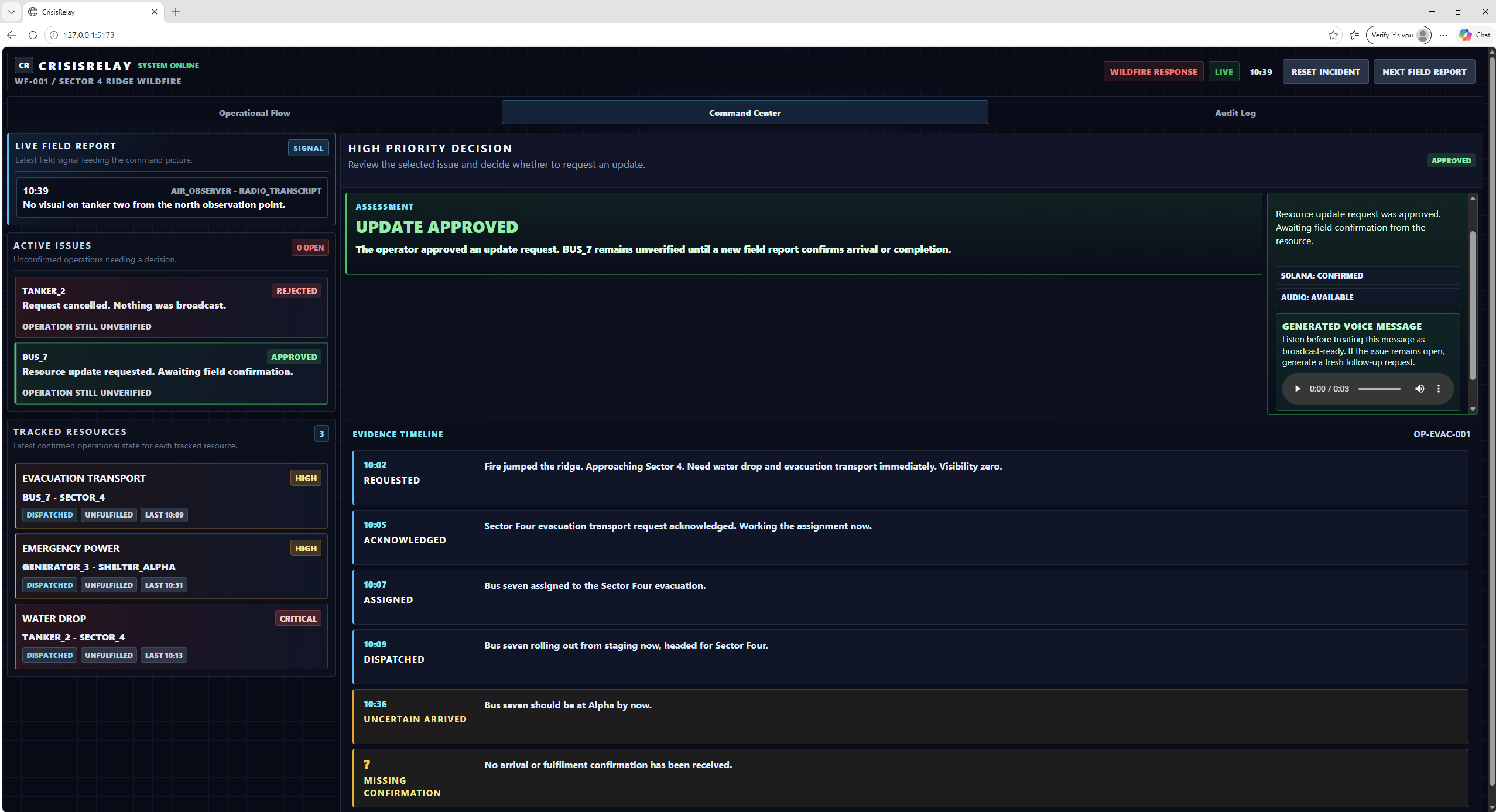
CrisisRelay turns raw field reports into a live operational picture.
It:
- extracts structured meaning from reports
- tracks resource and mission states
- preserves uncertainty instead of forcing false updates
- flags unresolved operations as active issues
- supports human-reviewed follow-up requests with voice preview
- keeps an audit trail of decisions
How we built it
We built CrisisRelay with:
- FastAPI for the backend
- React for the command-center UI
- Gemini for structured extraction
- Pydantic for strict schema validation
- ElevenLabs for voice preview
- Solana for optional approval receipt logging
We also built a synthetic incident dataset, a deterministic state engine, and a benchmark workflow to test extraction quality.
Challenges we ran into
Our biggest challenge was preventing the system from over-assuming meaning.
We had to make sure it:
- does not infer arrival or completion from vague language
- preserves uncertainty correctly
- updates timelines and issue state reliably
- keeps audio, approval, and decision state tied to the right issue
Accomplishments that we're proud of
We’re proud that CrisisRelay is a working end-to-end prototype, not just a UI mockup.
We built:
- a live command-center workflow
- structured extraction with strict validation
- a deterministic state engine
- severity-ranked active issues
- human-in-the-loop approval with voice preview
- benchmark-driven testing for extraction behavior
What we learned
We learned that in crisis software, handling uncertainty well is more important than sounding confident.
We also learned:
- AI should assist, not decide final operational truth
- strict schemas matter
- benchmark design is critical
- small UI state bugs can break trust quickly
- human approval needs to be built into the workflow from the start
What's next for CrisisRelay
Next, we want to:
- expand to more disaster scenarios like earthquakes and floods
- improve map and geospatial context
- support multi-agency coordination
- strengthen deployment readiness and observability
- make the audit and approval trail more robust
The long-term goal is to help responders act faster without turning uncertainty into false certainty.
Built With
- blockchain
- elevenlabs-api
- fastapi
- gemini-ai
- react
- solana


Log in or sign up for Devpost to join the conversation.