-
-
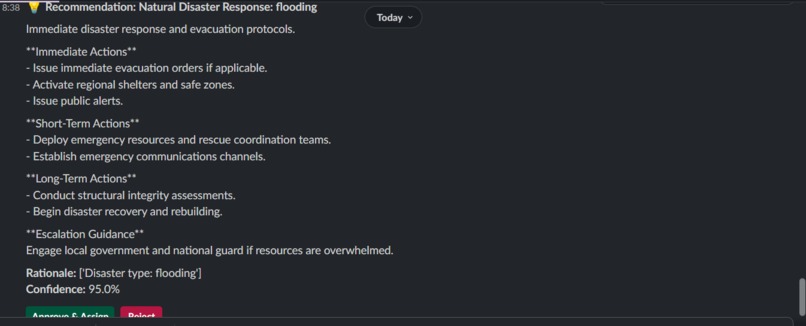
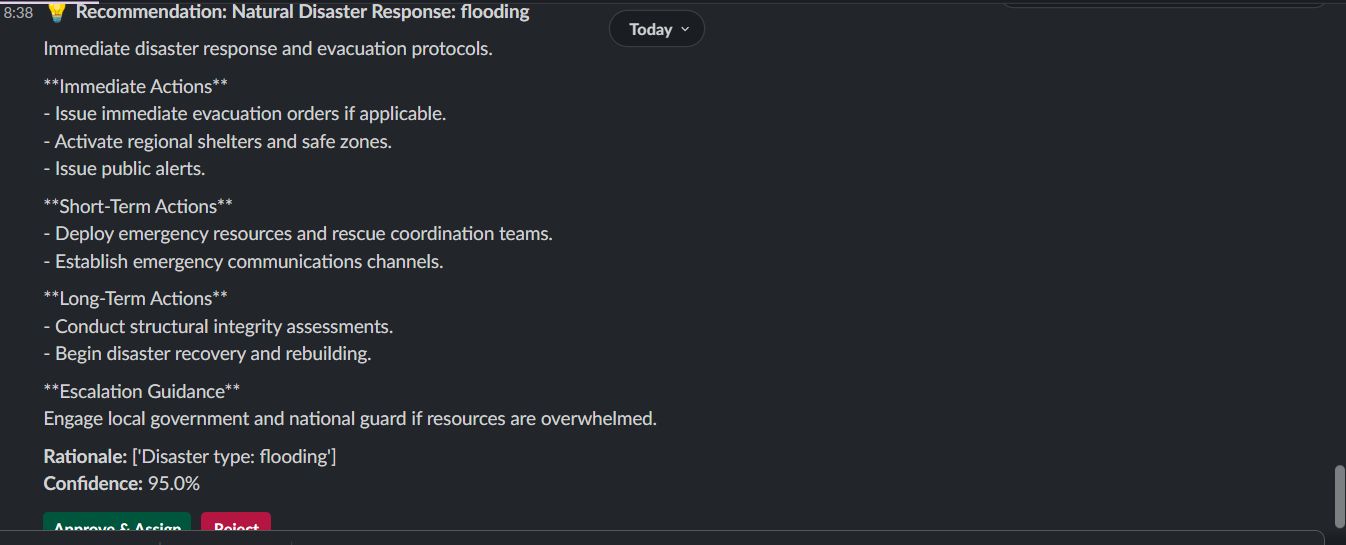
Recommened Actions for an Incident
-
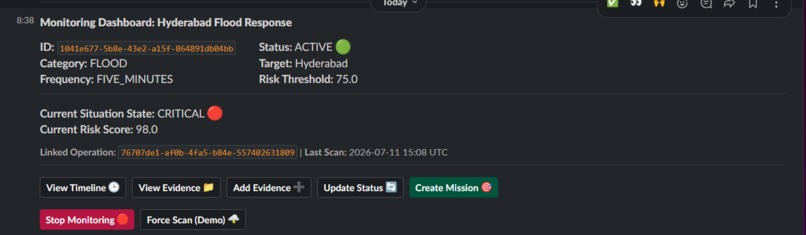
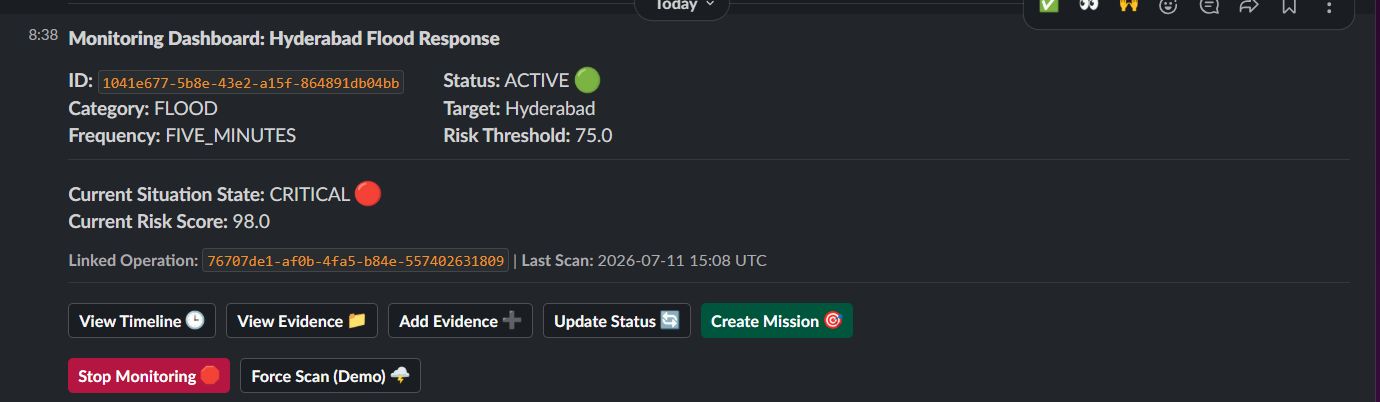
Monitoring DashBoard
-
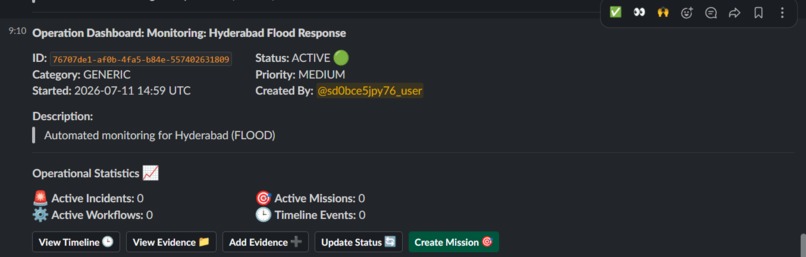
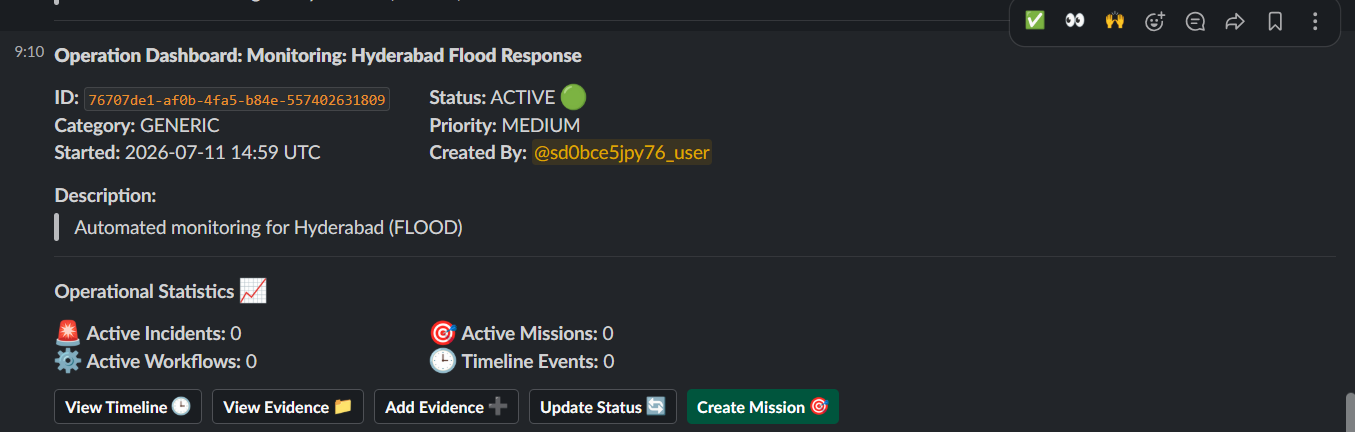
Operation Dashboard
-
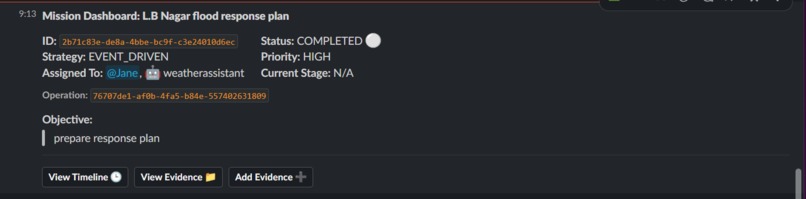
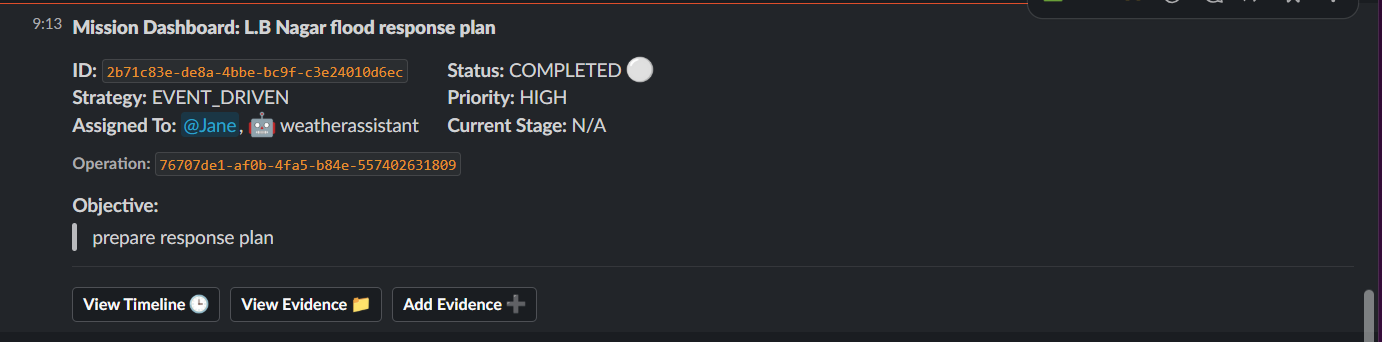
Mission Dashboard
-
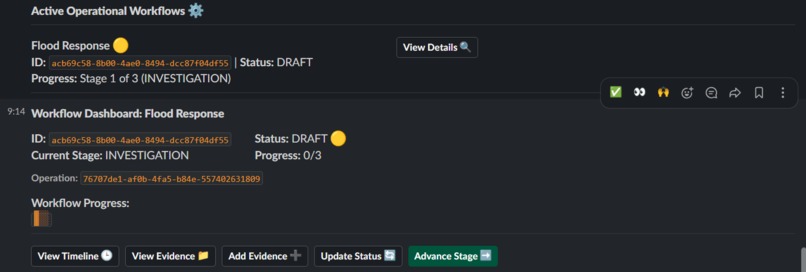
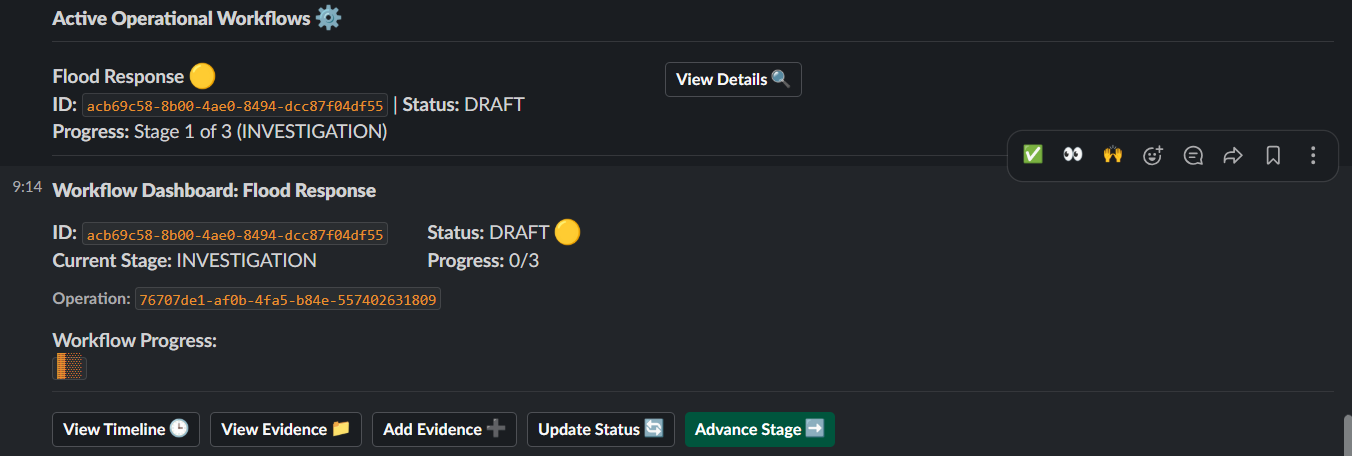
Workflow Dashboard
Inspiration
The inspiration for CrisisPilot came from the seasonal flooding that affects my neighboring state of Andhra Pradesh every year. During these events, authorities and response teams often have to monitor multiple information sources, coordinate across agencies, and make time-critical decisions under pressure. I wanted to explore how AI could assist not by replacing human decision-makers but by continuously monitoring developing situations, organizing operational information, and providing timely recommendations. This led to the idea of building CrisisPilot, an AI-powered Active Operations Platform that helps teams move from reactive incident response to proactive operational awareness.
What it does
CrisisPilot is a Slack-native platform that continuously monitors external intelligence, evaluates operational risk, and coordinates incident response. Operators create Monitoring Profiles, which automatically provision Operations, Workflows, Missions, Timelines, and a Mission Scheduler. As new information arrives, the platform assesses risk, generates human-reviewable incident recommendations, sends Slack notifications, and maintains a complete operational audit trail through Timeline and Evidence management.
How we built it
I built CrisisPilot using FastAPI, Slack Bolt (Socket Mode), SQLAlchemy, and SQLite, following a feature-first, domain-driven architecture. AI capabilities are powered through Groq LLMs, while external intelligence is accessed through an MCP-based integration layer. We implemented a persistent Mission Scheduler, Mini-Agent framework, Monitoring engine, Workflow orchestration, Notification system, comprehensive automated testing, GitHub Actions CI, and deployment on Railway.
Challenges we ran into
The biggest challenge was coordinating multiple independent subsystems into a single operational workflow while keeping the architecture modular and maintainable. Designing long-running monitoring processes, managing scheduler execution, maintaining immutable timelines, integrating AI without sacrificing deterministic business logic, and ensuring every critical action remained human-approved required careful architectural decisions. Balancing automation with operator control was a key focus throughout development.
Accomplishments that i am proud of
- Built a complete Active Operations Platform rather than a simple chatbot.
- Designed a modular feature-first architecture that scales with new operational domains.
- Implemented autonomous Monitoring Profiles that automatically provision Operations, Missions, and Workflows.
- Created a persistent Mission Scheduler with AI-assisted Mini-Agent execution.
- Maintained human-in-the-loop decision making for all critical incident actions.
- Achieved comprehensive testing, CI/CD automation, Slack integration, and cloud deployment while keeping the platform highly maintainable.
What i learned
This project taught me how to design production-style backend systems, implement domain-driven architecture, orchestrate long-running workflows, build Slack-native applications, integrate AI responsibly, and create reliable testing and deployment pipelines. Most importantly, i learned that successful AI systems depend just as much on strong software engineering and operational design as they do on the underlying language models.
What's next for CrisisPilot
I plan to extend CrisisPilot with PostgreSQL support, distributed scheduling, predictive analytics, additional MCP integrations such as satellite imagery and IoT sensors, OAuth-based multi-workspace Slack distribution, richer operational dashboards, and deeper integrations with emergency management systems to support real-world operational environments.
Built With
- agentic-ai
- asyncio
- disaster-management
- fastapi
- github-actions
- groq
- llama-3
- mcp
- pytest
- python
- rts
- slack
- slackbolt
- socket-mode
- sqlalchemy
- sqlite
- uvicorn

Log in or sign up for Devpost to join the conversation.