-
-
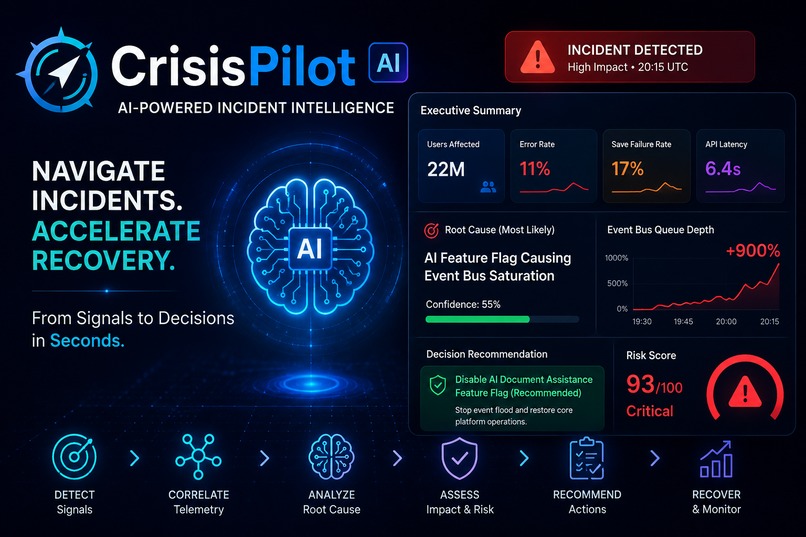
CrisisPilot AI – Autonomous Incident Commander Powered by Gemini
-
Architecture
-
-
Inspiration
Modern organizations lose millions of dollars during major incidents because teams spend too much time identifying what actually went wrong. Engineers analyze telemetry, managers assess business impact, executives demand updates, and recovery teams coordinate mitigation—often under extreme pressure and with incomplete information.
We built CrisisPilot AI to act as an autonomous Incident Commander powered by Gemini.
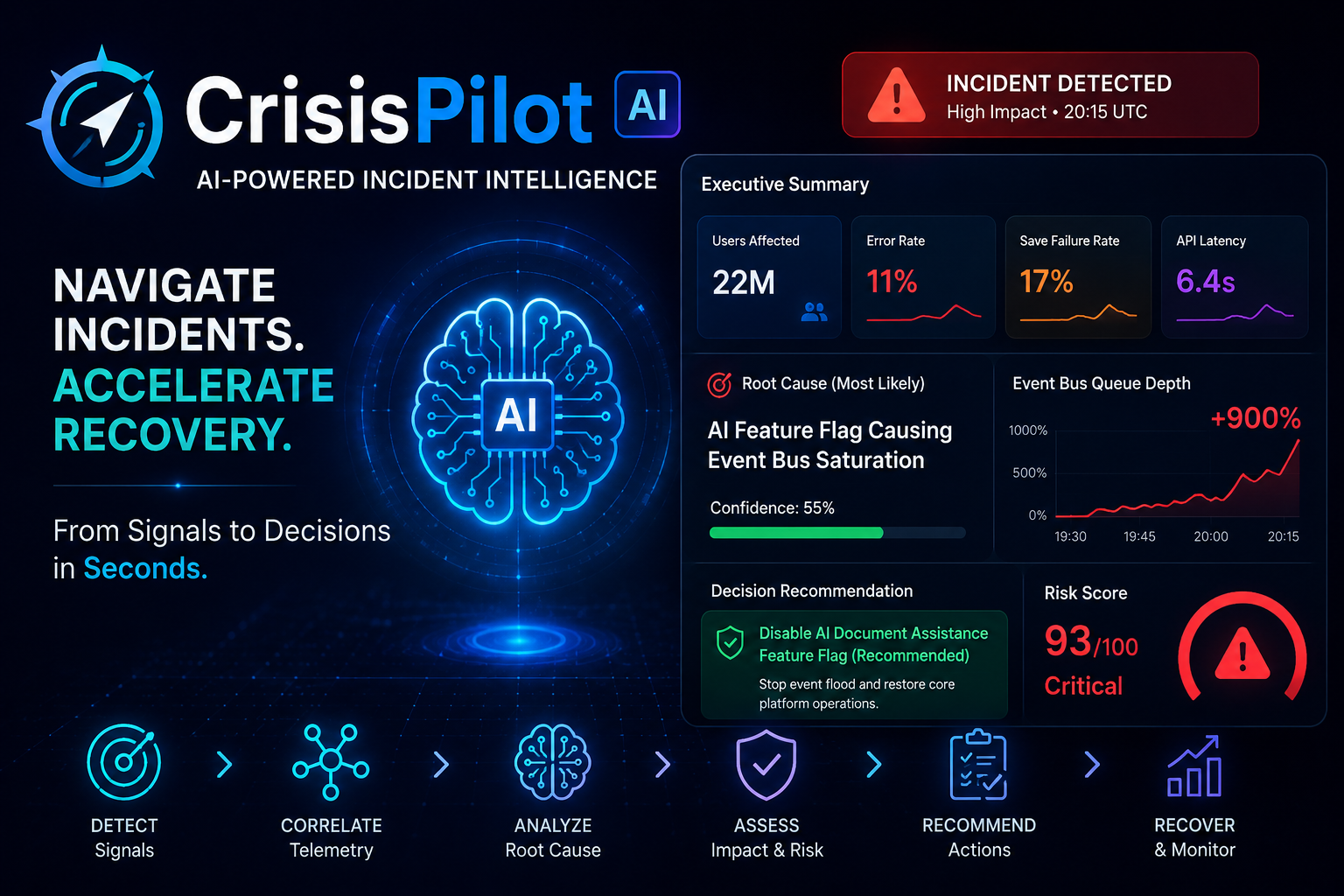
Instead of being just another chatbot, CrisisPilot AI investigates operational incidents, correlates evidence across systems, identifies the most probable root causes, predicts business impact, prioritizes recovery actions, and generates executive-ready reports within minutes.
Our goal is simple:
Reduce investigation time, accelerate recovery, and enable better decisions during critical situations.
What it does
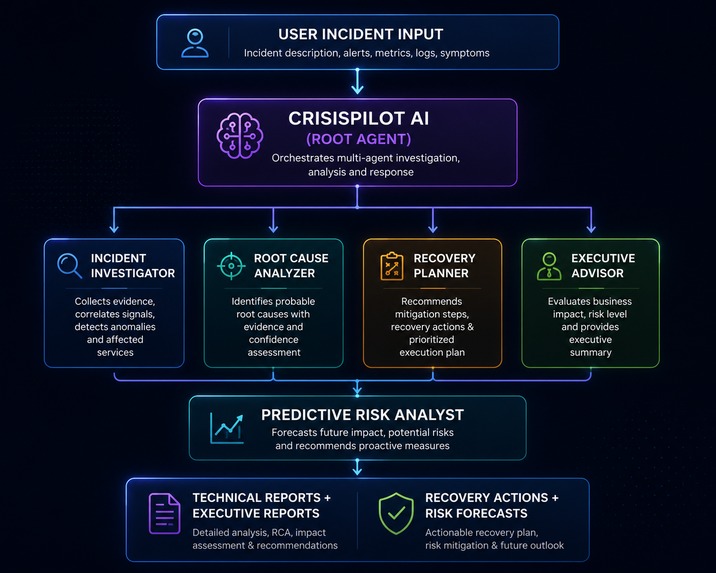
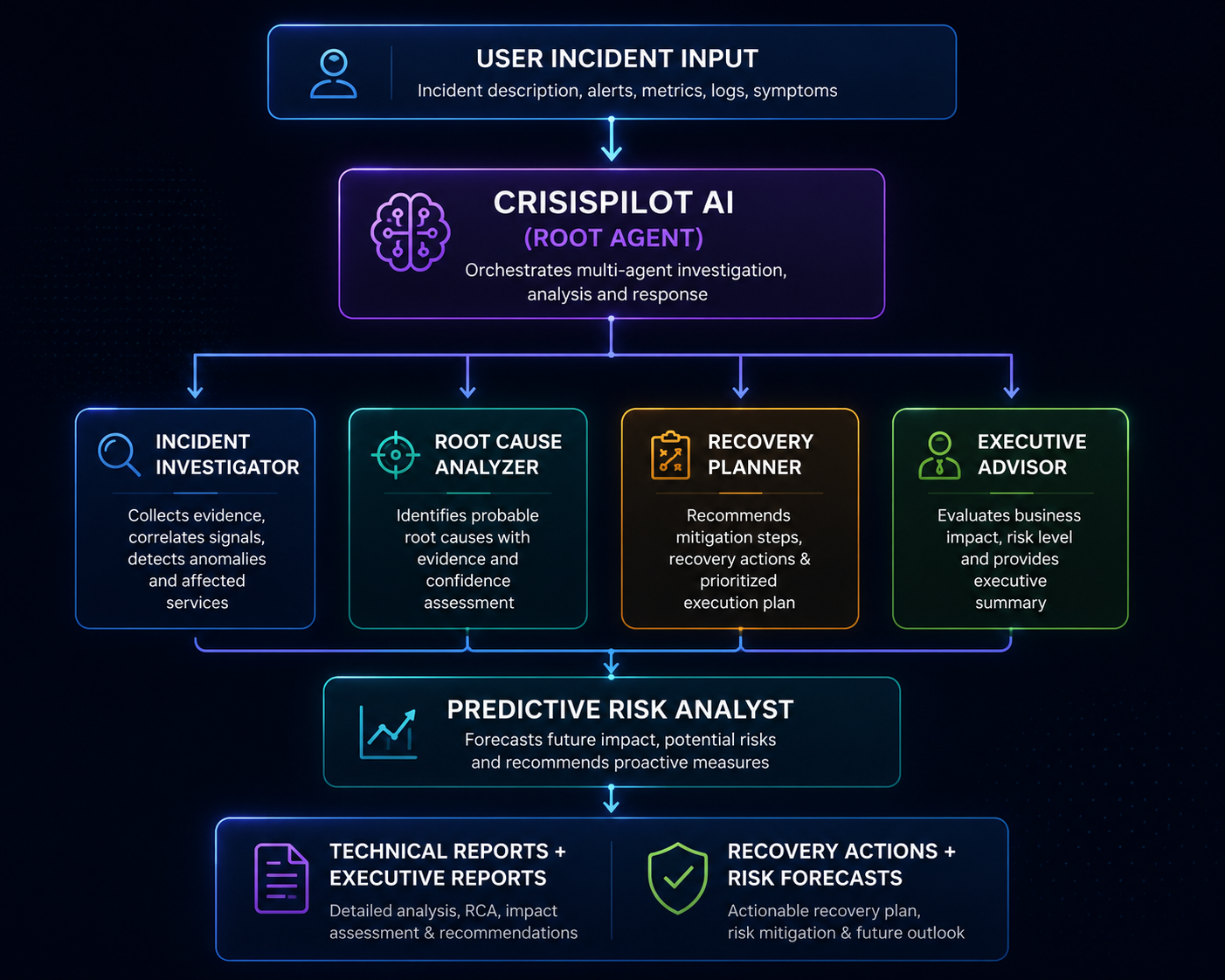
CrisisPilot AI orchestrates a team of specialized AI agents that collaborate to investigate complex incidents.
It can:
- Analyze telemetry and operational signals.
- Detect anomalies and affected services.
- Identify probable root causes using evidence-based reasoning.
- Assess technical, financial, and customer impact.
- Generate prioritized recovery plans.
- Forecast what may happen if no action is taken.
- Produce executive summaries suitable for leadership teams.
The system transforms scattered operational data into actionable intelligence.
How we built it
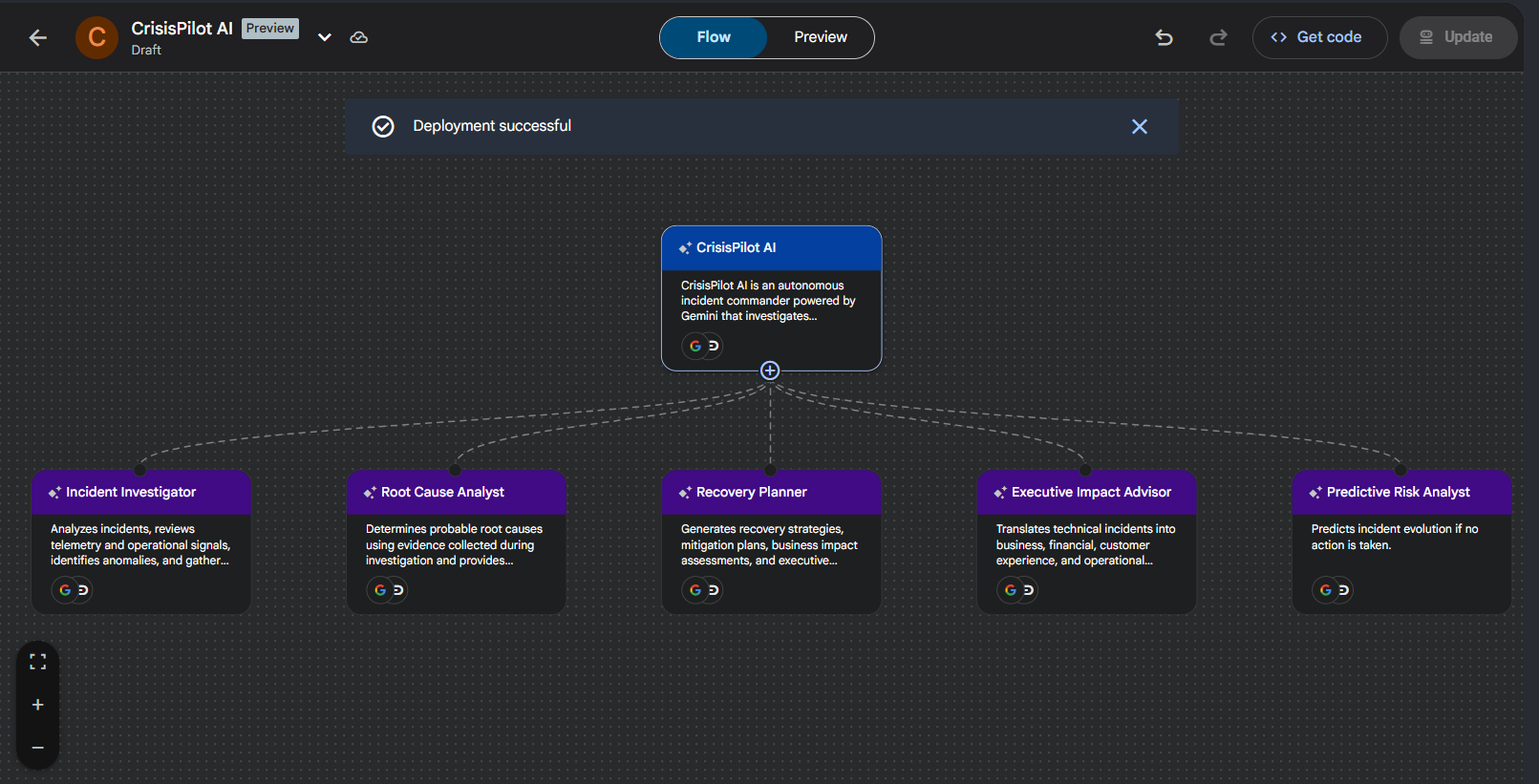
We built CrisisPilot AI using Google's Agent Platform and Gemini 2.5 Flash.
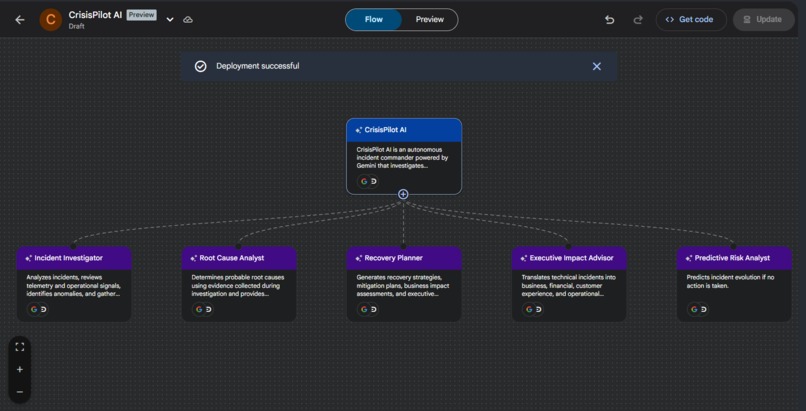
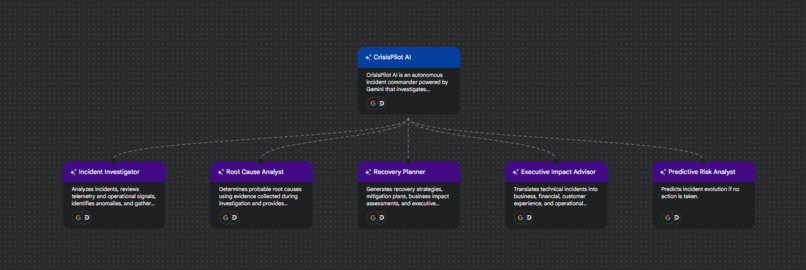
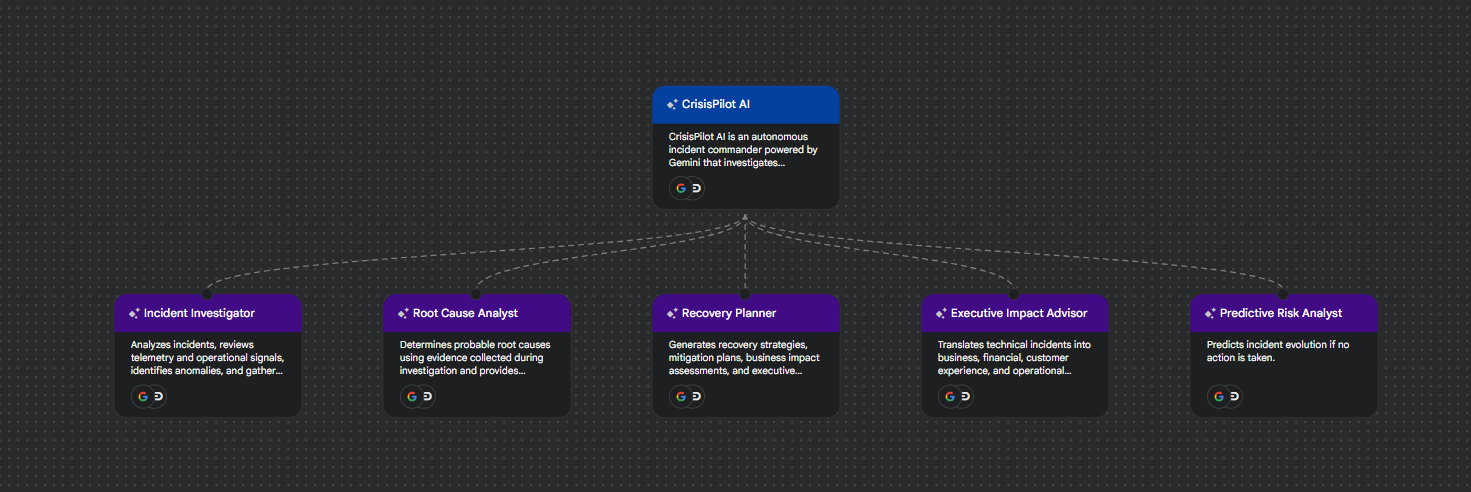
The system consists of multiple specialized agents:
- Incident Investigator
- Root Cause Analyst
- Recovery Planner
- Executive Impact Advisor
- Predictive Risk Analyst
These agents work together under a central Incident Commander to provide end-to-end incident analysis.
We also leveraged Google Search and URL Context tools to enrich investigations with external context when required.
Challenges we ran into
One of our biggest challenges was designing an agent workflow that avoids jumping directly to conclusions.
We needed to ensure the system:
- Investigates before diagnosing.
- Separates evidence from assumptions.
- Explains confidence levels transparently.
- Balances technical accuracy with executive communication.
Another challenge was coordinating multiple specialized agents into a coherent decision-making process.
Accomplishments that we're proud of
- Built a complete multi-agent incident response workflow.
- Created structured executive reports from technical telemetry.
- Enabled confidence-based root cause analysis.
- Developed predictive risk forecasting capabilities.
- Demonstrated real-world incident scenarios affecting millions of users.
What we learned
We learned that effective incident response is not only a technical problem—it is also a communication and prioritization challenge.
By combining specialized AI agents, organizations can significantly reduce Mean Time To Detect (MTTD) and Mean Time To Recovery (MTTR).
What's next for CrisisPilot AI
Future enhancements include:
- Integration with monitoring platforms such as Cloud Monitoring and Grafana.
- Real-time ingestion of logs and alerts.
- Automated incident timeline generation.
- Slack and Microsoft Teams integration.
- Canary-based recovery recommendations.
- Industry-specific playbooks for finance, healthcare, transportation, and retail.
CrisisPilot AI aims to become the AI-powered Incident Commander for modern digital operations.
Built With
- gemini-2.5-flash
- google-agent-platform
- google-search-tool
- incident-response-intelligence
- multi-agent-systems
- predictive
- python
- risk
- root-cause-analysis
- url-context-tool

Log in or sign up for Devpost to join the conversation.