-
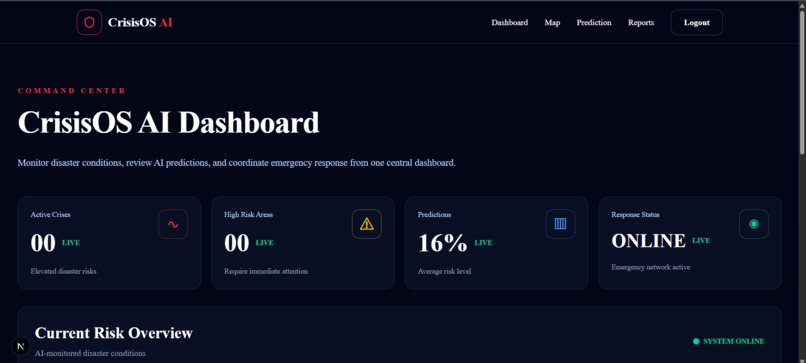
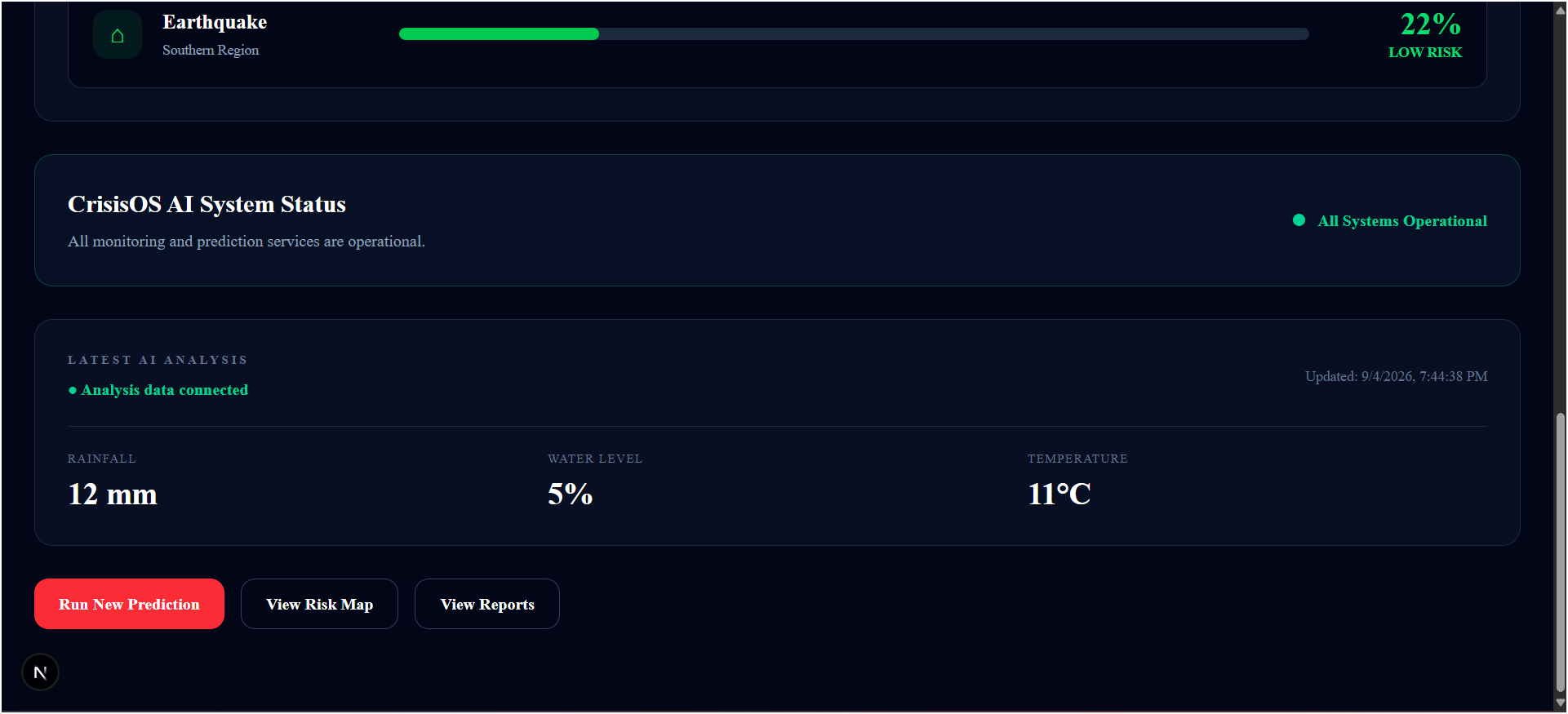
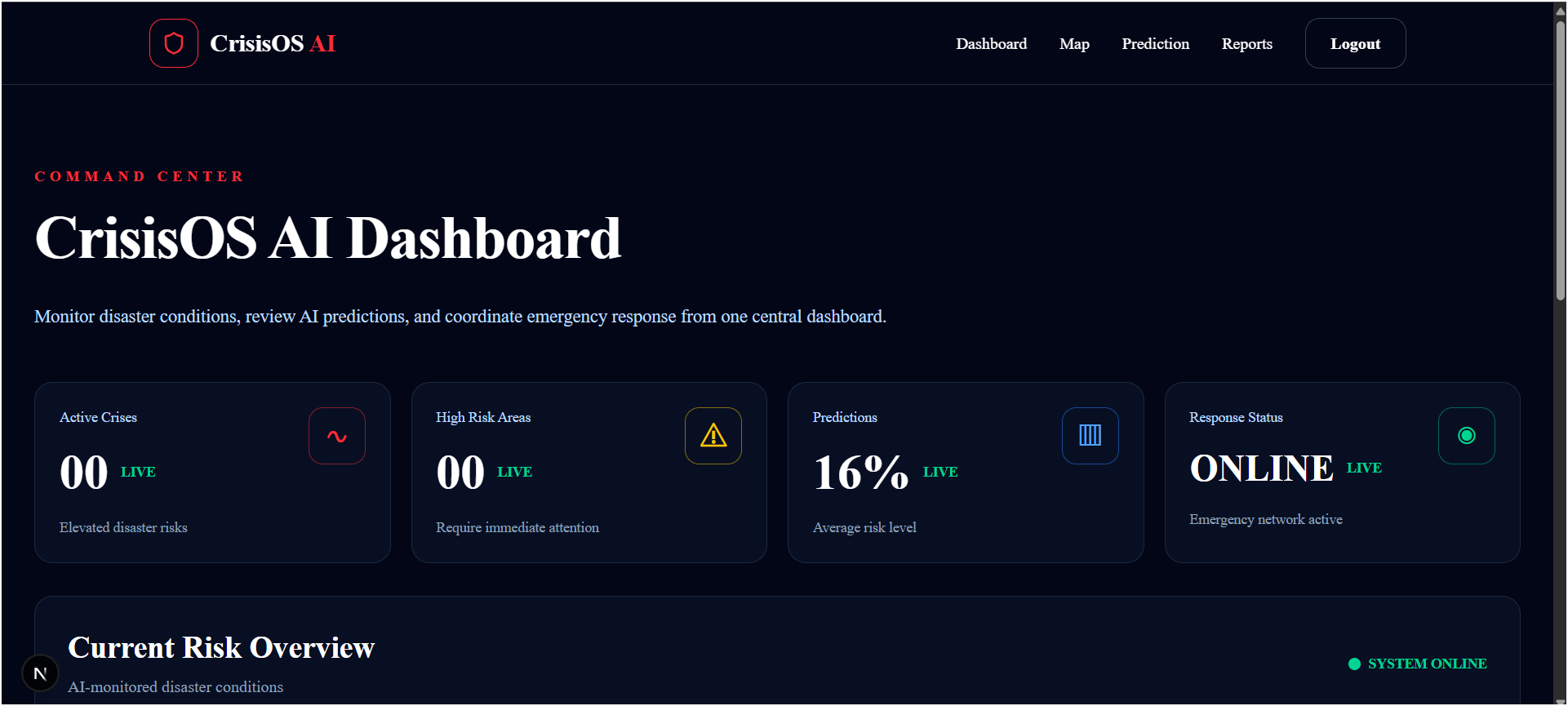
CrisisOS AI Dashboard – Live disaster monitoring overview with active crises, high-risk areas, predictions, and response status.
-
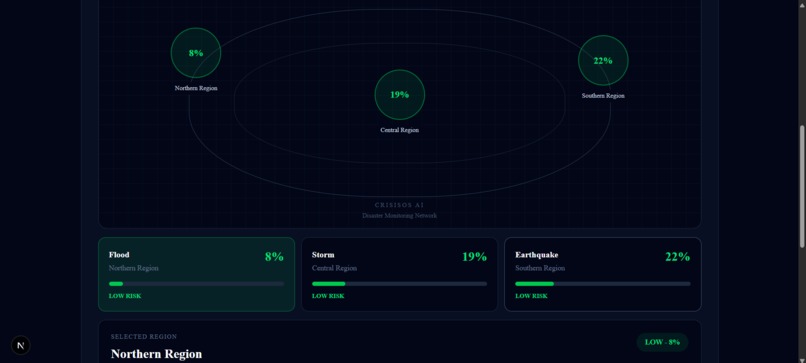
Current Risk Overview – Flood, storm, and earthquake risks across Northern, Central, and Southern regions.
-
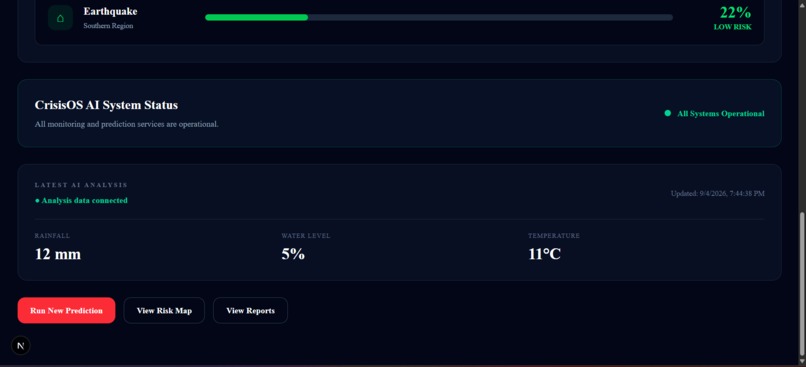
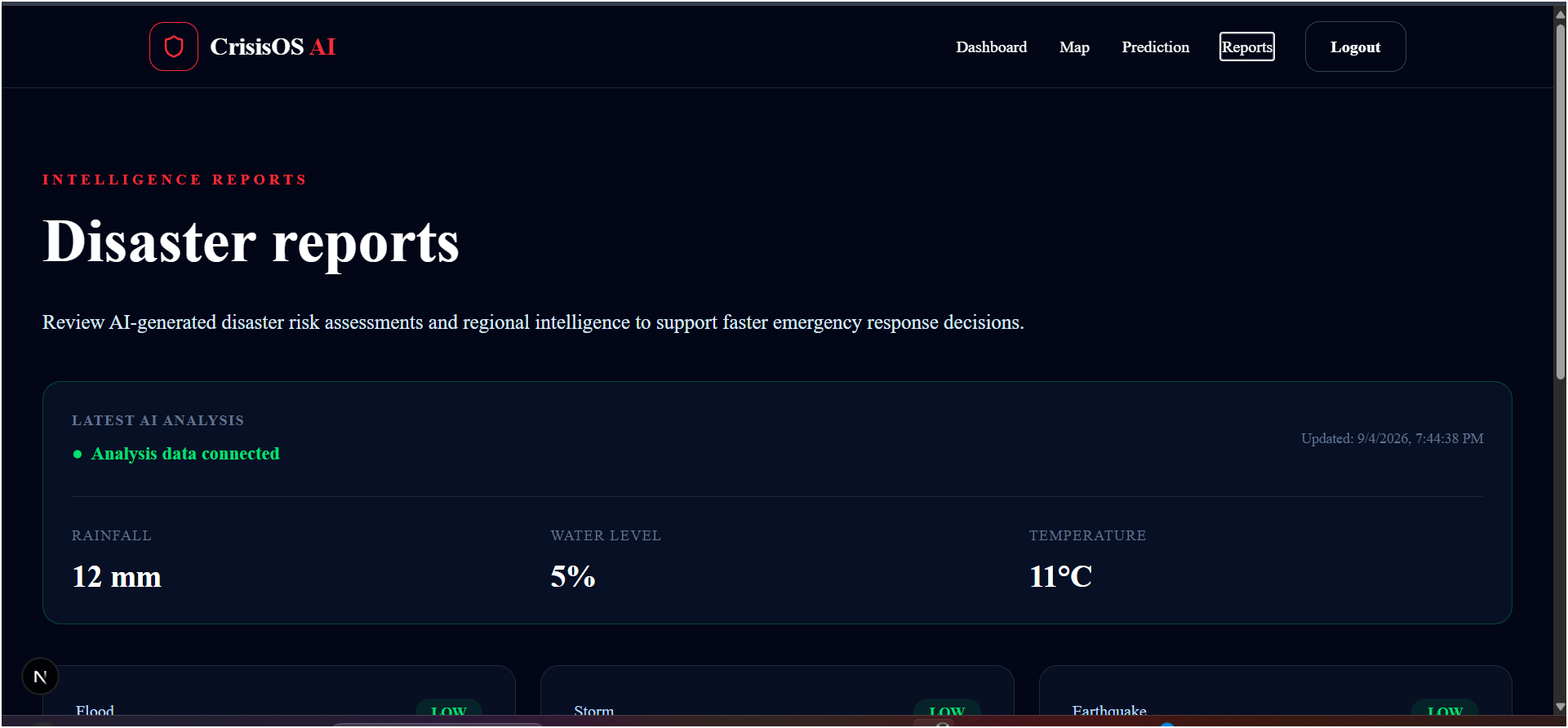
Latest AI Analysis – Environmental monitoring data showing rainfall, water level, and temperature conditions.
-
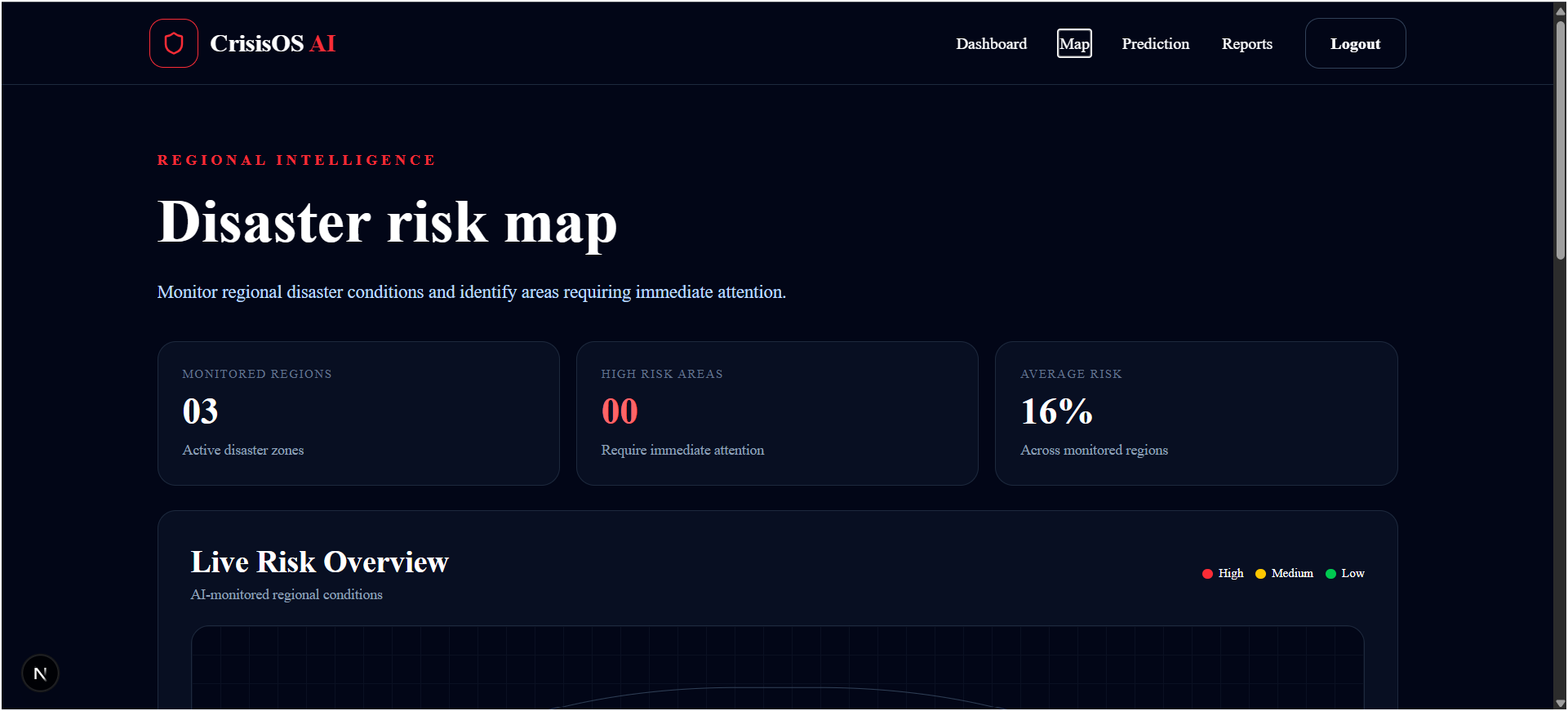
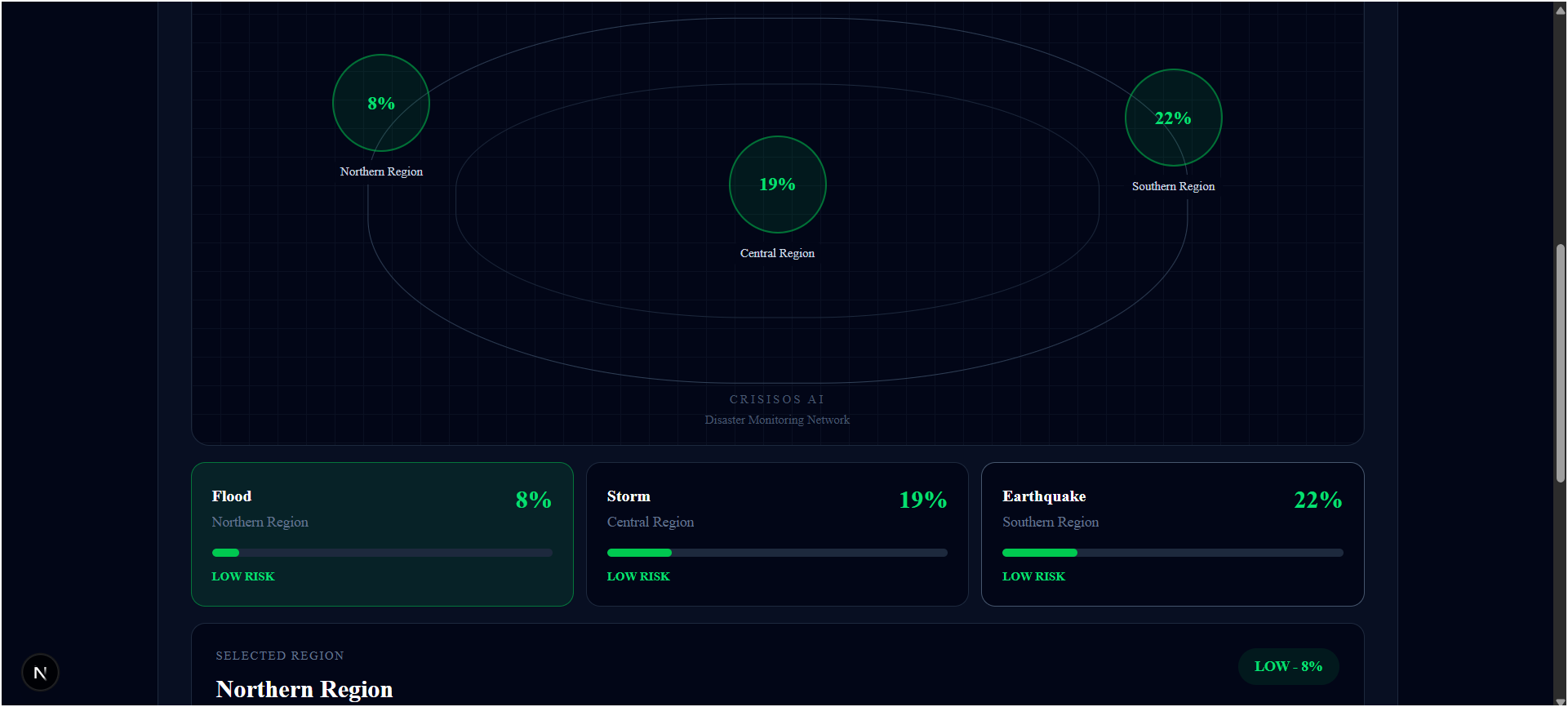
Disaster Risk Map – Regional intelligence visualization showing risk levels across monitored regions.
-
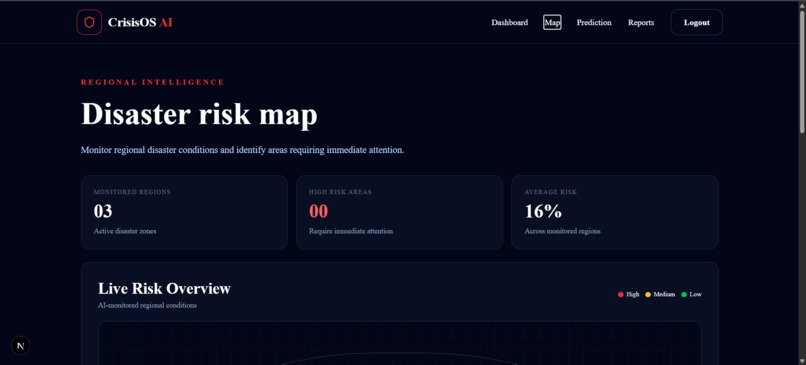
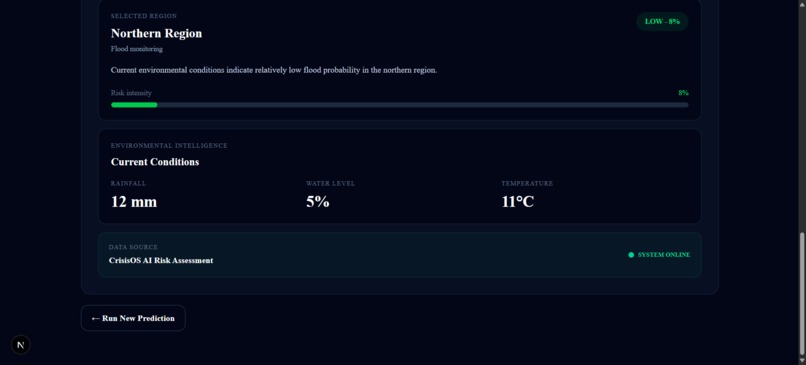
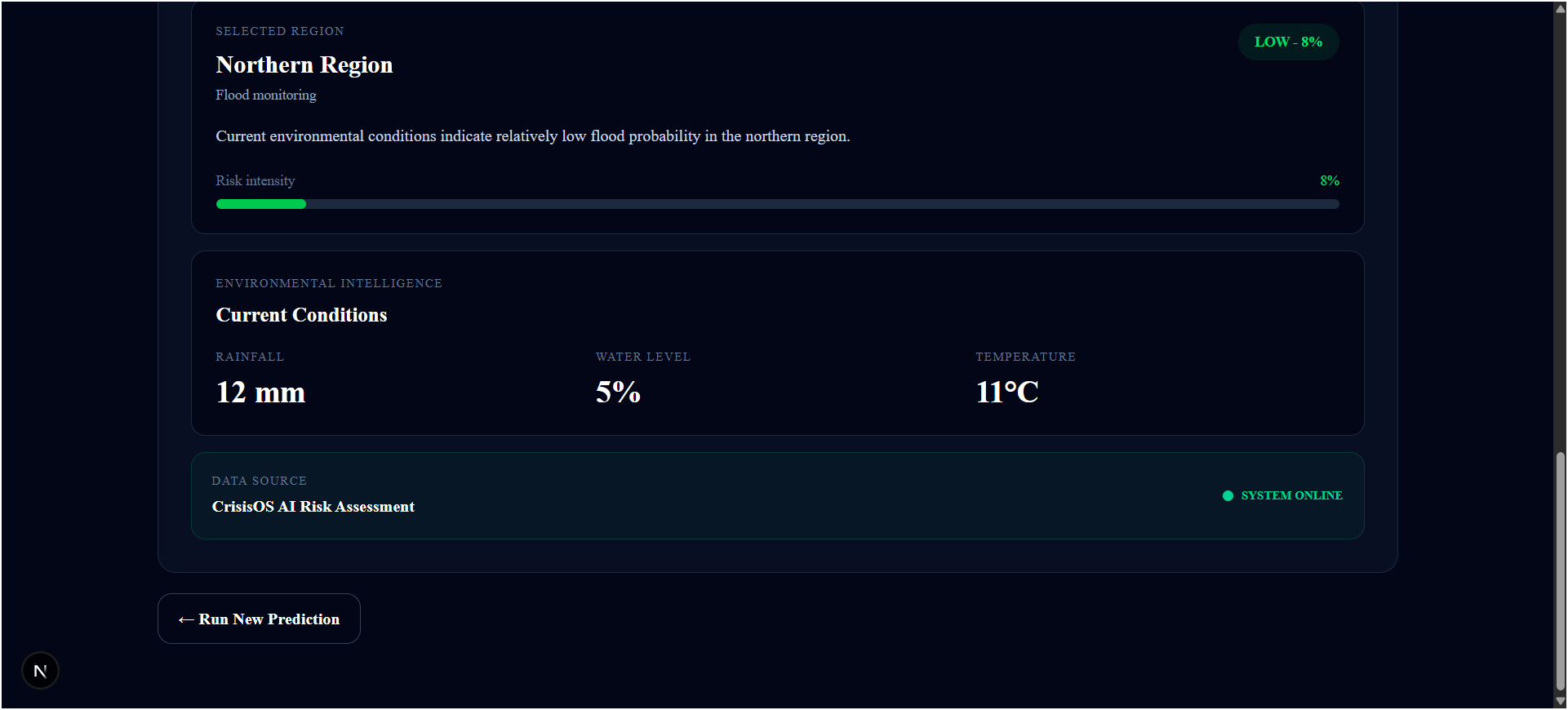
Regional Risk Details – Northern Region flood monitoring with an 8% low-risk assessment.
-
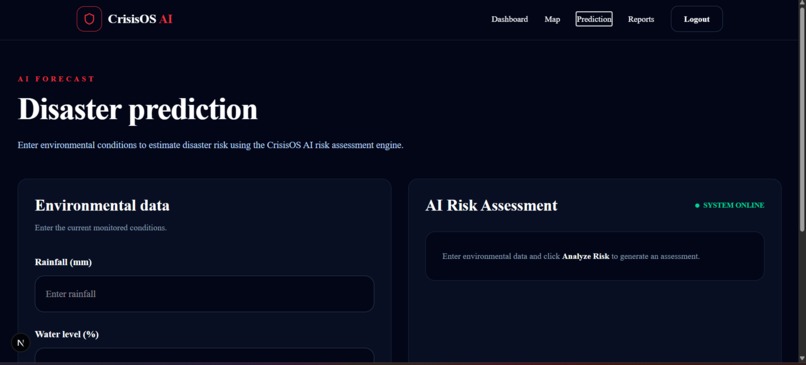
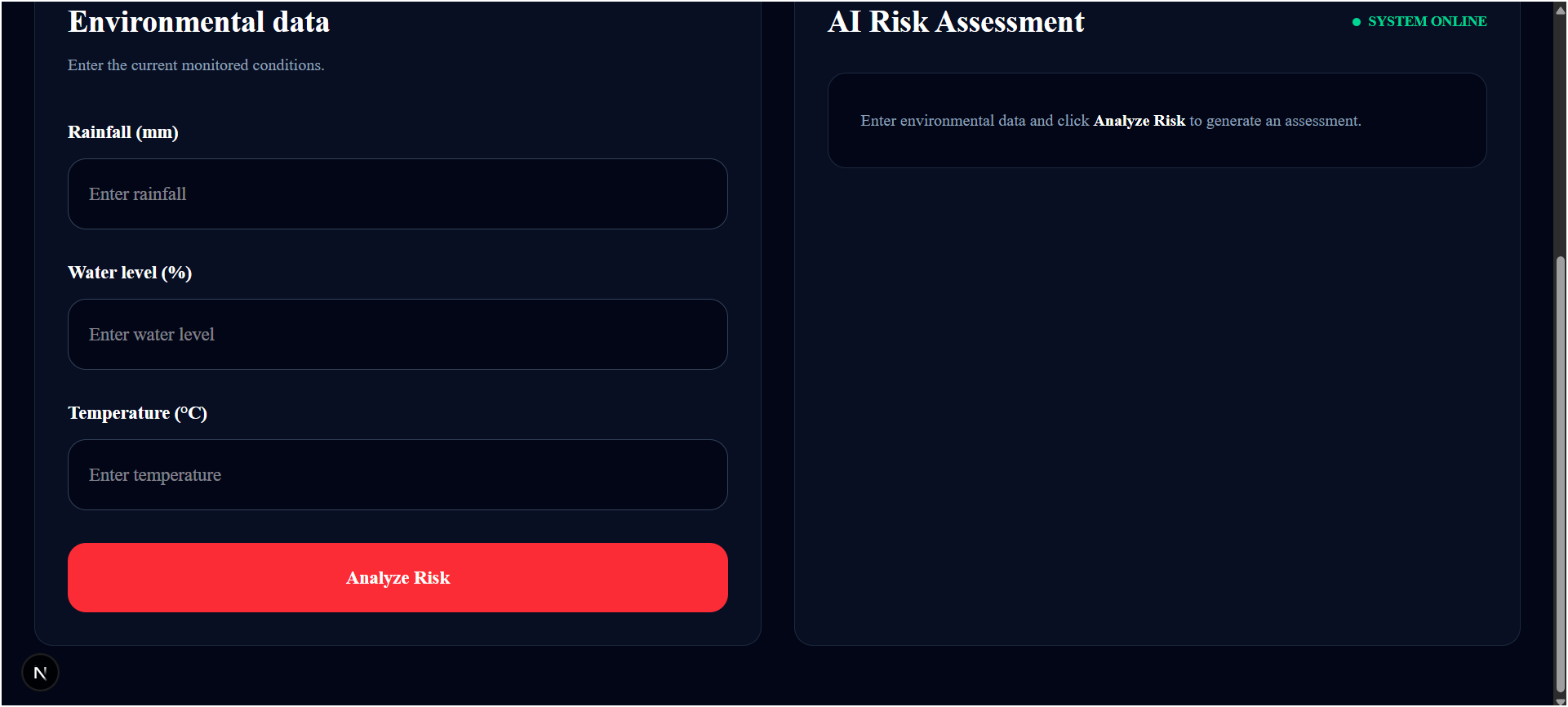
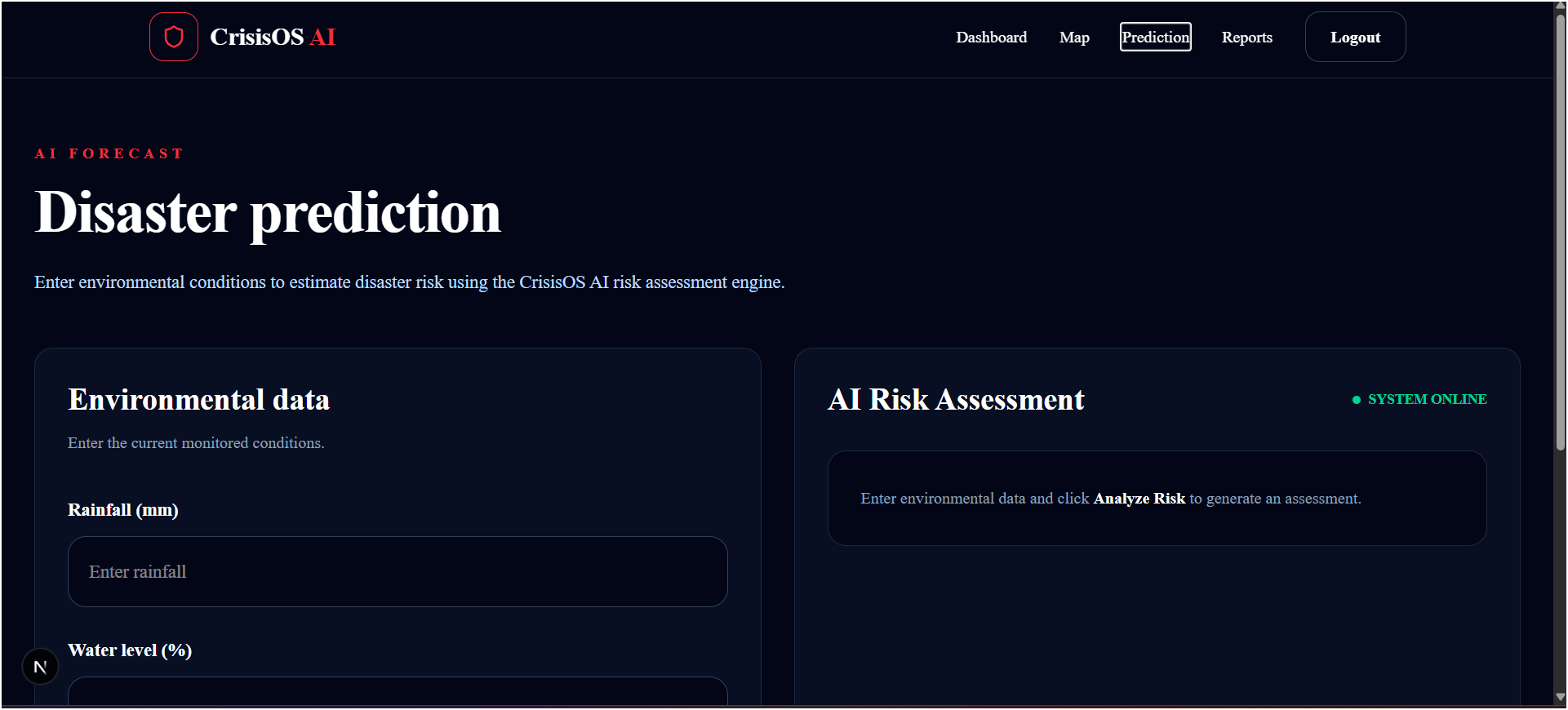
AI Forecast Prediction – Environmental data input form for analyzing disaster risk.
-
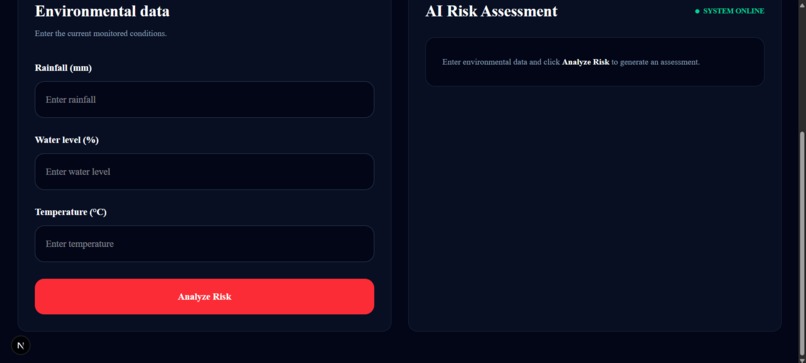
Environmental Data Analysis – Rainfall, water level, and temperature inputs with AI Risk Assessment.
-
Disaster Reports – AI-generated disaster intelligence and the latest environmental analysis.
-
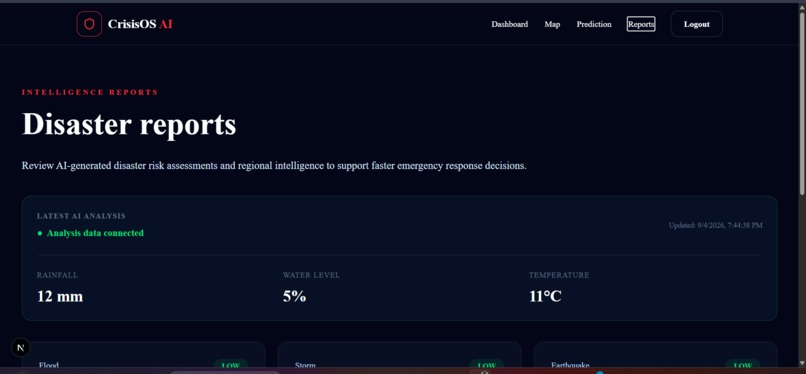
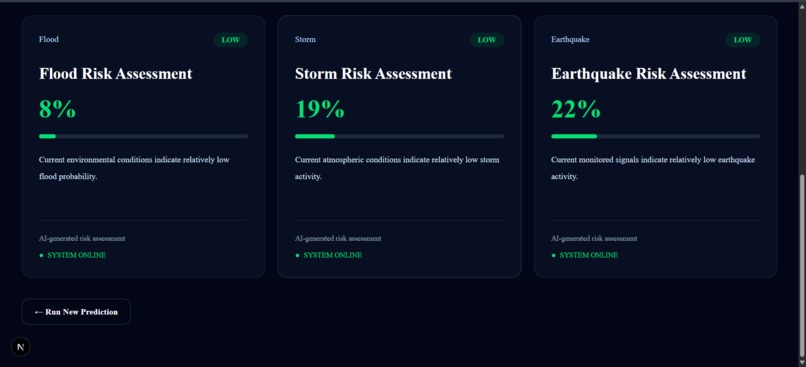
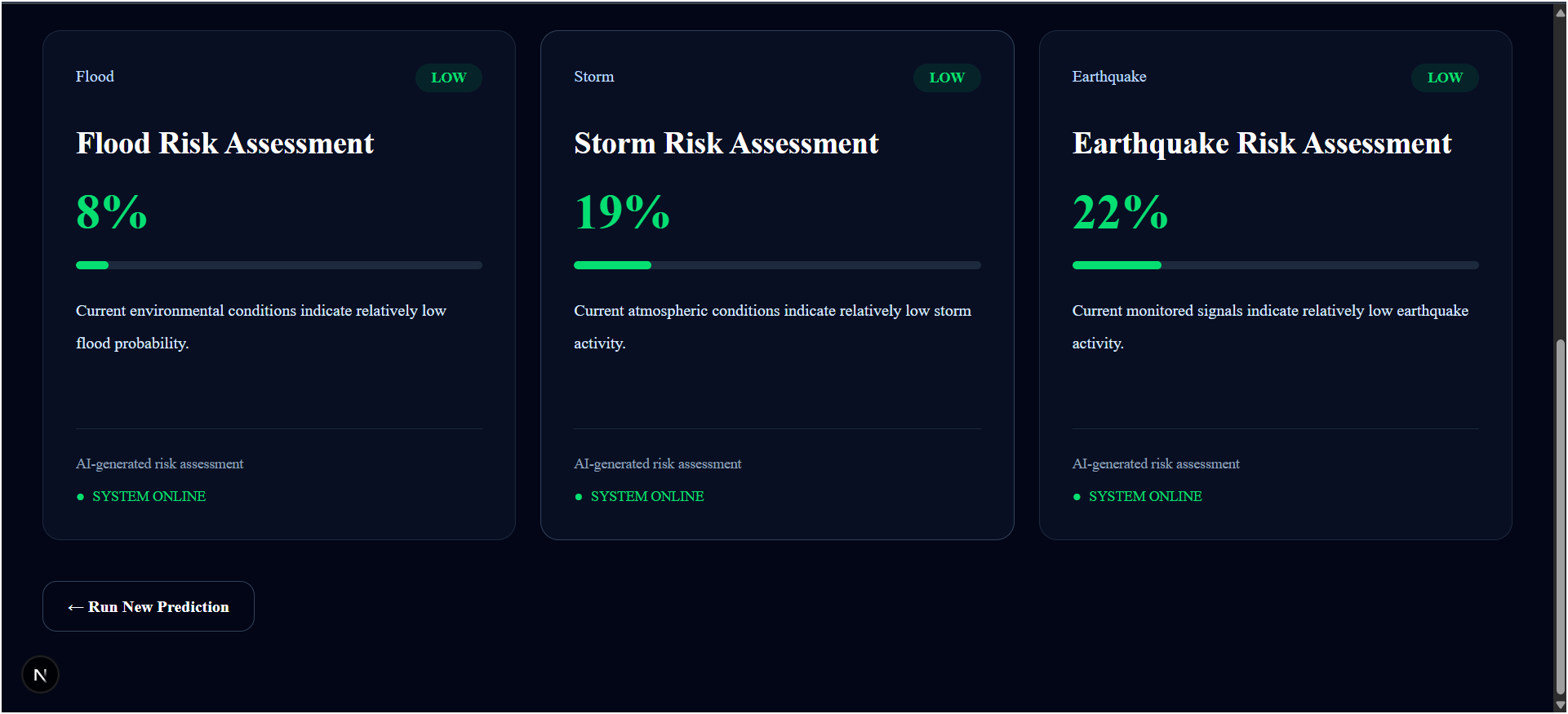
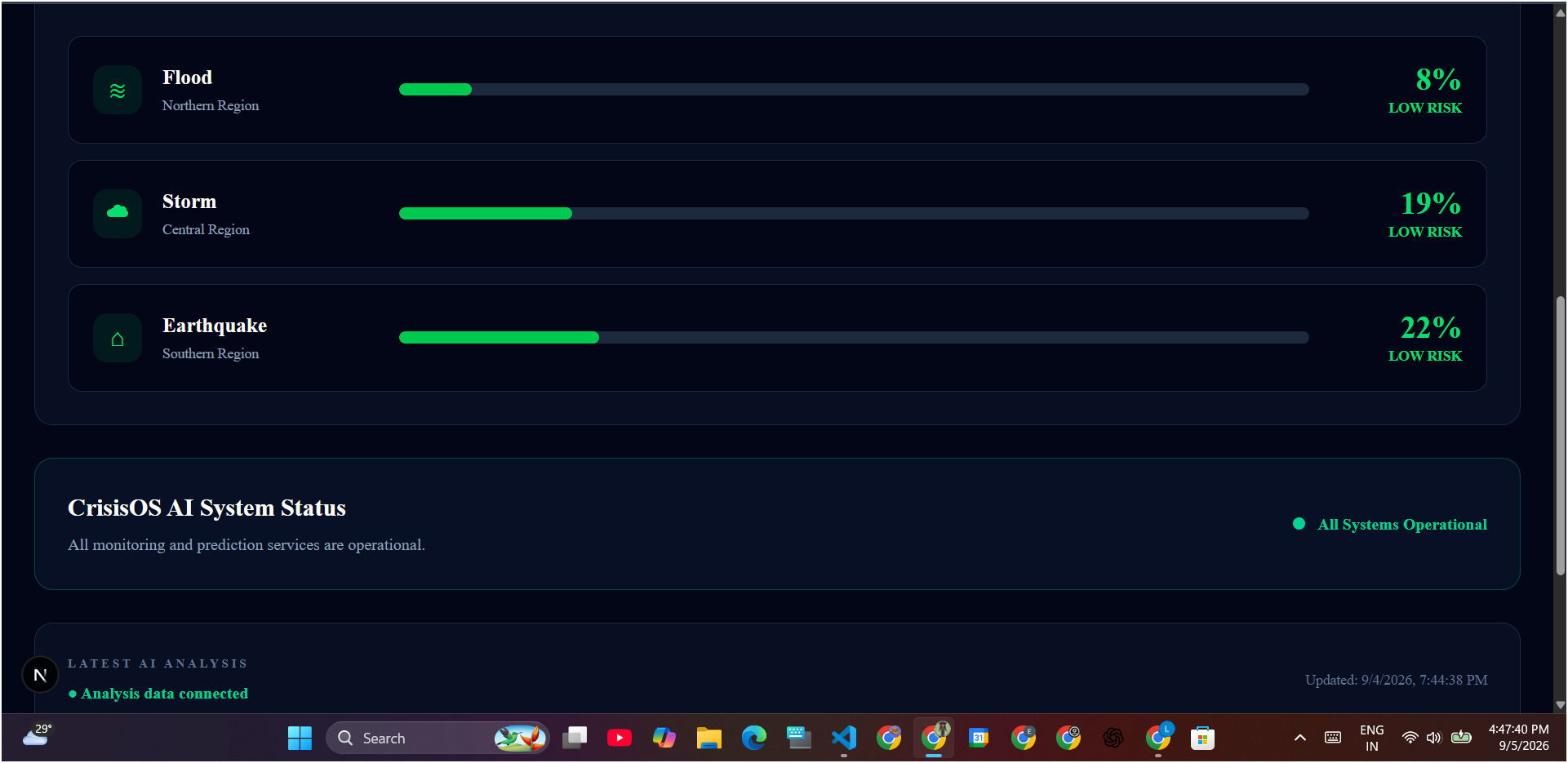
Risk Assessment Reports – Flood, storm, and earthquake assessments with current risk percentages.
-
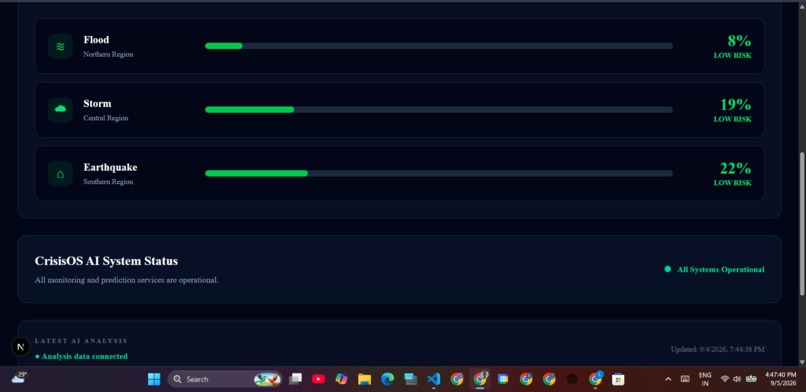
Detailed Disaster Risk Assessments – Individual AI-generated reports showing low-risk conditions for Flood, Storm, and Earthquake.
Inspiration
Inspiration
Natural disasters can happen with little warning, making it difficult for communities and emergency teams to quickly understand risks and respond effectively. We wanted to create a centralized platform that makes disaster monitoring easier and helps visualize potential risks.
What it does
CrisisOS AI is an AI-powered disaster monitoring and risk assessment platform. It provides a centralized dashboard for monitoring disaster conditions, viewing regional risk levels, generating predictions, and reviewing intelligence reports.
The platform monitors different disaster scenarios such as floods, storms, and earthquakes and presents risk levels through an easy-to-understand visual interface.
How we built it
We built CrisisOS AI as a modern web application using Next.js, React, TypeScript, and CSS. The application includes multiple pages for the Dashboard, Disaster Risk Map, Predictions, and Intelligence Reports.
We focused on creating a responsive, clean interface that allows users to quickly navigate between different disaster monitoring tools and understand regional risk information.
Challenges we ran into
One of the main challenges was connecting all pages and navigation correctly while maintaining a consistent design across the application. We also worked on making the risk information clear and visually understandable.
Accomplishments that we're proud of
We successfully created a complete disaster intelligence platform with multiple working sections, including:
- AI disaster monitoring dashboard
- Regional disaster risk map
- Risk prediction system
- Intelligence reports
- Flood, storm, and earthquake monitoring
- Clear visual risk indicators
What we learned
Through building CrisisOS AI, we learned more about designing multi-page applications, managing navigation in Next.js, building responsive user interfaces, and presenting complex risk information in a simple and understandable way.
What's next for CrisisOS AI
In the future, we want to integrate real-time weather and environmental data, improve the AI prediction models, add emergency alerts, and provide more detailed location-based disaster intelligence.
What it does
How we built it
Challenges we ran into
Accomplishments that we're proud of
What we learned
What's next for CrisisOS AI
Built With
- ai
- css
- javascript
- next.js
- react
- typescript

Log in or sign up for Devpost to join the conversation.