-
-

Crisis Net Logo
-
-
-
-
-

🌩️ Inspiration
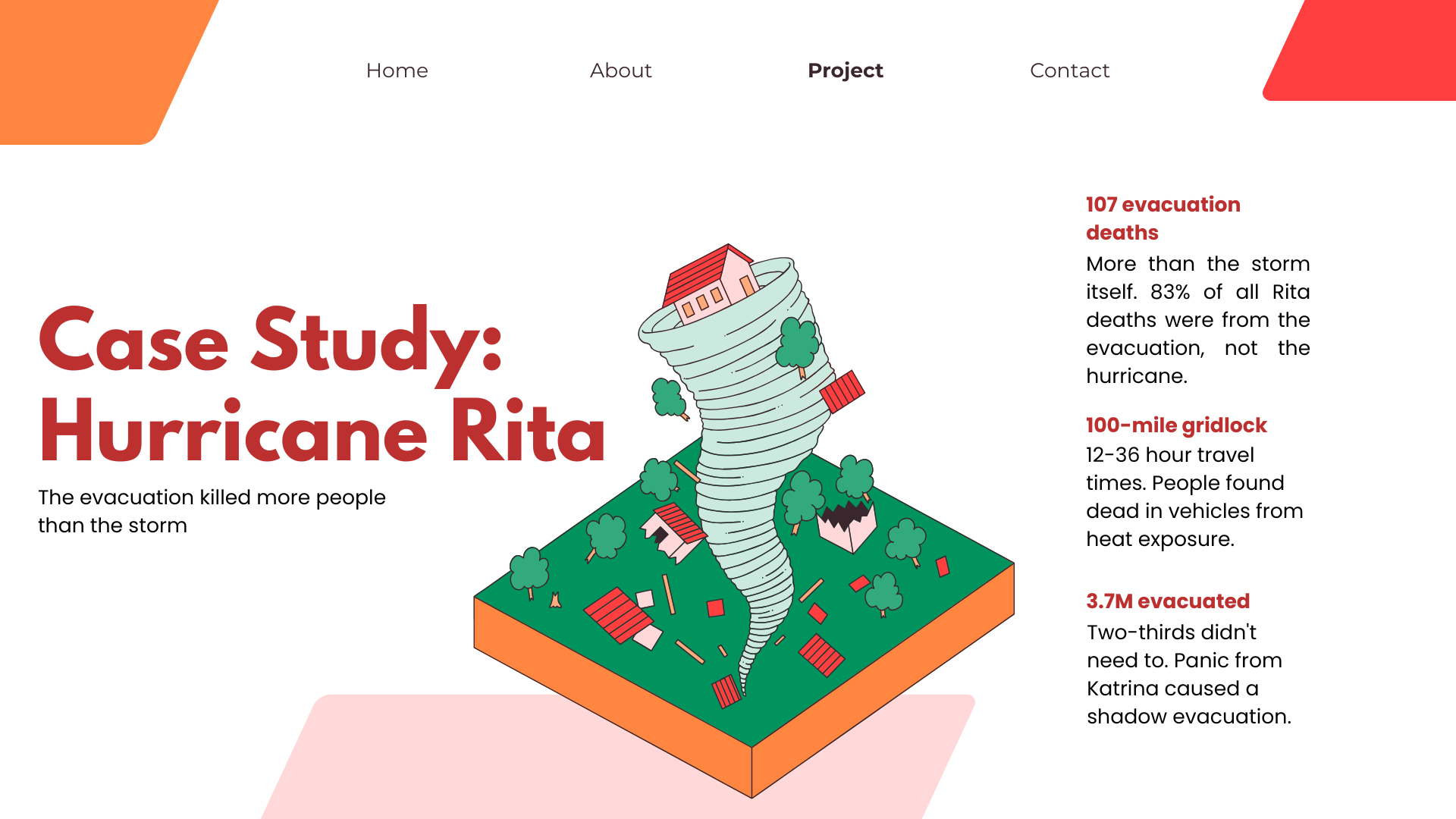
When severe weather strikes, people often have very little time to make decisions. Alerts can be confusing, information is scattered, and evacuation routes can quickly become unsafe. We wanted to build a tool that allows entire communities to respond faster, work together, and organize themselves during emergencies. CrisisNet was inspired by the growing realization that combining AI reasoning and data processing techniques with complex, but robust algorithms can provide reliable and scalable results in a much more cost effective way. Our goal with this product is not to add onto the pile of "GPT wrappers" but instead, show how generative AI can power entirely new approaches to impactful problems, when paired with traditional and robust methods, at a fraction of the cost.
🚨 What it does
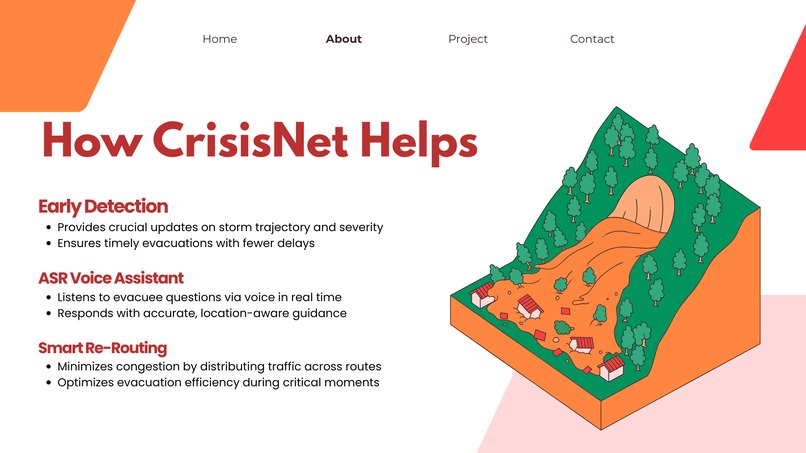
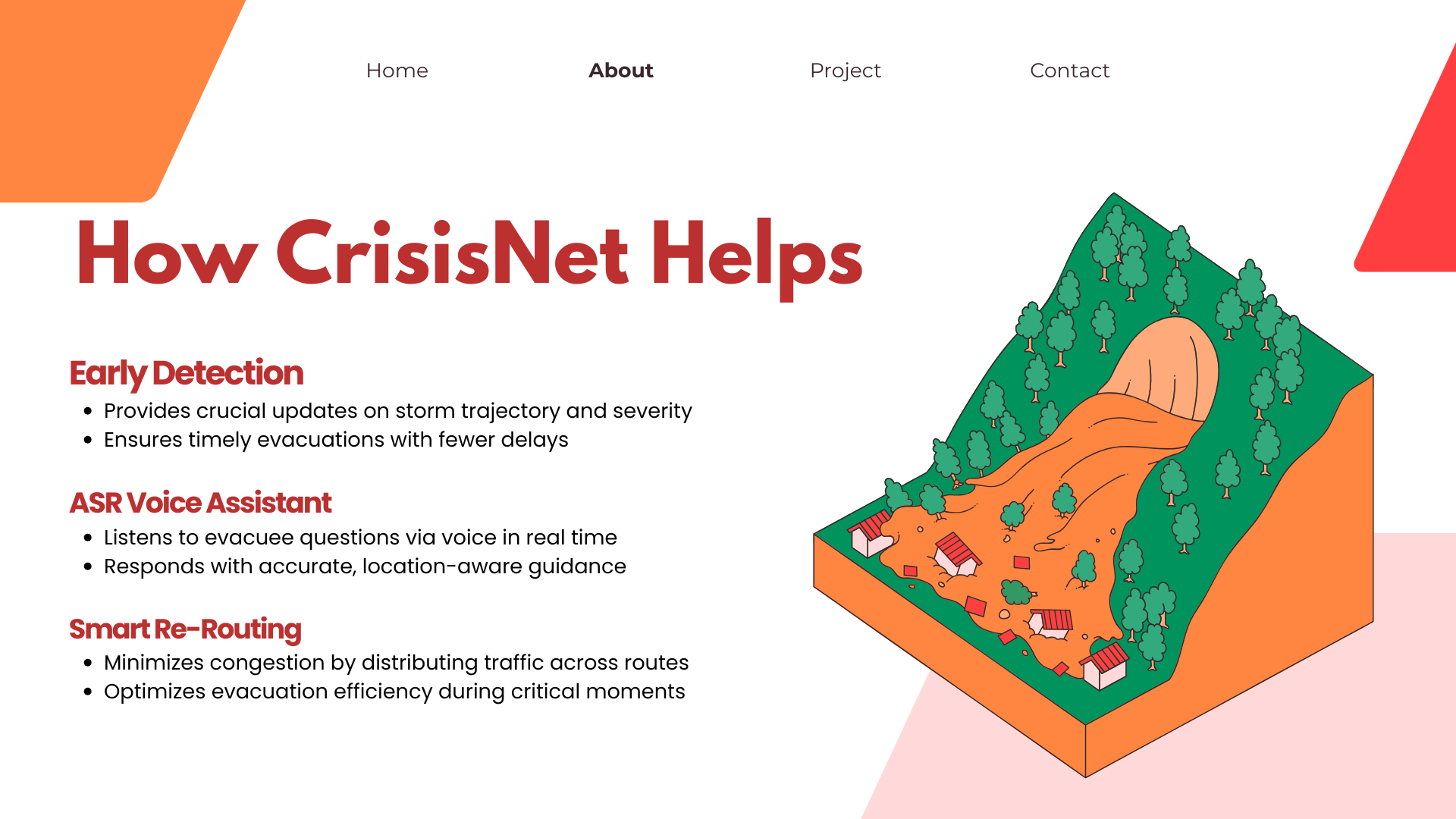
CrisisNet is a mobile-first emergency response app that helps users navigate severe weather situations. It provides early detection of dangerous conditions, constant updates of relevant data (offline enabled), a real-time voice-enabled AI assistant using RAG, intelligent evacuation routing and dynamic weather simulation (currently typhoons, floods and extreme winds).
Users can ask the assistant questions during emergencies and receive fast, contextual responses. At the same time, the app analyzes road conditions and hazards to recommend safer evacuation routes, helping people reach safety more efficiently during critical moments.
Where this product truly shines is its ability to** bridge the gaps between members of a community when it matters most**. Users can specify "Connections" - trusted individuals that our platform coordinates with during emergencies to facilitate evacuation of vulnerable groups, improve response times, decrease gridlock and so much more.
🛠️ How we built it
We built CrisisNet as a mobile-first application using React Native for the frontend, allowing us to create an accessible and responsive interface optimized for mobile use during emergencies.
The backend was built with FastAPI/Python, which handled routing logic, weather simulations, and AI integrations.
For mapping and navigation, we integrated the Mapbox API to visualize routes and hazards on an interactive map.
CrisisNet also leverages several AI capabilities:
- The ChatGPT Realtime API powers the voice-based ASR assistant, enabling real-time interaction with users.
- The ChatGPT 4.1 Mini API powers our conversational intelligence and response generation.
- We implemented retrieval-augmented generation (RAG) so the assistant can fetch live or contextual updates about the current situation before generating responses.
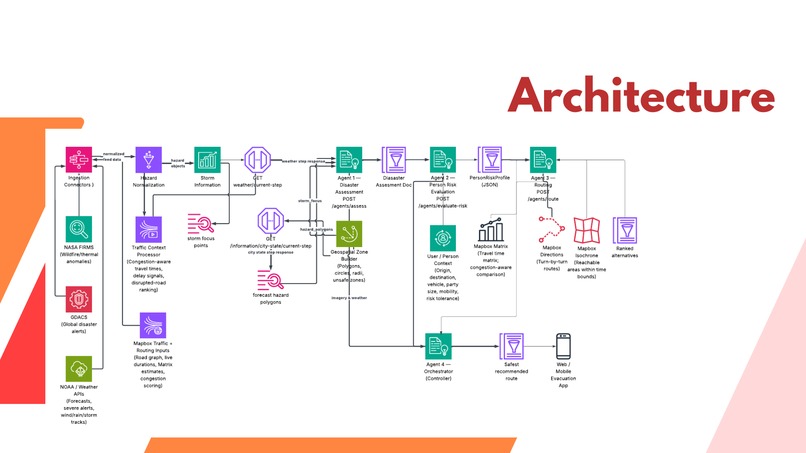
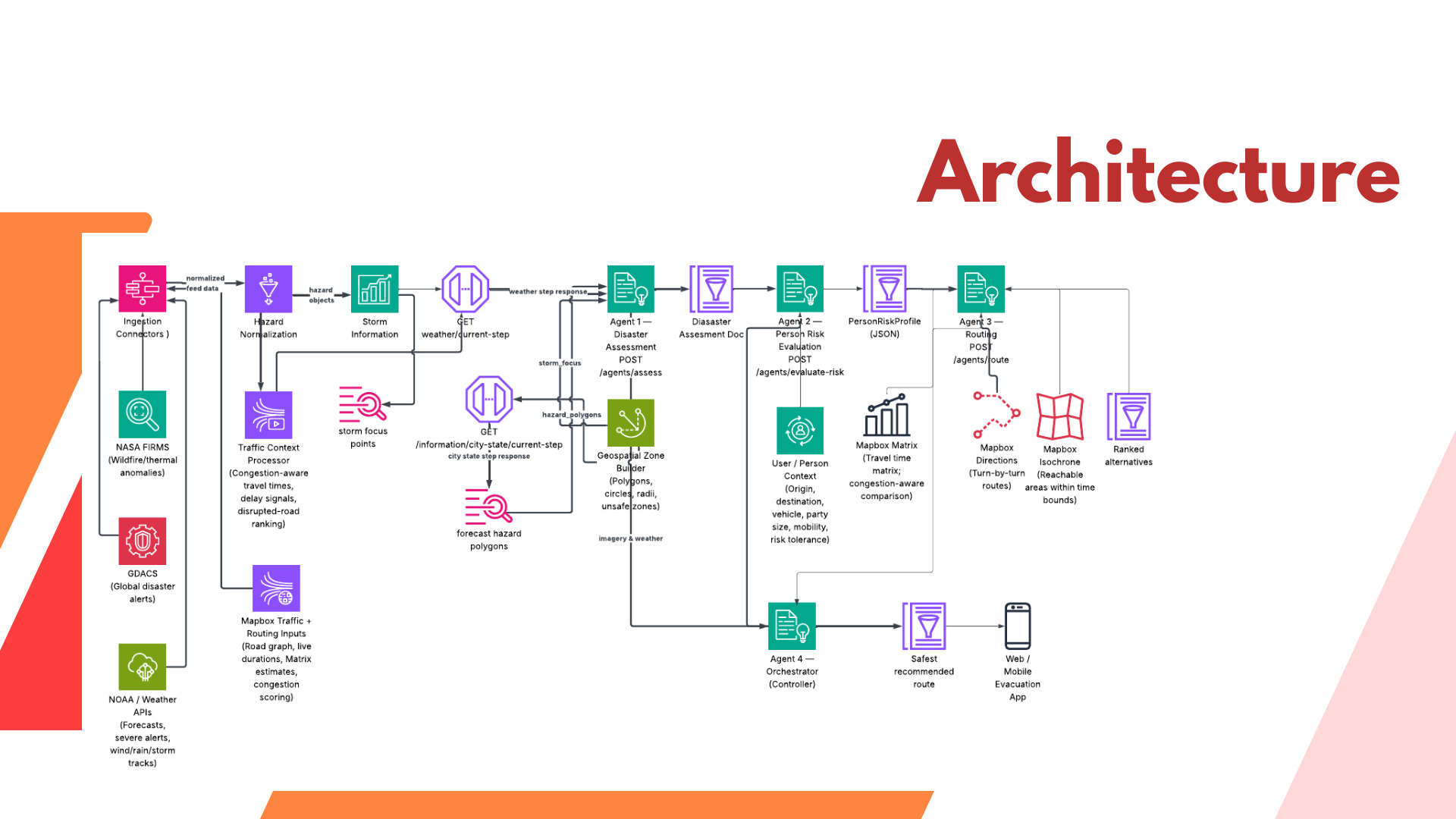
- The core of the coordination and evacuation logic is facilitated by allowing LLMs to use tools that provide optimal pathing, get the latest weather/disaster data and coordinate with other "user agents"
- We used watsonx.ai to coordinate multiple AI agents, combining different specialized roles such as disaster assessment, risk evaluation, and route planning into a single decision-making pipeline.
- This multi-agent design allows the system to continuously interpret changing environmental conditions, reason over road and hazard constraints, and generate safer, more adaptive evacuation recommendations for affected users. Together, these components allow CrisisNet to combine mapping, simulation, and AI-driven assistance into a cohesive, real-time system.
⚙️ Challenges we ran into
- Agentic AI integration into path routing was difficult to set up because there were many variables involved in simulating dynamic evacuation scenarios based on simulated weather conditions and furthermore, integrating those results with a live map interface.
- Coordinating multiple AI systems (real-time voice interaction, retrieval, and routing logic) required careful orchestration to keep responses fast and relevant.
- Simulating realistic, severe weather scenarios while keeping the system stable within the hackathon timeframe.
- Optimizing complex, high compute processes and algorithms on limited hardware.
🏆 Accomplishments that we're proud of
- Building a highly integrated and well-structured codebase in a very short amount of time.
- Successfully combining multiple technologies—mobile development, pathing algorithms, simulation algorithms, backend services, data engineering, all powered by Gen AI—into one cohesive system.
- Implementing several cutting edge AI techniques, including real-time AI interaction, retrieval-augmented generation, and agentic, data-driven decision-making on complex high impact tasks.
📚 What we learned
- Different ways to force algorithmic rule sets onto LLMs (to guarantee rules and priorities are followed) for tasks such as, conversational assistance, retrieval-based reasoning, real-time interaction, data organizing/processing etc.
- How to prompt LLMs more effectively when using variable context and provide better contextual information for higher quality responses that leverage context from third-party data providers.
- How to prioritize certain data sources when making specific decisions to orchestrate agentic systems with memory.
- How effective AI-assisted development tools can accelerate building complex systems during short timelines.
- The importance of teamwork and coordination when integrating many different technologies.
🚀 What's next for CrisisNet
The next step for CrisisNet is testing our approach on real-world historical disaster data and live hazard feeds. For the hackathon, weather conditions had to be mocked so we could reliably demonstrate severe events during the demo, however, even now, we ingest and visualize live data; using that data to gain new insights is part of our next steps.
With real, testable data sources, CrisisNet could learn to provide even more accurate predictions, tailored live alerts, and dynamically updated evacuation routes that current methods simply cannot match. Our unique approach of combining real time data sources and getting the affected community to work on a "peer-to-peer" network is an approach that even well managed, disaster-affected regions should consider using (BC, California etc.).
The frequency of natural disasters is only increasing, CrisisNet can set the foundation for any community to cooperate in the most effective way, when it matters the most.
Built With
- chat-gpt-api
- fastapi
- gpt
- mapbox
- python
- react-native
- watsonx.ai


Log in or sign up for Devpost to join the conversation.