-
-
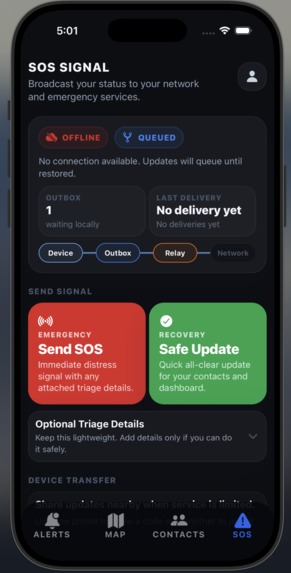
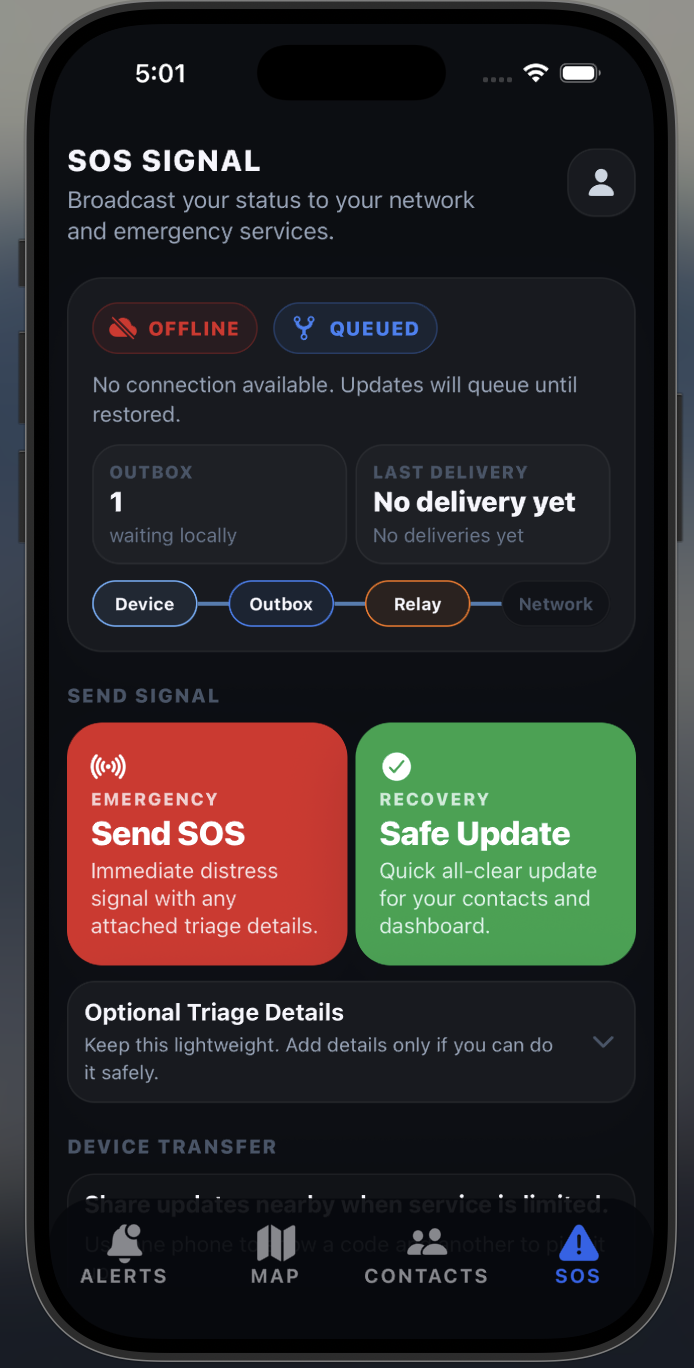
The action screen enables users to send updates, both online and offline.
-
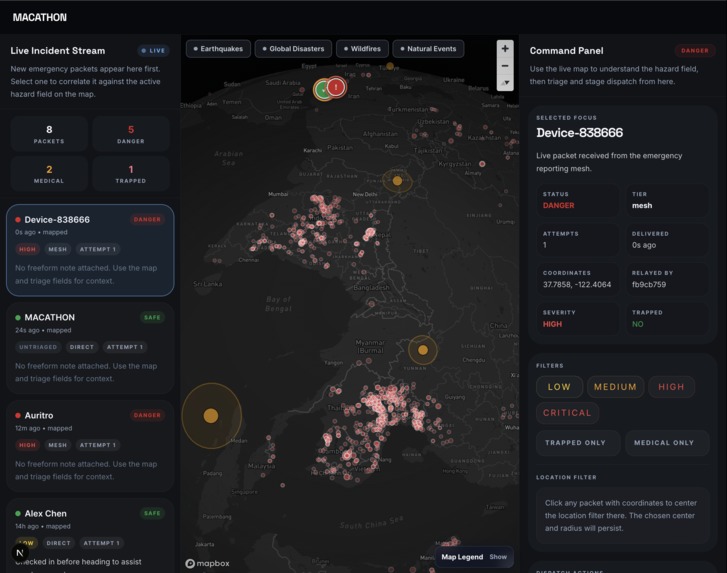
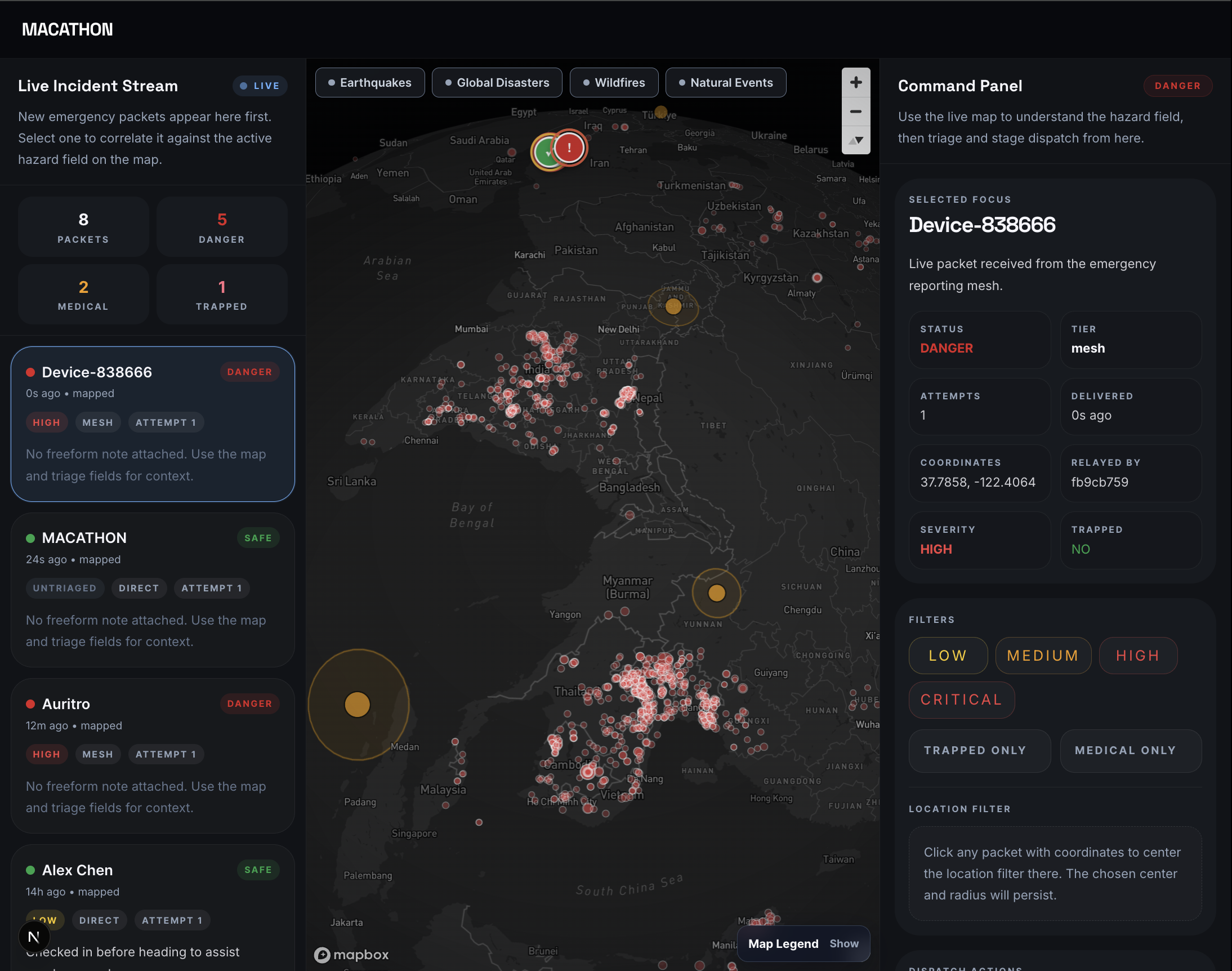
The command panel lets operators track reports, map hazards, and prioritise response.
-
CrisisMapr Logo
The Problem
In disasters, people face danger and uncertainty about whether their loved ones are safe. Communication often fails due to power outages and lost signal, making it difficult to reach others. Many rely on unreliable social media updates that lack personal relevance. During floods and typhoons, families can’t contact each other for days. Unfortunately, there is no reliable way to track loved ones, understand nearby risks, or seek help when it matters most.
The Solution
Our solution - CrisisMapr - enables users to view real-time disasters globally while tracking their loved ones on a map to see if they are within danger zones. Users can update their status as safe, in danger, or unreachable, allowing others to stay informed. The app provides a live summary of who is safe in real time and includes an SOS feature that can notify nearby users even without WiFi, helping coordinate support and emergency response when it matters most.
How we Built It
We built the system using TypeScript with React Native and Expo for the mobile app, and Next.js for the web dashboard. Data is stored locally using SQLite before syncing to Supabase with PostgreSQL. We integrated multiple disaster APIs such as USGS, NASA FIRMS, EONET, and GDACS to display real time hazard data. The app uses a store and forward model with offline capability, ensuring reports are delivered even with unstable connectivity.
Challenges
Initially, we explored common issues such as homelessness, women’s health tracking, financial management, and personal safety, but these felt overused or not personally meaningful. Drawing from our own experiences with floods in the Philippines and India, and bushfires in Australia, we shifted focus to disaster response. We faced challenges including false alerts, system reliability, fragmented emergency services, and network failures. These limitations forced us to rethink our approach, ultimately leading us to design a solution focused on supporting people directly affected during crises.
Built With
- apis
- expo.io
- next.js
- postgresql
- react-native
- sqlite
- supabase
- typescript


Log in or sign up for Devpost to join the conversation.