-
-
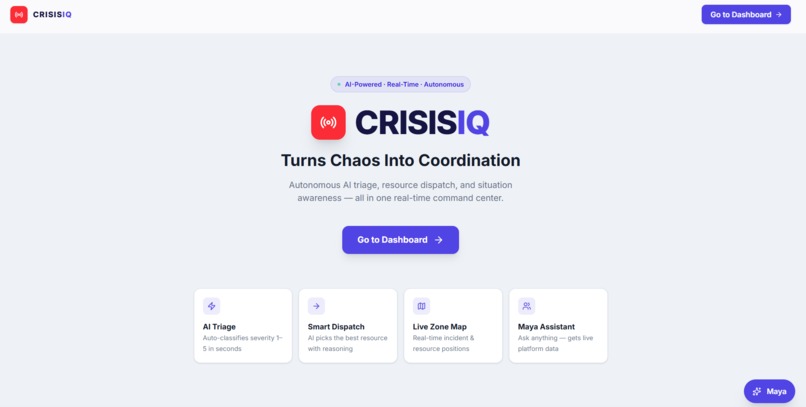
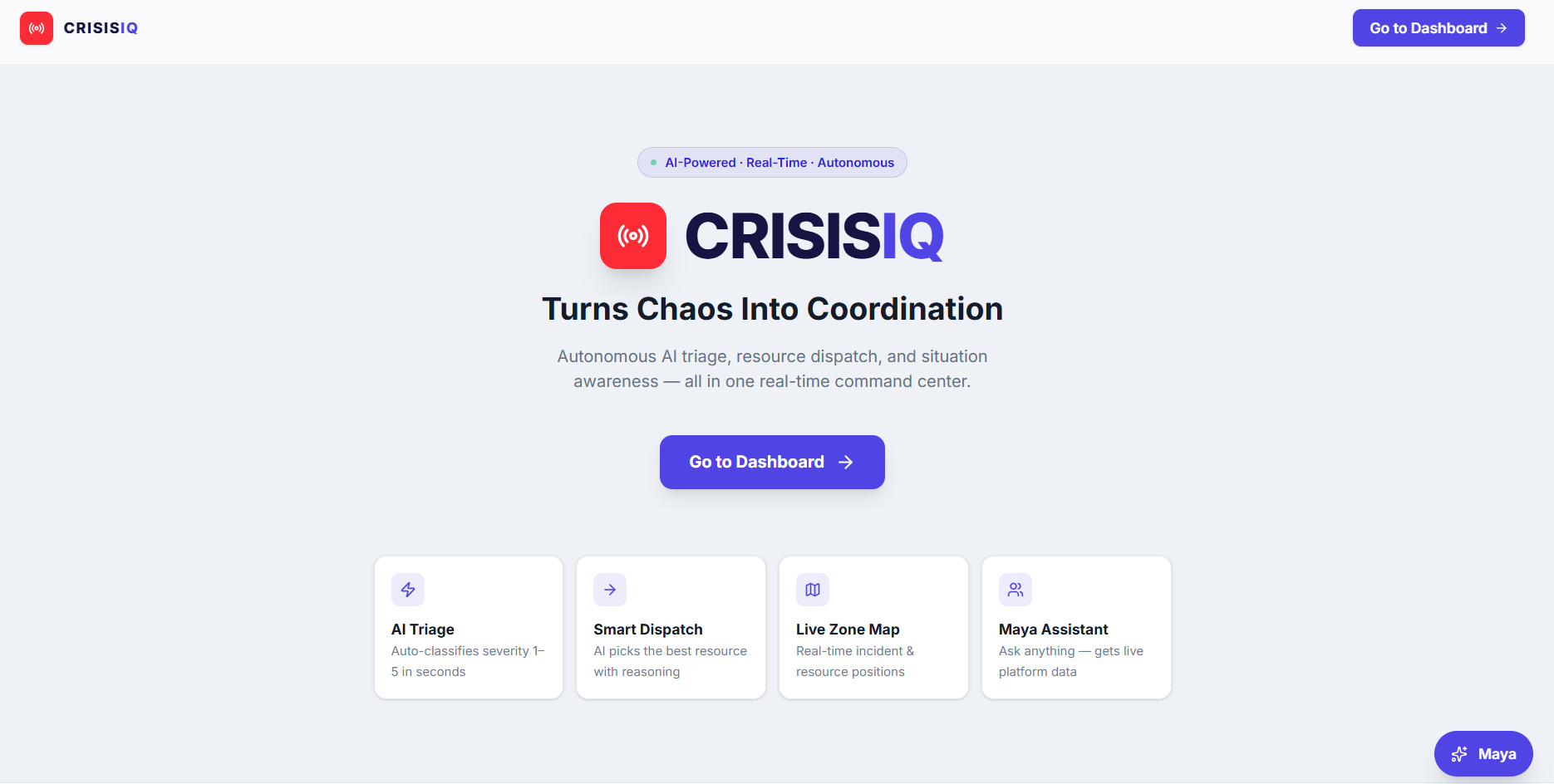
Landing Page - Modern and intuitive user interface designed for crisis management operations.
-
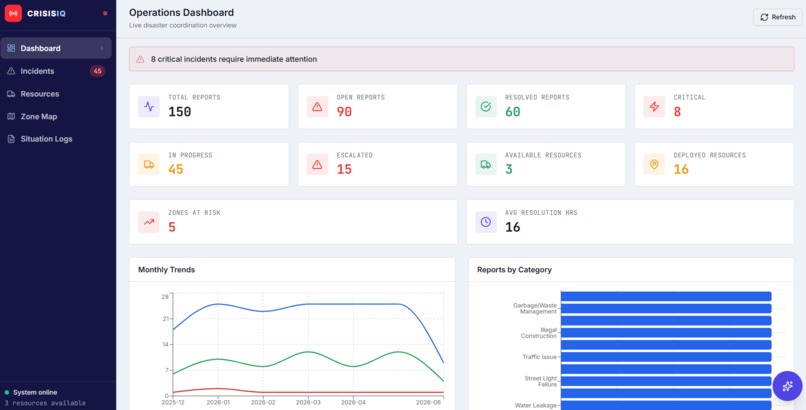
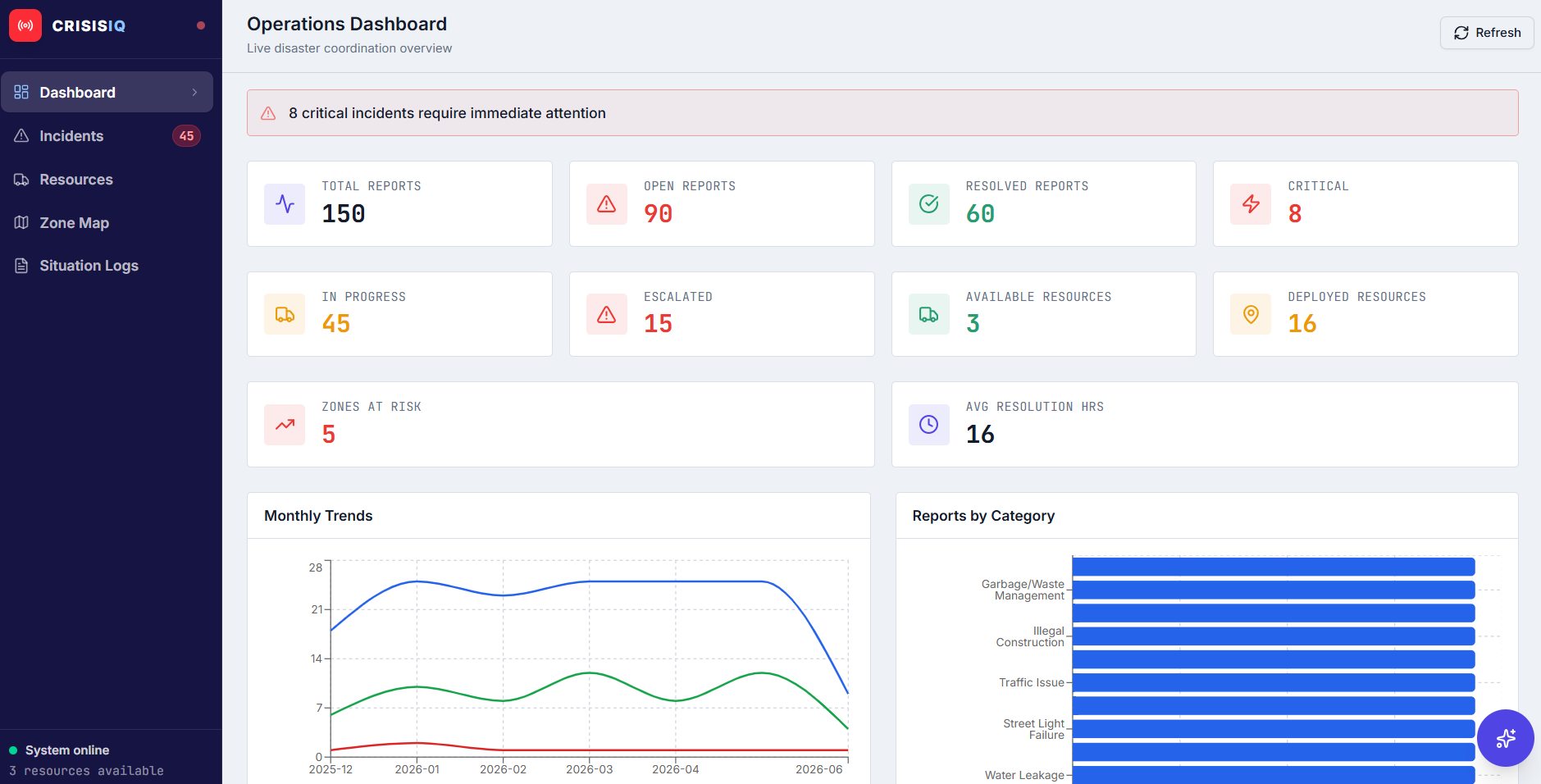
CRISISIQ Dashboard - Real-time overview of incidents, analytics, and operational metrics.
-
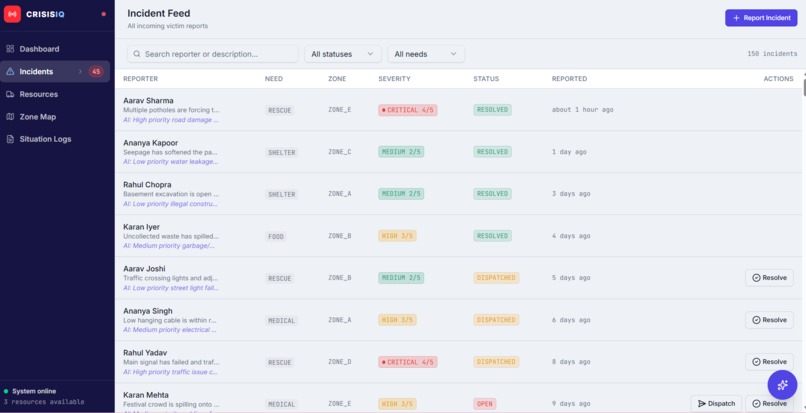
Reports Page - Comprehensive reporting interface for monitoring incidents and operational efficiency.
-
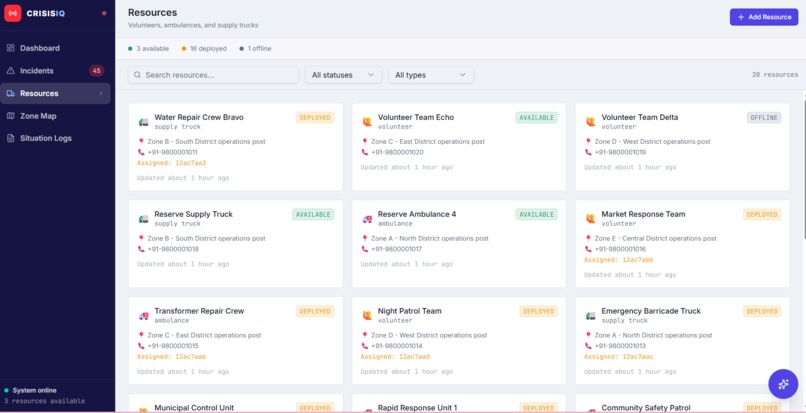
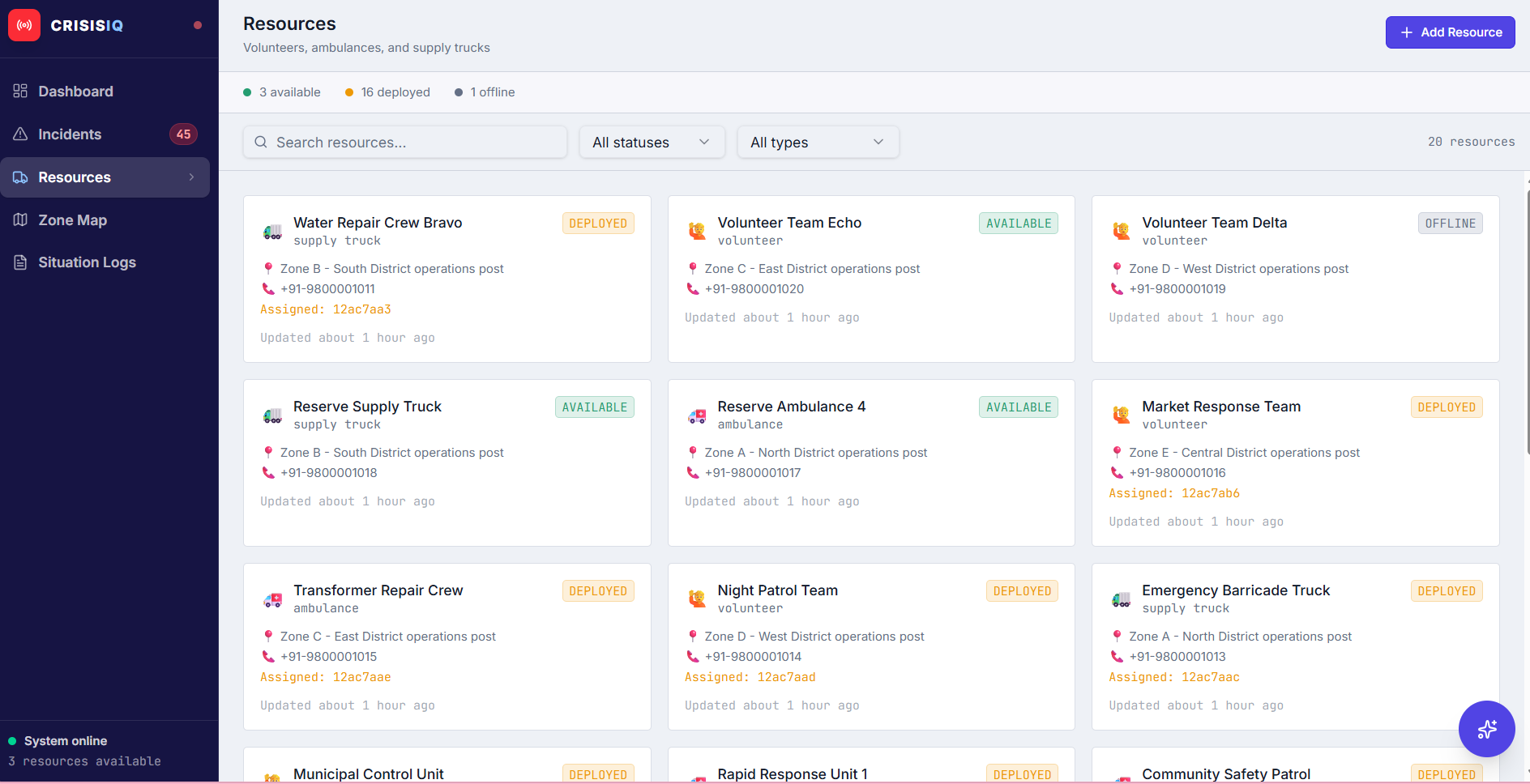
Resource Management- Resource monitoring and deployment management for emergency response teams.
-
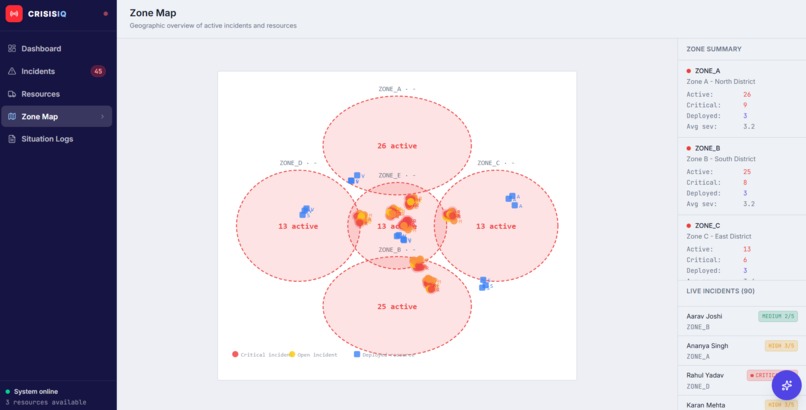
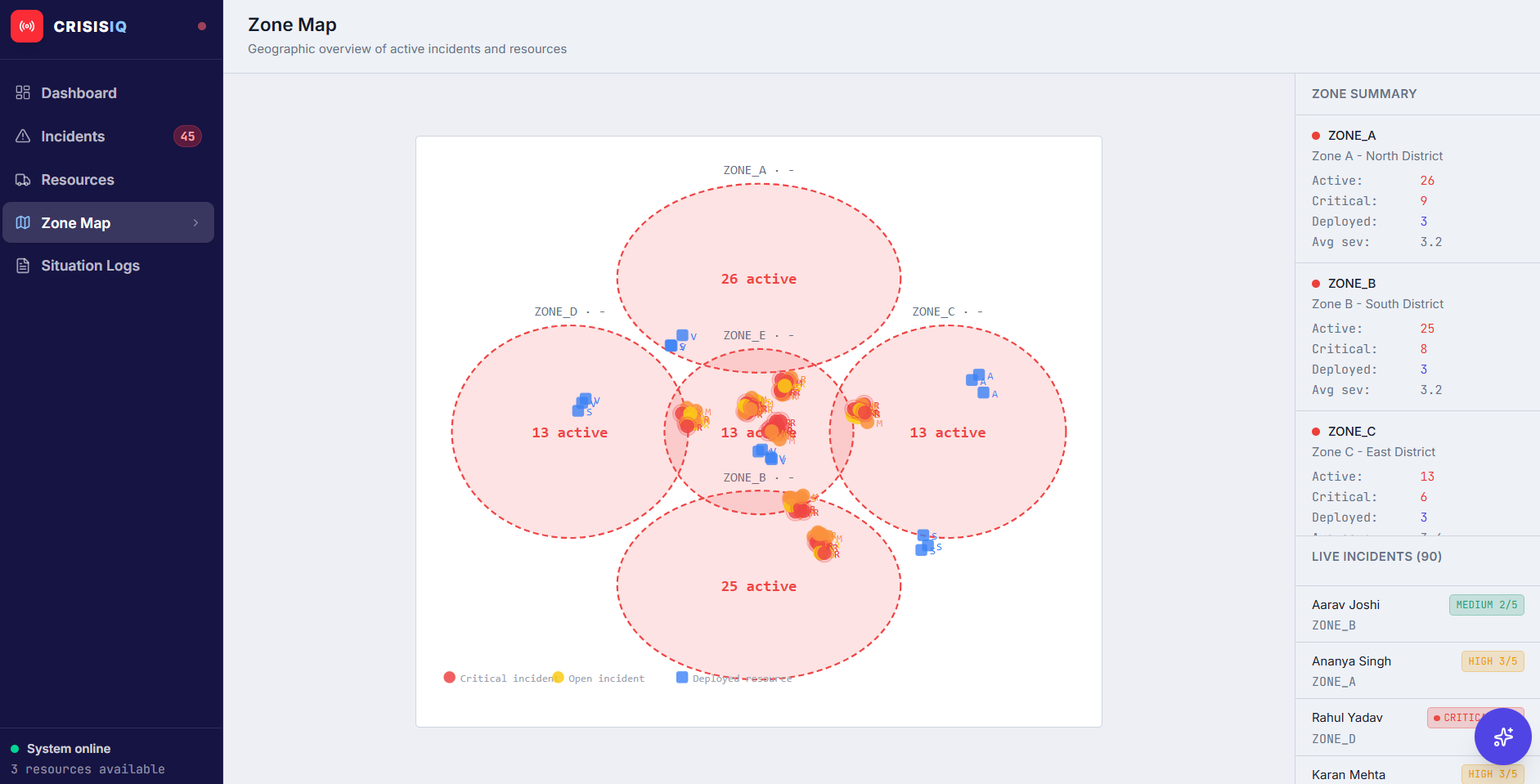
Heatmap / Map View - Geospatial visualization of incident hotspots for faster crisis response and resource allocation.
-
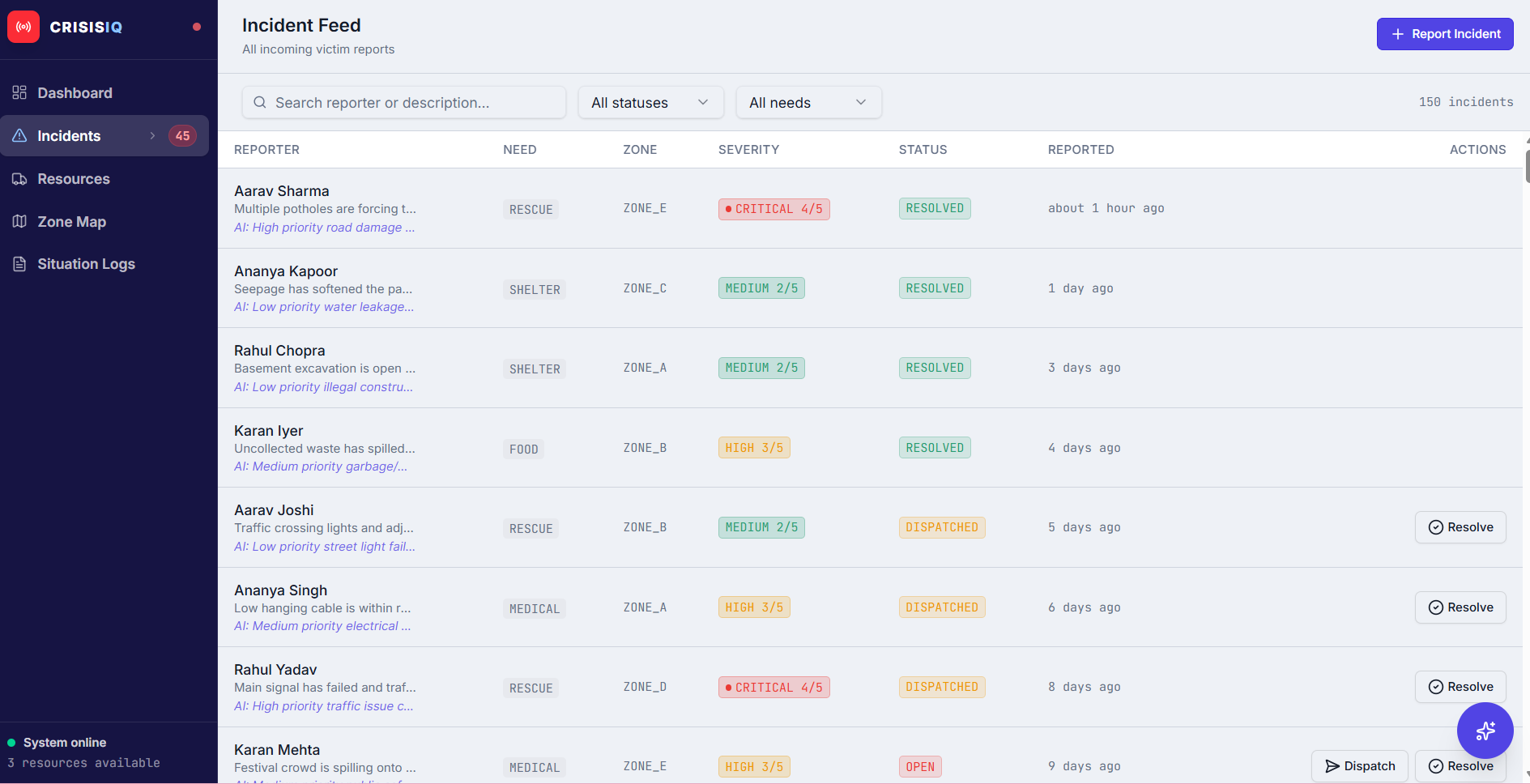
Incident Management- AI-powered incident reporting and tracking system with priority-based workflows.
Inspiration
Every year, disasters claim thousands of lives, not just because of their intensity, but because of coordination failure. During the 2023 Turkey earthquake, the 2024 Wayanad landslides in Kerala, and countless floods across South Asia, relief teams struggled with the same problems:
- Victims had no reliable way to signal their needs
- Volunteers and resources were misallocated
- No single system connected the dots in real time
We asked ourselves: What if an AI agent could be the coordination brain that disaster response has always needed?
That question became CrisisIQ.
What it does
CrisisIQ is an autonomous multi-step AI agent that manages disaster relief coordination end-to-end — without requiring constant human input.
It operates across 3 autonomous loops:
🆘 Loop 1 — Intake & Triage
- Victims submit location-tagged reports (food / medical / rescue / shelter)
- Gemini classifies severity (1–5) and clusters nearby incidents into zones
- All structured incident data is stored and indexed in MongoDB Atlas
🚑 Loop 2 — Resource Matching & Dispatch
- Agent queries available volunteers, ambulances, and supply trucks from MongoDB
- Gemini reasons: "Zone B has 8 critical medical cases, 2 ambulances available 4km away"
- Agent autonomously dispatches resources and updates assignment status in real time
📊 Loop 3 — Situation Awareness
- Live coordinator dashboard shows incidents, resources, and resolutions on a map
- Agent proactively alerts when a zone is critically understaffed
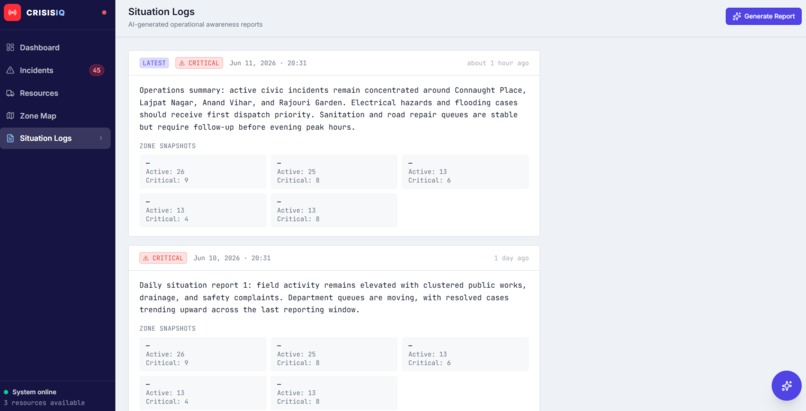
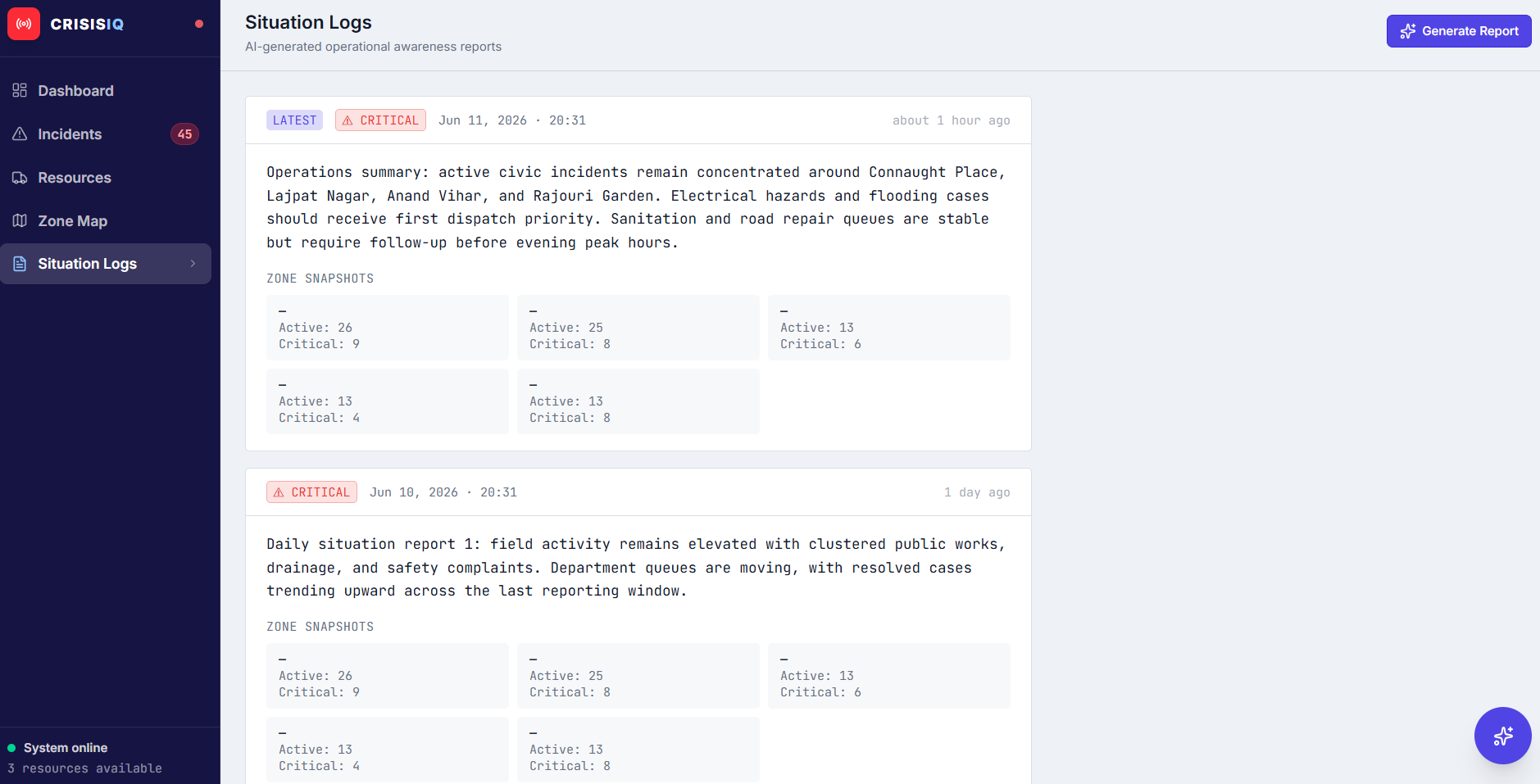
- Gemini generates plain-English situation reports every 30 minutes from aggregated MongoDB data
How we built it
| Layer | Technology |
|---|---|
| Agent Orchestration | Google Cloud Agent Builder |
| Reasoning Engine | Gemini 2.5 |
| Database + Partner MCP | MongoDB Atlas + MongoDB MCP Server |
| Frontend Dashboard | React + Leaflet.js |
| Hosting | Google Cloud Run |
The MongoDB MCP server is the backbone of the entire agent. Every decision the agent makes — triaging an incident, dispatching a resource, logging a resolution — is a live read/write operation through MCP tools. The agent uses 5 distinct MongoDB MCP tool calls:
insertIncident— logs incoming victim reportsqueryAvailableResources— finds nearest available relief unitsupdateAssignmentStatus— marks resources as deployedaggregateZoneStats— computes per-zone severity scoresgenerateSituationLog— stores Gemini-written situation reports
This is not MongoDB as passive storage — it is MongoDB as an active tool the agent wields to reason and act.
Challenges we ran into
1. Making the agent truly autonomous (not just a chatbot) The hardest part was designing agent flows where Gemini could make multi-step decisions without human prompting at every step. We had to carefully engineer tool chaining so the agent could: receive input → query context → reason → act → log — all in one uninterrupted flow.
2. Real-time data consistency With multiple incidents and resources updating simultaneously, keeping MongoDB state consistent while the agent was mid-decision required careful schema design and atomic update operations.
3. Keeping the UI calm under chaos The coordinator dashboard needed to surface critical information instantly without overwhelming the user. Balancing information density with clarity took several design iterations.
Accomplishments that we're proud of
- ✅ Built a genuinely agentic system — the agent acts, not just answers
- ✅ End-to-end autonomous loop from victim report → resource dispatch → resolution
- ✅ Meaningful, multi-tool MongoDB MCP integration at the core of every decision
- ✅ Gemini-generated situation reports that read as if they came from a trained emergency coordinator
- ✅ Demoed a full disaster scenario resolved in under 4 minutes with zero manual coordination
What we learned
- Agent design is hard. Chaining LLM reasoning with live database operations requires far more careful prompt engineering than building a standard chatbot.
- MongoDB MCP unlocks a new paradigm — treating a database not as a passive store but as a set of agent-callable tools fundamentally changes how you architect AI systems.
- Impact-driven projects build themselves faster. When the problem is real and urgent, every technical decision has a clear answer.
What's next for CrisisIQ - AI Agent for Disaster Response
- 🌍 Multi-language support — critical for deployment across India, Southeast Asia and Africa, where disaster risk is highest
- 📱 SMS/WhatsApp intake — so victims without smartphones or internet can still submit reports via basic text
- 🤝 NGO & government API integrations — connect directly with NDRF, Red Cross, and municipal systems
- 📡 Offline-first edge mode — a lightweight agent variant that works on low-bandwidth disaster-zone networks
- 🔮 Predictive risk scoring — use historical MongoDB data + weather APIs to predict high-risk zones before a disaster strikes
CrisisIQ is not just a hackathon project. It is a blueprint for how AI agents can save lives at scale.
Built With
- express.js
- gemini-ai
- mongodb
- node.js
- react
- tailwind-css
- typescript

Log in or sign up for Devpost to join the conversation.