-
-
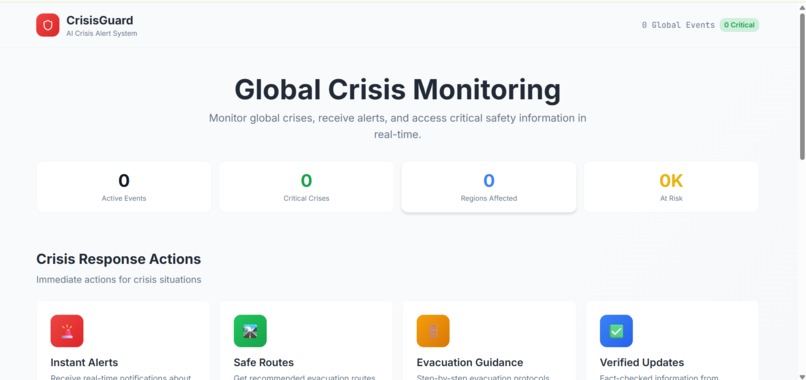
landing page
-
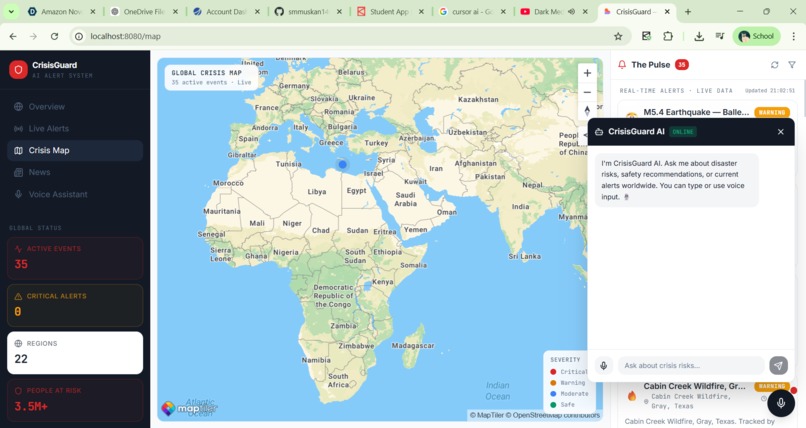
map + chat page
-
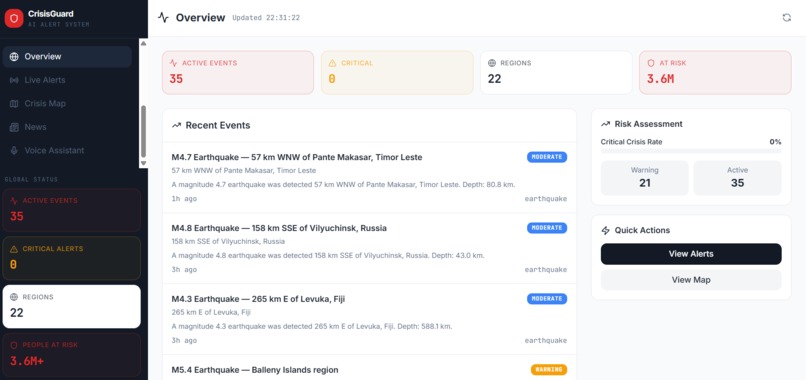
overview page
-
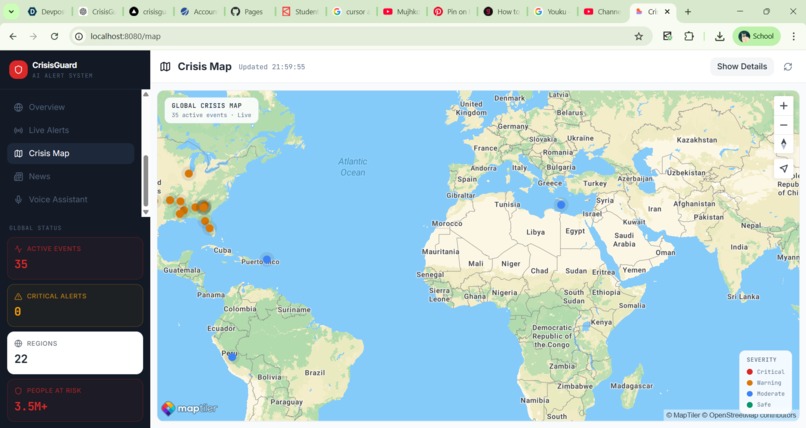
map page
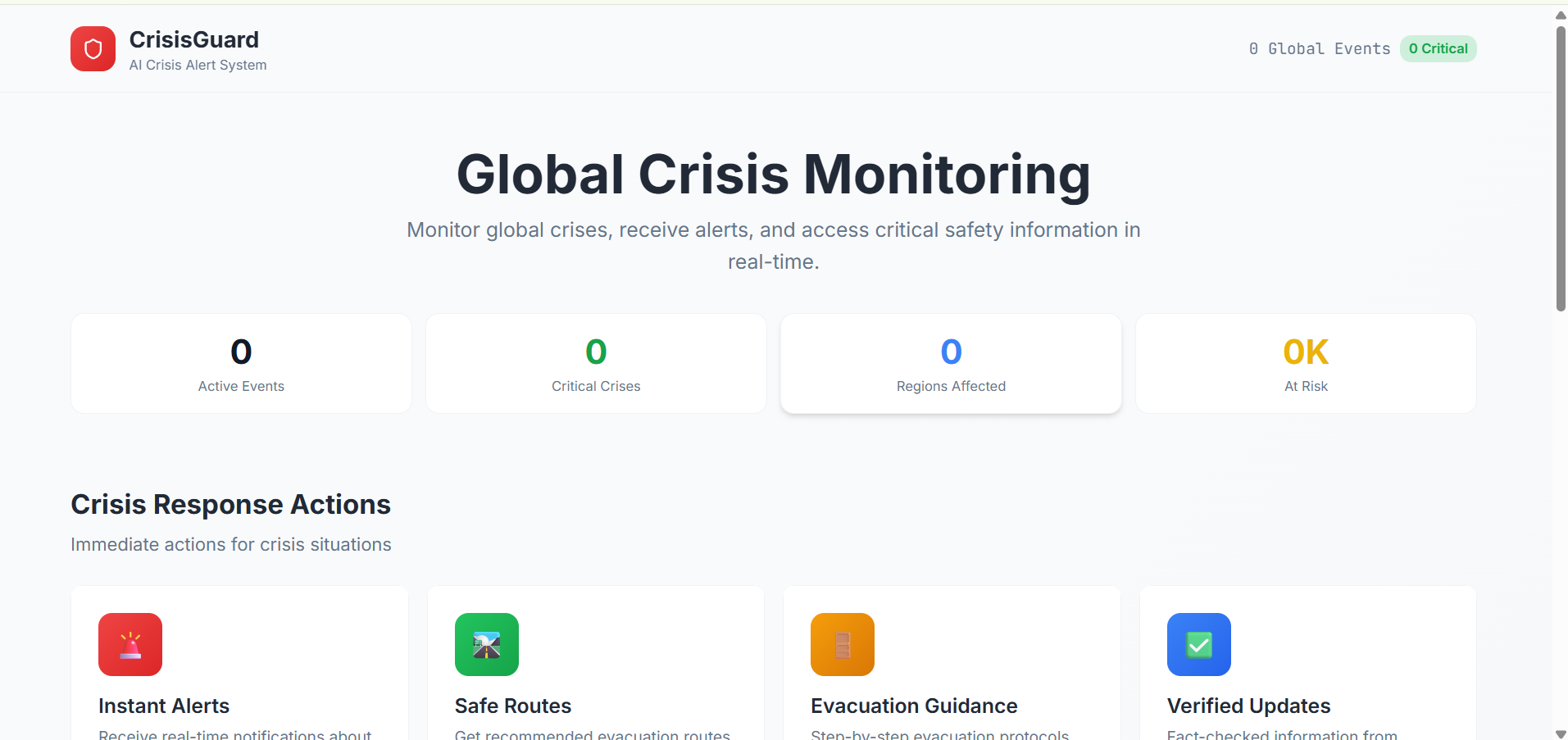
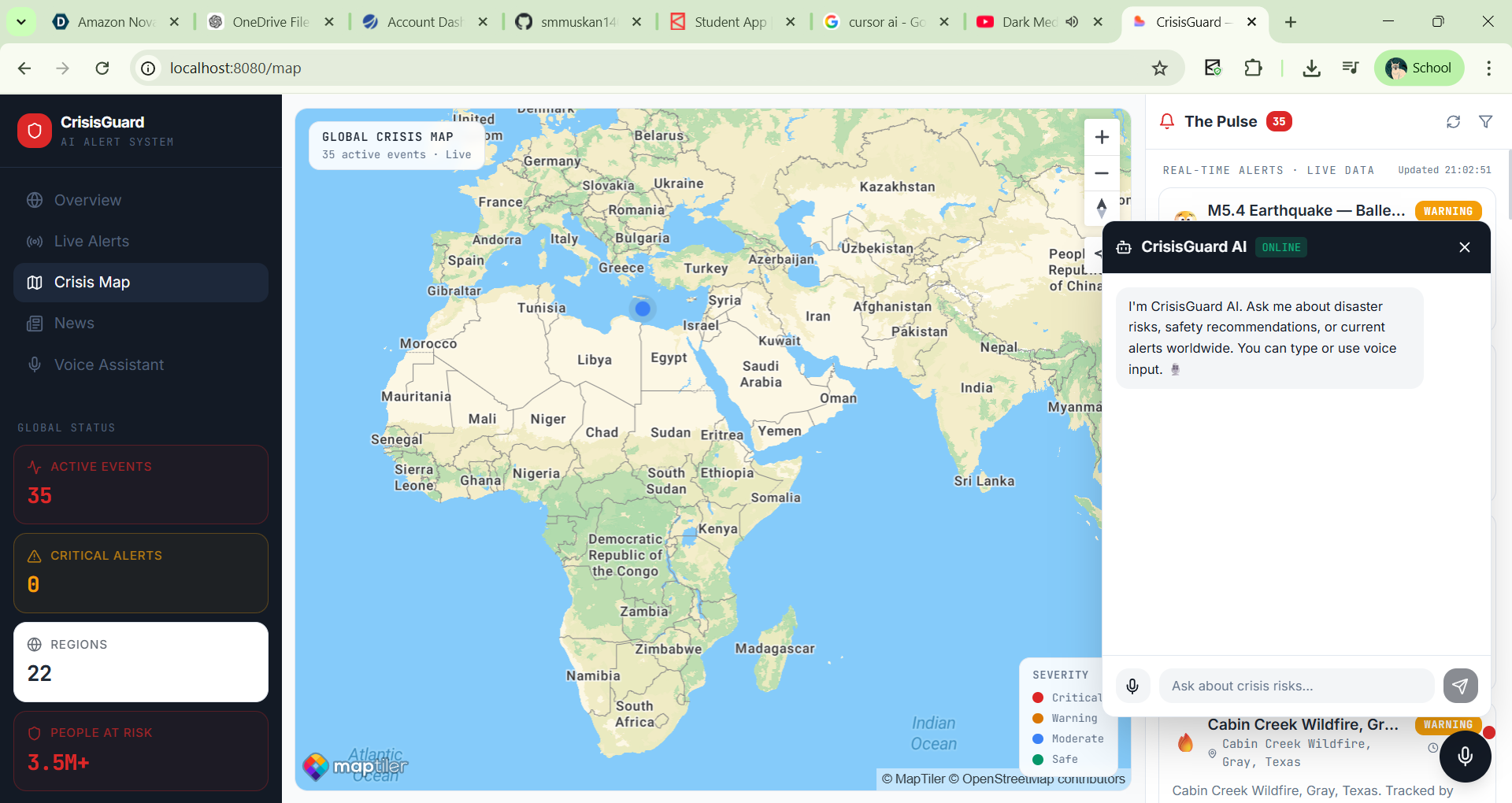
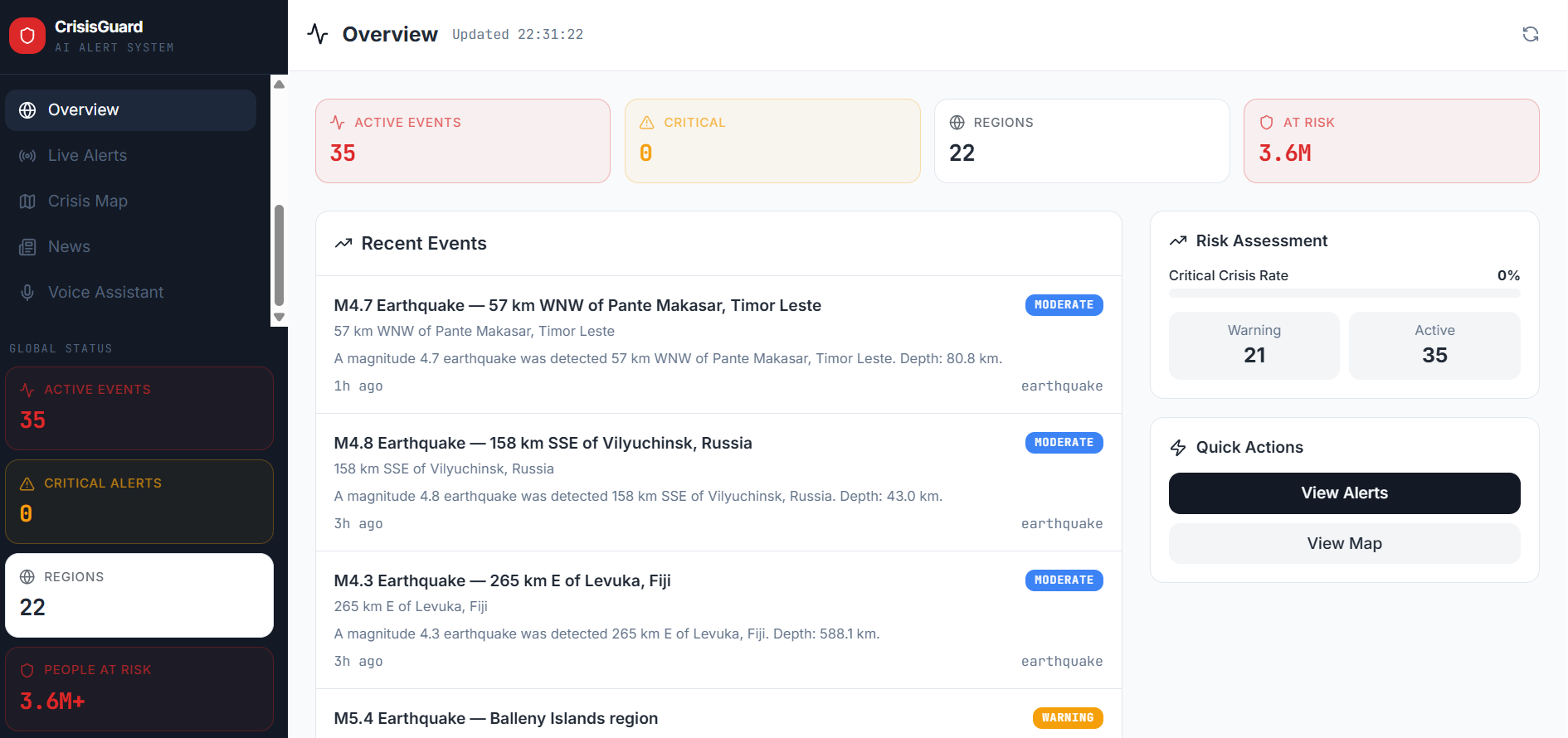
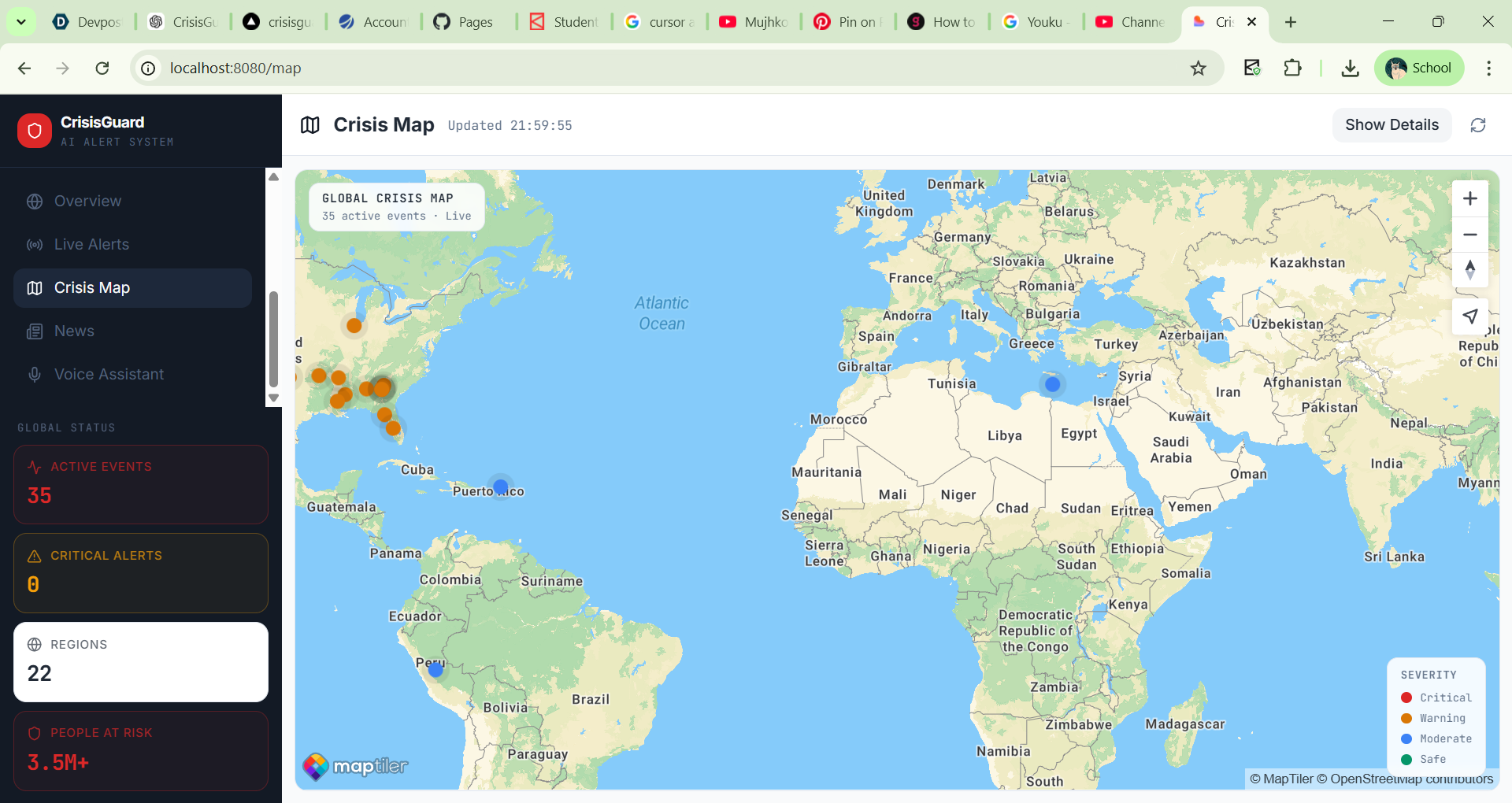
Inspiration
In many global crises—wars, terrorist attacks, natural disasters, or sudden conflicts—people often receive information too late. News channels take time to verify and broadcast events, and by the time warnings reach civilians, valuable time has already been lost. We wanted to build a system that detects danger faster than traditional news and alerts people instantly. CrisisGuard was inspired by the idea that early information can save lives. Travelers, journalists, humanitarian workers, and civilians all need real-time awareness of dangerous situations around them. Our goal was to create a platform that monitors global crisis signals and sends early alerts to users, helping them stay safe and make informed decisions.
What it does
CrisisGuard is an AI-powered global crisis monitoring and alert platform that detects wars, disasters, and dangerous events in real time. The system collects information from news APIs, global data sources, and geolocation services, then uses AI to analyze the information and determine whether a crisis is emerging. Key features include:
Real-time global crisis alerts Location-based warnings Live news and conflict updates Early warning notifications Interactive map showing danger zones Safety information and evacuation guidance
How I built it
We built CrisisGuard using modern web technologies and AI-powered services. The frontend interface provides a simple dashboard where users can view crisis alerts and map-based danger zones. The backend processes incoming data from APIs and analyzes it using AI models to detect potential threats. Main components include: Frontend: React + TypeScript UI Framework: Tailwind / ShadCN Backend: Serverless API functions Maps: Google Maps API Data Sources: News APIs for real-time global updates. Database: Cloud-based storage for alerts and user data
Challenges I ran into
Building a real-time crisis detection system presented several challenges. One major challenge was filtering reliable information. Many sources report breaking events at different speeds, so ensuring that alerts are accurate and meaningful required careful data processing. Another challenge was designing a system that avoids false alarms while still providing early warnings. Integrating multiple APIs and displaying the information in a clear and useful way for users was also a key technical challenge.
Accomplishments that I'am proud of
Building a working AI-powered crisis alert system Integrating real-time global data sources Creating a map-based visualization of crisis zones Designing a platform that could potentially help people stay safe during emergencies
What I learned
How to integrate AI services into real-time applications How to work with multiple external APIs How to build location-aware alert systems The importance of reliable data sources in crisis detection
What's next for CrisisGuard
Satellite and disaster monitoring data Advanced AI crisis prediction models Mobile app notifications Crowdsourced reports from users Offline alerts for low connectivity areas.

Log in or sign up for Devpost to join the conversation.