-
-
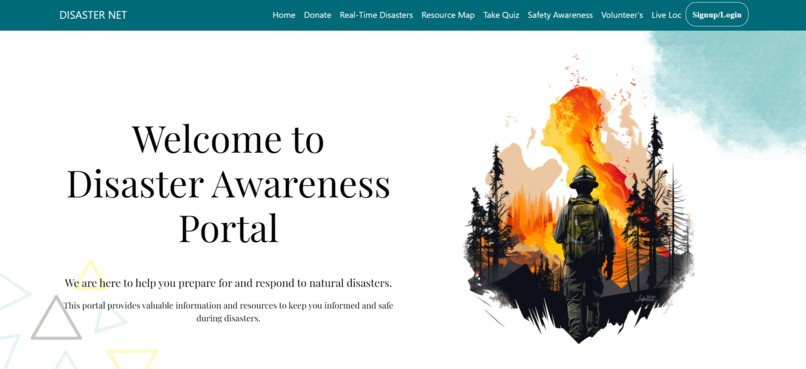
Landing Page
-
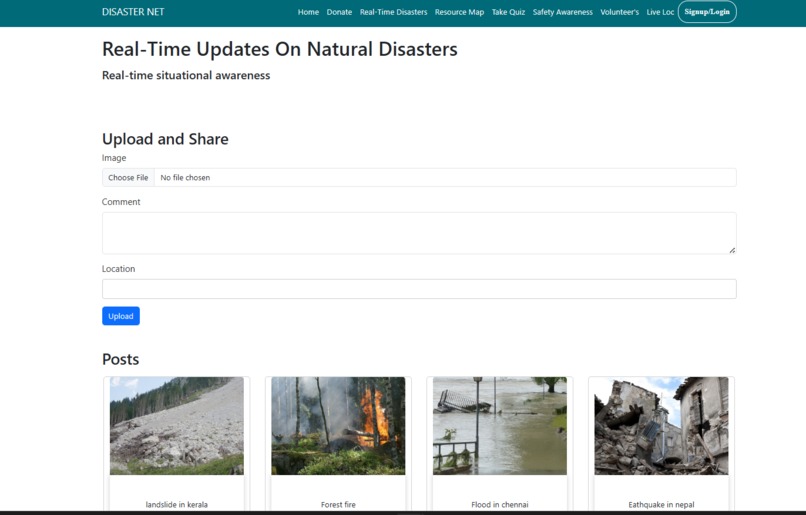
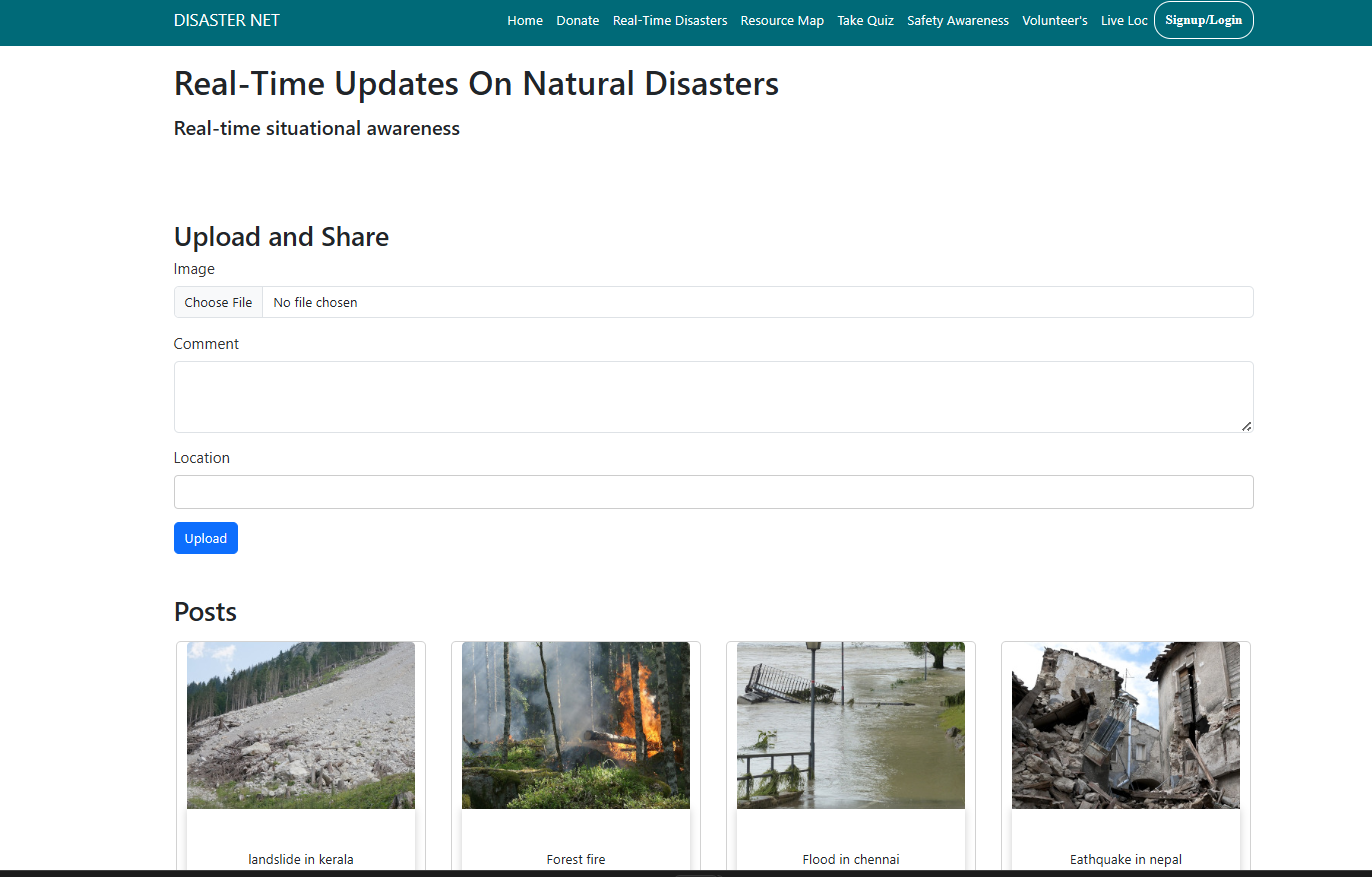
Real Time Updates
-
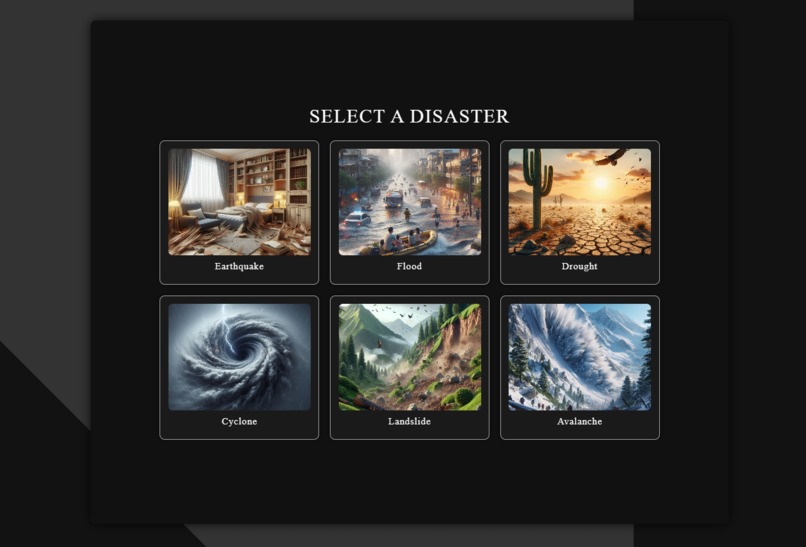
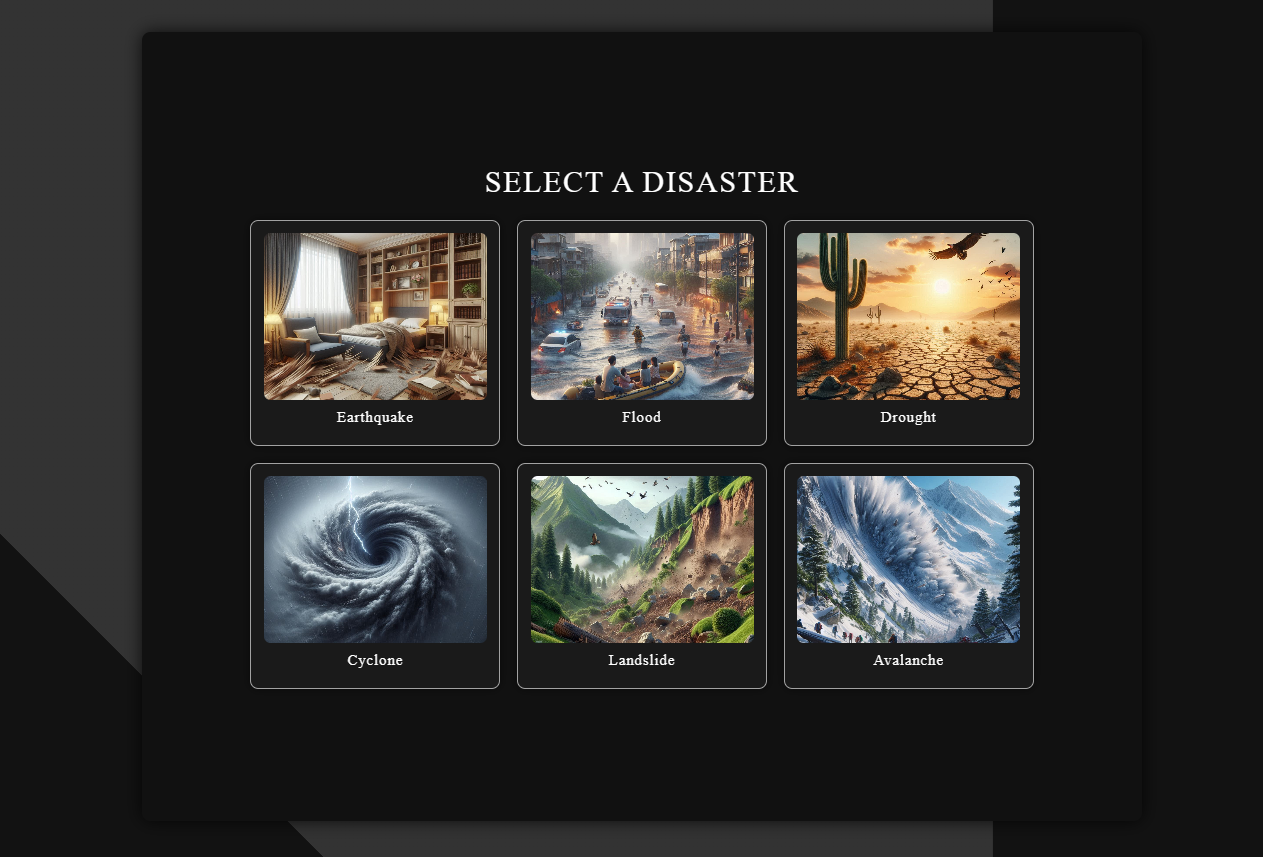
Gamified Learning
-
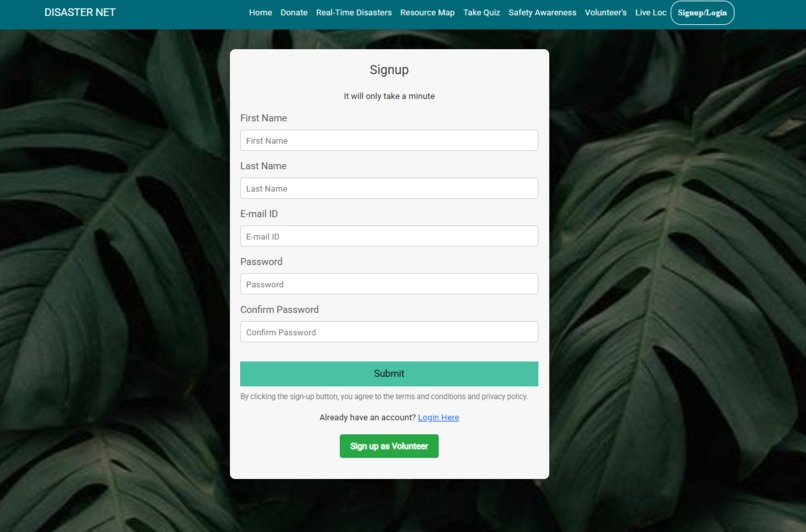
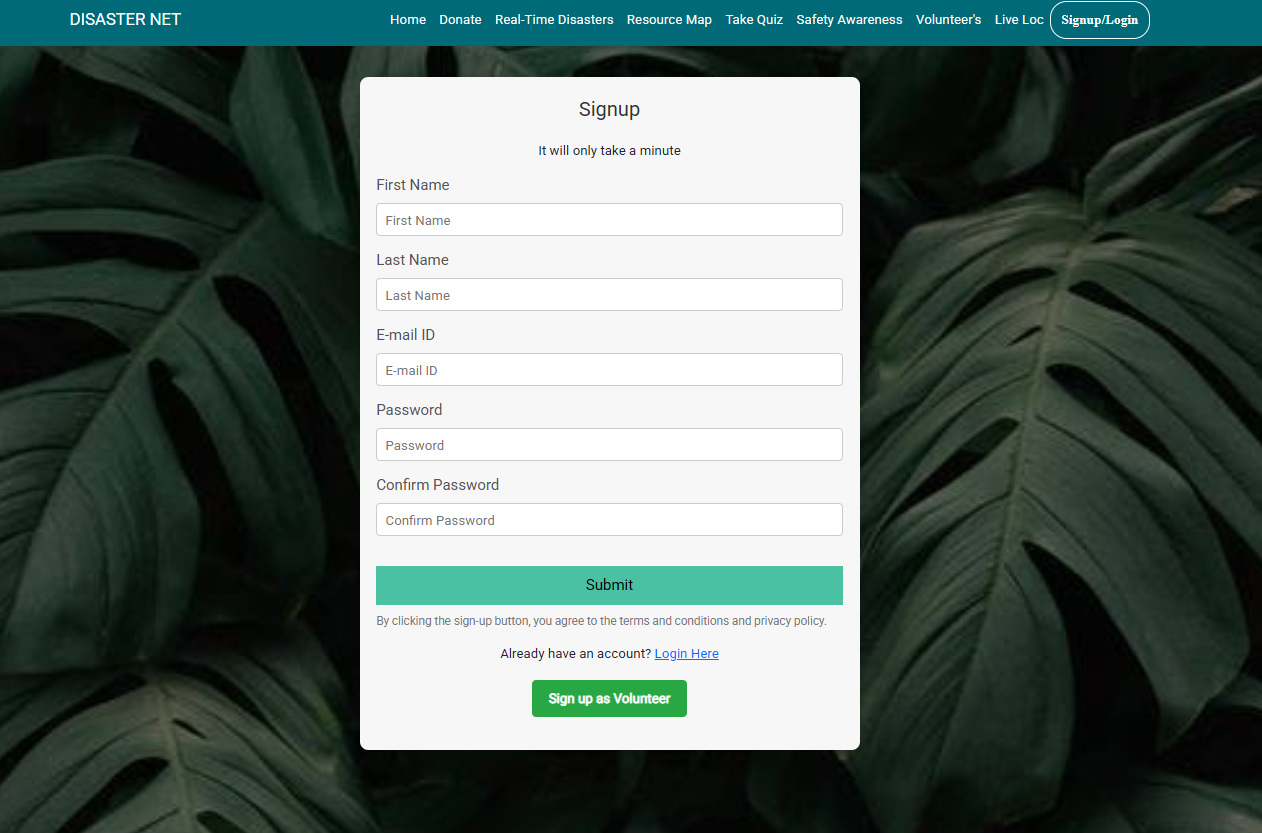
SignUp & Login
-
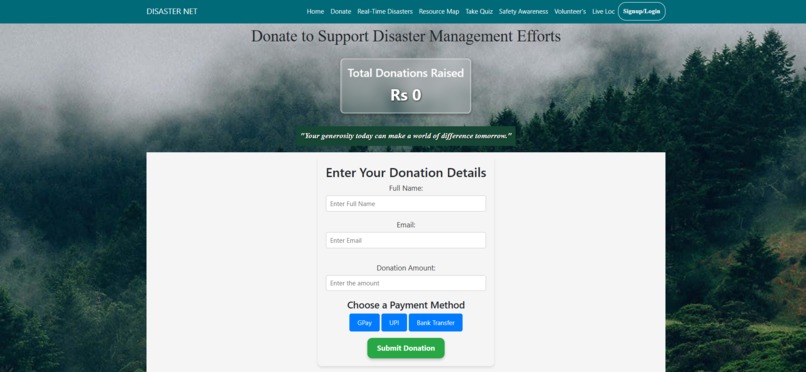
Donation Page
-
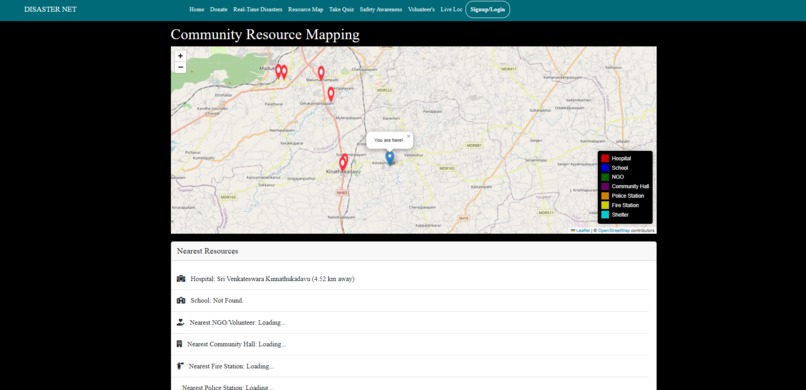
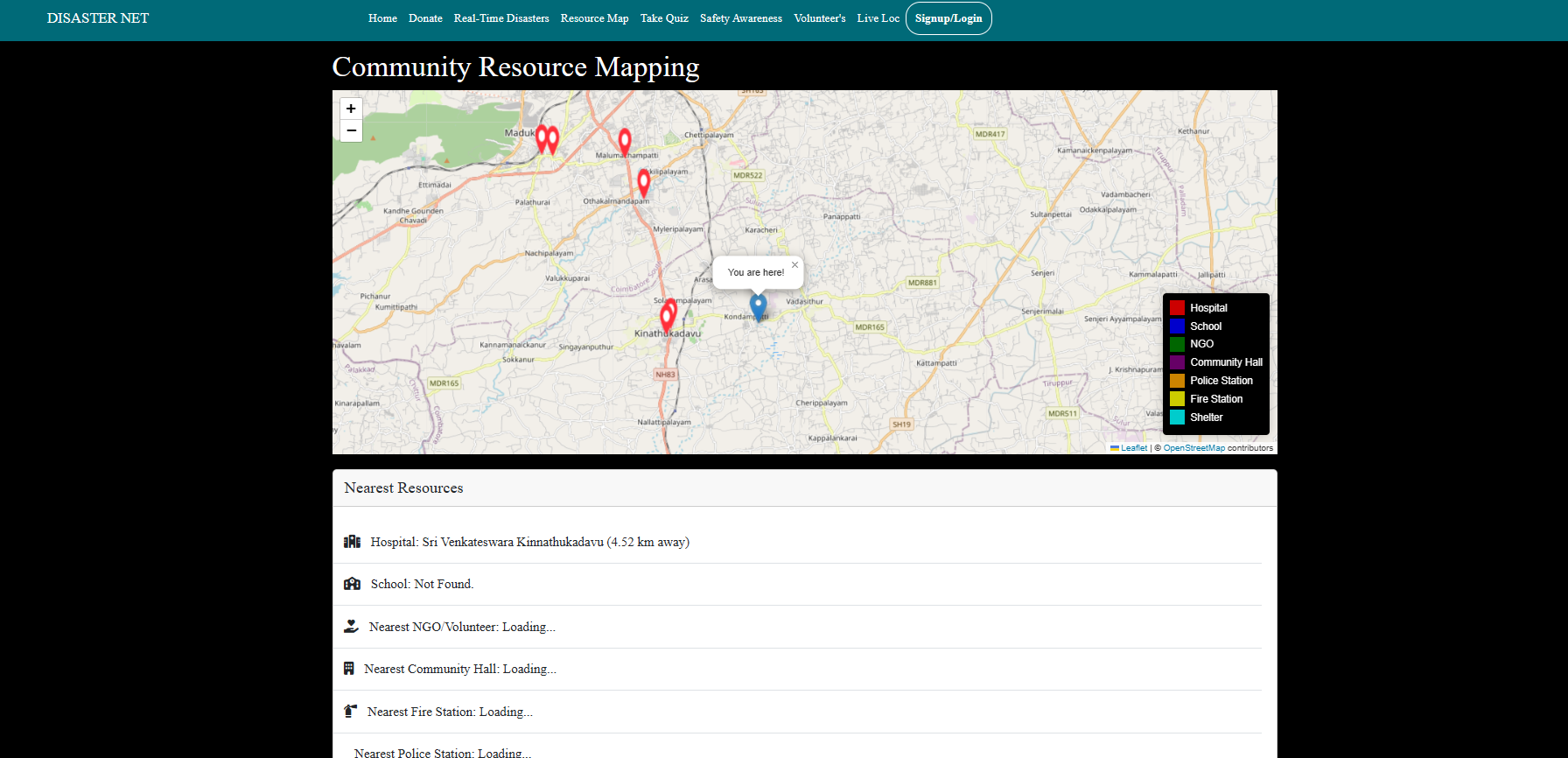
Resource Map


🌍 Inspiration
During recent floods and earthquakes, we saw how slow communication, fragmented tools, and delayed response cost lives. We wanted to build something that unites citizens, volunteers, and authorities on one platform.
That idea became DisasterNet — a solution to make disaster management faster, smarter, and more connected through technology.
🚨 What it does
DisasterNet is a web and mobile platform that:
- Enables real-time incident reporting from users during crises.
- Maps available community resources like shelters and hospitals.
- Coordinates volunteer efforts based on location and skills.
- Supports transparent crowdfunding for verified disaster relief.
- Uses AI-driven predictions to forecast resource and volunteer needs.
Together, these features help authorities and citizens respond quickly and effectively, saving lives and reducing damage.
🧠 How we built it
We designed DisasterNet as a scalable, cloud-based system with five main components:
- Frontend: HTML, CSS, JavaScript, and Bootstrap for a responsive, user-friendly UI.
- Backend: Node.js and Express for APIs, authentication, and data management.
- Database: MongoDB for dynamic and flexible storage of incidents and resources.
- Machine Learning: Predictive models trained on past disaster data to estimate needs.
- Deployment: AWS / Google Cloud for real-time performance and scalability.
Example predictive formula used for resource estimation:
$$
R_t = \alpha D_t + \beta V_t + \gamma P_t
$$
where (R_t) = required resources, (D_t) = disaster severity, (V_t) = volunteer availability, (P_t) = population density.
⚙️ Challenges we ran into
- Handling real-time data updates from multiple users simultaneously.
- Ensuring trust and transparency in crowdfunding modules.
- Maintaining system performance during peak traffic in emergencies.
- Designing an interface that remains clear and accessible under stress.
🏆 Accomplishments that we're proud of
- Built a fully integrated disaster management platform from scratch.
- Created a predictive AI model that improves decision-making in emergencies.
- Designed a user-friendly interface usable by both citizens and officials.
- Won the Internal SIH Hackathon and participated in the Regional Level SIH.
- Received appreciation in the SAP Hackathon for innovation and impact.
- Contributed toward UN Sustainable Development Goal 11 — Sustainable Cities and Communities.
📚 What we learned
We learned that:
- Community-driven data can drastically improve disaster response.
- Scalable cloud systems are vital for handling real-time crises.
- Collaboration and testing are key to ensuring reliability under pressure.
- Building for accessibility and simplicity saves lives when seconds count.
🚀 What's next for DisasterNet
- Integrate multilingual support to reach global users.
- Partner with government and NGOs for real-world deployments.
- Add IoT and satellite data integration for faster detection.
- Launch mobile-first enhancements for rural and low-bandwidth areas.
- Continue refining AI models for predictive and preventive disaster analytics.


Log in or sign up for Devpost to join the conversation.