Inspiration
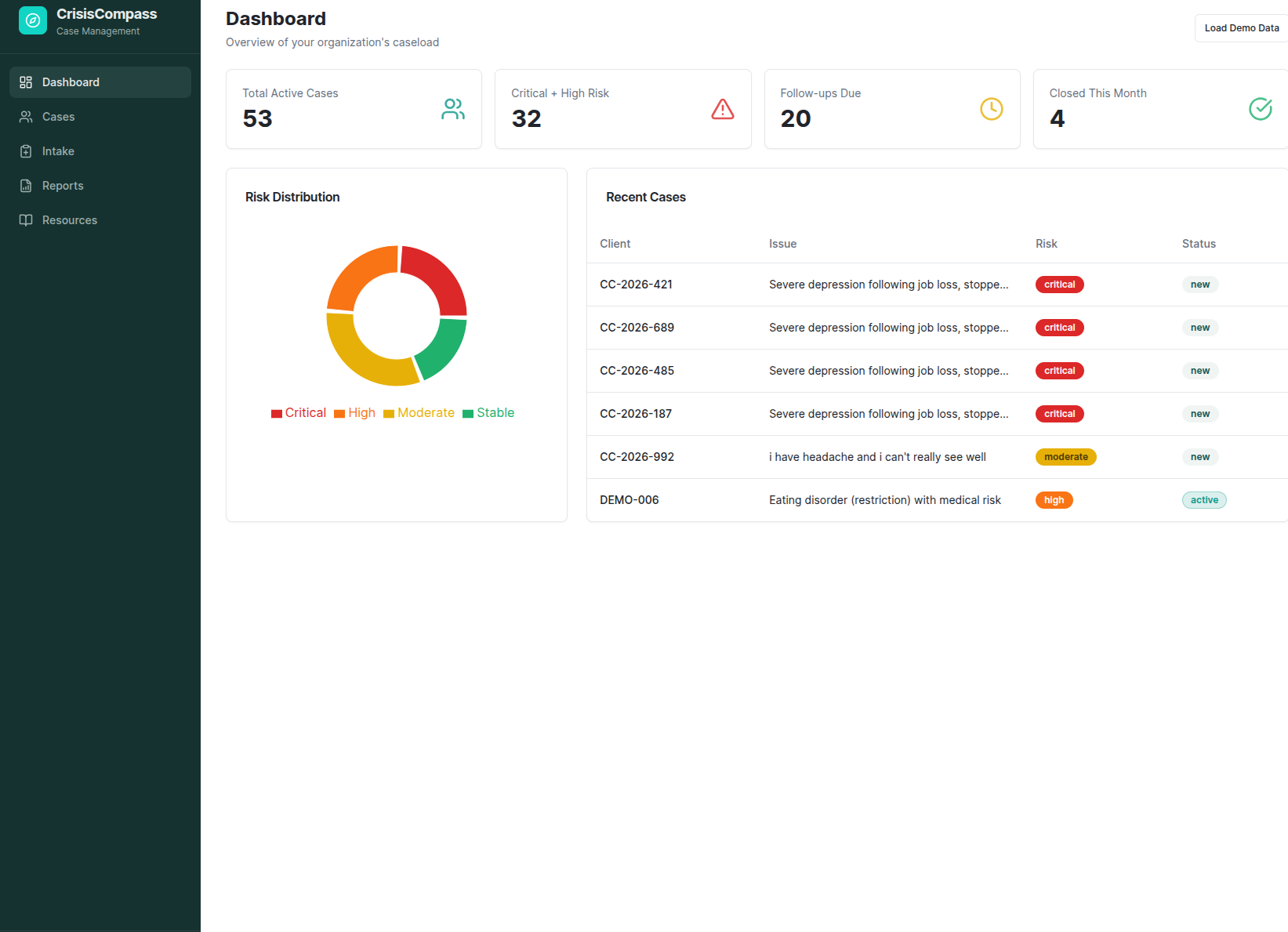
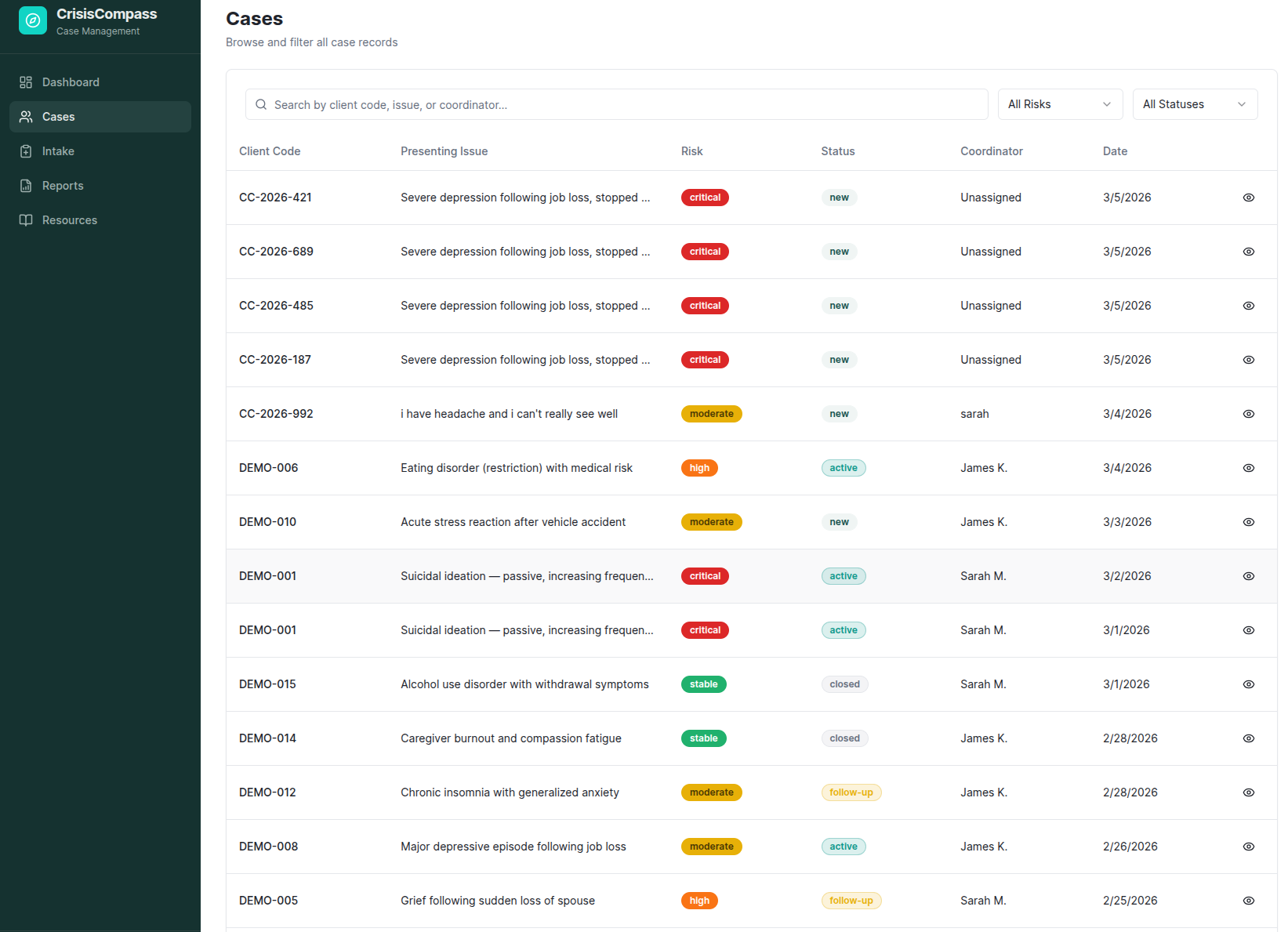
Mental health organizations are on the front lines of a global crisis — yet they are managing hundreds of vulnerable clients using spreadsheets, paper forms, and email threads. We kept asking: why does every AI tool built for mental health target the patient, but nobody builds for the coordinator doing the work?
That gap was our inspiration. We wanted to build the tool that a 5-person NGO team could pick up today and immediately save hours of work — redirecting that time back to the people who need help.
What We Learned
- How to architect a full AI-powered workflow using Groq's ultra-fast inference API with Llama 3.3 70B for real-time clinical decision support
- How to design for non-technical users — coordinators are not developers, so every interaction had to be intuitive and forgiving
- That the most impactful AI applications are not the most complex ones — they are the ones that solve a genuine, painful, daily problem for real people
How We Built It
We built CrisisCompass in under a week as a two-person team:
- Frontend: React + TypeScript, scaffolded rapidly with Lovable.dev then extended manually with full Supabase and Groq integration
- Database: Supabase (PostgreSQL) for real-time case data, authentication, and row-level security
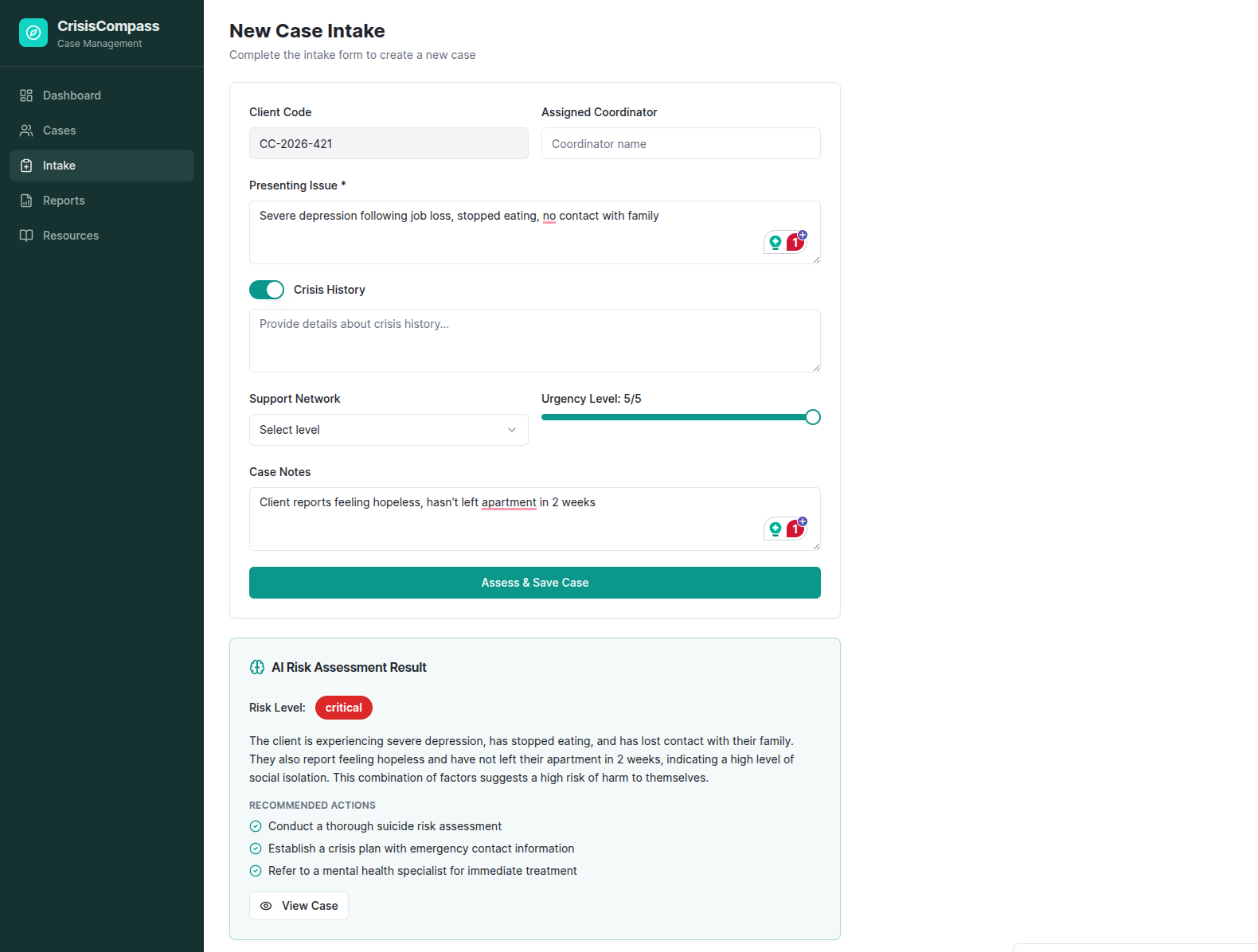
- AI Engine: Groq API with Llama 3.3 70B for three core features — risk scoring on intake, note summarization, and funder report generation
- Hosting: Vercel with automatic GitHub deployment
The AI layer works by sending structured intake data to Llama 3.3 via Groq and instructing it to return only valid JSON — risk level, clinical rationale, recommended actions, and follow-up timeline. This makes the output reliable, parseable, and immediately actionable for coordinators.
Challenges We Faced
- Prompt reliability: Getting the LLM to return consistent, parseable JSON every time required careful prompt engineering and robust markdown-stripping before parsing
- Scope control: There were many features we wanted to build — we had to ruthlessly prioritize the five that would create the most impact in the time available
- UX for non-developers: Designing an interface that feels as simple as a spreadsheet but as powerful as a clinical tool was harder than the technical implementation
- Free stack constraints: Building a fully functional, deployed, AI-powered product entirely on free tiers (Supabase, Groq, Vercel) required creative architecture decisions at every layer
Built With
- groq
- llama-3.3-70b
- lovable
- postgresql
- react
- recharts
- supabase
- typescript
- vercel


Log in or sign up for Devpost to join the conversation.