
Why We Built CrisisCompass
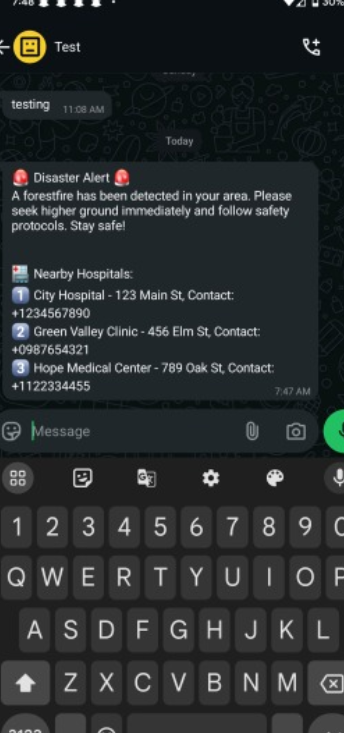
When disasters happen, people need fast and clear information. But too often, emergency alerts are slow, confusing, or missing important details. We created CrisisCompass to fix this. Our platform gives real-time disaster tracking and instant alerts through WhatsApp and voice calls. With AI-driven notifications, we make sure people get the information they need, when they need it. We use Oracle APEX for secure data storage and Twilio API for instant communication, bridging the gap between emergency services and those in danger.
What CrisisCompass Does
CrisisCompass helps people stay safe during emergencies by providing:
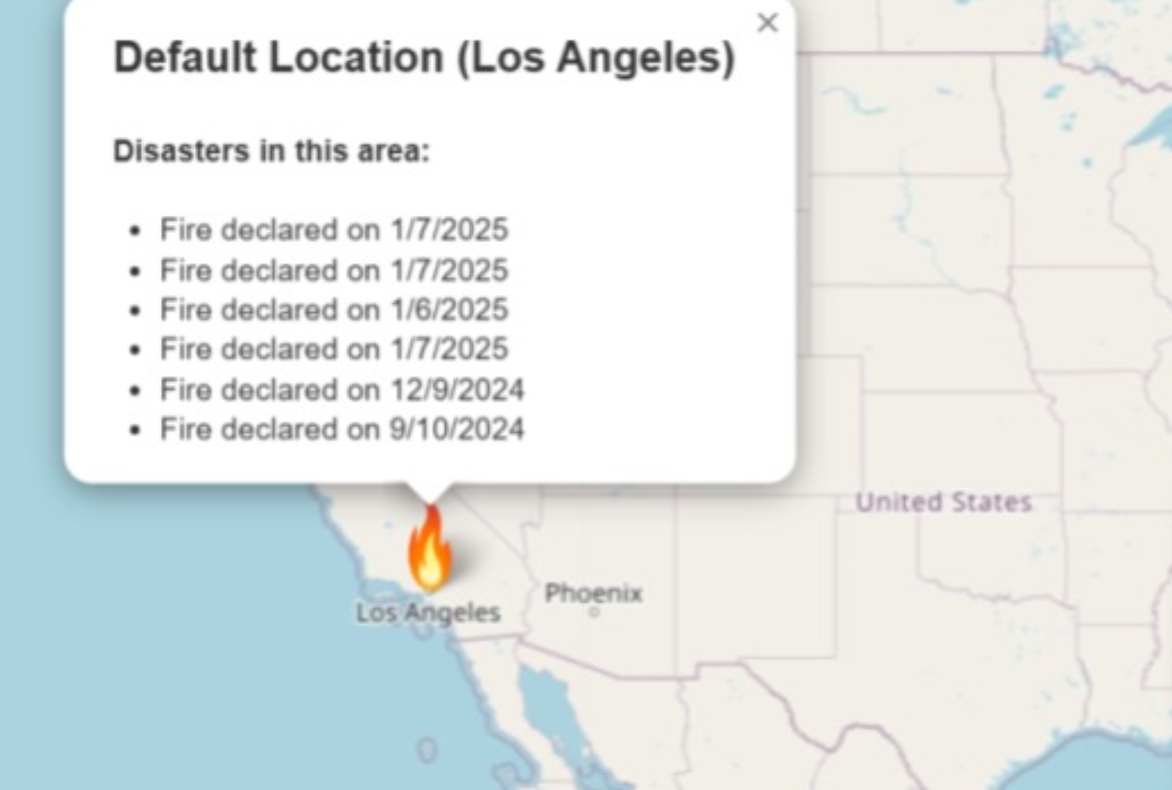
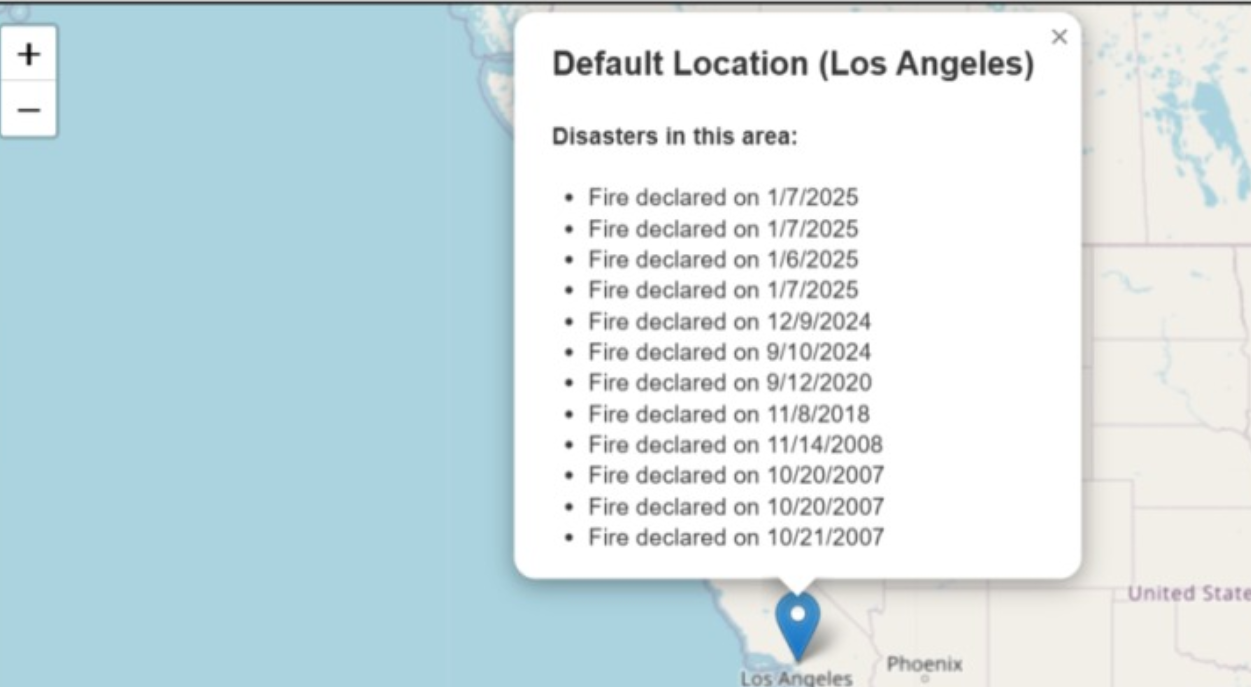
- Live Disaster Map – See real-time disaster locations based on where you are.
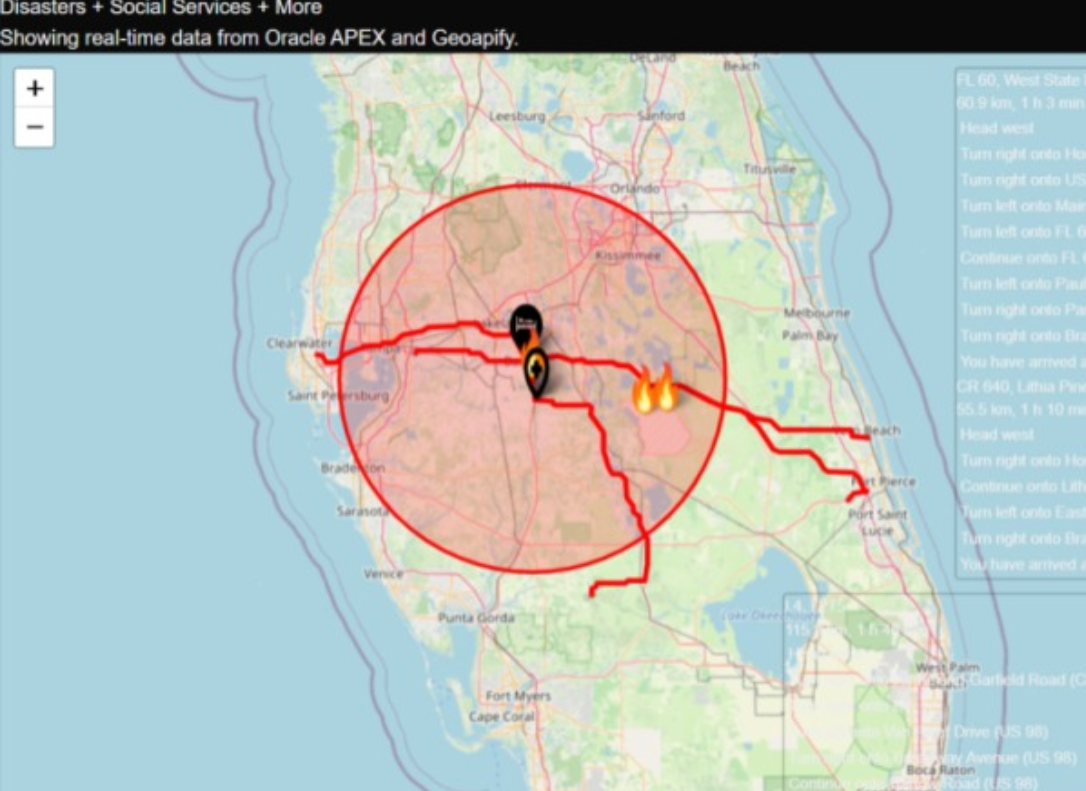
- Safe Zone & Hospital Finder – Find the closest safe zones and hospitals in a crisis.
- Instant WhatsApp Alerts – Get emergency messages with evacuation routes and shelters.
- AI-Powered Voice & SMS Notifications – Receive automated voice calls and SMS updates using Twilio.
- Disaster Data from Multiple Sources – Fetches disaster data from Oracle APEX, FEMA API, and NOAA API to ensure accurate and up-to-date alerts.
How We Built It
- Frontend – Built with Next.js and React, styled with TailwindCSS for a smooth experience.
- Live Tracking & Mapping – Used Leaflet.js and WebSockets for real-time updates.
- Database – Stored structured data in PostgreSQL on Oracle Cloud for scalability.
- Communication System – Integrated Twilio Voice and WhatsApp APIs for quick alerts.
Challenges We Faced
- Ensuring disaster updates were precise and timely was difficult.
- Integrating multiple alert systems while keeping them reliable was a challenge (this is definitely something we'll be working on, to refine our website).
What We’re Proud Of
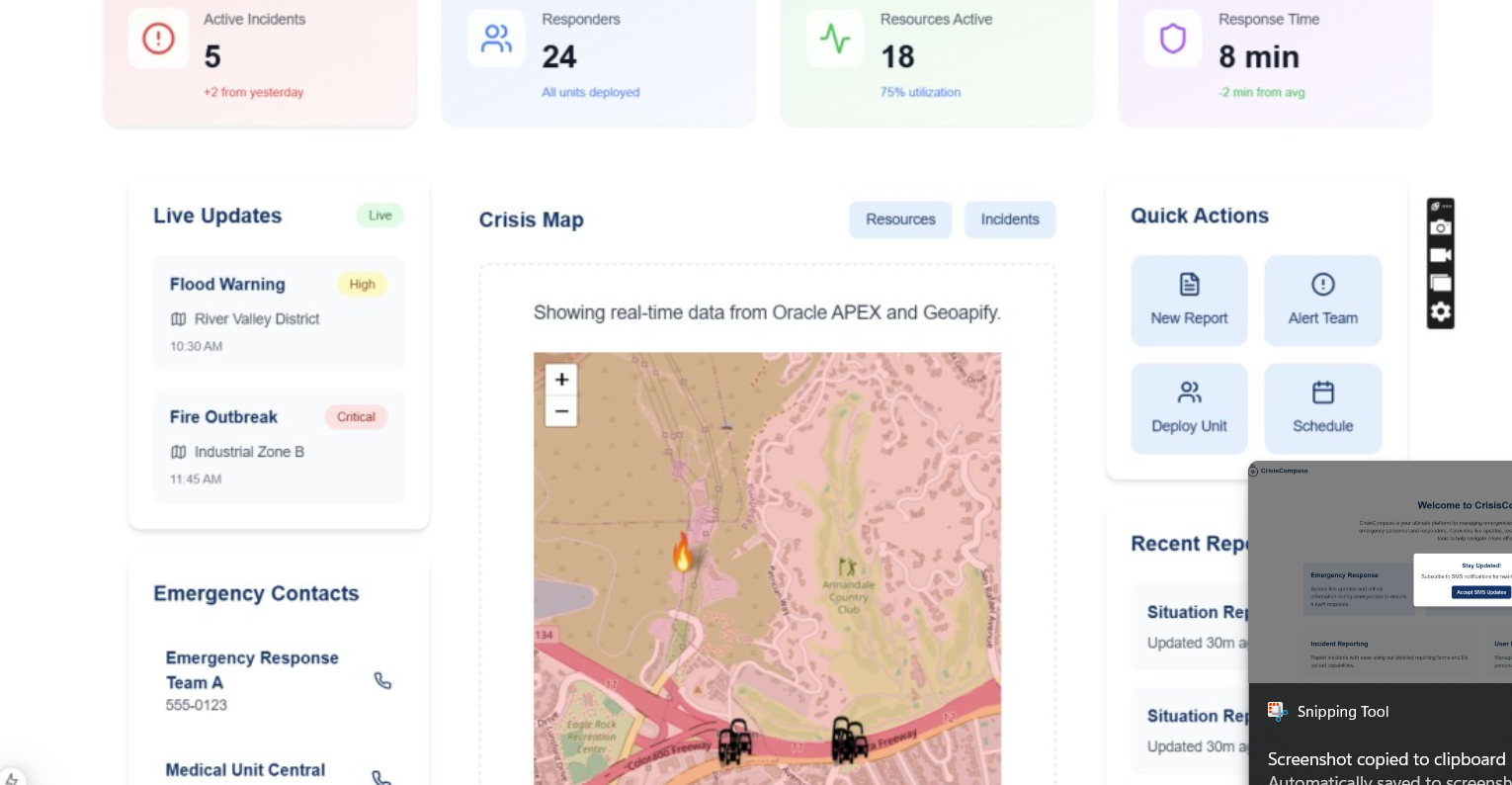
- Building a real-time disaster tracking system with an interactive map.
- Seamlessly integrating WhatsApp and Twilio APIs for fast emergency alerts.
- Creating a secure and scalable database on Oracle APEX for disaster data management.
What We Learned
- We learned how to use Oracle APEX and Cloud. We also learned how to use Twilio in the backend and get updates.
- As for frontend stack, our team mates learned Nextjs.
What’s Next for CrisisCompass
- Integrating multiple alert systems, and safe stations.
- Launching Android and iOS apps for easier access.
- Letting users report and verify real-time disaster events.
- Partnering with emergency services for real-time official updates.
CrisisCompass is on a mission to save lives through technology. We’re committed to making emergency response faster, smarter, and more effective.
Built With
- fema-api
- leaflet.js
- nextjs
- noaa-api
- oracle-apex
- oracle-cloud
- python
- react
- tailwindcss
- twilio
- vercel
- websockets


Log in or sign up for Devpost to join the conversation.