-
-
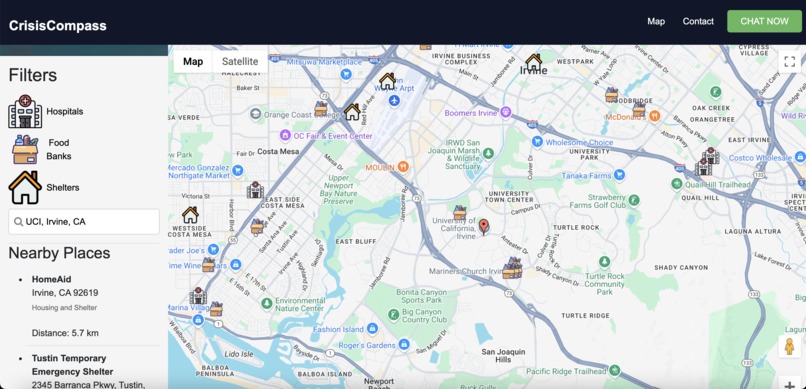
Map of nearby resources based on user location
-
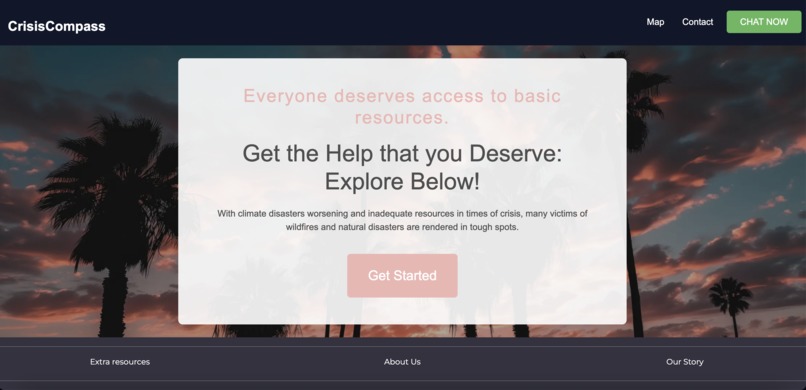
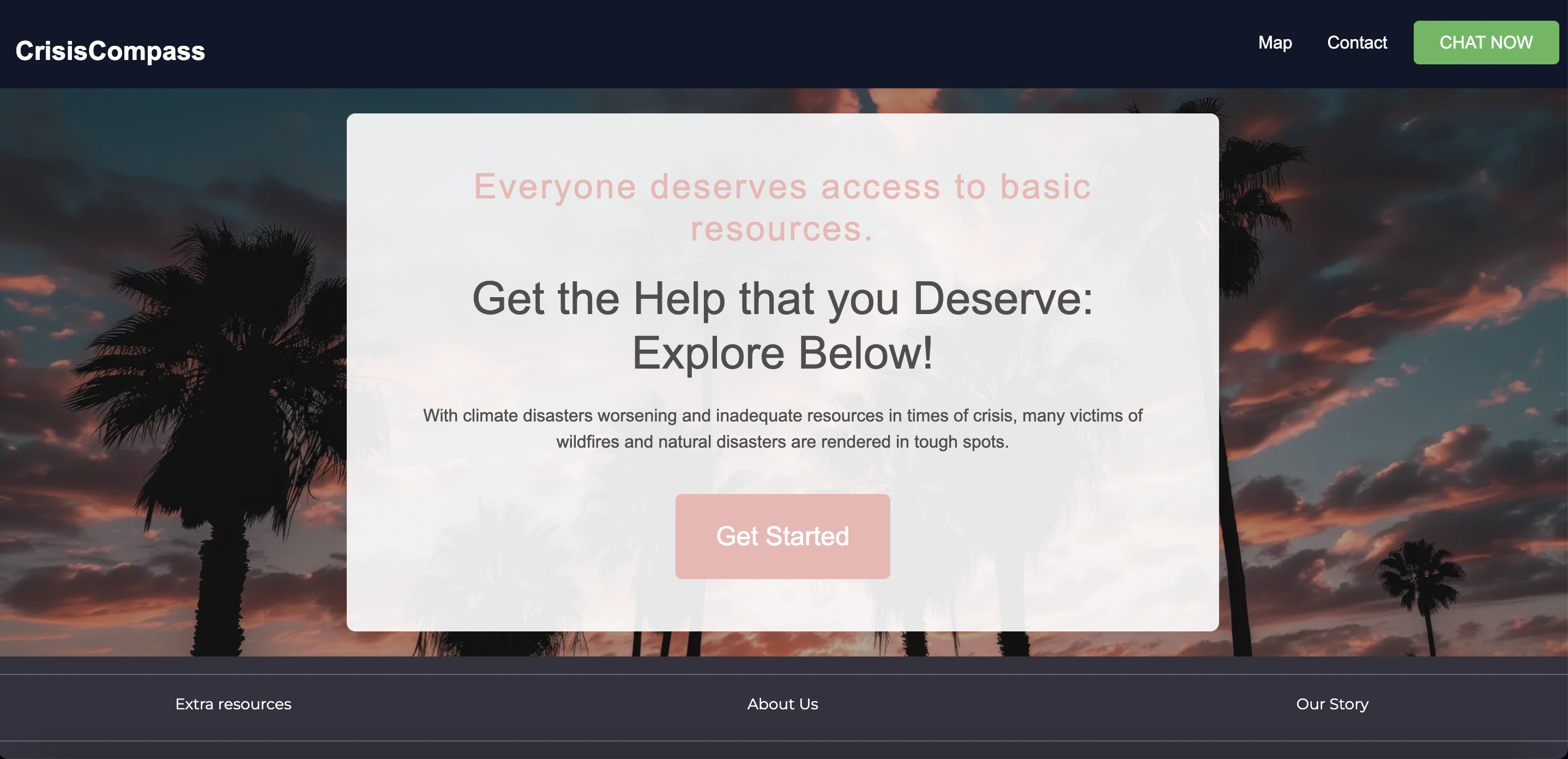
Home page
-
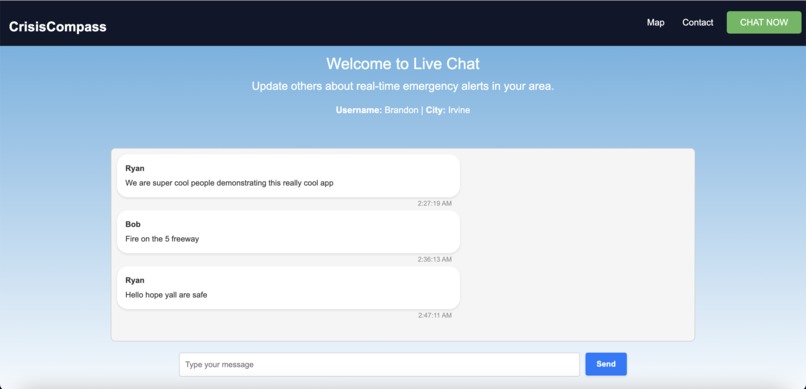
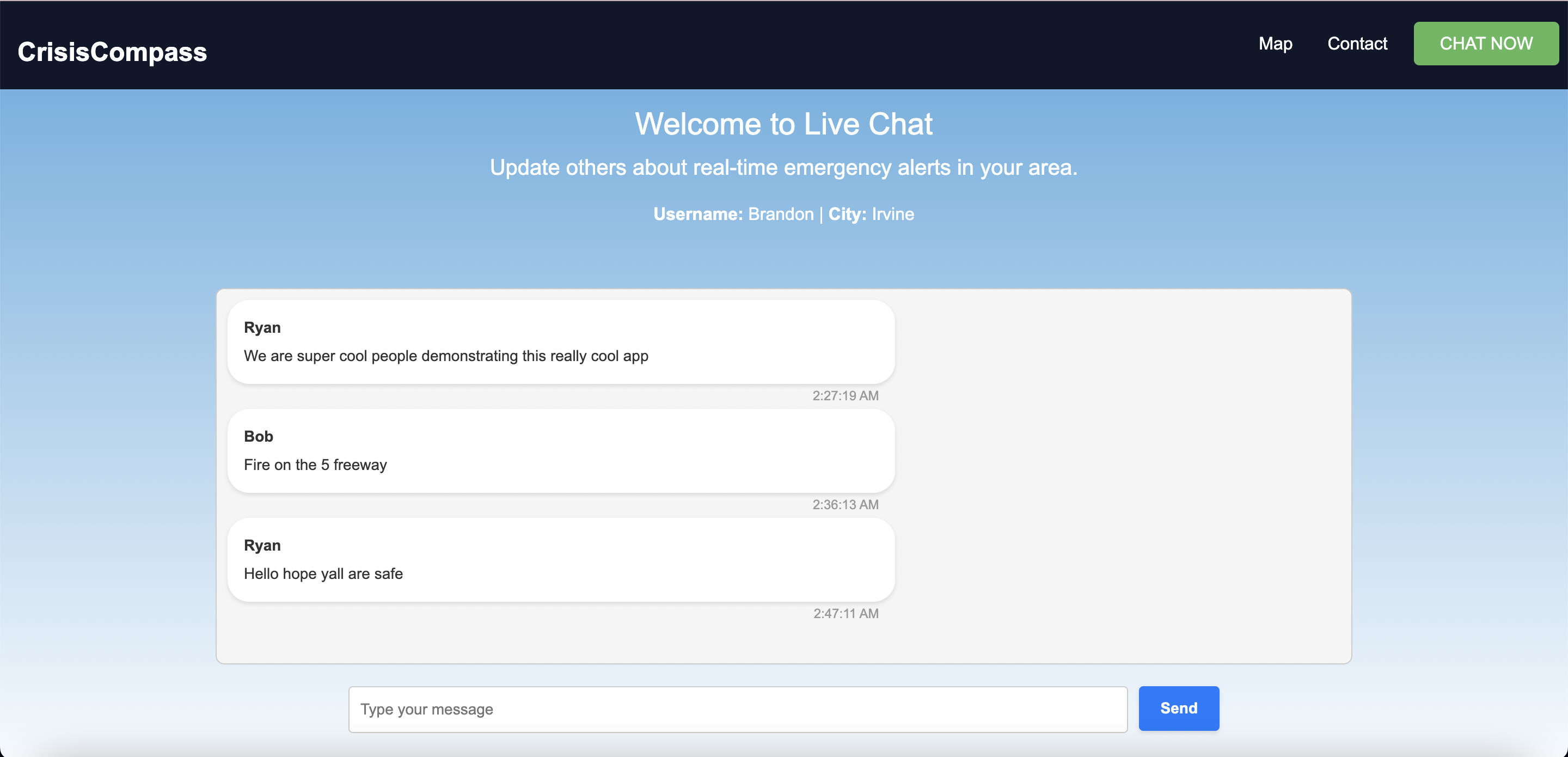
Live chat with users in your city
Inspiration
After witnessing the devastation caused by the recent wildfires in Los Angeles and seeing friends and family affected, we felt compelled to create a tool that simplifies the process of finding nearby resources and shelters during times of crisis.
What it does
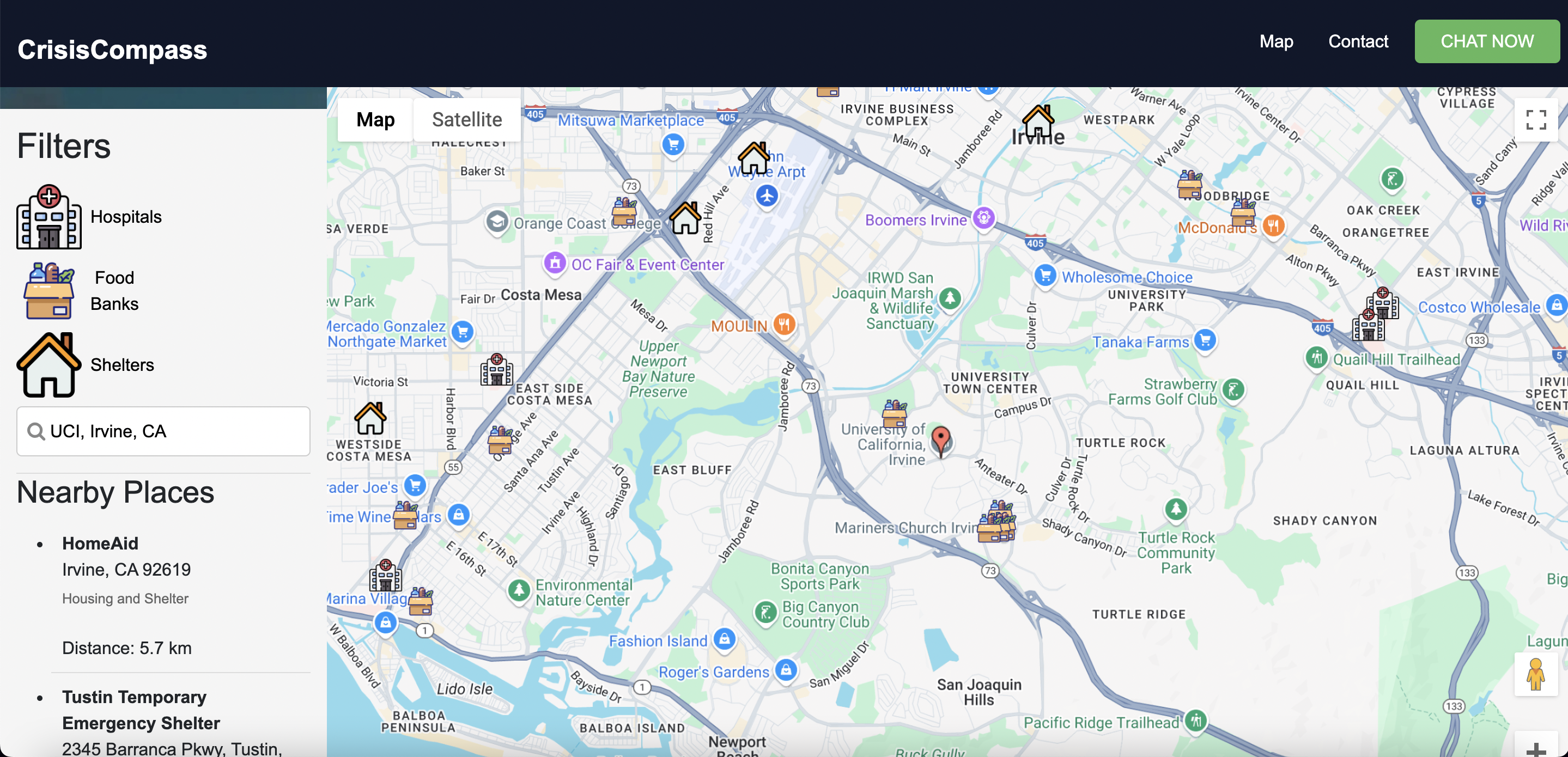
CrisisCompass is designed to connect disaster victims with vital resources. It provides an interactive map that helps users quickly locate nearby hospitals, shelters, and food banks based on their current location. In addition, the app features a Live Chat function, enabling users to support one another by sharing real-time information and offering assistance within their community. Finally, CrisisCompass includes a resource page that consolidates important links to other emergency resource centers, ensuring users have easy access to additional support.
How we built it
We built the front-end of CrisisCompass using React, which powers key features such as the resource pages, the filtering system for the resource map, and the user interface for the Live Chat. To integrate the interactive map, we leveraged the Google Maps API along with the React Google Maps Library, which made it easier to implement functions like Place Autocomplete and Text Search. For the Live Chat's real-time communication, we used Supabase to store and filter chat messages by city, ensuring users can quickly connect with others in their area.
Challenges we ran into
As this was our first hackathon, we initially struggled with organizing roles and brainstorming ideas, primarily due to our limited experience. With a diverse set of skills within the team, it was a challenge to align our efforts and seamlessly integrate different parts of the project. For instance, the lack of detailed resources for the React Google Maps Library made it difficult to adapt our codebase to work with React. Despite these hurdles, the process was a valuable learning experience, helping us improve our research skills and communication to ensure smoother collaboration throughout development.
Accomplishments that we're proud of
We are incredibly proud of the drive and determination each team member showed in bringing our vision to life. Despite facing several obstacles, we worked together to divide tasks according to our individual strengths and made sure everyone’s contributions counted. Building and deploying an app from scratch under time constraints was no small feat, but with strong communication and effective project management, we surpassed our expectations and created something we’re truly proud of.
What we learned
This hackathon provided us with a valuable introduction to the world of software engineering, simulating the entire development process from start to finish. Throughout the experience, we acquired essential skills that are critical in the industry, including the ability to work under pressure, effectively organize and manage a project roadmap, communicate clearly with teammates, and research and implement new technologies. Additionally, the workshops we attended were incredibly beneficial, not only aiding in our development but also introducing us to key industry concepts such as AWS, which we used for deployment, that will be invaluable in our future careers.
What's next for CrisisCompass
Our plans for the future are to implement an API that tracks danger zones and sends live notifications to users. These alerts would be displayed on the map, highlighting evacuation routes and real-time disaster areas. Looking ahead, we envision expanding beyond the web application by developing a mobile app with the same functionality, ensuring users can access critical information on the go.


Log in or sign up for Devpost to join the conversation.