-
-
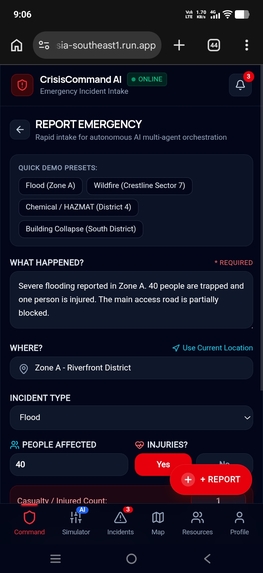
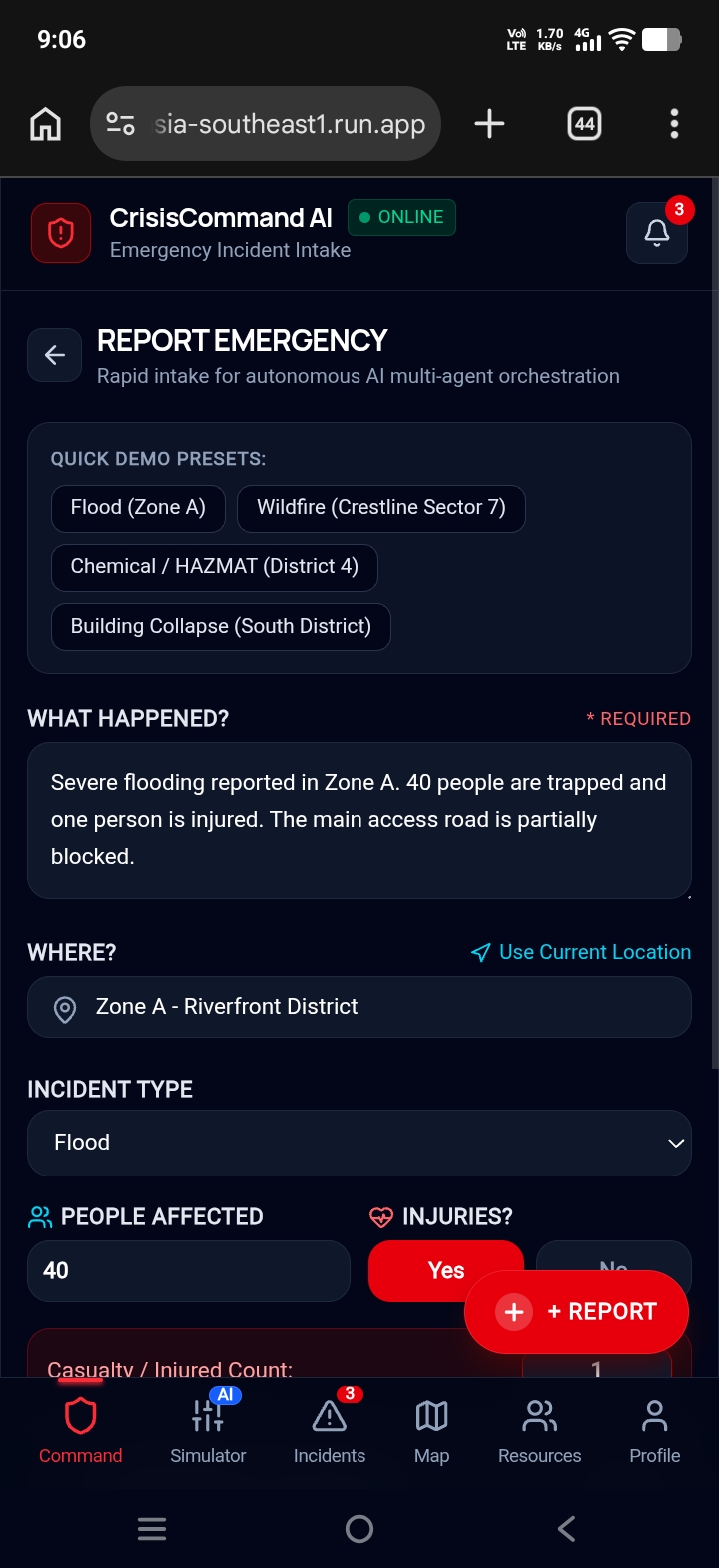
Report emergency
-
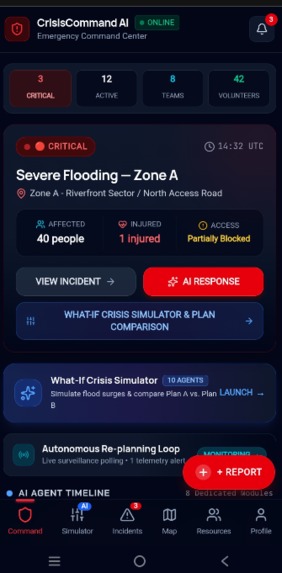
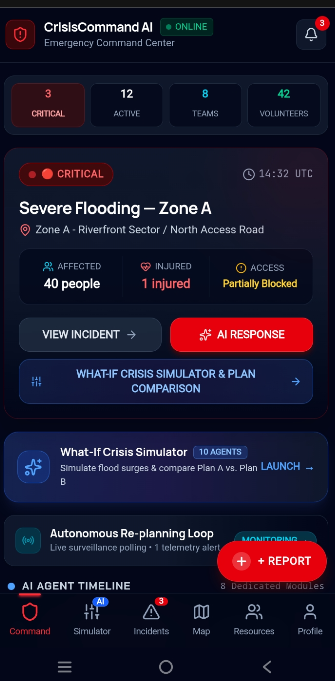
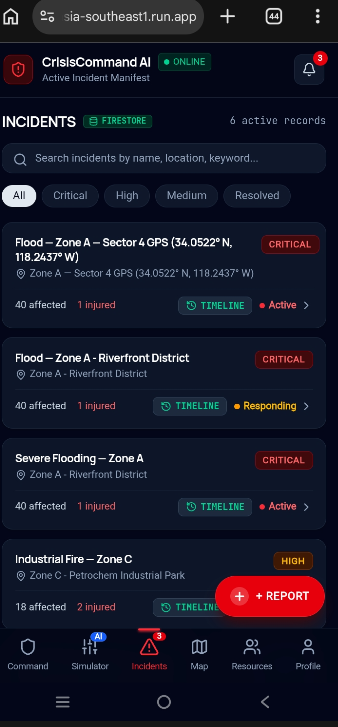
Dashboard of emergency
-
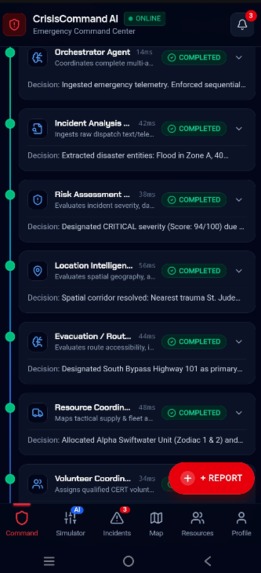
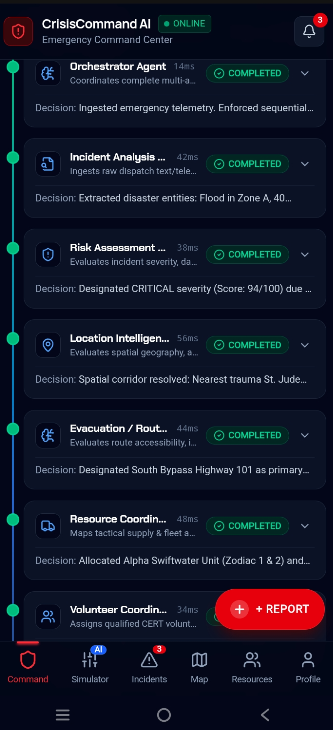
Agents
-
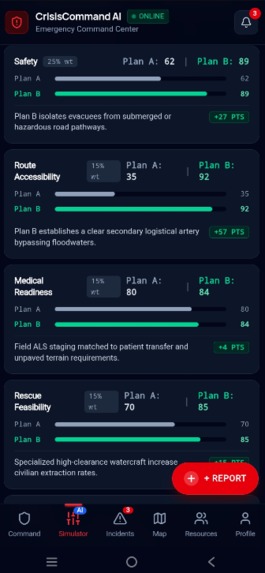
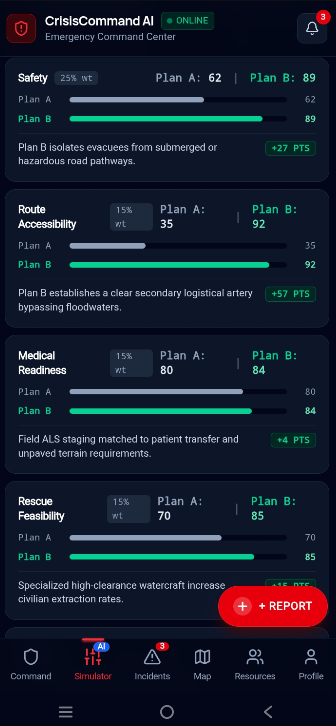
Plan A and Plan B comparison and recommended the best plan
-
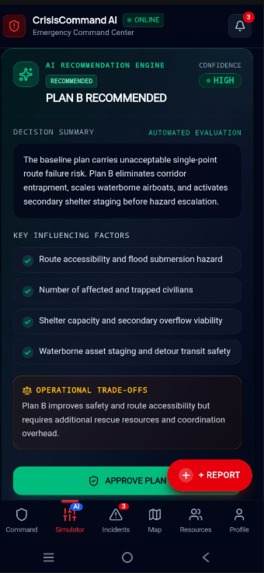
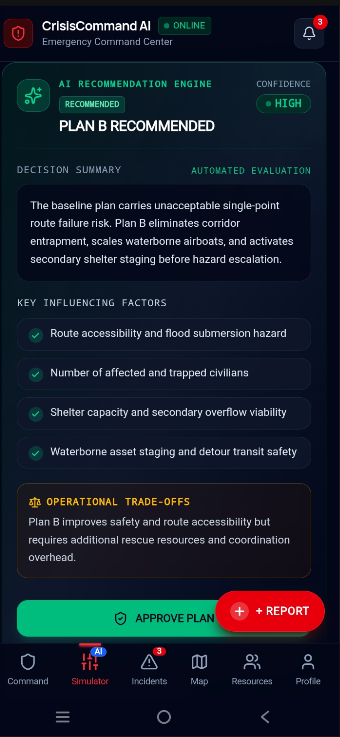
with the help of AI the best plan is recommended that is PLAN B
-
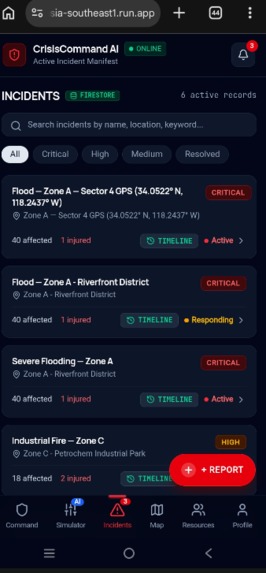
we can progress the History
-
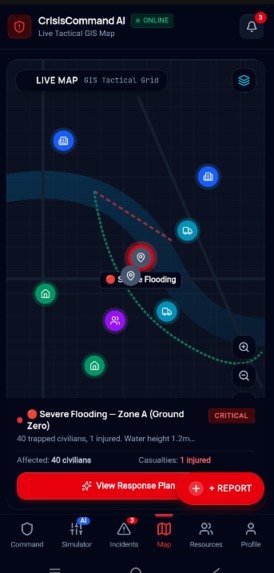
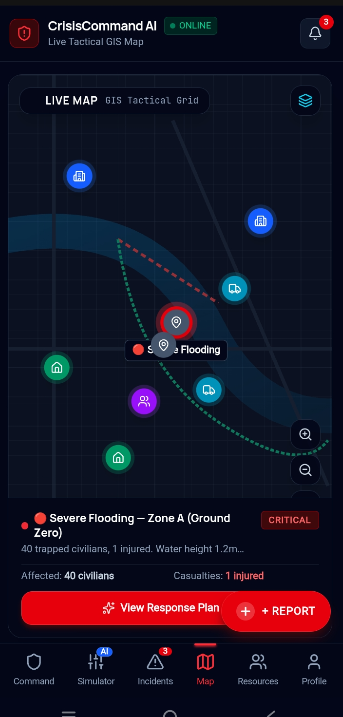
we can see the Live map resolution
-
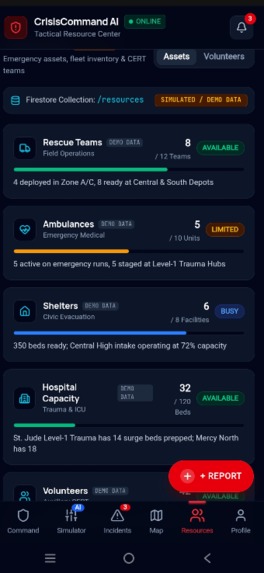
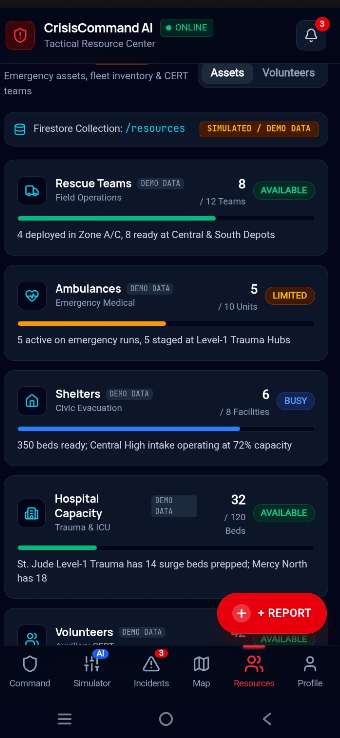
the resources are Rescue teams Ambulances Hospitals Shelters Volunteers Emergency vehicles Food and water Medical supplies
-
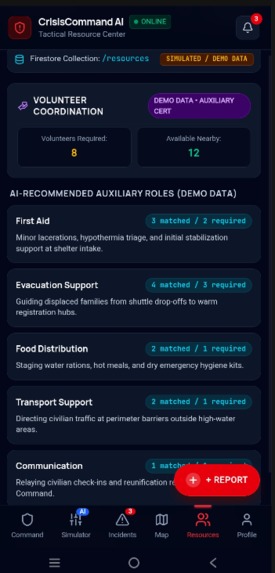
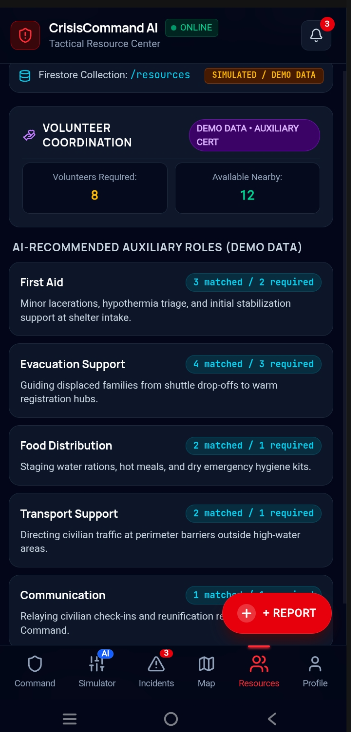
volunteer coordination
-
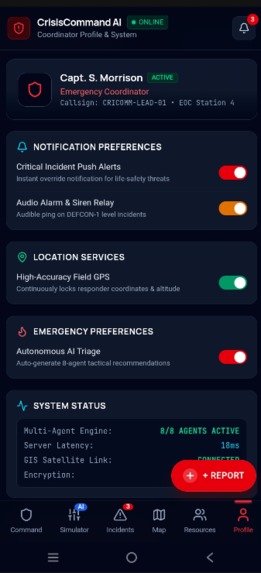
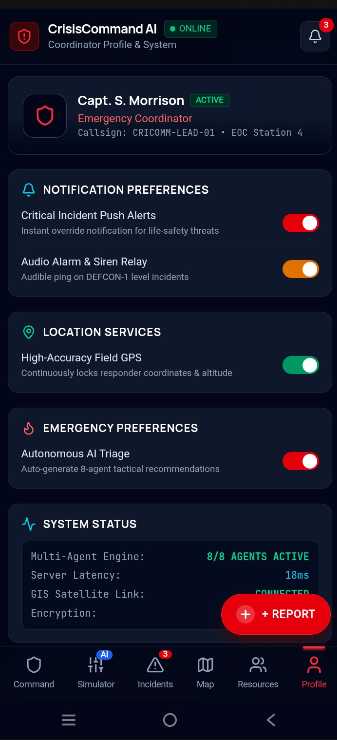
with profile
Inspiration
During a crisis, the situation can change within minutes. A road that was accessible can become blocked, the number of affected people can increase, or available resources can become limited.
We realized that emergency decision-making should not stop with a single response plan. It should also consider “What if the situation changes?”
This inspired us to build CrisisCommand AI, an Agentic AI system that can create an initial response plan, simulate changing crisis conditions, generate an adaptive plan, and recommend the better strategy.
Our core idea is simple:
When the crisis changes, the plan changes.
What it does
CrisisCommand AI is an Agentic AI emergency decision-support system powered by Google Gemini and Google ADK.
The system:
- Analyzes emergency reports using AI.
- Assesses incident severity and risks.
- Analyzes location and evacuation constraints.
- Identifies required emergency resources.
- Generates Plan A for the current situation.
- Provides a What-If Crisis Simulator.
- Re-analyzes the situation when conditions change.
- Generates an adaptive Plan B.
- Compares Plan A and Plan B.
- Provides an AI recommendation with key decision factors.
- Maintains incident and simulation context.
Example
A flood initially affects 40 people and the main road is partially accessible.
The user can simulate:
“What if the main evacuation route becomes completely inaccessible?”
CrisisCommand AI re-evaluates the situation and generates an adaptive response instead of simply keeping the original plan.
How we built it
We built CrisisCommand AI as a multi-agent AI workflow using Google's AI technologies.
Google Gemini
Gemini provides the reasoning and intelligence required for:
- Incident understanding
- Risk analysis
- Scenario reasoning
- Response planning
- Plan comparison
Google Agent Development Kit (ADK)
ADK coordinates our specialized agents.
Our agent architecture includes:
- Orchestrator Agent — coordinates the complete workflow.
- Incident Analysis Agent — understands and structures emergency reports.
- Risk Assessment Agent — evaluates severity and risk.
- Location Intelligence Agent — provides location and accessibility context.
- Route / Evacuation Agent — evaluates route feasibility.
- Resource Coordination Agent — identifies required resources.
- Action Planner Agent — generates response plans.
- Simulation Evaluator Agent — evaluates What-If scenarios and compares plans.
- Monitoring Agent — tracks changing incident conditions.
Core workflow
Emergency Report → AI Analysis → Plan A → What-If → AI Re-analysis → Plan B → Compare → Recommend
We designed the interface as a mobile-first emergency command application, focusing on clear status indicators, response cards, simulation controls, and easy-to-understand recommendations.
Cloud Firestore can be used as the persistent state layer for incident information, response plans, simulation scenarios, and recommendations.
Challenges we ran into
One of our biggest challenges was designing an AI workflow that was more than a simple chatbot.
We needed different agents to perform different responsibilities while maintaining the context of the same crisis.
Another challenge was designing the What-If simulation so that a changed condition would trigger meaningful re-analysis instead of simply modifying the original response.
We also had to carefully distinguish between:
- AI recommendations
- Simulated actions
- Actual emergency actions
This was important because an emergency decision-support system should never falsely claim that an ambulance, rescue team, or hospital has actually been contacted when no real-world integration has performed that action.
Finally, we focused on making a complex multi-agent workflow understandable through a simple mobile interface.
Accomplishments that we're proud of
We are proud of building a working concept that demonstrates how Agentic AI can support adaptive crisis decision-making.
Our key accomplishments include:
Multi-Agent Architecture
We divided crisis analysis into specialized agents instead of relying on a single AI response.
What-If Crisis Simulation
Users can introduce changing conditions and see how the response strategy adapts.
Plan A → Plan B
The system generates a baseline response and then an adaptive response after a simulated change.
AI Plan Comparison
The system evaluates both plans using factors such as safety, accessibility, resources, feasibility, and risk.
AI Recommendation
The system provides a recommendation along with the reasoning factors behind it.
Most importantly, we moved from a static emergency response concept toward an adaptive decision-support workflow.
What we learned
Building CrisisCommand AI taught us that an effective Agentic AI system is not just about giving a better prompt to an LLM.
We learned how to:
- Design specialized AI agents with clear responsibilities.
- Coordinate multiple agents through an orchestrator.
- Maintain context across multiple stages of a workflow.
- Design AI systems around changing states rather than single inputs.
- Use scenario simulation as part of AI decision-making.
- Present complex AI reasoning through a simple user interface.
- Build responsible AI boundaries around high-impact domains.
- Separate simulated recommendations from real-world actions.
The biggest lesson was:
Good agentic systems are about orchestration, state, reasoning, and adaptation — not just generation.
What's next for CrisisCommand AI
Our next step is to connect the prototype with reliable real-world data sources.
Potential future capabilities include:
- Real-time weather data
- Live traffic and road conditions
- GIS and mapping data
- Satellite imagery
- IoT emergency sensors
- Emergency authority integrations
- Real-time evacuation tracking
- Predictive resource demand
- Voice-based emergency reporting
- Multilingual crisis communication
- Real-time notifications
Our long-term vision is to transform CrisisCommand AI from a prototype into a continuously adapting crisis decision-support platform that helps emergency teams explore scenarios, prepare alternative strategies, and make better-informed decisions.
Vision
From reacting to crises to preparing for what could happen next.
Built With
- adk
- agent
- cloud
- development
- firestore
- gemini
- genai
- html
- javascript
- kit
- react
- sdk

Log in or sign up for Devpost to join the conversation.