Inspiration
When disasters occur—whether floods, fires, accidents or infrastructure failures—information often spreads in a chaotic and unstructured way. Emergency responders, volunteers and affected communities struggle to quickly understand the situation, identify the most urgent needs and coordinate help effectively.
I wanted to explore how artificial intelligence, real-time data systems and voice technology could work together to transform scattered incident reports into clear, actionable crisis intelligence.
This idea led us to build CrisisChain AI, a real-time emergency coordination platform designed to help communities and responders quickly understand what is happening, where help is needed and how resources can be deployed efficiently.
What it does
CrisisChain AI is a real-time crisis coordination system that transforms unstructured incident reports into actionable response intelligence.
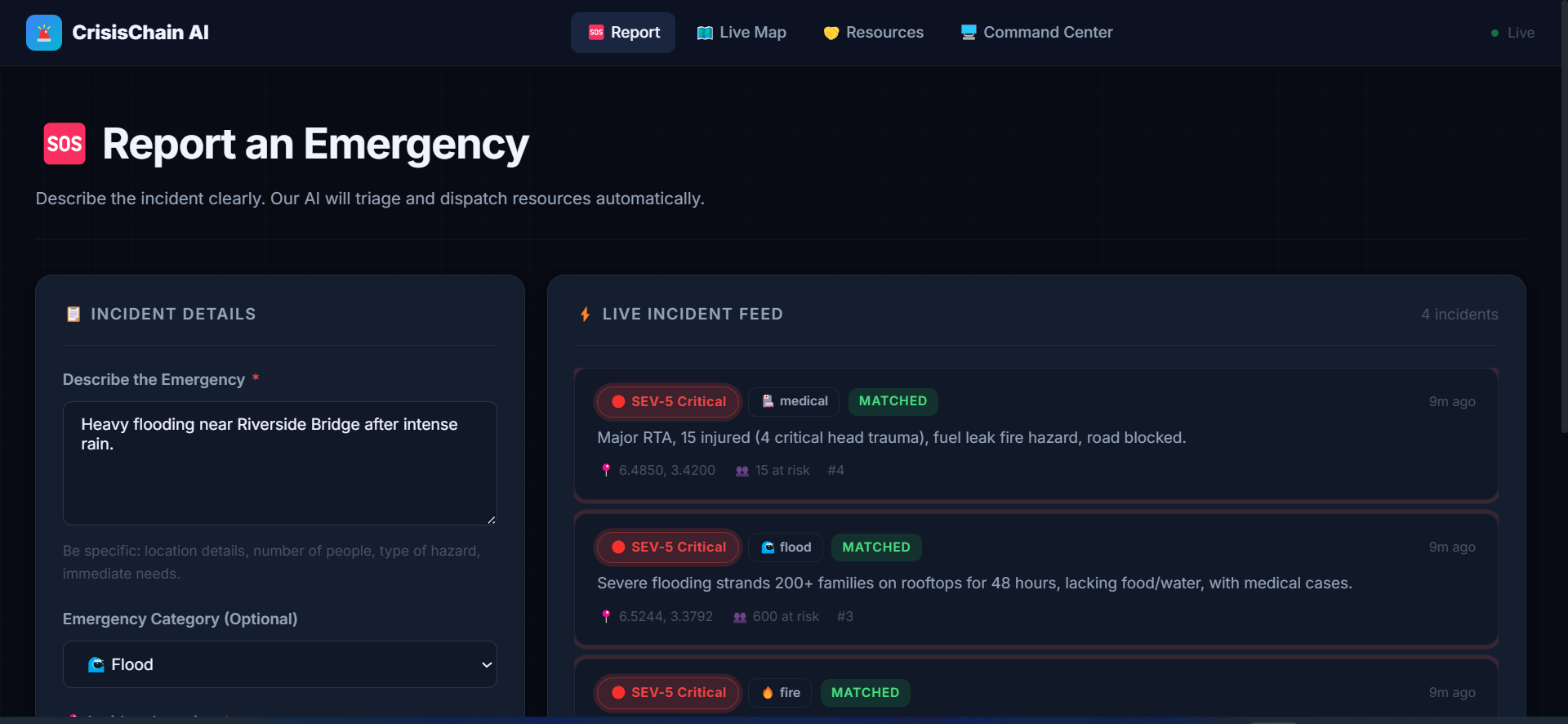
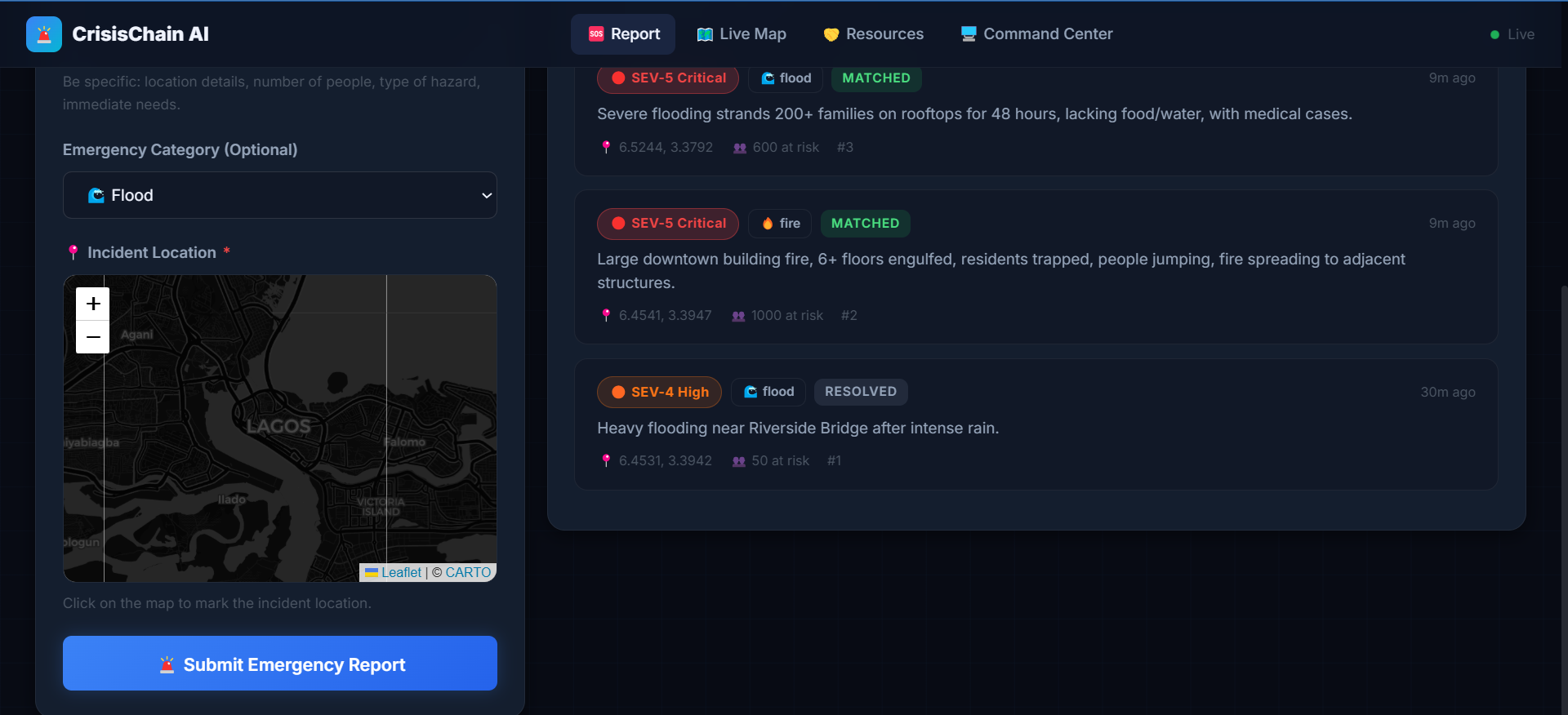
The platform allows users to report emergencies such as floods, fires, accidents or medical situations. These reports are then analyzed by AI to extract key information, including incident type, severity and immediate needs.
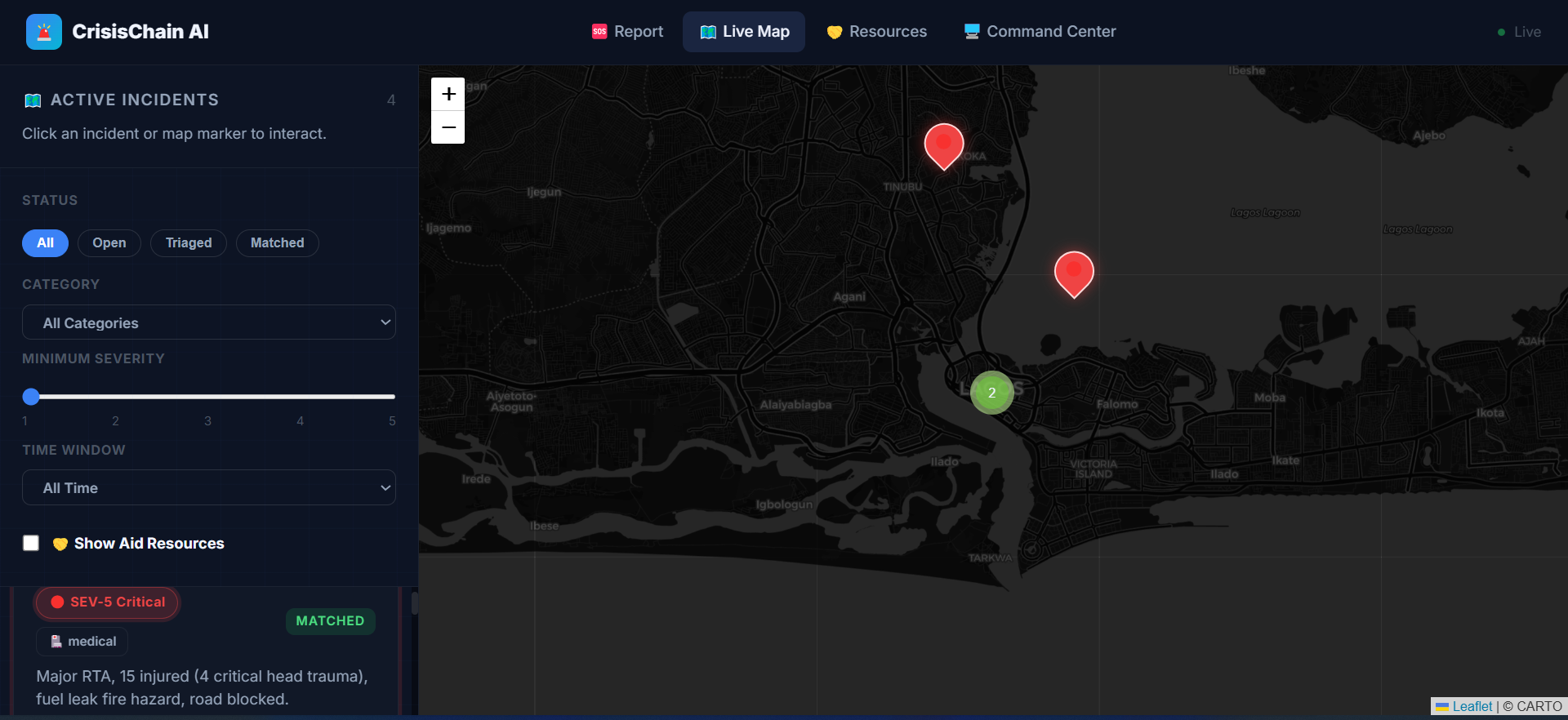
Once processed, incidents appear on a live interactive map, allowing responders to quickly identify critical areas.
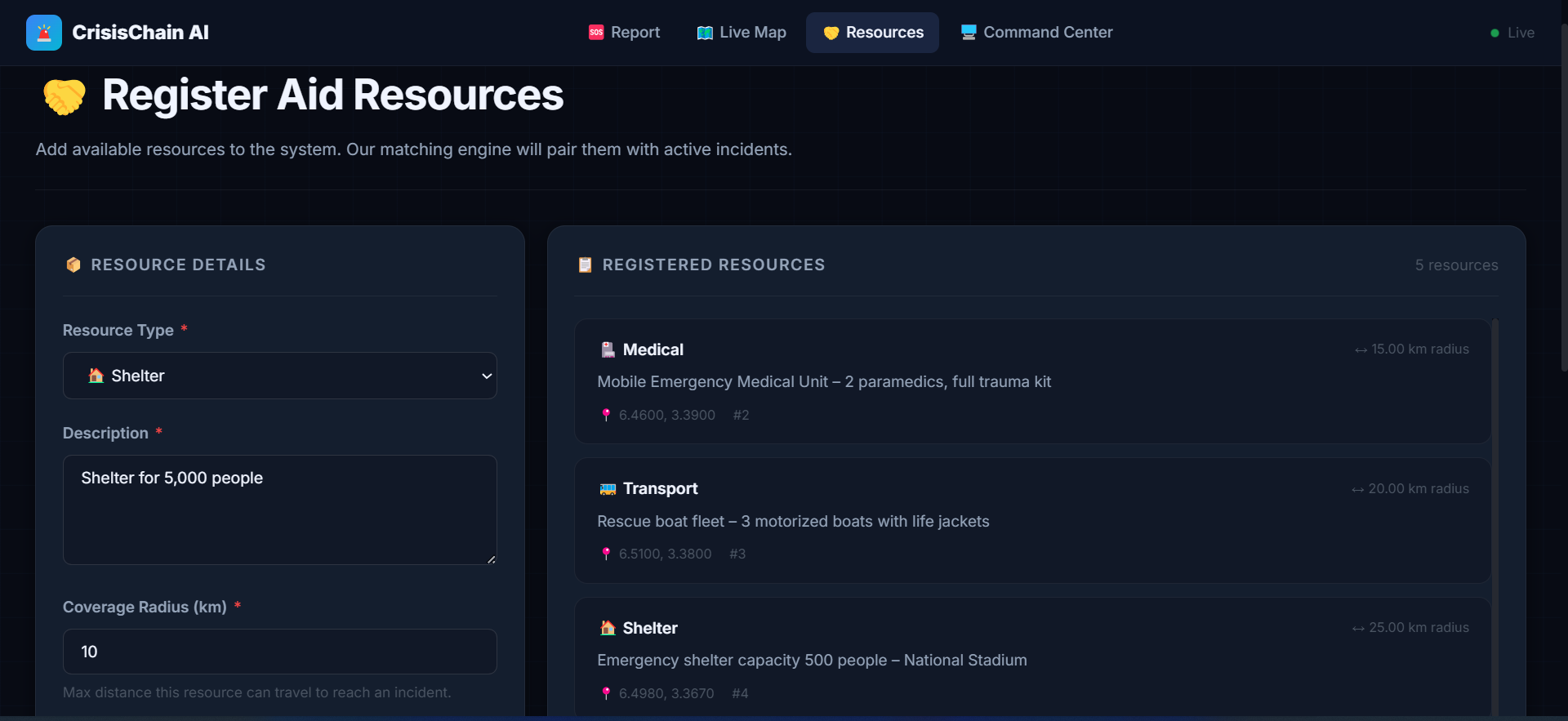
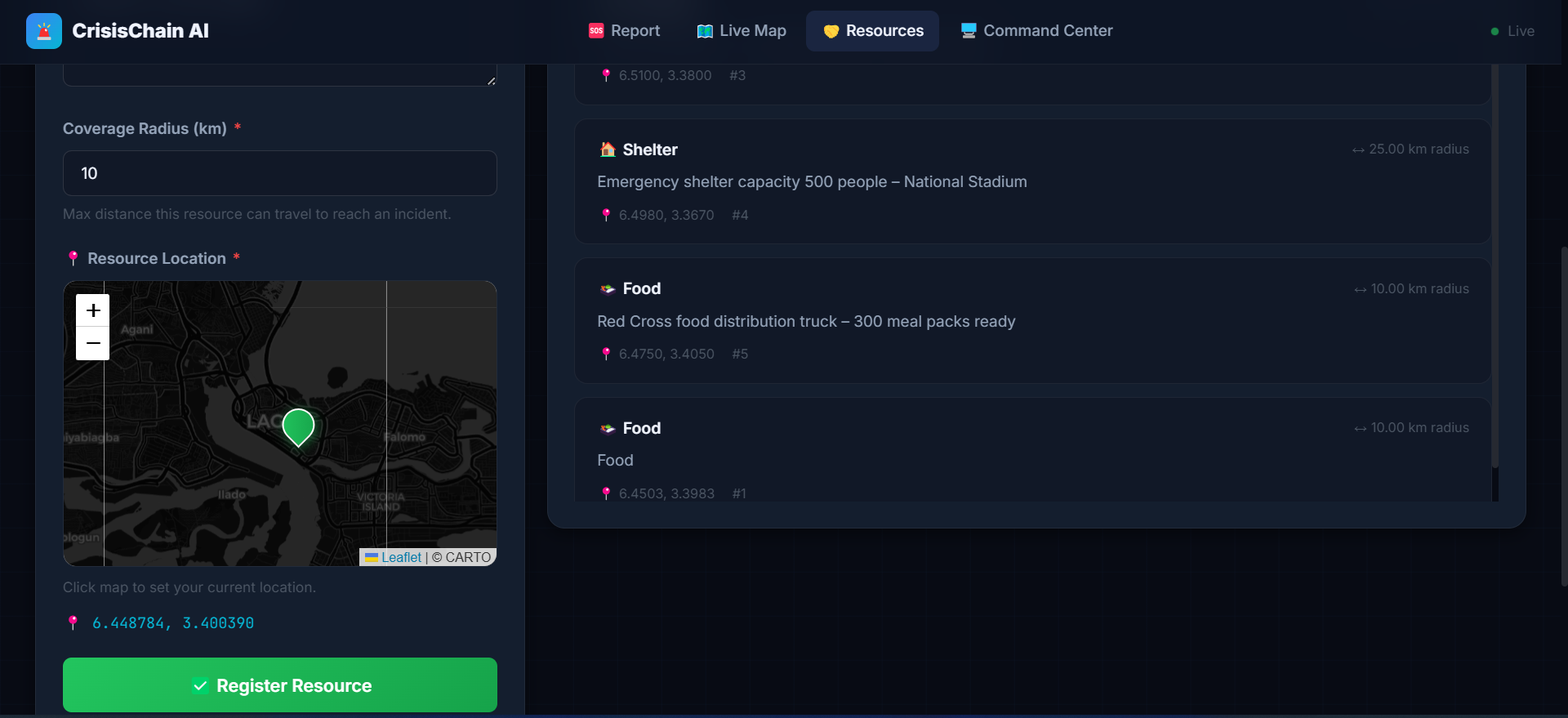
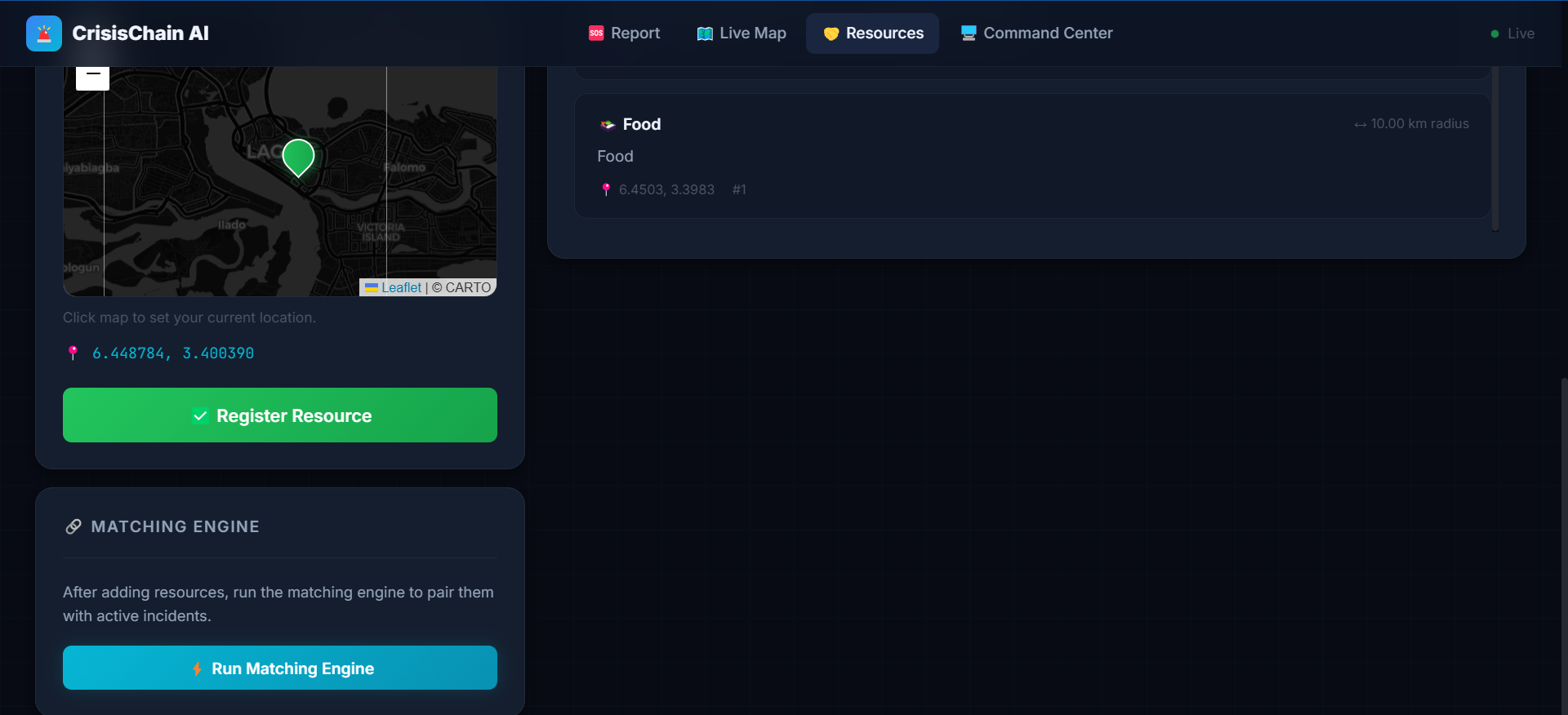
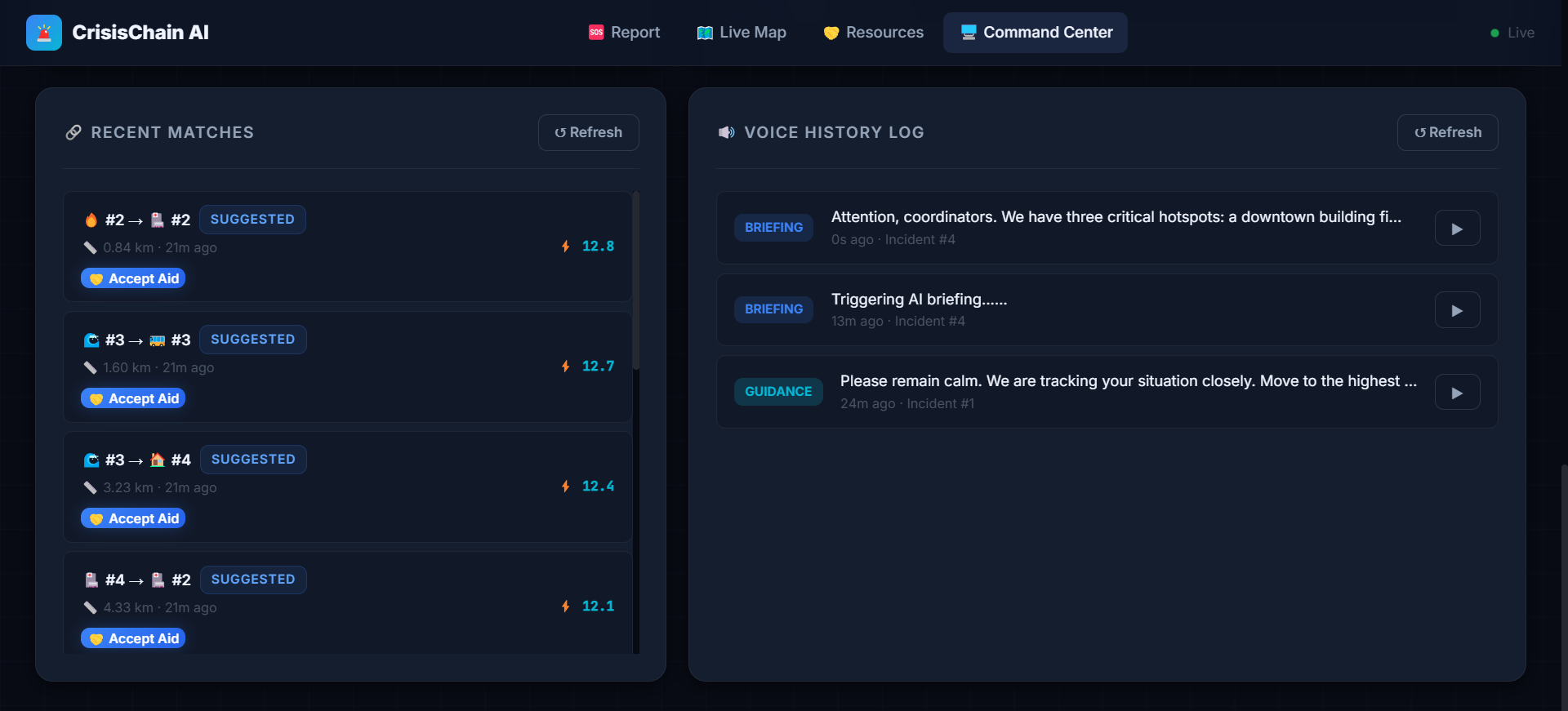
The platform also allows volunteers to register available resources such as food, transportation, medical assistance or shelter. A built-in matching engine automatically identifies nearby resources that can respond to incidents.
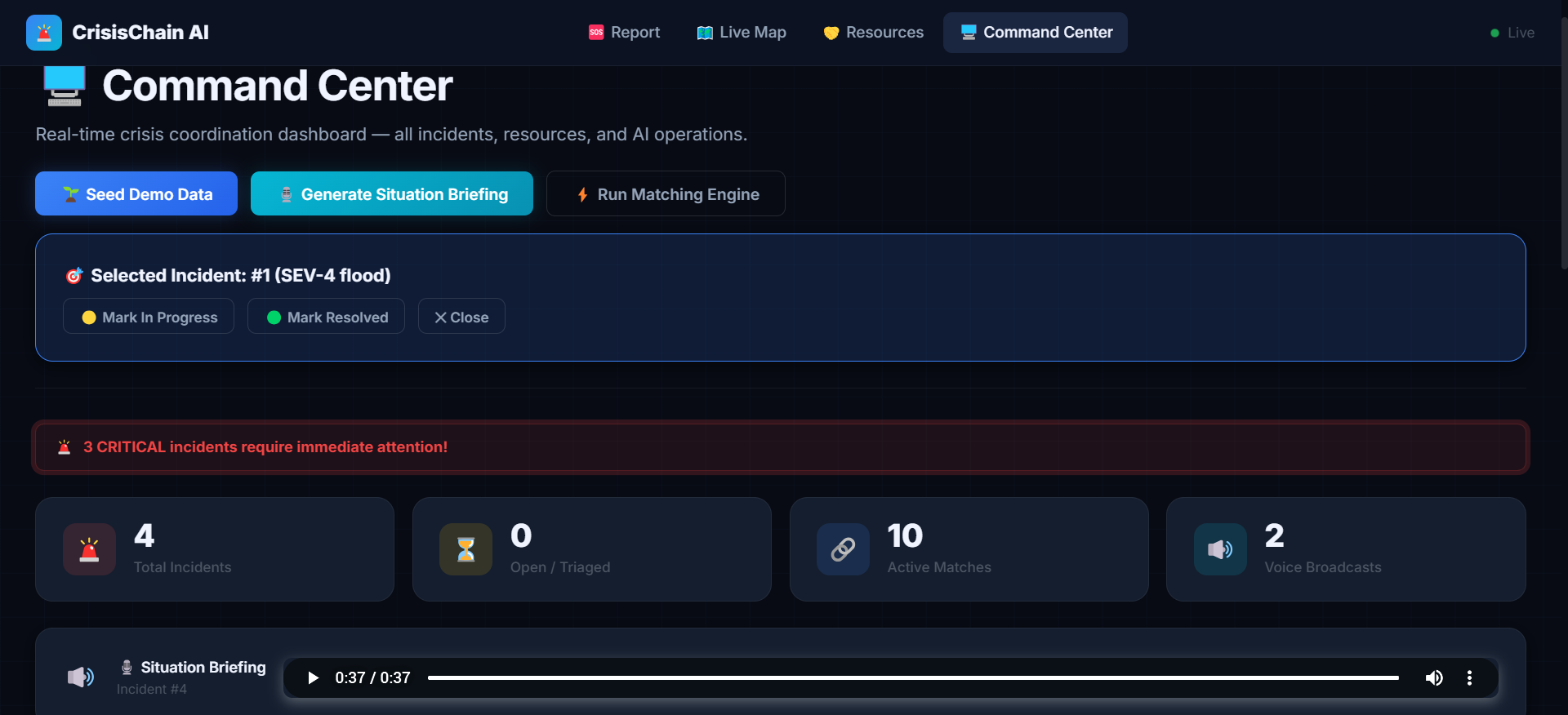
To improve communication during emergencies, the platform uses ElevenLabs voice technology to generate real-time voice briefings and safety guidance, helping responders and affected individuals quickly understand the situation without needing to read long reports.
Together, these capabilities create a real-time command center for emergency coordination.
How I built it
CrisisChain AI was built as a full-stack web platform combining real-time systems, AI analysis and voice synthesis.
The frontend was developed using HTML, CSS, and JavaScript, providing an interactive interface and live crisis map powered by Leaflet.js.
The backend was built using PHP and MySQL, which handle incident reporting, resource management and the matching system.
To enable real-time updates across the platform, I implemented a Node.js Socket.io server, allowing new incidents, matches and updates to instantly appear on all connected clients.
For AI analysis, I integrated Google Gemini, which processes incident descriptions and extracts structured crisis data such as severity levels, risk factors and recommended actions.
For voice communication, I integrated ElevenLabs Text-to-Speech, which converts AI-generated briefings and safety instructions into clear audio messages.
These components together create a system capable of real-time crisis intelligence and communication.
Challenges I ran into
One of the main challenges was transforming unstructured human reports into structured crisis data. Incident descriptions can vary widely in wording and detail, so designing prompts that consistently extract useful information required careful tuning.
Another challenge was implementing real-time synchronization across multiple parts of the system. Incidents, AI updates and resource matches all needed to appear instantly on the live map and dashboard, which required coordinating the backend APIs with the Socket.io real-time server.
Integrating AI-generated voice briefings also required designing a workflow where AI-generated scripts could be converted into speech quickly enough to be useful during real-time demonstrations.
Accomplishments that I'm proud of
One accomplishment I'm particularly proud of is successfully combining AI analysis, geospatial mapping, real-time updates and voice synthesis into a single working platform within a short development time.
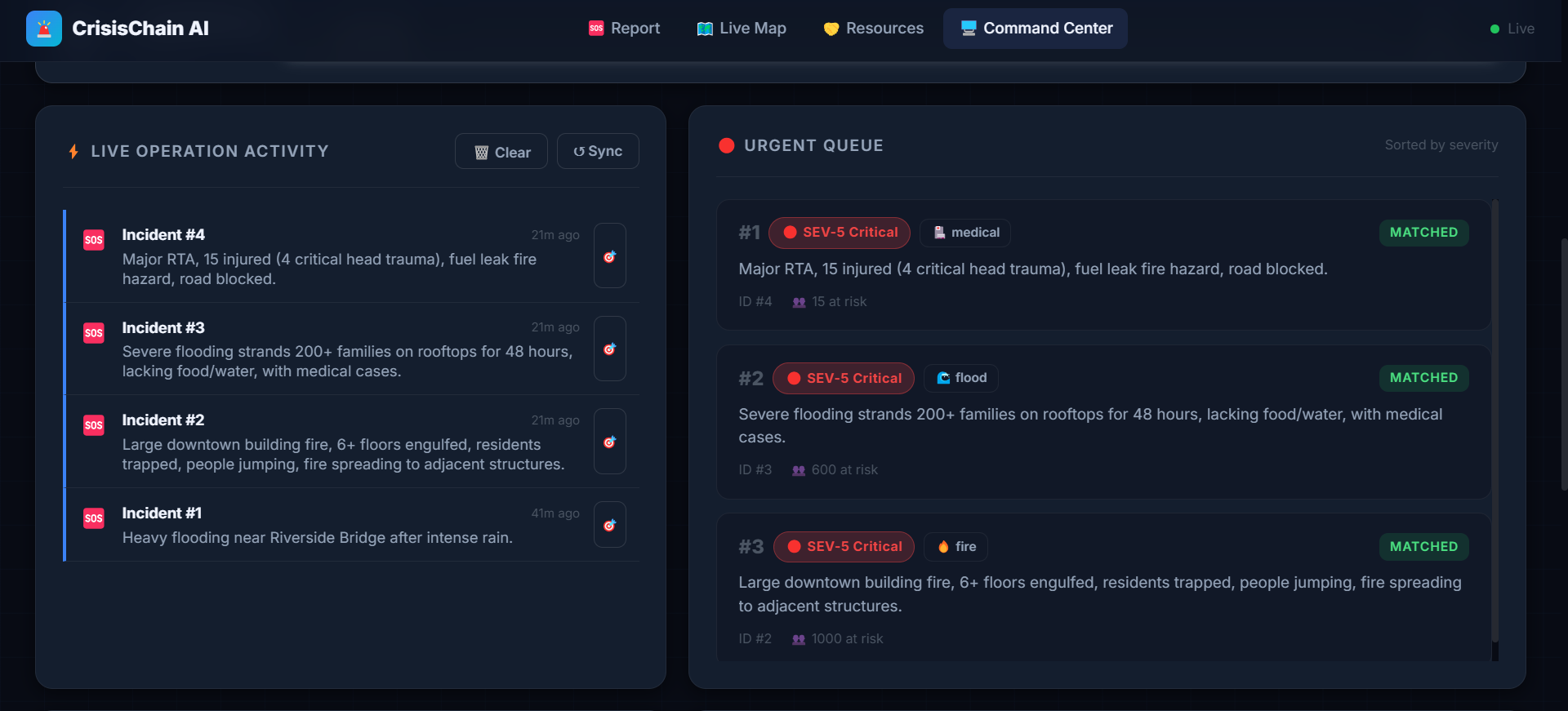
Another achievement is building a Command Center dashboard that allows users to see live incidents, prioritize urgent situations and generate AI-powered voice briefings.
Most importantly, the system demonstrates how AI can be used not just for analysis, but for real-world coordination during emergencies.
What I learned
Building CrisisChain AI taught me a lot about designing systems that combine AI, real-time infrastructure and human-centered interfaces.
I learned how important it is to structure AI outputs so they can be used programmatically within larger systems. I also gained deeper experience integrating multiple technologies—AI APIs, voice synthesis, geospatial mapping and real-time communication into a single workflow.
Perhaps the biggest lesson was seeing how technology can transform chaotic information into clear, actionable insights that can help people respond faster during crises.
What's next for CrisisChain AI
There are several directions I would like to explore next.
First, I would expand the system to include mobile reporting tools, allowing people to submit incidents directly from smartphones during emergencies.
I would also like to introduce multilingual voice alerts, enabling the platform to communicate safety instructions in different languages.
Additional improvements could include predictive analytics to identify emerging crisis hotspots, integration with official emergency services and expanded support for drone or satellite data.
Ultimately, the goal is to evolve CrisisChain AI into a scalable platform that helps communities and responders coordinate more effectively during disasters.


Log in or sign up for Devpost to join the conversation.