-
-
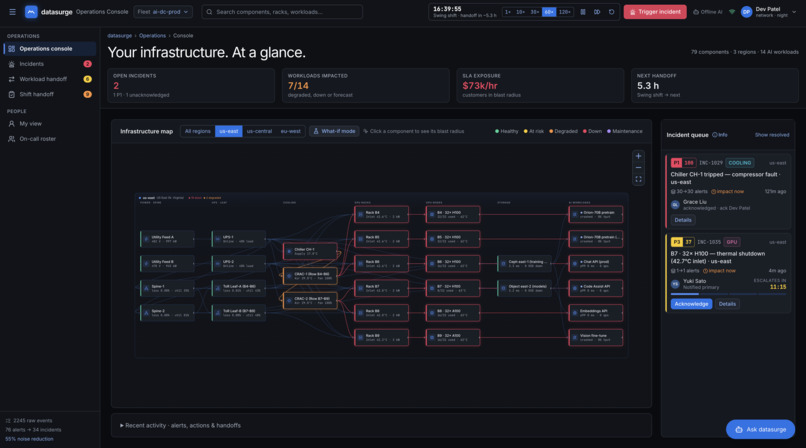
Operations Console
-
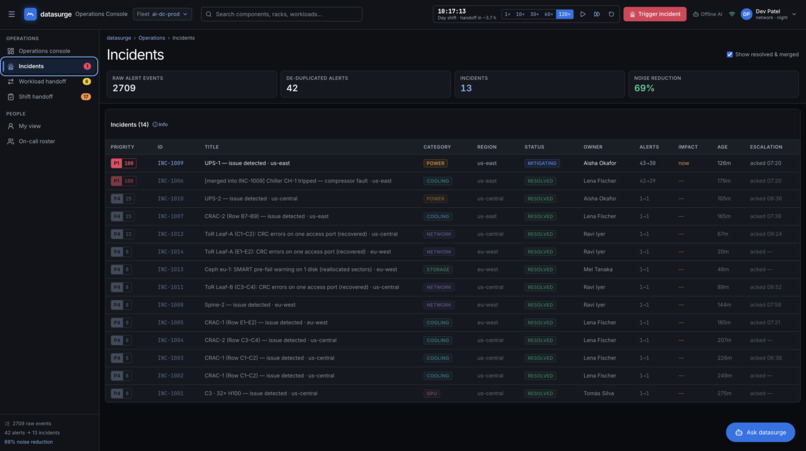
Incidents
-
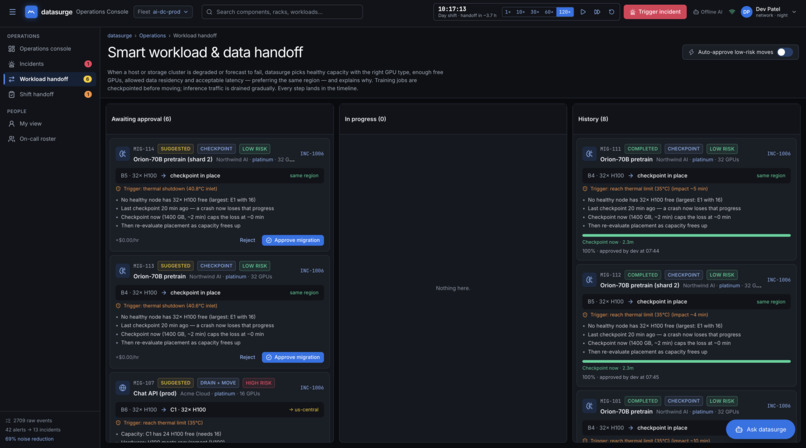
Work Handoffs
-
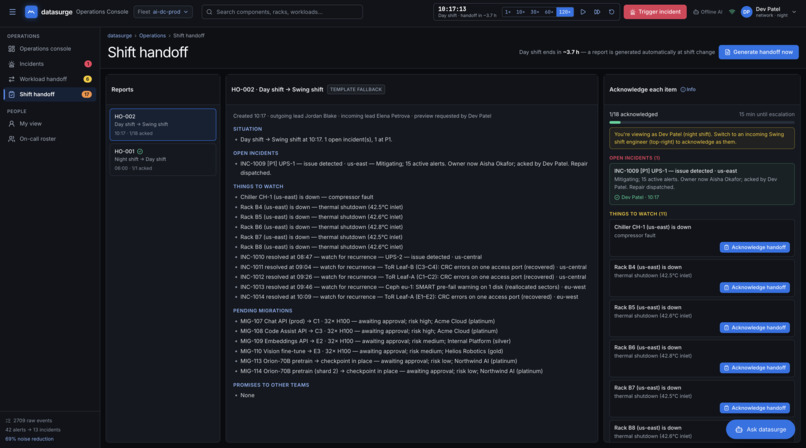
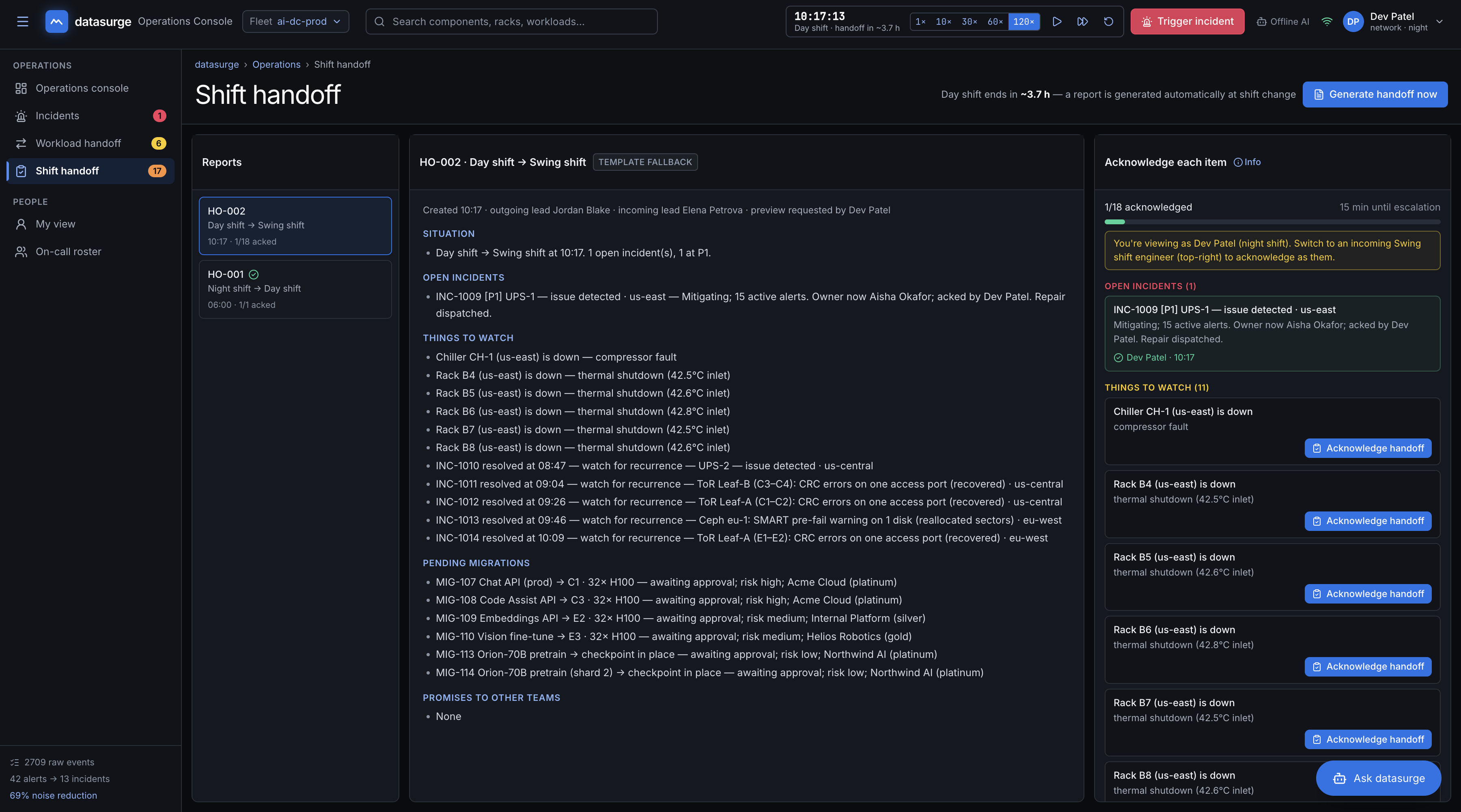
Shift Handoffs
-
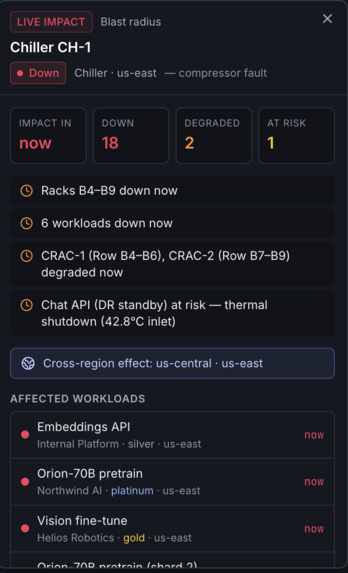
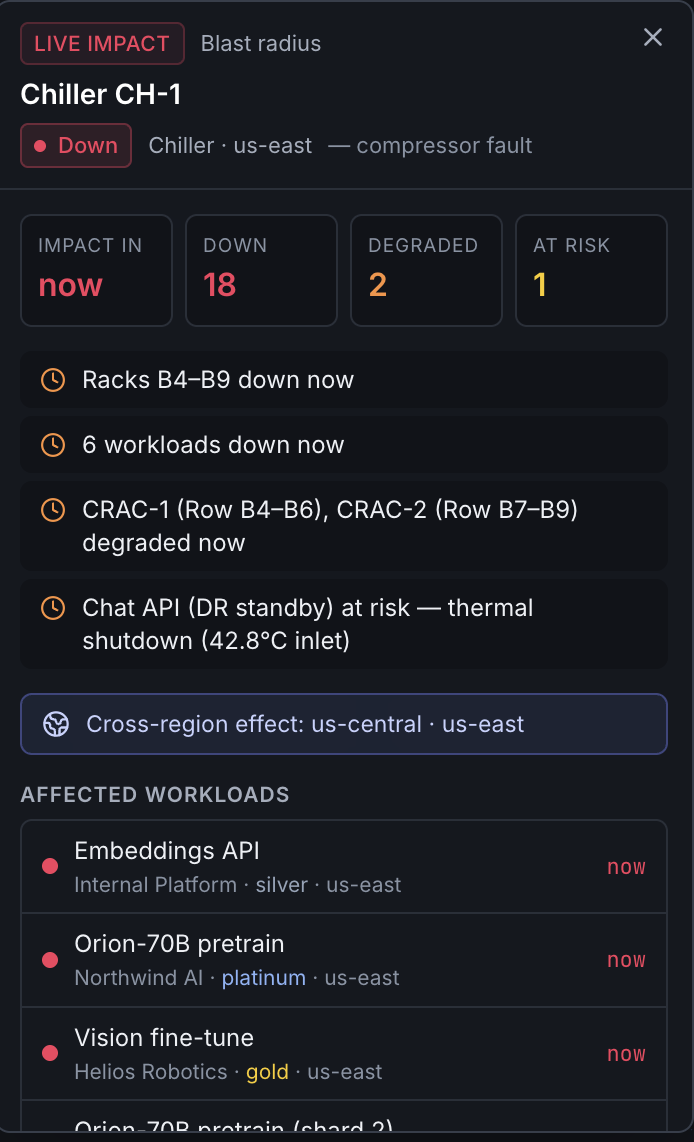
Blast Radius
Inspiration
AI data centers run around the clock, but the people keeping them healthy still face familiar problems: important warnings get buried, incidents go to the wrong person, and shift changes can lose critical context. We built DataSurge to help operators see what is at risk and know what needs attention next.
What it does
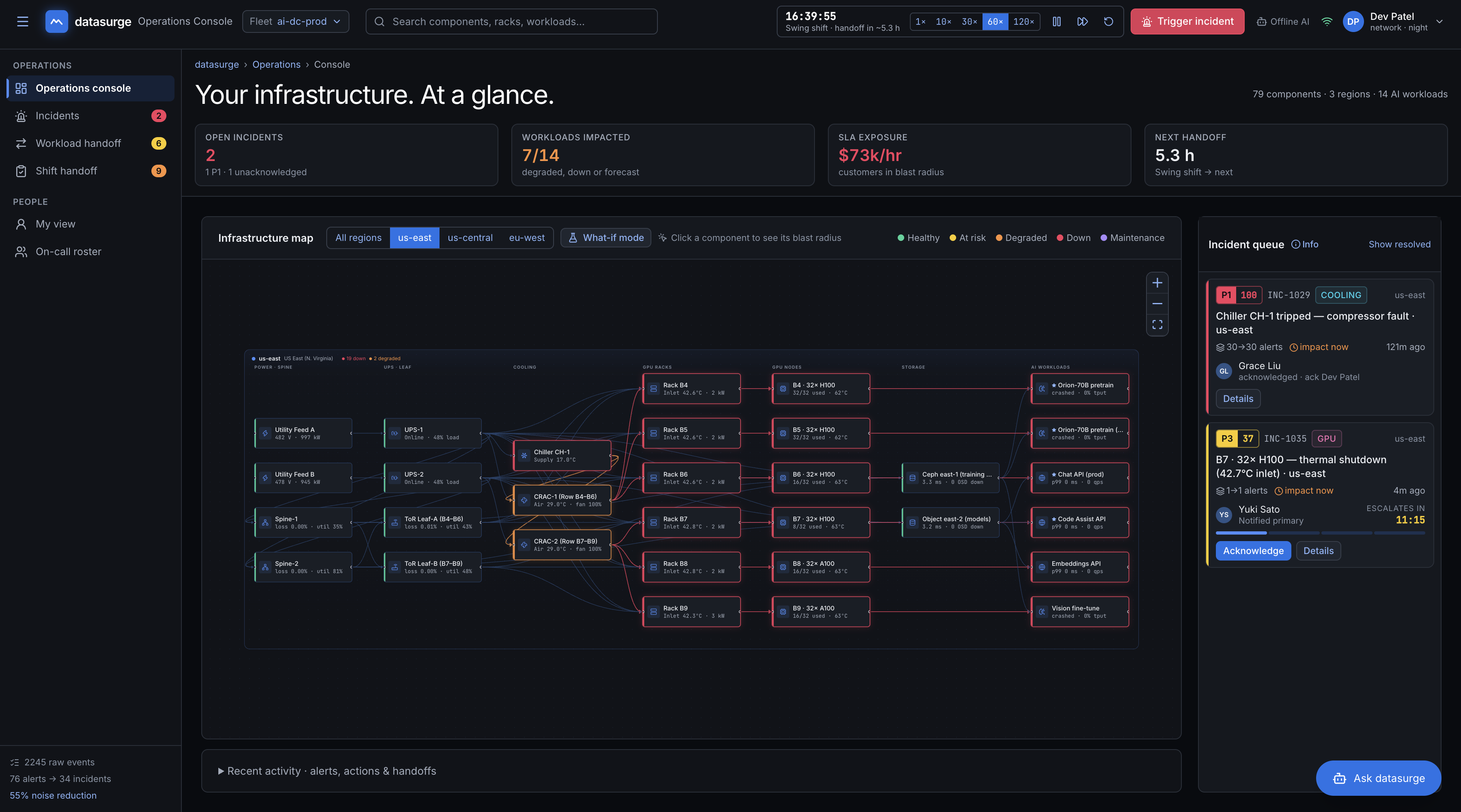
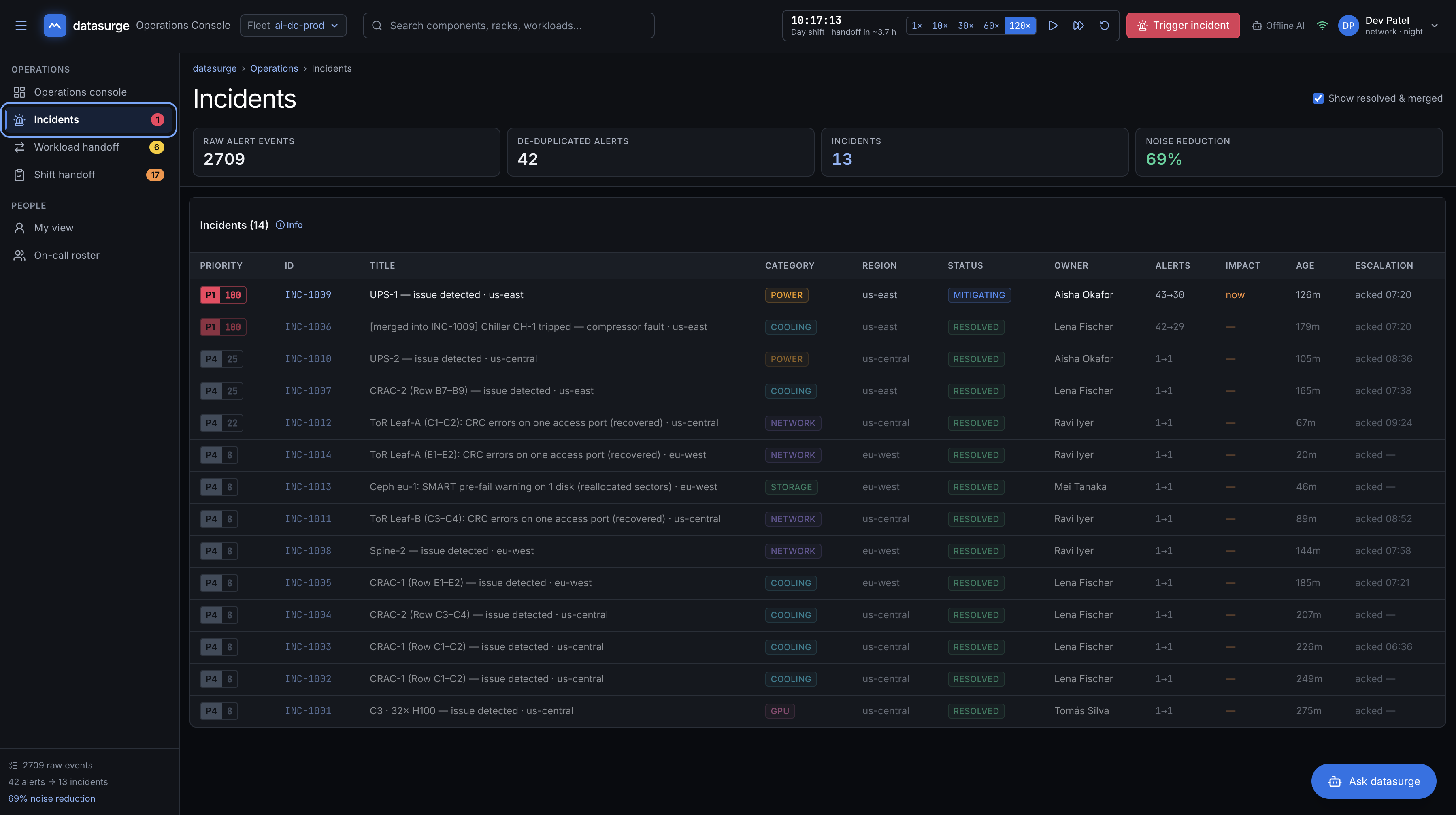
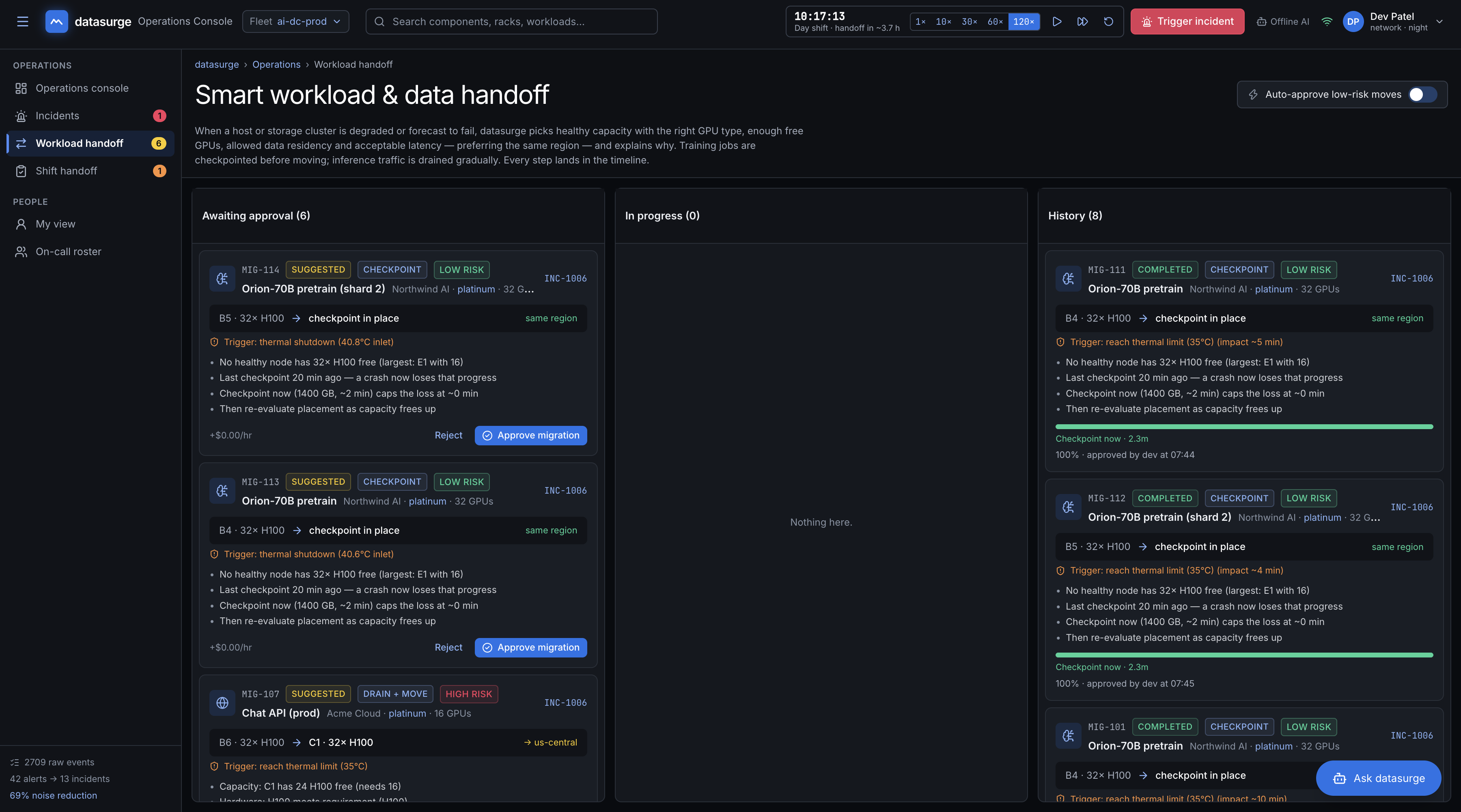
DataSurge is an interactive operations console for a simulated AI data center. When an incident occurs, operators can trace its impact through a dependency map, view affected workloads and estimated time to impact, and see which engineer is responsible. The console groups related alerts into incidents, routes them by specialty, and escalates incidents that go unacknowledged. It can suggest workload migrations or checkpoints, with reasoning about capacity, hardware, latency, risk, and cost. Its timeline records actions, while shift handoffs summarize open work for the incoming team to acknowledge. An AI assistant can answer questions about the simulation.
How we built it
We built the interface with React, TypeScript, and Tailwind. A Python FastAPI backend runs the simulation and serves live updates over WebSockets. The simulated environment, dependency graph, alerts, incidents, workload suggestions, and shift handoffs use seeded data, so the demo works without connecting to real data-center equipment. The AI assistant uses the Gemini API. Incident summaries and shift reports use an existing AI integration with a template fallback when AI is unavailable.
Challenges we ran into
We had to make a large system of connected components understandable at a glance. A fault can affect cooling equipment, GPU racks, and workloads across regions, so we worked to show the chain of impact without requiring operators to sift through every alert. Making the demo useful without real hardware was another challenge. We built a simulation with faults, forecasts, incident escalation, workload actions, and shift changes so people can follow an incident from detection to handoff.
Accomplishments that we're proud of
We brought the full incident workflow into one demo: a fault creates related alerts, the system identifies a responsible specialist, shows downstream impact, suggests workload protection, and carries unresolved work into the next shift.
The simulation also supports what-if maintenance previews and includes offline report templates, so core features remain demoable when an AI service is unavailable.
What we learned
Good operations software needs to answer three questions quickly: What happened? What could it affect? Who should act next? We also learned that routing, clear explanations, and shift handoffs matter as much as detecting a technical fault.
What's next for DataSurge
We want to make the dependency map easier to explore, improve the assistant’s reliability and conversation flow, and connect the console to real monitoring and incident-management systems. We would also test the interface with data-center operators to learn which information they need first during an incident.

