-
-
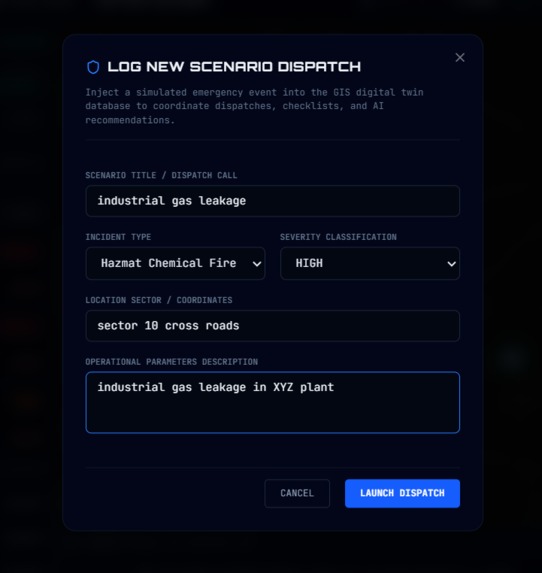
test incident report
-
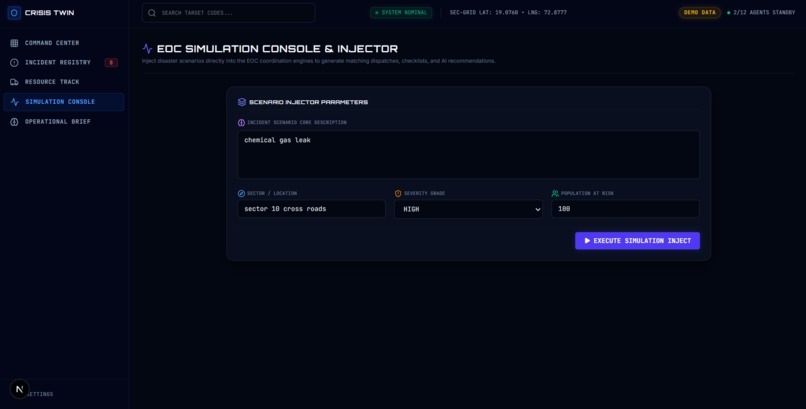
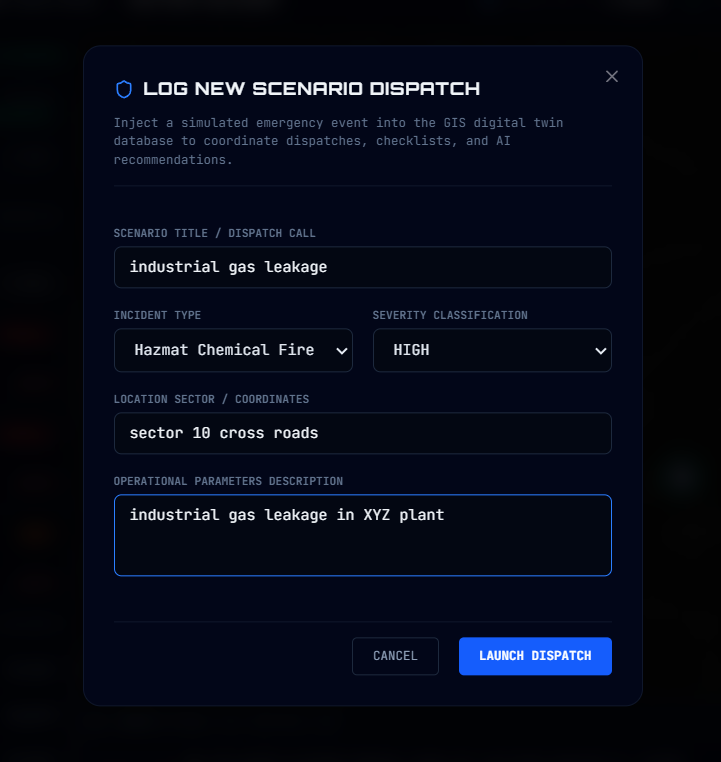
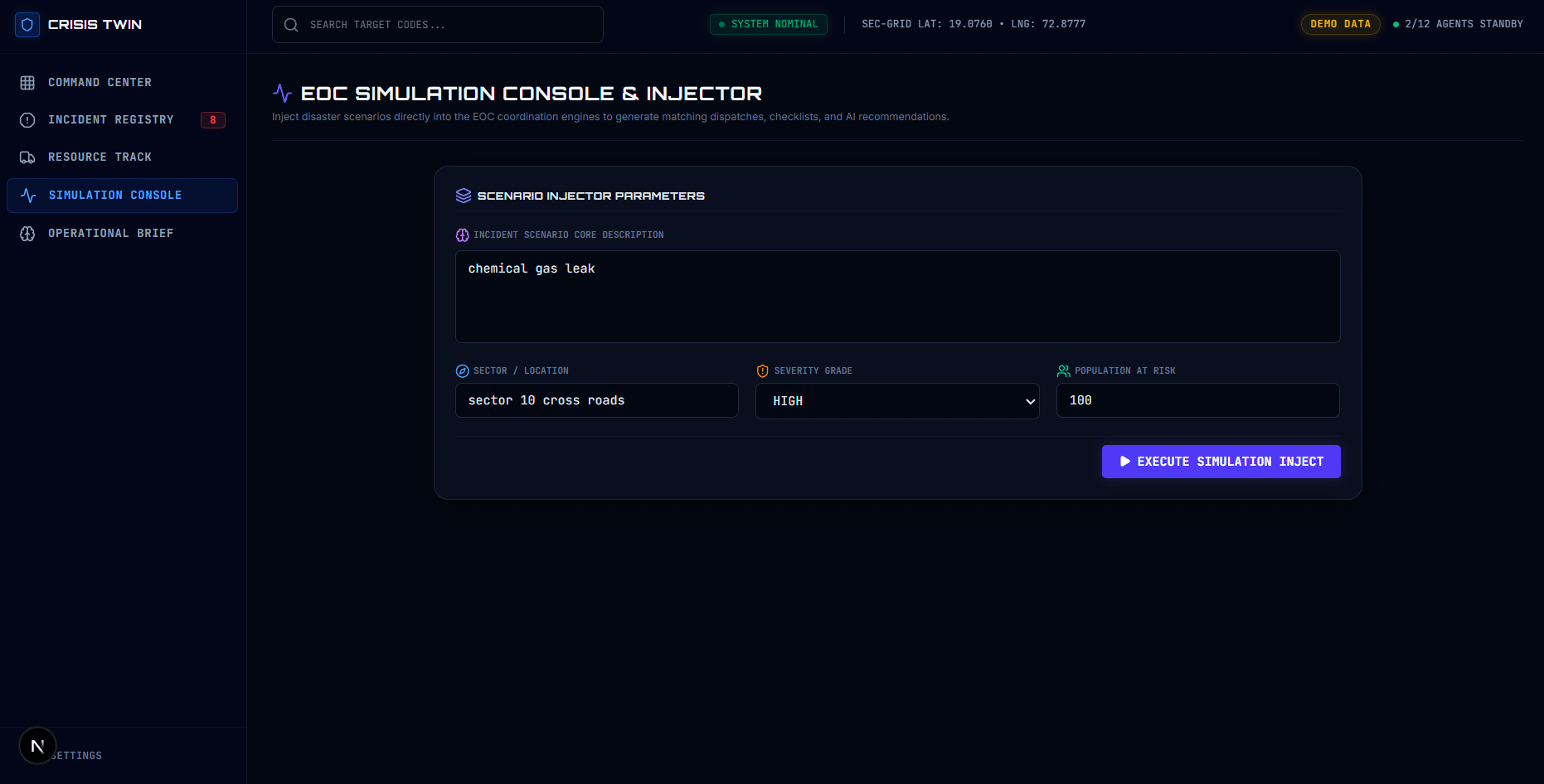
incident simulation
-
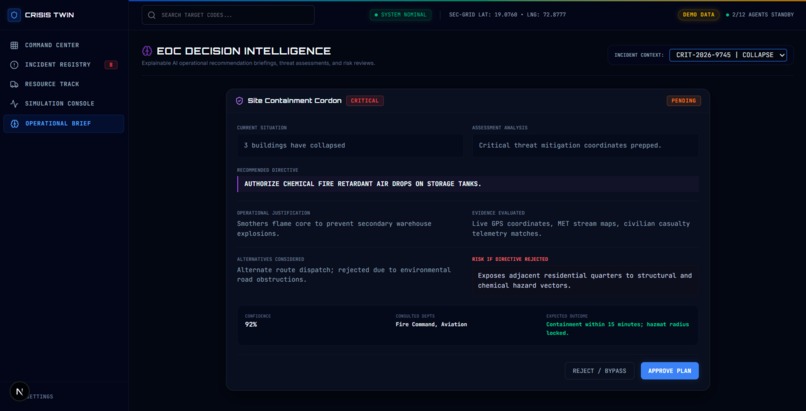
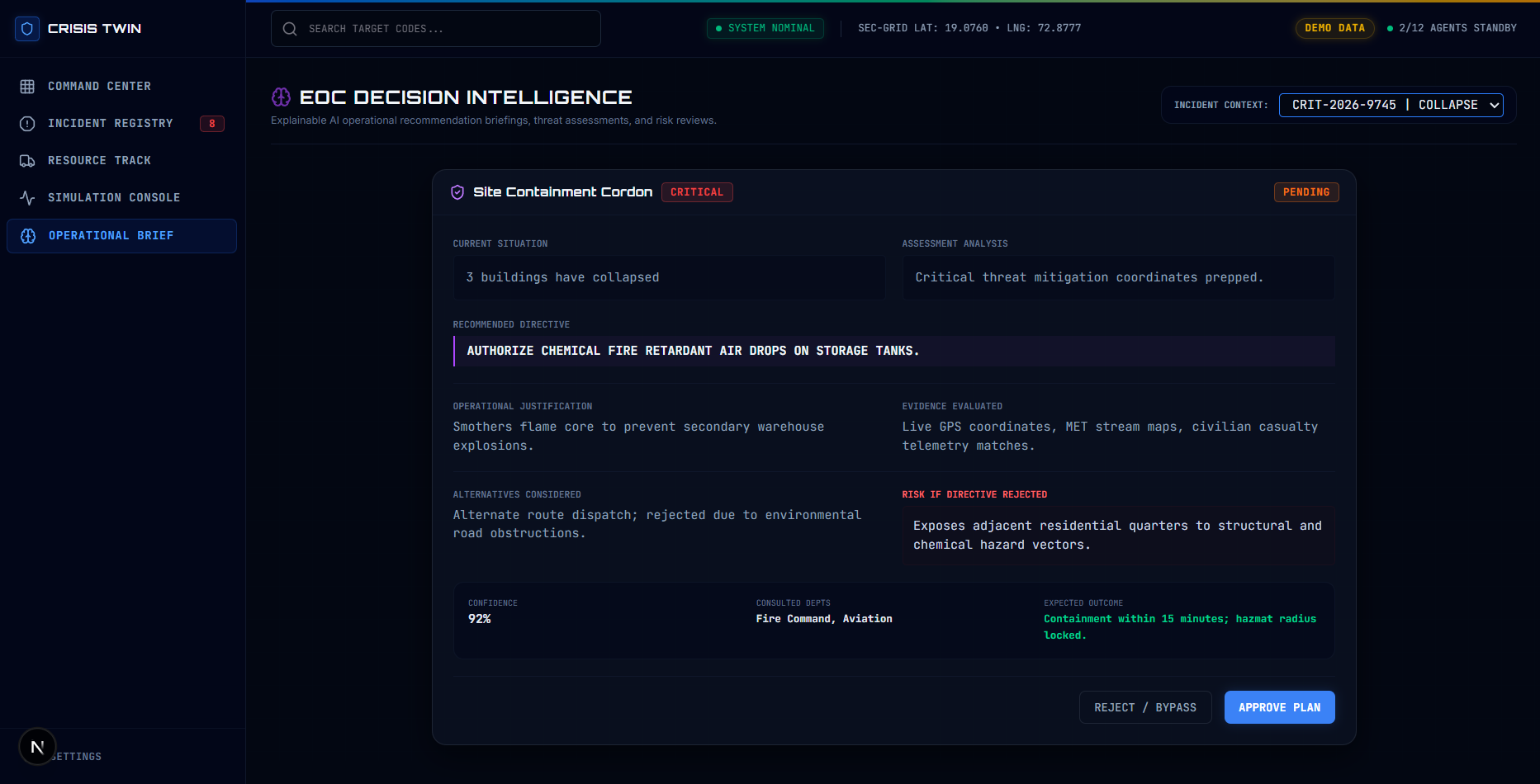
plan of action approval page
-
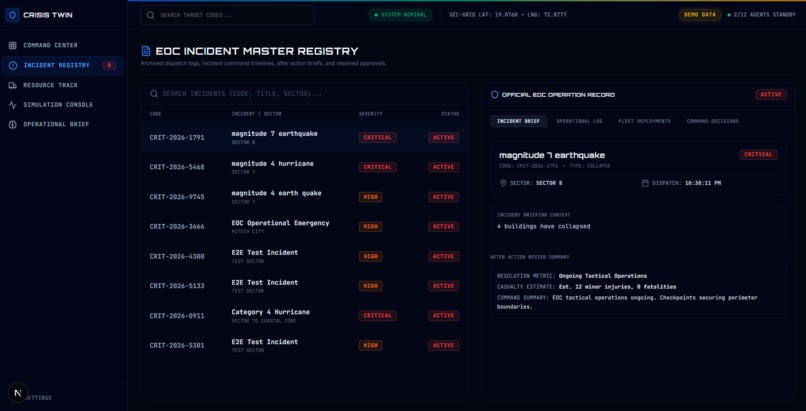
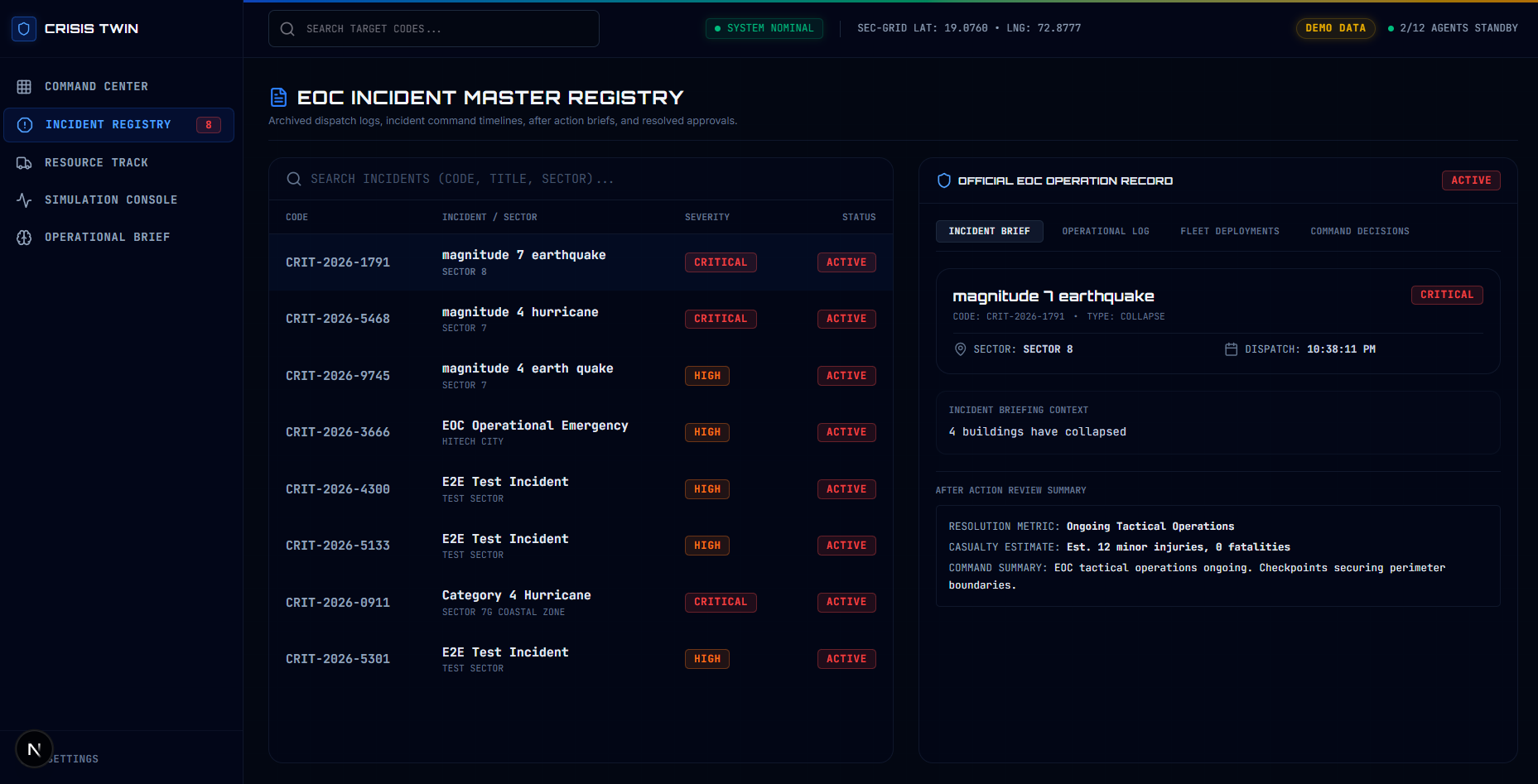
ongoing incident list
-
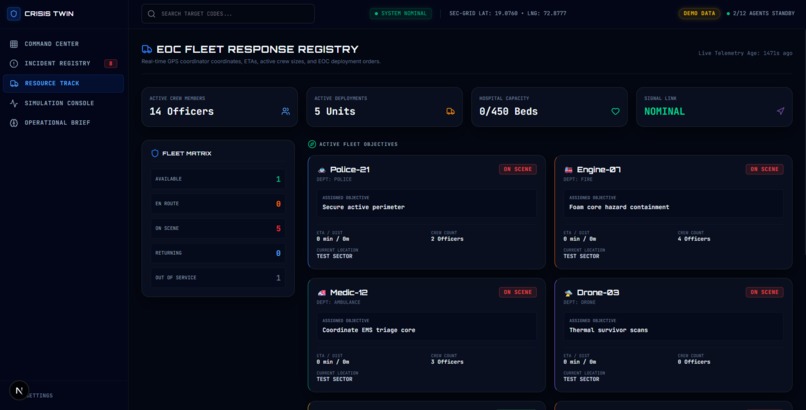
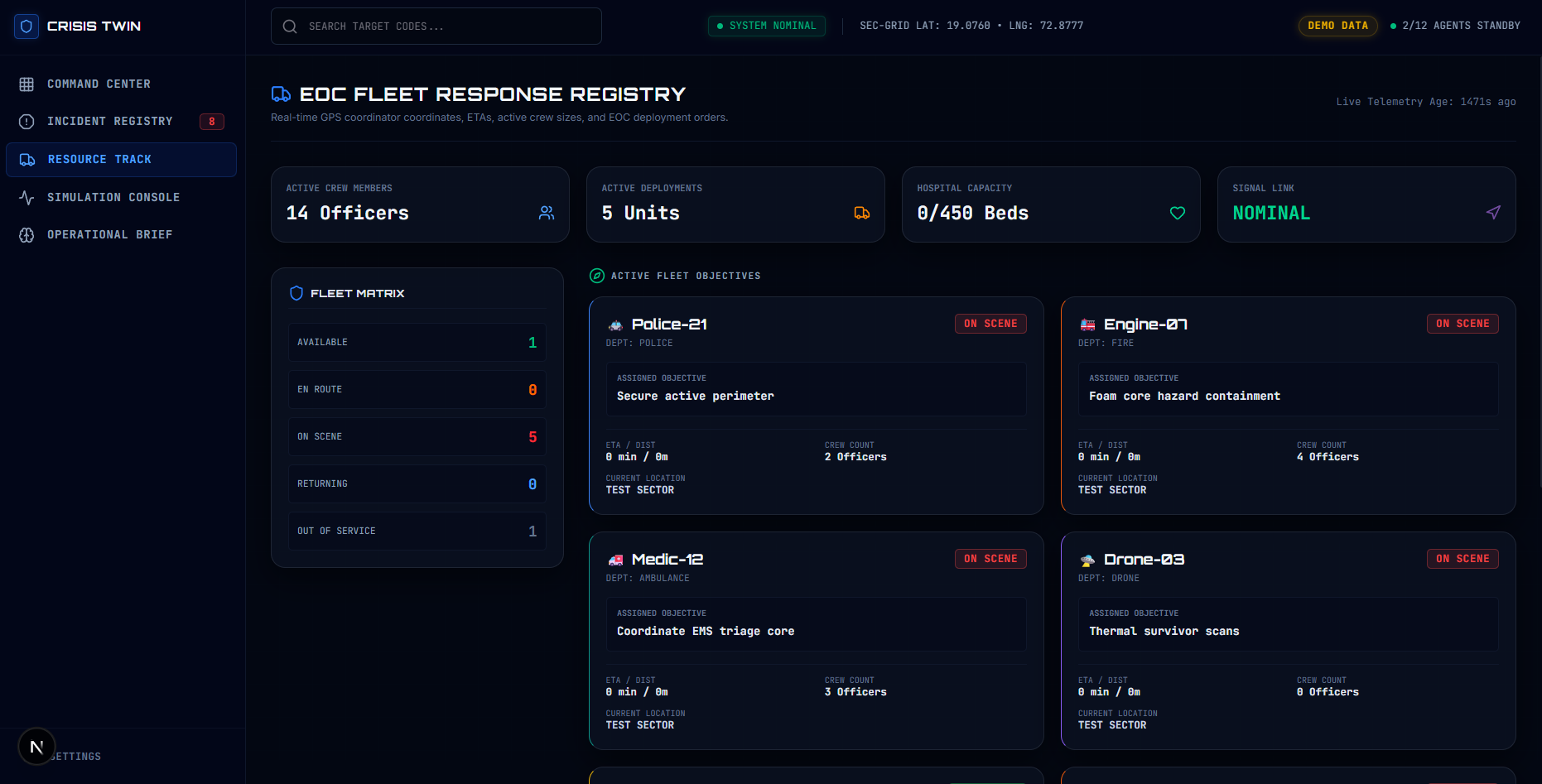
emergency vehicles and resource monitor
-
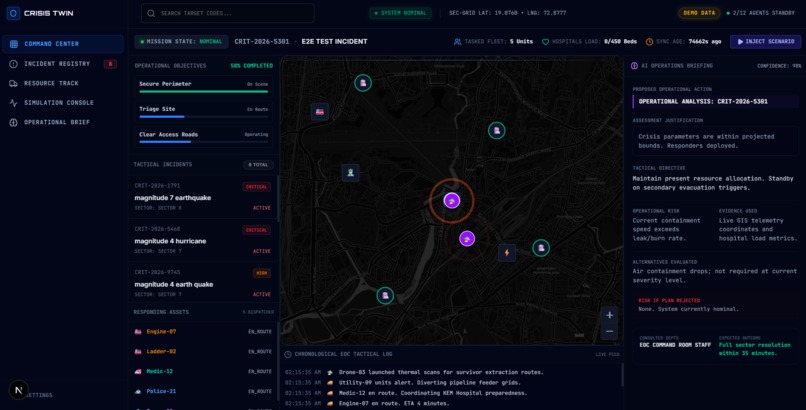
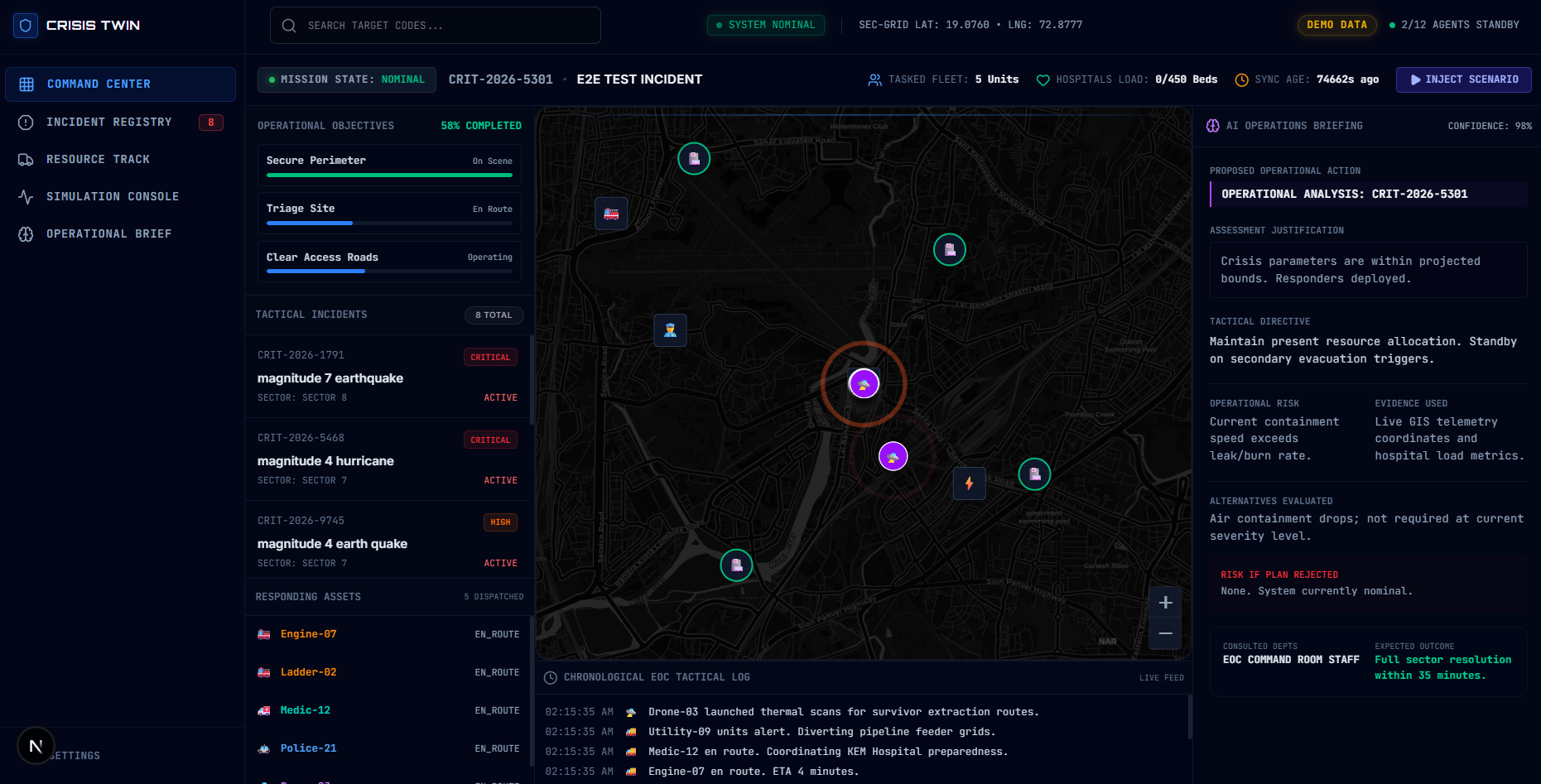
dashboard
Crisis Twin – AI-Powered Emergency Operations Command Center
Inspiration
During large-scale emergencies, every minute matters. Yet emergency response is often fragmented—police, fire departments, ambulances, hospitals, and utilities operate in separate systems, making coordination difficult when it is needed most. We wanted to explore a simple question:
What if every city had a digital twin that could coordinate every responding agency in real time while keeping humans in command of the final decisions?
That idea became Crisis Twin—an AI-assisted Emergency Operations Center designed to transform disconnected emergency response into a unified mission.
What it does
Crisis Twin provides a real-time operational view of an emergency by combining:
- Interactive GIS incident mapping
- Live responder and resource tracking
- AI-generated operational recommendations
- Human approval workflows for critical decisions
- Mission planning and objective tracking
- Explainable Decision Intelligence
- Incident timelines and after-action reporting
Instead of replacing emergency commanders, the platform augments them by providing situational awareness, coordinated response plans, and evidence-backed recommendations while ensuring humans remain in control of every critical action.
How we built it
We built Crisis Twin as a full-stack web application using:
- Next.js for the frontend and API routes
- React for the interactive command interface
- TypeScript for type-safe development
- Prisma + SQLite for data persistence
- Zustand for centralized real-time state management
- Leaflet for interactive GIS mapping
- AI orchestration through a unified Emergency Operations Commander that generates explainable operational recommendations and mission plans.
The platform continuously synchronizes incidents, responder deployments, approvals, timelines, and mission status into a single operational workspace.
Challenges we ran into
One of our biggest challenges was balancing automation with human decision-making. We didn't want AI making critical emergency decisions autonomously, so we redesigned the workflow around human-in-the-loop approvals, ensuring AI acts as a decision-support system rather than a replacement for emergency commanders.
Another challenge was avoiding information overload. Emergency command software must communicate complex situations within seconds, so we repeatedly redesigned the interface to prioritize situational awareness, operational clarity, and rapid decision-making instead of simply displaying more data.
What we learned
Building Crisis Twin taught us that the hardest part wasn't generating AI recommendations—it was designing a system that people could trust under pressure. Explainability, clear workflows, and thoughtful information hierarchy proved just as important as the underlying technology.
We also gained valuable experience designing mission-centric interfaces, integrating geospatial visualization with operational data, and building scalable state management for real-time applications.
What's next for Crisis Twin
Our vision is to evolve Crisis Twin into a deployable emergency management platform by integrating live GIS feeds, IoT sensors, weather services, traffic data, CAD systems, and real responder telemetry. Future versions will support multi-incident coordination, predictive resource allocation, and richer operational simulations to help cities prepare for and respond to crises more effectively.
Built With
- css
- leaflet.js
- lucide
- next.js
- node.js
- orm
- prisma
- react
- shadcn/ui
- sqlite
- tailwind
- typescript
- zustand

Log in or sign up for Devpost to join the conversation.