Inspiration
When disasters strike, relief teams waste the critical first hours coordinating across WhatsApp groups and spreadsheets instead of actually helping. We wanted a system where, the moment a disaster is detected, an organized response workspace would appear, helping the rescue team to get into work as quickly as possible.
What it does
Crisis Coordinator is a Slack agent that activates automatically when a natural disaster is detected. It creates a dedicated incident workspace with sub-channels for volunteers, supplies, medical, and communications, then posts live situation briefings of the tasks that are done and the things that are still pending.
How we built it
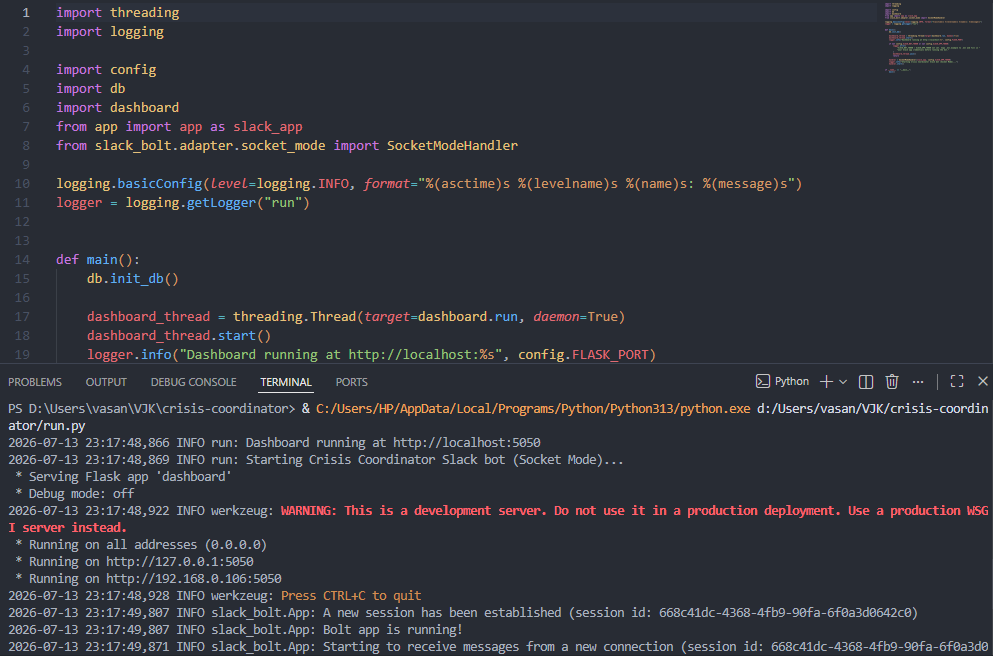
We built Crisis Coordinator as a Python Slack Bolt agent running in Socket Mode, paired with a shared SQLite store so every action such as detection, channel creation, task claims, and closures writes to a single auditable timeline.
Challenges we ran into
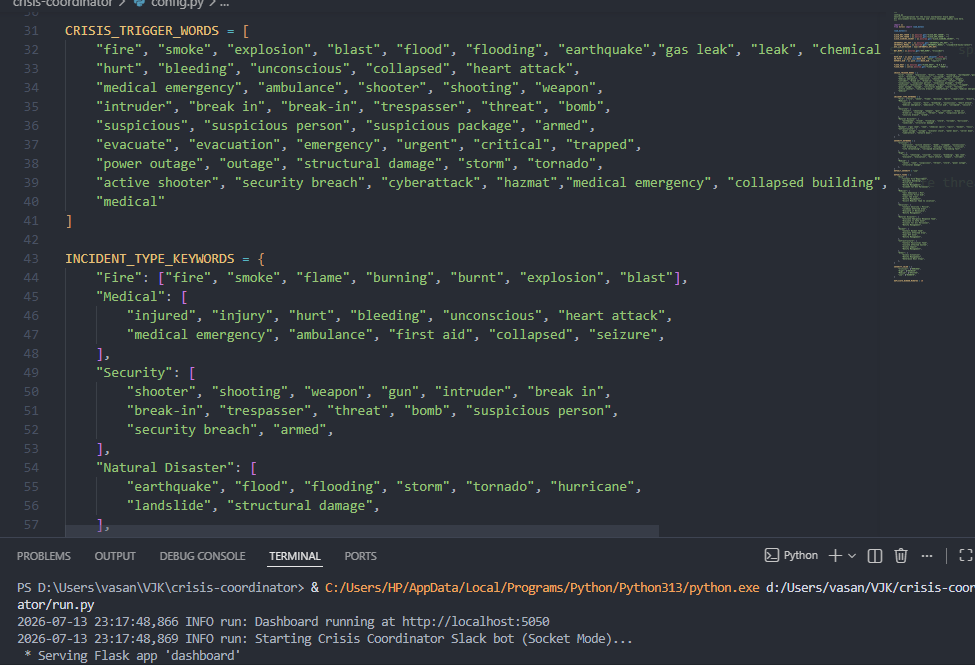
Filtering real alerts from false positives, designing channels that scale from small local incidents to large multi-org responses, and finding the right update cadence to inform without overwhelming teams.
Accomplishments that we're proud of
A full response workspace will be up in under 60 seconds of a disaster being detected; volunteers get task clarity instantly, and any late-joining team member can get fully briefed in under a minute using Slack AI summaries.
What we learned
Slack is more than a communication tool; it can be the actual command layer for real-world crisis operations when real-time data, MCP integrations, and AI are combined.
What's next for Crisis Coordinator
Multi-language briefings, disaster-type playbooks, and direct integrations with Red Cross and UN OCHA systems. and fix the issues the users are facing.

Log in or sign up for Devpost to join the conversation.