-
-
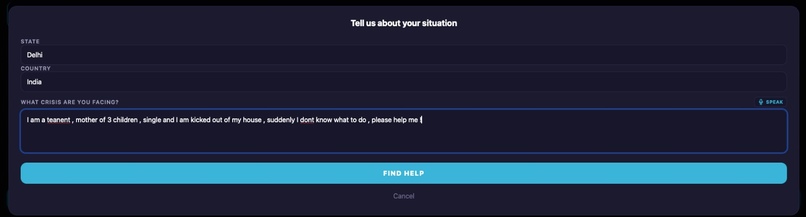
A screenshot of the basic, initial MVP version of CrisisCompass
-
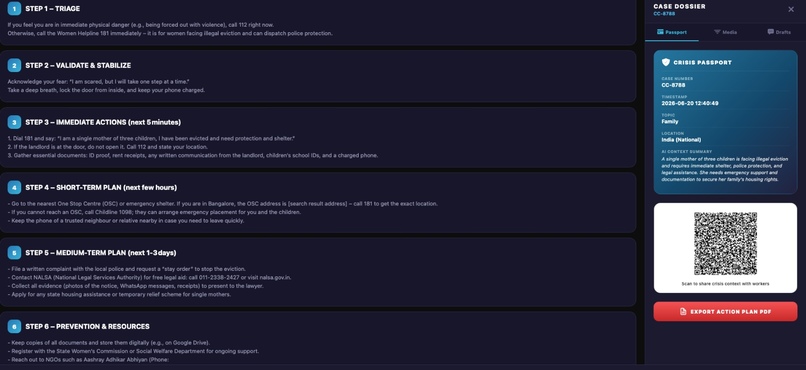
A screenshot of the basic, initial MVP version of CrisisCompass
Inspiration
I've seen it happen multiple times. A sudden problem or an unexpected surprise just pops up out of nowhere, scaring the daylights out of you. Leaving you stuck, with seemingly no hope of getting out. Nobody to support or comfort you, nowhere to go, and nothing to do, you just let life happen. All you can do is maybe google a few things and hope for the best, desperately waiting for help, but nothing arrives. Even in my life, ive seen close relative fall due to a sudden crisis that they can't solve alone.
What it does
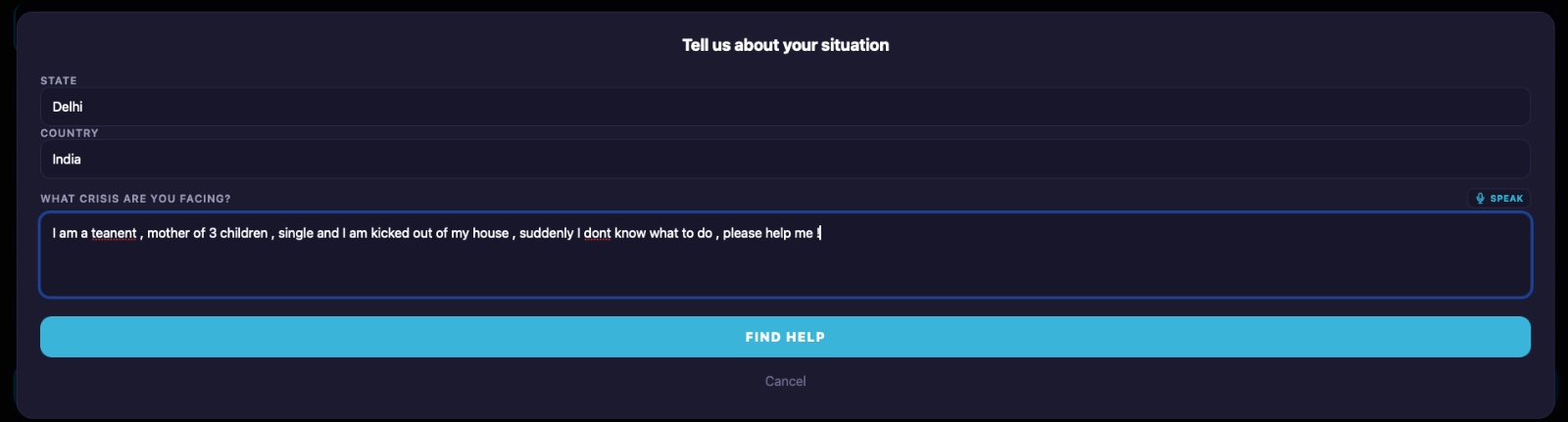
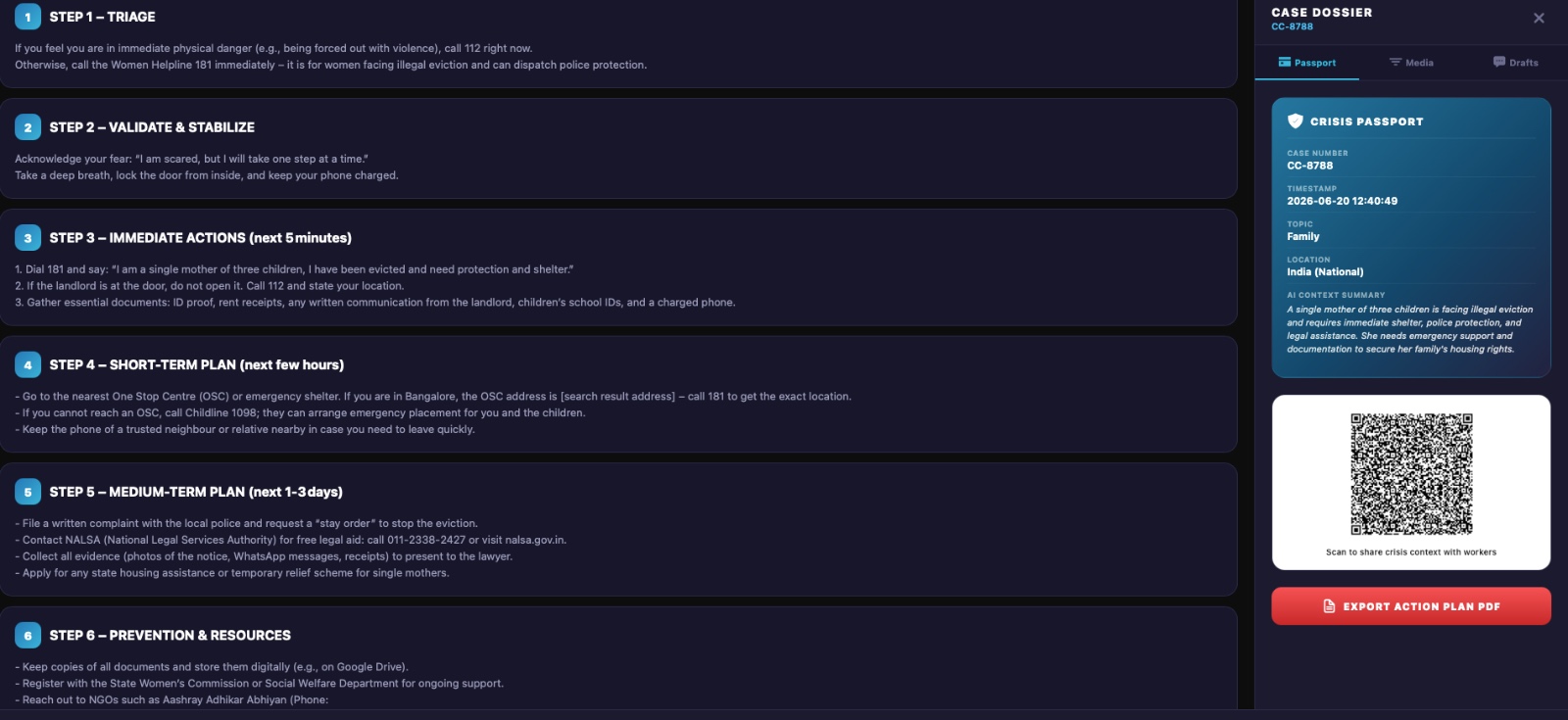
So we decided to build CrisisCompass. CrisisCompass is a web application/platform which is designed to help you during crises. We can take unstructured, high-stress voice inputs or scrambled texts and turn that into a clear, step-by-step personalized survival plan. It searches geo-localized physical resources using Serp API, scrapes the latest up-to-date helpline directories like findahelpline.com, and has a real-time crowd-sourced feedback loop. CrisisCompass has several features like an interactive compass mode (micro-action gate) which breaks down an overwhelming survival plan into one small gamified task at a time to break choice paralysis, the intake passport which compiles the user's specific crisis context and localized needs into a personalized sidebar, which can also be accessed by NGO workers and helpline attendants through a secure QR code, offline-first caching which dynamically caches the action plan and other data to the local device storage the second it is generated so that help stays with you even when internet doesn't and drafted communications which pre-formats personalized text scripts and email drafts answering the three most common questions NGOs ask to eliminate hesitation and thought paralysis while speaking on the phone. CrisisCompass also has countless other mini features like a background whisper mode, and a decentralized verification loop that largely contribute in serving help to the user. With CrisisCompass, the user doesnt have to desperately try to find help, help finds them. Getting you out of problems is our commitment.
How we built it
We built CrisisCompass with a vision and Google Antigravity. The brain of our application is a FastAPI backendd that orchestrates an AI classification pipeline via LangChain, utilizing a fast, open-source model through the OpenRouter API. We also integrated SerpAPI to feed this model live, localized infrastructure data (like Google maps spatial queries for emergency shelter locations, NGO headquarters, etc) alongside crawl4ai's web crawler to scrape and verify high-priority helpline registries in real time. On the client's side frontend, we built a fluid, comforting web application using React, Typescript and Tailwind CSS to minimize visual noise for a user who's already experiencing intense anxiety and trauma.
Challenges we ran into
Well, these were many. The FastAPI backend, the core part of our project just quit the day before we decided to submit the project, we also had several distractions that we had to handle together as a team, keeping each other accountable. We had to take multiple criteria into consideration while building this without compromising any of these. Remember, our target users are people in immediate crises which breeds anxiety, pressure and a traumatic state of mind. Anyhow, we felt it was incredibly effective to map out the whole system architecture on paper so we have a bird's eye view on every single component of our project.
Accomplishments that we're proud of
We built a solution that acknowledges human warmth and connections. We are inexpressibly proud of Compass Mode that turns challenge into a game, and the Intake Passport-- features that are designed for a brain experiencing intense anxiety, trauma and pressure. Our platform embodies human values, connections, unity, and mutual trust. We didnt just build a cold utility wrapper, but a comforting platform that tells the users "Don't worry, take a breath, We've got you covered. Just start with Step 1."
What we learned
We learned that in any problem you face, complexity is the villan. The most advanced tech in the world is completely useless if it requires a high-speed 5G network and perfect reading comprehension all the time to operate. Life isn't perfect, not even close, so we decided that the best thing to be is down to Earth, calm, and simple.
What's next for Crisis Compass
Okay, this is huge. Our next milestones includes going global, developing an autonomous "Lifeguard Agent" that reaches out to helplines, NGOs, and agencies all on its own with your context. We are going to make this completely mobile-friendly, still preserving the free nature of the project, make this a two-sided ecosystem: we'll build an incredibly simple, secure dashboard for the NGOs and shelters themselves. The helpers are directly involved in helping the user. We will also make significant updates to the crowd-sourced verification loop, and build a new feature called "Compass Map" which features a personalized offline map with the locations of all the helpful areas, shelters, NGOs, etc which'll be helpful for you. One future problem is funding, to solve that we are already slowly reaching out to platforms and in the future, hope to partner with the government in helping the people with AI.
Built With
- crawl4ai
- fastapi
- fpdf2
- langchain
- openrouter
- react
- serpapi
- tailwindcss


Log in or sign up for Devpost to join the conversation.