-
-
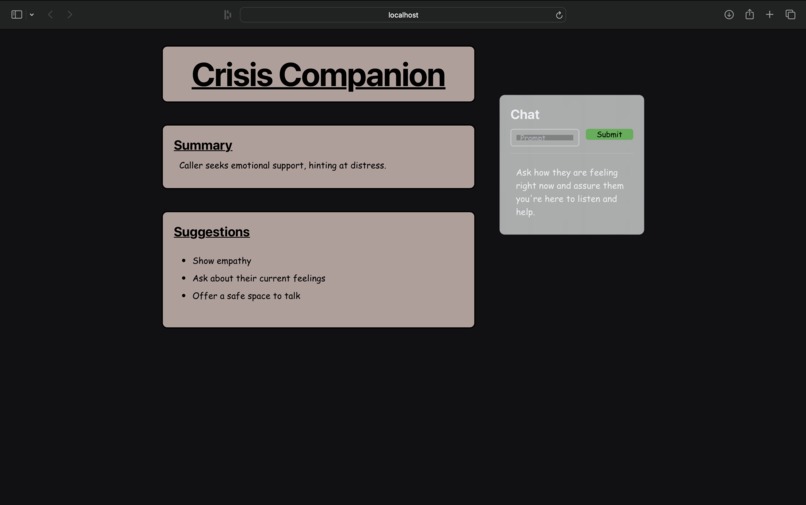
Crisis Counselor Dashboard
Inspiration
As someone who has suffered from mental health issues in recent years, I wanted to create a website that can help others who have been through what I have. Using this, I also wanted to use AI to make certain technologies accessible to those who have limited access to professional healthcare.
What it does
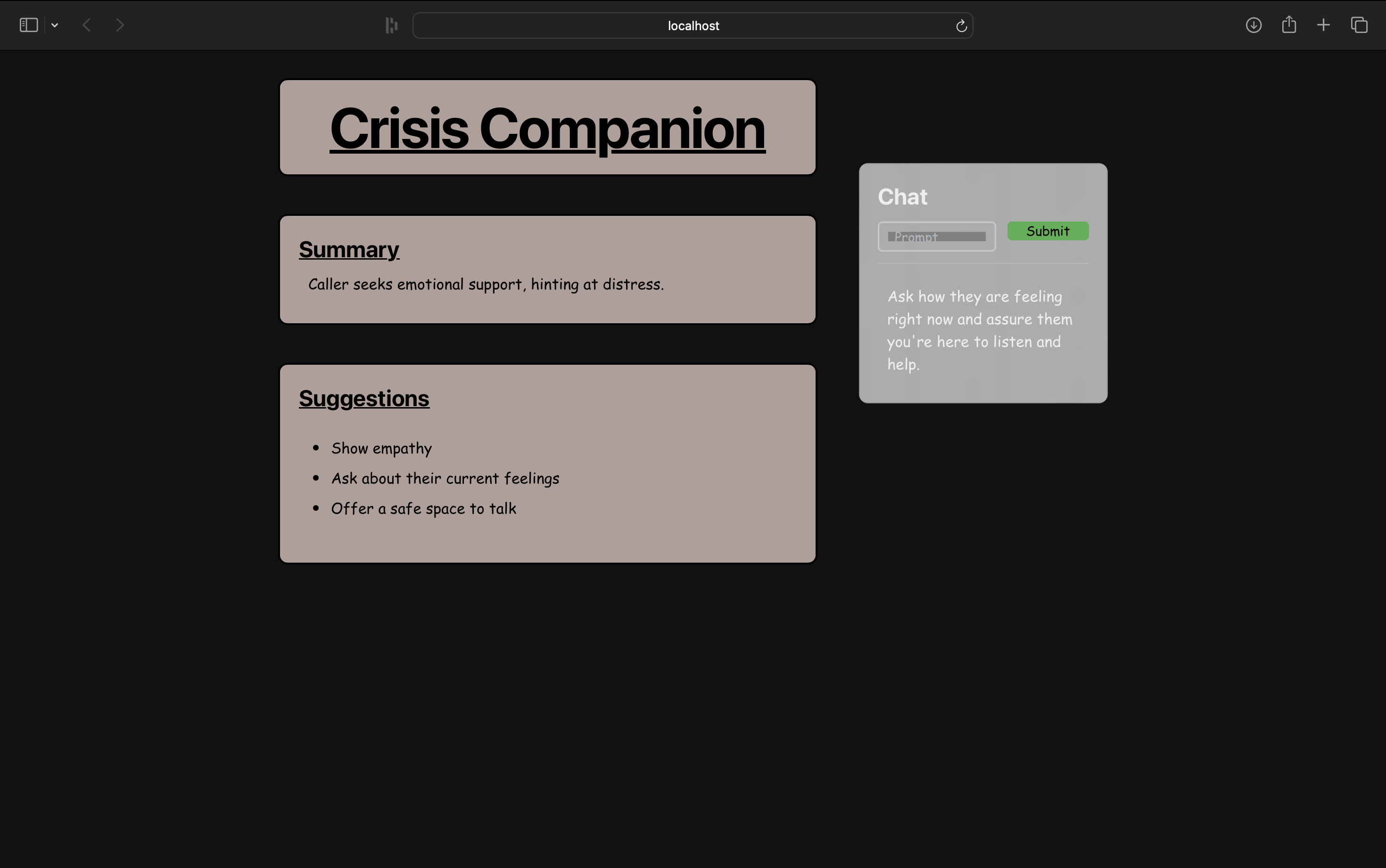
We created an assistive tool for volunteers who work for suicide hotlines and therapists who work over the phone. It provides a summary of the conversation, potential clarifying questions, and a chat interface to inquire about mental health topics that it is trained on.
How we built it
We built the frontend using Reflex and our backend consisted of Deepgram for the voice-to-text and OpenAI for our assistant model.
Challenges we ran into
We found it difficult to connect the frontend and backend. We also found it difficult to find data to train our assistant on as many suicide hotline searches refer you to a hotline. We also found it difficult for diarization (splitting a transcript into two separate voices)
Accomplishments that we're proud of
We are especially proud of the way our group coordinated with each other. We split up the work very well and communicated our strengths and weaknesses. We also took into consideration of ideas from everyone in our group.
What we learned
We learned how to use the Reflex and Deepgram API in the span of a few hours. We also learned how to create both a frontend and backend which was easily supported by the ease of Reflex.
What's next for Crisis Companion
We hope to expand our website to help other sectors (medical, interviews, etc). We also hope to make our model faster so that users can get a quicker potential response better.
Built With
- deepgram
- openai
- python
- reflex


Log in or sign up for Devpost to join the conversation.