Inspiration
In times of crisis, efficient resource distribution can be the difference between life and death. The inspiration behind CrisisAid is to use data-driven insights to predict and allocate disaster relief resources effectively. By leveraging historical data on disasters, CrisisAid aims to support emergency planners and relief organizations in making swift, impactful decisions.
What it does
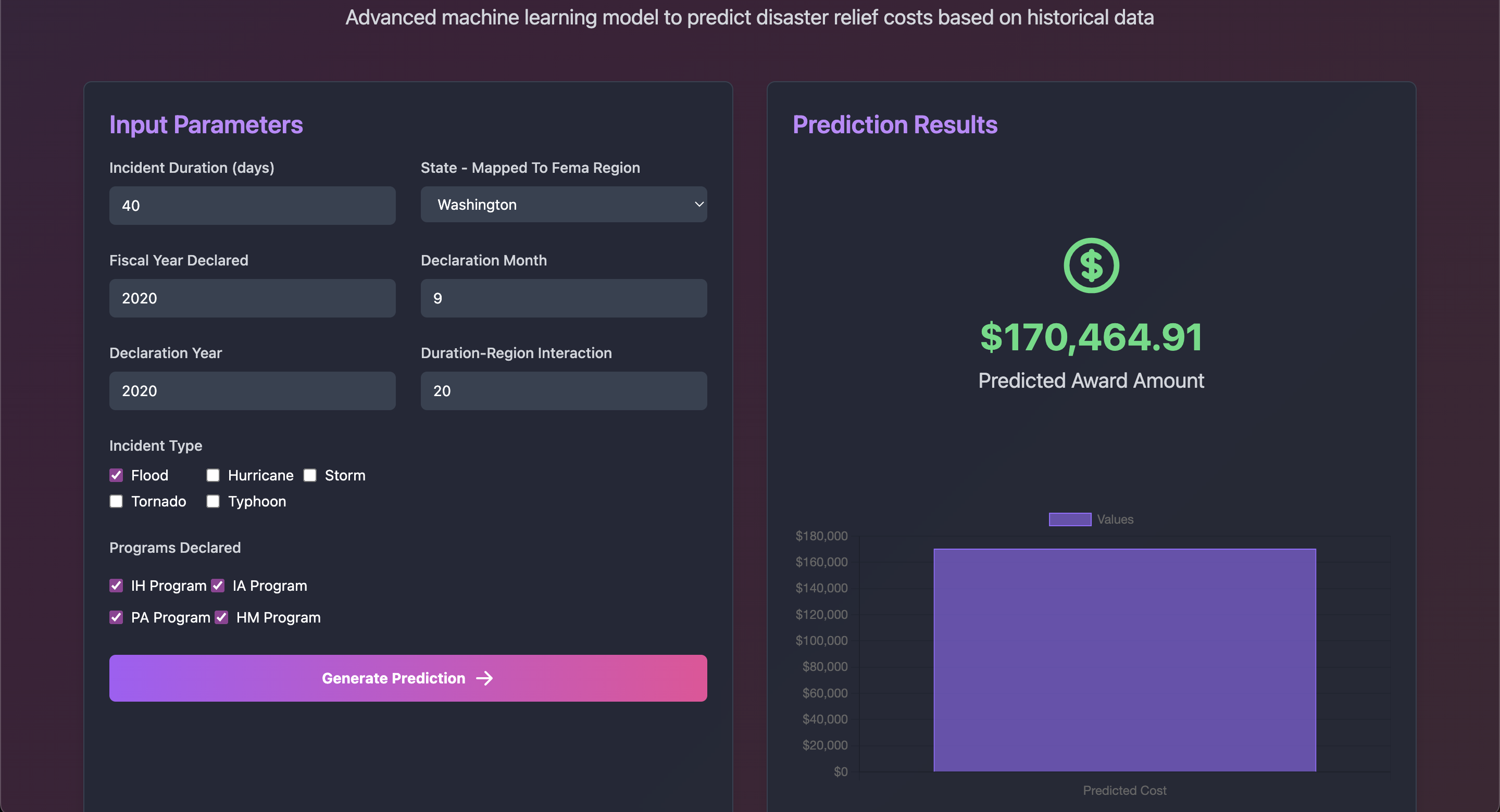
CrisisAid predicts the amount of disaster relief resources needed in specific regions based on historical patterns of various disaster types, durations, and regions. By building a robust predictive model, the platform provides optimized allocations, reducing both wasted resources and response time during crises.
How we built it
The project was built using Python and the Decision Trees machine learning model, enhanced by preprocessing and feature engineering steps. The historical disaster data includes fields such as disaster type, affected region, duration, and prior aid distribution. After data preprocessing, the model uses feature engineering to improve accuracy and trains on a combination of these features to generate reliable predictions. We also utilized log transformation on the award amount to reduce data skewness and ensure a more balanced distribution.
Challenges we ran into
Key challenges included managing data quality, particularly handling missing or inconsistent data and finding ways to accurately represent complex interactions between factors like region and disaster duration. Tuning the model for optimized performance while avoiding overfitting was also a crucial and intricate task.
Accomplishments that we're proud of
We’re proud of building a model that not only predicts relief allocations accurately but also does so in a user-friendly and interpretable manner. Achieving meaningful evaluation scores and integrating robust preprocessing steps to manage data inconsistencies were also significant accomplishments.
What we learned
This project highlighted the importance of feature engineering and preprocessing in creating a machine learning model with real-world impact. We learned about the intricacies of working with disaster data, particularly when it comes to predicting aid amounts, and gained insights into balancing model accuracy with interpretability.
What's next for Crisis Aid
The next steps involve expanding CrisisAid’s dataset to cover global disasters and integrating real-time data for on-the-fly predictions. We also plan to enhance the model’s explainability by adding features like LIME or SHAP to provide insights into prediction factors, making it even more useful for decision-makers in relief organizations.
Built With
- contabo
- digitalocean
- numpy
- pandas
- python
- sckit-learn


Log in or sign up for Devpost to join the conversation.