-
-
-
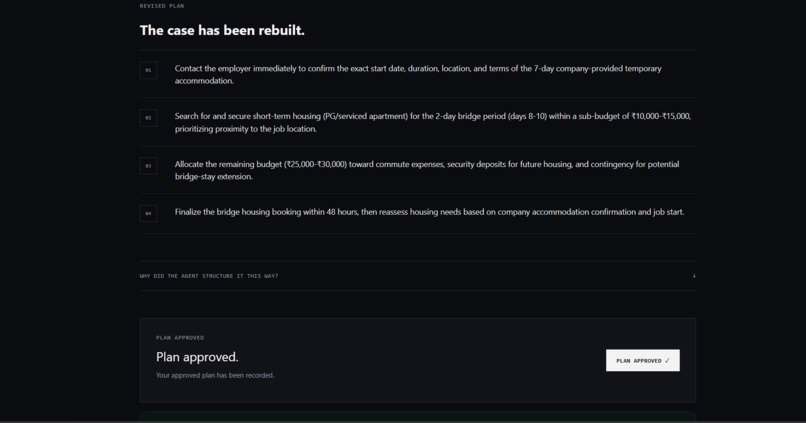
Revised Plan / Approval
-
-
-
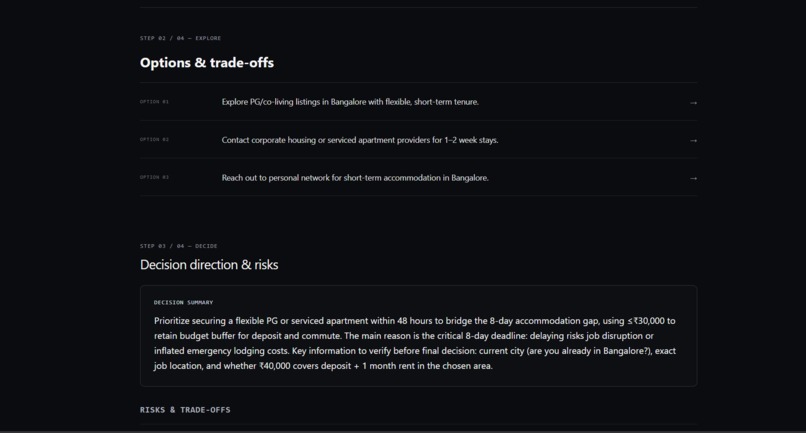
Options & Decision
-
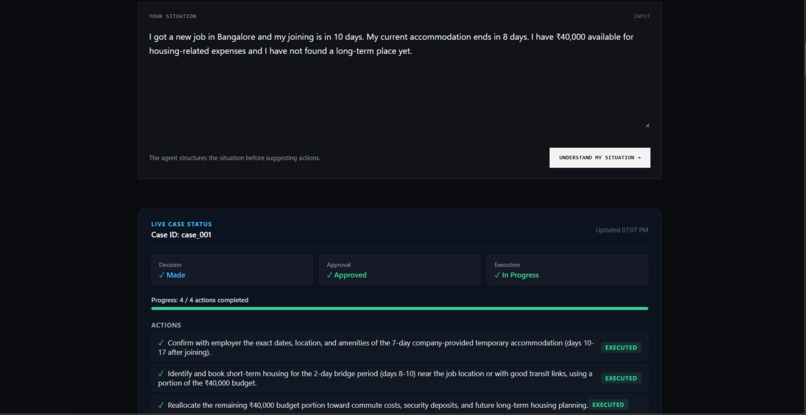
-
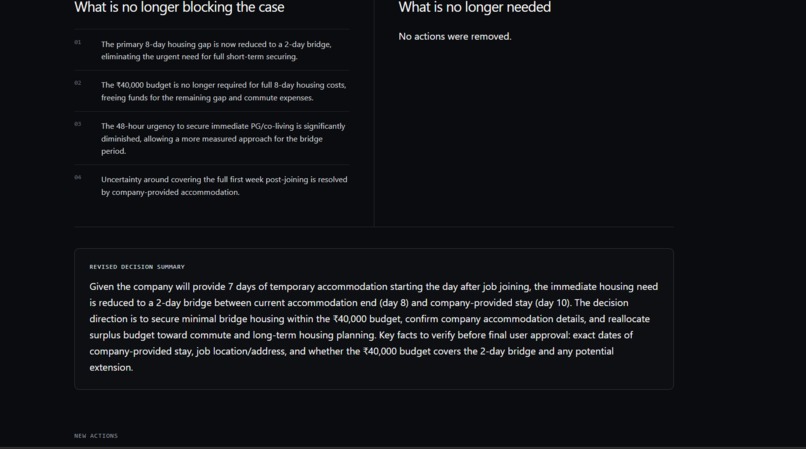
-
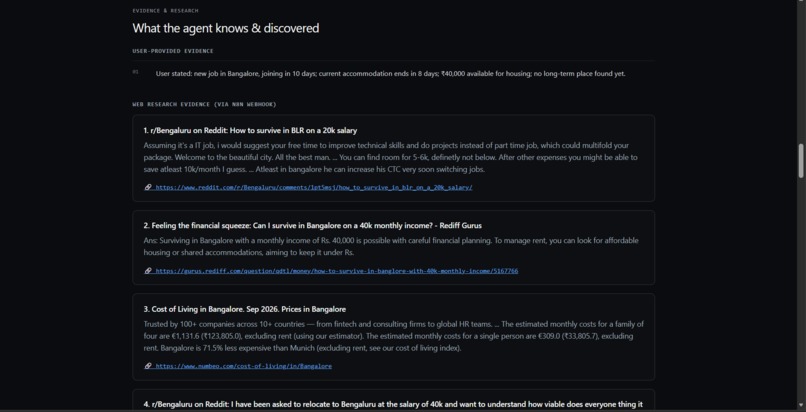
Evidence & Research
-
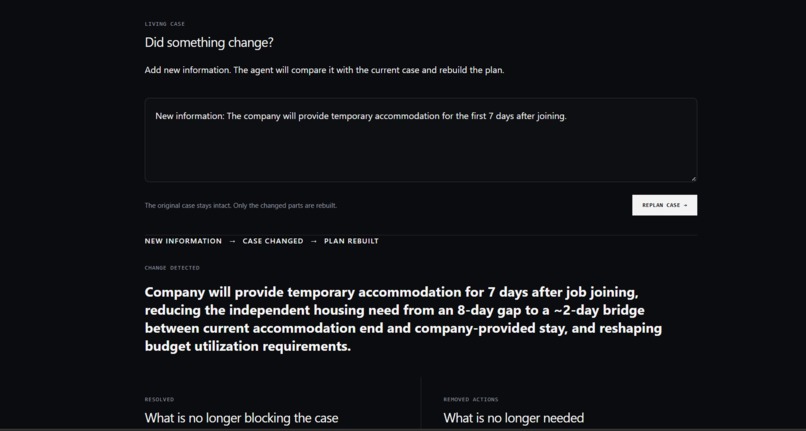
New Information / Replan
-
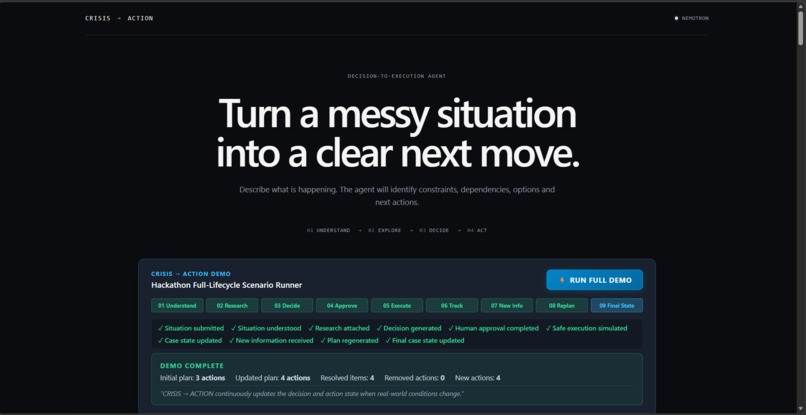
Full Lifecycle Demo
-
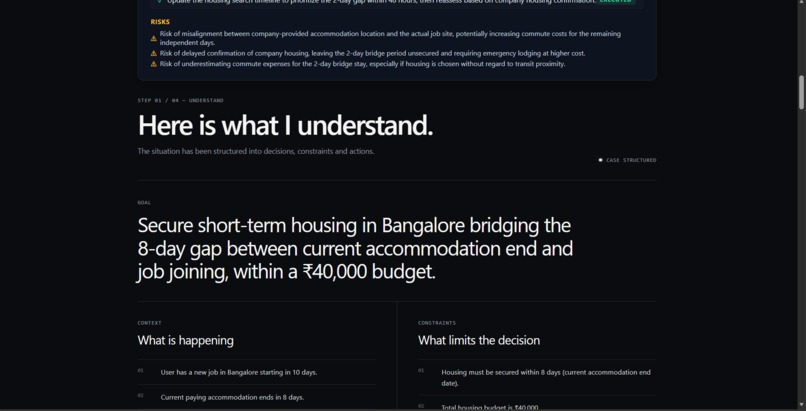
Understand / Case State
Inspiration
Real-world problems are rarely clean or simple. People often have to make decisions while dealing with deadlines, budgets, missing information, changing circumstances, and multiple dependencies.
We wanted to build an AI system that does more than give a one-time answer. The idea behind CRISIS → ACTION came from a simple question:
What if an AI could continuously understand a real-world situation, help make a decision, get human approval, execute the approved plan, track progress, and adapt when new information appears?
This led us to build CRISIS → ACTION — a Decision-to-Execution Agent designed to turn messy situations into structured, actionable decision workflows.
What it does
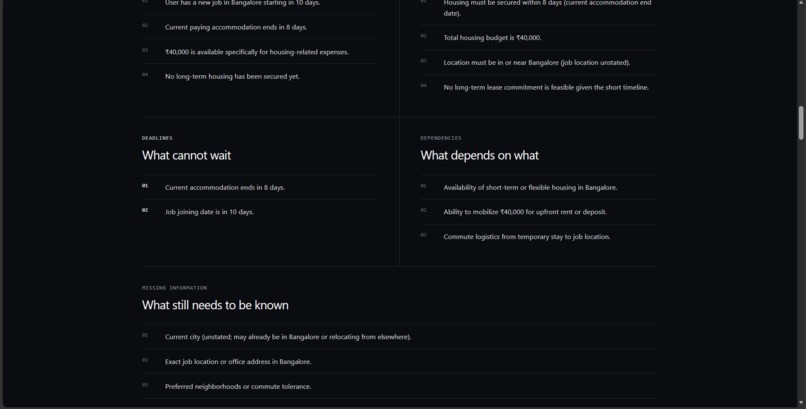
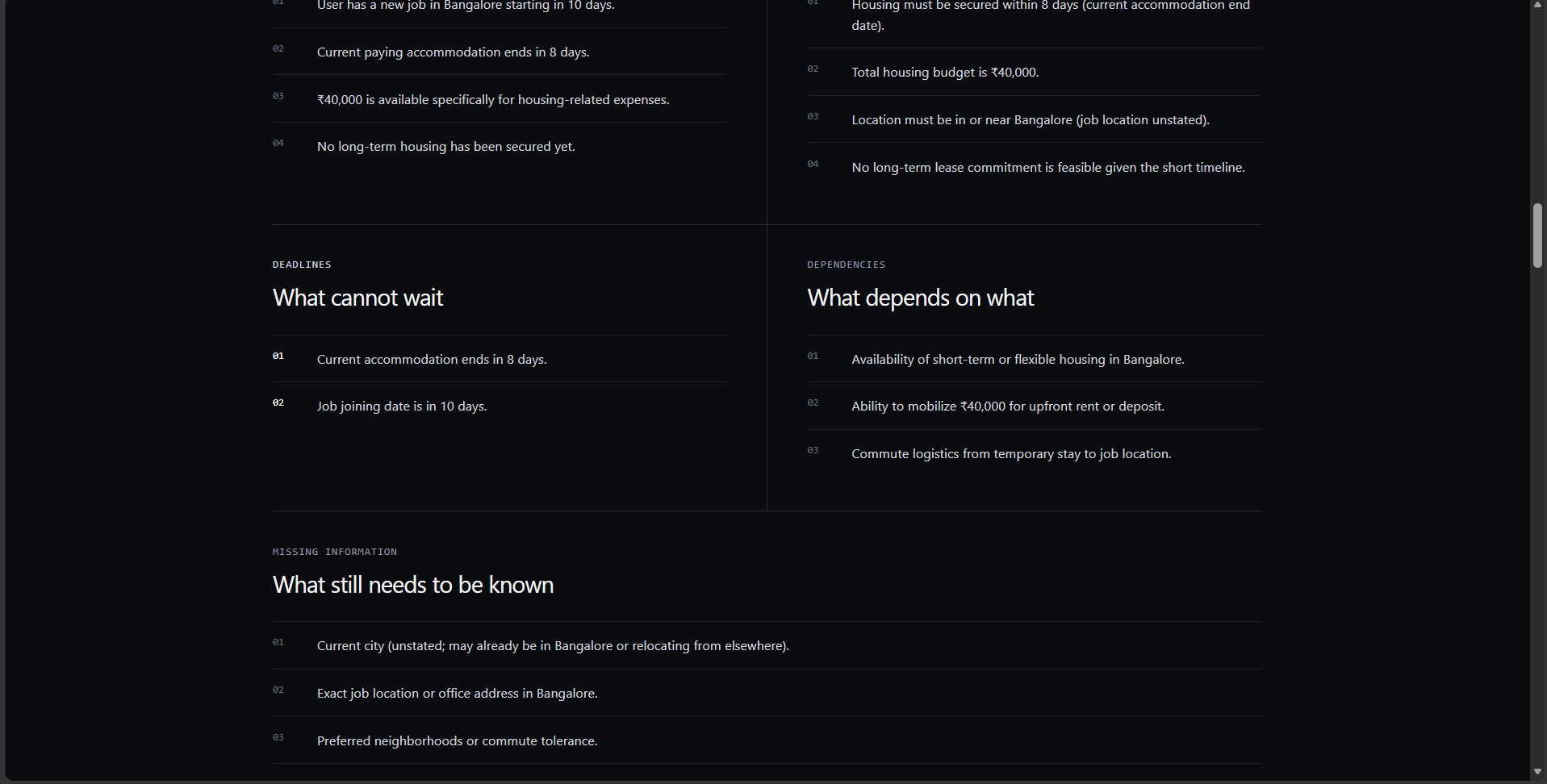
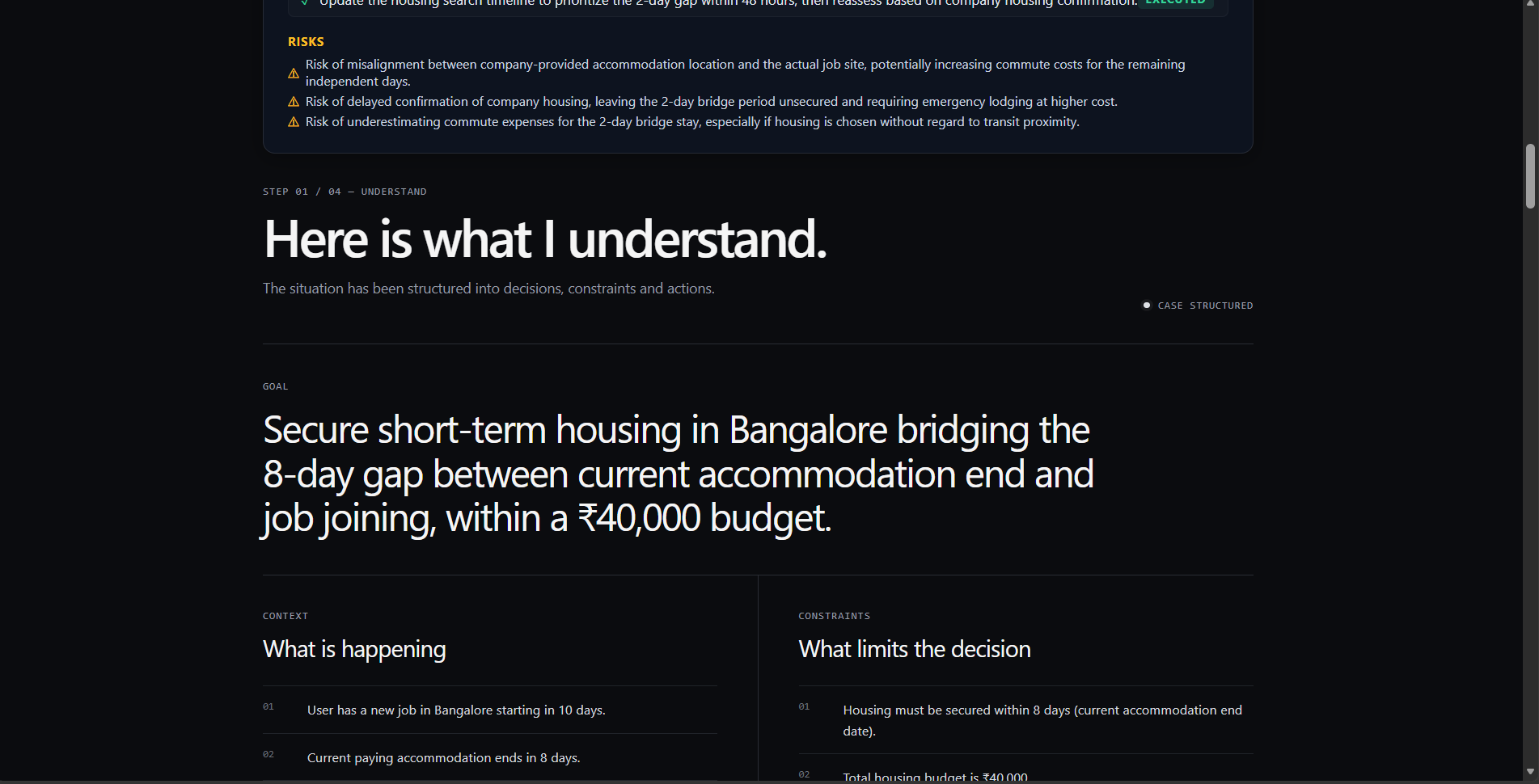
CRISIS → ACTION converts an unstructured situation into a structured case state containing:
- Goal
- Context
- Constraints
- Deadlines
- Dependencies
- Missing information
- Evidence
- Options
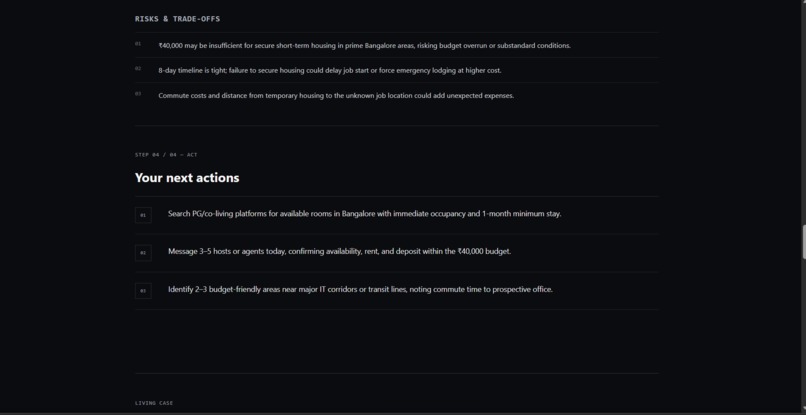
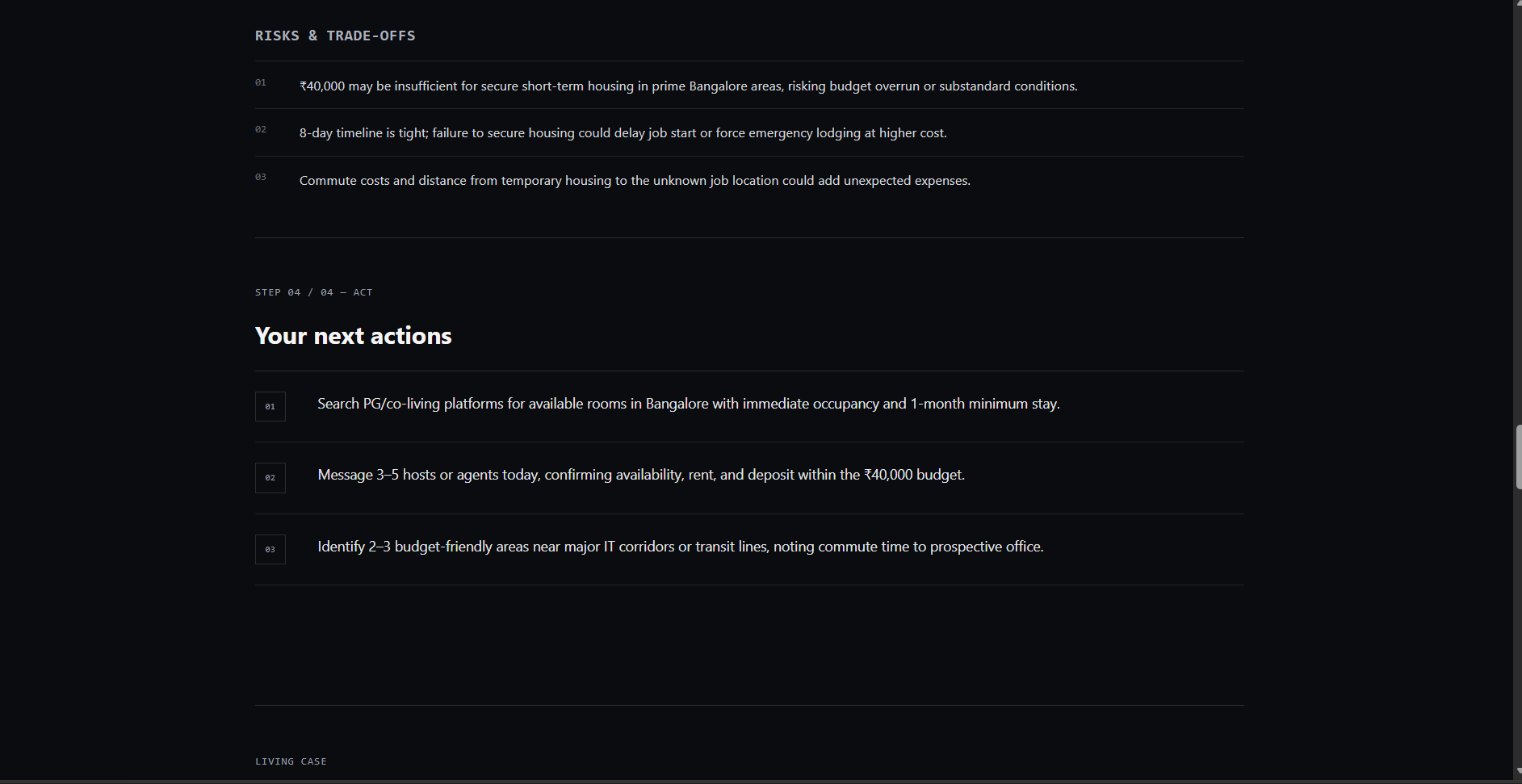
- Risks and trade-offs
- Decisions
- Actions
- Approvals
- Execution status
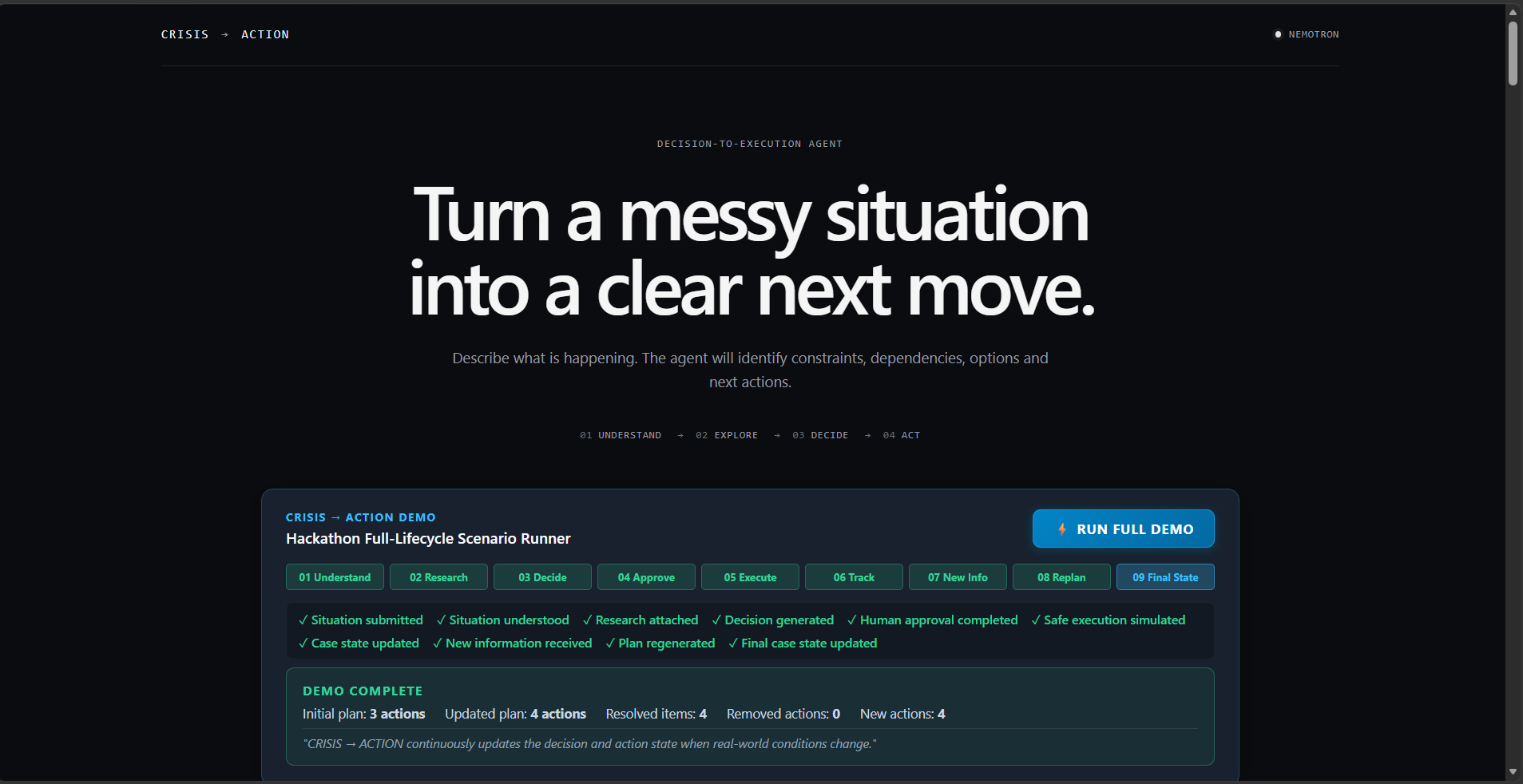
The agent follows a continuous lifecycle:
Understand → Research → Decide → Human Approval → Execute → Track → Replan
A key part of the system is its persistent Case State. Instead of treating every interaction as a new conversation, the system keeps track of what has already been decided, what actions are pending, what has changed, and what needs to be reconsidered.
How we built it
The core reasoning layer uses NVIDIA Nemotron through Nebius Token Factory.
We built the backend using Python and FastAPI, with a React/Vite frontend providing the decision workspace.
The system uses structured prompts and JSON-based state management to make the agent's reasoning process inspectable and predictable.
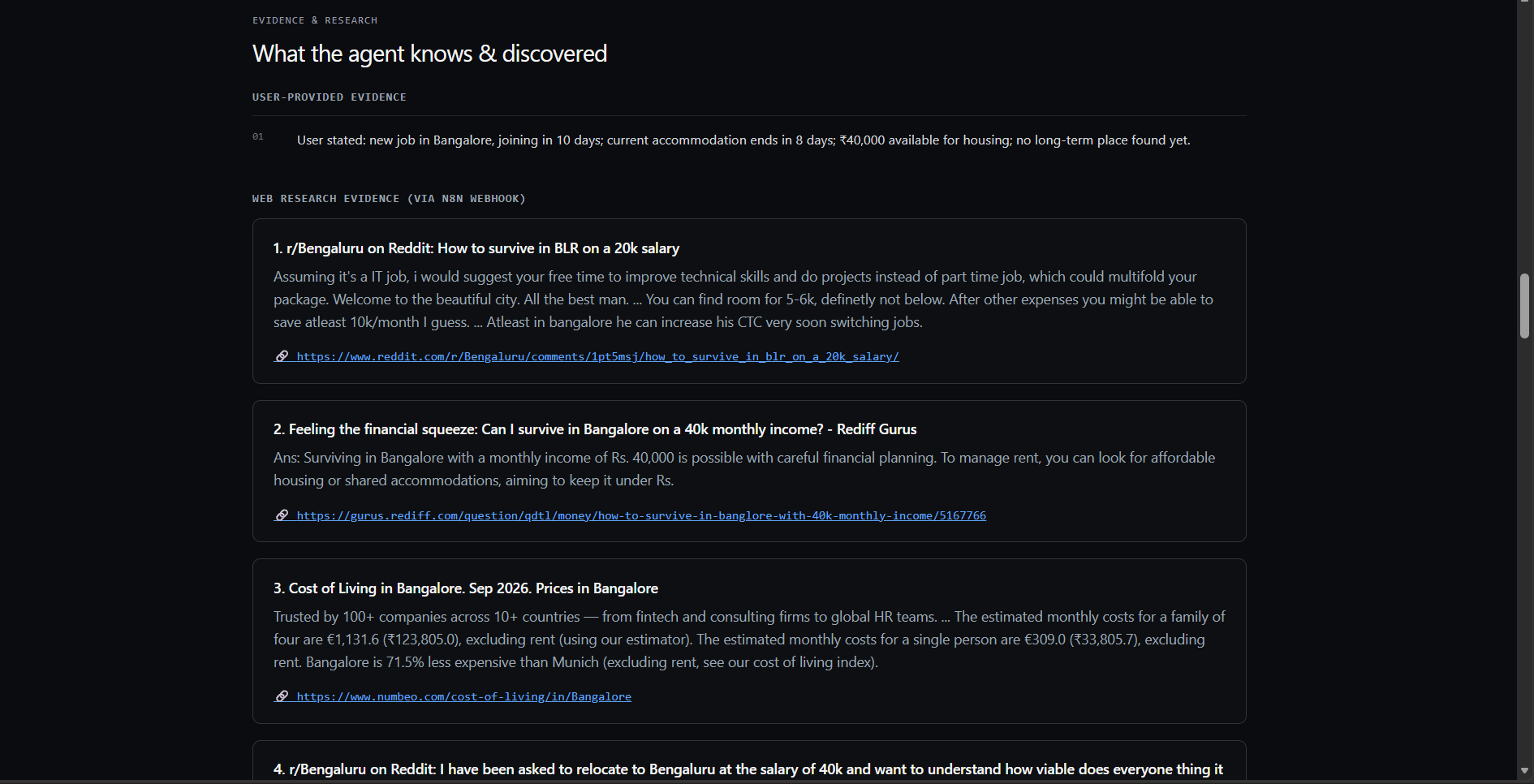
For external research and workflow orchestration, we integrated n8n. Research requests can be sent through an n8n webhook, where web search results are collected and returned as structured evidence.
The execution layer also uses n8n. After the user approves a plan, the approved actions are sent to an execution workflow. For the hackathon demo, execution is intentionally simulated and does not perform irreversible real-world actions such as payments, bookings, or sending real emails.
A real-world example
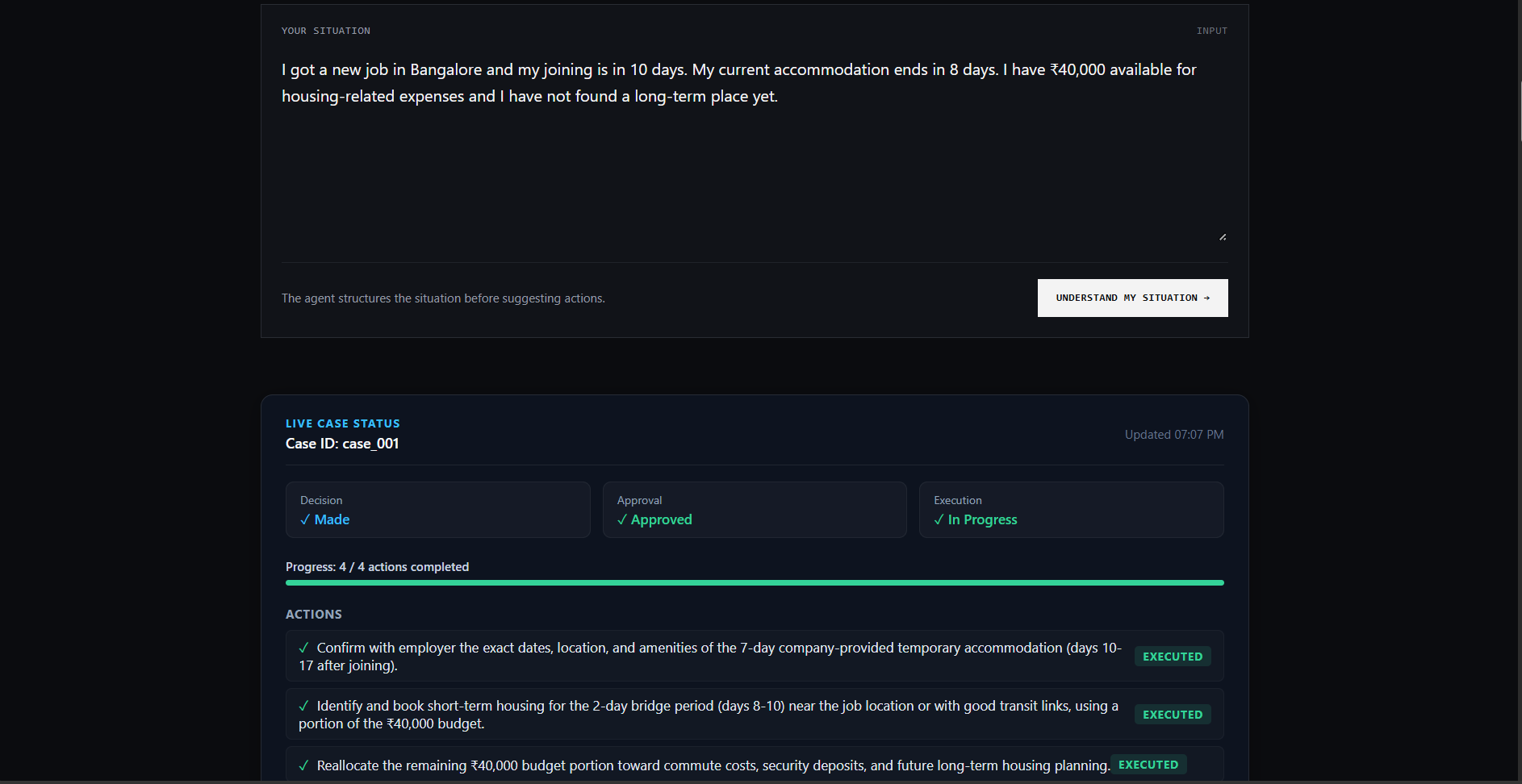
For our demo, we use a job-relocation scenario.
A person has:
- A new job in Bangalore
- Joining in 10 days
- Current accommodation ending in 8 days
- ₹40,000 available for housing
- No long-term accommodation yet
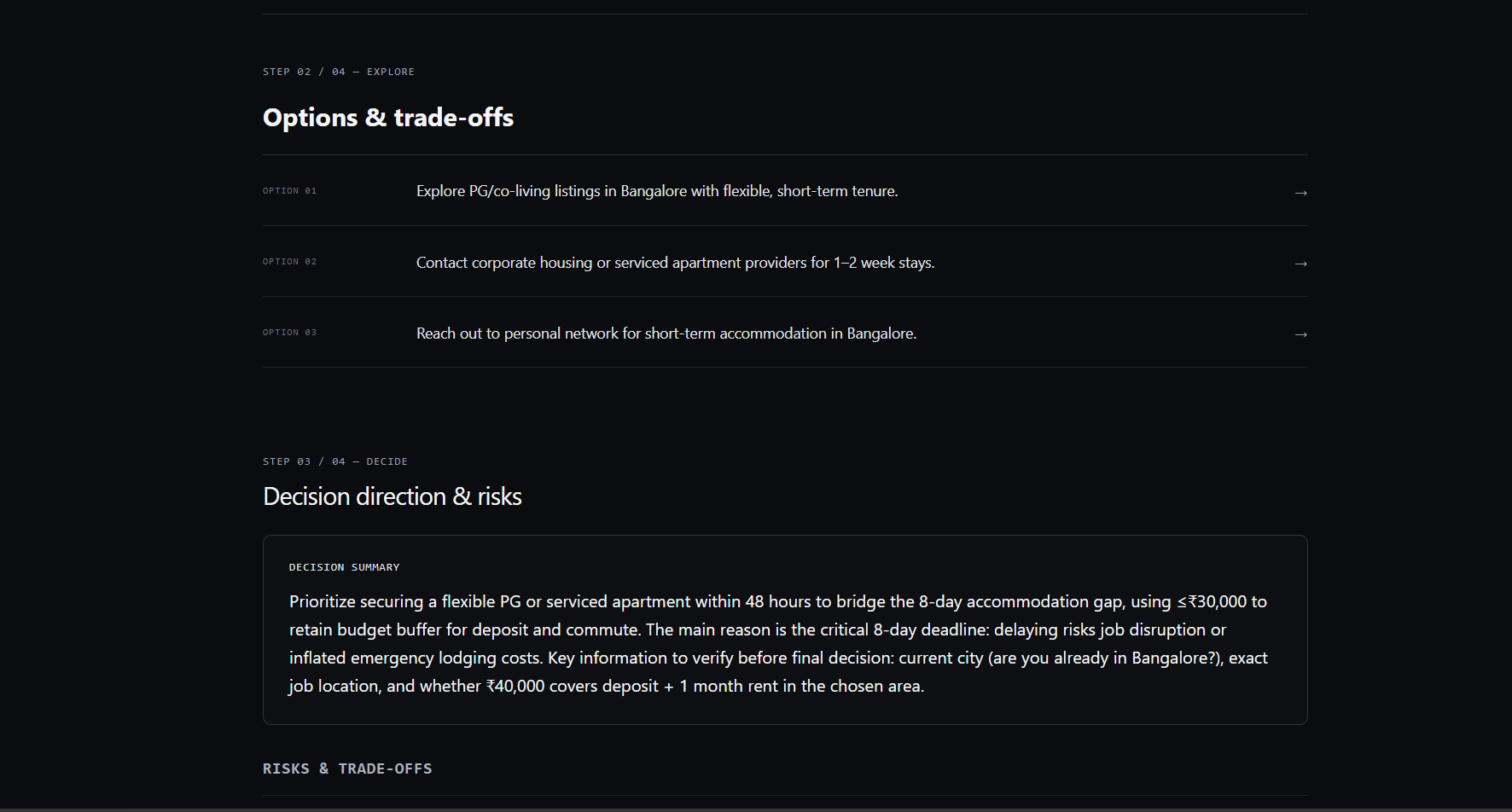
The agent first understands the situation, identifies the deadline and budget constraints, researches relevant information, evaluates options, and creates an action plan.
The human then reviews and approves the plan.
The approved actions are sent to the execution workflow and their status is tracked.
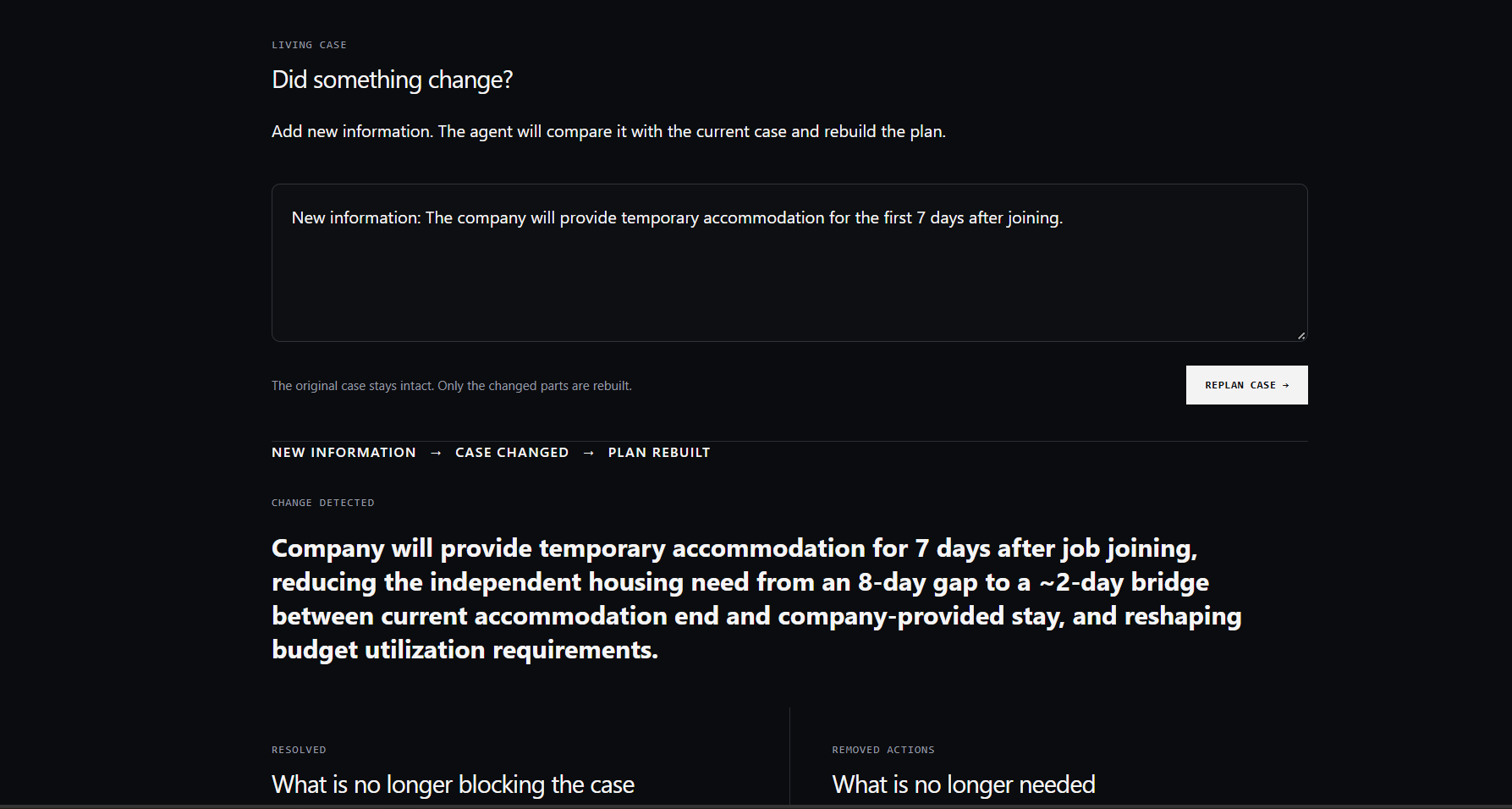
Then the situation changes.
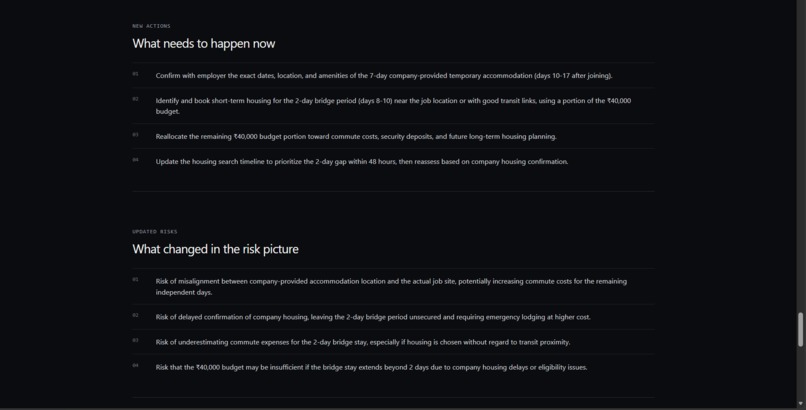
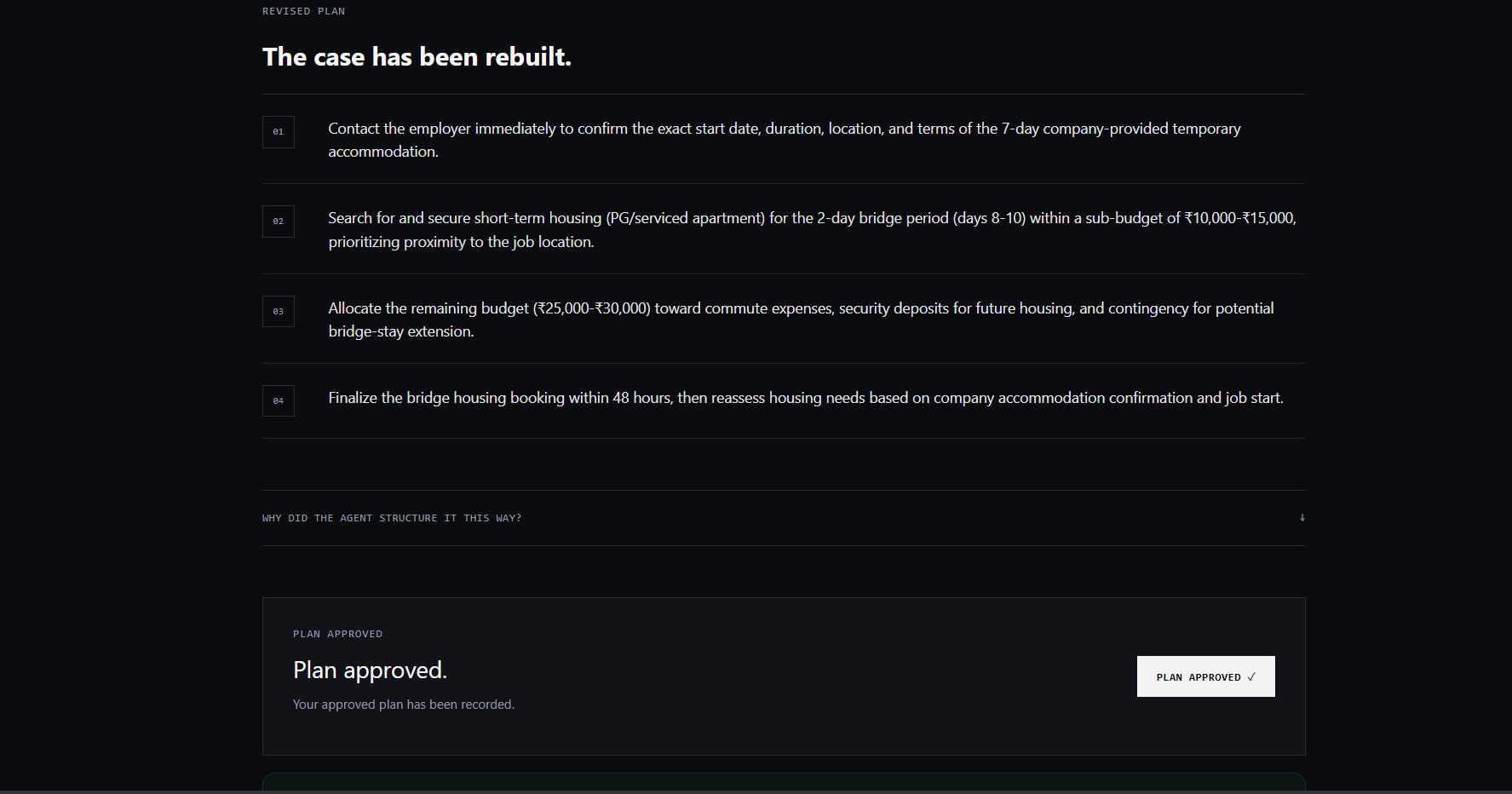
The user provides new information: the employer will provide temporary accommodation for 7 days.
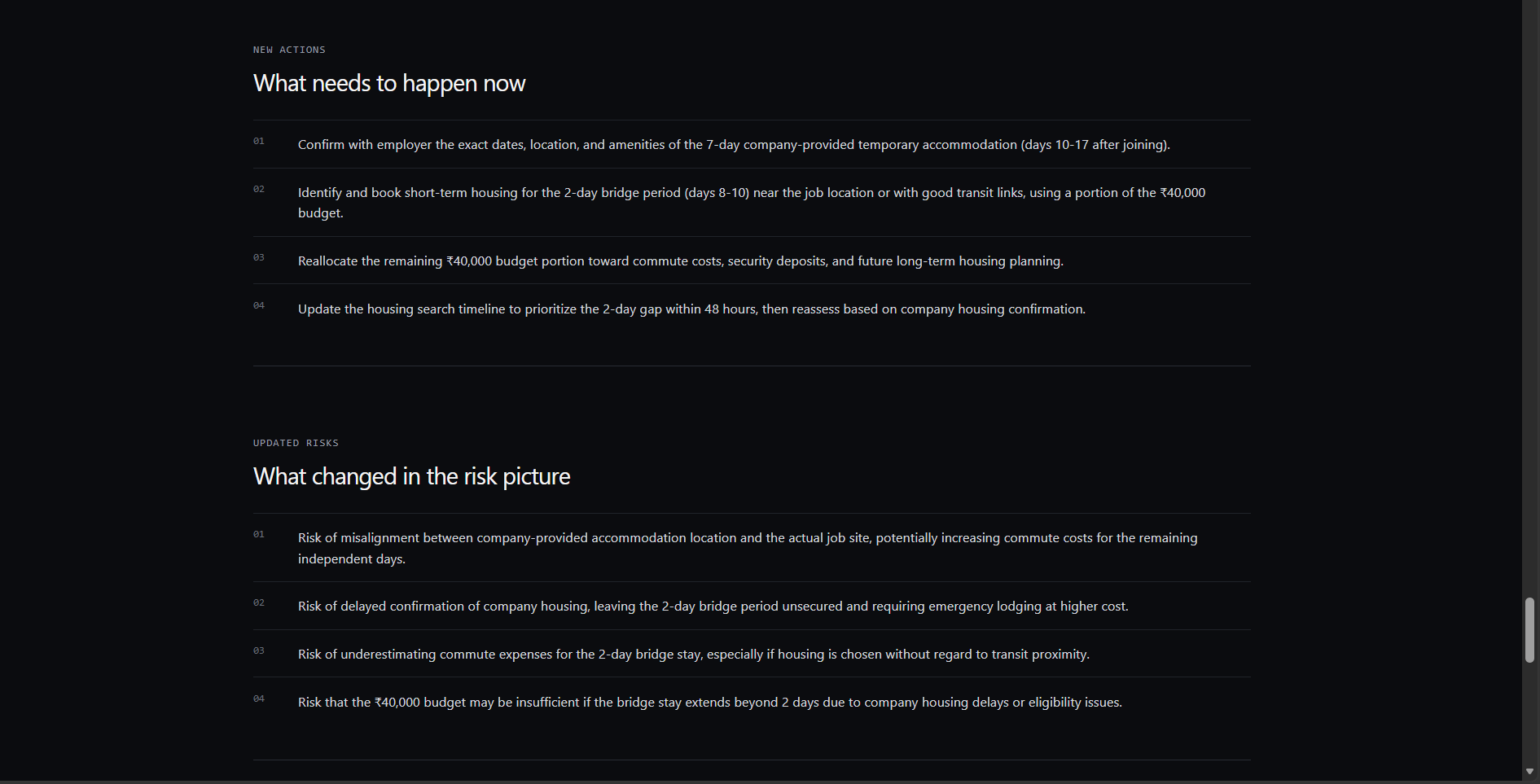
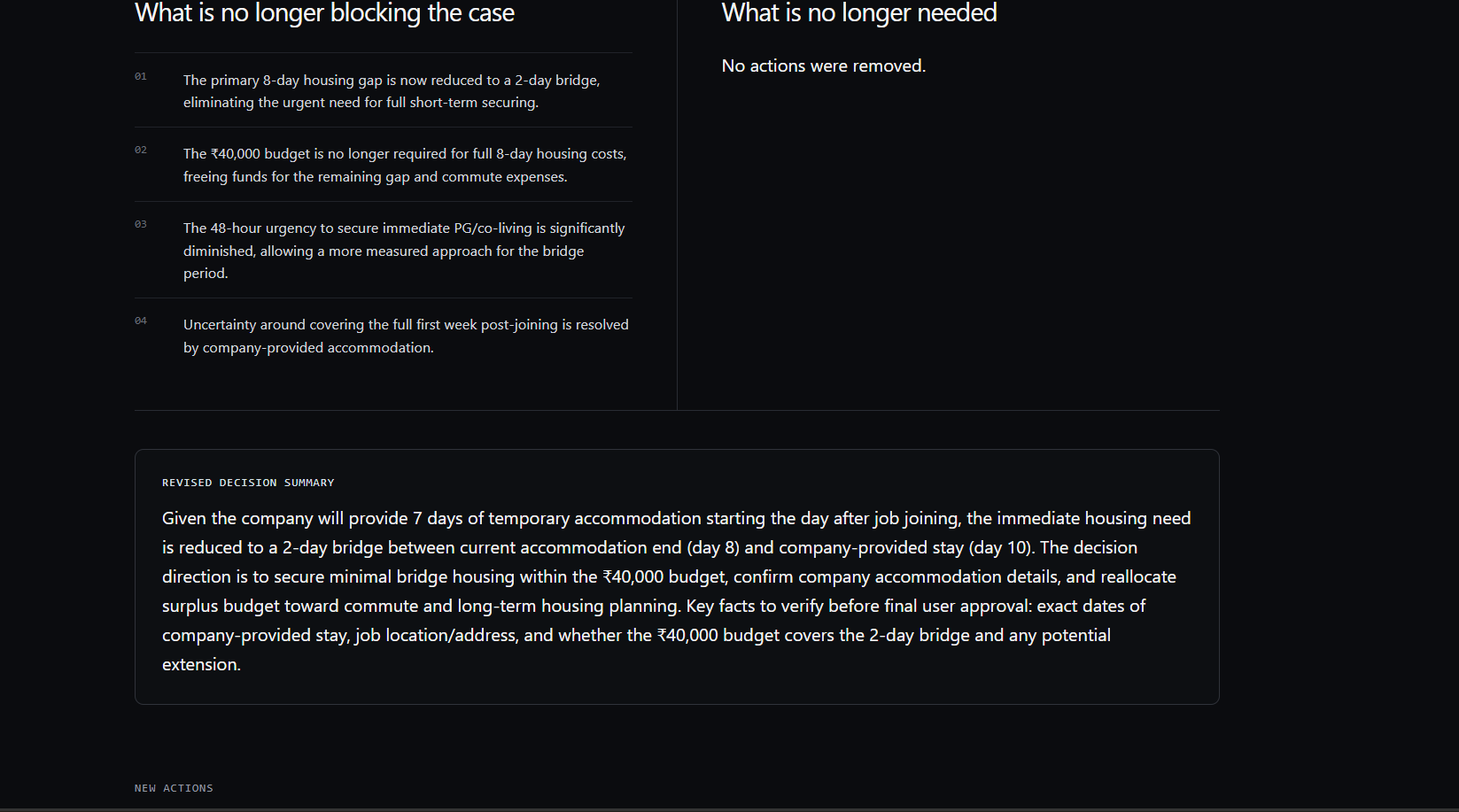
Instead of starting from zero, CRISIS → ACTION updates the existing Case State. It identifies which previous concerns are resolved, removes obsolete actions, updates risks, protects the budget, and creates a revised plan focused on finding long-term accommodation during the temporary stay.
This demonstrates the central idea of the project:
The AI does not just answer. It maintains a living decision state and adapts the plan as reality changes.
Challenges we faced
One of the main challenges was making the agent reliable when working with changing information.
A normal chatbot can easily produce a new answer without remembering which parts of the previous plan are still valid. We therefore designed a structured Case State and separate analysis, decision, approval, execution, tracking, and replanning stages.
Another challenge was handling model output reliably. We added structured JSON extraction, normalization, validation, and safeguards so that the frontend receives predictable data even when the model response contains additional reasoning or formatting.
We also had to make the system safe. Human approval is required before execution, and the hackathon execution workflow is intentionally simulated rather than performing irreversible actions.
What we learned
We learned that building an agentic application is not only about connecting an LLM to a prompt.
The important part is the system around the model: state management, evidence handling, tool integration, human approval, execution, tracking, and replanning.
Using NVIDIA Nemotron through Nebius Token Factory allowed us to build the reasoning layer, while n8n helped us connect research and execution workflows.
The biggest lesson was that useful agentic AI should be designed around decision state and actions, not just conversation.
Why CRISIS → ACTION is different
Most AI assistants stop after generating an answer.
CRISIS → ACTION is designed to continue beyond the answer:
Understand → Research → Decide → Approve → Execute → Track → Replan
The human remains the final decision-maker, while the agent maintains the structured state and continuously adapts the action plan.
Our goal is to move AI from:
“Here is an answer.”
to:
“Here is the current situation, the decision, the approved actions, their status, and what should happen next.”
Built With
- fastapi
- javascript
- json
- n8n
- nebius
- nebiustokenfactory
- nvidia
- nvidianemotron
- python
- react
- token
- vite
- websearch

Log in or sign up for Devpost to join the conversation.