-
-
logo
-
-
-
Landing page
-
-
-
-
What Inspired Us?
It started with the floods.
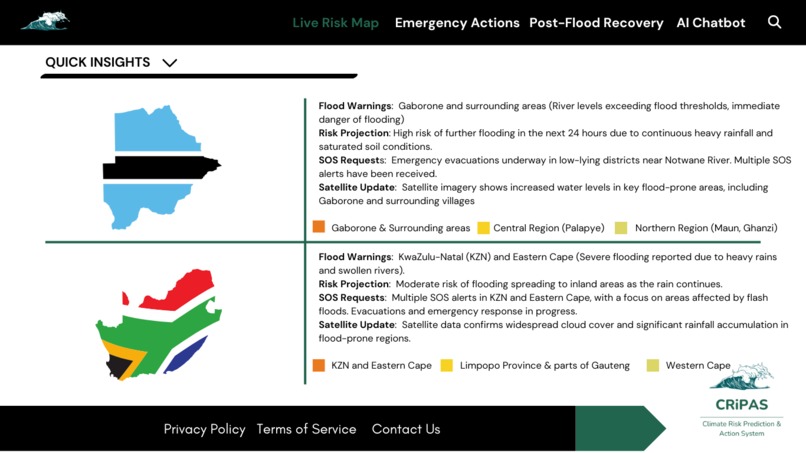
Not just statistics on a weather report, but real, devastating floods that submerged homes, stranded families, and wiped away livelihoods in Gaborone, Botswana. We watched as communities scrambled for safety, relying on late warnings, unreliable information, and rescue efforts that were often too little, too late. We asked ourselves: Why should floods still catch people off guard in an era of AI and satellite technology?
That question sparked CRiPAS.
We envisioned something more than just another weather app. We wanted a system that doesn’t just say, “It’s going to rain.” We wanted to tell people: “Here’s exactly where it will flood. Here’s how bad it will get. Here’s how to get to safety.”
And so, CRiPAS was born—an AI-powered flood prediction and emergency response system designed for the unique challenges of Southern Africa.
What it does
We focused on three core features that could make the biggest impact in the shortest time:
1. CRiPAS-HyperCast™: AI Flood Prediction Before It Happens
Most early warning systems rely on basic rainfall measurements and historical flood data. We pushed beyond that. CRiPAS-HyperCast™ is powered by a Climate Fusion Model (CFM)™—an AI-driven engine trained on 30+ years of climate data, real-time satellite imagery, and live water level sensors from major rivers and flood zones.
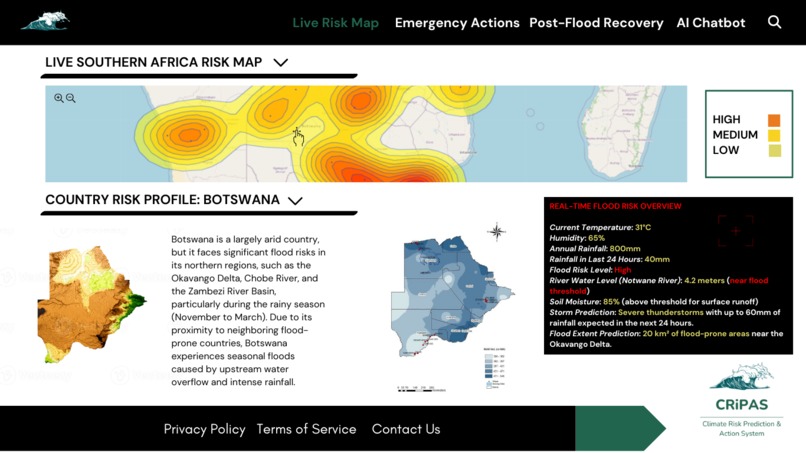
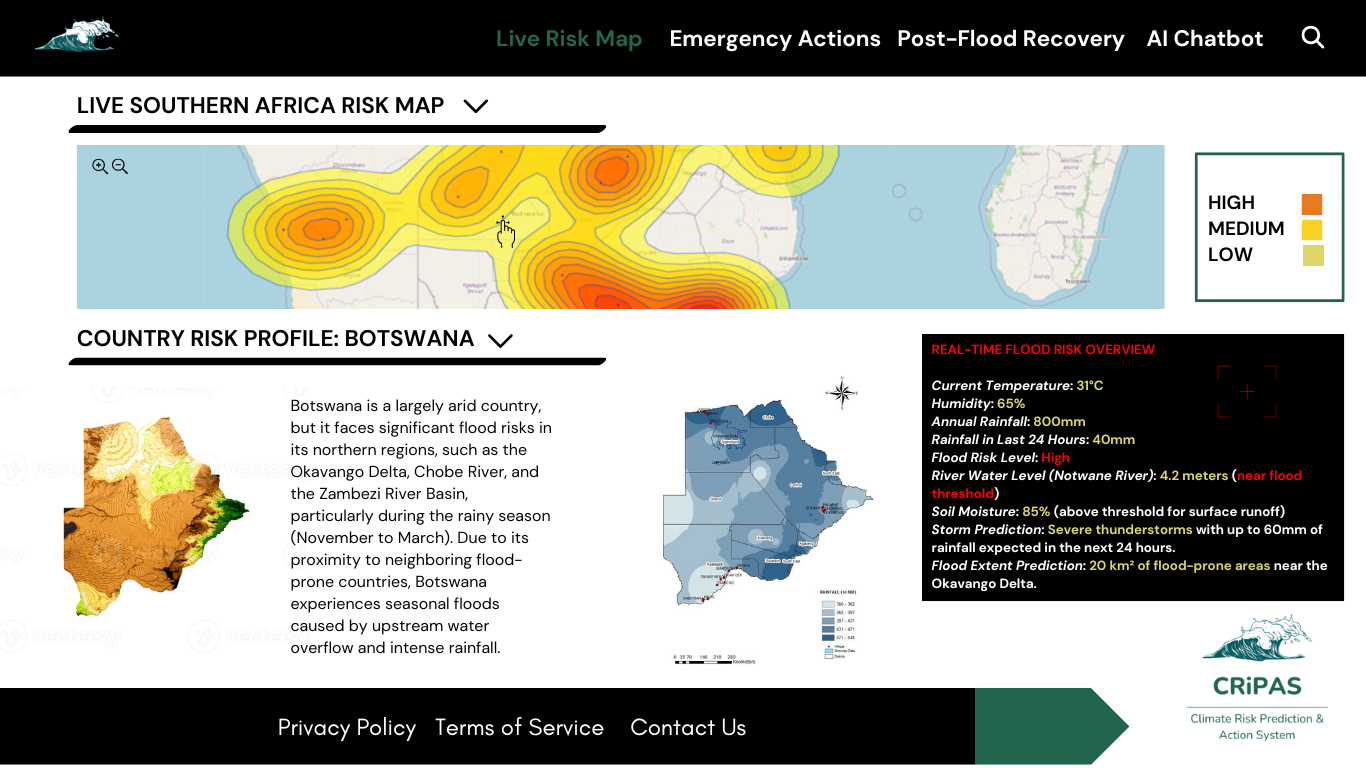
How It Works: Runs millions of simulations per hour to predict not just if a flood will happen, but where, when, and how severe it will be. What It Does: Generates 7-day flood risk heatmaps, pinpointing high-risk, medium-risk, and safe zones before the storm even hits.
2. CRiPAS-Eye™: Live Monitoring with AI Drones & Satellites
The problem with flood response? Governments rely on outdated, slow-moving damage reports. By the time people get help, it’s already too late.
CRiPAS-Eye™ sees the flood in real-time—from space and air.
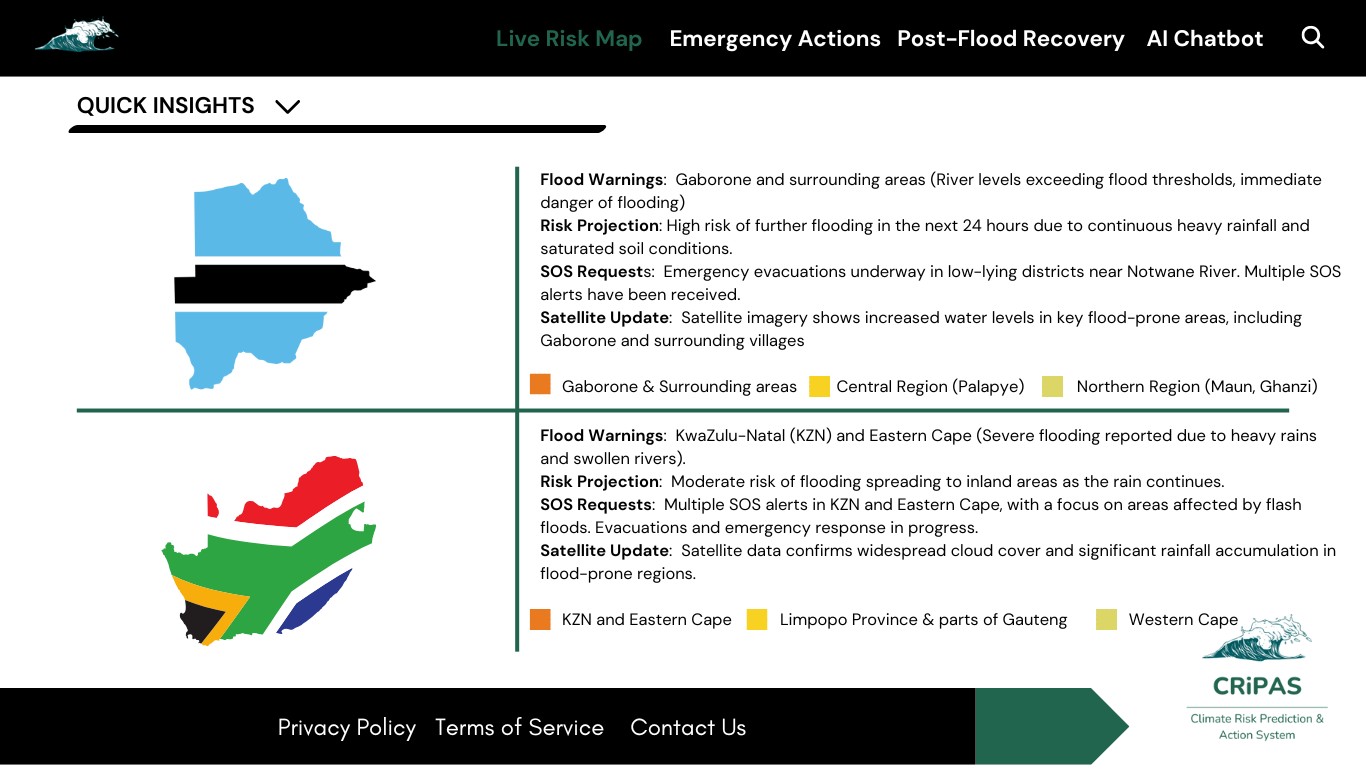
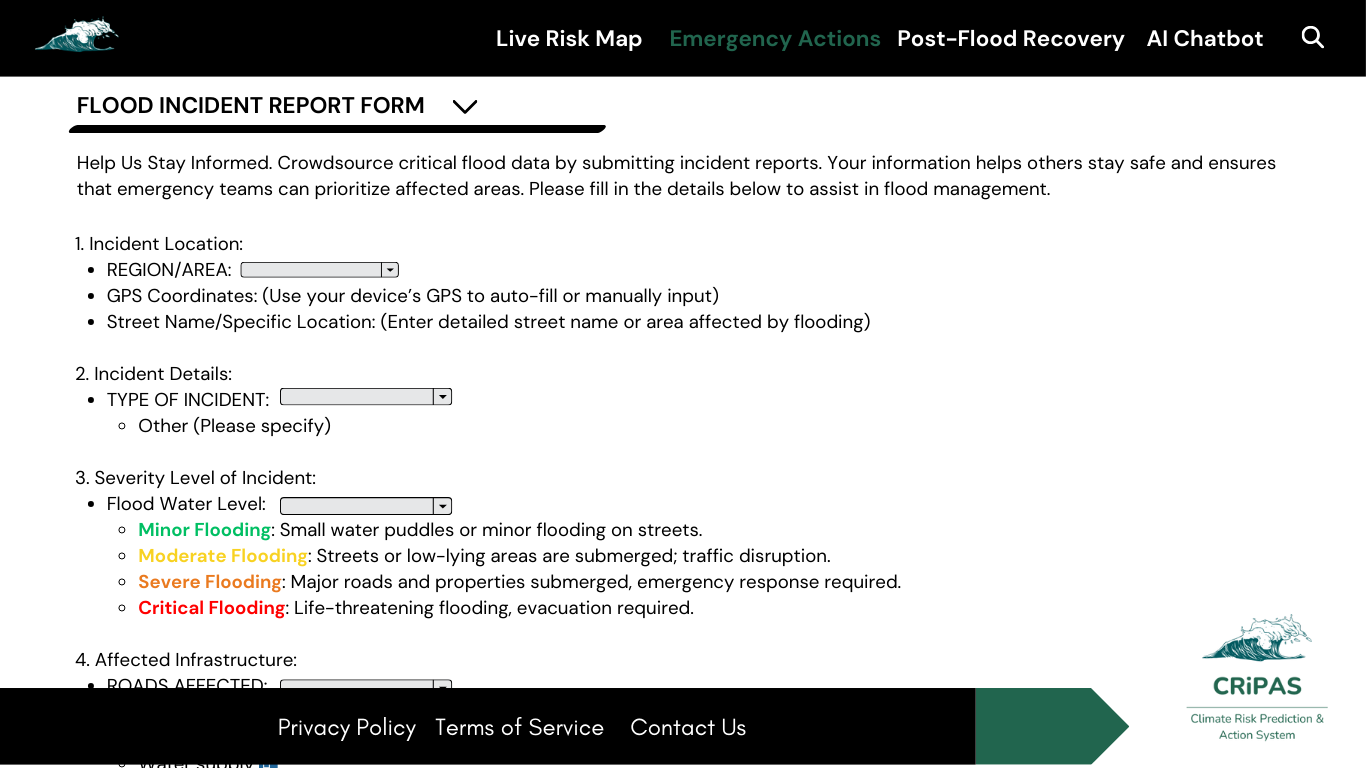
AI-Powered Satellite Flood Tracking: Pulls data from NASA, ESA, and regional satellites, using computer vision to map water expansion and identify danger zones. Drone-Based Flood Surveillance: Deploys AI drones over disaster areas, sending live images and videos to a real-time disaster dashboard. Before & After AI Damage Estimation: Predicts the impact before a flood and calculates actual damage afterward critical for fast-tracking aid and insurance claims.
3. CRiPAS-SafeNav™: Smart Evacuation & Rescue
Most people don’t know what to do when a flood strikes. Standard GPS routes fail because roads disappear underwater. Emergency responders struggle to find the most at-risk victims.
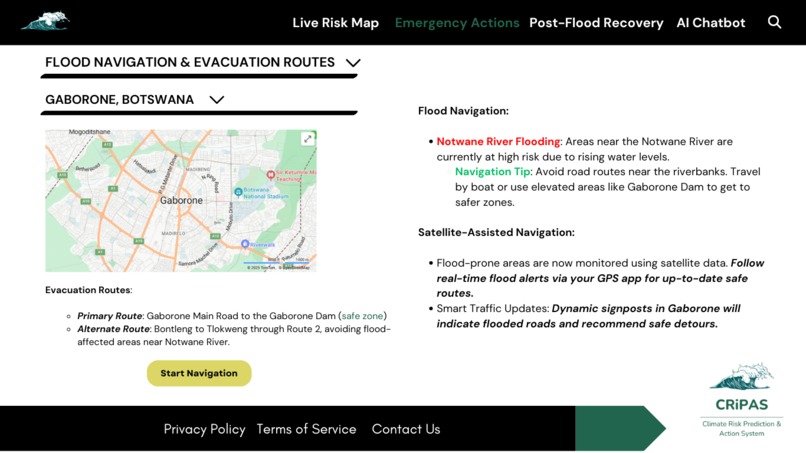
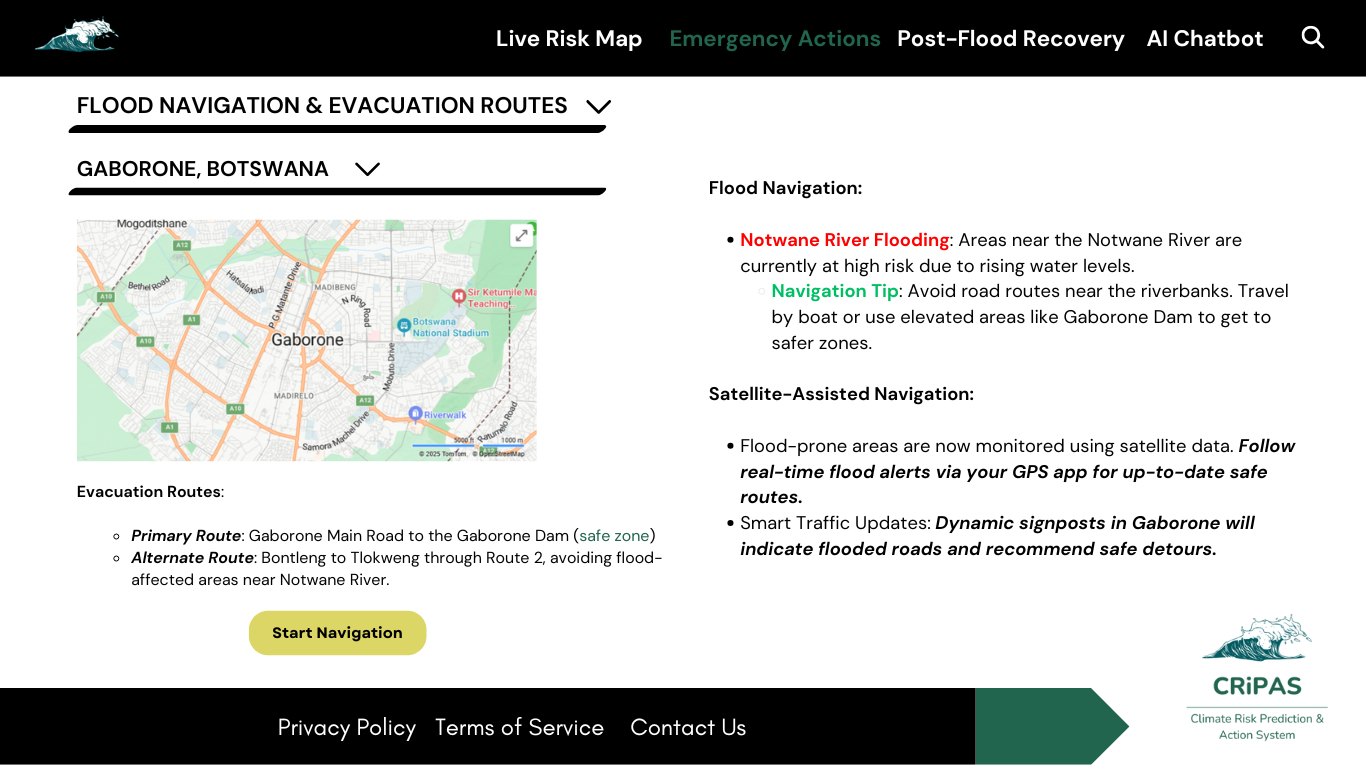
CRiPAS-SafeNav™ guides people to safety in real-time with dynamic flood navigation and smart rescue requests.
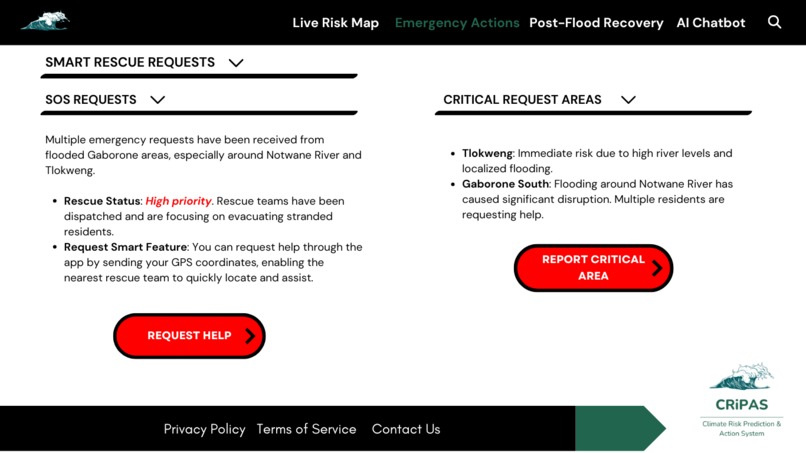
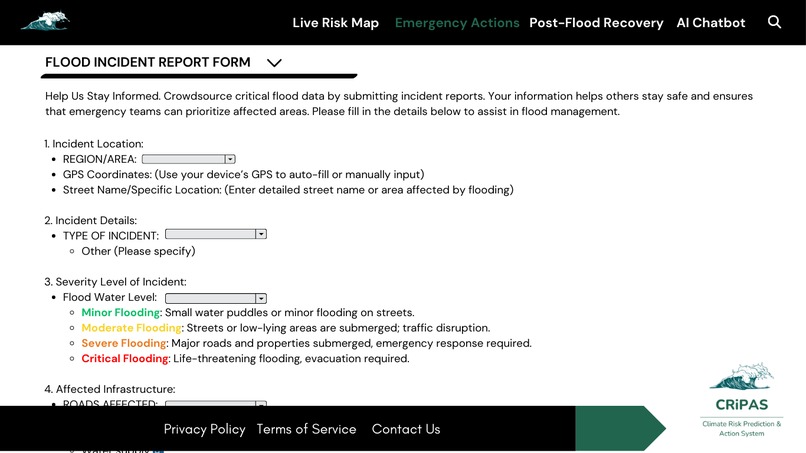
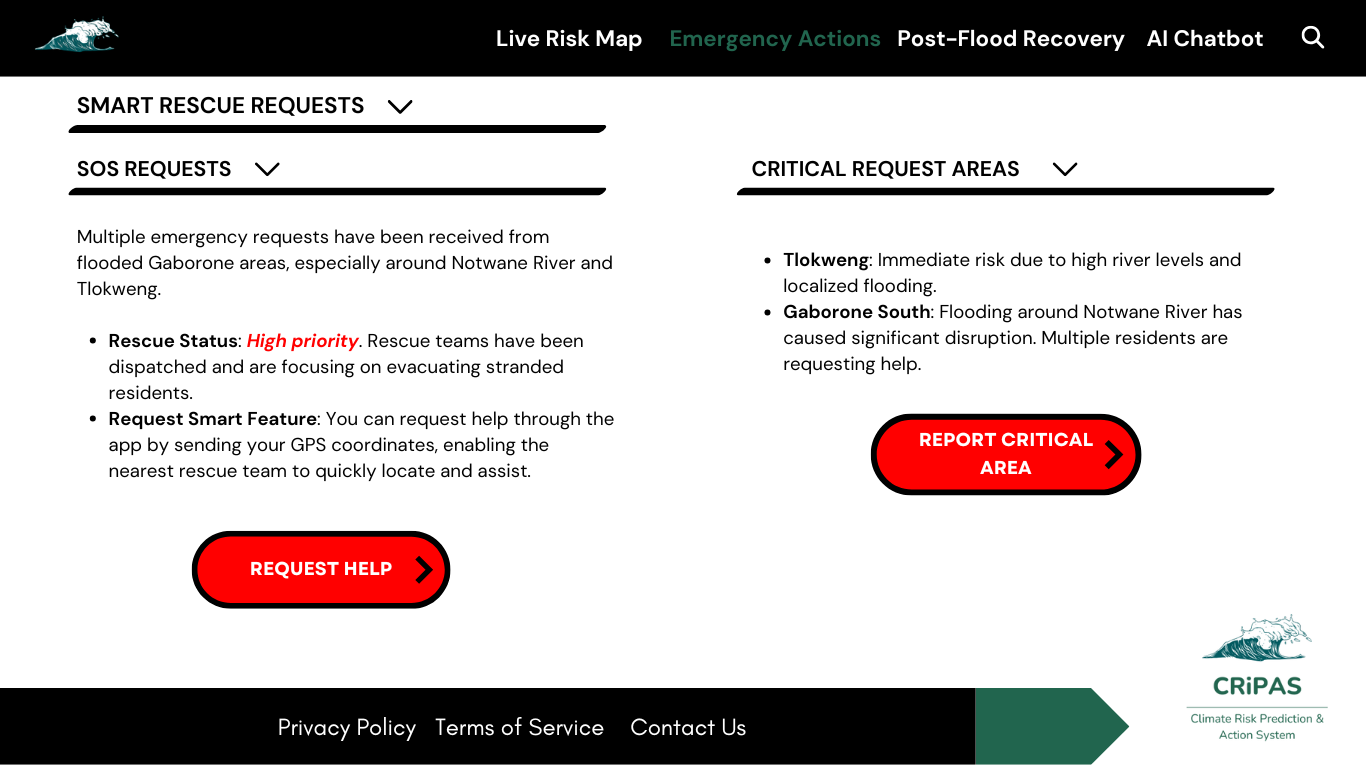
AI-Powered Evacuation Routes: Constantly updates safe paths as flood conditions change. Smart Rescue Requests: Users can request emergency help, and CRiPAS prioritizes rescues based on risk level (e.g., stranded elderly, children, or people with disabilities). Offline Mode: For rural areas with no internet, CRiPAS stores emergency routes and sends SMS/USSD alerts.
What We Learned
Building CRiPAS wasn’t easy. Some challenges were expected, others blindsided us.
Coding Takes Time: We started strong, but time ran out before we could complete all functionalities. Flood prediction models require rigorous testing—there’s no room for error when lives are at stake.
Lack of Indigenous Knowledge: AI models need training data, and one of our biggest gaps was the lack of localized indigenous knowledge on historical flood patterns. How do we train a model when the information we need is scattered, undocumented, or lost?
AI Models Take Forever to Train: Flood prediction isn’t just about plugging numbers into an algorithm. It takes weeks—sometimes months—to fine-tune an AI system to a point where its predictions are reliable.
The Floods Didn’t Wait: While we built CRiPAS, real floods continued to devastate communities. It was a harsh reminder that people needed solutions yesterday, not next year.
Accomplishments that we're proud of
The Concept Itself: CRiPAS is a groundbreaking leap forward in AI-powered flood mitigation, bridging the gap between forecasting and real disaster preparedness.
Climate & Sustainability Focus: We actively incorporated sustainable tech practices, prioritizing green computing and energy-efficient AI models to reduce our carbon footprint.
Taking Initiative in Disaster Response: We stepped up in the face of an active crisis, applying AI to solve real-world climate threats.
What's next for CRiPAS
- Partnerships: Collaborating with local and international organizations for data and disaster response integration.
- AI Model Infusion with Indigenous Knowledge: Merging advanced AI with traditional environmental wisdom to create hyper-localized flood intelligence.
- Rolling it out.
Built With
- bootstrap
- canva
- css
- figma
- glide
- html
- javascript
- mock-response
- node.js
- react
- react-dom


Log in or sign up for Devpost to join the conversation.