-
-
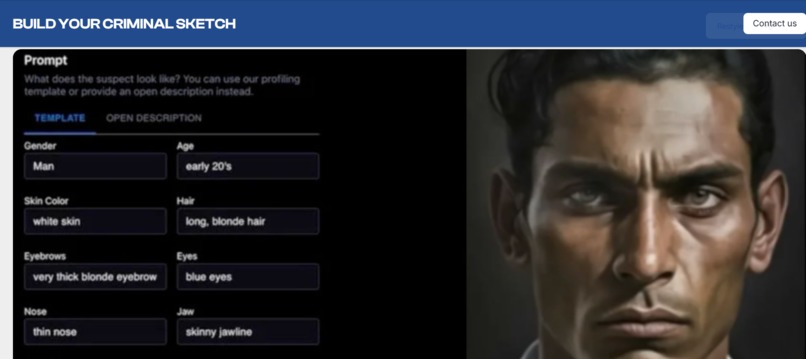
CSAI working
-
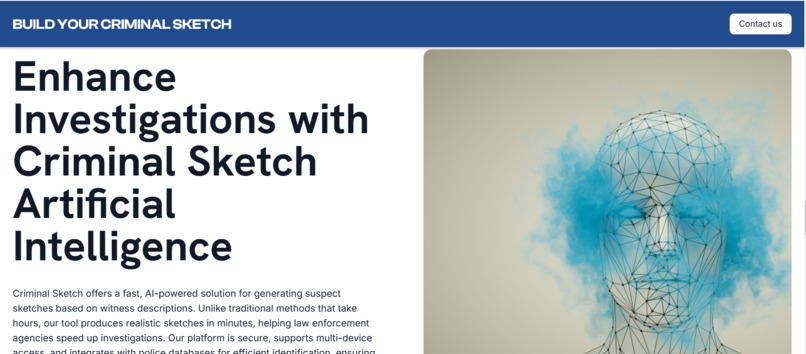
Website
-
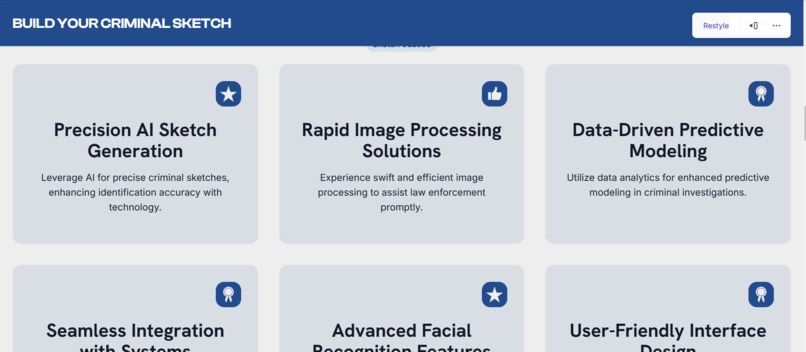
website
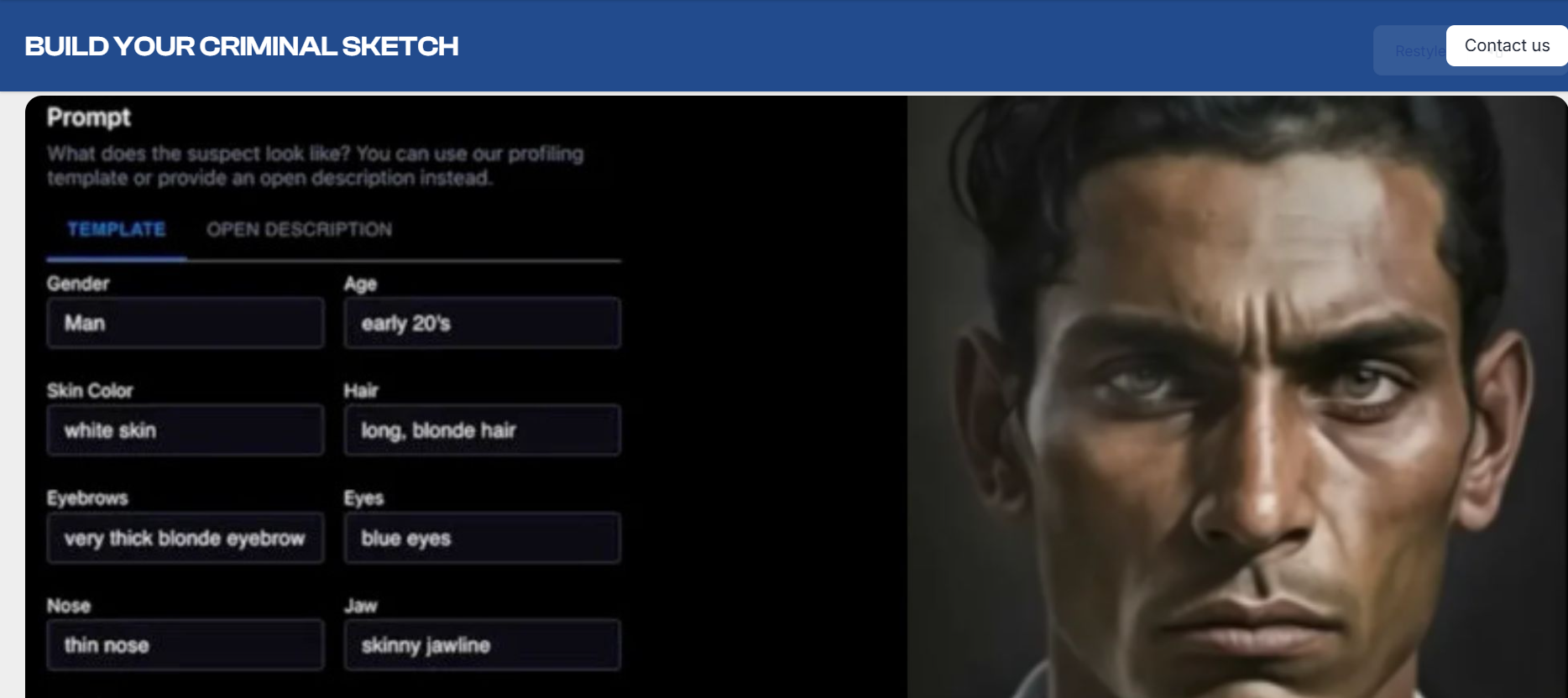
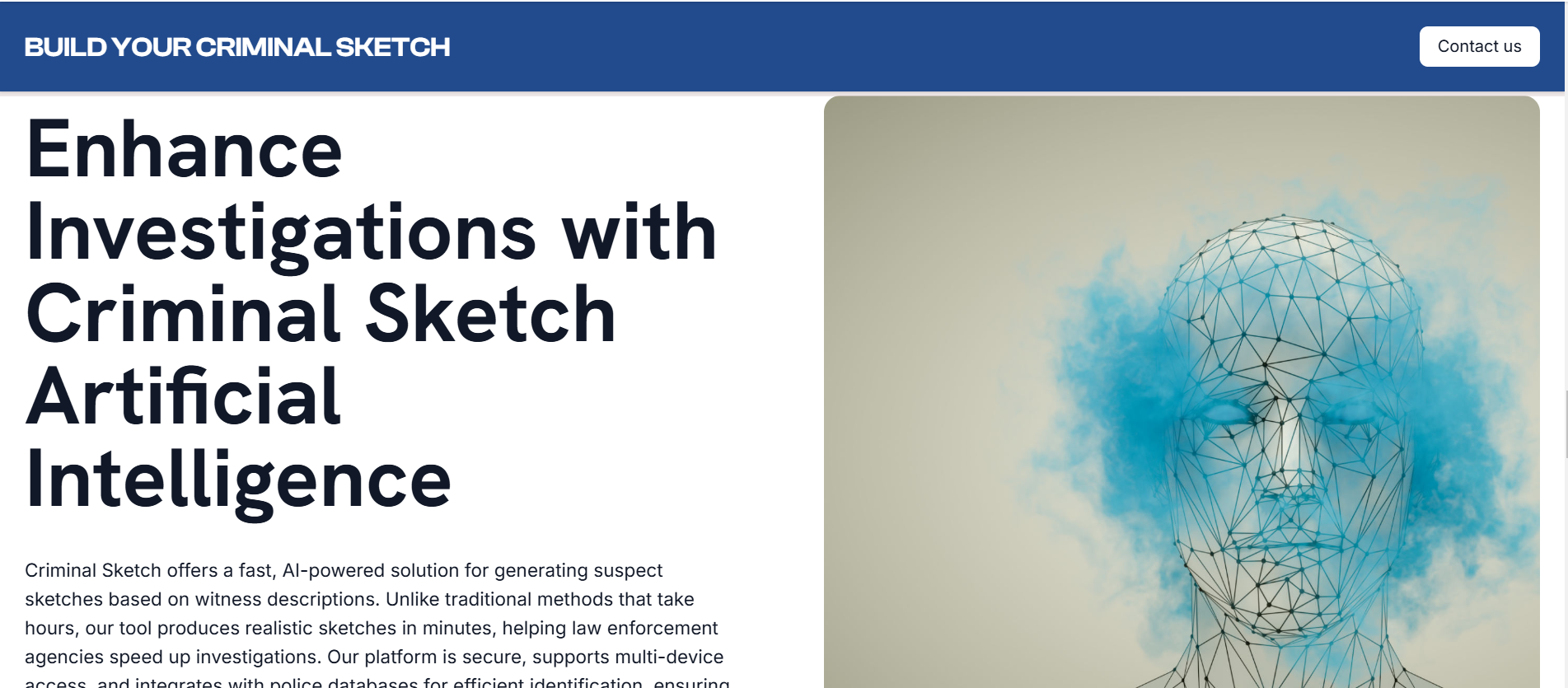
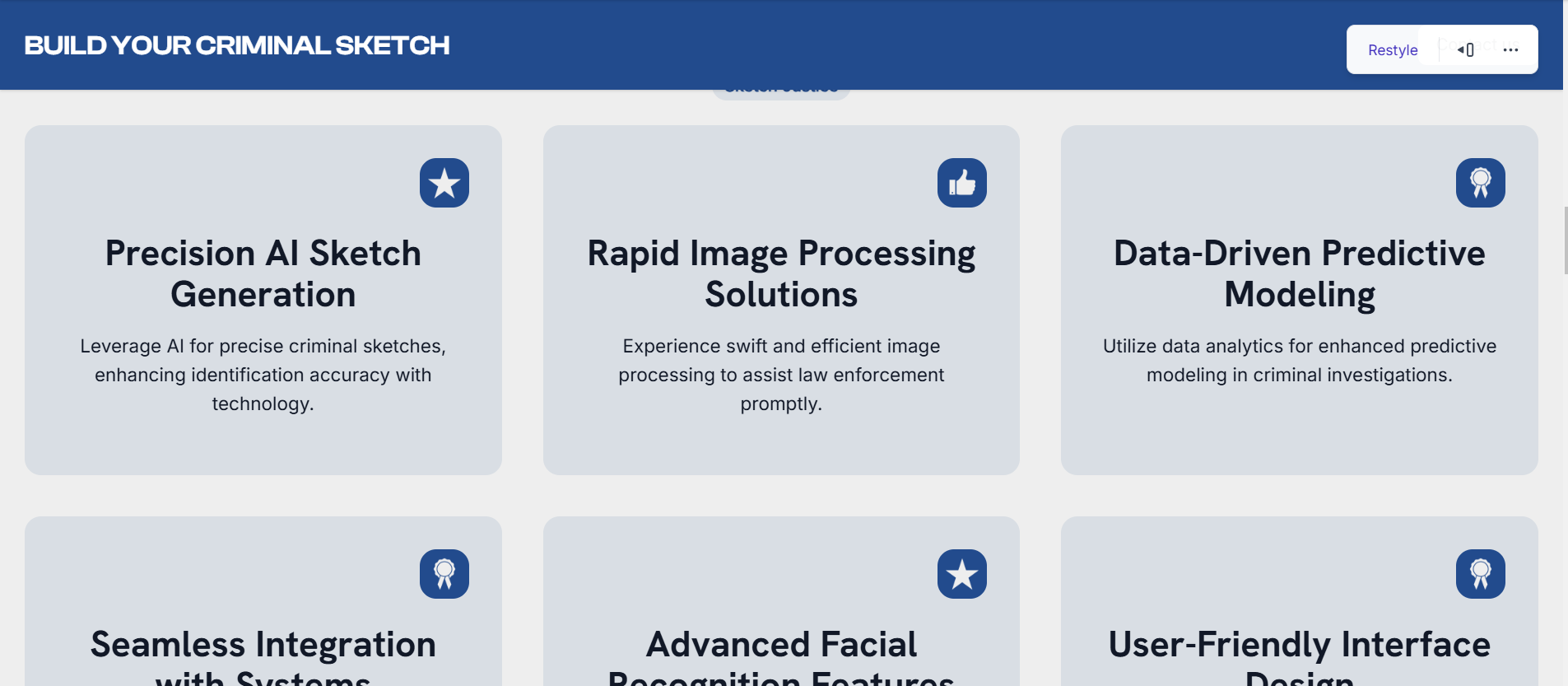
Criminal Sketch Artificial Intelligence (CSAI)
Inspiration
The idea for CSAI came to me during a visit to a police station. Observing the limitations of traditional sketch methods and the challenges law enforcement faced in visualizing suspects from descriptions, I saw an opportunity to leverage AI to assist in criminal identification. I wanted to build a solution that could turn verbal descriptions into accurate sketches, aiding both civilians and police in identifying suspects efficiently.
What it Does
CSAI generates realistic criminal sketches from witness descriptions, making it easier for law enforcement to track down suspects. The system has two versions:
- A Public Version for civilians, allowing anyone to describe a suspect and get a basic sketch.
- A Police Version with enhanced features, including access to criminal databases for cross-referencing sketches with existing profiles.
CSAI accelerates investigations by using AI-driven image creation and database comparison, ultimately helping to close cases faster.
How We Built It
We built CSAI by integrating multiple technologies:
- Natural Language Processing (NLP): To interpret detailed verbal descriptions, breaking down each characteristic into visual components.
- Feature Mapping System: Links each described element (like "sharp jawline" or "light beard") to corresponding visual features.
- Generative AI Model (GANs): Uses GANs to generate an initial sketch, which then refines itself based on user feedback.
- Cloud Storage: Ensures sketches are saved securely and accessible, with database comparison features for law enforcement use.
Challenges We Ran Into
Developing CSAI was both exciting and challenging.
- Accuracy: Creating realistic, accurate sketches from brief descriptions required constant model fine-tuning.
- Privacy and Security: For the police version, ensuring secure access to sensitive databases required strict compliance with privacy standards.
- User-Friendly Design: Designing an interface that balances simplicity for the public with the advanced functionality needed by law enforcement was challenging.
- Cloud Resource Management: Managing cloud storage and processing costs, while maintaining high performance, required careful optimization.
Accomplishments That We’re Proud Of
We’re proud to have developed a functional AI platform that can generate realistic sketches from descriptions. The successful integration of NLP and GANs into a user-friendly interface is a major milestone, as is the creation of separate versions for public and police use. Making CSAI both accurate and secure has been a rewarding achievement.
What We Learned
Building CSAI taught us a great deal about the technical side of AI, including feature mapping and NLP integration. We also gained valuable insights into the ethical and logistical aspects of working with criminal databases and handling sensitive data. Additionally, we learned how essential user feedback is in refining AI-driven tools.
What’s Next for Criminal Sketch Artificial Intelligence
Looking ahead, we plan to:
- Expand Database Access: Partner with more law enforcement agencies globally for a more comprehensive database comparison feature.
- Add Facial Recognition: Integrate advanced facial recognition to improve sketch matching accuracy.
- Include Geographic Analysis: Use location data to add context to suspects’ descriptions and profiles.
- Launch Mobile Accessibility: Develop a mobile app for easy access, making CSAI even more user-friendly for civilians and law enforcement on the go.
Our vision is for CSAI to be a widely used, trusted AI tool in criminal investigations, making communities safer through the power of technology.
Built With
- cloud
- css-frameworks:-tensorflow
- django-platforms:-aws
- facial-recognition-apis-(future-integration)
- flask
- google-cloud-platform-(gcp)-databases:-mysql
- html
- javascript
- languages:-python
- mongodb-apis:-nlp-apis
- opencv-other-technologies:-gans
- postgresql
- pytorch
- secure
- storage

Log in or sign up for Devpost to join the conversation.