Inspiration
We were inspired to develop Solace after seeing various news stories about unethical practices in the scope of organizational incident reporting, namely police organizations and even workplace structure. We wanted to create a system of accountability and transparency for individuals of authority.
What it does
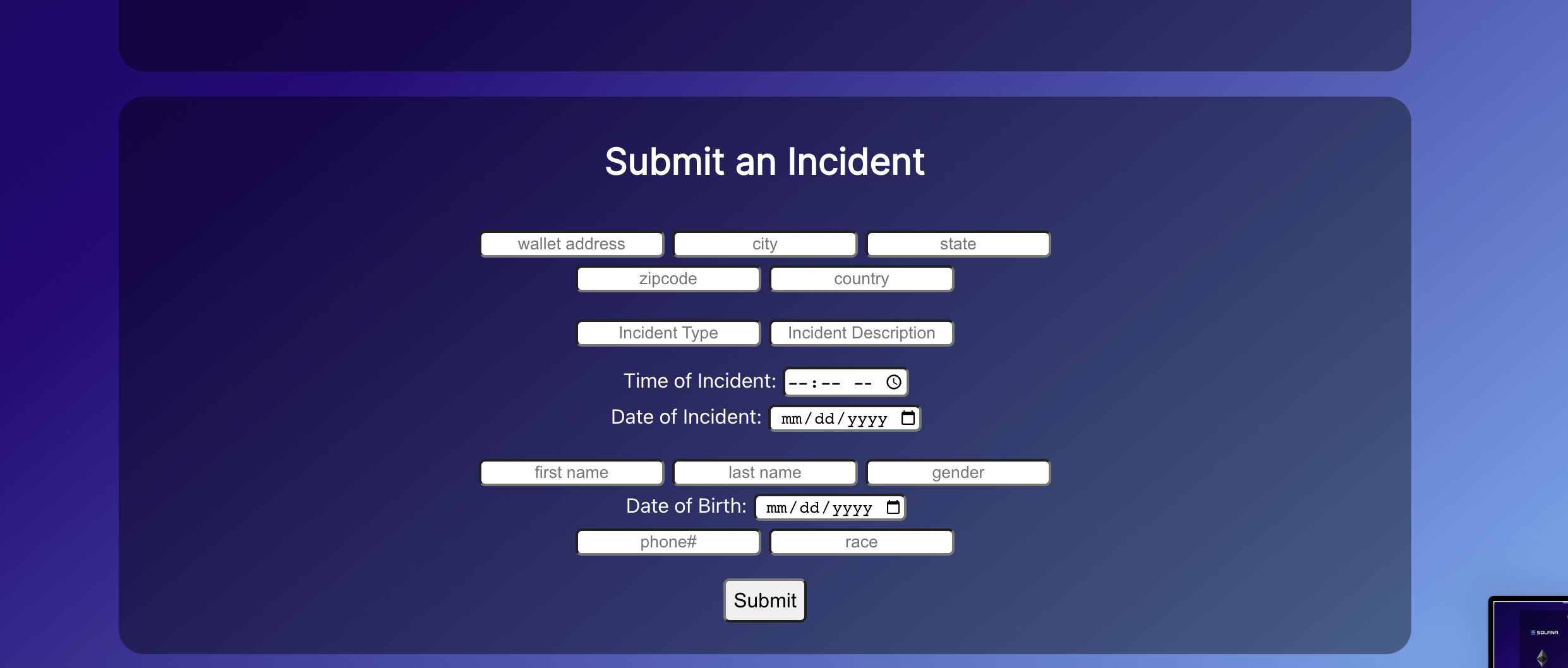
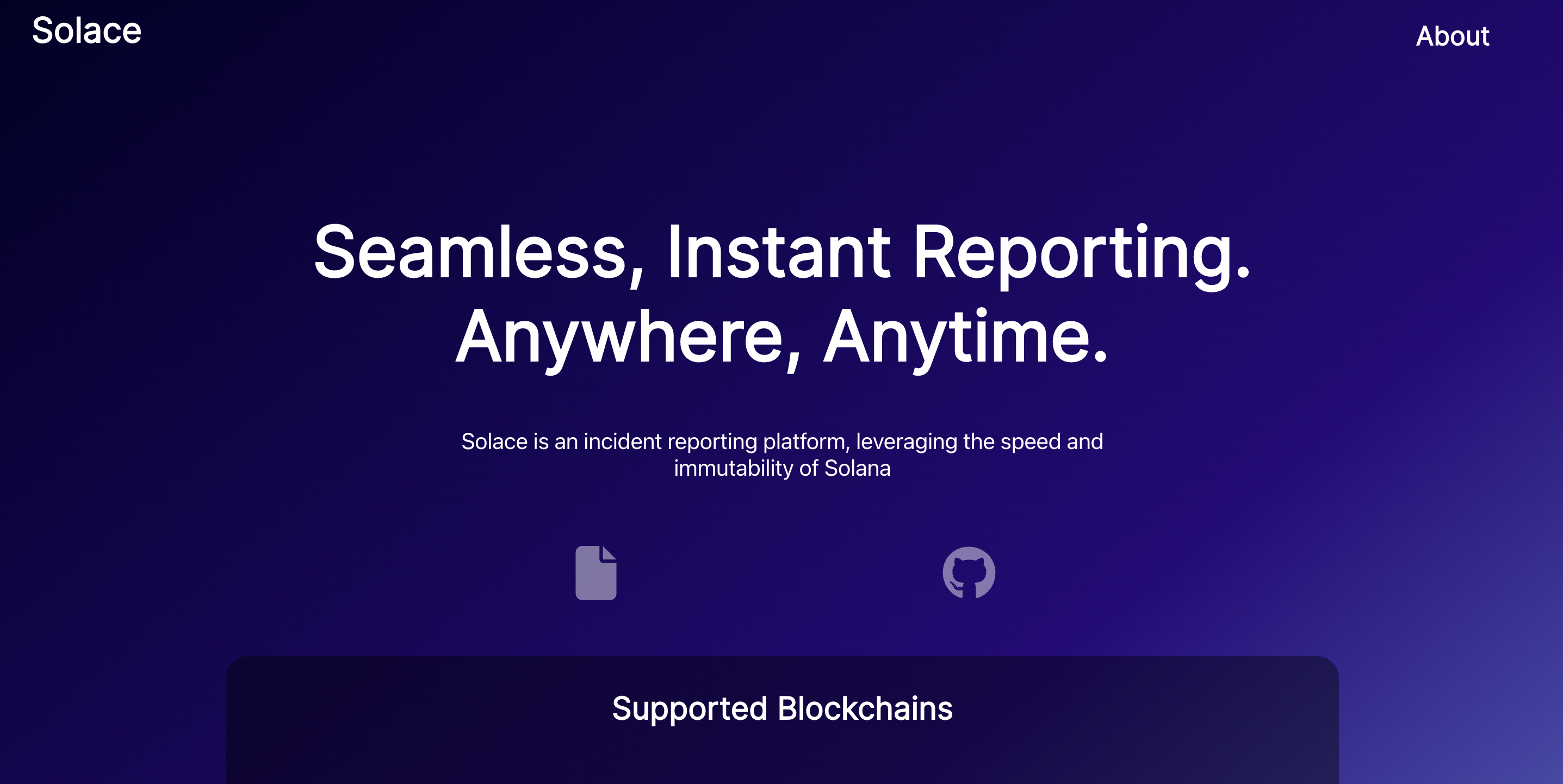
Solace is a Solana-based decentralized application (dApp) that facilitates anonymous incident reports. By leveraging blockchain's transaction finality and scalability, Solace democratizes tamper-proof reporting. Furthermore, Solace's reliance on an immutable peer-to-peer network mandates accountability from all parties involved: namely authoritative figures.
How we built it
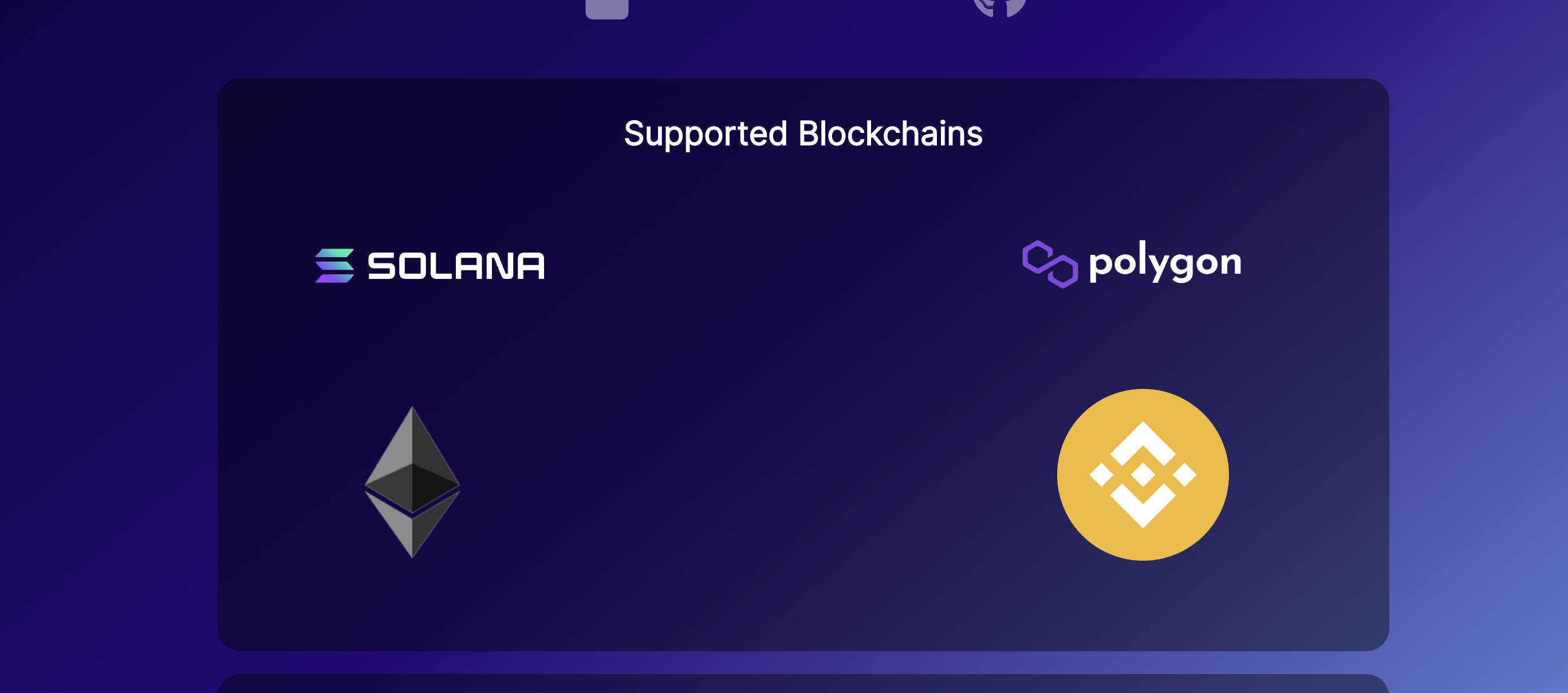
We utilized Remix Ethereum IDE for smart contract compilation and deployment on Binance, Solana, Polygon, and Ethereum testnets; Hardhat, WebStorm, and VSCode for smart contract development; and VSCode and IntelliJ IDEA for front-end.
The frameworks employed include Ethers.js, React.js, and Web3.js; the languages used include but are not limited to Solidity, HTML, CSS, and JavaScript.
Challenges we ran into
We struggled to merge our front- and back-end programs, however, both worked independently; the connection process was arduous due to the various languages, frameworks, and applications involved. Additionally, we are inexperienced in JavaScript (and corresponding frameworks), which inhibited our workflow. This also hindered our Web3 wallet connection, as certain Metamask code deployments caused complete front-end failure.
Furthermore, our developers are novices in both web development and blockchain: technical documentation pertaining to our project was often incomprehensible due to its sophistication.
Accomplishments that we're proud of
dApp deployment on various EVM-compatible chains: after 13 continuous hours of website and smart contract development, we successfully launched our project on Binance, Ethereum, Polygon, and Solana testnets! At this hackathon we qualified for multiple bounty categories!
Disclaimer: Solana is not EVM-compatible, however, a permitted third-party product (Neon Labs' EVM) was utilized to deploy Solidity smart contracts.
What we learned
We gleaned smart contract development, Solidity, JavaScript frameworks, Hardhat/Remix debugging, and end-to-end dApp programming. Moreover, we gained practical experience with testnet deployment and Web2 back-end.
What's next for Solace
Firstly, we plan to bolster our front- and back-end programs to handle significant transaction volume; currently, the front-end is hosted locally and connects with smart contracts via JS/HTML/CSS. Upon comprehensively enhancing Solace, we seek to deploy it on the Solana Mainnet (via Neon EVM) followed by other EVM-compatible chains (i.e. Avalanche, Polygon, Hedera, Aurora, and Arbitrum). Upon network expansion, we plan to trial our product in for- and non-profit organizations across the globe. With the intent of empowering individuals, Solace seeks ubiquity.
References
https://popcenter.asu.edu/content/witness-intimidation-0 https://docs.soliditylang.org/en/v0.8.17/ https://hardhat.org/docs https://docs.metamask.io/guide/ https://docs.ethers.io/v5/ https://www.youtube.com/c/PatrickCollins https://crime-data-explorer.fr.cloud.gov/pages/explorer/crime/crime-trend
Built With
- css
- ethers.js
- html
- intellij-idea
- javascript
- react
- remix
- solidity
- web3.js
- webstorm


Log in or sign up for Devpost to join the conversation.