-

-
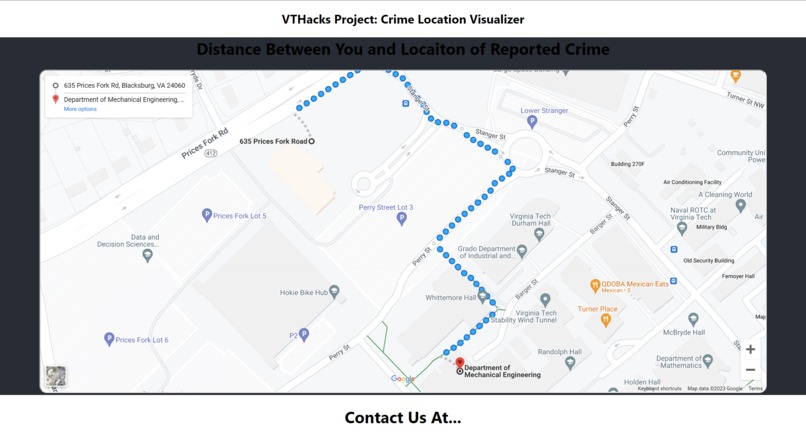
Front-Page of Crime Notify

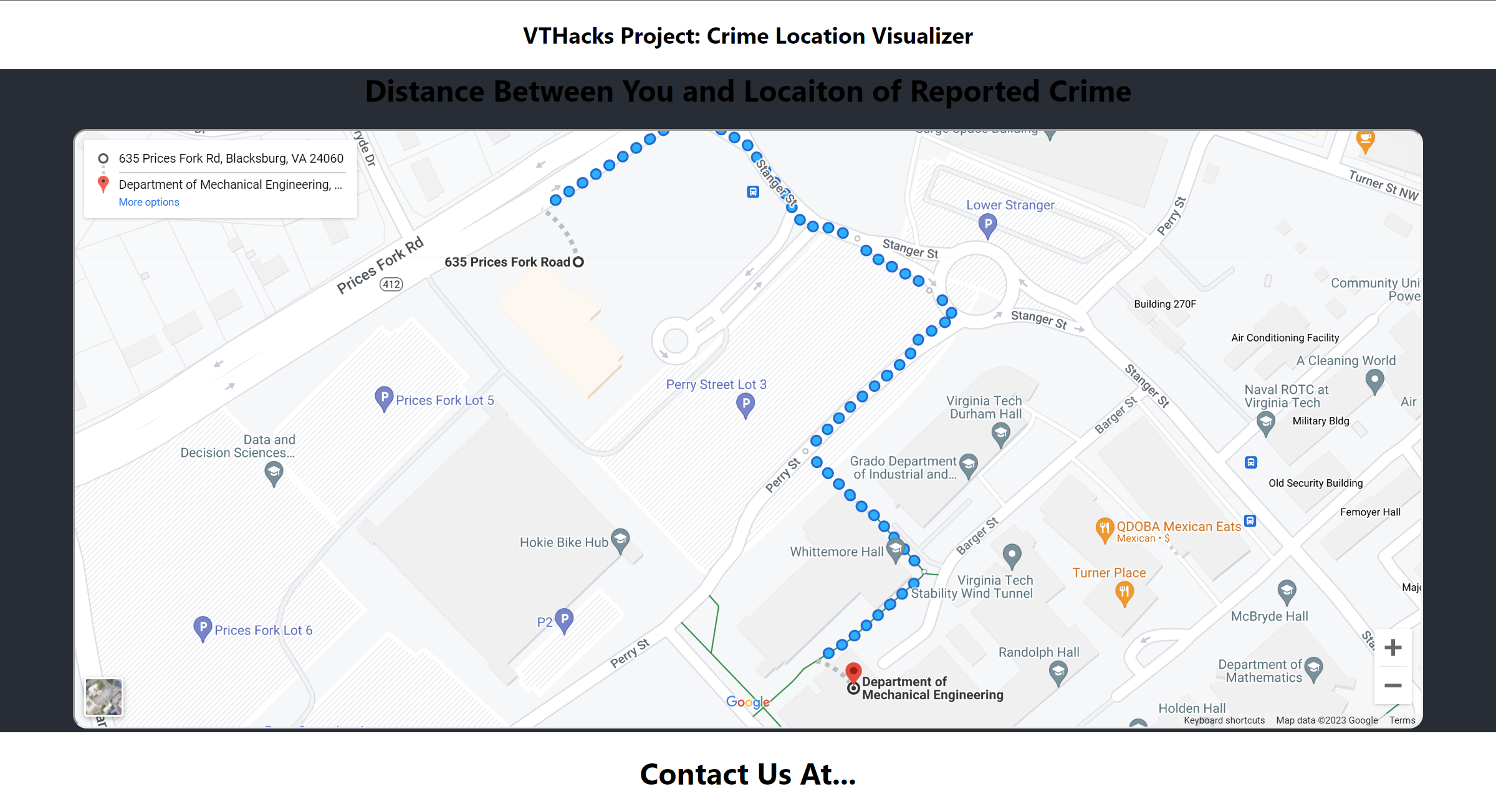
Inspiration
Our inspiration for Crime Notify came from a simple observation: college students needed a more accessible and convenient way to receive information about incidents around them. We saw the value in push notifications combined with visual maps to empower students to make informed decisions and enhance their safety. Crime Notify was born from our commitment to a safer college experience
What it does
Crime Notify delivers real-time push notifications directly to users' devices, ensuring they are immediately aware of any reported crimes or incidents in their vicinity. What sets it apart is the integration of a visual map that displays the exact location of the incident relative to the user, allowing them to confidently navigate their surroundings and avoid potential risks. In essence, Crime Notify is your campus safety companion, revolutionizing how students stay informed and stay safe
How we built it
Building Crime Notify was a dynamic and collaborative effort that leveraged modern technology and valuable learning experiences. Here's how we built it:
Technology Stack We chose React as our primary framework to develop the website, providing a responsive and user-friendly interface.
API Integration We integrated an external API for crime data, which served as the foundation of our information. Additionally, we utilized the Google Maps API for geolocation and mapping features.
Data Query and Notification We designed a system to query the crime data, extract relevant information, and trigger push notifications to users. This real-time notification system ensures users receive immediate updates on incidents near them.
Mapping Component A key feature of Crime Notify is the mapping component, created within our React website. This component allows users to visualize their location in relation to reported incidents, empowering them to plan escape routes or take precautions effectively.
Version Control As a valuable learning opportunity, we embraced version control using Git and GitHub throughout the project. This allowed us to track changes, collaborate seamlessly, and maintain a well-organized codebase.
In summary, Crime Notify was brought to life through a combination of React for the website, external APIs for data, and Git/GitHub for version control. Our project embodies not only technological innovation but also a commitment to continuous learning and improvement. We built this using React.js and Google's Maps API
Challenges we ran into
As first-time hackers our main challenges were:
Knowledge Gap: We had a hard time figuring out what we didn't know we needed to know to make our idea come to life. We had to rapidly acquire new skills in React, UI design, and Git often delving into unfamiliar territory.
Compatibility Issues: Each team member worked on separate parts of the codebase, using various tools, libraries, and coding styles. It was a challenge to ensure that all these elements align and work seamlessly together.
Time Management: Balancing coding, debugging, and testing within the tight deadline of a hackathon was challenging. Additionally, prioritizing tasks and allocating sufficient time for each aspect of the project is crucial to ensure a polished and functional end product.
Teamwork: Collaborating effectively was a hurdle due to differing opinions, but we learned to communicate clearly and delegate tasks efficiently based on our skills and interests.
Despite these challenges, our determination and passion led to a successful React website project, reinforcing our commitment to becoming software engineers.
Accomplishments that we're proud of
One of our proudest achievements in building "Crime Notify" is our choice of technology. We opted for React as the framework for our website, a decision that enabled us to create a responsive and user-friendly platform. This choice reflects our commitment to embracing cutting-edge technology and delivering a seamless user experience.
The successful integration of external APIs into our system is another standout accomplishment. We seamlessly incorporated a crime data API and leveraged the Google Maps API for geolocation and mapping. This achievement required us to navigate complex data structures and establish real-time communication between services. It underscores our technical competence in handling intricate technological aspects.
One area that demanded our persistent efforts was debugging. As software developers, we quickly grasped the importance of debugging in the development process. It became an essential skill as we encountered various issues, ranging from data integration quirks to unexpected behavior in the user interface. Debugging taught us patience, problem-solving, and the art of meticulous code examination. It was through these challenges that we honed our debugging skills, recognizing that each issue provided an opportunity to learn and improve.
What we learned
Technical Skills: We gained proficiency in React, mastering its components and state management for building a dynamic and responsive web interface.
Version Control (Git/GitHub): Embracing version control with Git and GitHub was an essential skill development. We now appreciate its role in maintaining code integrity and enabling seamless collaboration.
Project Management: We honed our project management skills, from planning and task allocation to problem-solving and adapting to evolving requirements.
Teamwork: Collaboration was at the heart of this project. We learned how to effectively work together, divide responsibilities, and leverage each team member's strengths.
Problem Solving: Addressing challenges, whether technical or conceptual, allowed us to grow as problem solvers and innovators.
Continuous Learning: Above all, we learned that the journey of building "Crime Notify" is just the beginning. Continuous learning and adaptation are essential in the ever-evolving field of technology.
What's next for Crime Notify
We have so many wonderful ideas for the future of Crime Notify. With more time, and resources we would love to integrate a couple of these:
Enhanced Features: We would love more features such as incident categorization, safety tips, and a community reporting system to enhance user safety and build a community of trust.
Partnerships: Currently, we rely on data from a service that we cannot fully verify or rely on. Collaborations with local law enforcement agencies and safety organizations would allow us to work with even more comprehensive and accurate incident data.
Mobile App: Developing a dedicated mobile app for a seamless user experience on smartphones.

Log in or sign up for Devpost to join the conversation.