-
-
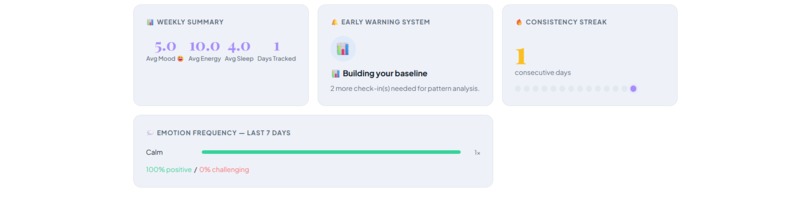
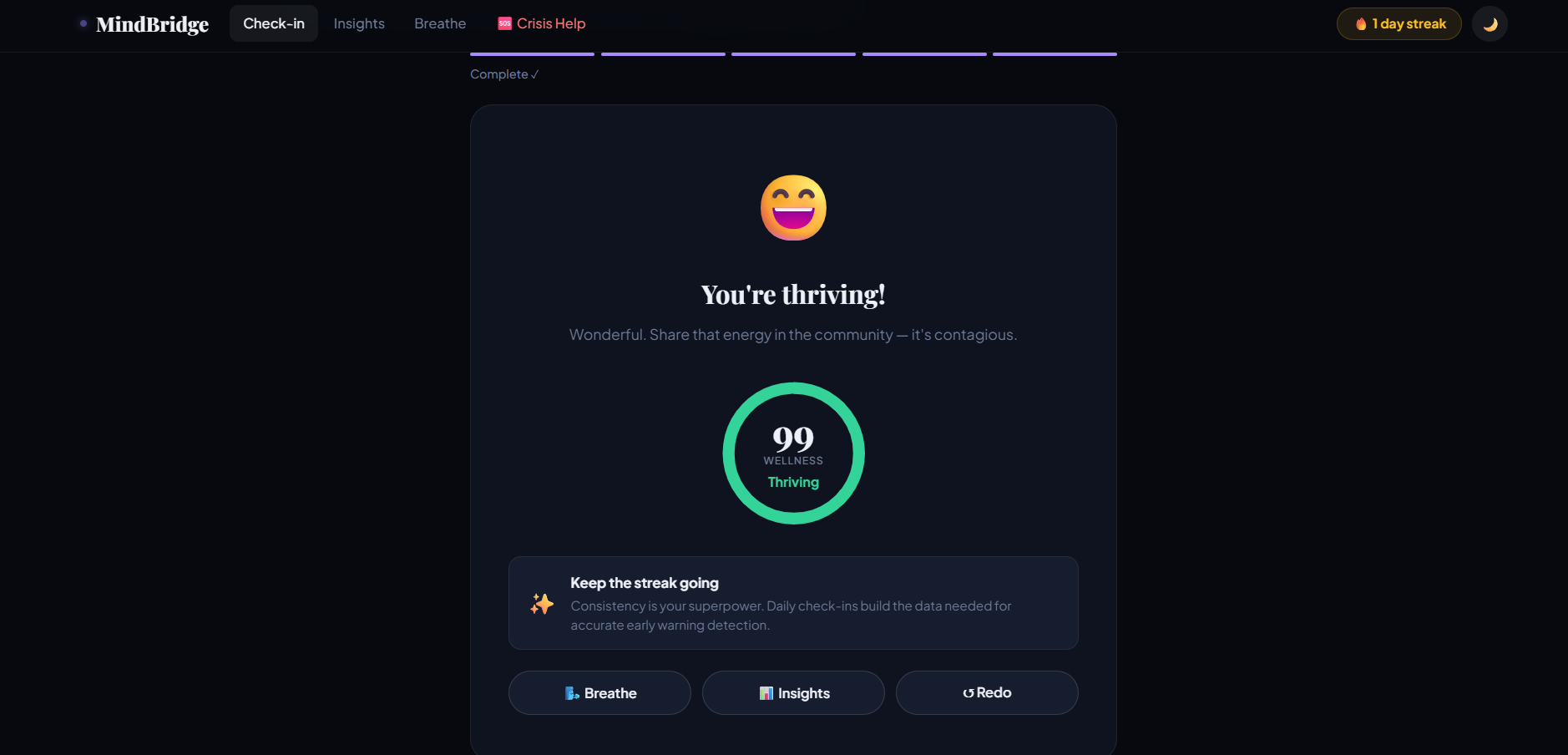
report in white theme
-
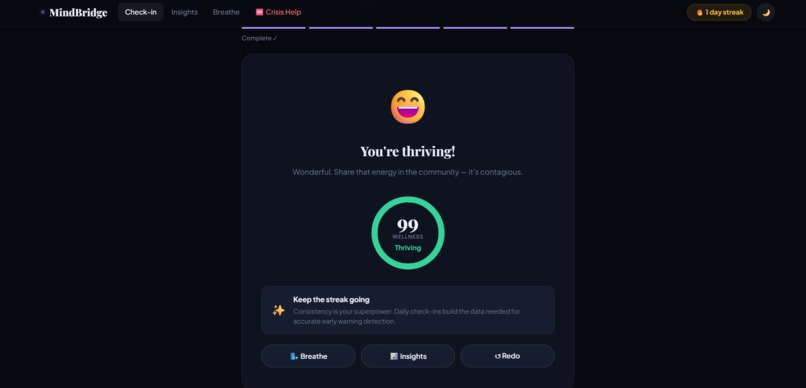
first test
-
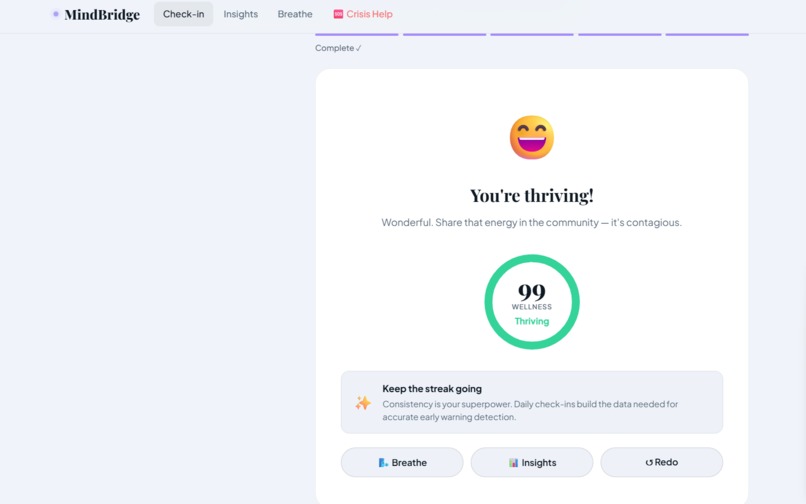
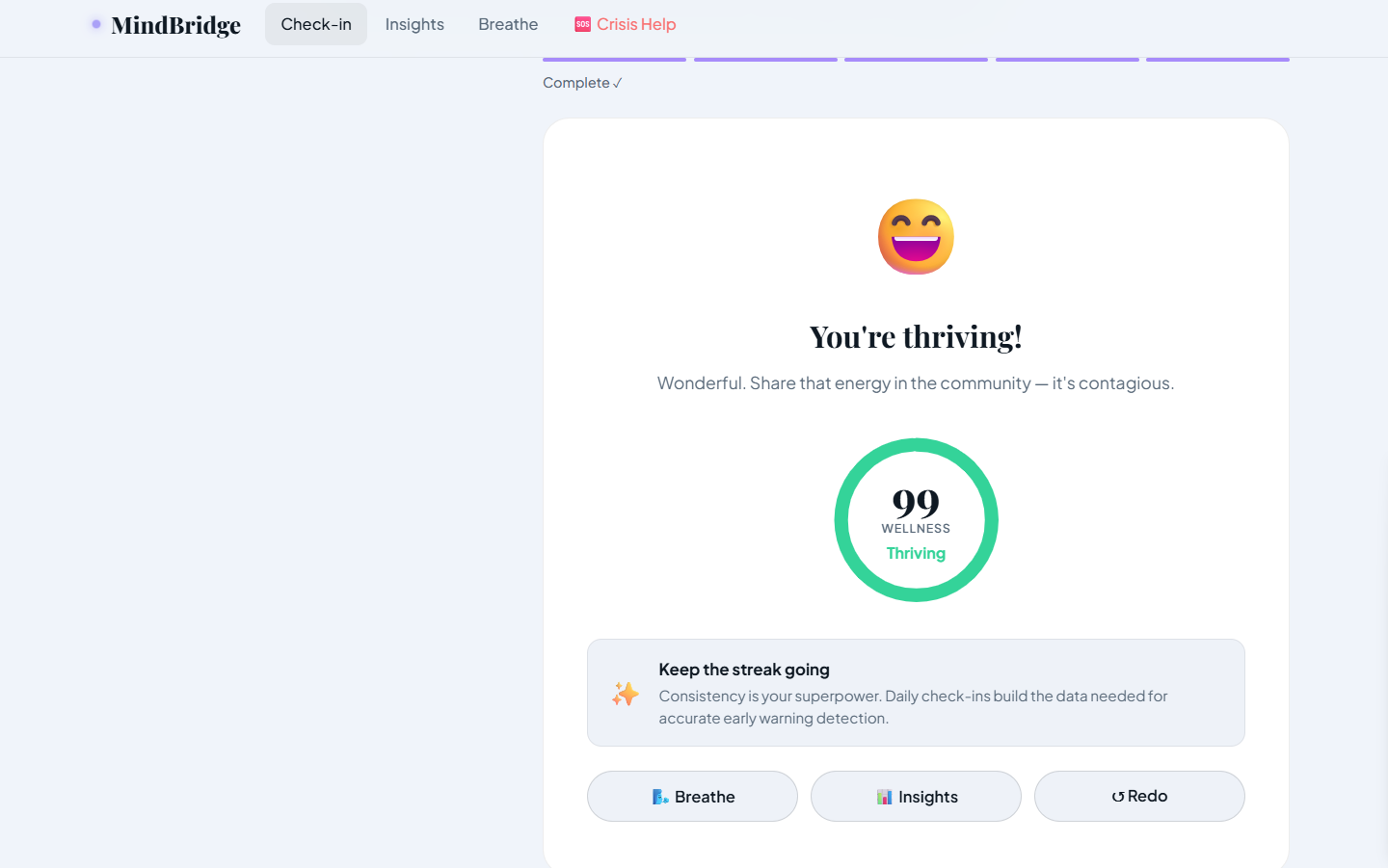
white theme result
-
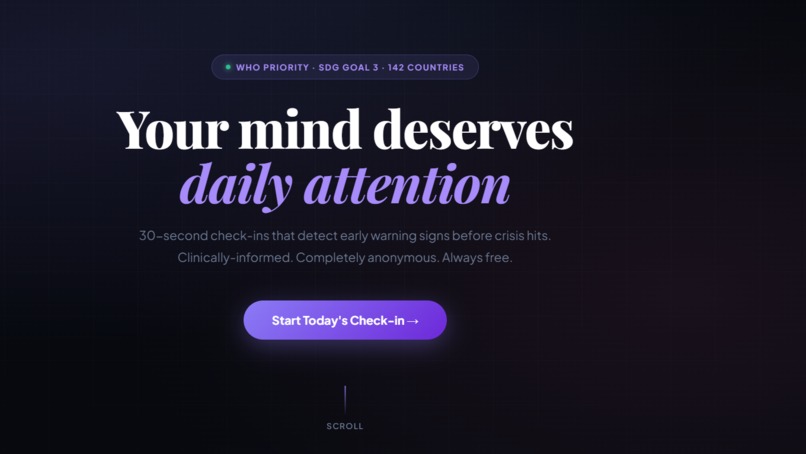
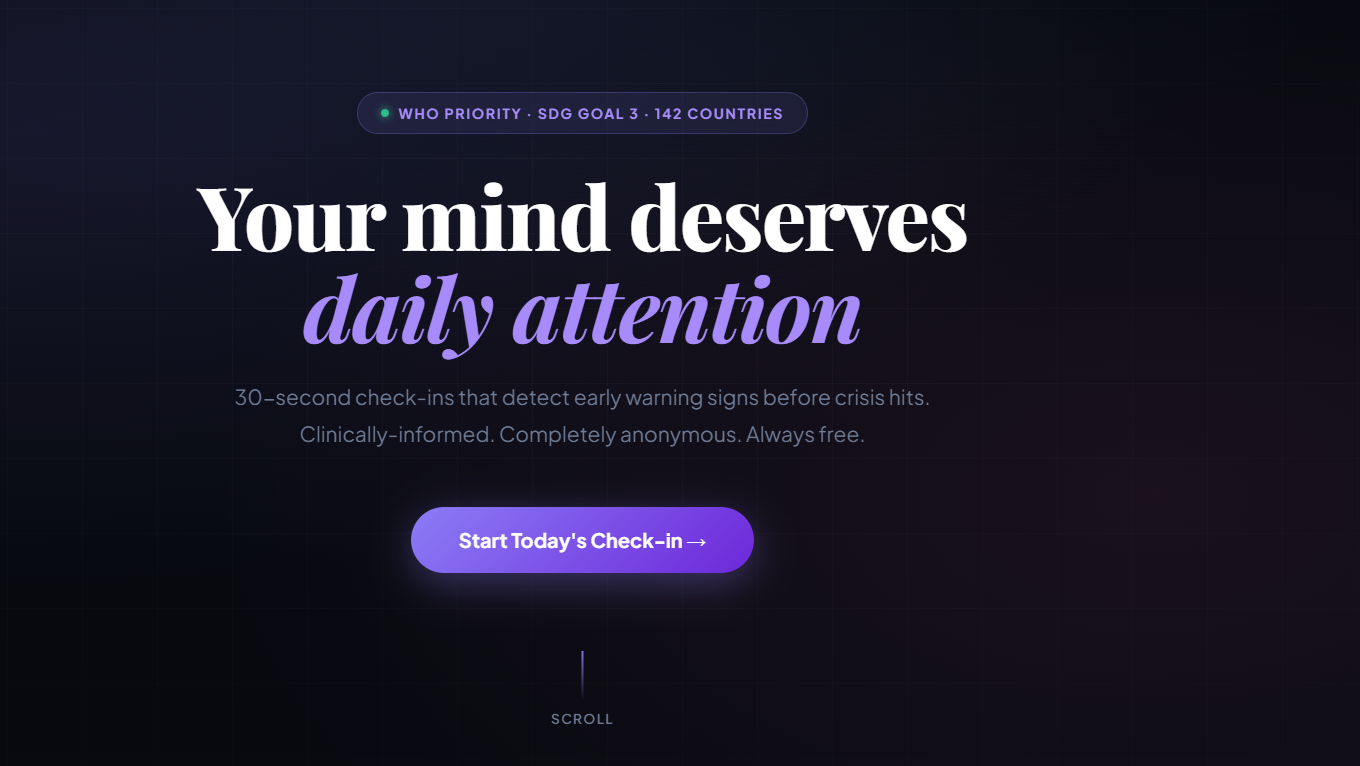
starting
What Inspired Me
A few months ago, someone close to me went through a mental health crisis.
Looking back, all the signs were there — weeks of declining mood, poor sleep, withdrawal from people they loved. But nobody caught it. Not their family, not their friends, not even them. By the time anyone realized something was wrong, it had already become a crisis.
That moment stuck with me. I kept thinking — what if there was something that could have caught those signs early? Not a therapist, not an app that requires you to already know you need help — just a quiet, daily check-in that watches for patterns and says "hey, something might be off" before it gets bad.
That's where MindBridge came from.
How I Built It
I wanted to build something that anyone, anywhere in the world could use. No account. No server. No data sent anywhere. Just open it and use it.
The entire app runs in the browser using plain HTML, CSS and JavaScript.
All data is stored locally on the user's device using localStorage —
which means your mental health data never leaves your phone or computer.
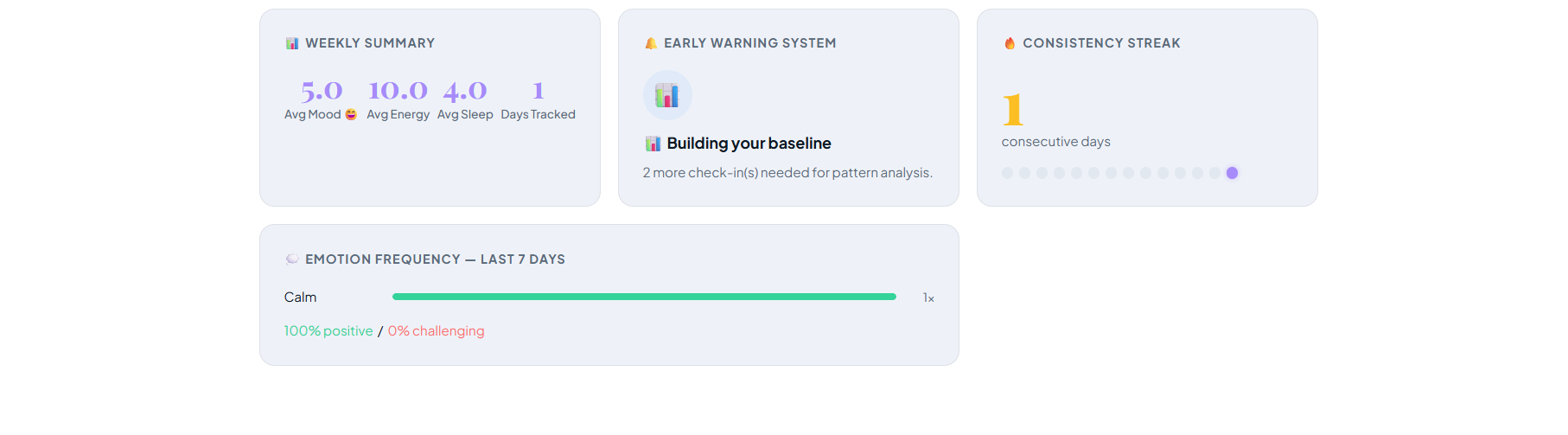
If the slope drops below a threshold, or if the average score falls too low, the system raises a caution or alert — and gently nudges the user toward crisis support or breathing exercises.
📚 What I Learned
I learned that mental health tools don't need to be complicated to be powerful.
The most important thing I learned technically was how to implement pattern detection using pure JavaScript — no libraries, no machine learning, just math. Linear regression on a small dataset is surprisingly effective at catching declining trends before they become obvious.
I also learned a lot about clinical mental health indicators — what actually signals that someone is struggling versus just having a bad day. Reading about PHQ-9 and GAD-7 assessment frameworks shaped how I designed the check-in questions and the warning thresholds.
Most importantly — I learned that privacy and trust are the most important features of any mental health tool. If people don't trust that their data is safe, they won't use it. Keeping everything on-device wasn't just a technical choice — it was the most important design decision I made.
🧱 Challenges I Faced
The hardest challenge was calibration.
How do you decide when to show a warning? Too sensitive and people ignore it. Not sensitive enough and you miss people who actually need help. I spent a lot of time reading clinical research and adjusting the thresholds until they felt right — not too alarming, not too quiet.
The second challenge was the crisis helplines.
I wanted every user to see a helpline that actually works in their country. Researching, verifying and formatting accurate helpline data for 19 countries — including availability hours, languages and phone numbers — took far longer than I expected. But it was the most important part to get right.
The third challenge was doing this without a backend.
Everything — data storage, pattern detection, streak calculation, chart rendering — had to work without any server. That constraint forced me to write cleaner, more efficient code than I would have otherwise.
Why It Matters
The World Health Organization estimates that 1 in 8 people globally lives with a mental health condition. In most countries, the average time between first symptoms and getting treatment is 10 years.
Ten years.
MindBridge doesn't replace therapists or treatment. But it can be that small, quiet thing that catches the early signs — and points someone toward help before a decade passes.
That's worth building.
Built With
- css
- gitlab
- html
- javascript

