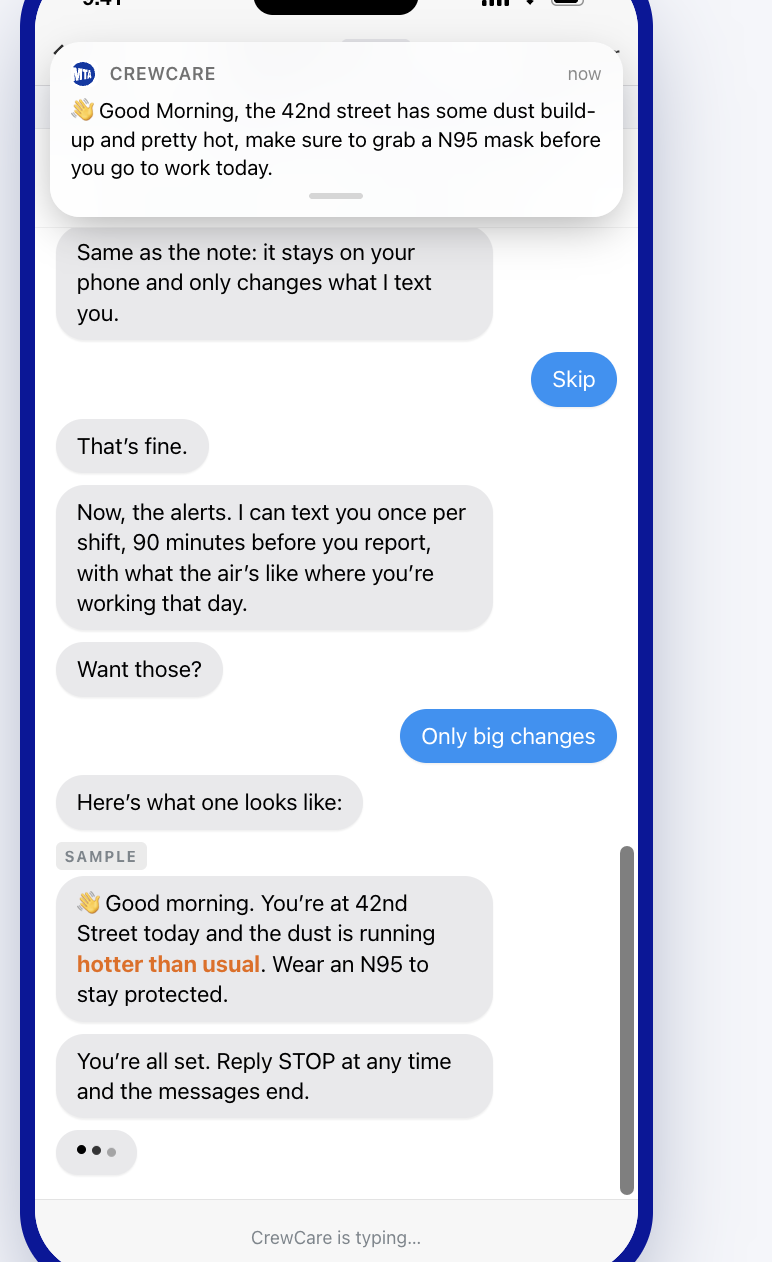
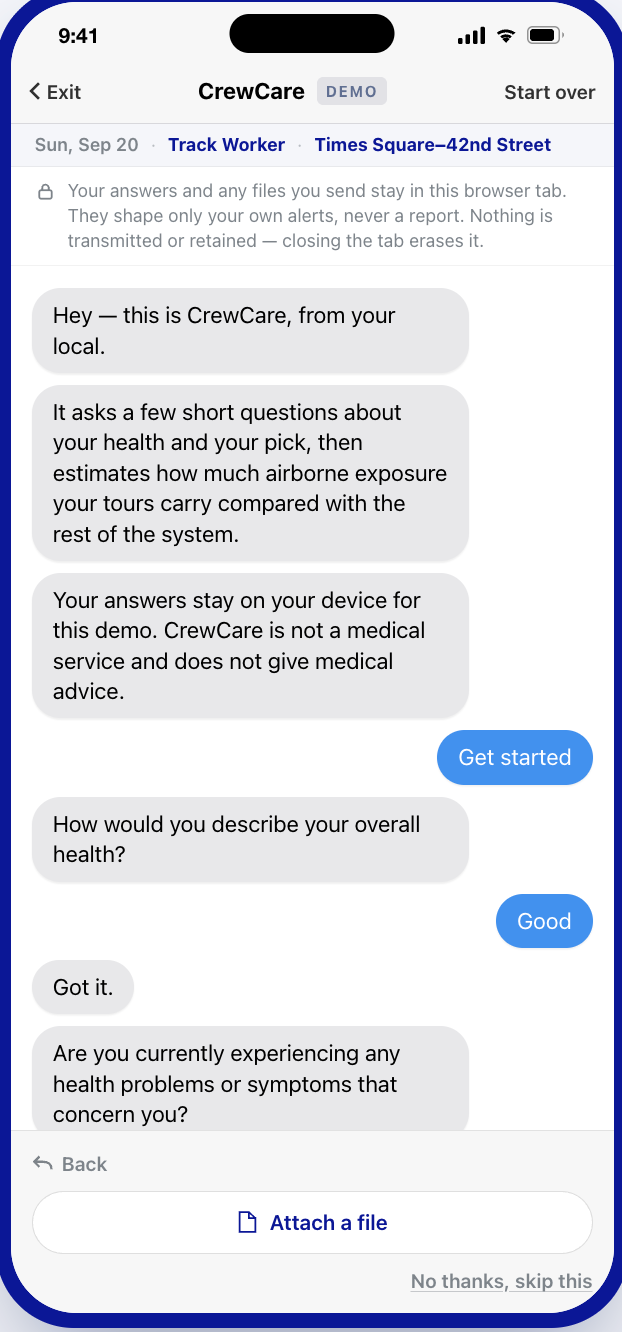
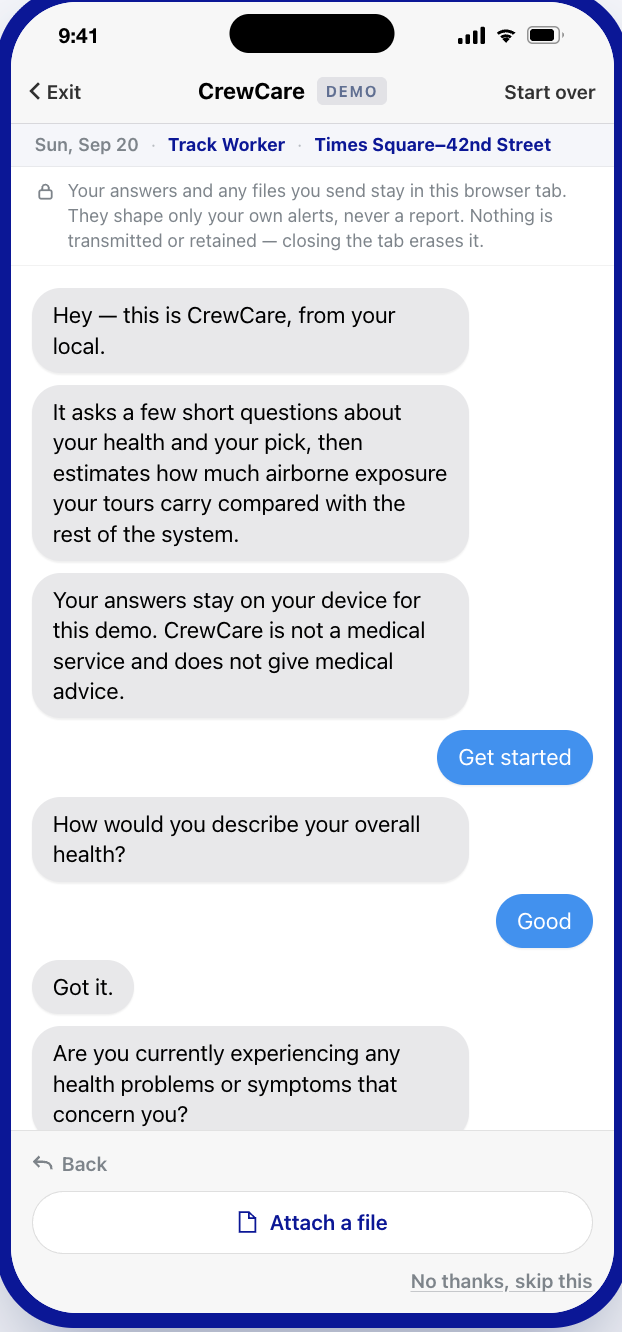
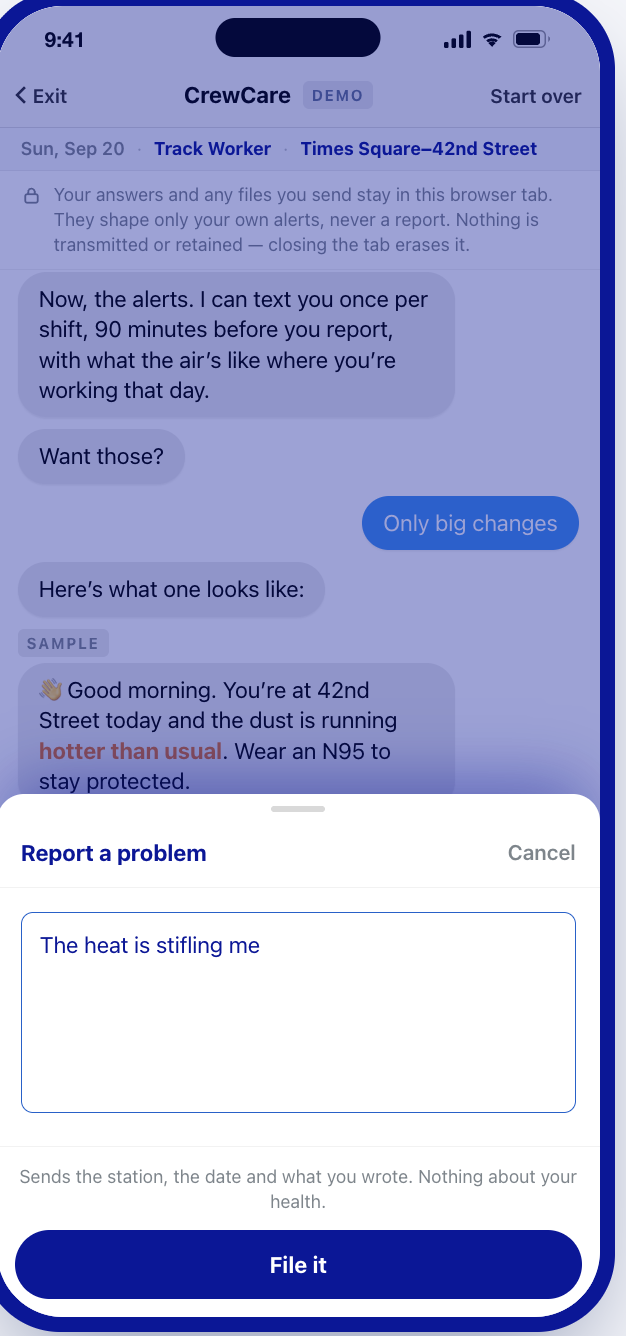
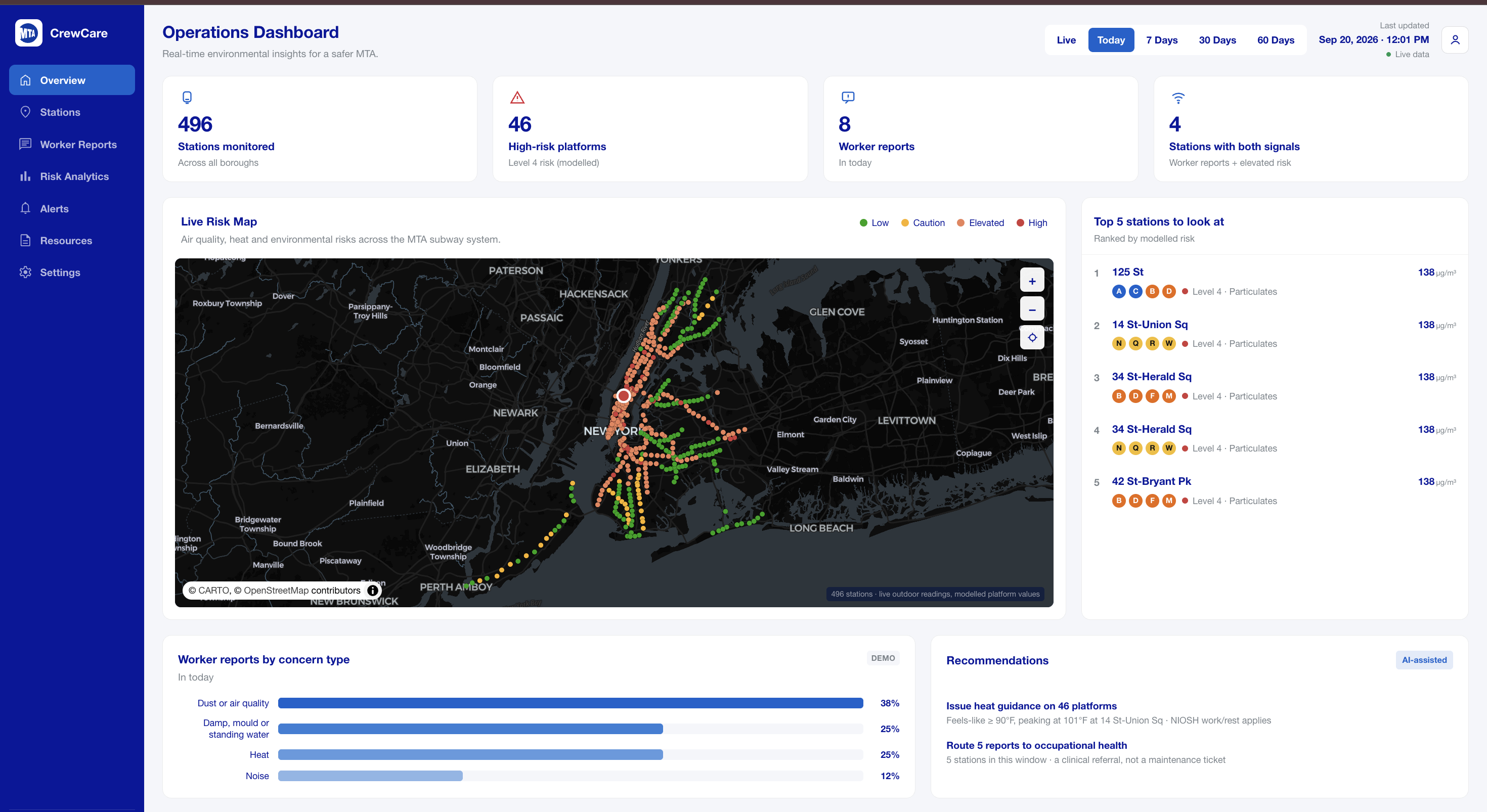
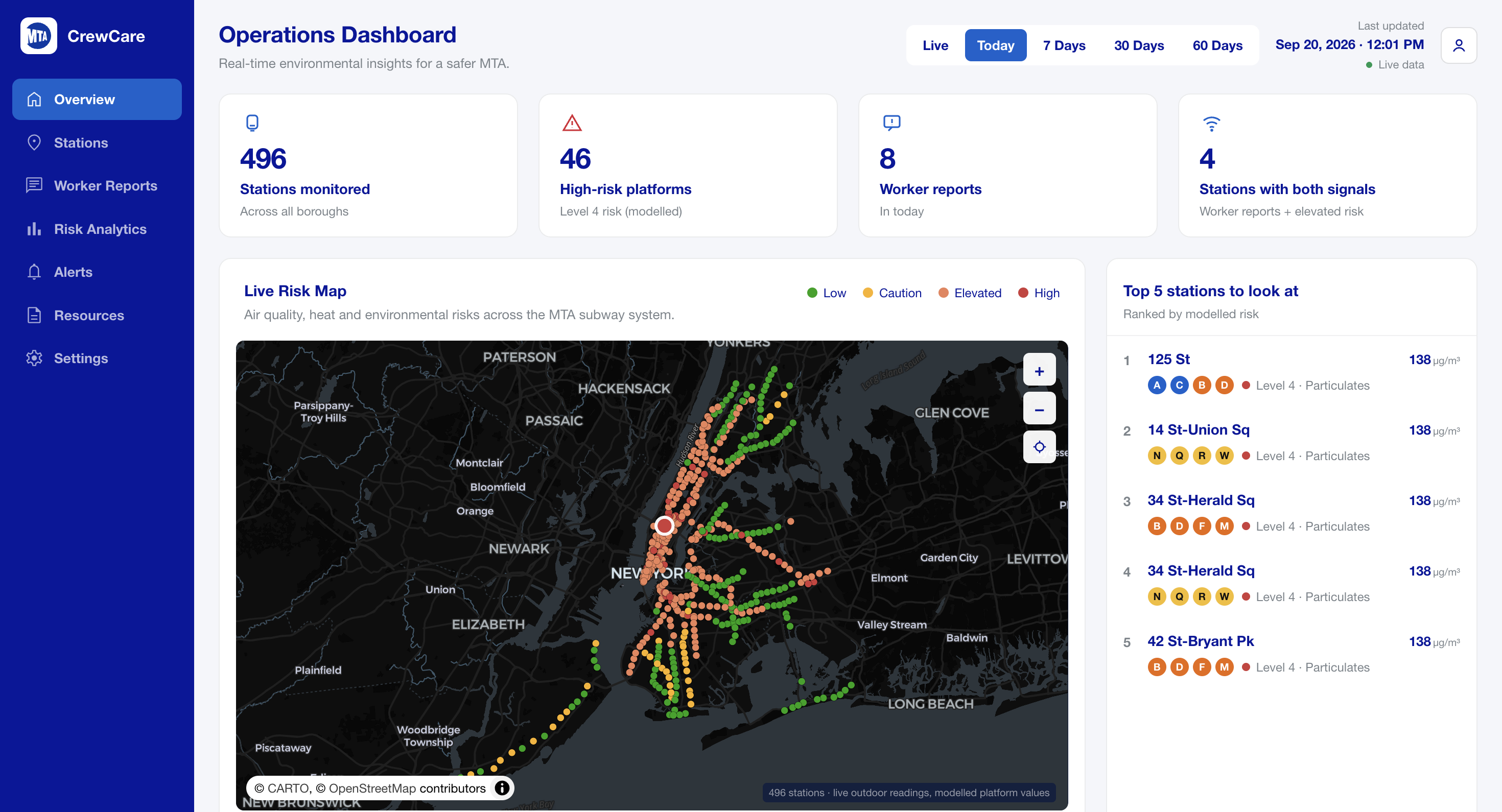
Track workers spend eight-hour tours on platforms that can run far hotter than the street and carry ten times its particulate load — Times Square models at 106 µg/m³ against a WHO 24-hour guideline of 15 — and almost none of that is visible to the person breathing it or to the local representing them. CrewCare is two halves of one system: a worker answers a few short questions in a messaging thread on their own phone, gets a plain-language alert before a shift ("the dust is running hotter than usual — wear an N95," never a ratio), and can report a station problem in a single text box; their local gets an operations dashboard showing modelled exposure across all 496 NYC subway stations, built from live Open-Meteo readings and a mechanical source model that derives platform PM2.5, heat and humidity from train frequency, enclosure class and ventilation rate. The governing rule is that those two halves never meet — health answers, medical documents and health-app data stay on the worker's phone and shape only their own alerts, while the dashboard reads a separate data module it has no import path out of, a boundary enforced by tests that sweep the rendered dashboard for every answer, filename and identifier a worker ever entered. Only the station complaint is built to travel, and it carries exactly two fields: where, and what they wrote. What a worker shares to protect themselves cannot become evidence against them.
Built With
- claude
- python
