-
-

Project Dashboard
-
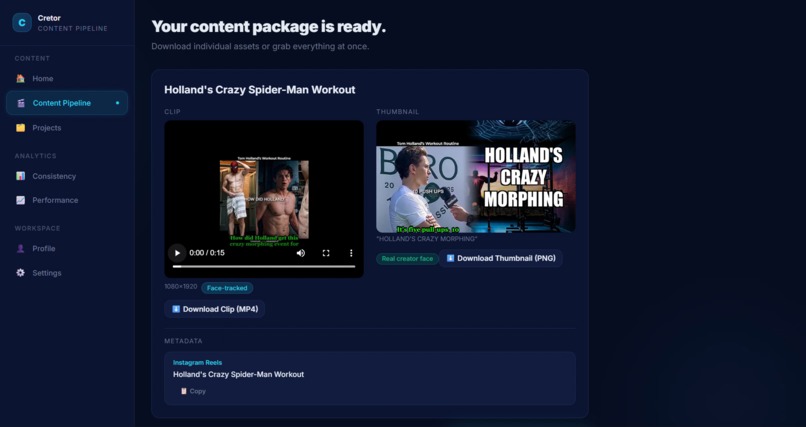
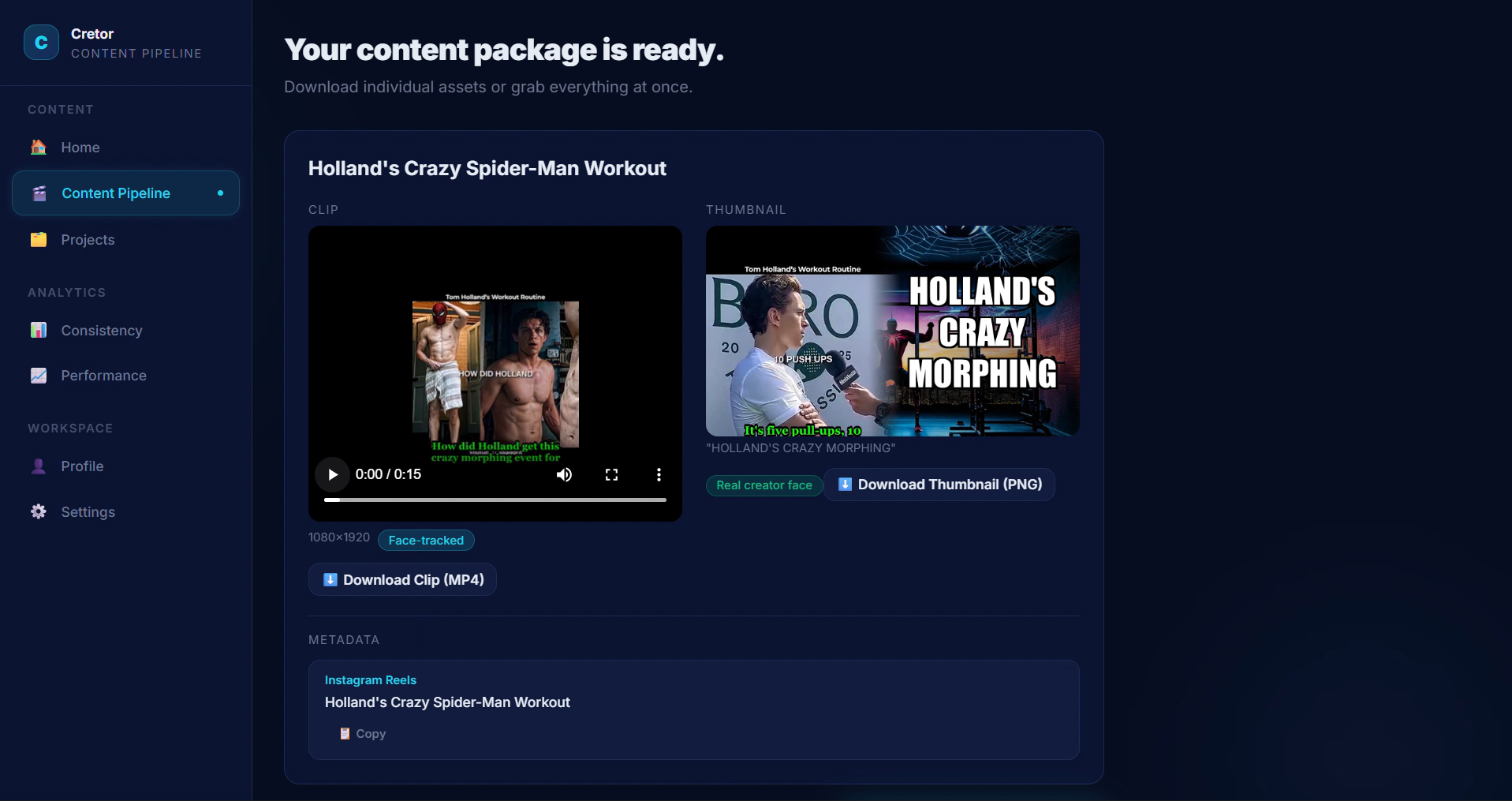
Output Video and Thumbnail
-

Home Page
-
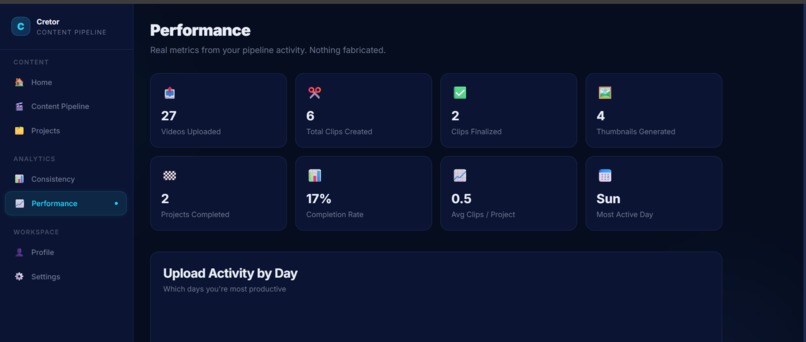
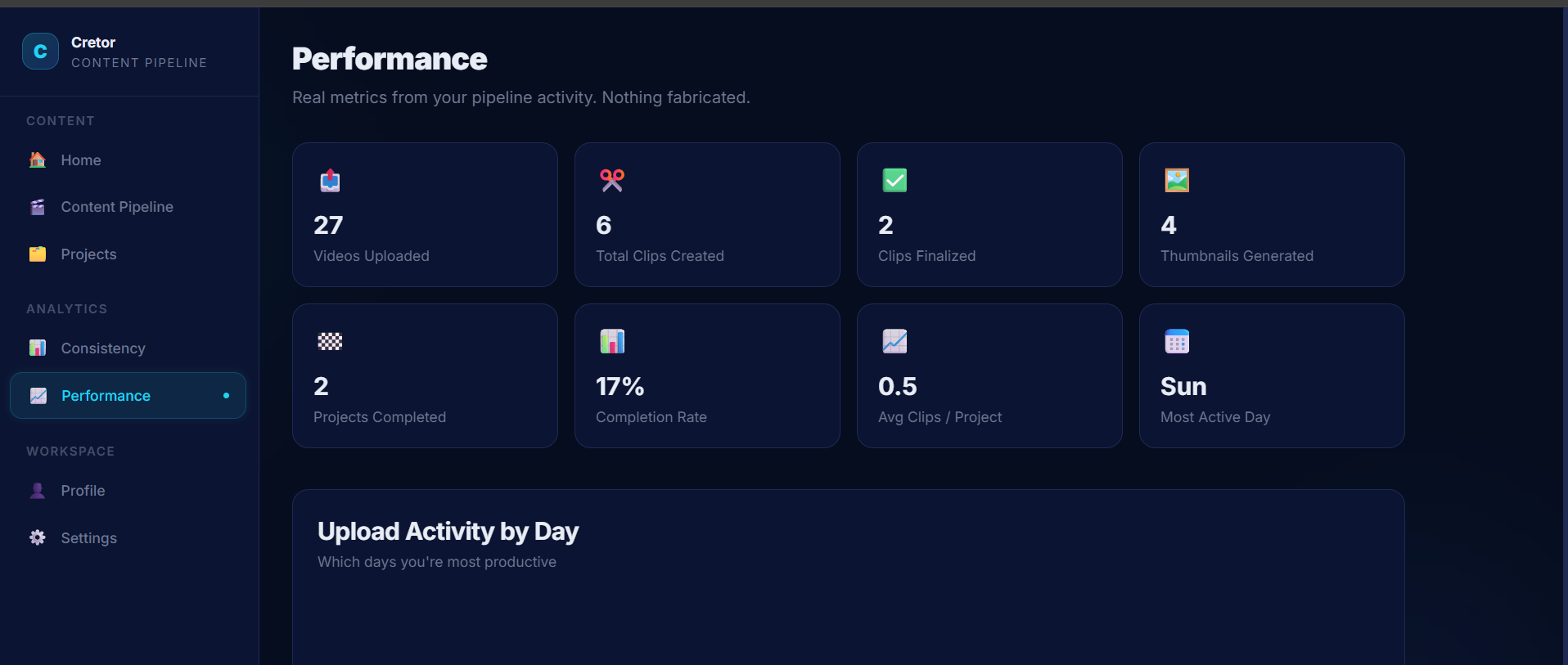
Performance Dashboard
-
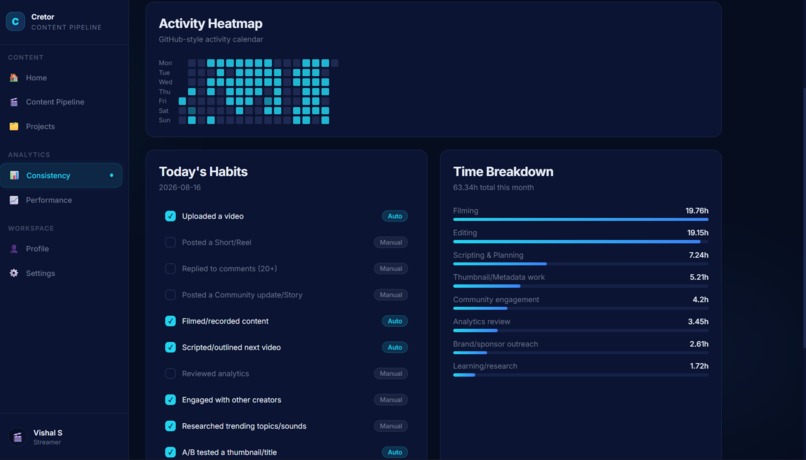
Consistency Dashboard
-
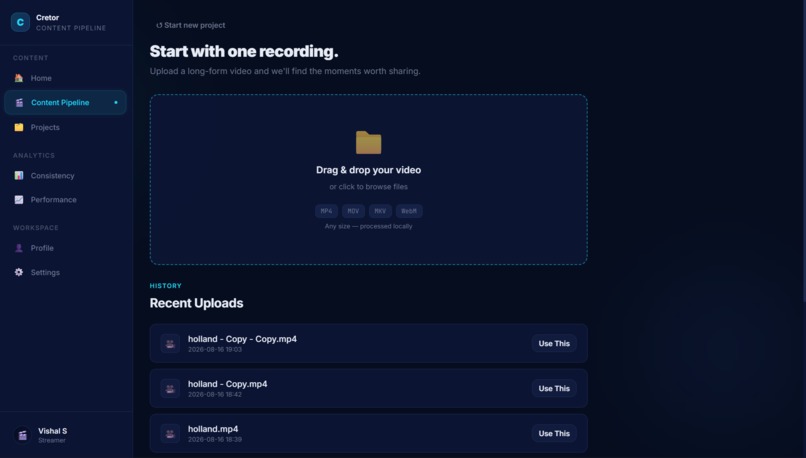
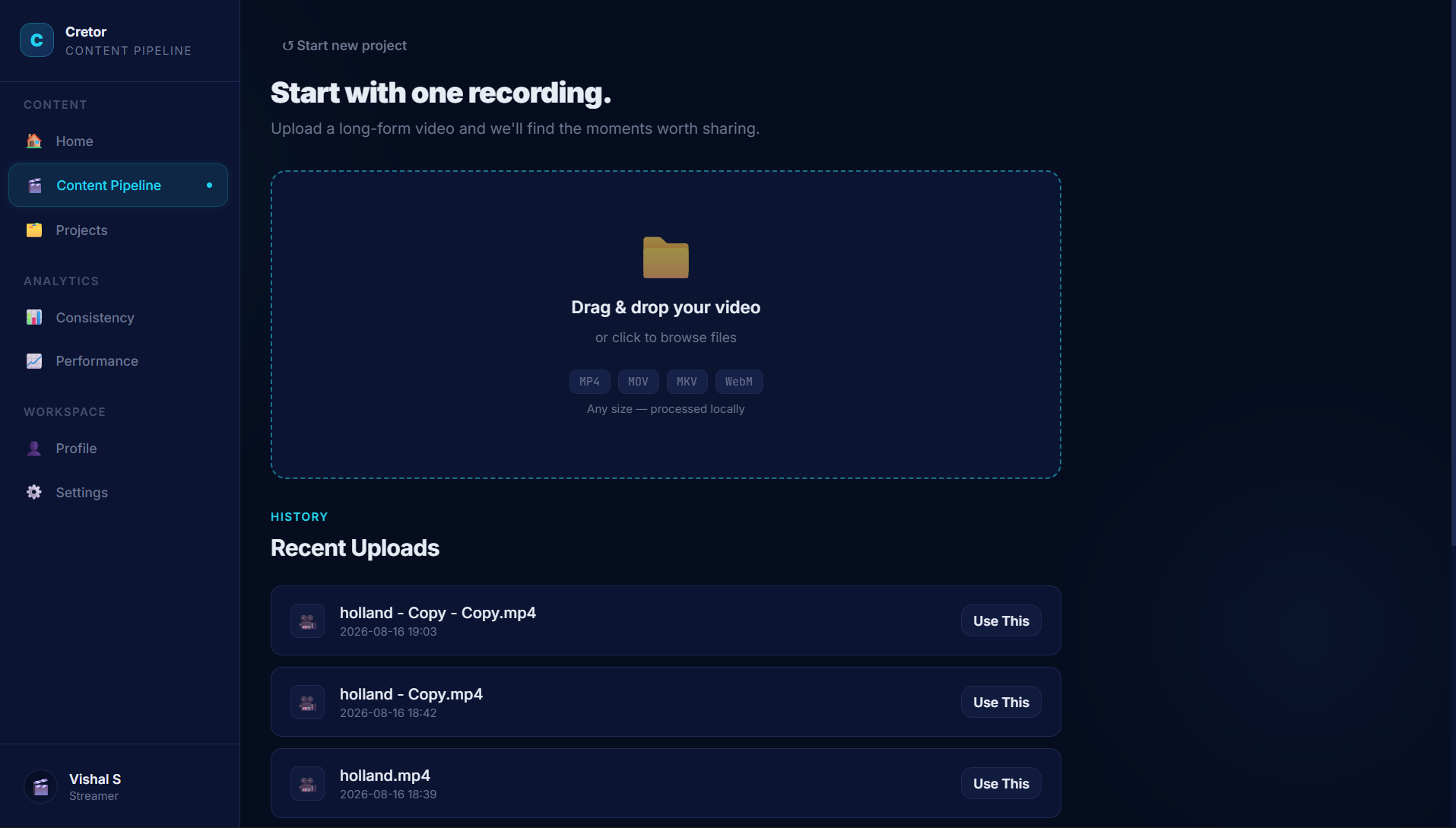
Video Upload Page
-

Profile Settings




Cretor — AI-Powered Creator Automation
Inspiration
Creators spend hours turning long-form videos into Shorts, Reels, and TikToks. Finding highlights, editing clips, adding captions, creating thumbnails, and writing metadata can take 2–3 hours per video.
Cretor automates this repetitive workflow, turning one long-form video into a ready-to-post content package in minutes — without requiring a dedicated editor.
What It Does
Cretor transforms a long-form video through an AI-powered pipeline:
🎙️ Transcribe— faster-whisper creates an accurate, timestamped transcript. 🔥 Find Highlights — Groq identifies and ranks engaging moments based on hook strength, emotional peaks, coherence, and quotability. ✂️ Create Clips — FFmpeg + OpenCV generate 9:16 vertical clips with face-guided cropping, silence trimming, and synchronized captions. 🖼️ Generate Thumbnails — Groq's vision model creates the thumbnail concept, while Hugging Face generates the background and the creator's face is composited on top. 📝 Generate Metadata— Groq creates titles, descriptions, tags, and hashtags. 📦 Create Draft Package — clips, thumbnails, and metadata are packaged together for review and manual publishing.
Cretor also includes a consistency dashboard that tracks upload streaks, daily tasks, and time spent on activities such as filming, editing, and scripting.
How We Built It
Frontend
- React
- Vite
- Zustand
Backend
- FastAPI
- Python
AI / ML
- faster-whisper
- Groq
- Hugging Face Inference API
Video Processing
- FFmpeg
- OpenCV
Each pipeline stage is independently runnable and testable, making the system easier to debug and improve.
Challenges We Ran Into
Caption Synchronization
Our first approach evenly distributed AI-generated text across the clip, which caused timing drift when speech speed changed.
We fixed this by using the original Whisper timestamps and remapping them after silence removal, keeping captions synchronized with the actual speech.
Two AI Providers
Groq handles reasoning and vision-based thumbnail prompting but does not generate images. We therefore combined Groq for the creative promptwith Hugging Face for image generation.
Face-Guided Cropping
Instead of using an expensive hosted vision model, we used a lightweight OpenCV Haar-cascade detector to keep speakers centered in vertical clips.
Accomplishments
- Built and tested a complete end-to-end pipeline using real videos
- Achieved accurately synchronized captions, including after silence trimming.
- Designed all pipeline stages as standalone, independently testable modules.
- Built a consistency dashboard to encourage creators to maintain a regular publishing workflow.
- Kept the AI workflow accessible using free-tier services.
What We Learned
Video pipelines require testing beyond simply checking whether an API succeeds — synchronization and real playback matter. Combining specialized AI providers can provide better capabilities while keeping costs low. Modular pipeline design makes complex AI workflows much easier to debug and improve.
What's Next
Word-level karaoke-style captions TikTok and Instagram Reels integrations Smarter multi-speaker face tracking Team collaboration and editor approval workflows Analytics feedback to continuously improve highlight selection
The Vision
Cretor's goal is simple: automate the repetitive parts of content creation so creators can spend less time editing and more time creating.
Built With
- ai
- api
- computer
- css
- face
- fastapi
- faster-whisper
- ffmpeg
- generative
- groq
- hugging
- language
- natural
- opencv
- processing
- python
- react
- rest
- tailwind
- typescript
- video
- vision
- vite
- zustand


Log in or sign up for Devpost to join the conversation.