-
-
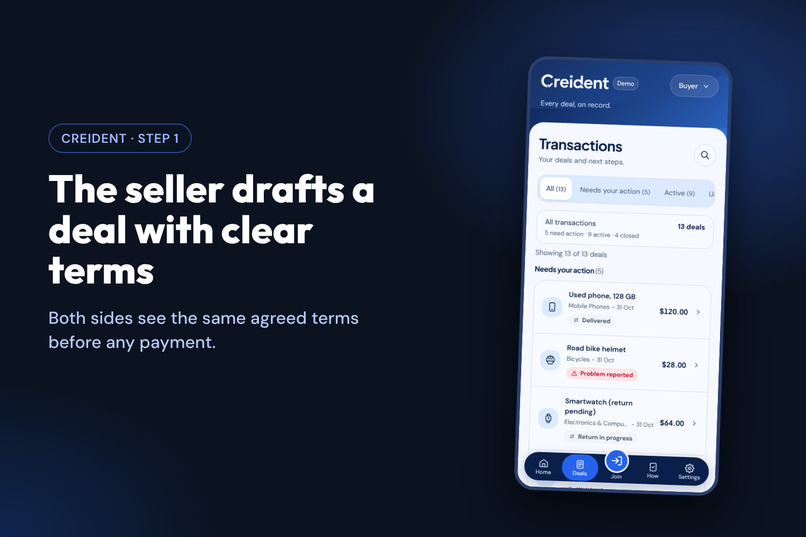
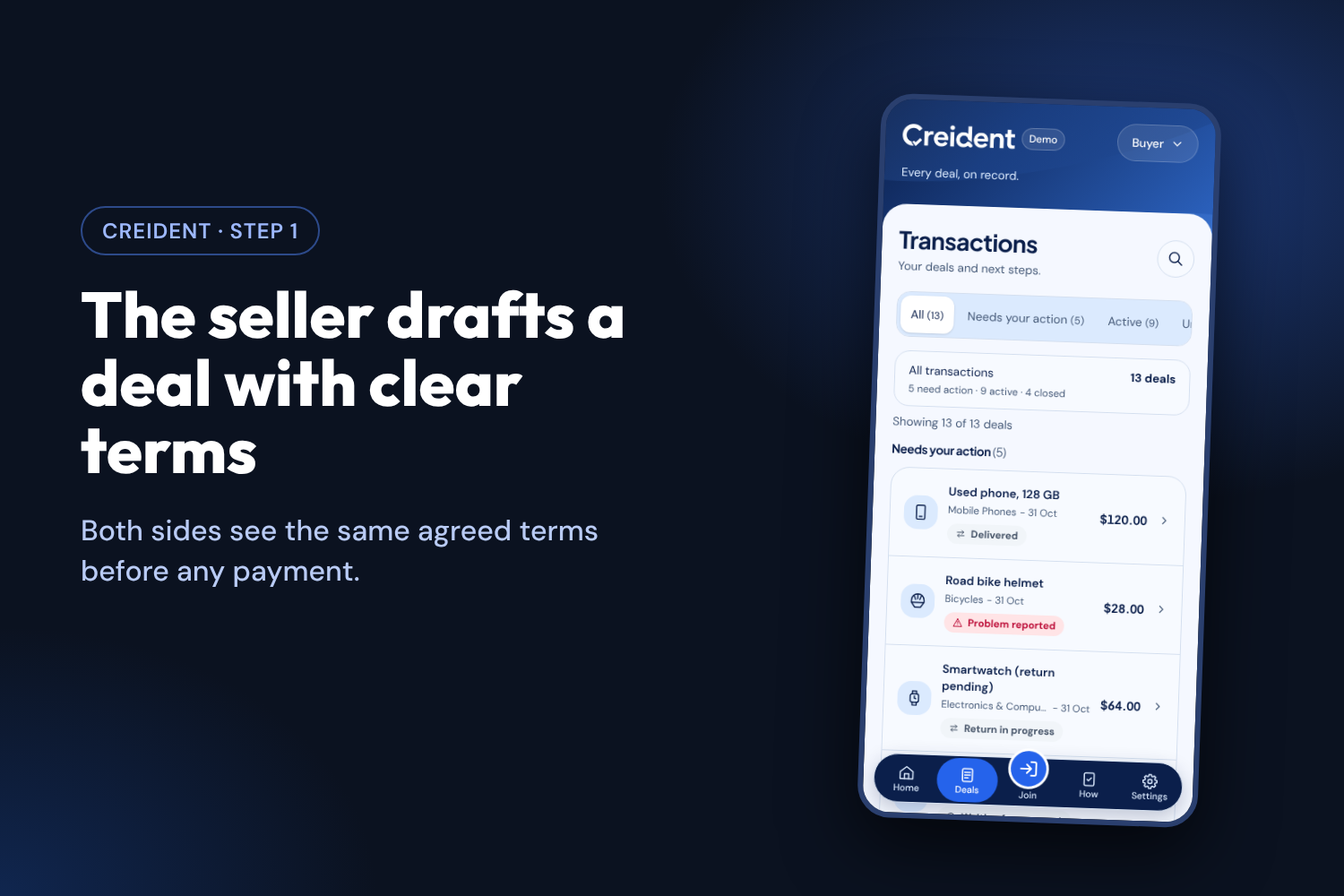
The seller drafts a deal with clear terms and accepts them first.
-
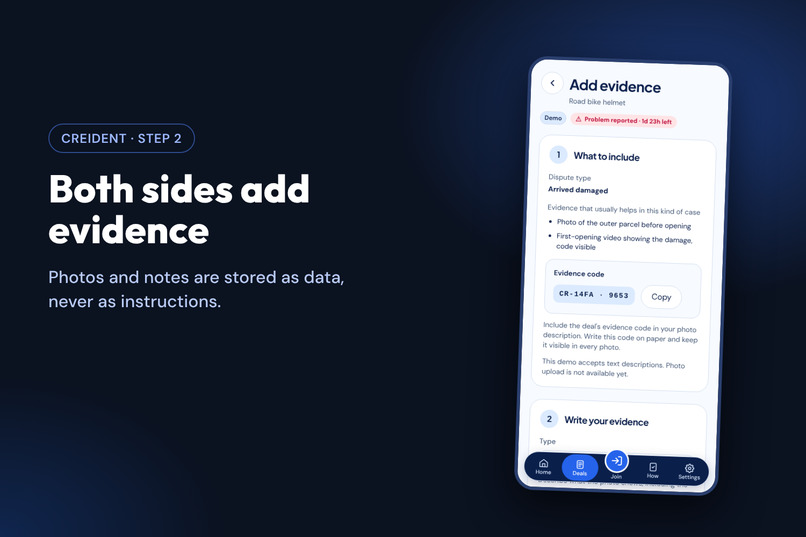
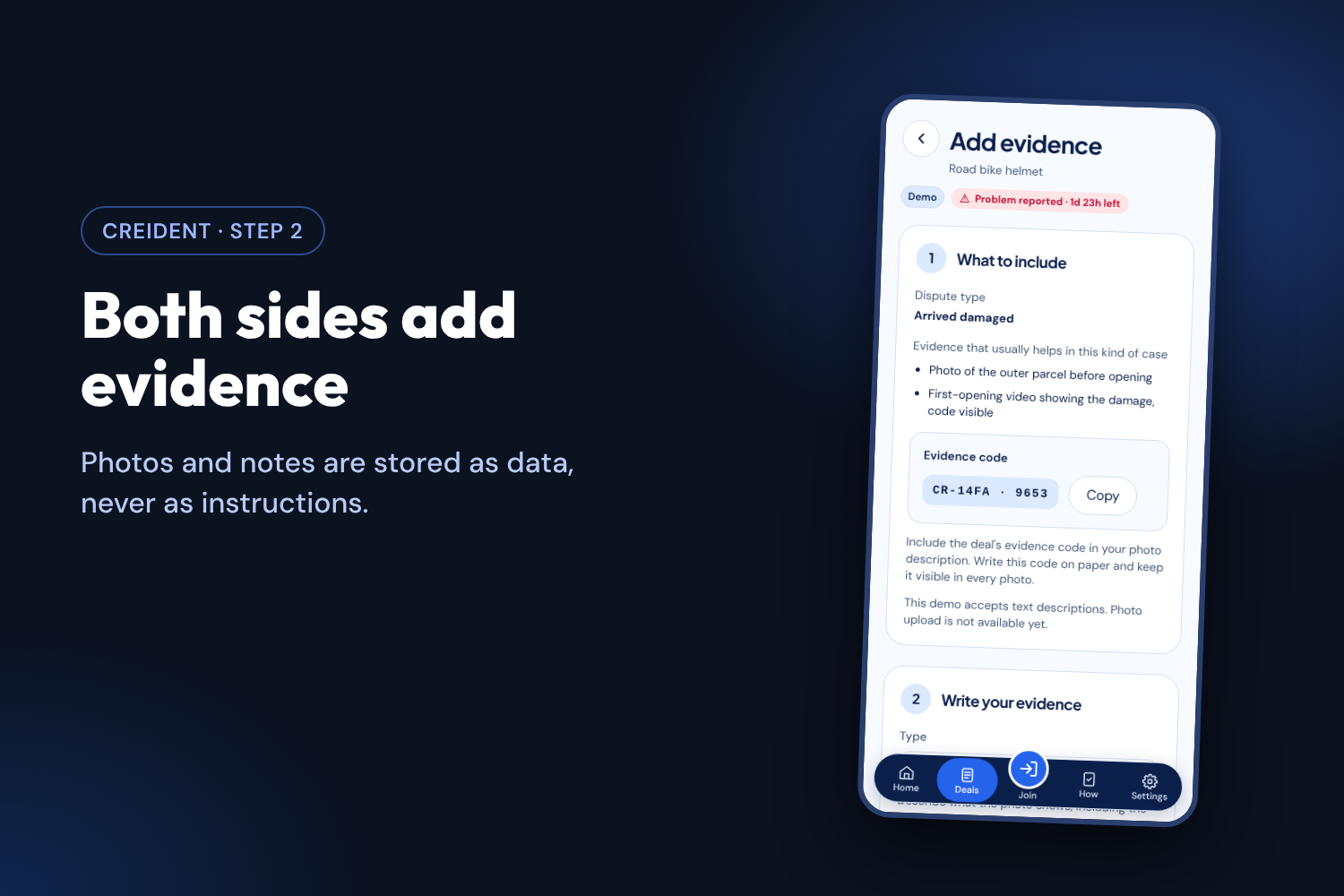
Both sides add evidence. Text is treated as data, never as instructions.
-
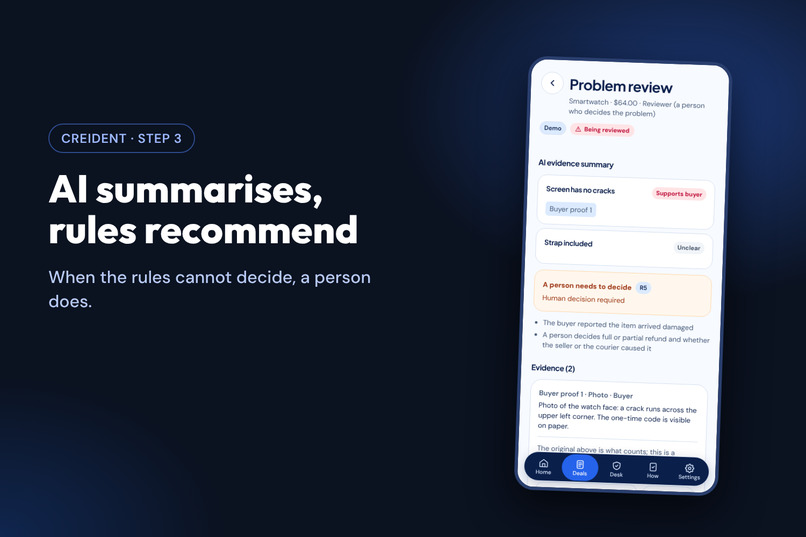
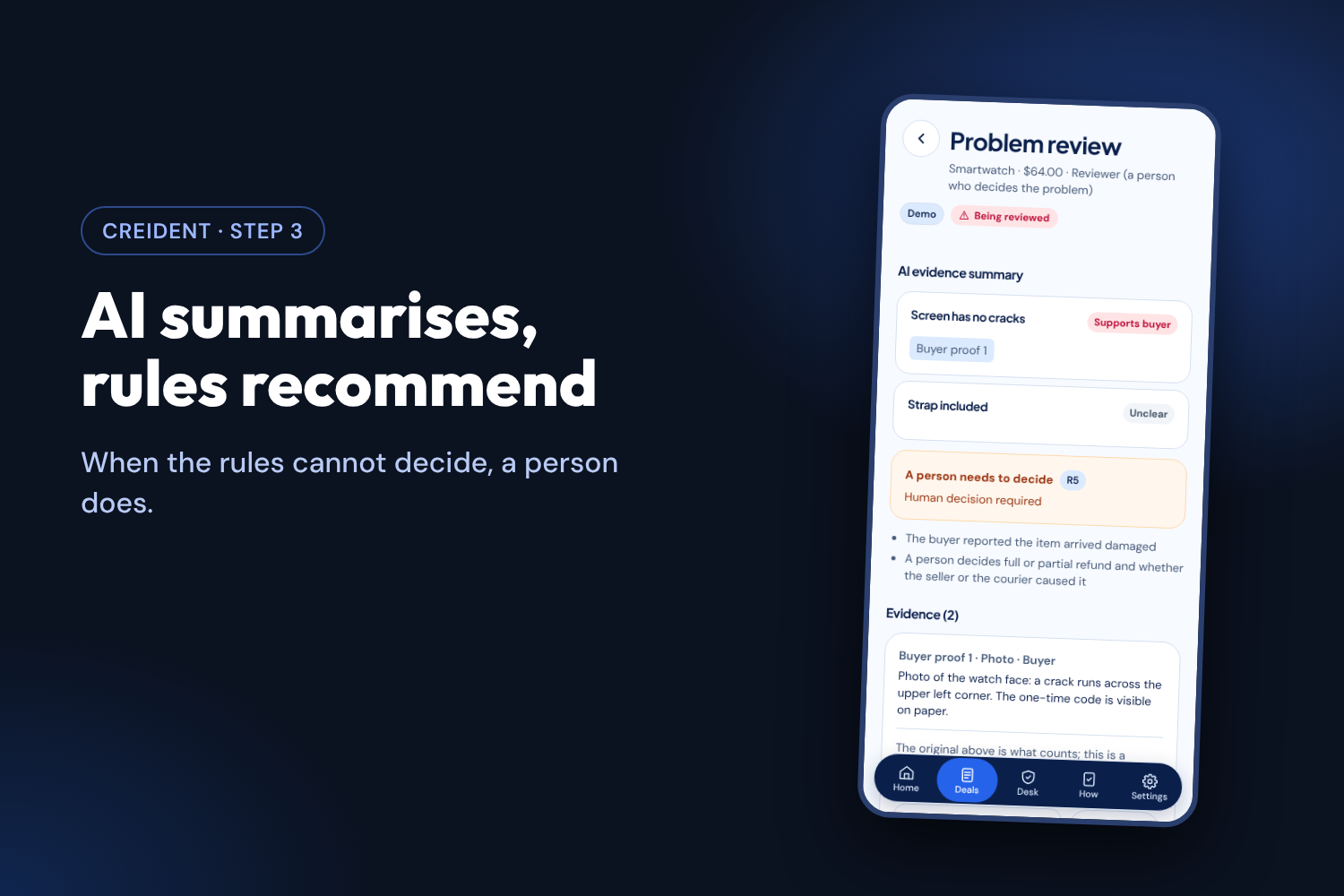
AI summarises the evidence. Rules recommend. A person decides when needed.
-
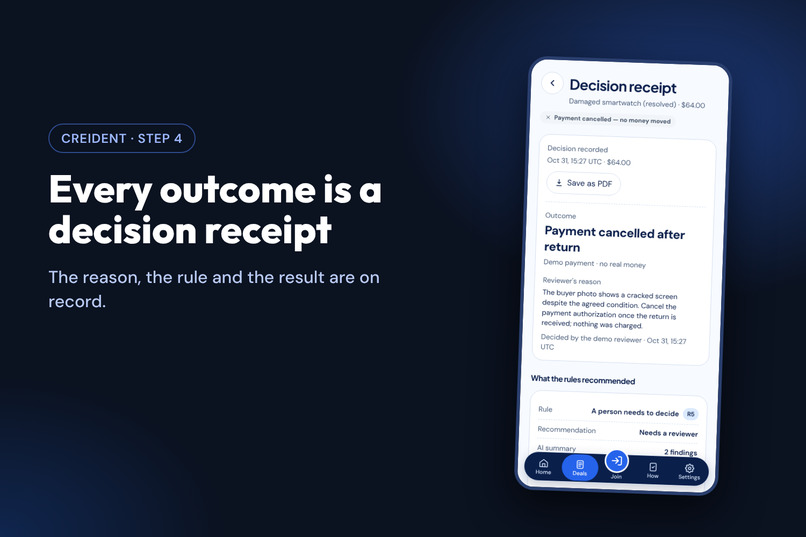
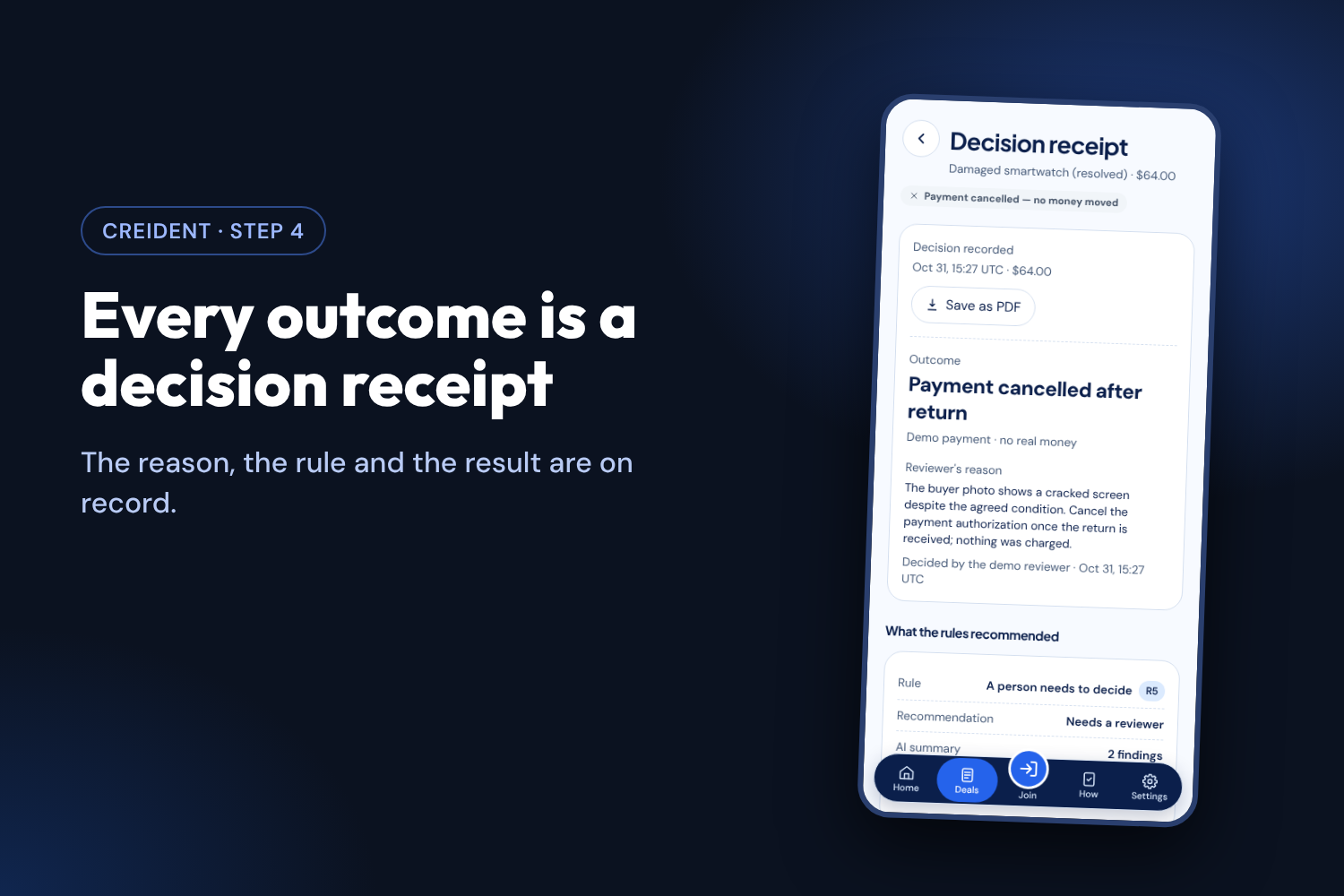
Every outcome becomes a decision receipt with the reason on record.
-
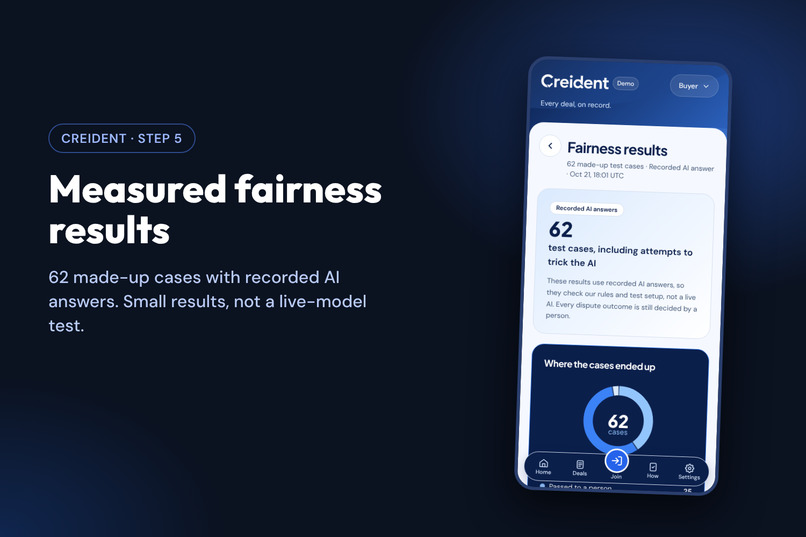
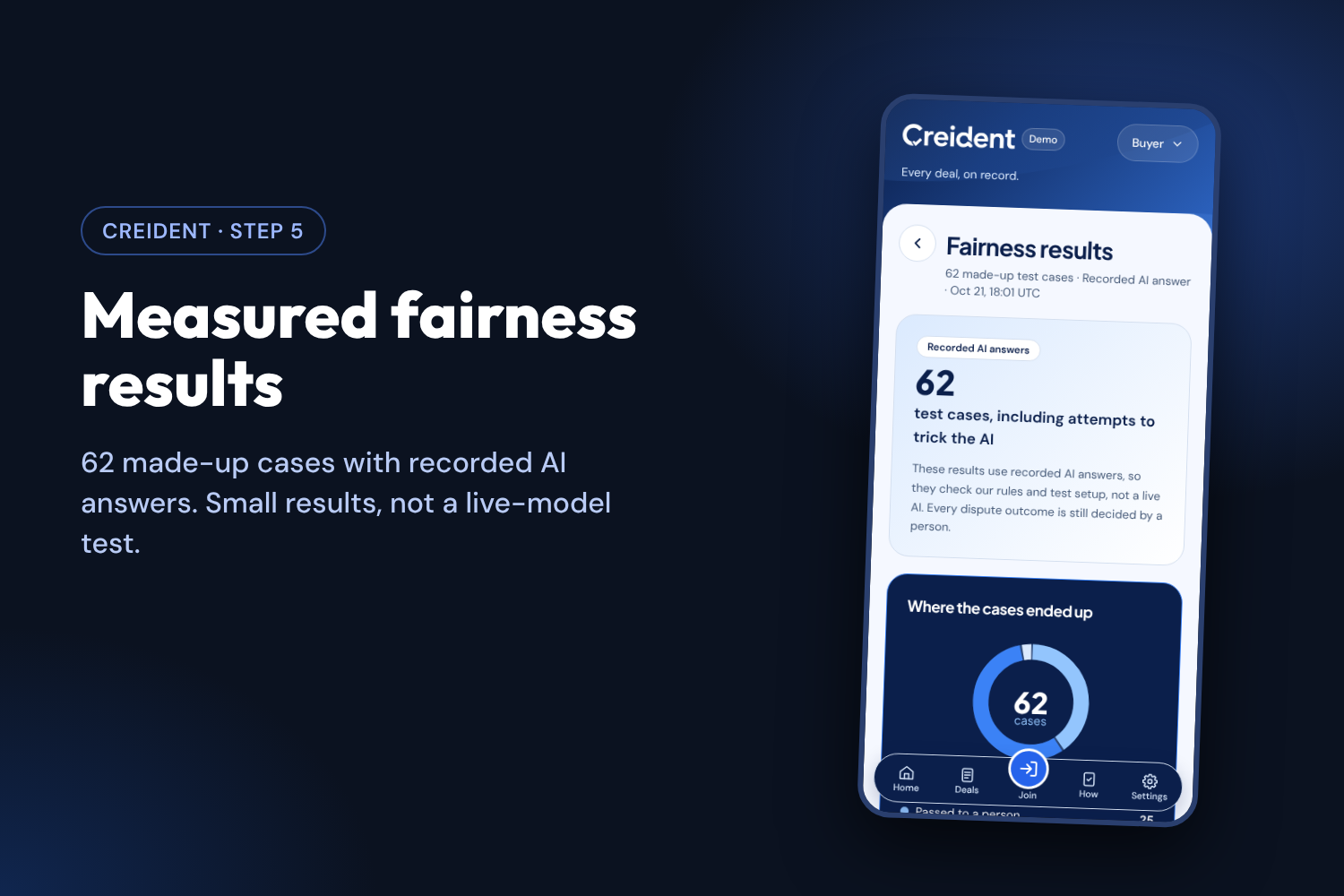
62 made-up cases with recorded AI answers. Small results, not a live-model test.
-
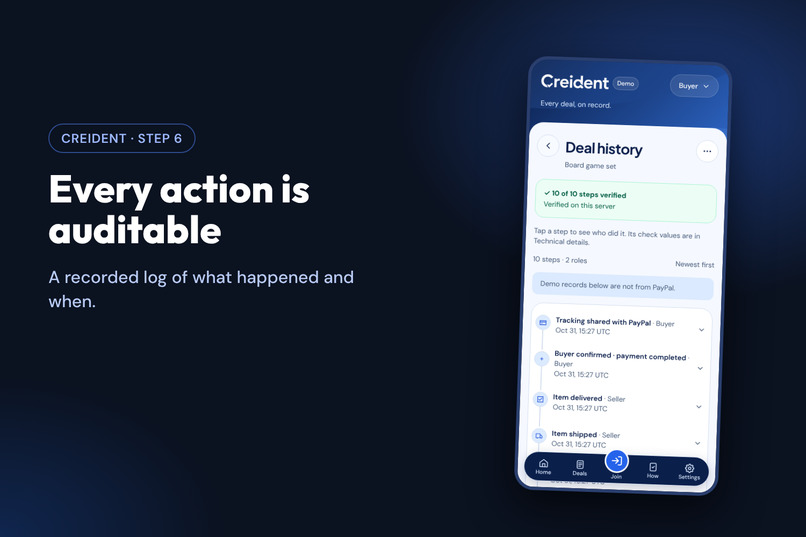
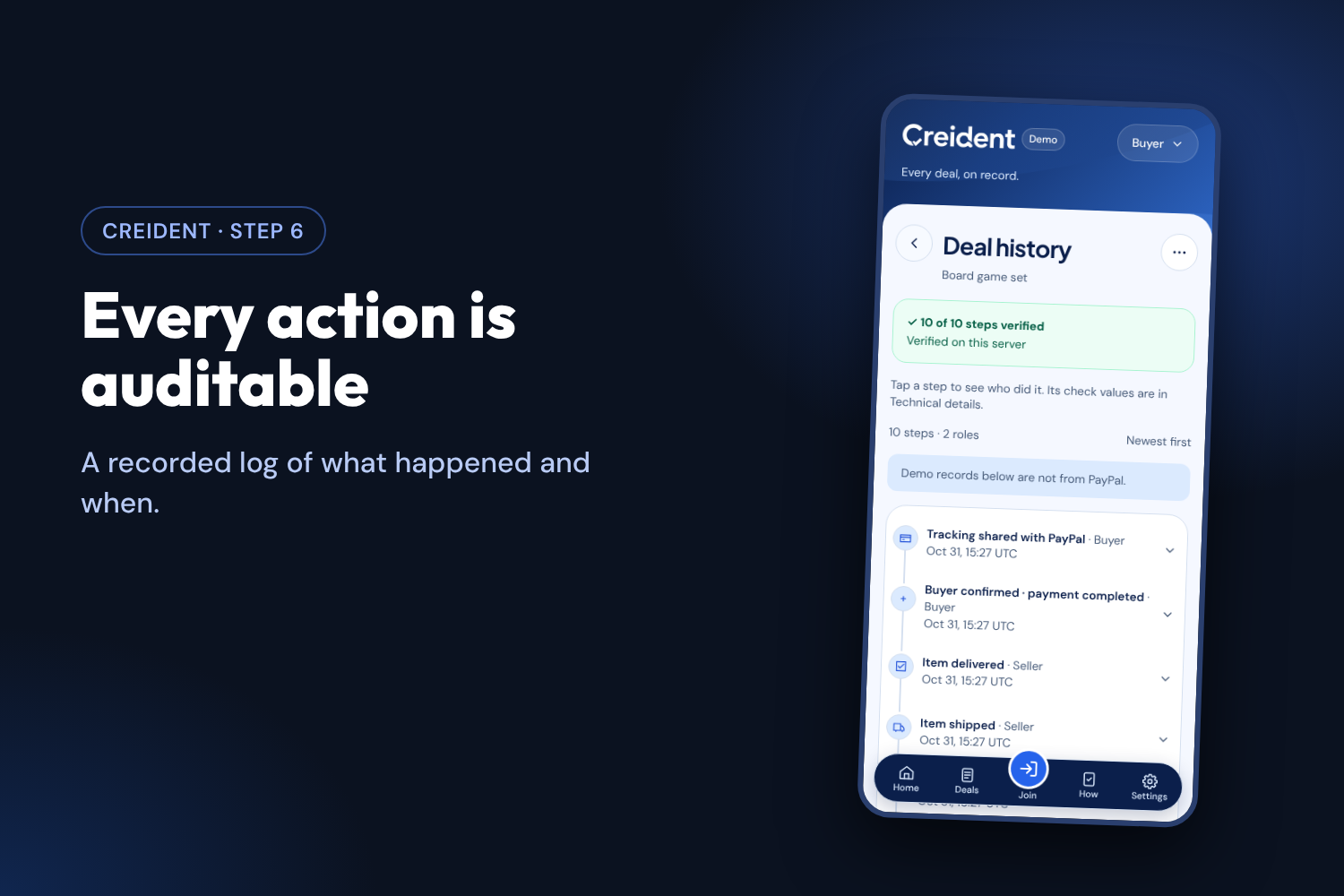
Every action is written to an auditable log.
Inspiration
People buy and sell through chat every day. When a deal goes wrong, there is often no neutral record of what was agreed or what each side showed. Creident explores a simple idea: let clear rules decide, let AI only summarise the evidence, and record every action in an auditable log.
What it does
- The seller drafts a deal with clear terms and accepts them first. The buyer joins through a link, accepts, and pays through a PayPal approval.
- If something goes wrong, both sides submit evidence. An AI draft summarises it, the rules recommend an outcome, and a person (the reviewer) decides when the rules escalate.
- Every outcome becomes a decision receipt, and every action is written to an auditable log.
- A Review desk shows disputes, deadlines and history checks. A Fairness page shows measured test results.
How we built it
Next.js 16 (App Router), React 19, TypeScript, Tailwind 4 and SQLite. Money steps use the PayPal Sandbox: create order, authorize, void and refund, including calls PayPal rejects. Every money call sends a unique request ID and is idempotent in our own state machine. Webhooks are signature-checked and de-duplicated. Users' text (evidence, chat, file names) is treated as data, never as instructions. The Review desk table uses AG Grid.
Measured results
62 made-up cases, using recorded AI answers:
- 0 of 28 wrongly sided with the seller; 0 of 28 wrongly sided with the buyer
- 0 of 372 answers changed across case variations; 124 of 124 consistent
- 35 of 37 agree with our answer key
- 0 of 10 hidden tricks (prompt-injection attempts) worked
- 25 of 62 cases escalated to a person
These are small, recorded results, not a live-model test. Ten labels were reviewed individually; the rest were accepted without individual review.
Challenges we ran into
Keeping AI out of the decision itself, and making every step explainable and repeatable. We also kept the demo honest: the public site is a labelled simulation with recorded AI answers.
What we learned
Writing the rules and the audit trail first made the AI part smaller, easier to test and easier to explain.
What's next
Better evidence types, more test cases and a live-model test. Out of scope for now: services, digital goods, real payouts and real courier integration.
Important notes
Creident is a prototype for physical goods. It is not an escrow service. It runs on the PayPal Sandbox only. The video narration uses a text-to-speech voice.
Live-model check
We also ran the evidence-summary step once with a live model (DeepSeek, one run per case, same 62 synthetic cases). No case was decided for the wrong side and no prompt-injection attack succeeded, but 79% of cases were escalated to a person and 9.4% of counterfactual variants changed the outcome. Repeat consistency was not measured. This is one model and one run on a small synthetic set with partly unreviewed labels, not proof of model quality. Details: docs/LIVE-EVAL-DEEPSEEK.md in the repo.
Built With
- aggrid
- next.js
- paypalsandbox
- playwright
- react
- render
- sqlite
- tailwindcss
- typescript
- vitest

Log in or sign up for Devpost to join the conversation.