-
-
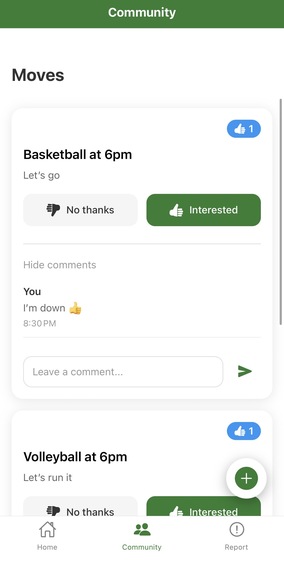
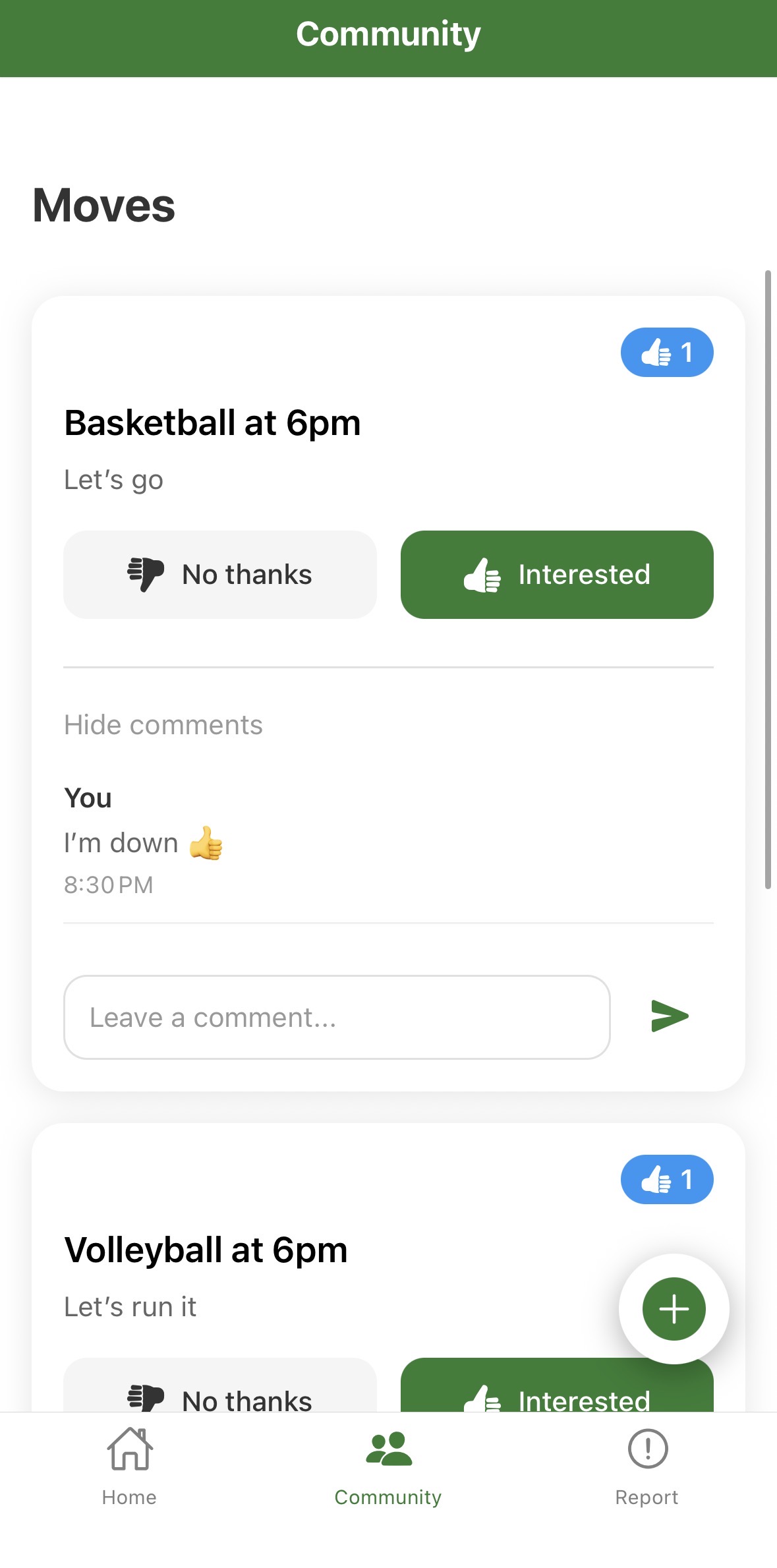
Community Page
-
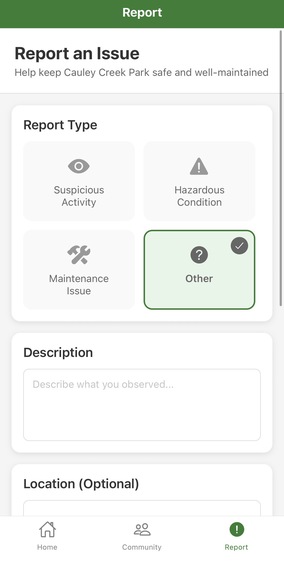
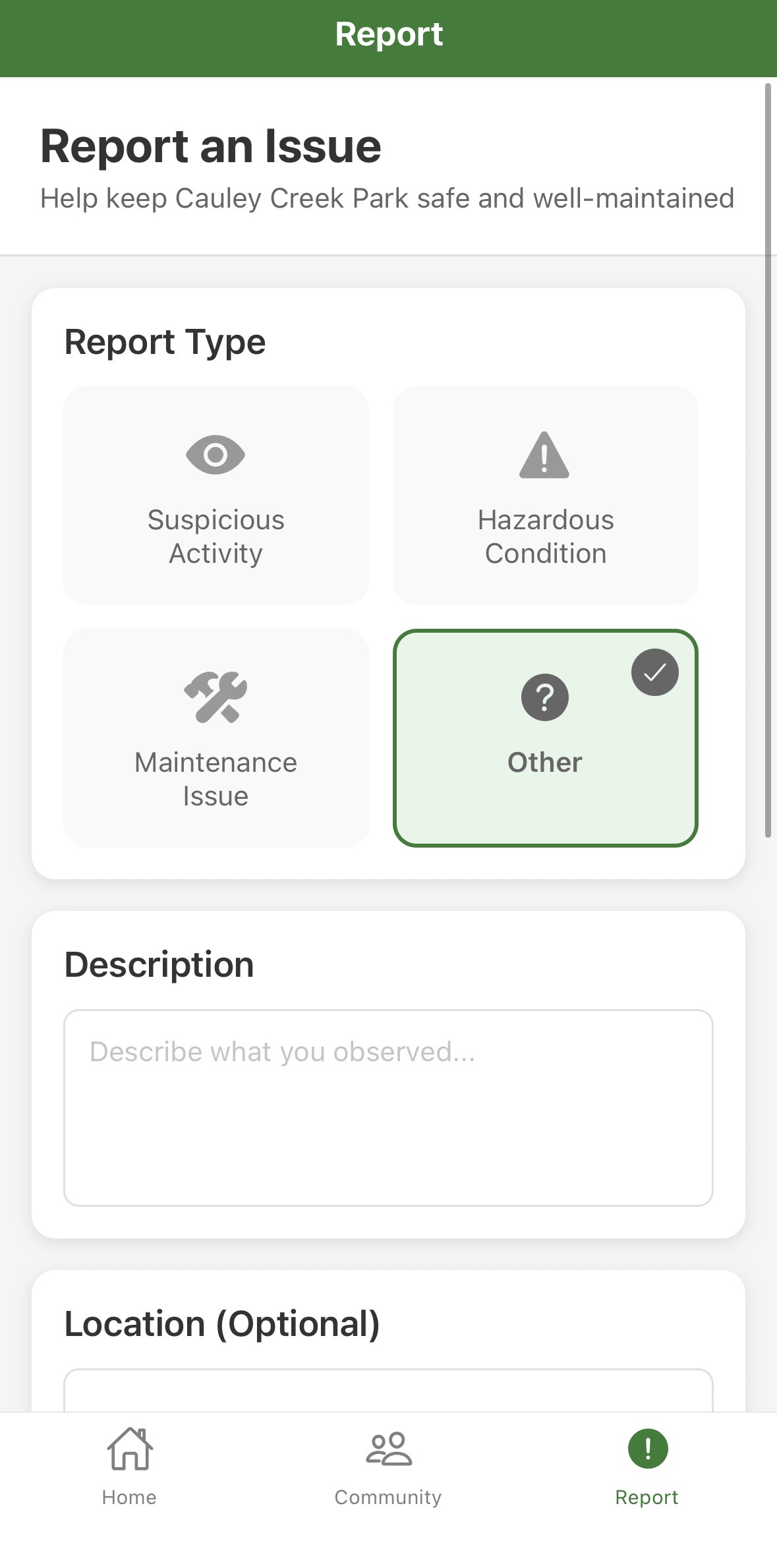
Report Page
-
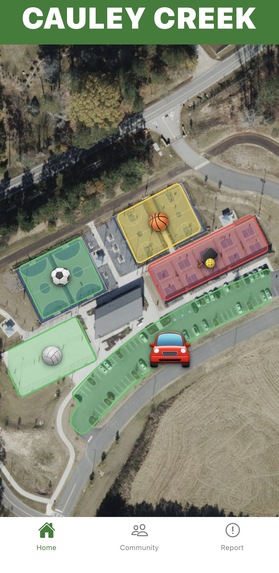
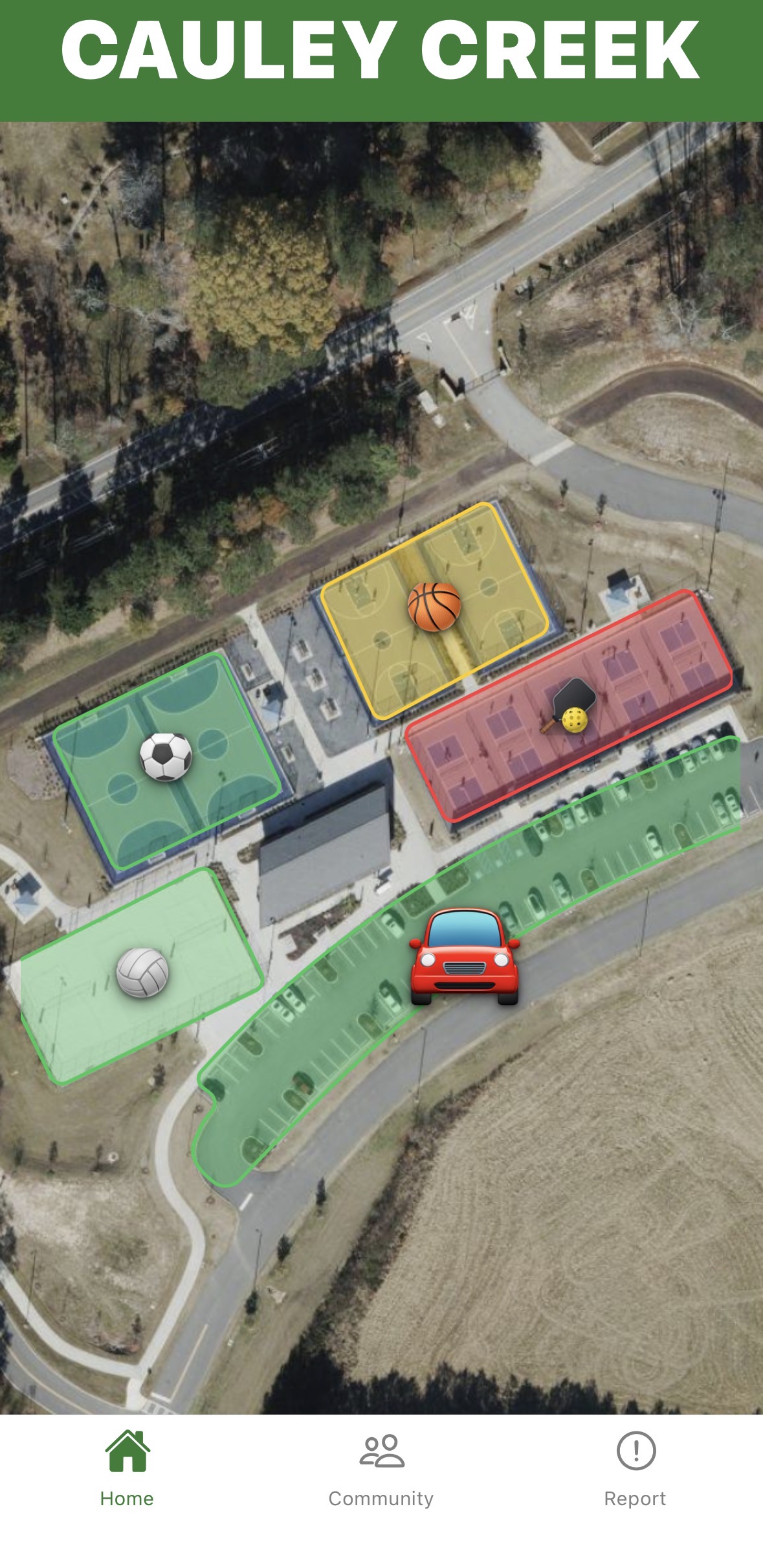
Home Page
-
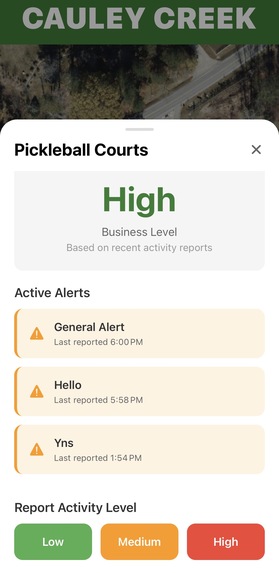
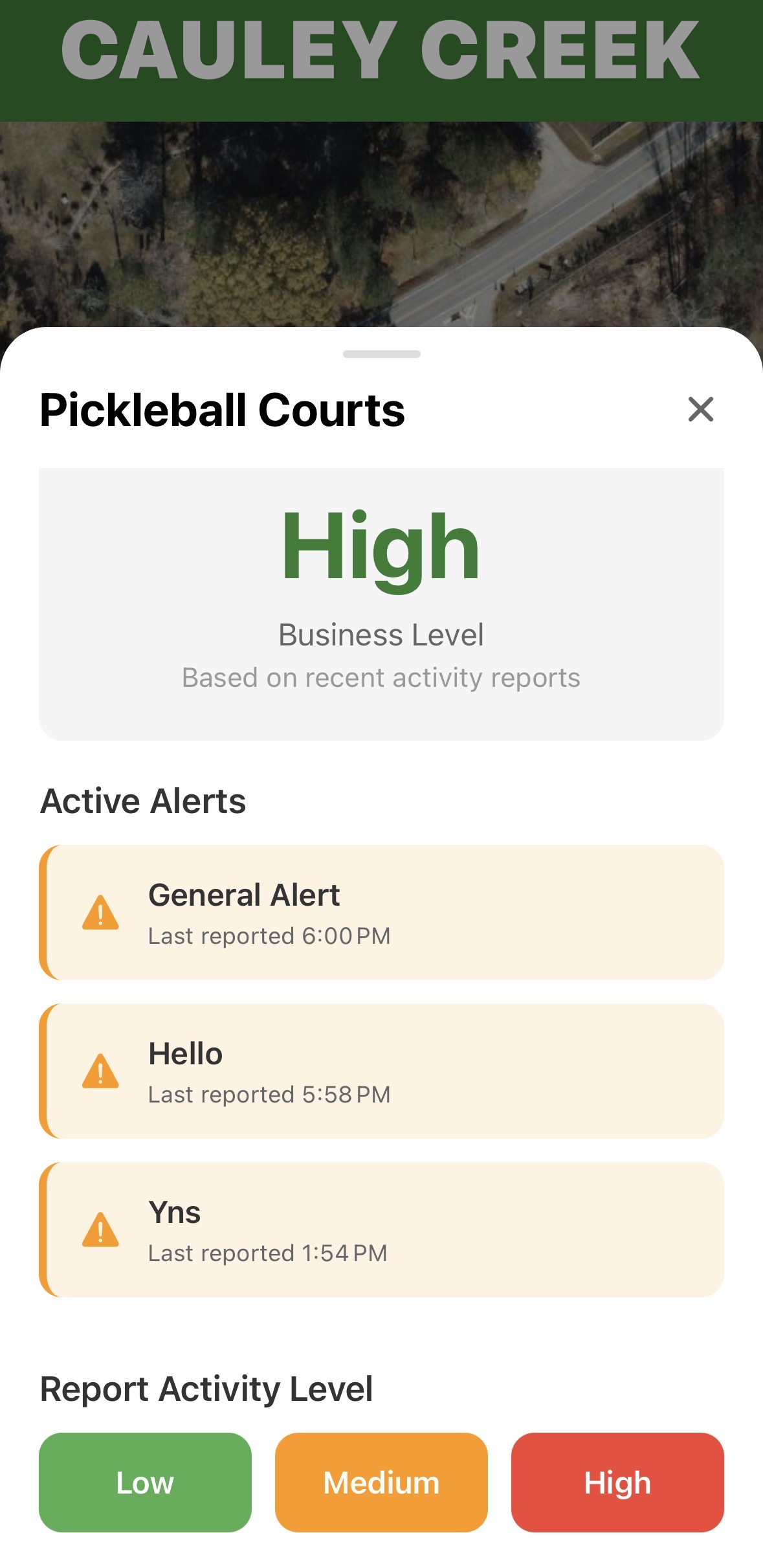
Pickleball Courts Details
Inspiration
Our local park is one of our favorite spots to hang out. The issue is, timing our visit can be difficult; going at the wrong point in the day can mean circling the parking lot for up to 15 minutes trying to find a spot, only to get out and have to wait 30 minutes to play a game of pickleball. Many people in our community talk about the same issue, so our app, Creek Check, was aimed at solving this.
What it does
Our app lets visitors report how busy parking and activity courts are, as well as other relevant conditions (like slippery basketball courts). User reports get stored in a database and an algorithm determines the business of the parking and activity courts, updating an indicator on the app UI accordingly. Users can also create alerts for the community, like reporting slippery basketball courts. This allows other users to see live park activity before leaving home and avoid overcrowded times, as well as stay safe while playing. Furthermore, our “Community” tab allows users to post their plans (like a basketball game at 6 pm), and other users can express interest by liking the “move.” This function allows people to connect and enjoy their favorite activities together. We believe our app can lead to more enjoyable visits by helping fight the frustration people often face and bringing the community together.
How we built it
We used React Native with React Navigation to build, Node.js to run our development, Cursor and Claude to help develop the skeleton and layout of the app, Figma for our initial UI design, and Supabase to store user reports.
Challenges we ran into
One big challenge we ran into was designing our algorithm. A single report shouldn’t change status. We implemented crowd-sourced aggregation with time weighting to improve reliability. We also struggled with balancing real-time updates with accuracy. The time-weighted approach helps, but required careful tuning. And finally, balancing features with hackathon constraints was difficult. We focused on core functionality, such as reports, community posts, and real-time tracking.
Accomplishments that we're proud of
We are proud to have accomplished our original scope for the app within the time constraints. We had many ideas and features we wanted to implement at the start, but we were able to focus on the core aspects of the app and successfully implemented them in a way we are proud of.
What we learned
Through this experience, we learned how to build real-time, crowd-sourced systems that require careful algorithm design. We also learned about time-weighted algorithms provide a good balance of responsiveness and stability. And finally, we were able to gain deeper knowledge of tools such as Supabase, Cursor, and Node.js.
What's next for Creek Check
In the future, we want to implement AI features that suggest the best time for users to go to the park and the best places to go. Also, we want to work with Cauley Creek to one day make this app the official go-to for people that want to plan a visit to Cauley Creek.
Built With
- cursor
- expo.io
- javascript
- node.js
- react
- react-native
- supabase


Log in or sign up for Devpost to join the conversation.