-
-
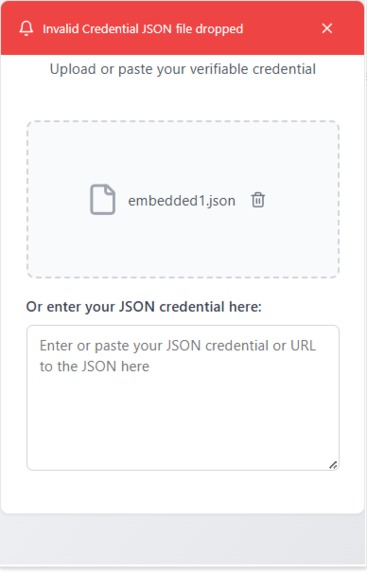
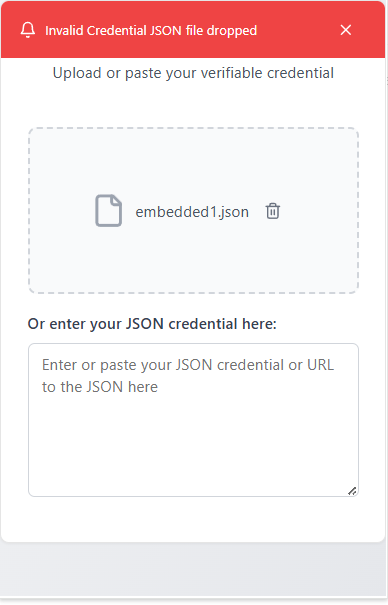
upload invalid credential
-
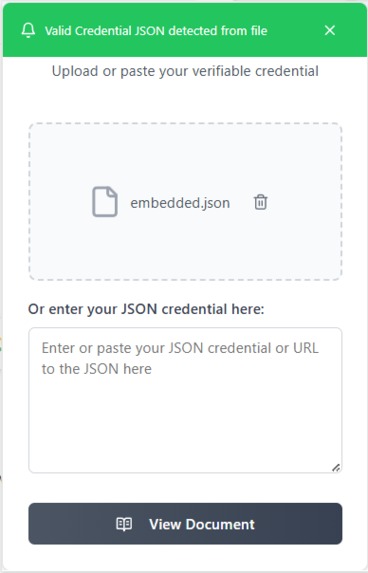
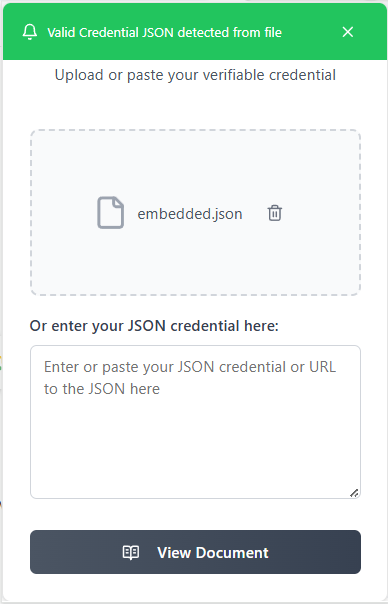
upload valid credential
-
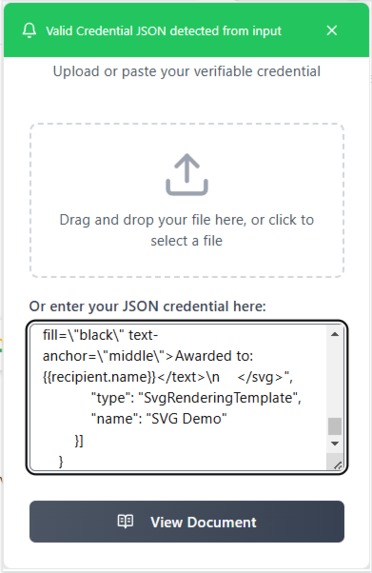
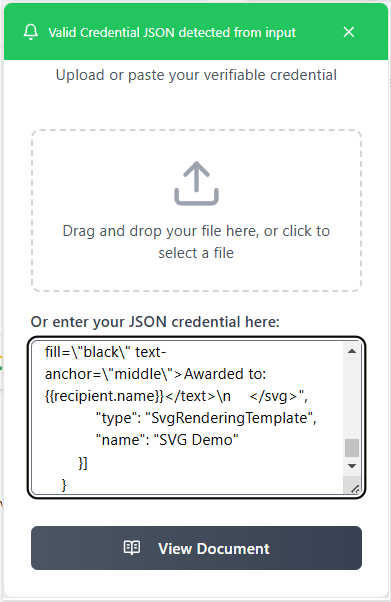
paste valid credential
-
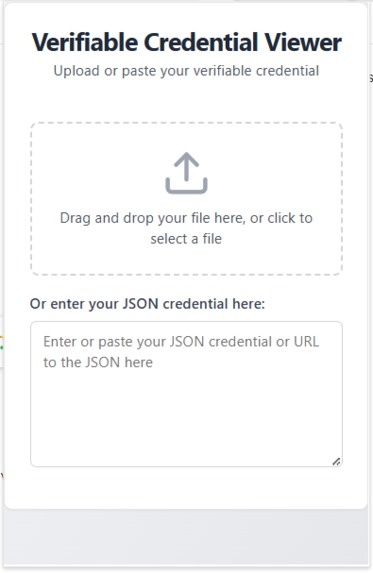
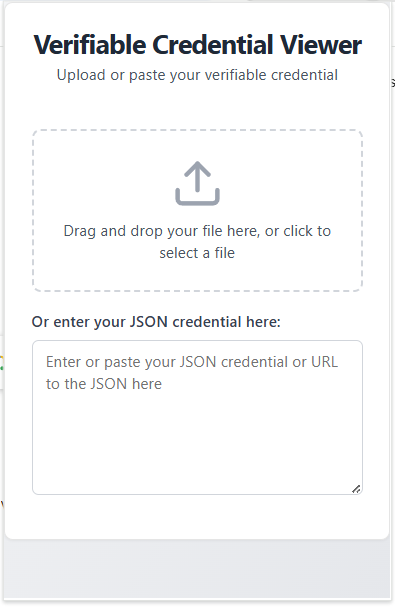
Landing screen
-
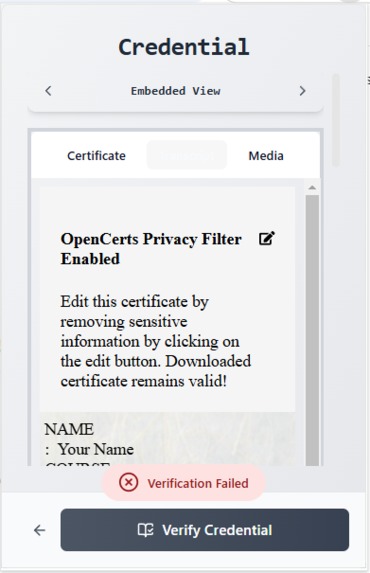
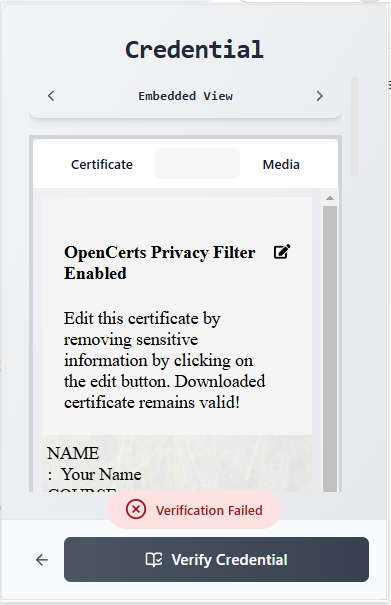
credential verification
-
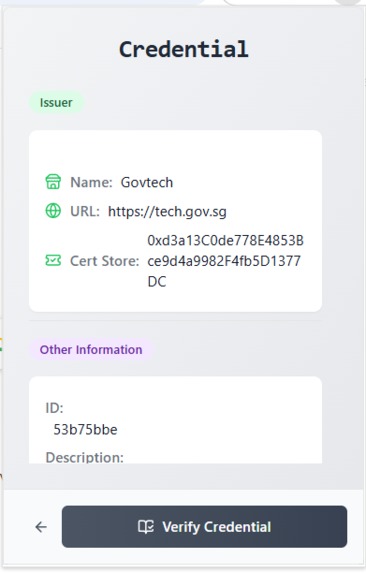
credential viewer scrolled
-
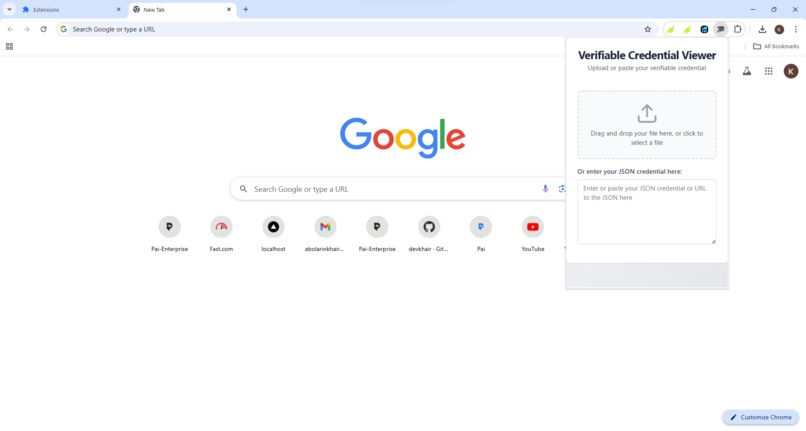
full plugin display
-

credential viewer

Inspiration
In an increasingly digital world, the need for secure and verifiable digital credentials has never been more critical. My inspiration for crediView came from witnessing the growing challenges in digital identity verification and the potential for fraud in online credentials. I envisioned a tool that could simplify the process of viewing and validating digital credentials, making it accessible not just to experts, but to anyone dealing with digital identities in their daily work.
What it does
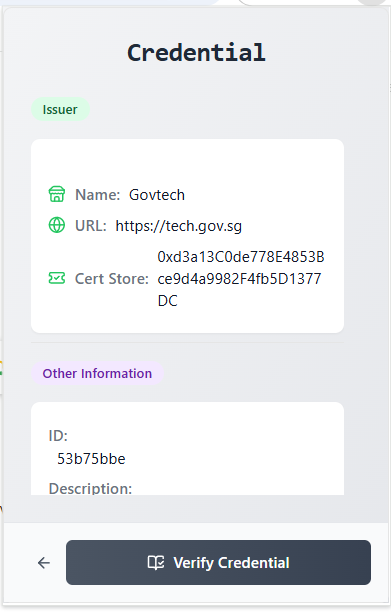
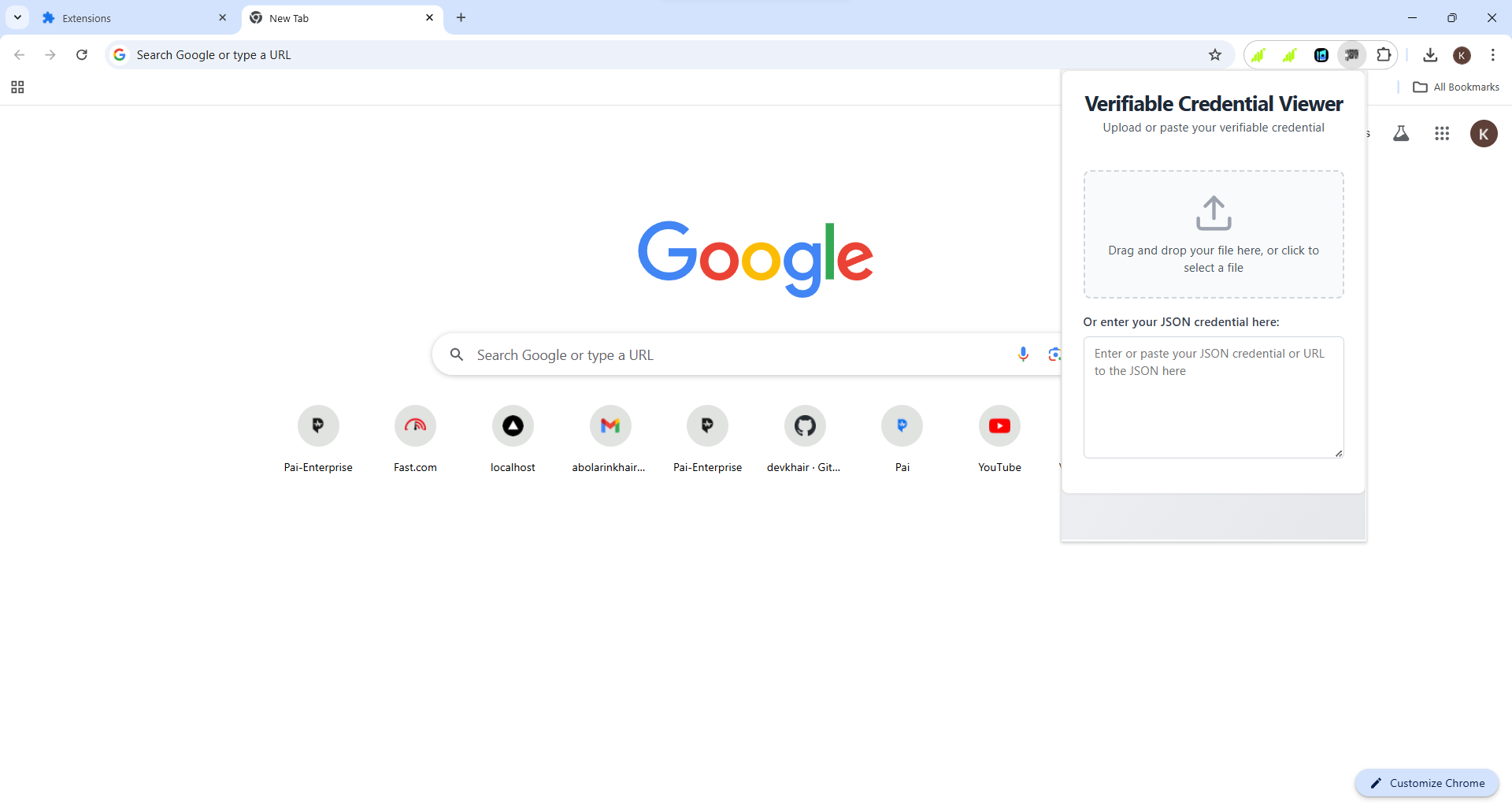
CrediView is a browser extension designed to simplify the process of viewing and validating JSON-based digital credentials. It offers a user-friendly interface for professionals and individuals working with verifiable credentials, digital identities, and blockchain certificates. Key features include:
- Easy credential input through drag-and-drop file upload, direct pasting, or manual entry.
- Automatic JSON detection and validation, providing instant feedback on credential format and structure.
- A clean, distraction-free interface with a modern grayscale gradient design for optimal readability.
- Support for various verifiable credential standards and formats.
- Real-time parsing and display of credential contents, making complex JSON structures easily readable.
How we built it
CrediView was developed using a combination of modern web technologies and best practices:
- Next.js Framework: Utilized for its powerful features, including server-side rendering and API routes, providing a robust foundation for the extension.
- React: Employed for building a dynamic and responsive user interface, ensuring smooth user interactions and real-time updates.
- Tailwind CSS: Used for styling, allowing for rapid UI development and consistent design across the extension.
- JSON Parsing and Validation: Implemented custom logic for handling various JSON credential formats and validating their structure against known standards.
- Browser Extension APIs: Leveraged to integrate the viewer seamlessly into the browser environment, providing easy access for users.
- Open-source Libraries: Integrated existing work in the verifiable credentials space, including libraries for cryptographic verification and standard compliance.
- Responsive Design: Implemented to ensure the viewer functions well across different devices and screen sizes, maintaining usability on various platforms.
Challenges we ran into
Standards Conformity: Ensuring conformity with different verifiable credential standards was complex. Each standard had its nuances, and creating a system that could handle multiple standards while maintaining accuracy was challenging.
Credential Diversity: Dealing with different types of credentials, each with its own structure and verification requirements, required careful planning and flexible code architecture.
RenderMethods Handling: Implementing various render methods to display different types of credentials in a user-friendly manner was tricky. Each credential type needed a tailored approach to present its information effectively.
Type Handling: Managing different data types within credentials, from simple strings to complex nested objects and arrays, required robust type checking and error handling. Performance Optimization: Balancing the need for thorough validation with the desire for quick, responsive user interactions was a constant challenge, especially when dealing with large or complex credentials.
Accomplishments that we're proud of
Throughout the development of the CrediView, several key accomplishments were achieved:
- Created a user-friendly tool that simplifies the complex process of verifying digital credentials, making it accessible to a broader audience.
- Successfully implemented support for multiple verifiable credential standards, allowing the extension to handle a wide range of credential types.
- Developed a JSON parsing and validation system that provides instant feedback to users, enhancing the user experience and reducing errors in credential handling.
- Designed an intuitive drag-and-drop interface that streamlines the credential input process, significantly improving user workflow efficiency.
- Overcame challenges in handling different credential types and render methods, creating a flexible system that can adapt to various credential structures.
- Successfully integrated the project with existing open-source work, contributing to the broader ecosystem of verifiable credential tools.
Built With
- next.js
- react
- tailwindcss

Log in or sign up for Devpost to join the conversation.