What Inspired Us
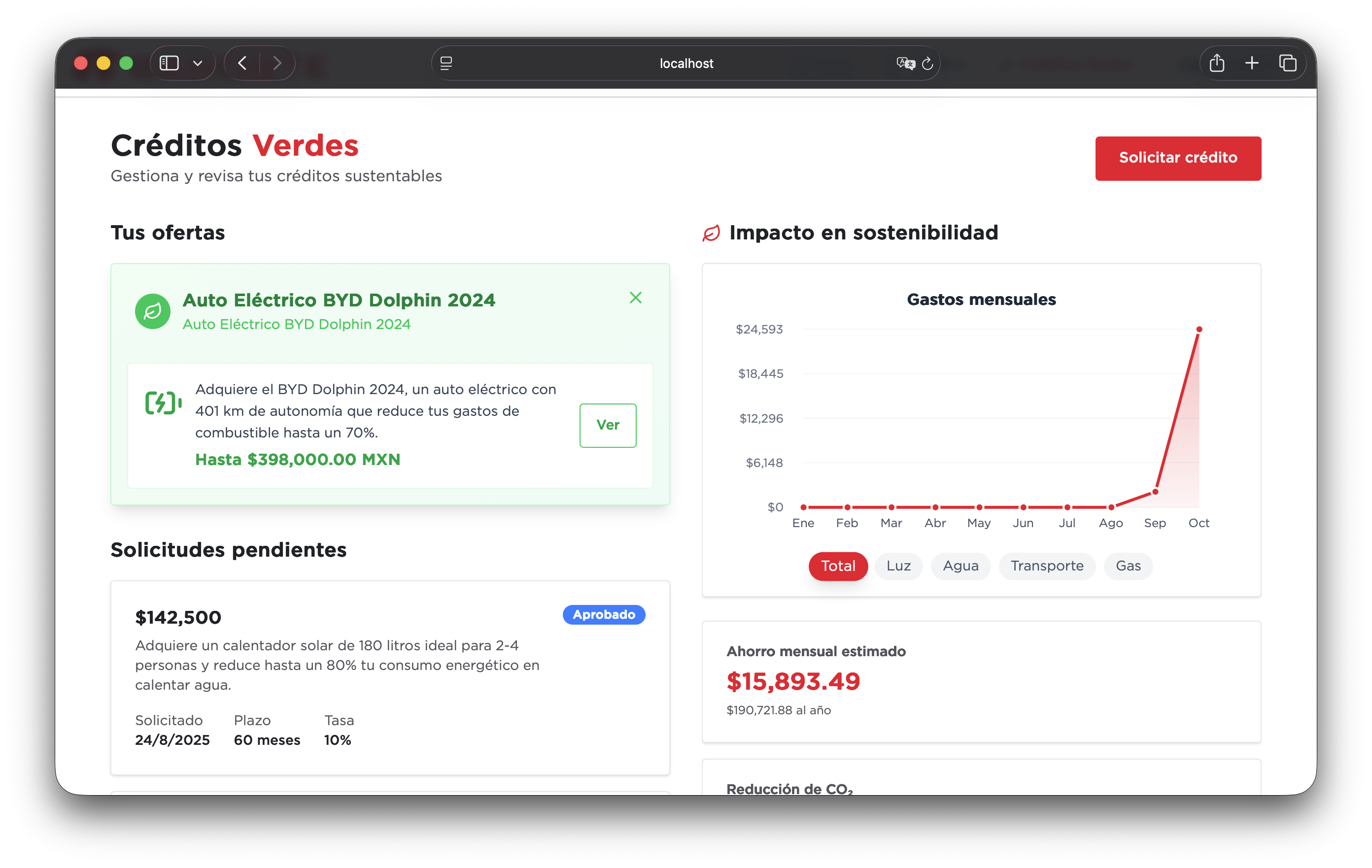
We were inspired by a common dilemma we observed: many people genuinely want to live a healthier, more sustainable lifestyle but are stopped by a significant financial barrier. They want to install solar panels, buy an electric vehicle, or update their homes with energy-efficient appliances, but they simply don't have the upfront capital to make it happen. We saw a clear need to bridge this gap, creating a financial tool that empowers people to invest in their future and the planet's future at the same time.
What We Learned
Through this process, our main takeaway is that business growth and environmental health are not mutually exclusive. We learned that there is a massive, untapped opportunity to create products that are simultaneously profitable for the business and restorative for the environment. You don't have to choose one or the other. We proved that we can build a successful financial product that incentivizes sustainable living, creating a powerful engine for positive change where the business and the environment grow together.
How We Built It
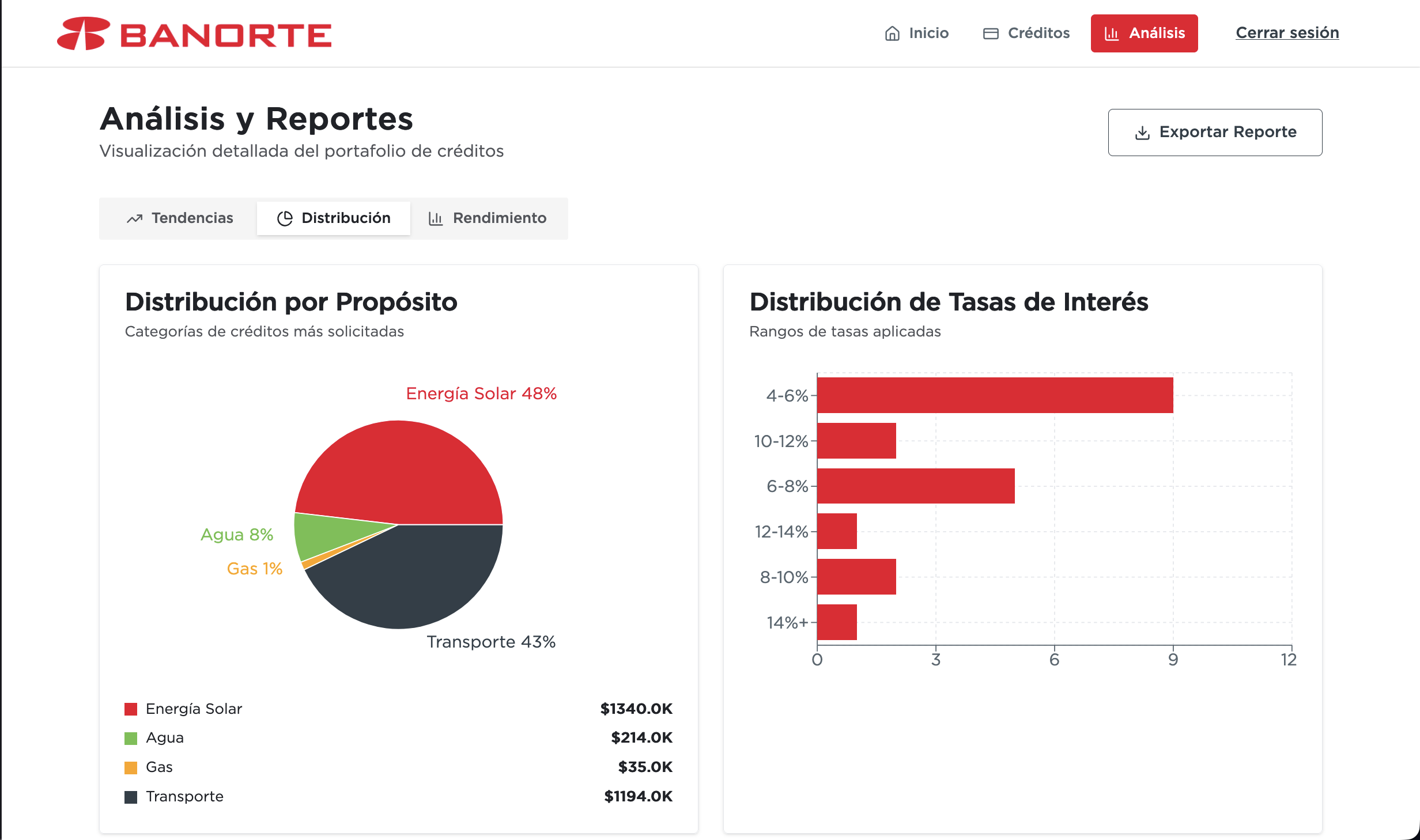
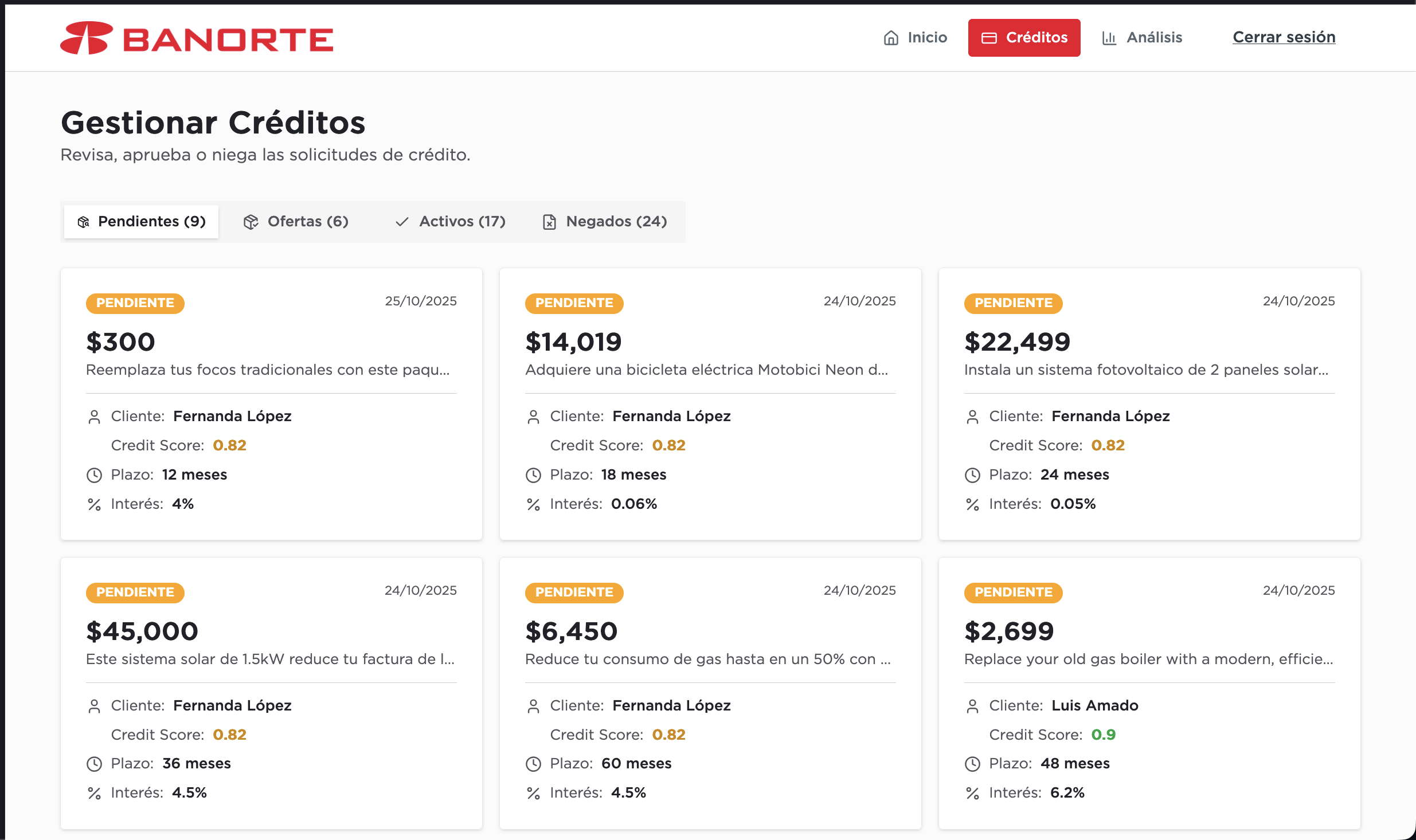
To bring this complex idea to life, we relied on a robust and modern tech stack. We built the front-end user experience using React and TypeScript, which allowed us to create a clean, responsive, and type-safe interface for our users. For the backend, we used Python with FastAPI to ensure high performance, scalability, and rapid development. All our data was stored and managed in a PostgreSQL database, and we integrated Gemini to help power the intelligent financial modeling needed to calculate these unique green credits.
Challenges We Faced
Our greatest challenge was the inherent complexity of financial products. We weren't just building an app; we were trying to find the perfect "trifecta" of value. The solution had to be:
- Genuinely beneficial for the user, providing a real path to long-term savings.
- Viable and profitable for the bank, ensuring it was a sustainable business model.
- Demonstrably positive for the environment, leading to measurable reductions in energy consumption or emissions.
Finding this precise balance, where no single party benefited at the expense of the others, was incredibly difficult. It required complex modeling to ensure the credit structure was fair, appealing, and effective for all three stakeholders.
Gemini and Arm Use in our Project
The core of our intelligent credit request modeling was powered by Gemini, which we used to engineer our green credit generation system. These prompts were designed to analyze multiple data streams simultaneously: a user's past transactions, their credit score, and Banorte's internal business logic. This process allowed us to instantly determine via our RAG (Retrieval Augmented Generation) Agent if a credit offer was not only viable and sustainable for the bank, but also realistic and beneficial for the user. Our ability to harness the LLM for this task was significantly enhanced by applying best practices we learned from ARM's LLM tutorials.
Built With
- fastapi
- gemini
- postgress
- python
- react
- typescript


Log in or sign up for Devpost to join the conversation.