-
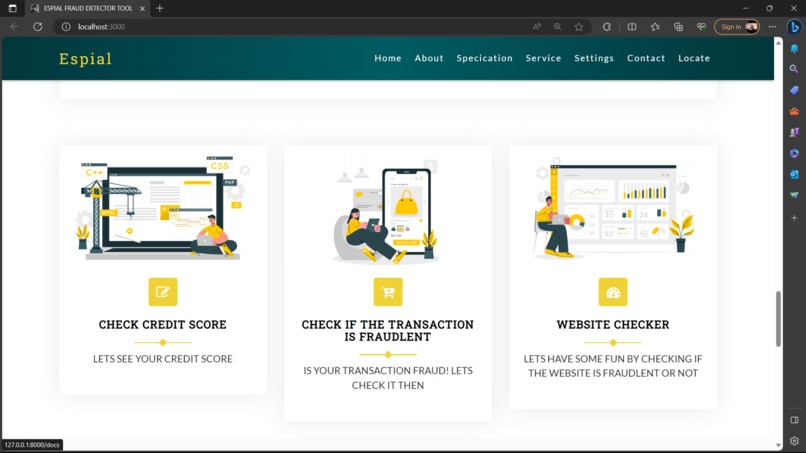
Services
-
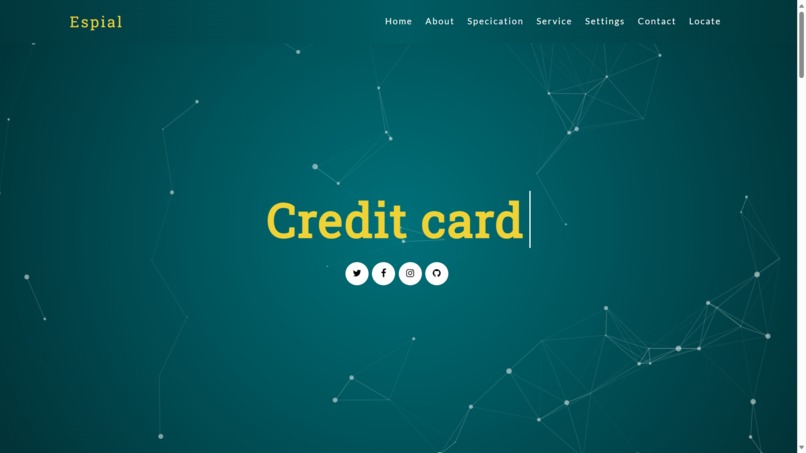
Intro page
-
Protection Authorised
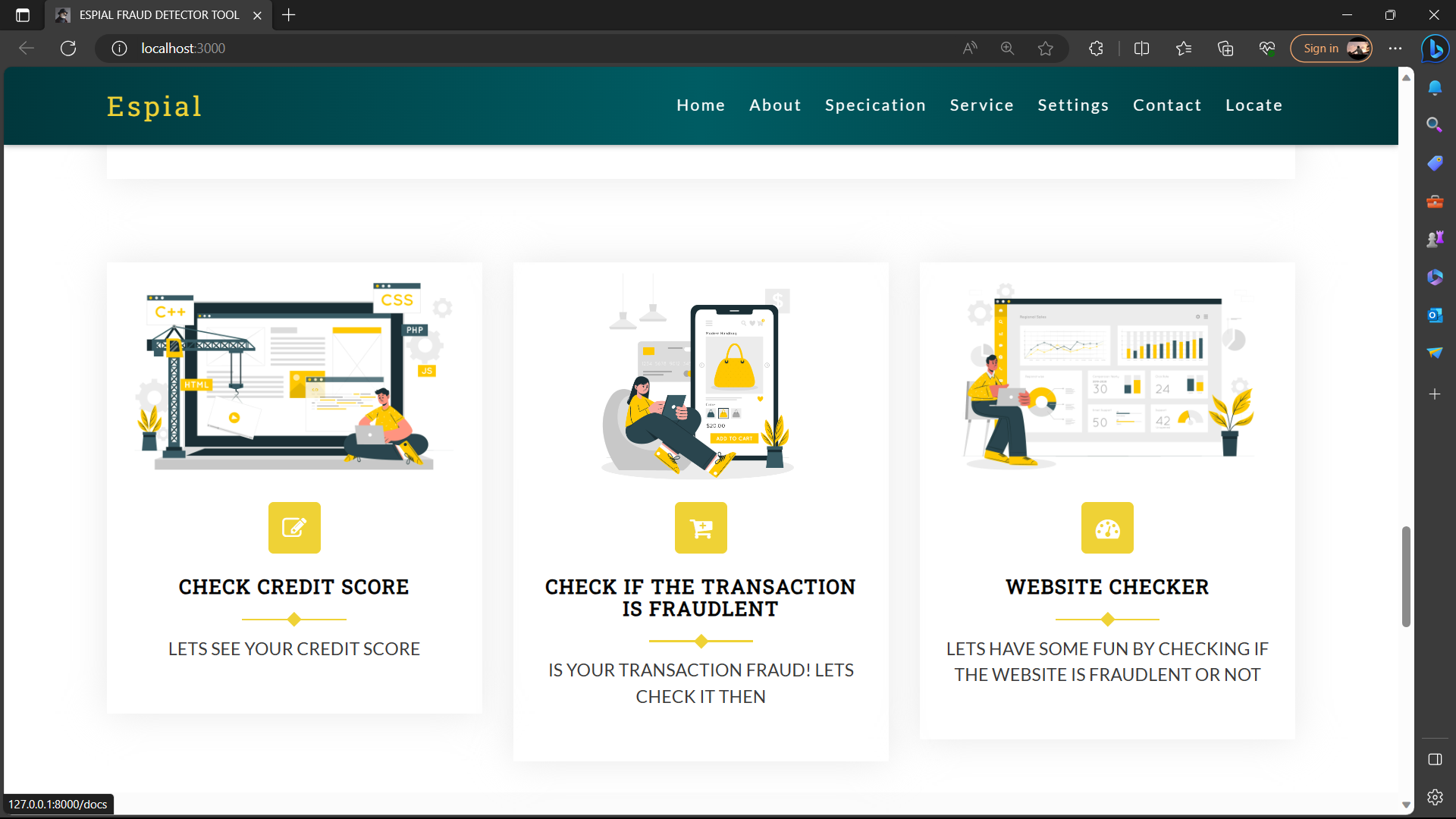
Web3 for financial Banking
Inspiration
The inspiration for this project struck close to home when my friend's uncle fell victim to a credit card fraud incident. Despite his innocence, he found it challenging to prove his case, and this unfortunate experience ignited my determination to develop a solution that could effectively detect fraudulent transactions. Each penny represents someone's hard-earned money, and I wanted to create a tool that would help people safeguard their financial assets.
What it does
Our project, "Credit Card Transaction Fraud Detection using ML," empowers individuals to protect themselves from fraudulent activities. It utilizes state-of-the-art machine learning algorithms, including Random Forest and Decision Trees, to identify suspicious transactions with an impressive 99% accuracy rate. The core of our project lies in its user-friendly UI, providing an intuitive and accessible platform for users to monitor their credit card transactions and detect potential fraud.
How we built it
To create this project, we harnessed the power of various Python frameworks and tools, such as Pandas, NumPy, SciPy, Matplotlib, TensorFlow, PyTorch, Scikit-learn, and Keras. We meticulously analyzed and preprocessed the transaction data, ensuring it was ready for the machine learning models. These models were trained on a dataset that comprised both legitimate and fraudulent transactions, allowing them to learn the patterns of fraudulent behavior.
We then developed a user-friendly UI that integrates seamlessly with the machine learning models. This UI not only displays transaction history but also highlights potential fraudulent transactions, giving users the information they need to take action swiftly.
Challenges we ran into
Throughout the project, we encountered several challenges. One significant hurdle was acquiring a diverse and representative dataset of real-world credit card transactions. Additionally, fine-tuning the machine learning models to achieve the desired 99% accuracy rate required extensive experimentation and parameter tuning. Integrating the models into a user-friendly interface while maintaining real-time functionality also posed its own set of challenges.
Accomplishments that we're proud of
We are immensely proud of creating a solution that not only effectively detects credit card fraud but also addresses the real-world challenges individuals face in proving their innocence. Our achievement lies not only in the technical prowess of our machine-learning models but also in the user-centered design of our UI. We've managed to combine cutting-edge technology with empathy and practicality to benefit those who rely on the security of their financial assets.
What we learned
Throughout this project, we learned the importance of data quality, model interpretability, and user-centric design. We gained valuable insights into the intricacies of credit card fraud detection, machine learning model selection, and hyperparameter tuning. Additionally, we realized the significance of building tools that can make a tangible difference in people's lives.
What's next for Credit Card Transaction Fraud Detection using ML
Our journey does not end here. In the future, we plan to further enhance the accuracy of our models by incorporating more advanced algorithms and exploring additional data sources. We also intend to collaborate with financial institutions to make this tool readily available to a broader audience. Ultimately, our goal is to continue refining and expanding our solution to provide even greater protection against credit card fraud, ensuring that everyone's hard-earned money remains secure.

Log in or sign up for Devpost to join the conversation.