-
-
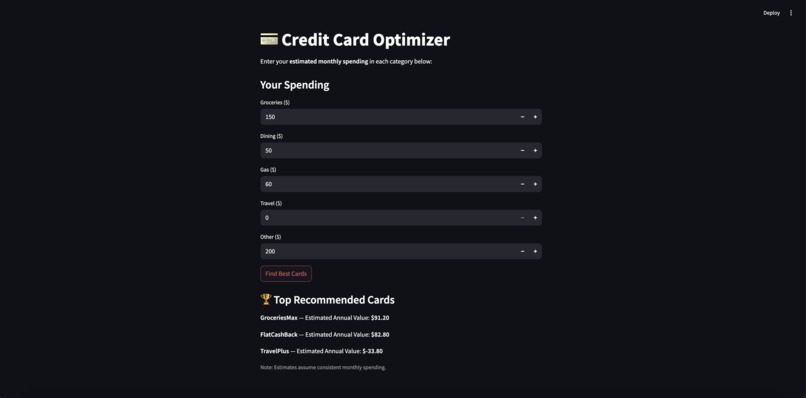
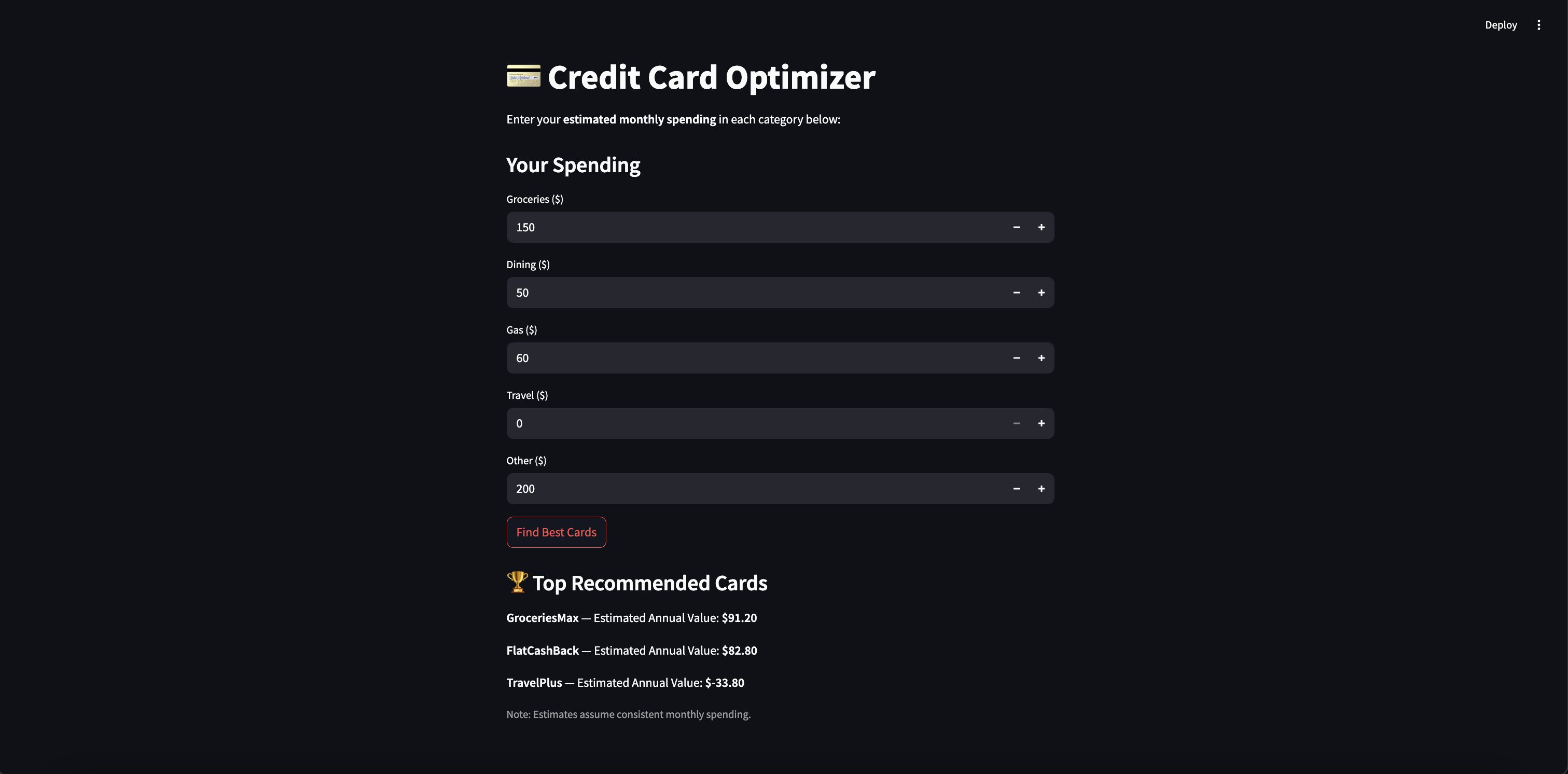
Credit Card Optimizer User Interface
Inspiration
A lot of people don’t realize they’re missing out on credit card rewards just by using the wrong card for their spending. We wanted to make it easy for anyone to see which cards actually work best for them.
What it does
Users enter their monthly spending in categories like groceries, dining, and travel, and the app recommends the best credit cards based on estimated annual rewards. It takes into account reward rates, categories, and annual fees.
How we built it
We built the app in Python and used Streamlit to create a clean, interactive web interface. Our backend logic calculates the value of each card and ranks them based on how well they match the user’s spending.
Challenges we ran into
Using Streamlit was new to us, so a bit of learning had to be done. Although our UI met our goal of being simple, it isn't as aesthetically pleasing as we would've liked, as our experience is mainly with backend dev. Connecting to real world credit card data was something we would like to implement as we further build the project, but we were short on time which was our biggest challenge, making this hard to implement.
Accomplishments that we're proud of
Our website has a clean and simple interface making it accessible and easy for anyone to use. We implemented the Streamlit framework successfully, even with this being our first time working with it.
What we learned
Learned how to quickly build and deploy a web app using Streamlit and how to structure our backend logic in a way that’s clean, reusable, and easy to expand. This project also just reinforced the how impactful the intersection of finance and technology is.
What's next for Credit Card Optimizer
Let users upload CSVs of their spending for smarter recommendations and connect the app to real-time credit card data so it stays current with new offers and rewards.
Built With
- python
- streamlit

Log in or sign up for Devpost to join the conversation.