Inspiration
As a content creator, I watched peers struggle with unplanned absences—their digital livelihoods (channels, courses, domains) left in limbo with no clear path for loved ones. I wanted to build something that turns "what if" into "what’s planned": a simple, human-centered way to protect digital legacies, not just list assets, but give creators control over their online legacy.
What it does
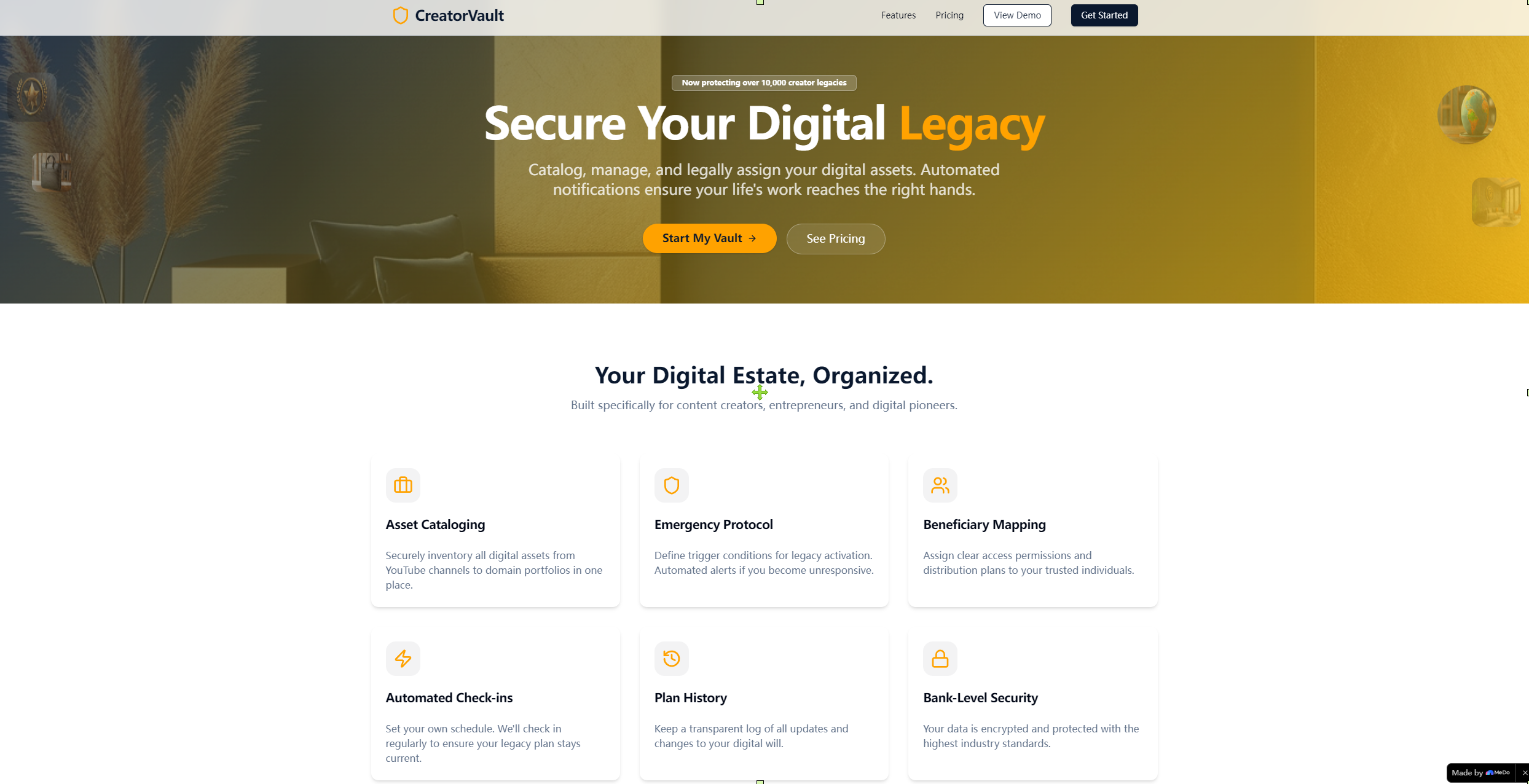
CreatorVault is a subscription platform that centralizes digital asset management (social, domains, e-commerce, IP) and lets creators assign access/ownership to beneficiaries. It includes automated check-in prompts and emergency protocols to ensure assets reach trusted people if the creator is unresponsive—all with intuitive, visually engaging tools to keep plans up-to-date with minimal effort.
How we built it
We started with user interviews with creators across YouTube, podcasting, and e-commerce to map core pain points. Designed the UI/UX in Figma (focusing on warm, trustworthy gradients and smooth animations), then built the frontend with React + TailwindCSS. Framer Motion powered micro-interactions (hover effects, transitions) to make complex planning feel approachable. We prioritized a card-based layout for assets/beneficiaries and a drag-and-drop inheritance map to simplify asset assignment.
Challenges we ran into
Balancing visual polish (animated elements, parallax scrolling) with performance was tough—we had to optimize animations to avoid lag on lower-end devices. Also, designing the emergency protocol logic to be flexible (custom trigger timelines, permission levels) while keeping it intuitive took multiple iterations; early versions felt too technical for non-technical creators.
Accomplishments that we're proud of
We created a UI that feels both premium and accessible—no jargon, just clear, visual tools for legacy planning. The drag-and-drop inheritance map turned a complex legal/administrative task into an interactive experience, and user testers (creators) reported feeling "empowered, not overwhelmed" by the process. We also nailed the micro-interactions: every button click, form edit, and page transition feels intentional and responsive.
What we learned
Creators care less about "features" and more about "peace of mind"—our biggest win was shifting from a "tool for asset tracking" to a "tool for legacy care." We also learned that animation isn’t just decorative: it guides users through complex workflows (like emergency plan setup) and builds trust in the platform’s reliability.
What's next for this project
We plan to add integrations with popular creator platforms (Shopify, Patreon) to auto-sync asset details, expand permission tiers for beneficiaries, and introduce a mobile-responsive version (currently desktop-first). We’re also exploring partnerships with legal firms to align the platform’s inheritance documents with regional estate laws—making CreatorVault not just intuitive, but legally actionable.
