Inspiration
As a freelance content creator, I watched peers overpay taxes because they missed creator-specific deductions—home studios, equipment, even small expenses like streaming gear. I knew there had to be a way to simplify identifying these breaks and calculating complex deductions like Section 179, so I built CreatorTax Write-Offs to level the playing field.
What it does
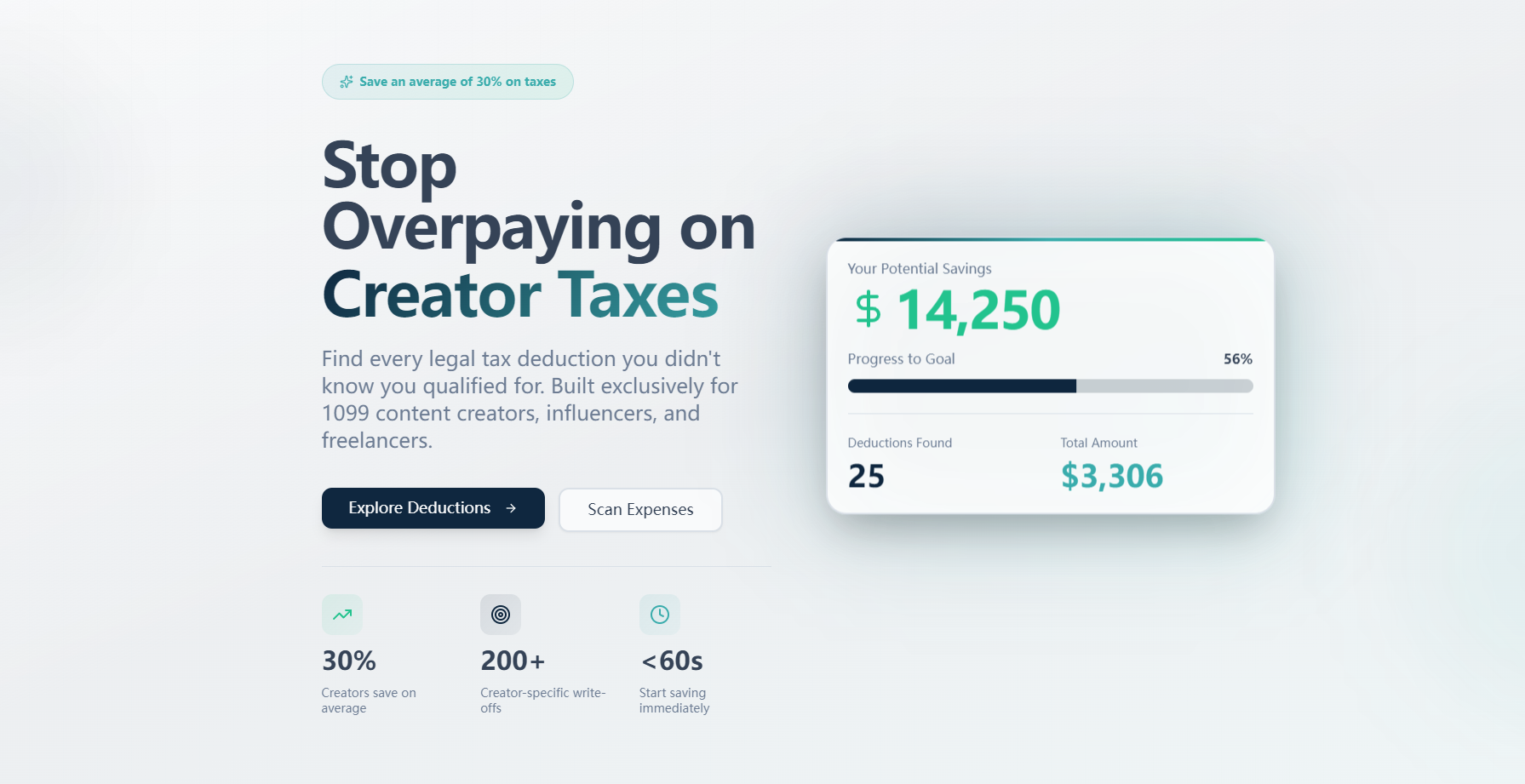
This web tool helps 1099 earners (creators, influencers, freelancers) find eligible tax deductions, auto-scan expenses for missed savings, calculate home office depreciation/Section 179 equipment deductions, track quarterly tax obligations, and generate comprehensive savings reports.
How we built it
I started by mapping IRS rules for creator deductions, then built a React frontend for intuitive tool access (dashboard, calculators, report page). Backend (Node.js/Express) handled tax logic (e.g., home office % = (studio sq ft / total home sq ft) × 100) and data storage (PostgreSQL). Integrated AI for expense tagging and Chart.js for visual breakdowns, hosted on AWS for scalability.
Challenges we ran into
The biggest hurdle was aligning calculations with dynamic IRS limits (e.g., Section 179 caps) and validating user inputs (e.g., preventing studio sq ft > total home size). Ensuring AI accurately tagged creator-specific expenses (e.g., podcast mics vs. personal electronics) also required iterative testing with real expense data.
Accomplishments that we're proud of
We built a tool that aggregates 200+ creator deductions, delivers real-time tax savings estimates, and generates exportable reports—all while keeping the UI intuitive enough for non-tax experts to navigate in under 60 seconds. Early users reported identifying $1,500+ in missed deductions.
What we learned
Tax compliance for 1099 earners is deeply nuanced—every content type (streaming, graphic design) has unique deductions. We also learned that usability beats complexity: users prioritized clear, visual results over jargon-heavy tax explanations.
What's next for this project
We plan to add state-specific tax rule support, integrate with accounting software (QuickBooks), and build a mobile-responsive version. Long-term, we’ll expand to include tax planning tools for annual filing and personalized deduction reminders based on user activity.
