-
-
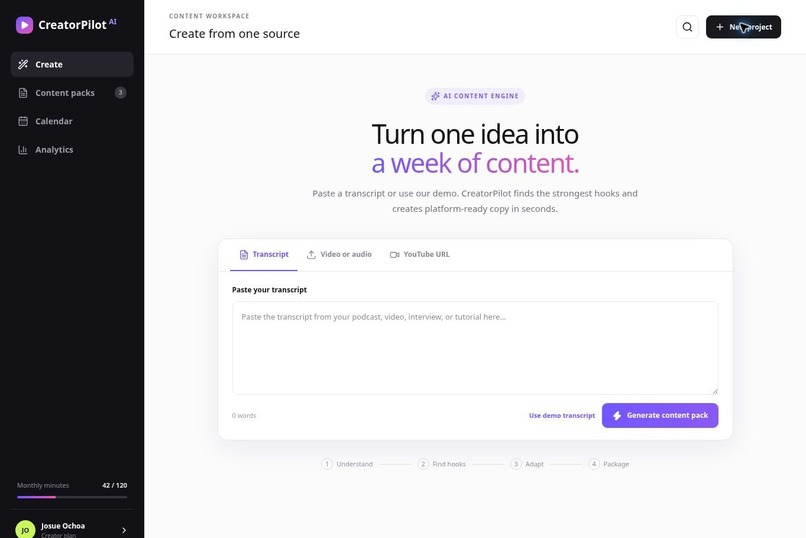
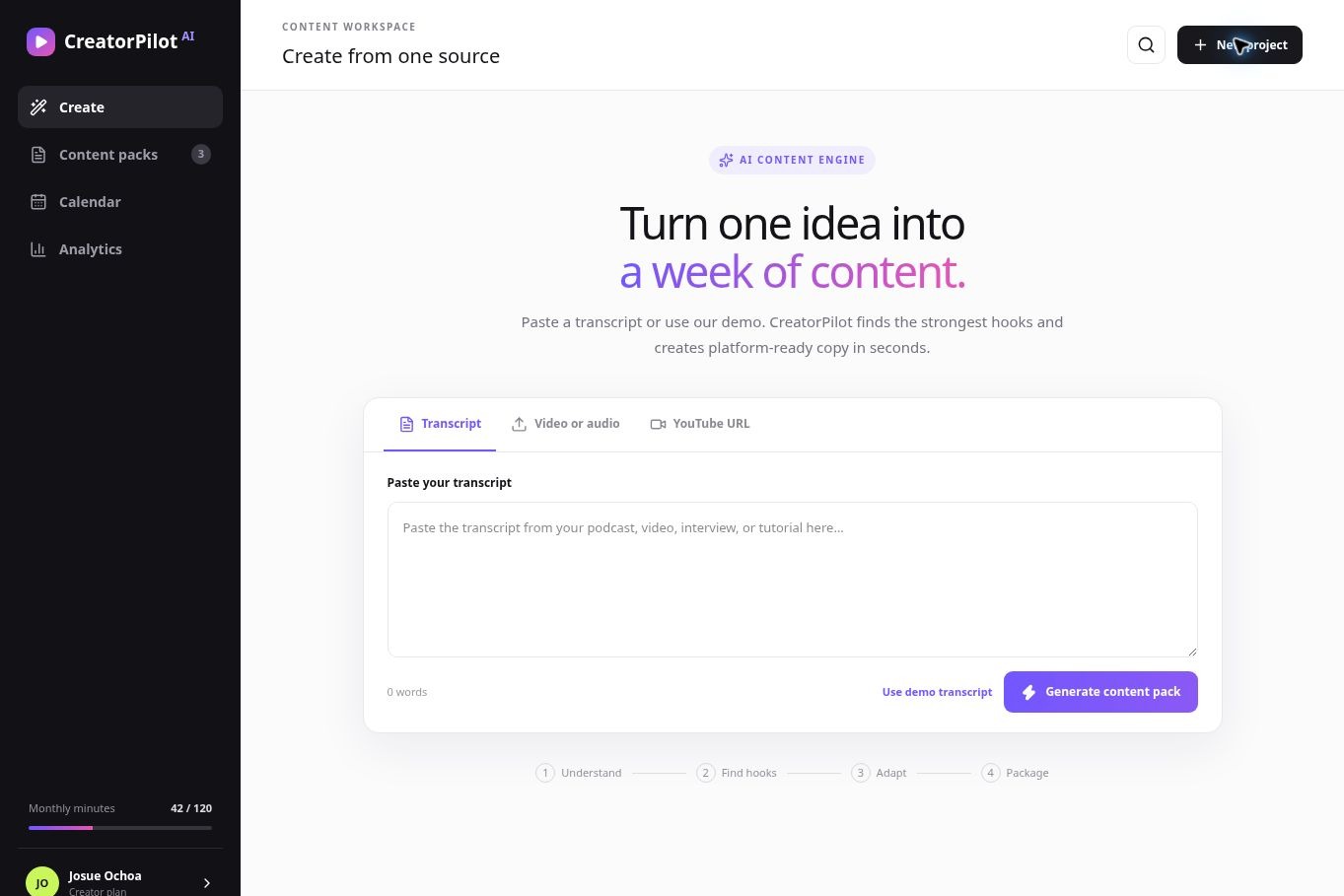
CreatorPilot AI create dashboard
-
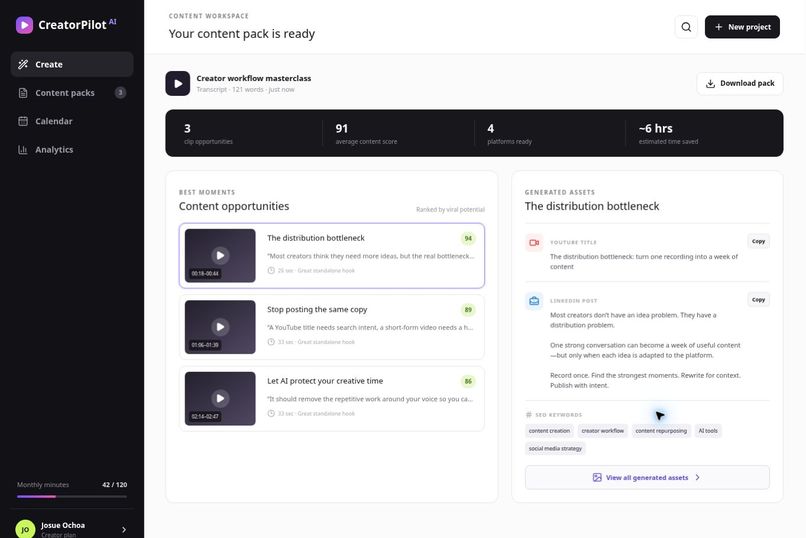
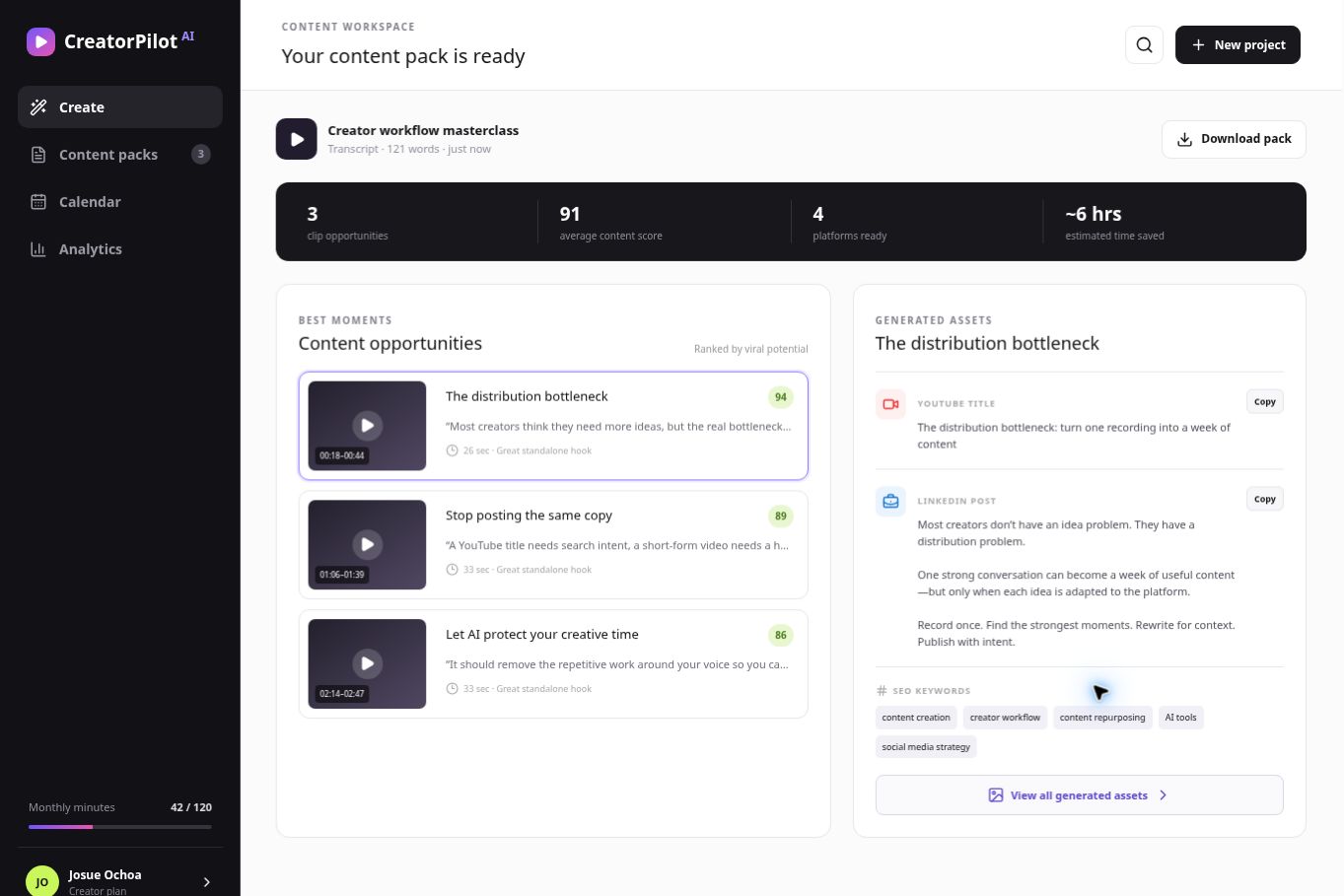
CreatorPilot AI opportunity dashboard
-
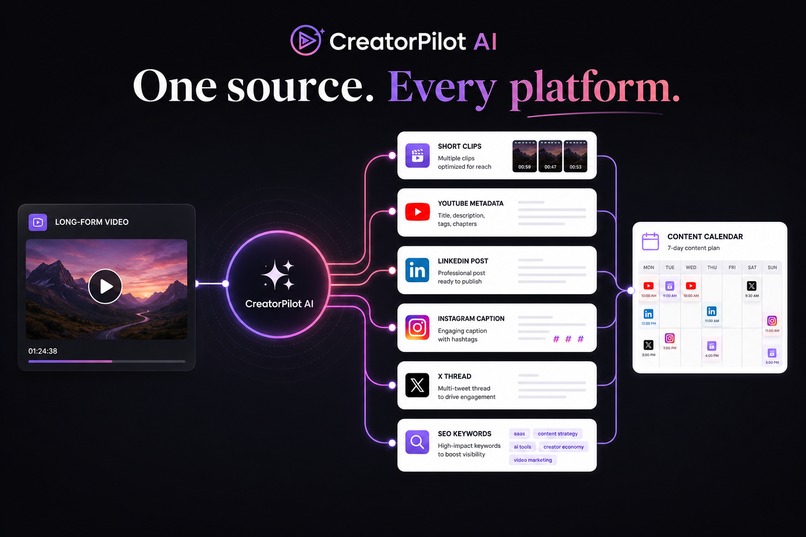
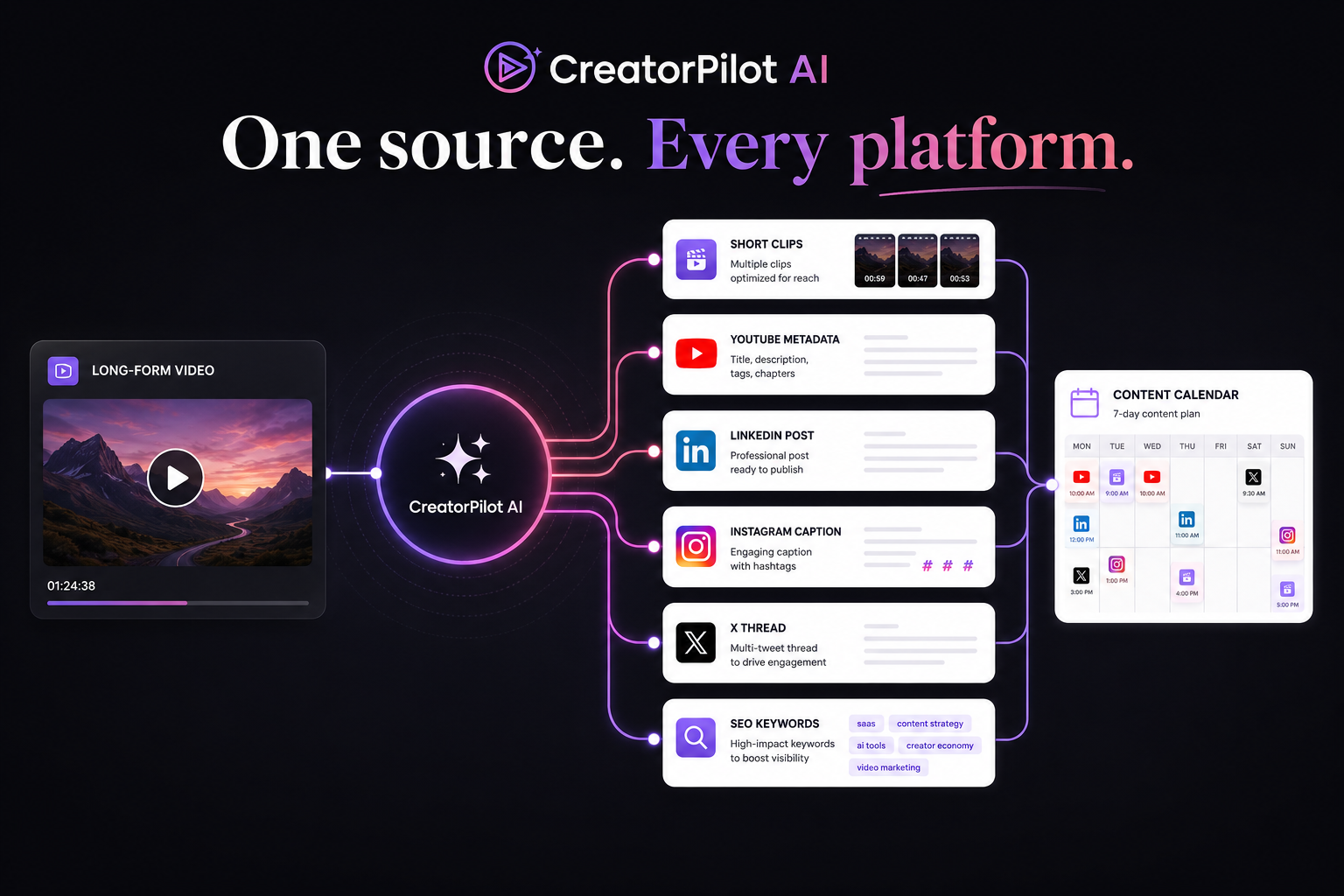
One video, every platform
-
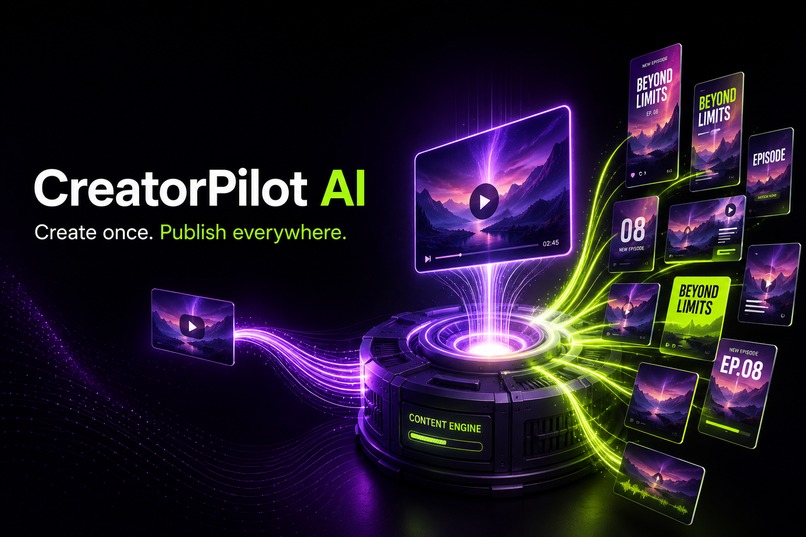
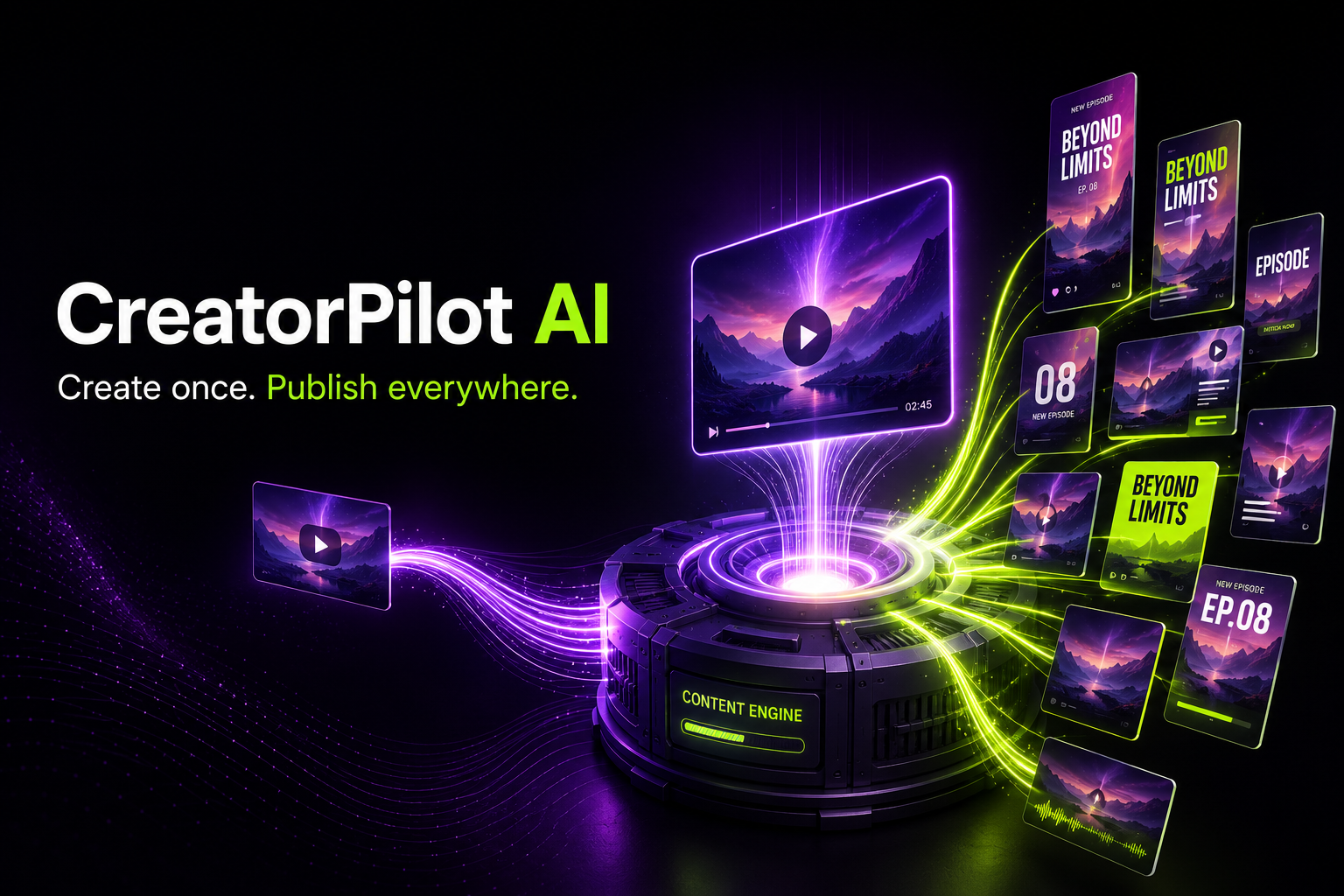
CreatorPilot AI One video, everywhere
Inspiration
Content creators spend an enormous amount of time doing work that happens after the content is created—finding the best moments in a long video, writing captions, creating titles, optimizing SEO, preparing posts for different platforms, and deciding when to publish them.
We built CreatorPilot AI because we wanted to turn that repetitive workflow into one intelligent pipeline. Instead of using several disconnected tools, our goal was simple: upload one piece of content and let AI transform it into a complete, platform-ready content package.
What it does
CreatorPilot AI is an AI-powered content automation engine that analyzes long-form videos, audio, or transcripts and automatically turns them into reusable content for multiple platforms.
A creator can provide a piece of long-form content, and CreatorPilot AI can:
- Transcribe and understand the source content
- Detect interesting moments, hooks, and potential short-form clips
- Rank segments based on their content and engagement potential
- Generate short-form clip suggestions with timestamps
- Create titles, descriptions, captions, hashtags, and keywords
- Adapt the same idea for YouTube, TikTok, Instagram, LinkedIn, and X
- Generate SEO recommendations and content scores
- Suggest thumbnail concepts and attention-grabbing thumbnail text
- Create a suggested publishing schedule
- Organize everything into a single Creator Content Pack
Instead of asking creators to decide what to do with their content, our Content Opportunity Agent analyzes it and recommends the best opportunities automatically.
For example, a 30-minute podcast can become several YouTube Shorts, TikTok/Reels concepts, a LinkedIn post, an X thread, optimized YouTube metadata, and thumbnail ideas—all generated from the same source.
How we built it
CreatorPilot AI uses an AI-driven pipeline that combines media processing, transcription, LLM reasoning, structured content generation, and automation.
The frontend provides a simple dashboard where creators can upload content and review generated assets. The backend handles media processing, transcription, AI analysis, clip selection, and content generation.
We designed the AI workflow as multiple specialized stages rather than relying on one large prompt. The system first understands the transcript, identifies meaningful segments, evaluates potential hooks, and then sends the strongest opportunities to platform-specific content generators.
For video processing, we use FFmpeg to work with real media files and extract selected clips. Speech is converted into structured transcripts that preserve timestamps so AI-selected moments can be mapped back to the original video.
The content engine then generates structured outputs for different platforms while preserving the meaning and tone of the original content.
Conceptually, our pipeline looks like:
Upload → Process → Transcribe → Understand → Detect Opportunities → Score → Generate → Optimize → Package
This architecture also makes CreatorPilot AI extensible because additional agents, platforms, analytics systems, or publishing integrations can be added without rebuilding the entire pipeline.
Challenges we ran into
One of our biggest challenges was making the system do more than simply summarize a transcript.
A good short-form clip is not necessarily the section containing the most information. It needs context, a strong opening, a clear idea, and enough independence to make sense without the rest of the video. Designing the scoring and analysis workflow around those characteristics required experimentation.
Another challenge was maintaining accurate timestamps while moving between transcription, AI analysis, and video processing. The AI may identify an interesting statement semantically, but the application still needs to locate that exact moment in the original media.
We also had to balance automation with creator control. AI should reduce repetitive work without removing the creator from the creative process, so CreatorPilot AI generates recommendations that creators can review and refine rather than blindly publishing everything.
Finally, platform differences were challenging. A strong LinkedIn post is very different from a TikTok caption or YouTube title, so we created platform-aware generation rather than simply copying the same AI output everywhere.
Accomplishments that we're proud of
We're especially proud that CreatorPilot AI is designed as a real workflow automation system rather than just an AI text generator.
The system can take actual creator content, understand it, discover reusable opportunities, and transform those opportunities into concrete assets.
We're also proud of the Content Opportunity Agent. Instead of requiring creators to know exactly what prompt to enter, the system proactively determines what valuable content can be extracted from their source material.
Most importantly, CreatorPilot AI demonstrates how AI can reduce hours of repetitive post-production work while allowing creators to spend more time on what actually matters: creating great content and connecting with their audience.
What we learned
Building CreatorPilot AI taught us that effective AI products require much more than connecting an interface to an LLM.
We learned how important structured outputs, specialized AI stages, validation, media processing, and reliable orchestration are when AI is responsible for completing a real workflow.
We also learned that AI performs better when it has a clearly defined responsibility. Separating content understanding, opportunity detection, scoring, SEO optimization, and platform adaptation produced a much more controllable system than asking a single prompt to perform everything.
Most importantly, we learned that the best creator tools don't try to replace creativity. They remove the repetitive work surrounding creativity.
What's next for CreatorPilot AI
Our next goal is to evolve CreatorPilot AI from a content-generation engine into an autonomous creator growth platform.
We plan to add direct publishing integrations for major social platforms, automatic subtitle generation, more advanced thumbnail generation, brand-voice profiles, collaborative content calendars, and deeper analytics.
The most exciting future feature is a performance feedback loop. CreatorPilot AI could analyze how previously generated content performs and use those signals to improve future recommendations.
Instead of simply asking:
“What content can we create from this video?”
CreatorPilot AI could eventually answer:
“Based on what your audience actually responds to, here is what you should create next.”
Our long-term vision is for CreatorPilot AI to become the AI operating system for creators—from raw idea to published content to continuous optimization.
Built With
- ai
- analysis
- automation
- cloudflare
- content
- css3
- html5
- javascript
- json
- natural-language-processing
- next.js
- node.js
- react
- seo
- transcript
- typescript
- vinext
- youtube

Log in or sign up for Devpost to join the conversation.