-
-
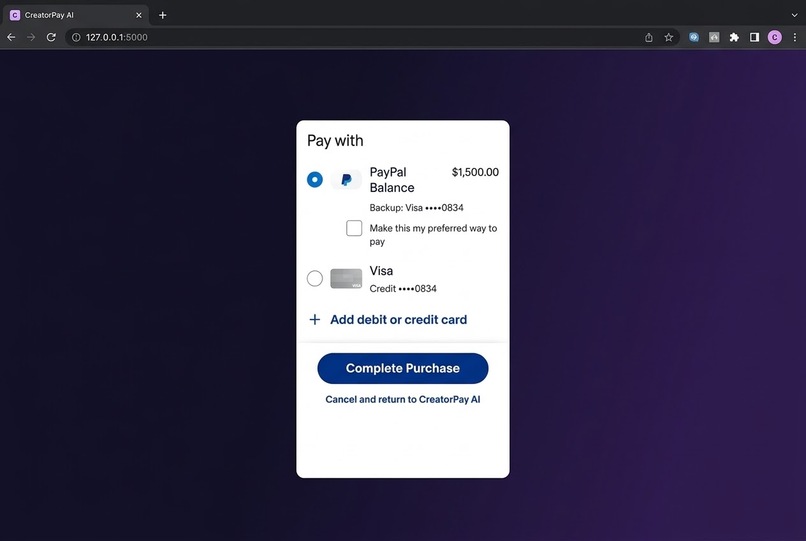
PayPal Sandbox checkout integration
-
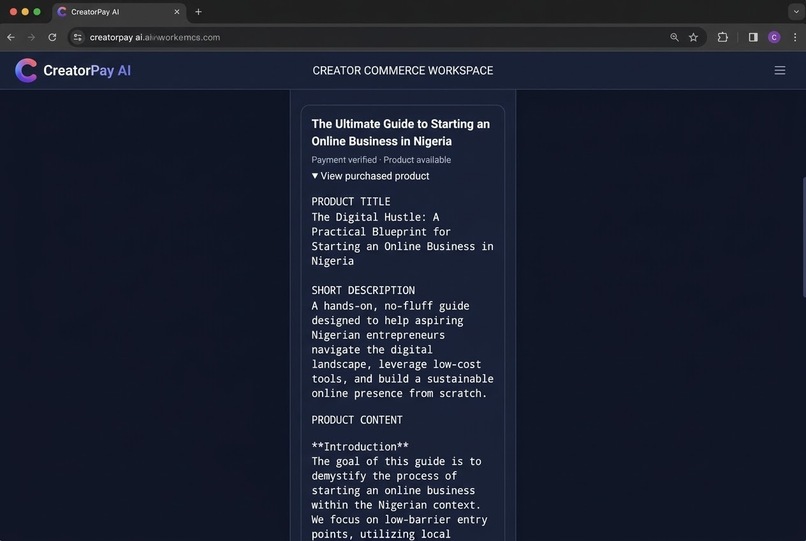
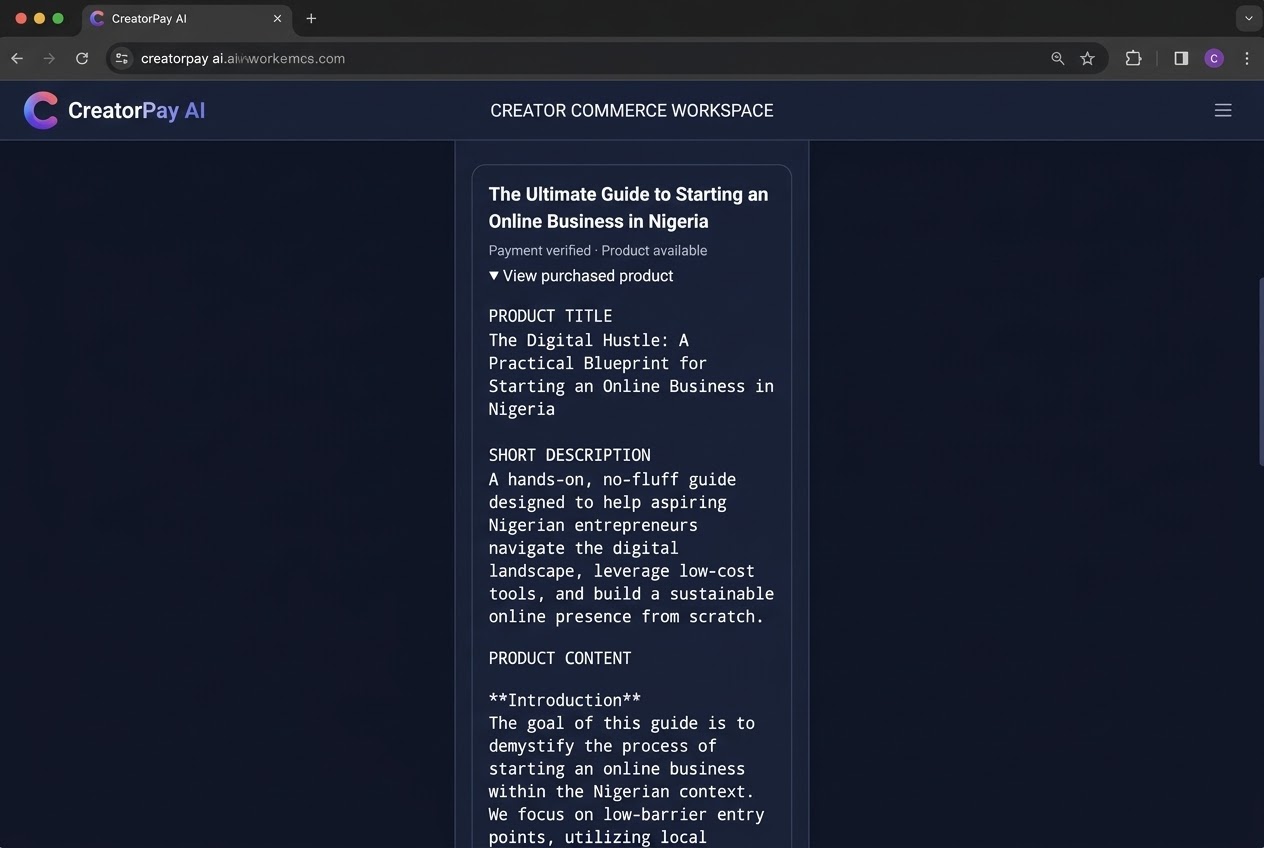
Generated digital product content
-
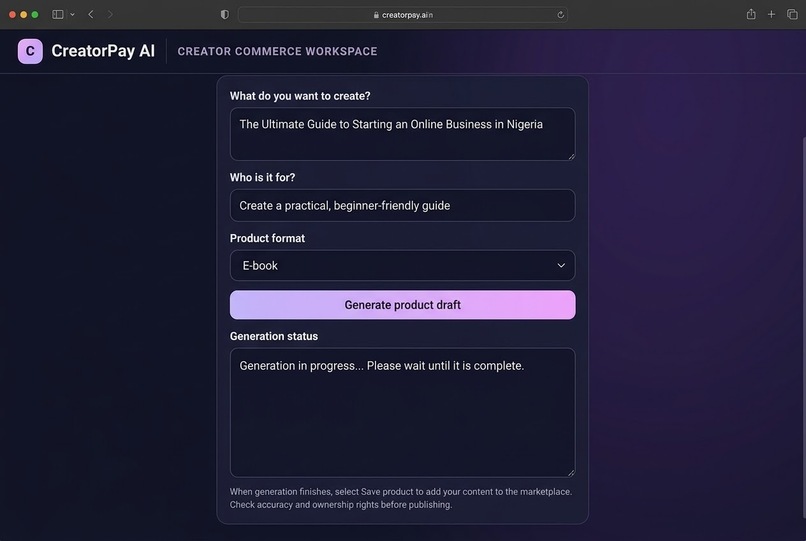
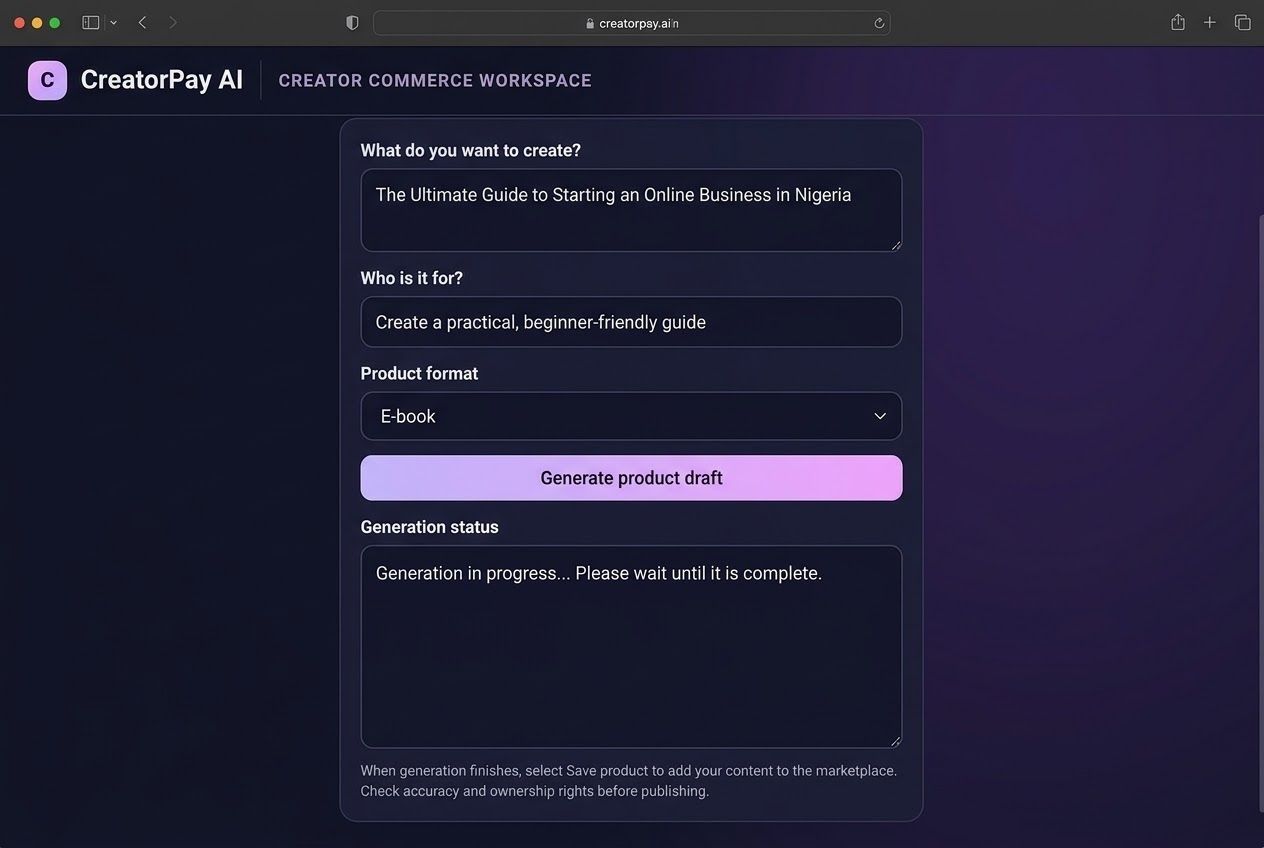
AI-powered digital product generatio
-
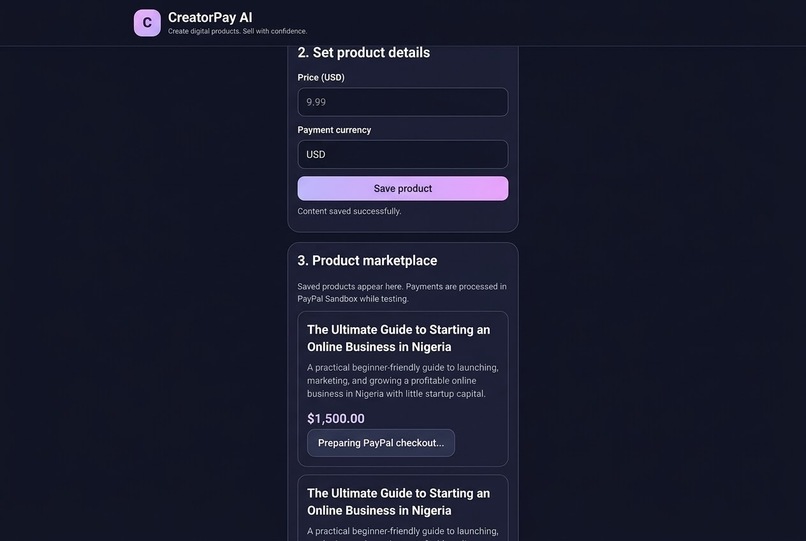
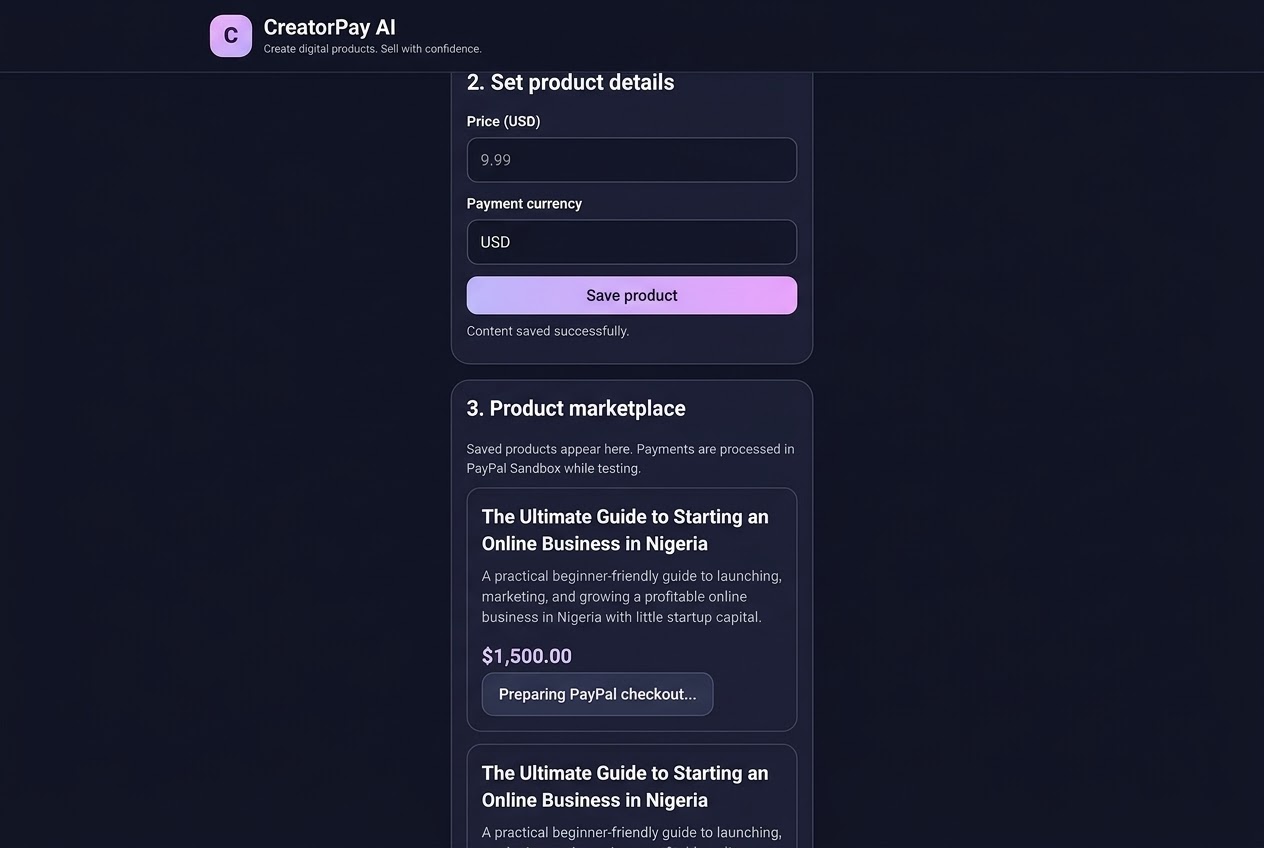
Digital product marketplace and pricing
-
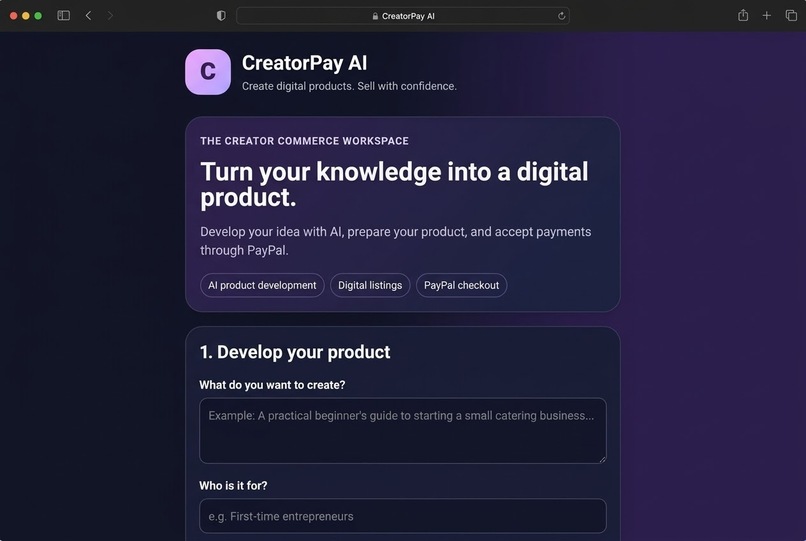
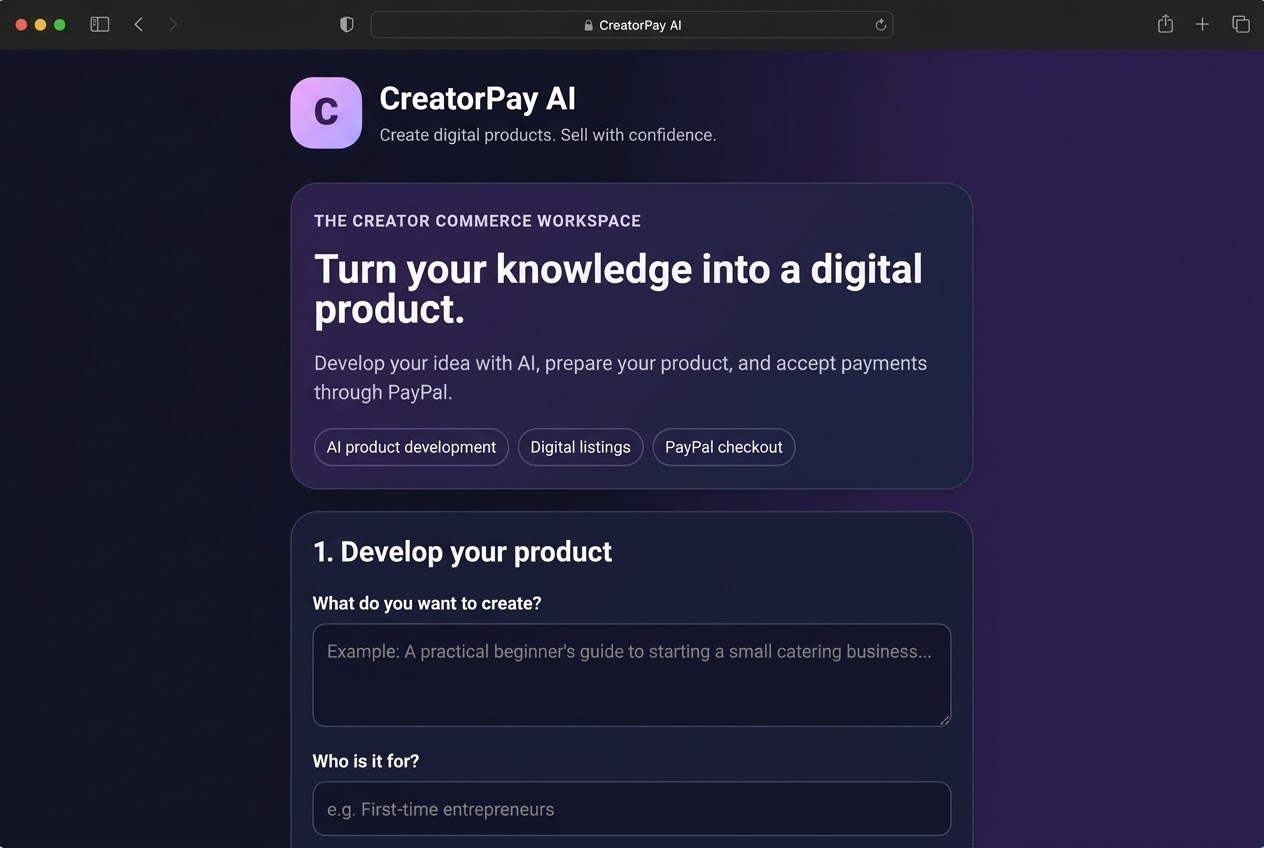
CreatorPay AI application interface
CreatorPay AI
Inspiration
Many independent creators have valuable ideas for digital products but struggle to turn those ideas into products they can sell. Creating content, preparing product descriptions, managing product listings, and integrating payments can require several different tools.
I built CreatorPay AI to bring these activities together in one platform, making digital product creation and selling more accessible to creators.
What it does
CreatorPay AI is an AI-powered digital product creation and commerce platform.
It allows creators to:
- Generate digital product content using AI.
- Create product titles and descriptions.
- Specify their intended audience and product format.
- Generate content with a requested page count.
- Save digital products to a product marketplace.
- Set product prices in USD.
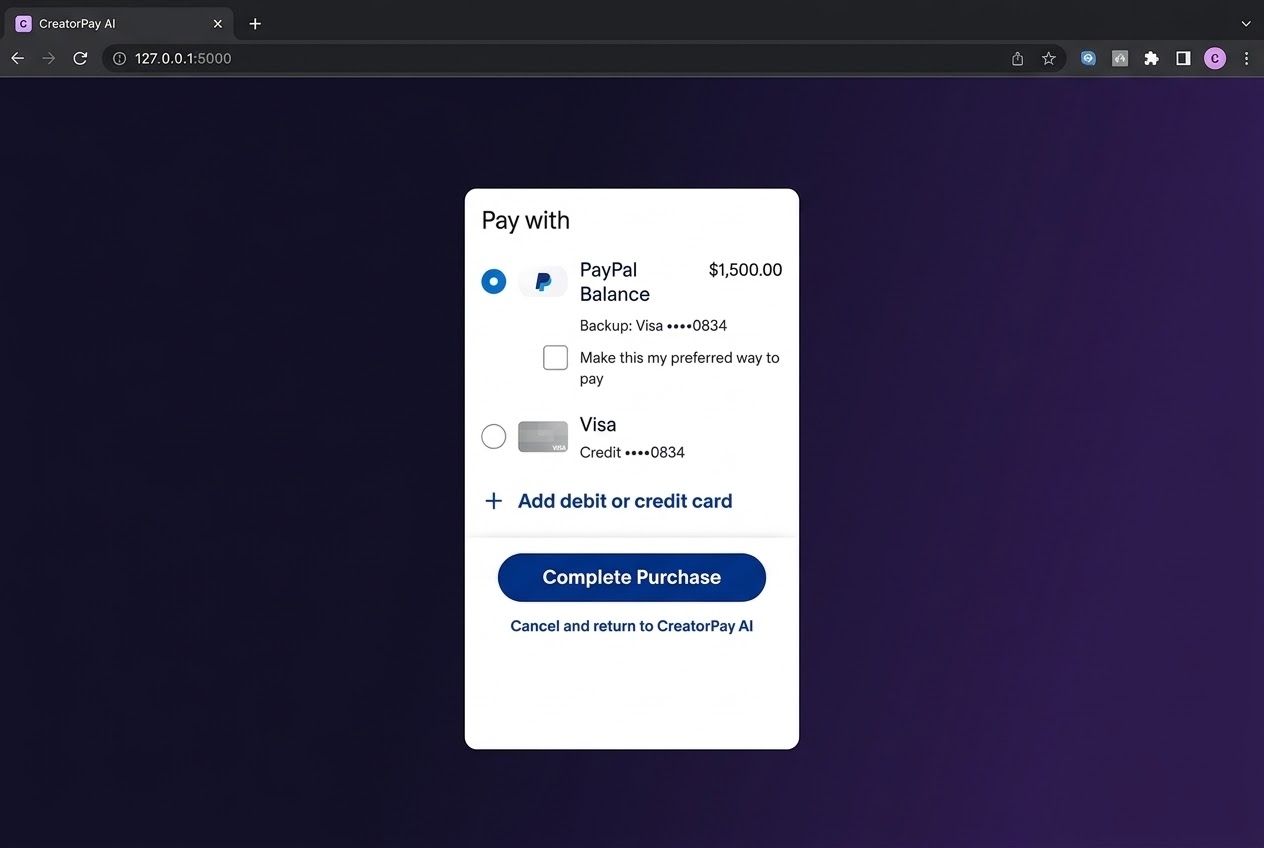
- Process test payments through PayPal Developer Sandbox.
- Access purchased digital product content.
- Download generated products in PDF and TXT formats.
How we built it
CreatorPay AI was developed as a lightweight web application using:
- Python and Flask: Backend application and API endpoints.
- JavaScript: Frontend interactions and product generation workflow.
- HTML and CSS: User interface and responsive styling.
- Groq API: Primary AI provider for digital product generation.
- Google Gemini API: Automatic fallback when Groq is unavailable.
- SQLite: Product and order data storage.
- PayPal Orders API: Sandbox order creation, payment capture, and server-side payment verification.
I also implemented generation checkpoints and error handling to help protect users' work when AI requests encounter temporary network or service errors.
The application supports downloadable PDF and TXT products and works to preserve the requested content and page count.
Challenges we ran into
One major challenge was handling unreliable AI API connections. Requests could fail because of network problems, rate limits, or temporary service errors.
I addressed this by implementing Groq as the primary provider and Google Gemini as an automatic fallback.
Another challenge was integrating PayPal's order creation and capture process while ensuring that payment amounts and currencies are verified on the server.
I also worked on ensuring that generated content is saved correctly, completed products retain their requested page counts, and the creation form resets only after a successful save.
Accomplishments that we're proud of
- Built a working AI-assisted digital product creation platform.
- Integrated two AI providers with automatic fallback.
- Implemented PayPal Developer Sandbox checkout.
- Implemented server-side payment verification.
- Created a product-saving and marketplace workflow.
- Implemented PDF and TXT downloads.
- Added generation recovery and error handling.
- Deployed a publicly accessible web application.
- Published the source code in a dedicated public GitHub repository.
Most importantly, I developed the project independently using accessible development tools and Android-based development workflows.
What we learned
This project helped me gain practical experience with API integration, AI-powered content generation, payment processing, database management, PDF generation, frontend and backend communication, deployment, and error recovery.
I also learned that building a useful AI application requires more than connecting an AI model. It requires reliable data handling, clear user feedback, payment security, and a smooth user experience.
What's next for CreatorPay AI
Future development will focus on strengthening the marketplace, improving product delivery, introducing creator authentication, enhancing payment reconciliation, and preparing the platform for secure production deployment.
My long-term goal is to make CreatorPay AI a useful platform that helps independent creators transform their ideas into digital products they can sell.
