-
-

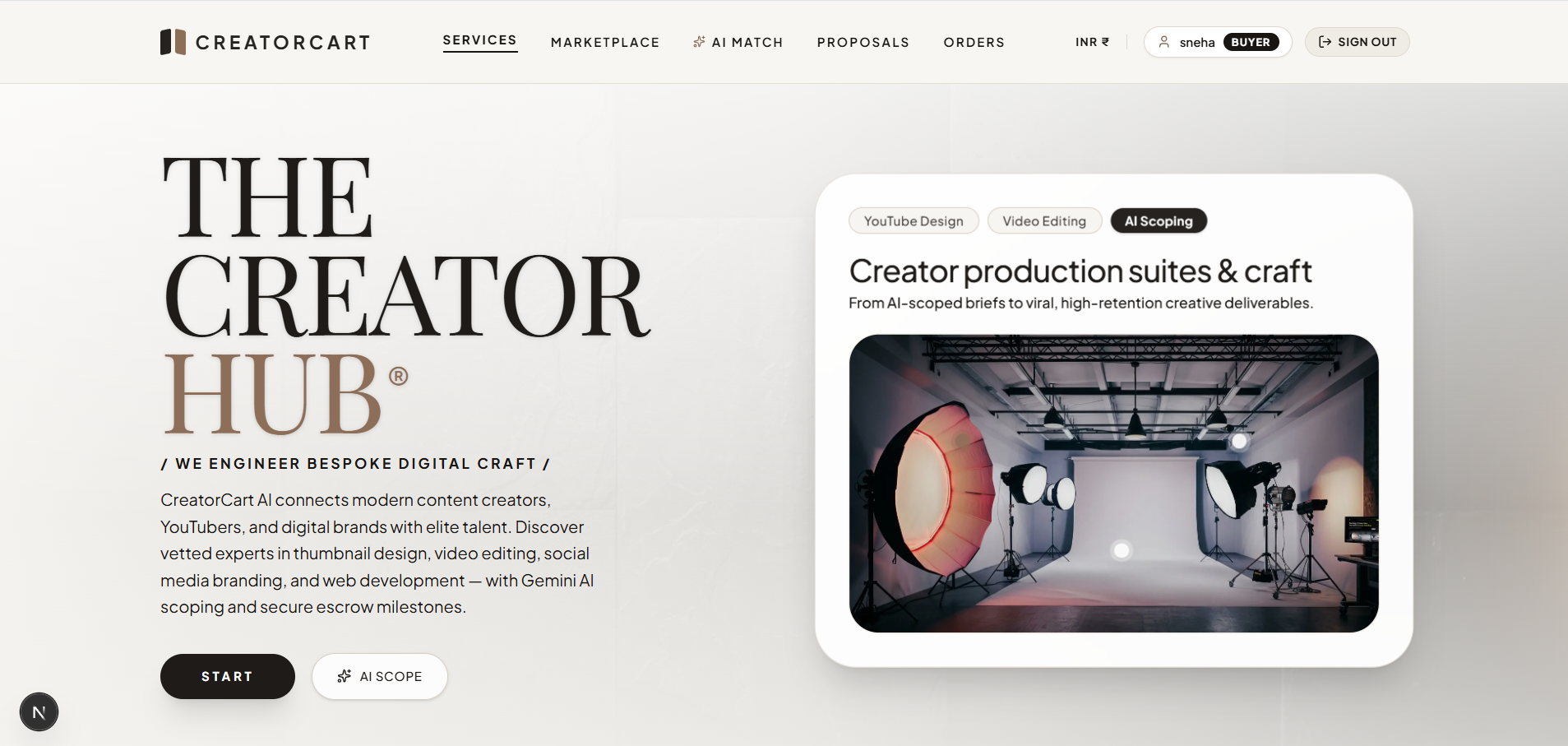
landing page
-
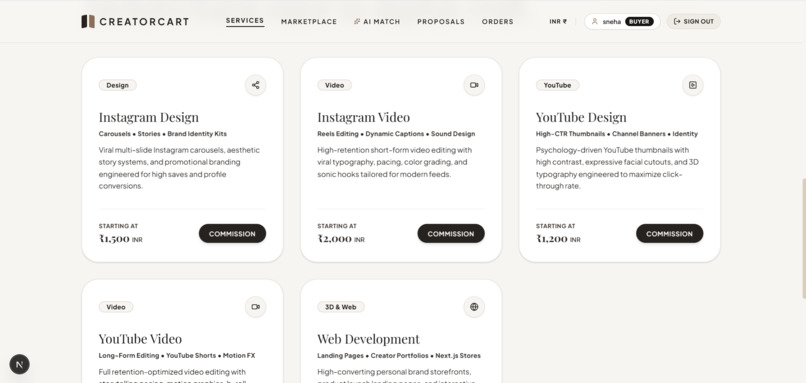
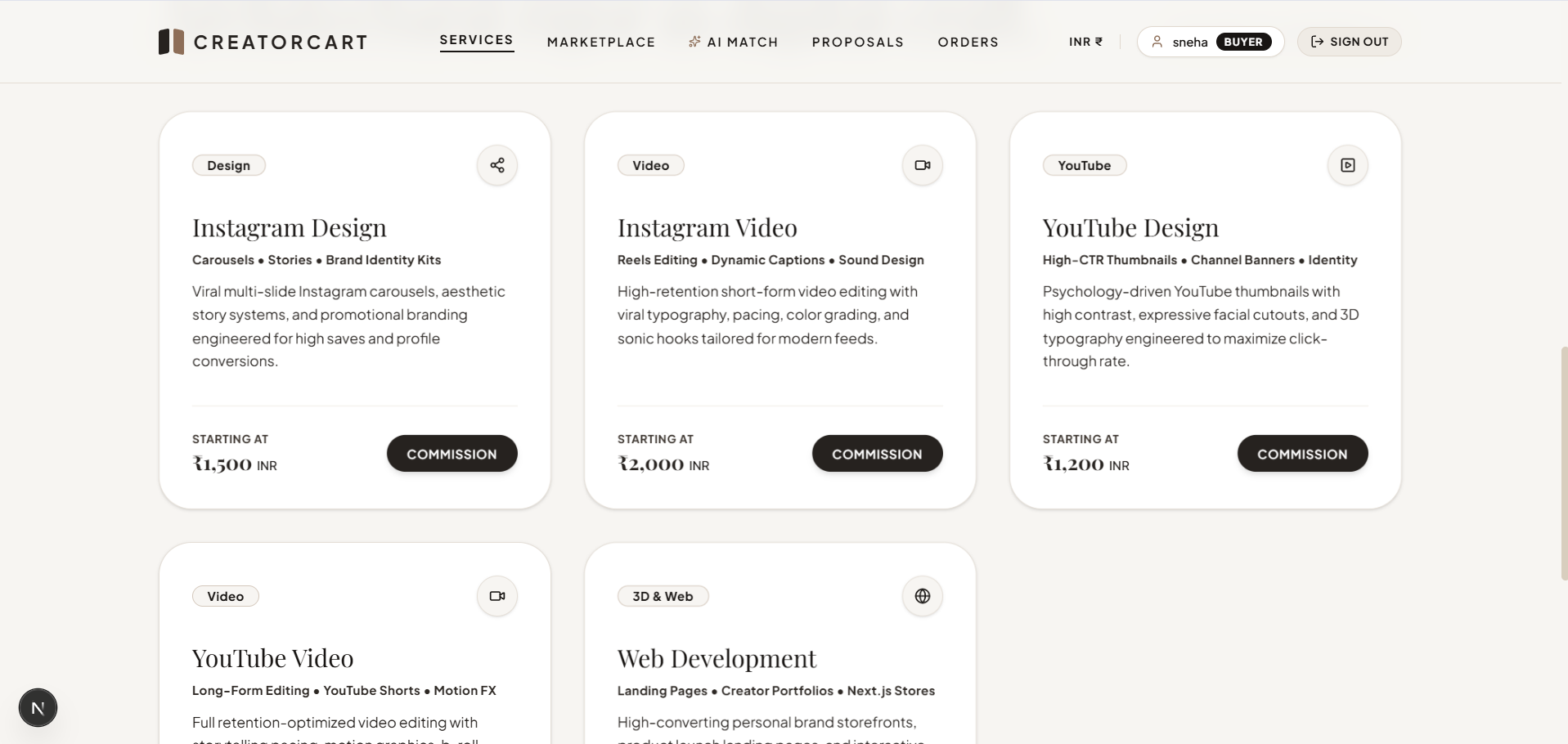
services provided present on landing page
-
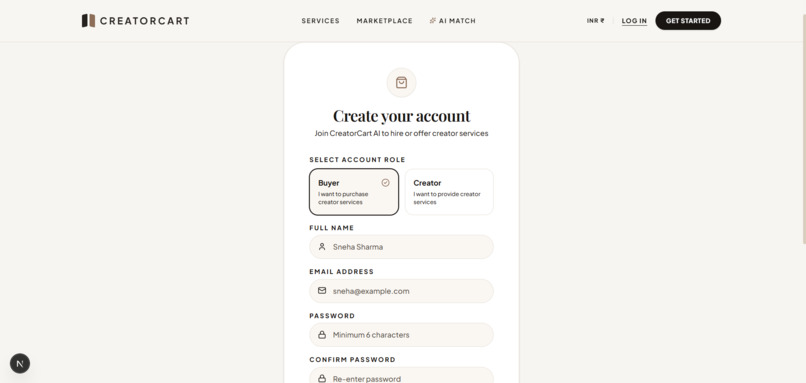
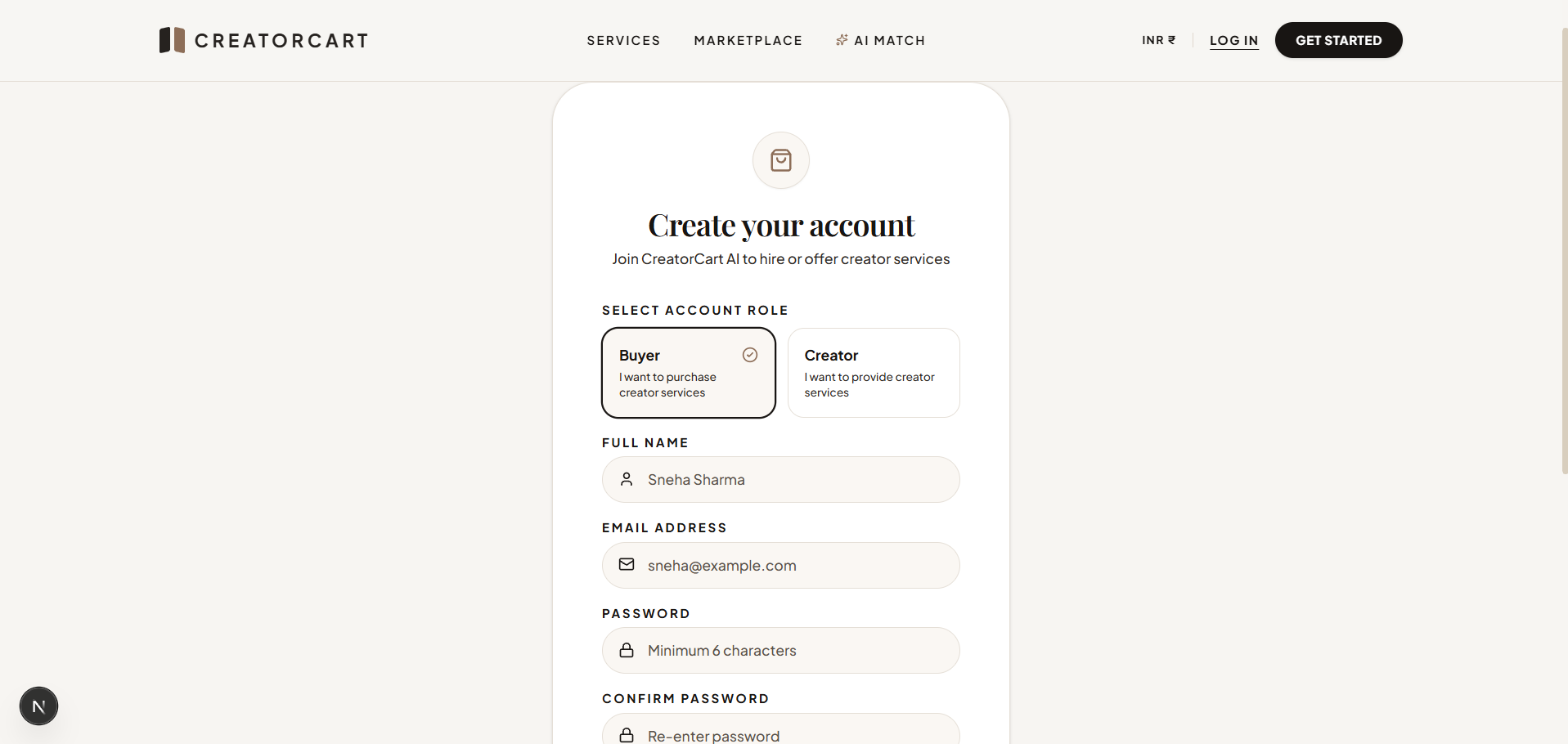
sign in/ sign up page
-

when a user logs in as a buyer the marketplace with all the services available opens
-
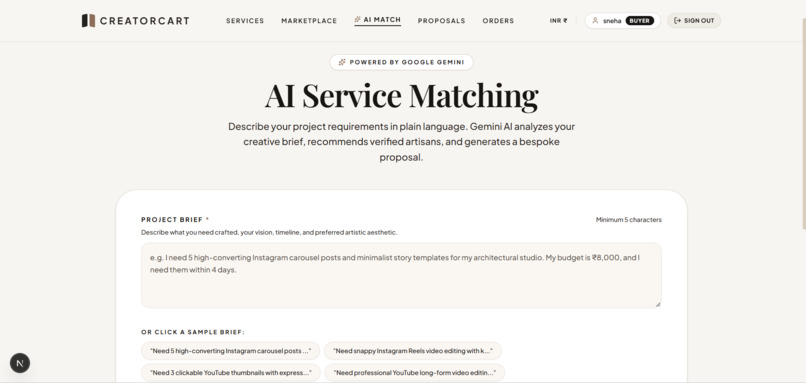
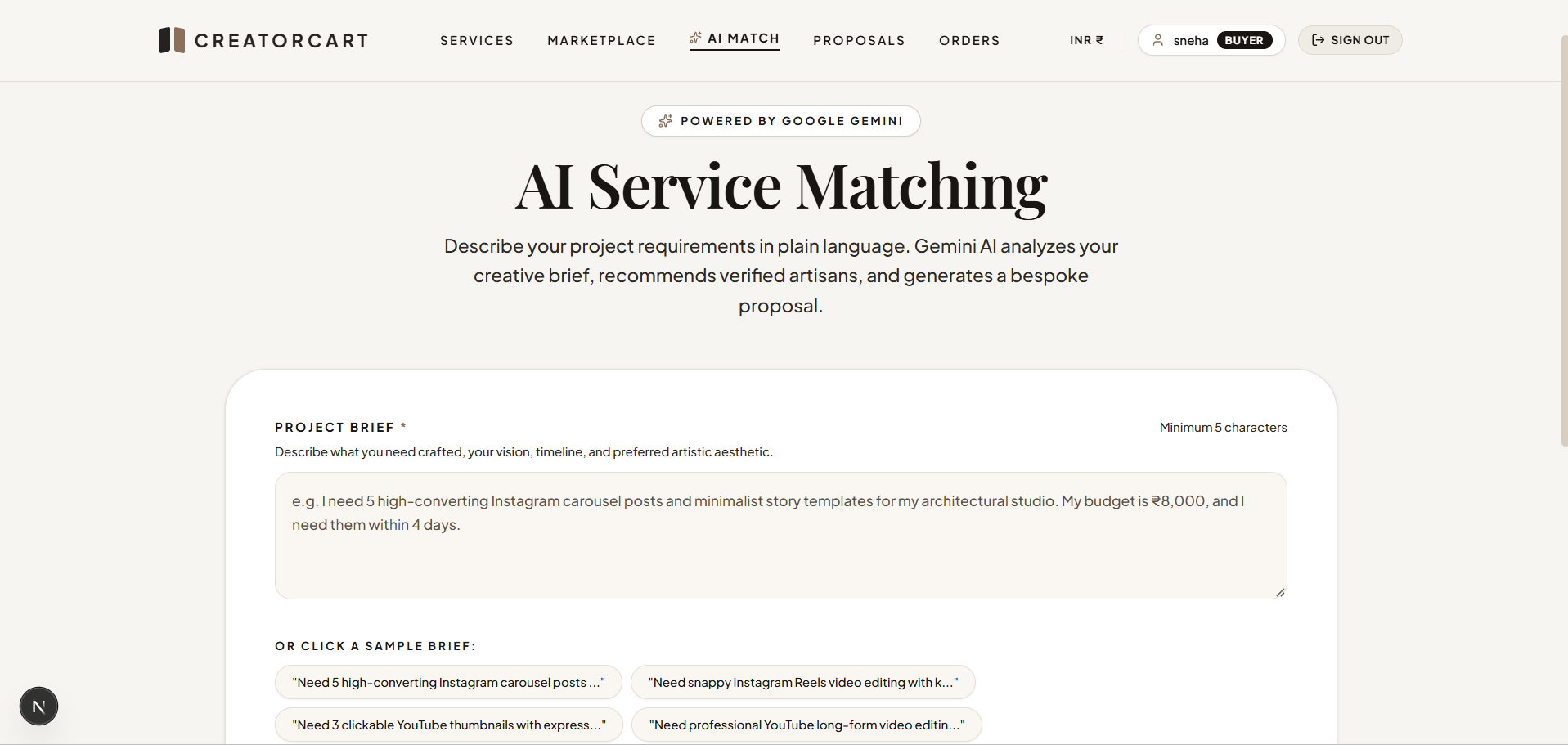
AI service matching feature that helps the user to enter the specifications required and AI will provide with the best matching results.
-
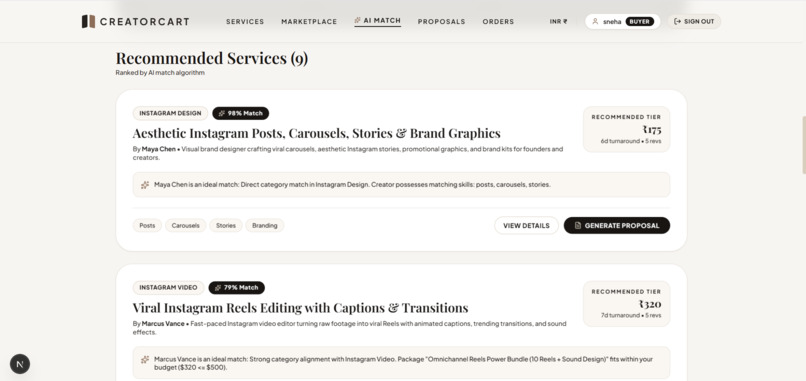
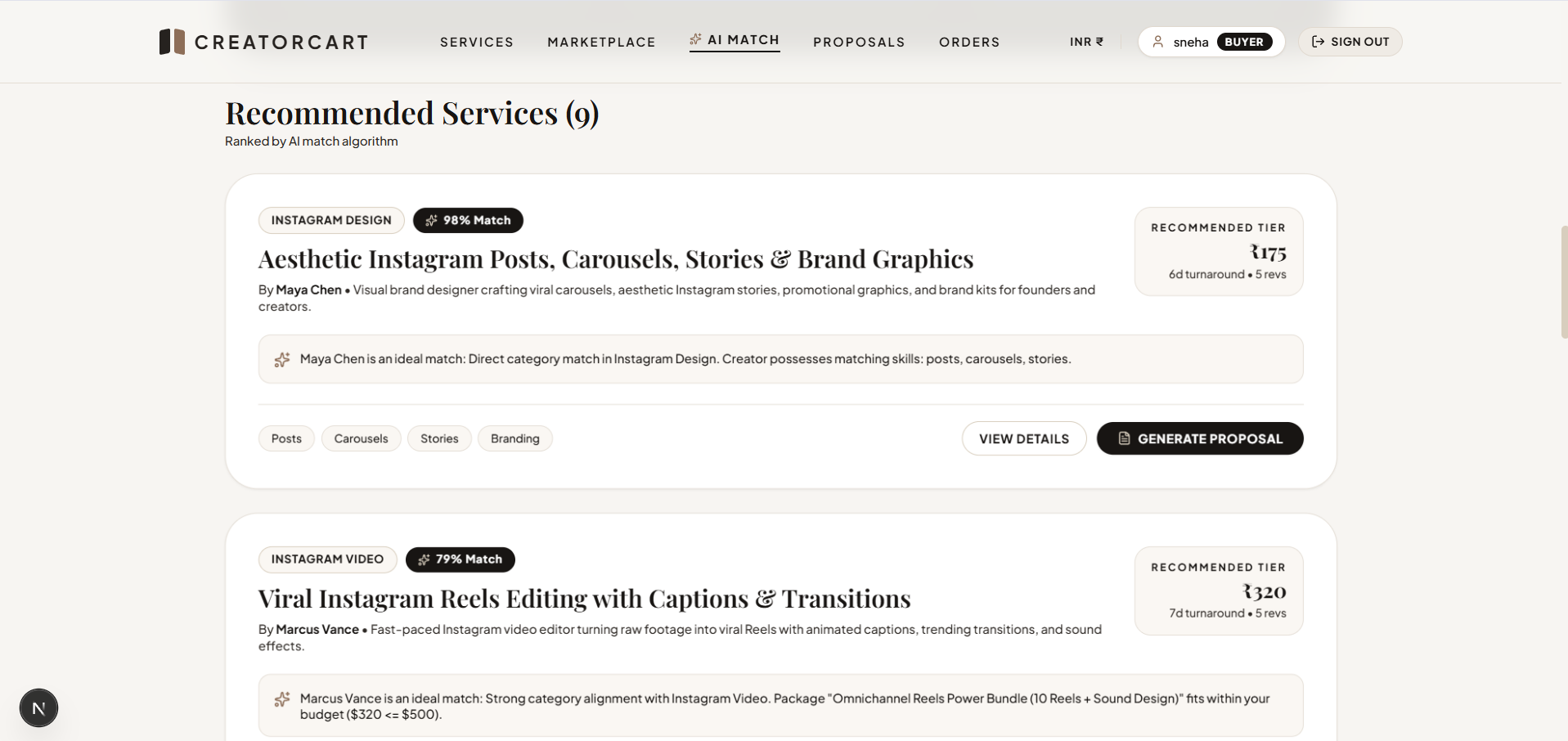
the recommended services based on the features fed to AI
-
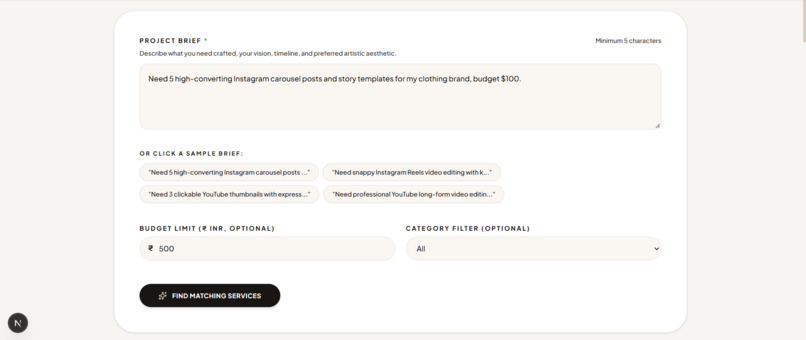
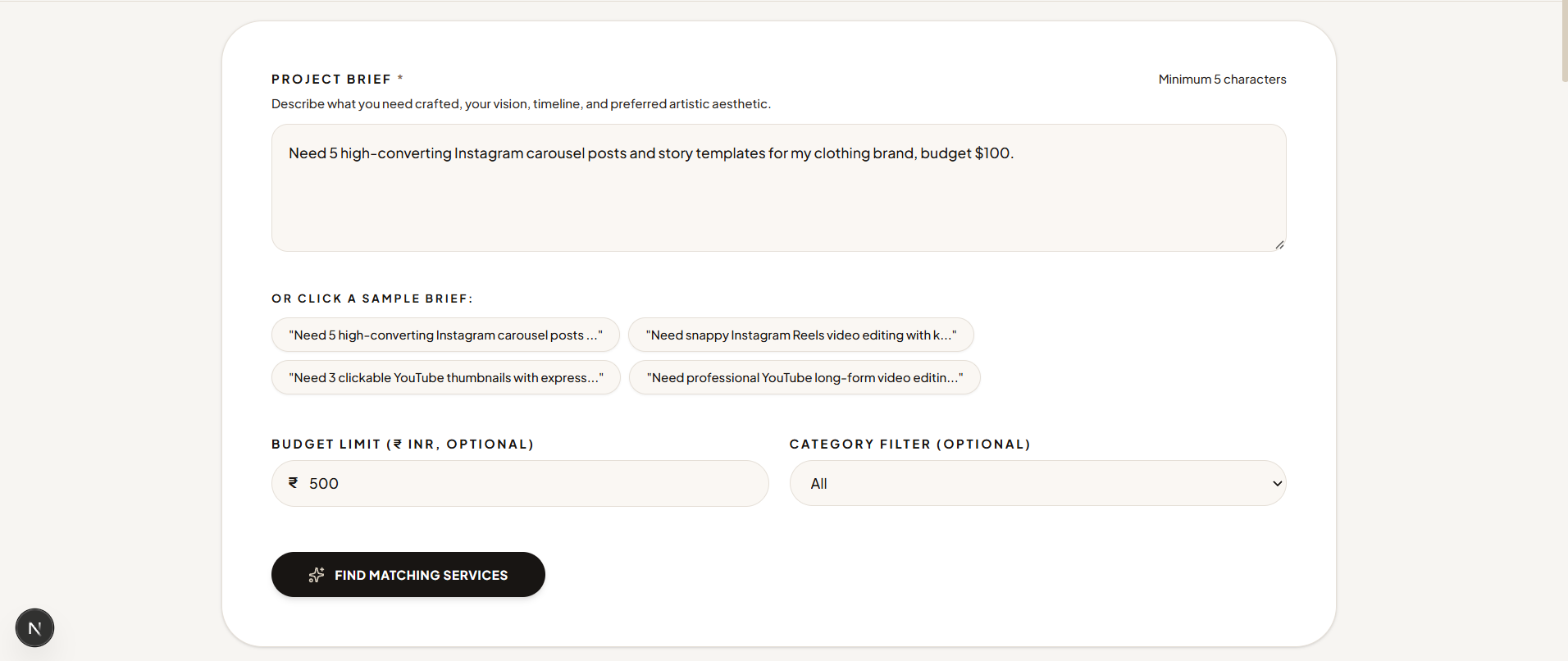
form to enter specifications for AI matching
-
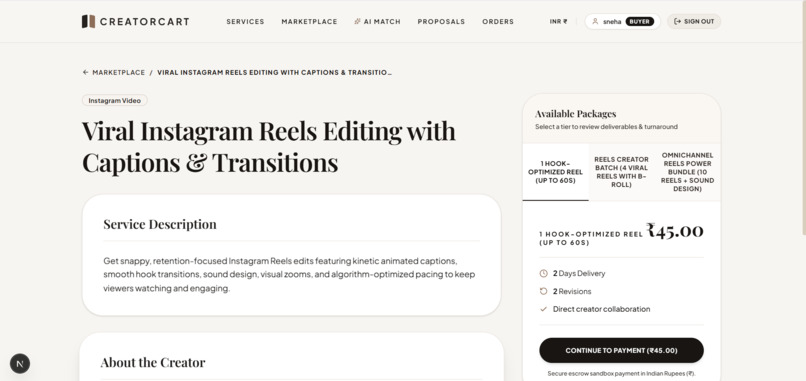
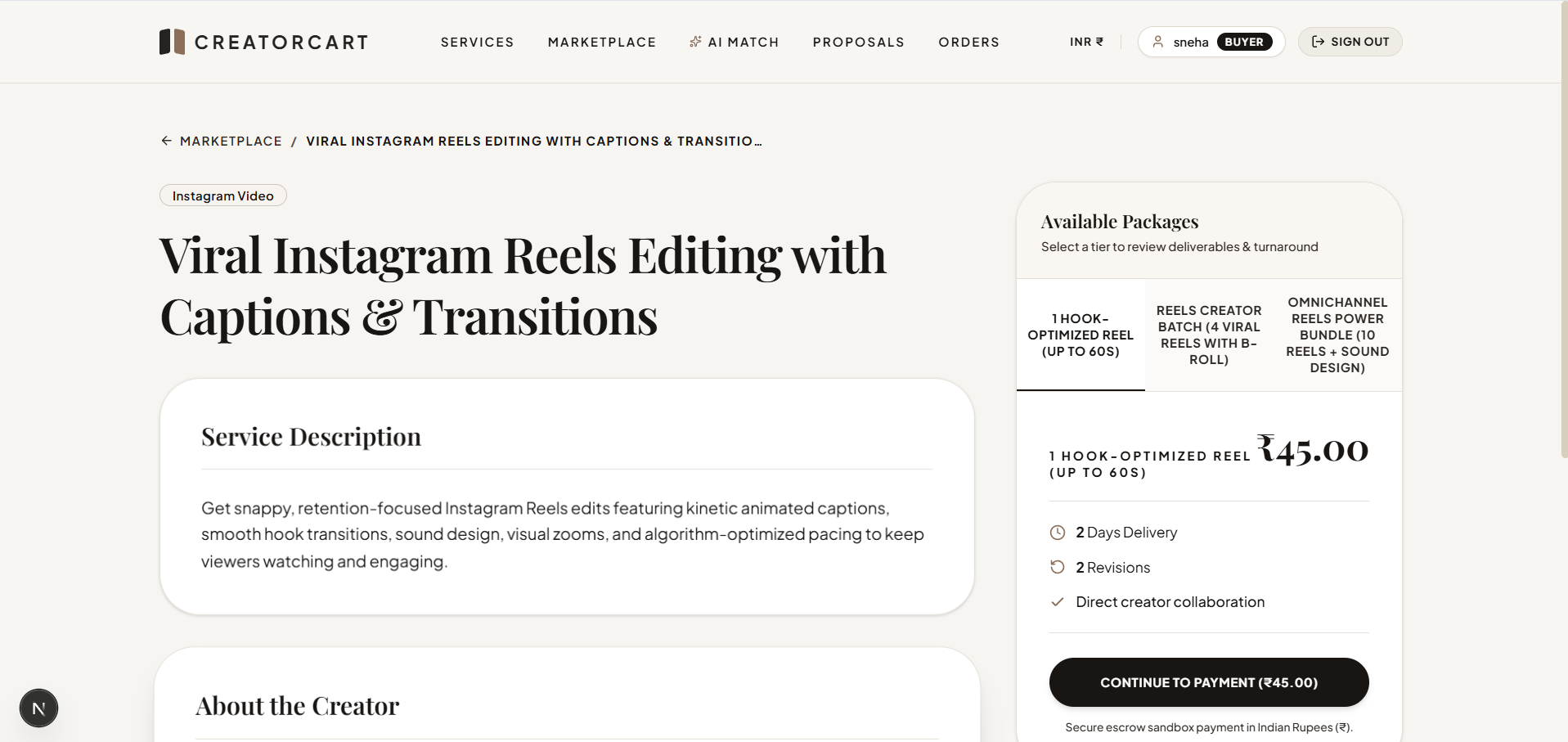
after selecting the service payment option appears
-
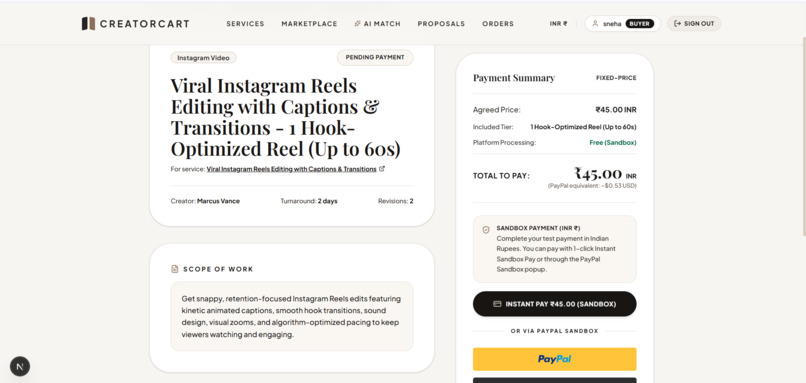
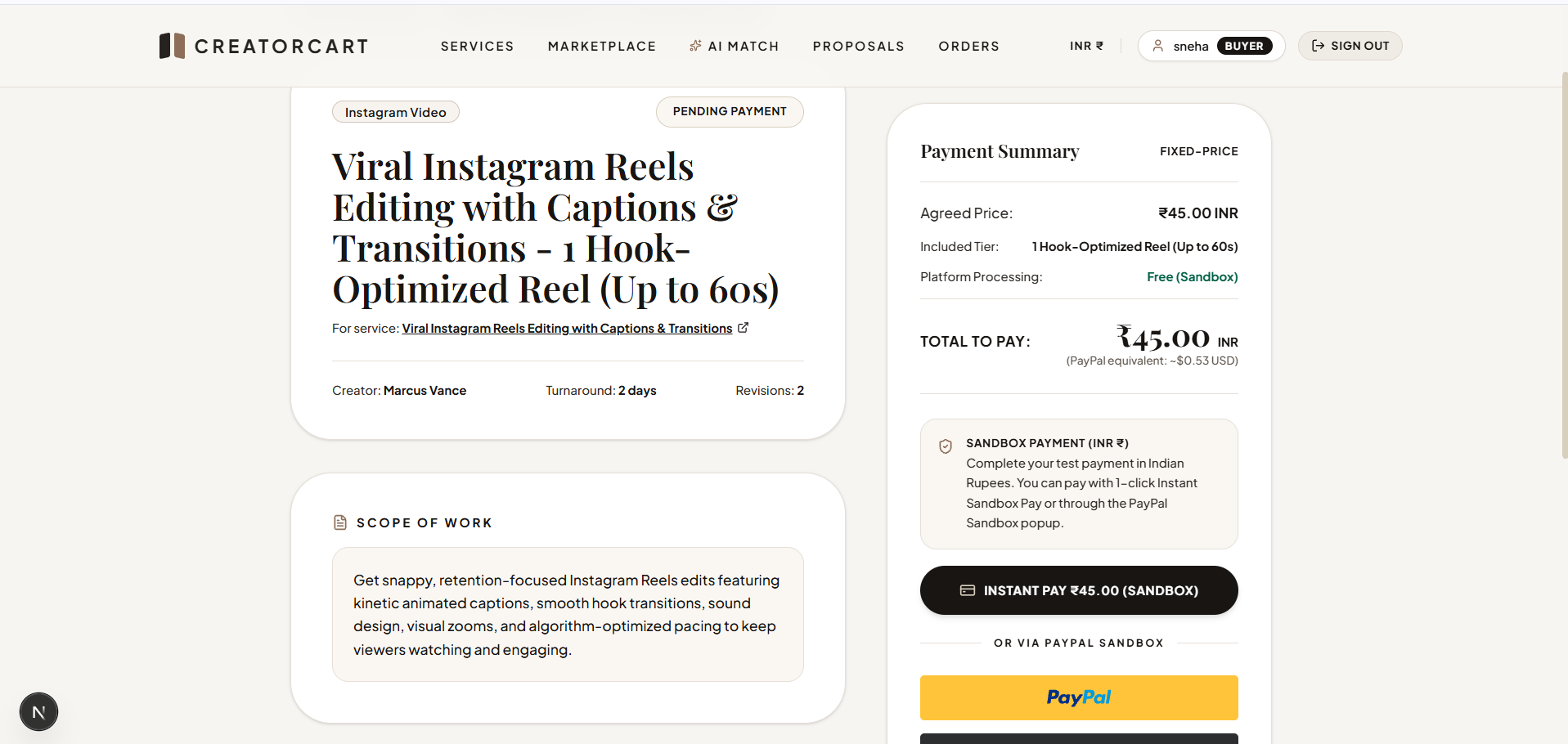
PayPal payment page
-
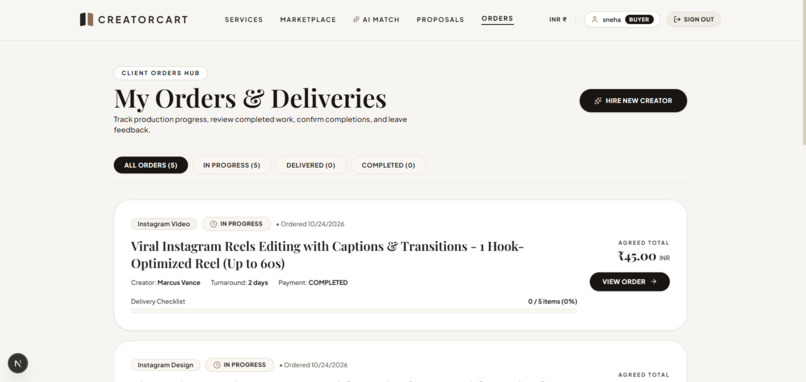
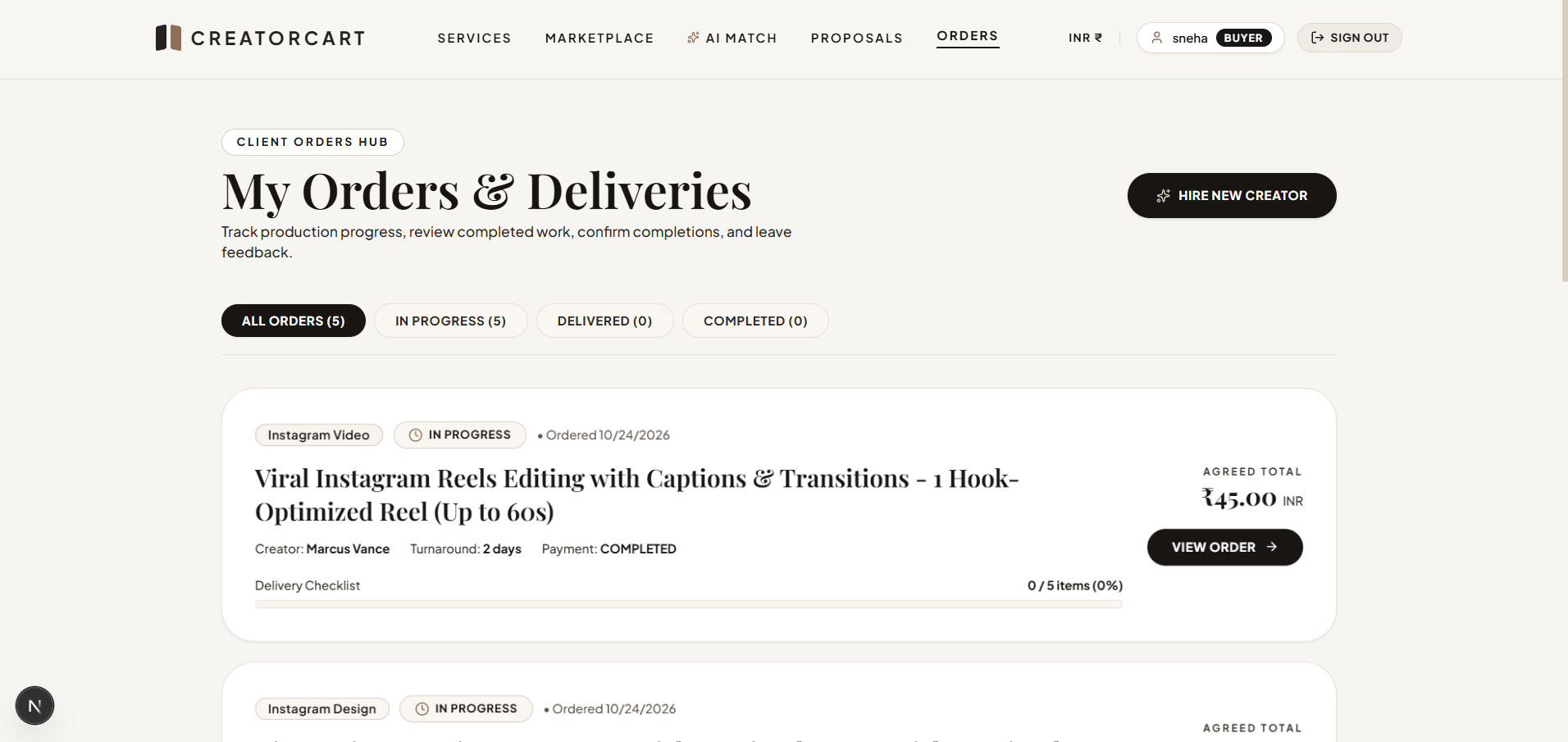
page that stores all the orders
-
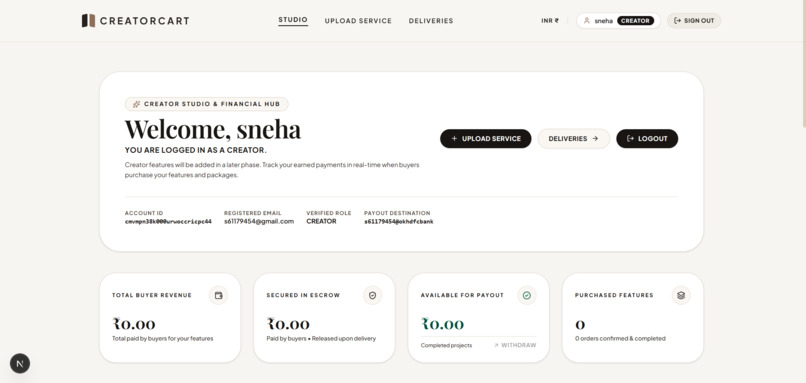
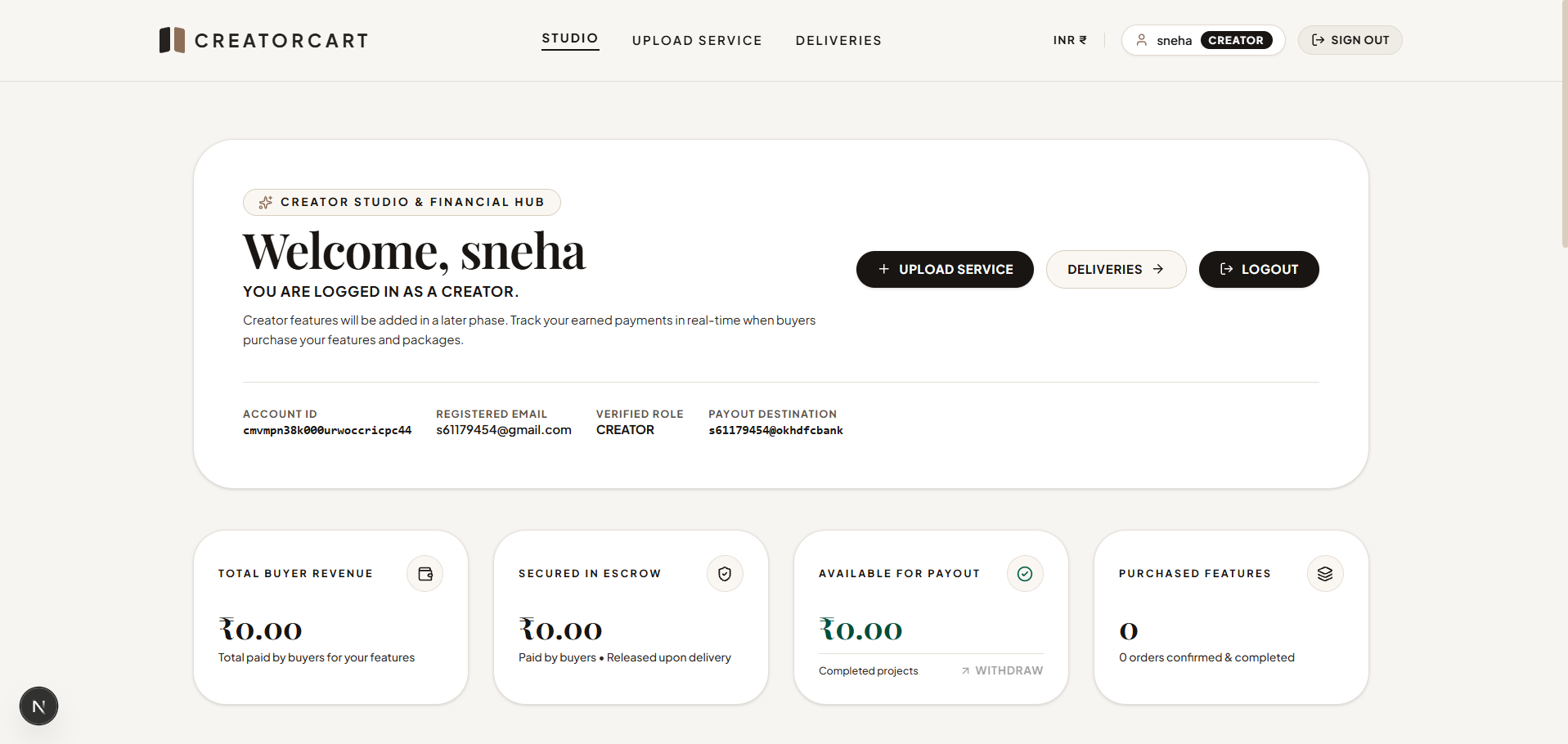
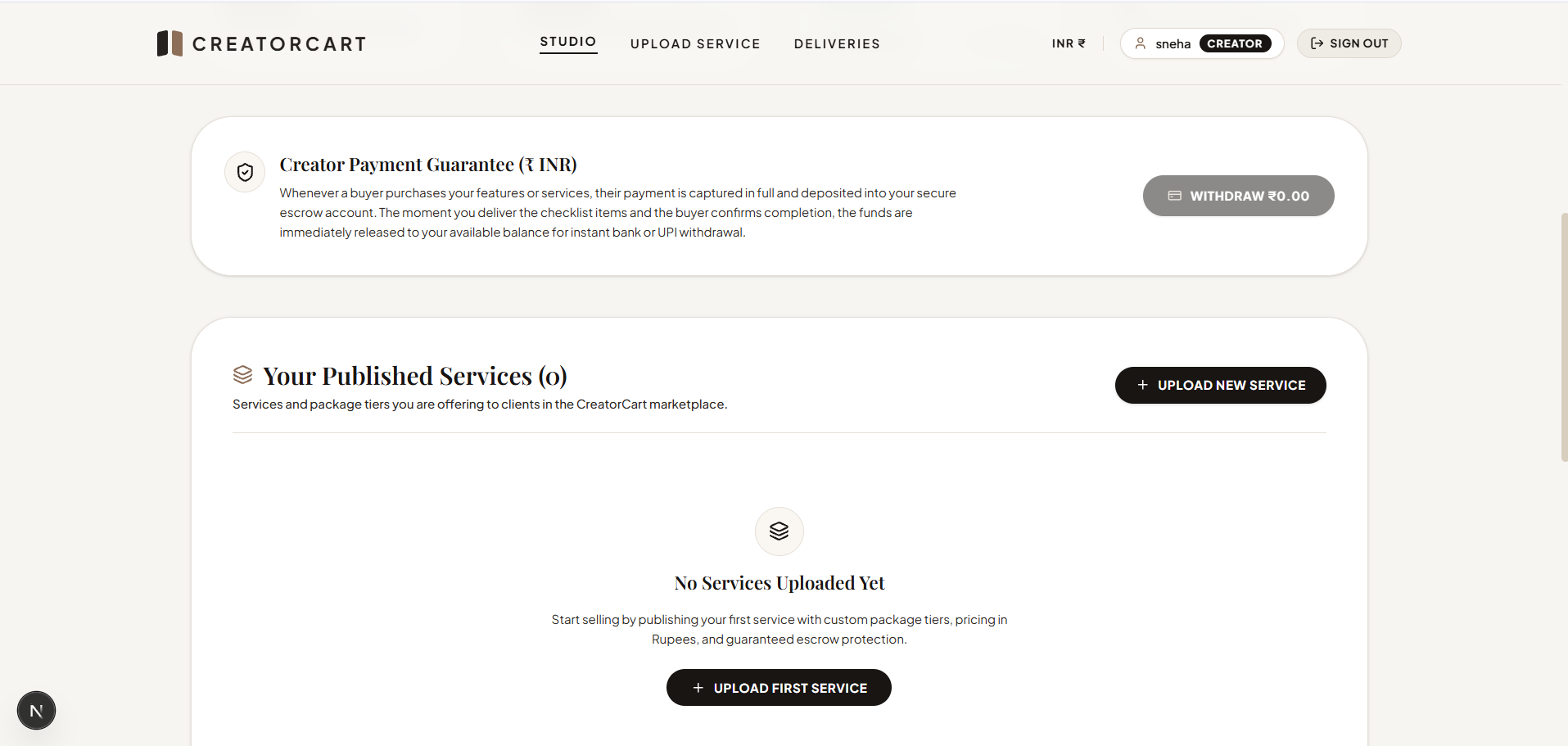
page that opens when you log in as a creator
-
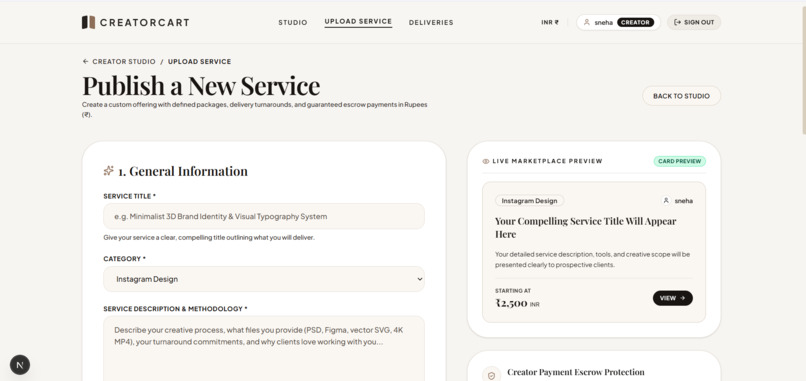
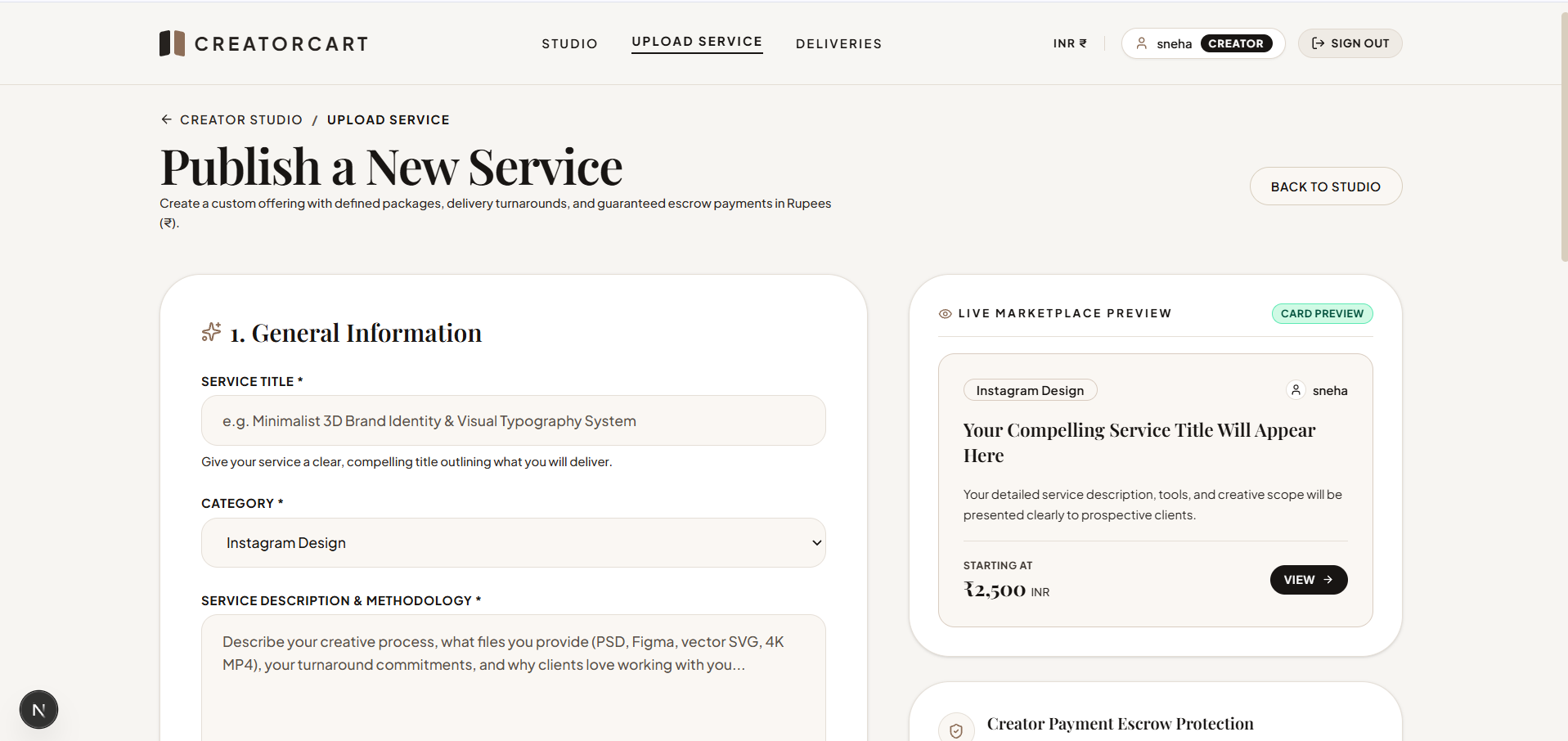
enter the specifications of the services you offer
-
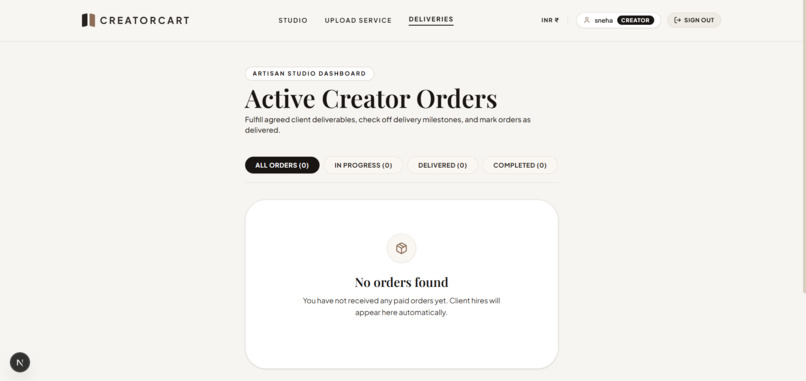
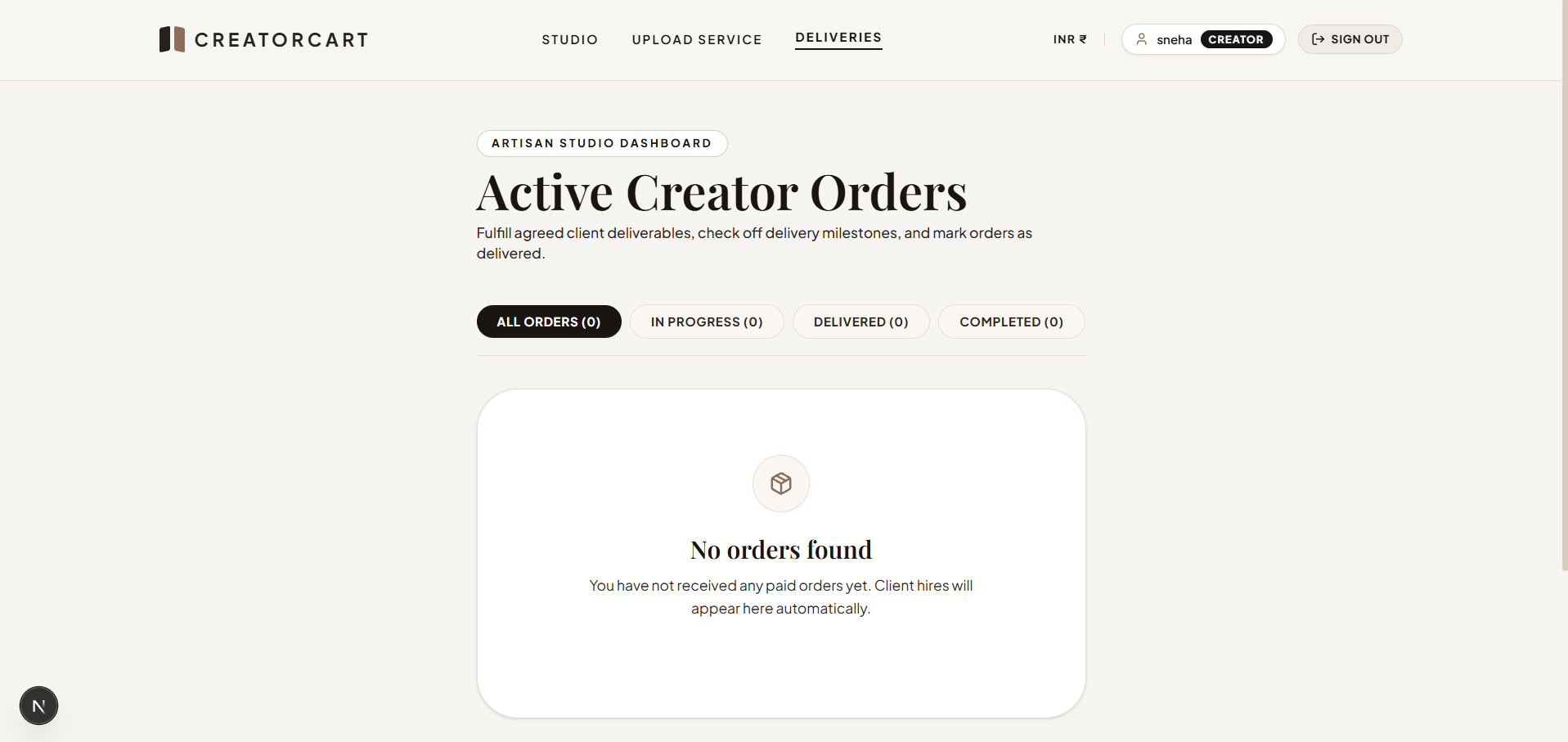
your current orders page
-
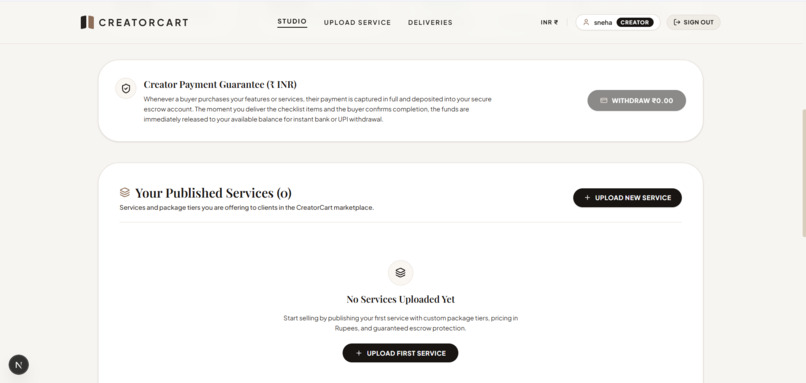
creator payment screen

Inspiration
The creator economy is growing rapidly, but connecting clients with the right creators is still a challenge. Clients often struggle to explain their requirements clearly, while creators face endless revisions, unclear deliverables, and mismatched budgets.
We wanted to solve this problem by building CreatorCart-AI, an AI-powered marketplace that transforms simple project descriptions into structured requirements, matches clients with suitable service packages, and streamlines the journey from proposal to delivery.
What it does
CreatorCart-AI connects clients with creators offering services such as YouTube thumbnails, Instagram Reels, social media designs, and web development.
AI-powered service matching: Converts natural-language project descriptions into structured requirements and recommends relevant creator packages.
Smart proposal generation: Helps define deliverables, timelines, and pricing based on verified service packages.
Secure payments: Integrates PayPal Sandbox for server-verified payment processing.
Automated delivery checklists: Generates category-specific quality checklists to help creators meet project requirements.
Feedback summaries: Uses AI to summarize buyer feedback and improve transparency after project completion.
How we built it
We built CreatorCart-AI as a full-stack application using Next.js 16, React 19, Tailwind CSS, PostgreSQL, Supabase, and Prisma ORM.
Google Gemini powers requirement interpretation, service matching assistance, and feedback summarization. Zod validates AI-generated structured outputs, with a fallback mechanism to maintain functionality when the AI service is unavailable.
We integrated the PayPal Orders API for payment creation and server-side capture, ensuring that pricing is verified against database records rather than trusted from the client. JWT authentication, secure HttpOnly cookies, and database-backed rate limiting help protect the application.
Challenges we ran into
Database migrations: Handling Supabase connection pooling alongside Prisma migrations required separate pooled and direct database connections.
AI hallucinations: Preventing AI from inventing prices, deadlines, or deliverables required separating AI-based requirement interpretation from verified database information.
Payment security: Ensuring that users could not manipulate payment amounts meant implementing server-authoritative pricing and payment verification.
Serverless rate limiting: We implemented database-backed rate limiting to avoid relying on in-memory counters that can reset across serverless instances.
Accomplishments that we're proud of
Built an end-to-end marketplace workflow connecting AI-powered discovery, proposals, payments, and delivery.
Made service recommendations depend on verified database packages rather than fictional AI-generated listings.
Integrated PayPal Sandbox with server-side payment verification and duplicate-capture safeguards.
Developed automated, category-specific delivery checklists to improve consistency and reduce ambiguity.
Combined AI capabilities with practical backend engineering, database integrity, and security measures in one application.
What we learned
This project taught us that building a reliable AI-powered product involves much more than integrating an LLM API.
We learned how to structure and validate AI outputs, design database-backed matching systems, secure payment workflows, handle database migrations, and build resilient serverless APIs. Most importantly, we learned that AI works best when paired with verified data, clear constraints, and deterministic business logic.
What's next for CreatorCart-AI
AI-powered asset verification: Analyze uploaded deliverables for resolution, aspect ratio, audio clarity, and visual quality.
Multi-currency payments and creator payouts: Explore additional payment providers and automated creator payouts.
Milestone-based payments: Introduce milestone-oriented payment workflows to support larger projects.
Interactive revision tools: Enable clients to leave timestamped comments on videos and visual annotations on design files.
Our goal is to make CreatorCart-AI a smarter, more transparent marketplace where creators can focus on creating and clients can confidently turn their ideas into reality.
Built With
- ai-integration
- app-router
- bcryptjs
- full-stack-development
- google-gemini-api
- javascript
- jwt-authentication
- lucide-react
- next.js
- node.js
- payment-gateway-integration
- paypal
- paypal-sandbox
- postgresql
- prisma-orm
- react
- rest-api
- serverless-architecture
- supabase
- tailwind-css
- typescript
- vercel
- web-development
- zod

Log in or sign up for Devpost to join the conversation.