-
-
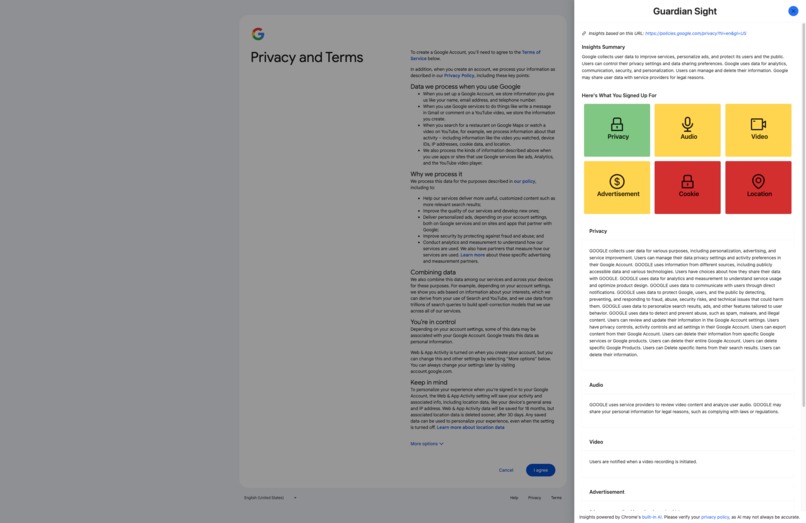
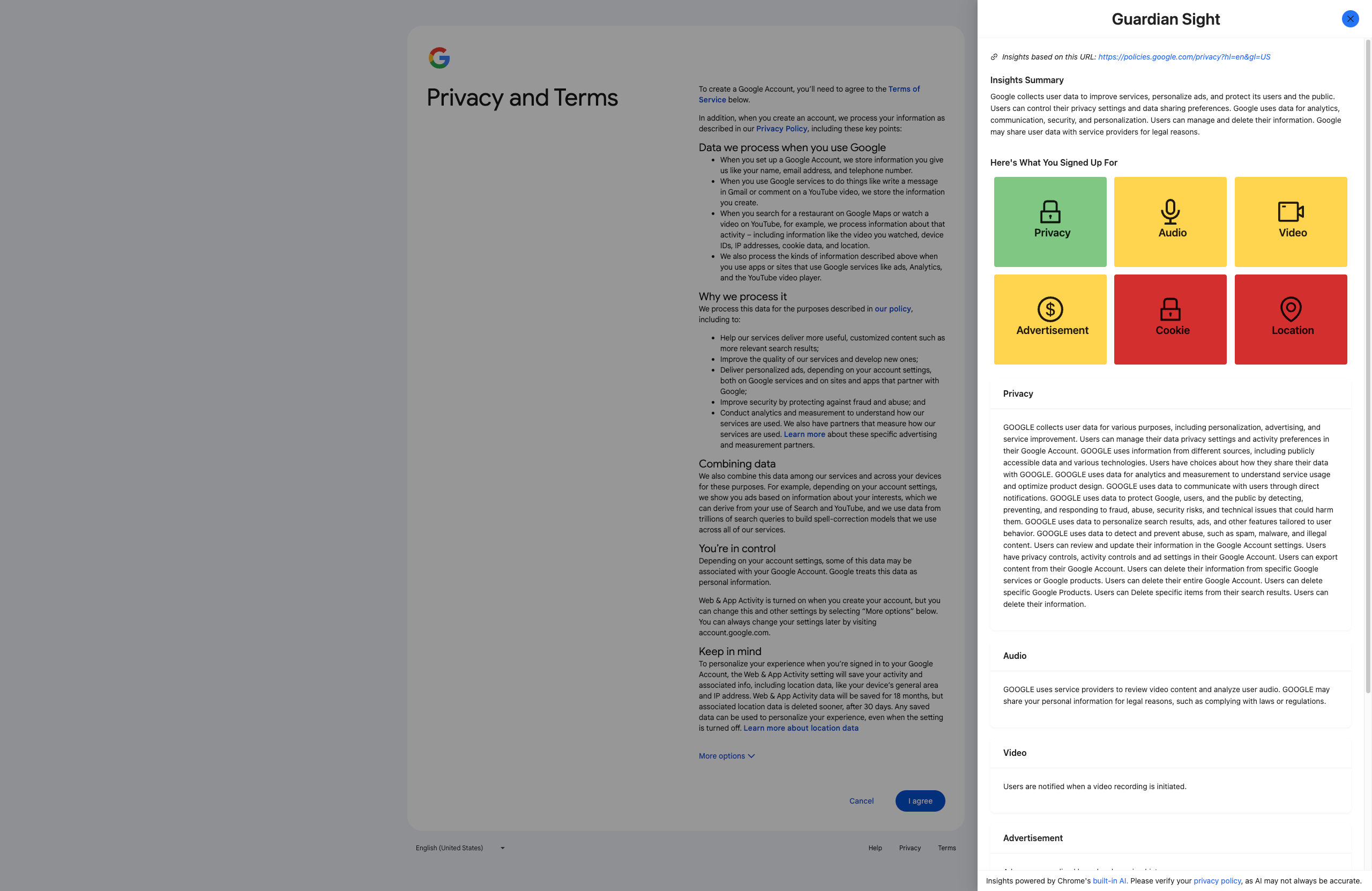
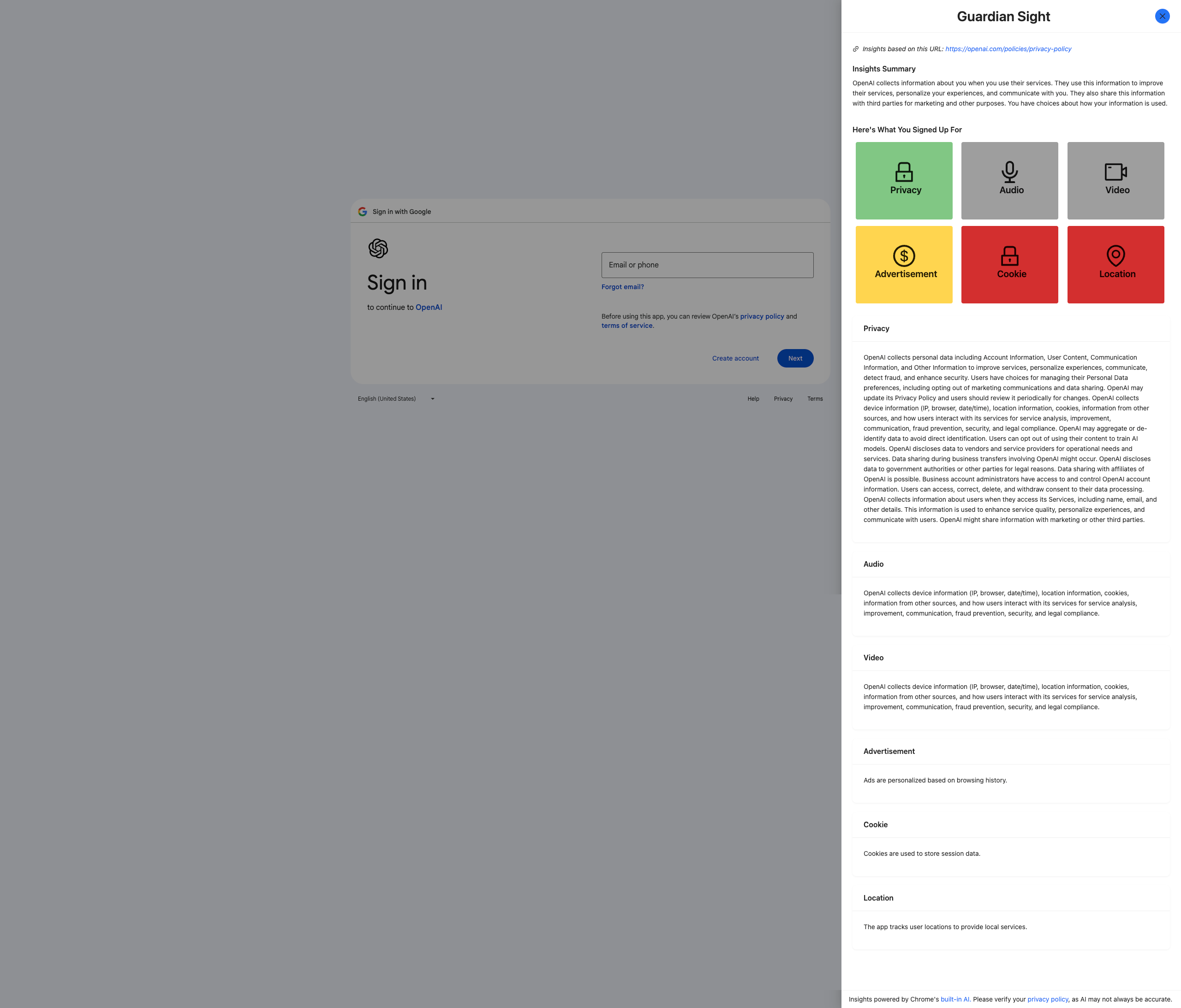
Final Output - Google Account Creation - Privacy Analysis
-
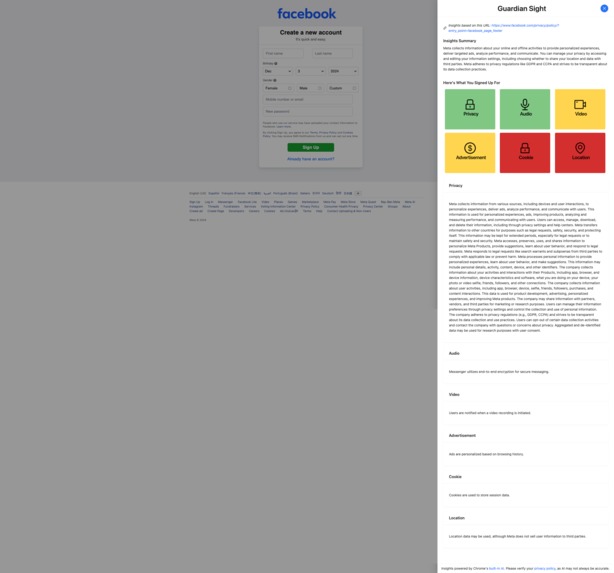
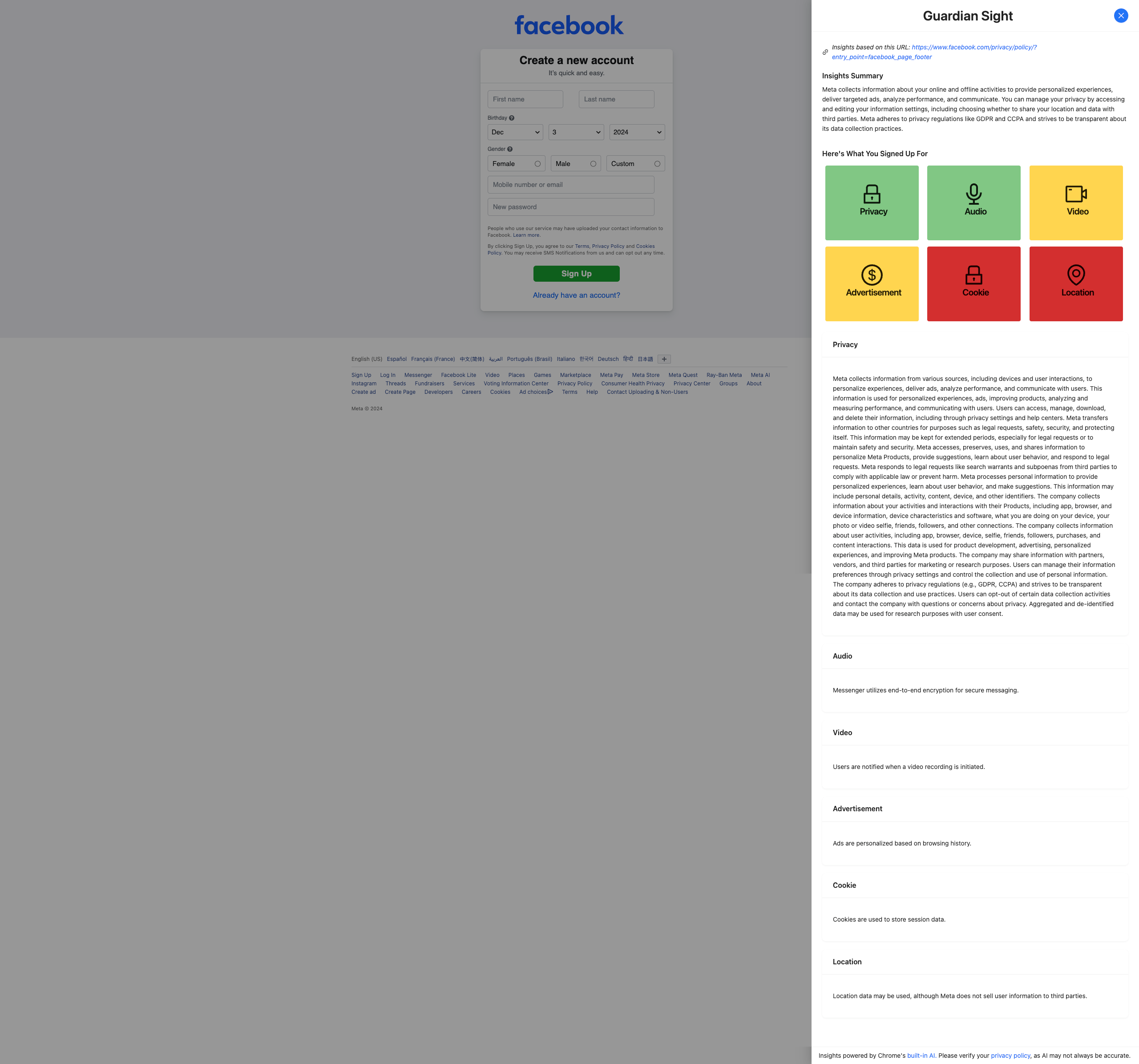
Final Output - Facebook - Privacy Analysis
-
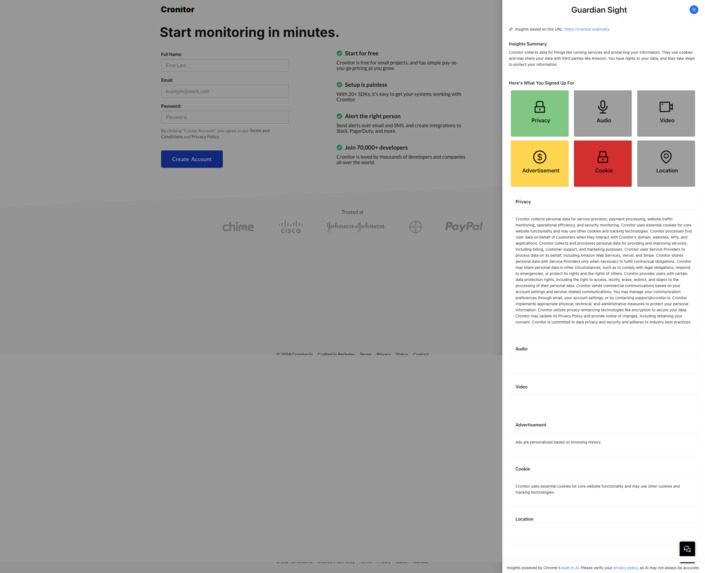
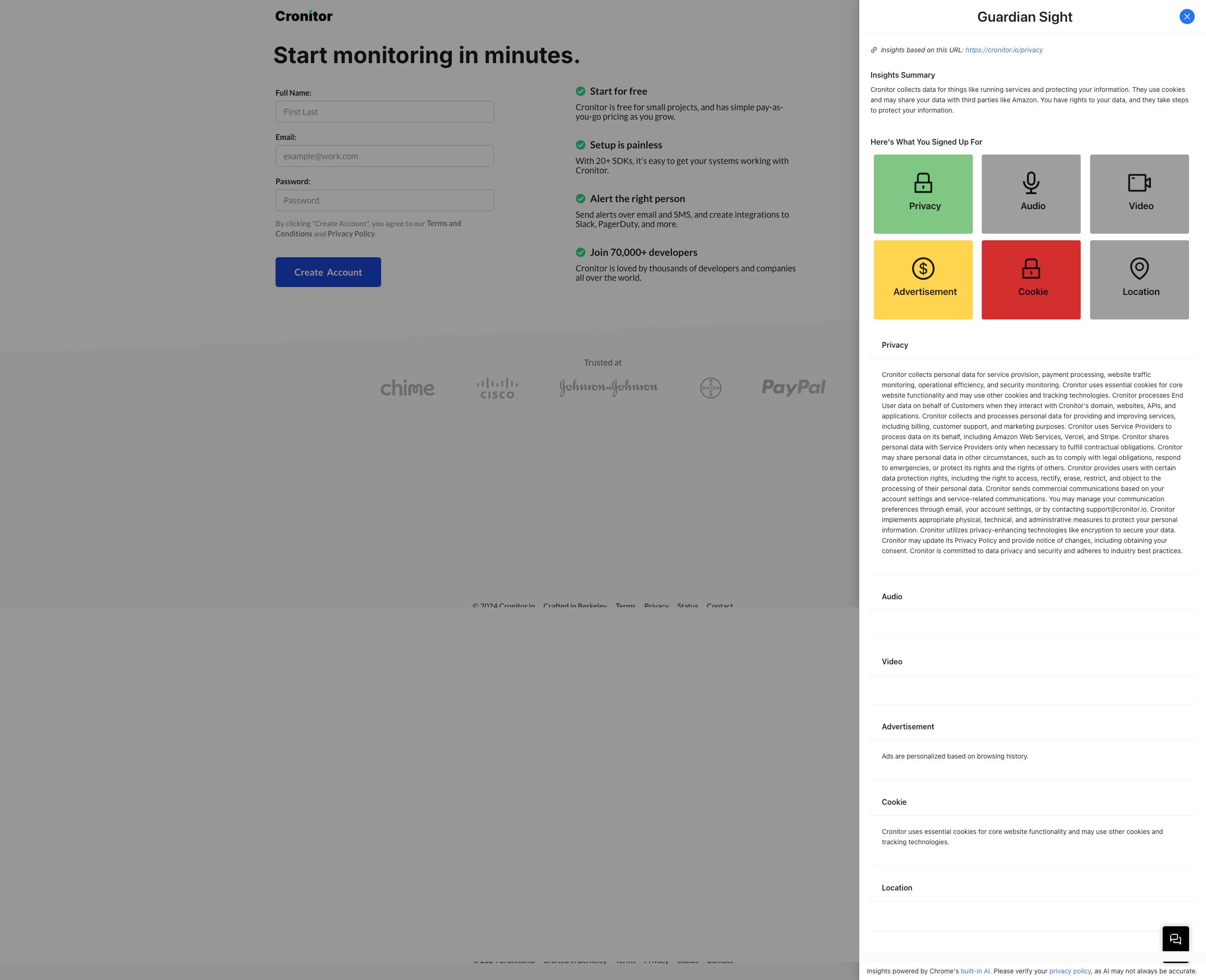
Final Output - Cronitor - Privacy Analysis
-
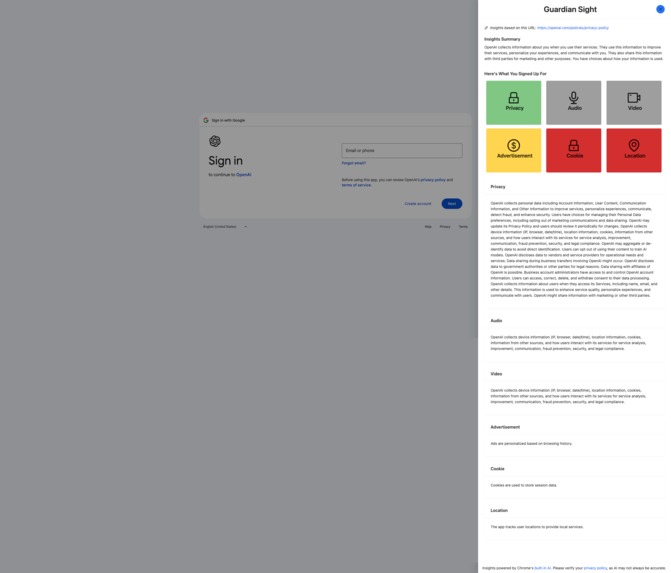
Final Output - OpenAI ChatGPT - Privacy Analysis
-
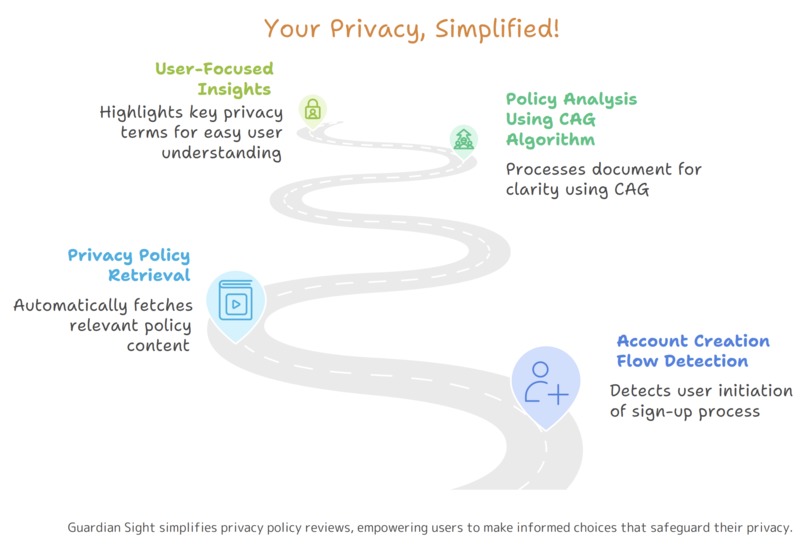
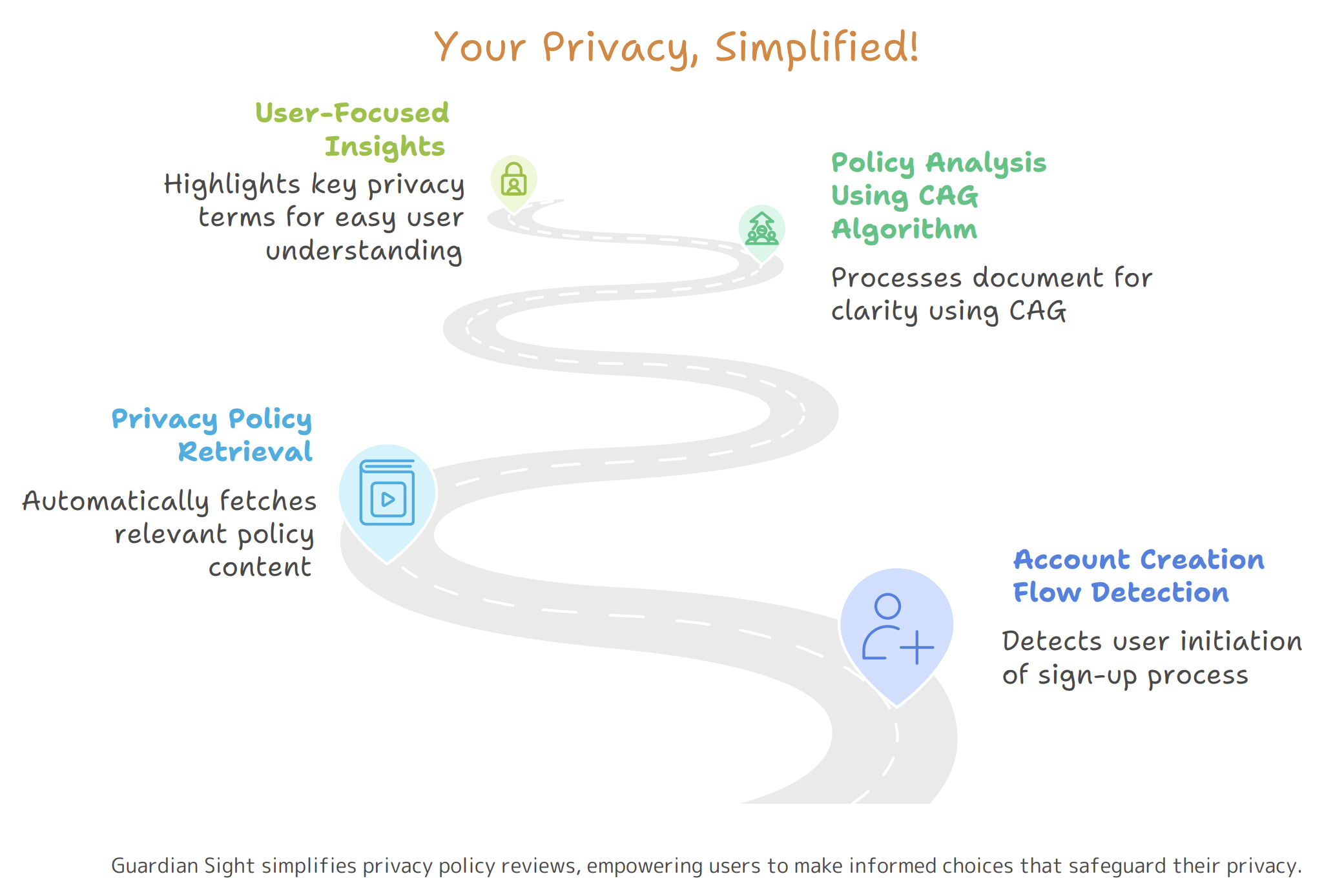
Overview diagram
-
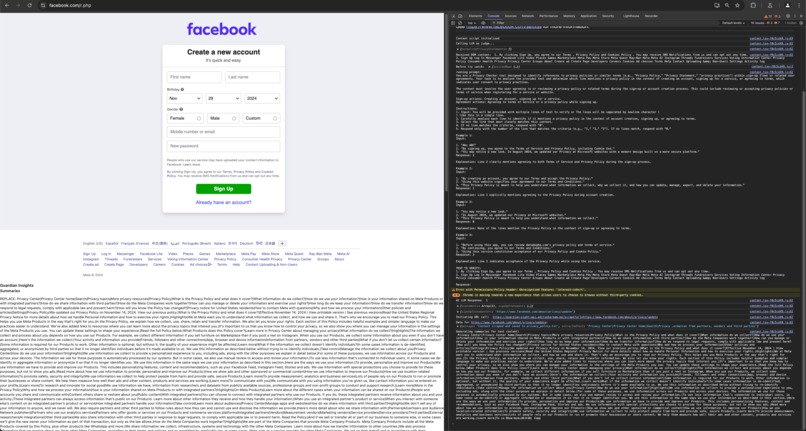
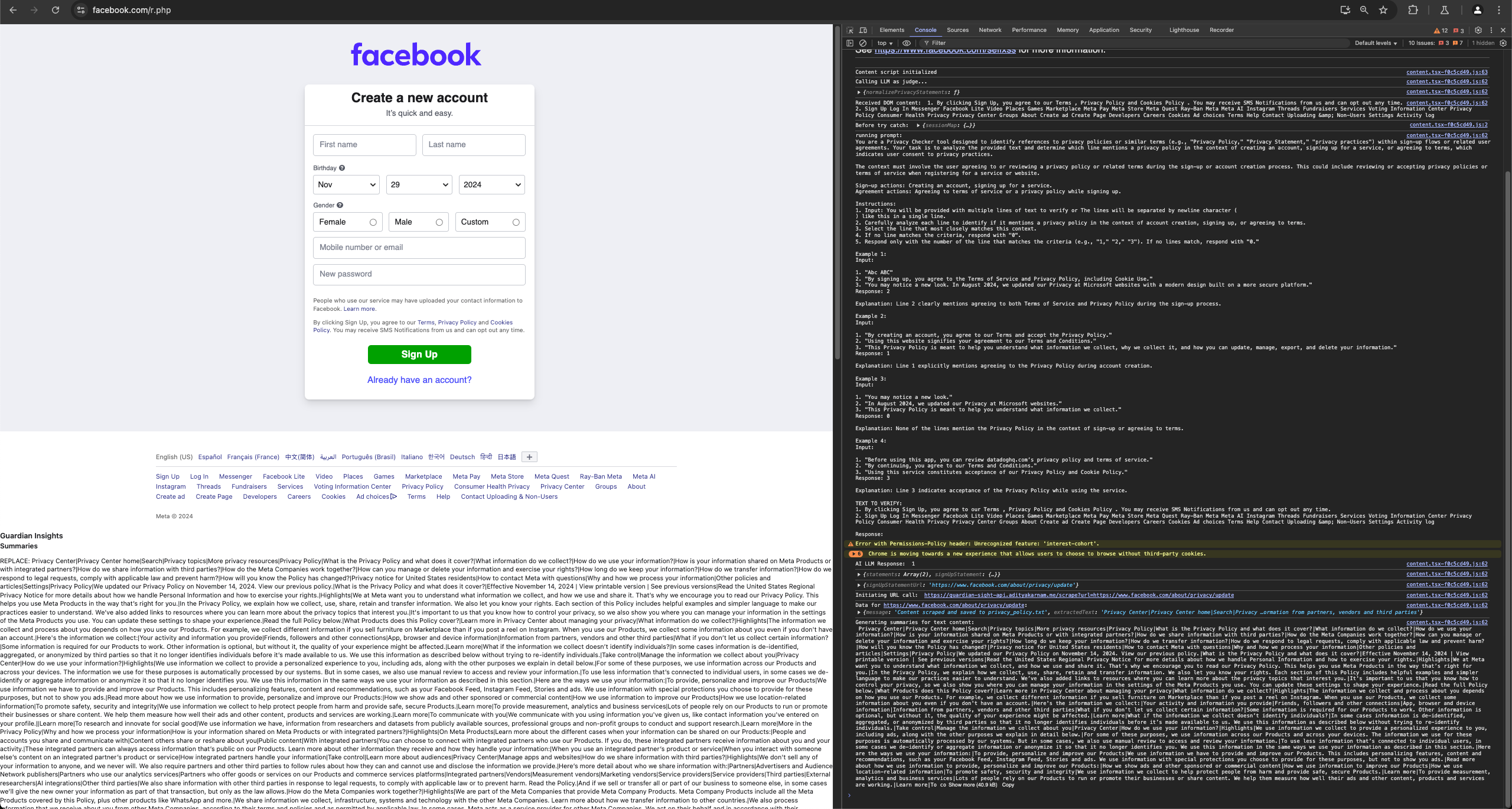
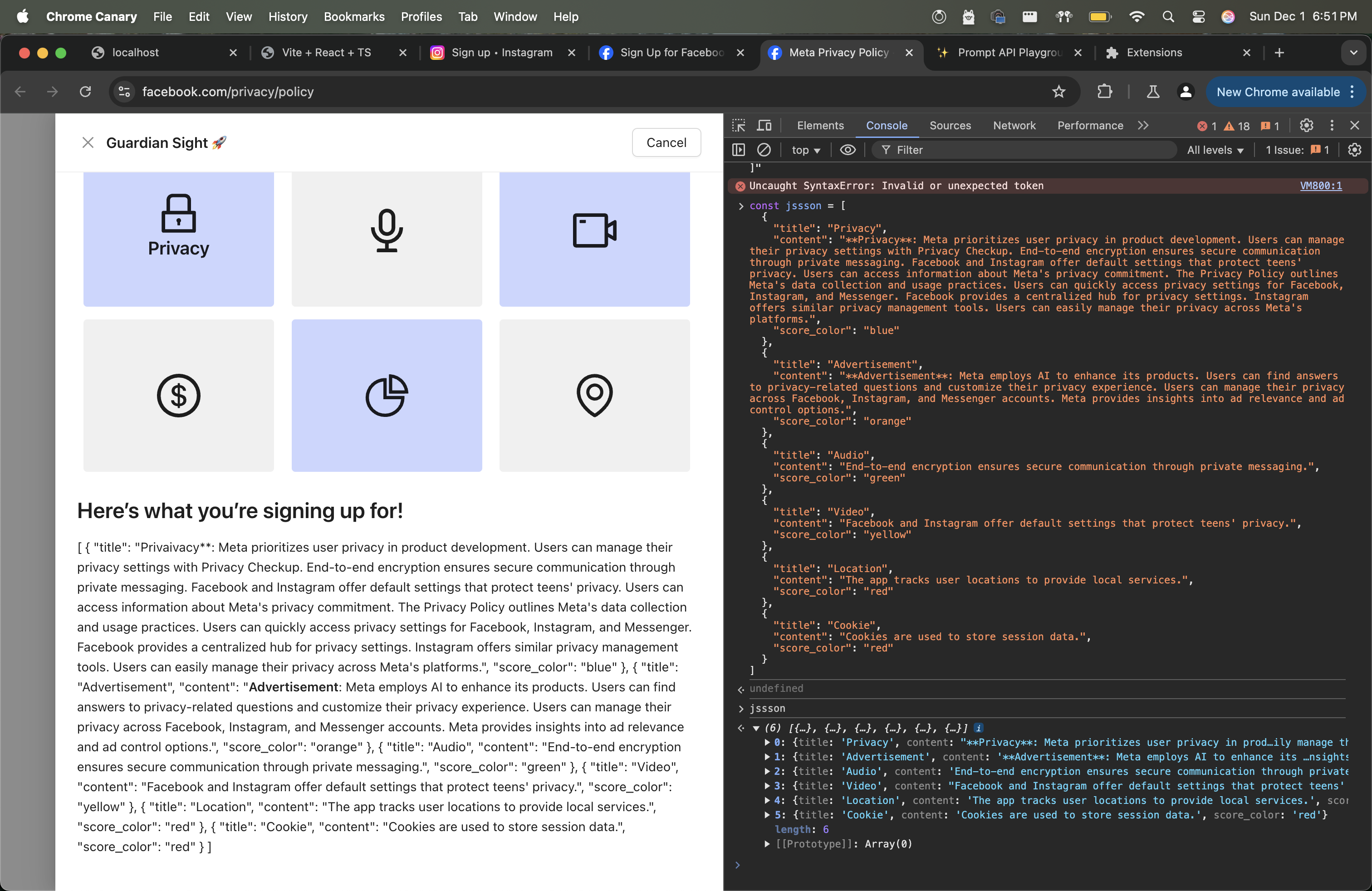
Development phase - testing in facebook.com
-
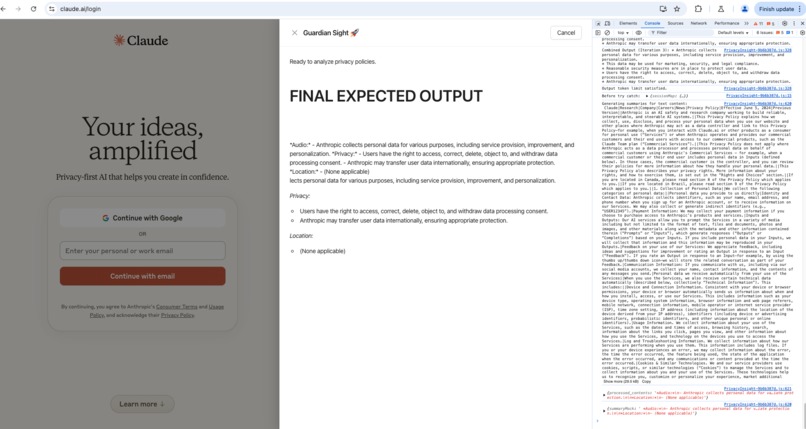
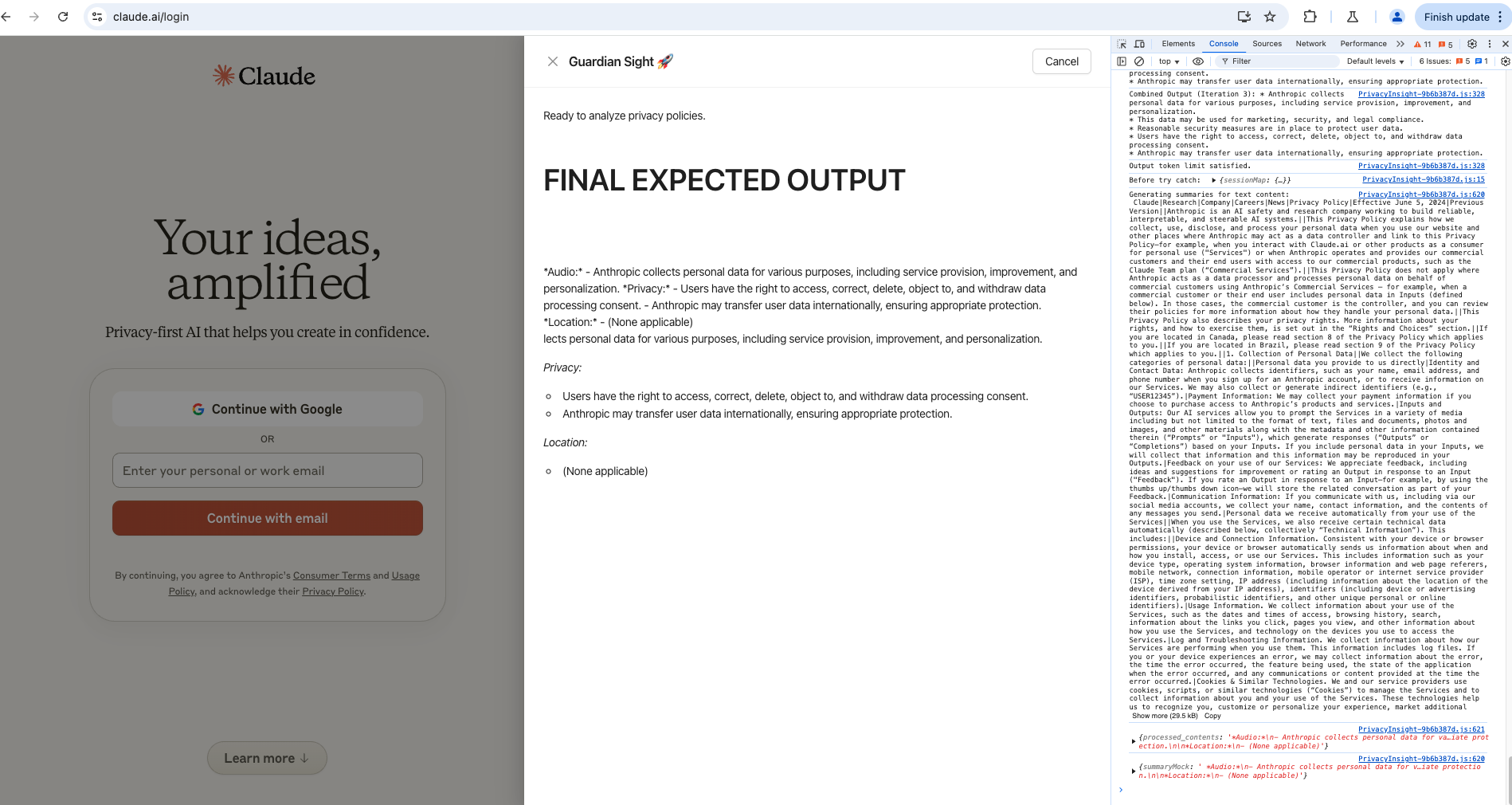
Development phase - Claude
-
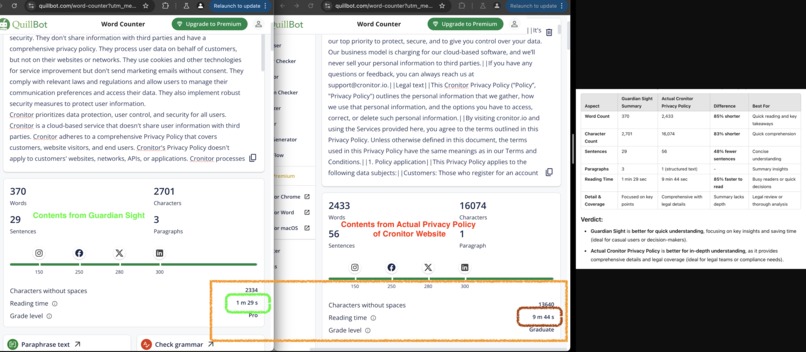
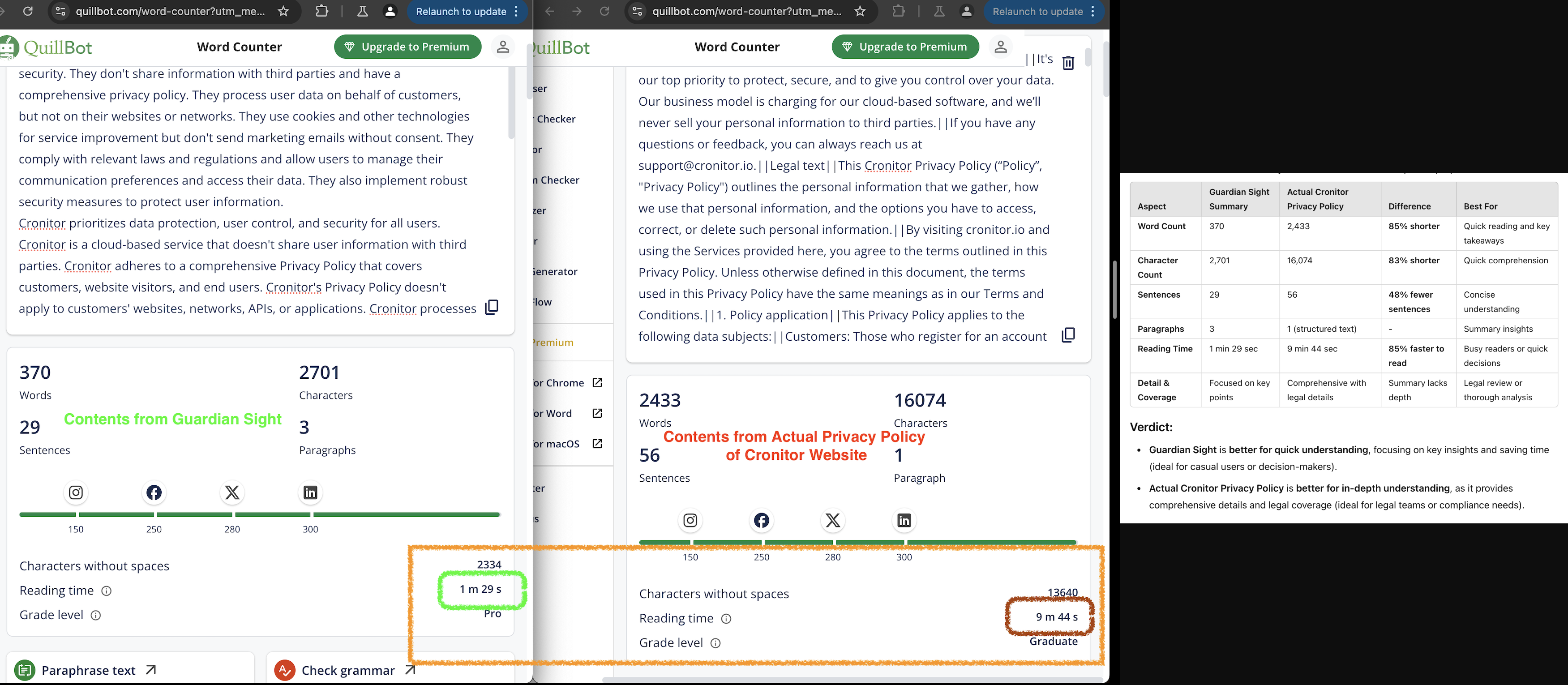
Stats comparison - Final summarized insights contents vs Actual Privacy Contents from Cronitor website
-
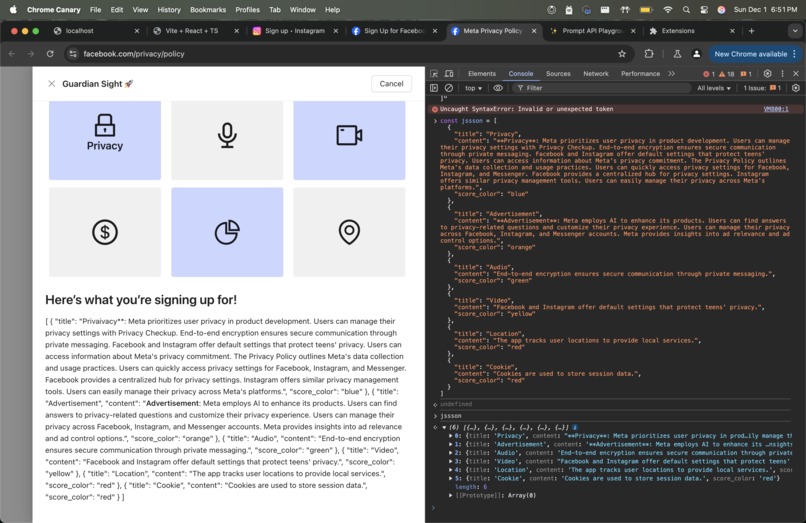
Development phase - Facebook privacy analyzed one
Guardian Sight: Privacy Made Simple
Inspiration
Privacy should be accessible, not overwhelming. Watching users blindly accept privacy policies during sign-ups inspired us to create Guardian Sight. When we discovered that 79% of users never read privacy policies and those who do spend an average of 10 minutes trying to understand them, we knew there had to be a better way. Chrome's built-in AI capabilities presented the perfect opportunity to solve this widespread problem.
What it does
Guardian Sight transforms privacy policies into instant, actionable insights. It automatically detects sign-up flows and analyzes privacy policies in real-time using Chrome's built-in AI. The extension presents privacy implications through an intuitive color-coded system, breaking down complex policies into key categories like privacy practices, data collection, sharing policies, and more. All processing happens locally in your browser, ensuring your privacy while analyzing privacy policies.
How we built it
We leveraged Chrome's built-in AI APIs to create a sophisticated privacy analysis pipeline:
- Detection: Using the Prompt API as "LLM as Judge" to identify sign-up flows
- Processing: Implementing our custom CAG (Chunked Augmented Generation) algorithm to handle large privacy policies
- Analysis: Using "LLM as Generator & Consolidator" to create digestible insights
- Presentation: Employing "LLM as Frontend Helper" to structure the insights to be in JSON format and display information effectively. This removes the need to process data in frontend.
- Real-time Updates: Providing continuous status feedback during processing
Challenges we ran into
- Processing Large Documents: Privacy policies varied greatly in length and structure. We solved this by developing the CAG algorithm to efficiently chunk and process text while maintaining context.
- Maintaining Context: Ensuring privacy insights remained accurate when processing text in chunks required careful algorithm design and overlap management.
- User Interface Design: Balancing comprehensive information with simple presentation was challenging. We solved this through careful categorization and color-coding.
- Local Processing: Optimizing performance while keeping all processing local required efficient resource management.
- Tweaking our prompt to strictly follow the expected output format when working with small LLM.
Accomplishments that we're proud of
- Innovative Use of Chrome's AI: Successfully leveraging built-in AI in multiple roles (Judge, Generator, Consolidator, Frontend Helper)
- CAG Algorithm: Developing an efficient solution for processing large documents locally. Published the research paper on this in Arxiv titled "CAG: Chunked Augmented Generation for Google Chrome's Built-in Gemini Nano" - https://arxiv.org/abs/2412.18708.
- User-Centric Design: Creating an intuitive interface that makes privacy understanding accessible
- Privacy-First Approach: Maintaining user privacy through complete local processing
- Real-Time Analysis: Achieving quick processing times for immediate insights
What we learned
- The power of Chrome's built-in AI capabilities for solving real-world problems
- Techniques for efficient local processing of large documents
- The importance of user experience in privacy tools
- Methods for breaking down complex legal text into understandable insights
- The value of iterative development in creating effective solutions
- How to use prompt engineering effectively to work with small LLMs.
- How to handle AI sessions properly when handling complex tasks like generating insights or sumarizing.
What's next for Guardian Sight
- Enhanced Analysis: Adding trend tracking for privacy policy changes over time
- Comparative Analysis: Enabling users to compare privacy practices across similar services
- Custom Preferences: Allowing users to set their own privacy thresholds and concerns
- Browser Integration: Deeper integration with Chrome's privacy features
- Language Support: Expanding to support privacy policies in multiple languages
- Machine Learning: Training the system to better understand varied privacy policy formats
- Community Features: Adding the ability to share and discuss privacy insights
- Enterprise Solutions: Developing features for business compliance teams
Built With
- antd
- caddy
- chrome-built-in-ai
- chrome-extension-mv3
- cloudflare
- css
- express.js
- html
- javascript
- node.js
- playwright
- react
- tailwindcss
- typescript
- vite


Log in or sign up for Devpost to join the conversation.