-
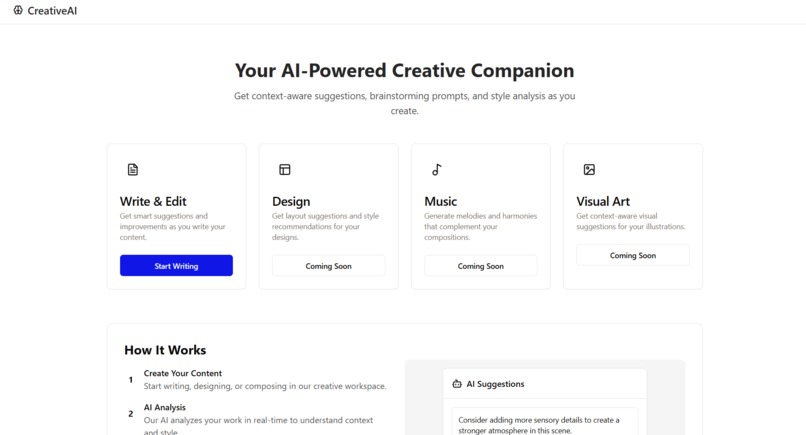
CreativeAI: Your AI-Powered Creative Companion
-
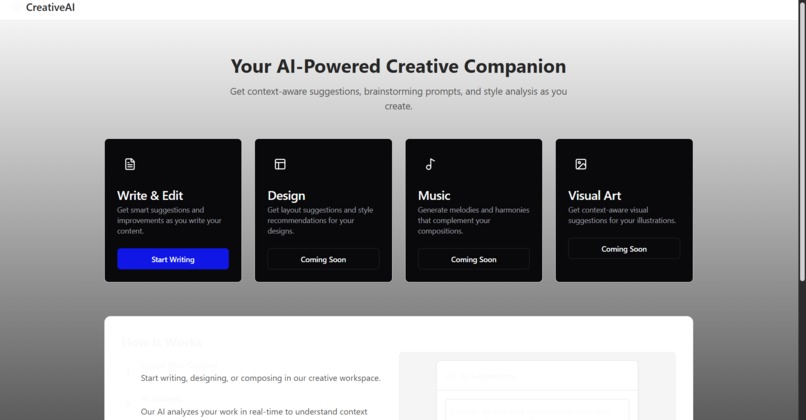
CreativeAI: Your AI-Powered Creative Companion(DARK THEME)
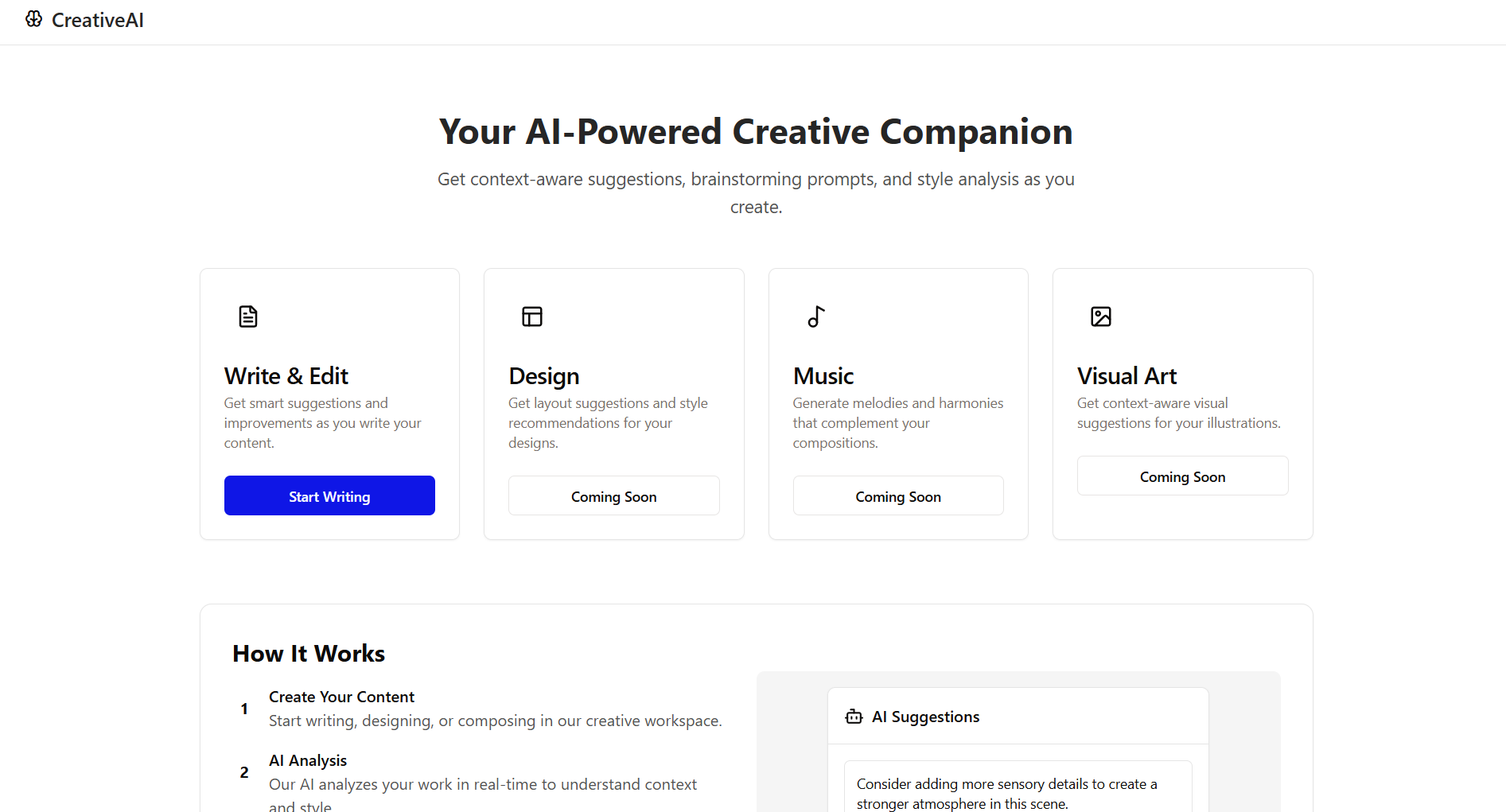
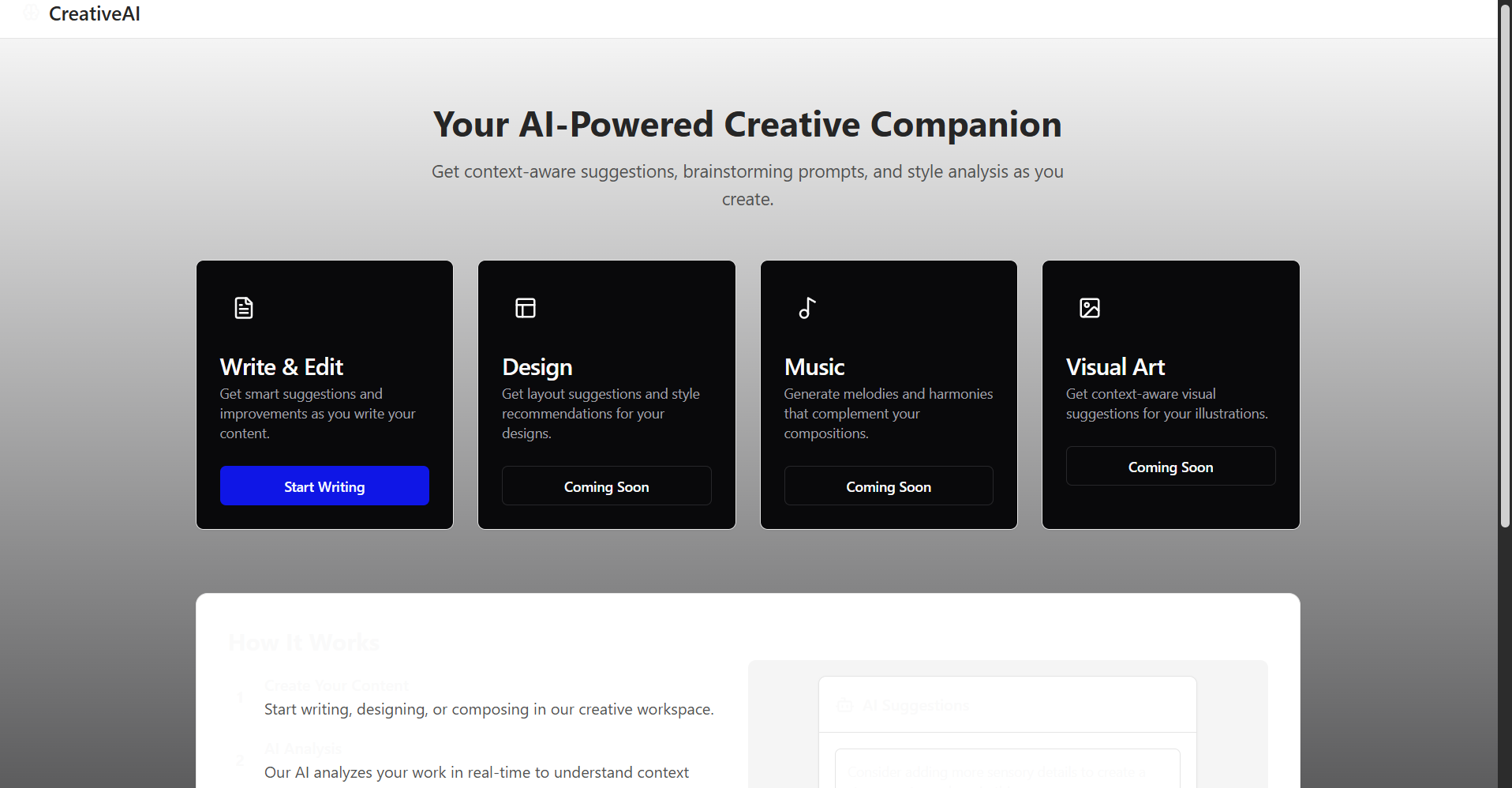
Context-Aware Creative Companion: Elevating the Creative Flow with Intelligent AI
Inspiration: The Missing "Partner" in Digital Creation
As creators ourselves, our team has often experienced the ebb and flow of the creative process. While digital tools offer immense power, they can sometimes feel isolating. We missed the dynamic interaction and intuitive feedback that often comes from collaborating with another creative individual – someone who understands the nuances of your current work and can offer timely, relevant suggestions. This sparked the idea for the "Context-Aware Creative Companion" – an AI that moves beyond simple prompt-based generation to become a true partner in the creative journey. We envisioned an AI that actively listens to and understands the evolving context of your work, offering insights and inspiration that feel genuinely collaborative.
What We Learned: The Nuances of Context and Proactivity
Building this project within the tight timeframe of the Google Build with AI Hackathon pushed us to learn rapidly about several key areas:
- Contextual Analysis: We delved into how to effectively analyze ongoing user input in near real-time. This involved exploring different techniques for natural language processing and potentially even basic pattern recognition in other creative mediums (though our initial prototype focused primarily on text). We learned that simply feeding the entire history isn't always effective; identifying the most relevant recent context is crucial.
- Proactive Suggestion Generation: Moving beyond reactive AI responses required us to think about when and how to offer suggestions without being intrusive. We explored different triggering mechanisms and the importance of providing diverse and genuinely helpful options.
- Leveraging Google AI Tools: We gained practical experience integrating with the Gemini/Gemma models for natural language understanding and generation. We learned about the strengths of these models in understanding context and generating creative text. We also explored the potential of Google Cloud for backend services and Firebase for real-time communication, although our initial prototype focused on a more localized demonstration.
- The Importance of User Experience: Even in a technical hackathon, we recognized that the user experience of a creative tool is paramount. We learned the importance of designing an interface that feels intuitive and supportive, rather than overwhelming the creator with constant AI interventions.
How We Built It: A Focused Prototype
Given the limited time, we adopted a focused approach to build a proof-of-concept prototype. Our core implementation involved:
- A Simplified "Creative Canvas": We created a basic text editor interface where users could input their writing.
- Real-time Context Analysis (Simulated): We implemented a mechanism to analyze the text input, focusing on keywords, sentence structure, and the overall topic. Due to time constraints, this initial analysis was rule-based and keyword-driven, simulating the deeper understanding that a fully trained model would provide.
- Gemini/Gemma Integration (Conceptual): We integrated conceptually with the Gemini/Gemma API. While we didn't have time for extensive fine-tuning or a fully deployed model, we focused on crafting effective prompts based on the analyzed context to demonstrate the potential of the AI to generate relevant suggestions. We used example API calls and mocked responses to showcase this functionality.
- Suggestion Display: We designed a non-intrusive UI element within the text editor to display the AI's suggestions. These suggestions could range from alternative phrasing and related ideas to potential next steps in the writing process.
- Firebase for Potential Real-time Collaboration (Future Scope): We briefly explored the potential of using Firebase for real-time collaboration features, where multiple creators could work together with the AI companion. However, this was beyond the scope of our initial prototype.
Our primary focus was on demonstrating the core concept of context-aware proactive assistance using the power of Google's AI models.
Challenges We Faced: The Time Constraint and the Depth of "Understanding"
We encountered several challenges during the hackathon:
- The Relentless Clock: The most significant challenge was the incredibly short timeframe. Building a truly context-aware AI that deeply understands creative nuances requires significant time for data processing, model training, and robust implementation. We had to make strategic decisions about what features to prioritize for a functional prototype.
- Simulating True Contextual Understanding: Our rule-based approach to context analysis was a simplification. Training a model to truly understand the intent, style, and subtle cues in creative work is a complex task that goes beyond basic keyword recognition. We had to clearly articulate the potential of using advanced AI models like Gemini/Gemma for this purpose, even if our initial prototype had limitations.
- Balancing Proactivity and Intrusion: Designing the AI to offer helpful suggestions without disrupting the creative flow was a delicate balance. We experimented with different levels of proactivity and UI placements for the suggestions to minimize distraction.
- Integration Complexity: Fully integrating with existing creative platforms would require significant API knowledge and development time, which was beyond the scope of the hackathon. We focused on a standalone demonstration to showcase the core AI capabilities.
Despite these challenges, we are excited by the potential of the "Context-Aware Creative Companion" to revolutionize the way we create. We believe that by leveraging the power of AI to truly understand the context of our work, we can unlock new levels of creativity and collaboration in the digital age.


Log in or sign up for Devpost to join the conversation.