-
-
selected
-
pursue
-
ranked
-
home
-
results
-
loading
Inspiration
Job seekers are flooded with listings, vague fit signals, and generic AI advice. CareerOS MAX was built to answer one practical question: which opportunities are actually worth my time today, and what should I do next to win them?
What it does
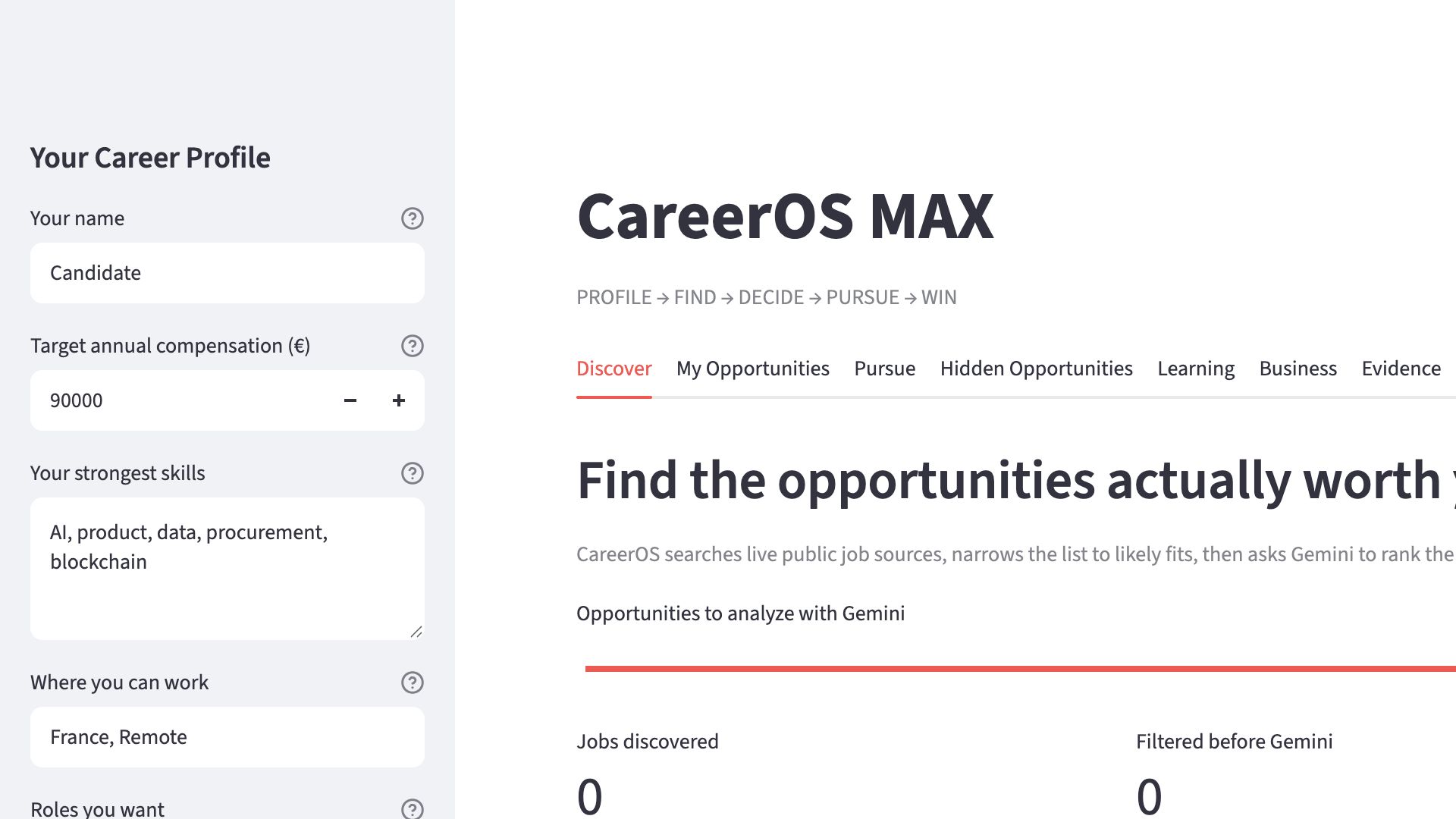
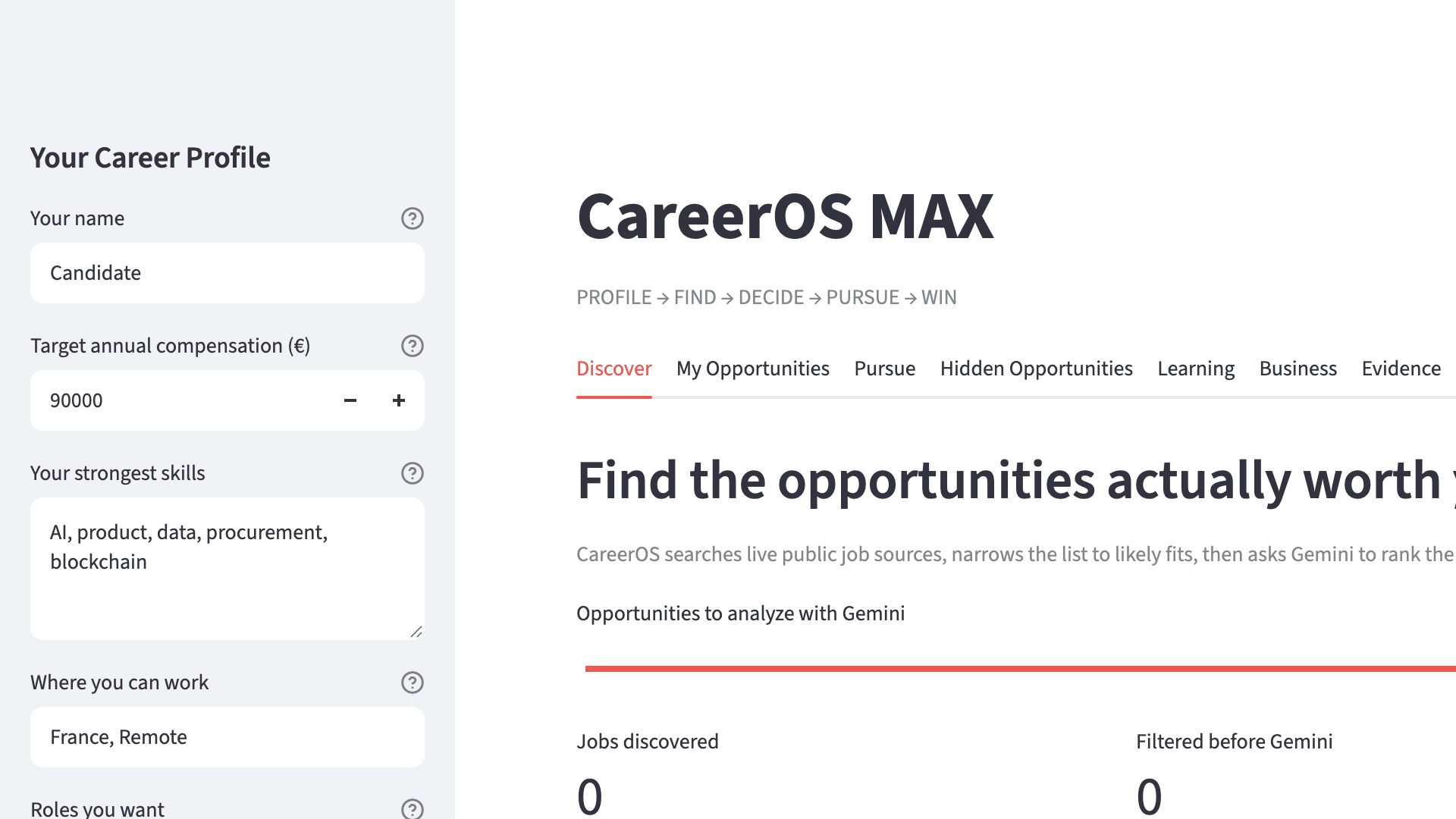
CareerOS MAX is an AI career copilot for job seekers.
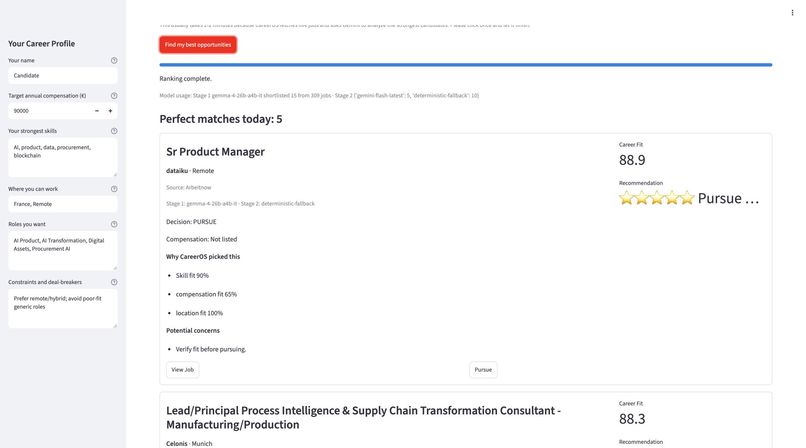
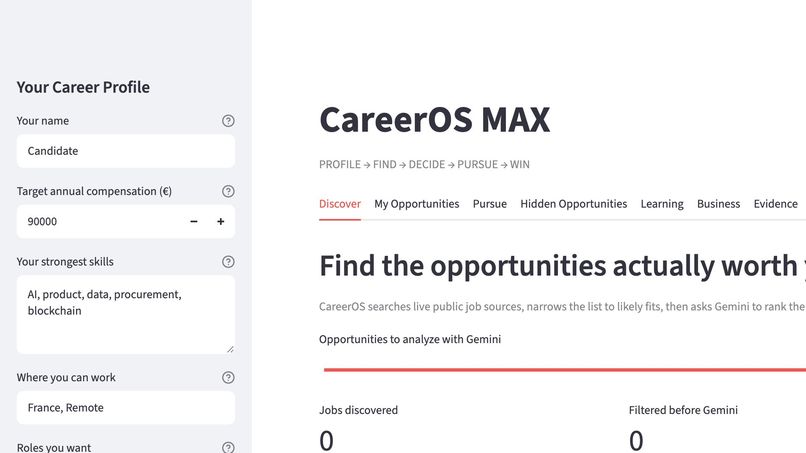
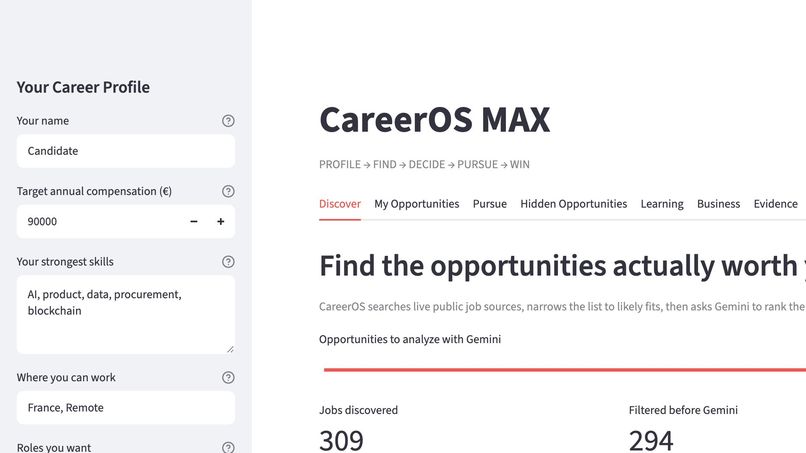
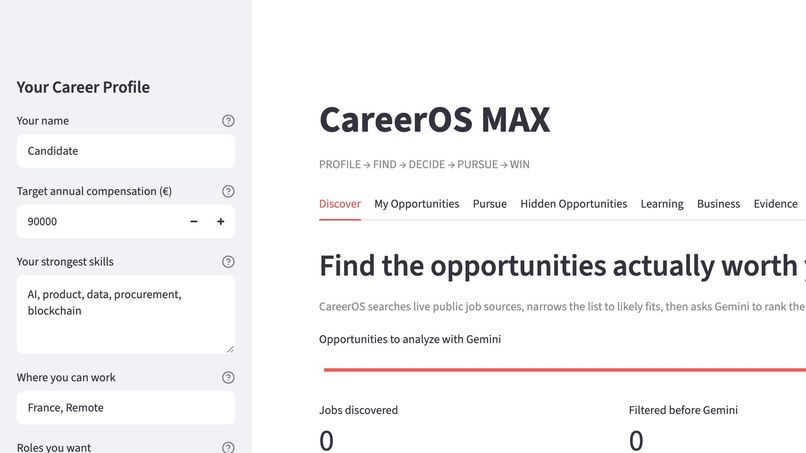
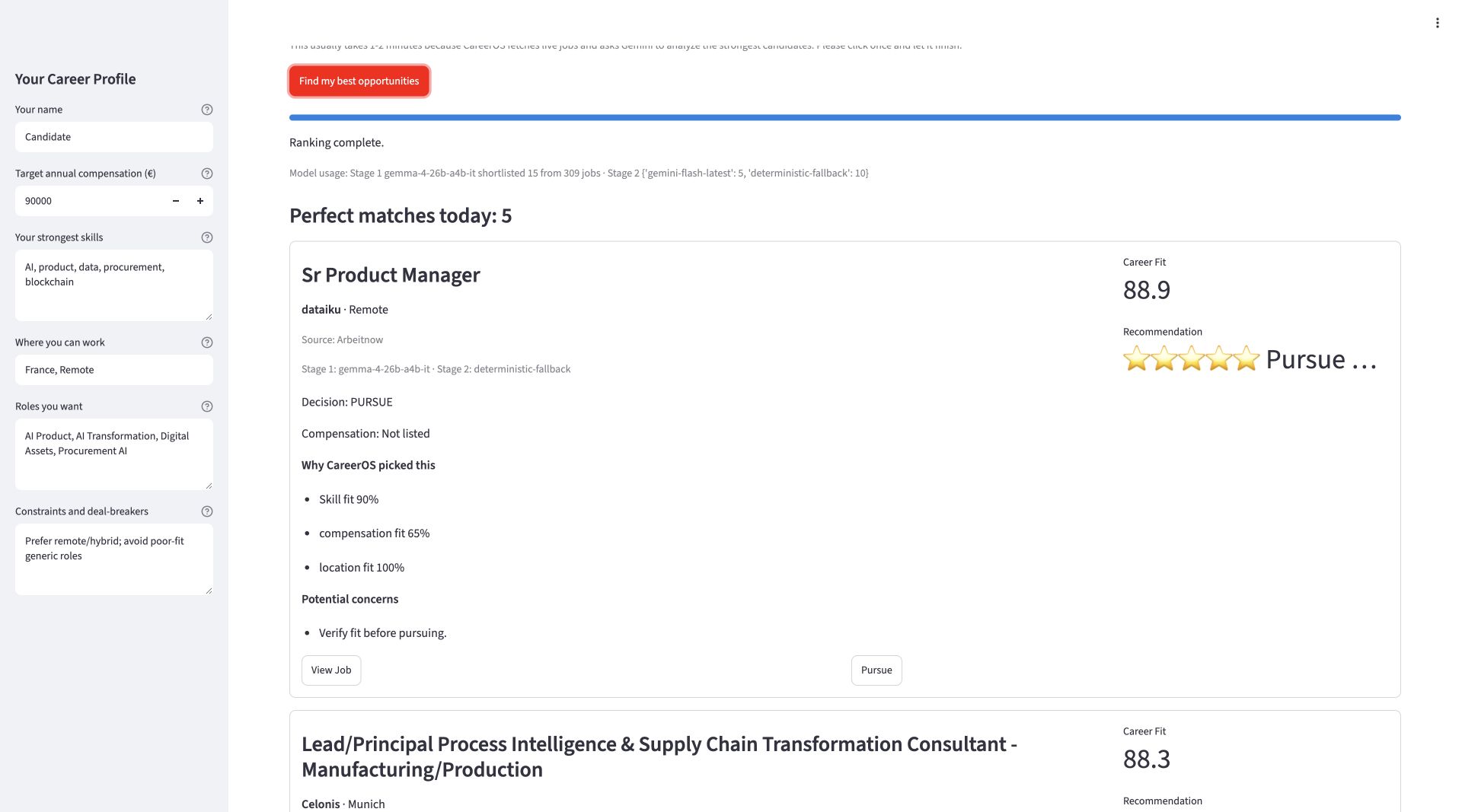
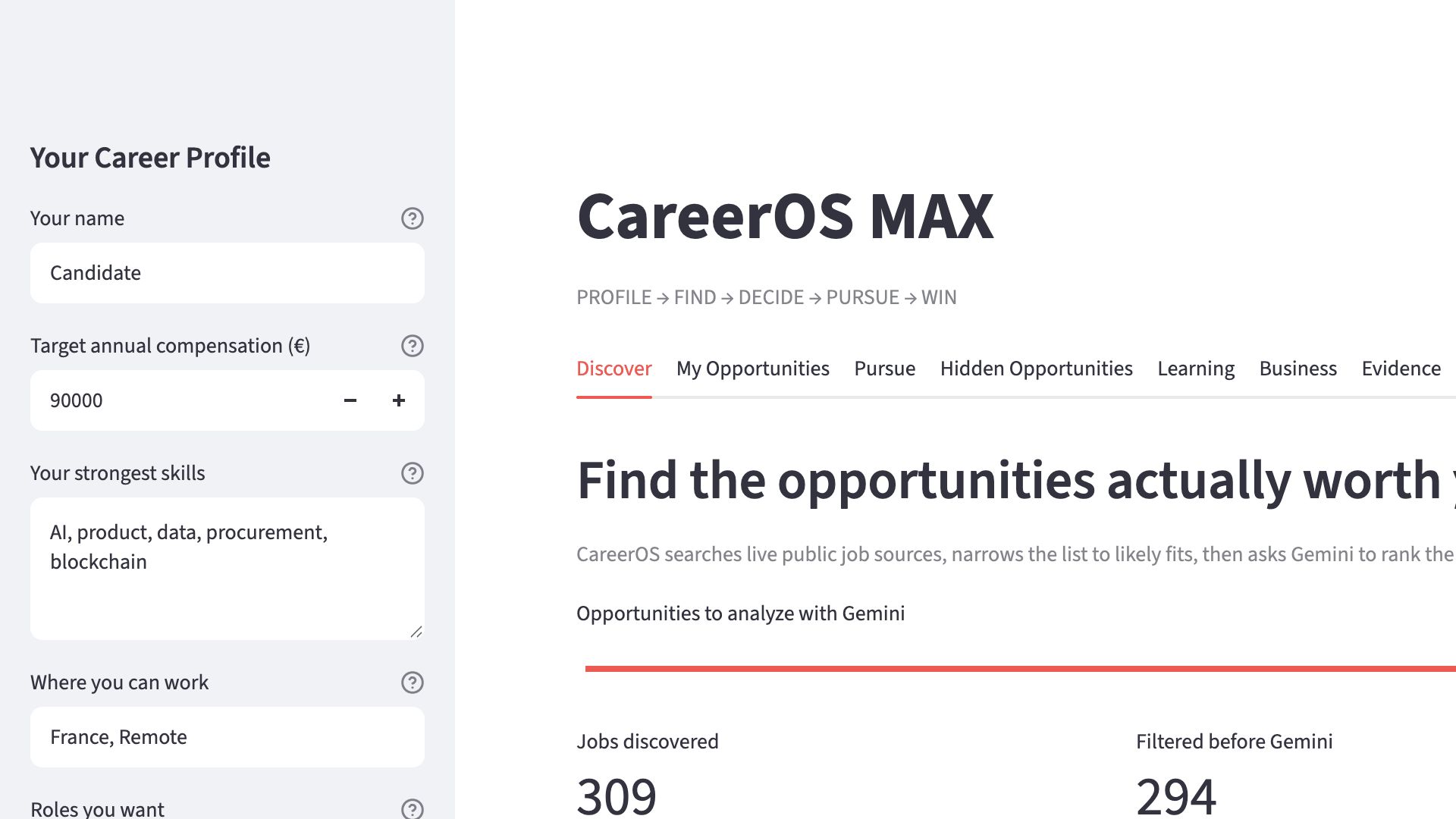
A user creates a Career Twin, clicks one clear button, and CareerOS fetches live jobs, filters them, ranks them, and explains which opportunities are worth pursuing.
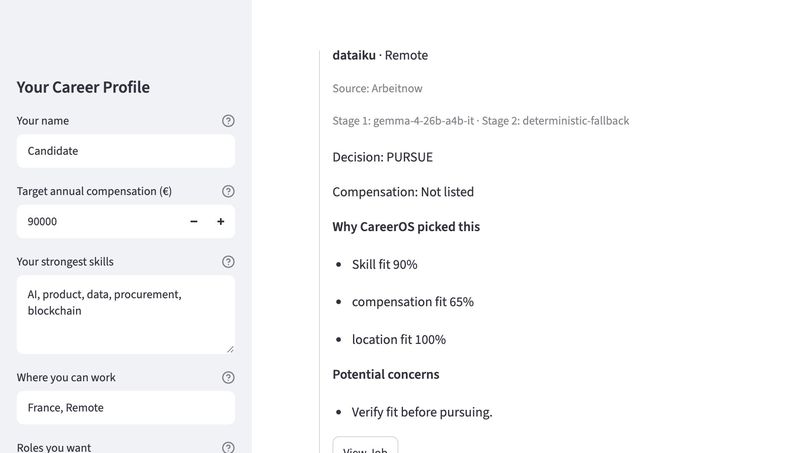
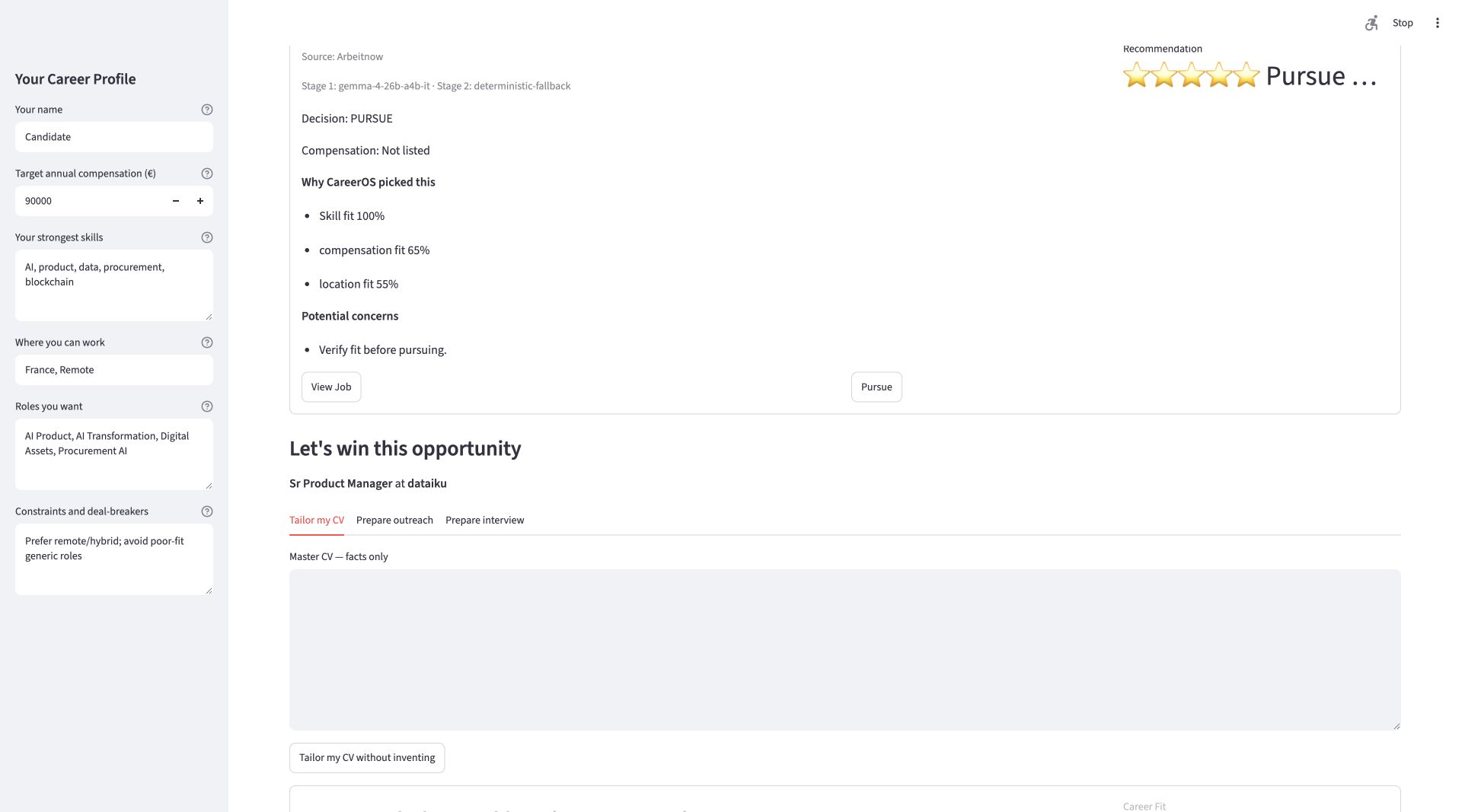
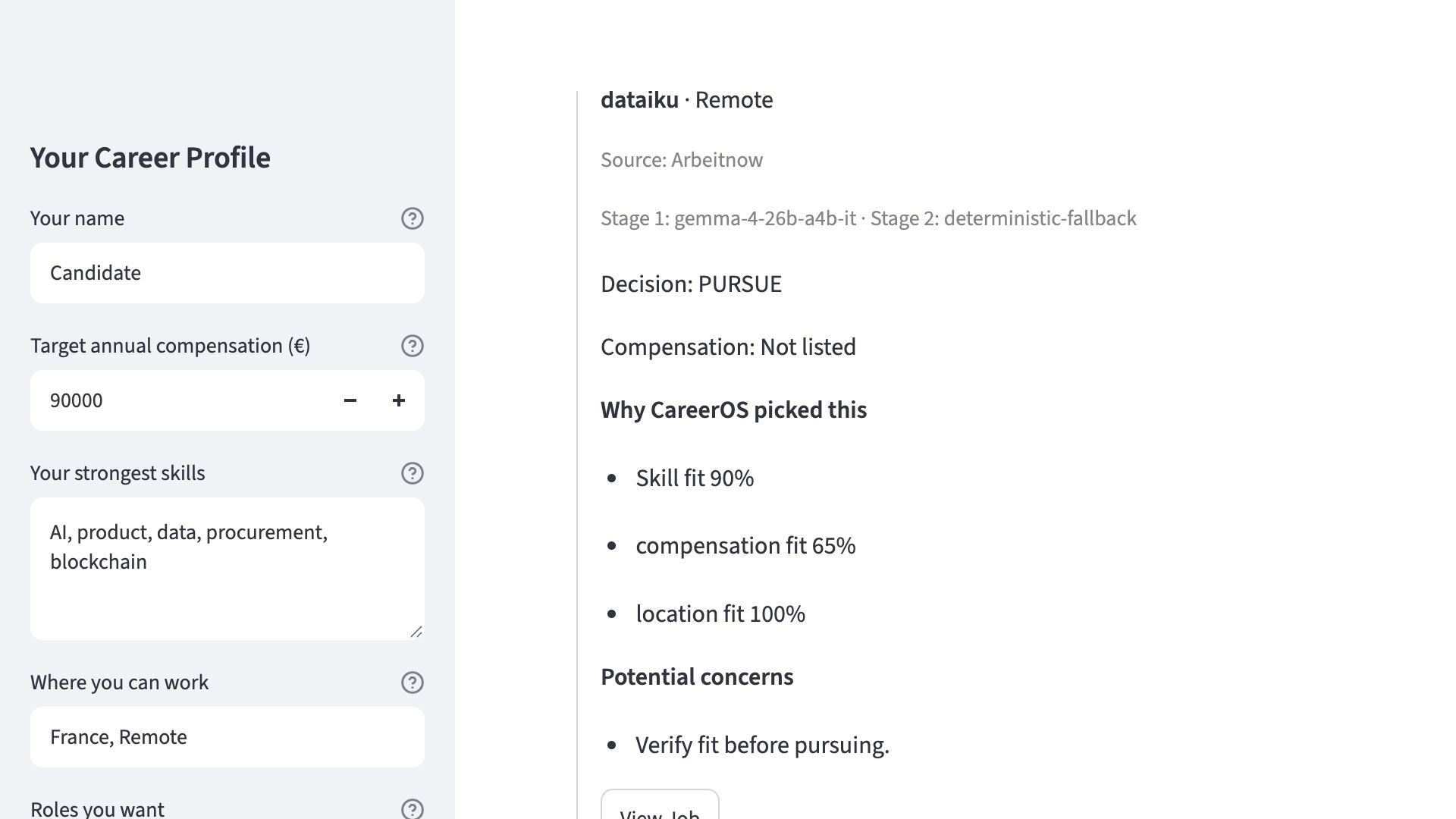
Each recommendation shows the role, company, location, compensation when available, Career Fit score, decision, reasons, risks, source, original job link, and which model evaluated it.
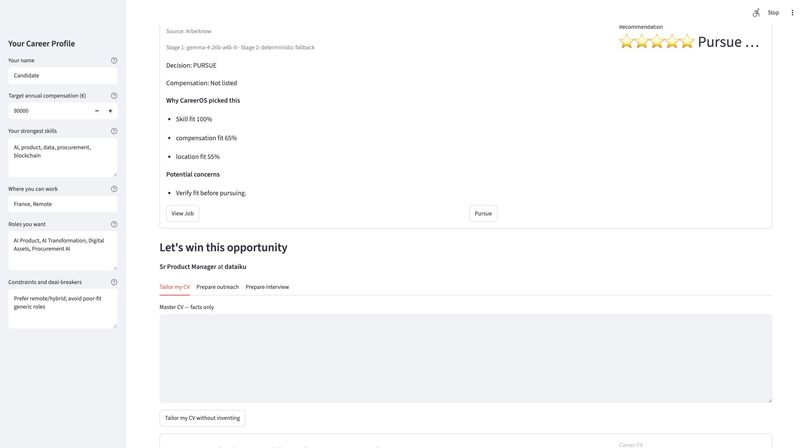
When the user chooses an opportunity, CareerOS opens the next steps: tailor my CV, prepare outreach, and prepare interview.
CareerOS does not mass-apply autonomously. The user stays in control.
How we built it
CareerOS MAX is a Streamlit app deployed on Google Cloud Run.
It includes live job ingestion, a Career Twin profile, ranked opportunity cards, Gemini-based reasoning, deterministic fallbacks, downstream CV/outreach/interview tools, evidence export, Cloud Run Job worker execution, and production smoke tests.
The AI pipeline is cost-aware:
Live jobs
-> Stage 1: Gemma or deterministic coarse ranking
-> Shortlist
-> Stage 2: Gemini Flash final recommendation reasoning
-> Ranked recommendations
-> Pursue workflow
Gemini Flash is used only for the final shortlisted opportunities shown to the user. The UI shows which model evaluated each opportunity, and evidence logs record model usage.
Challenges
The main challenge was turning powerful AI logic into a workflow that a normal job seeker can understand immediately.
Founder dogfooding showed that the first UX exposed too many internal concepts, like batch imports and agents. We reorganized the product around the user journey:
Profile -> Find -> Decide -> Pursue -> Win
Another challenge was controlling Gemini usage. The two-stage pipeline keeps costs low while preserving Gemini-native reasoning for final recommendations when quota is available.
What we learned
A useful AI career product needs more than resume tips. It needs real job discovery, clear fit explanations, visible risks, user control, cost-aware AI usage, and auditable evidence.
We also learned that UX is part of the AI system: if the user cannot understand how to start, the intelligence underneath does not matter.
What's next
Next steps include expanding job sources, improving profile quality, adding more judging evidence exports, validating with real job seekers, and converting Stripe TEST checkout into real revenue evidence only when a real customer pays.


Log in or sign up for Devpost to join the conversation.