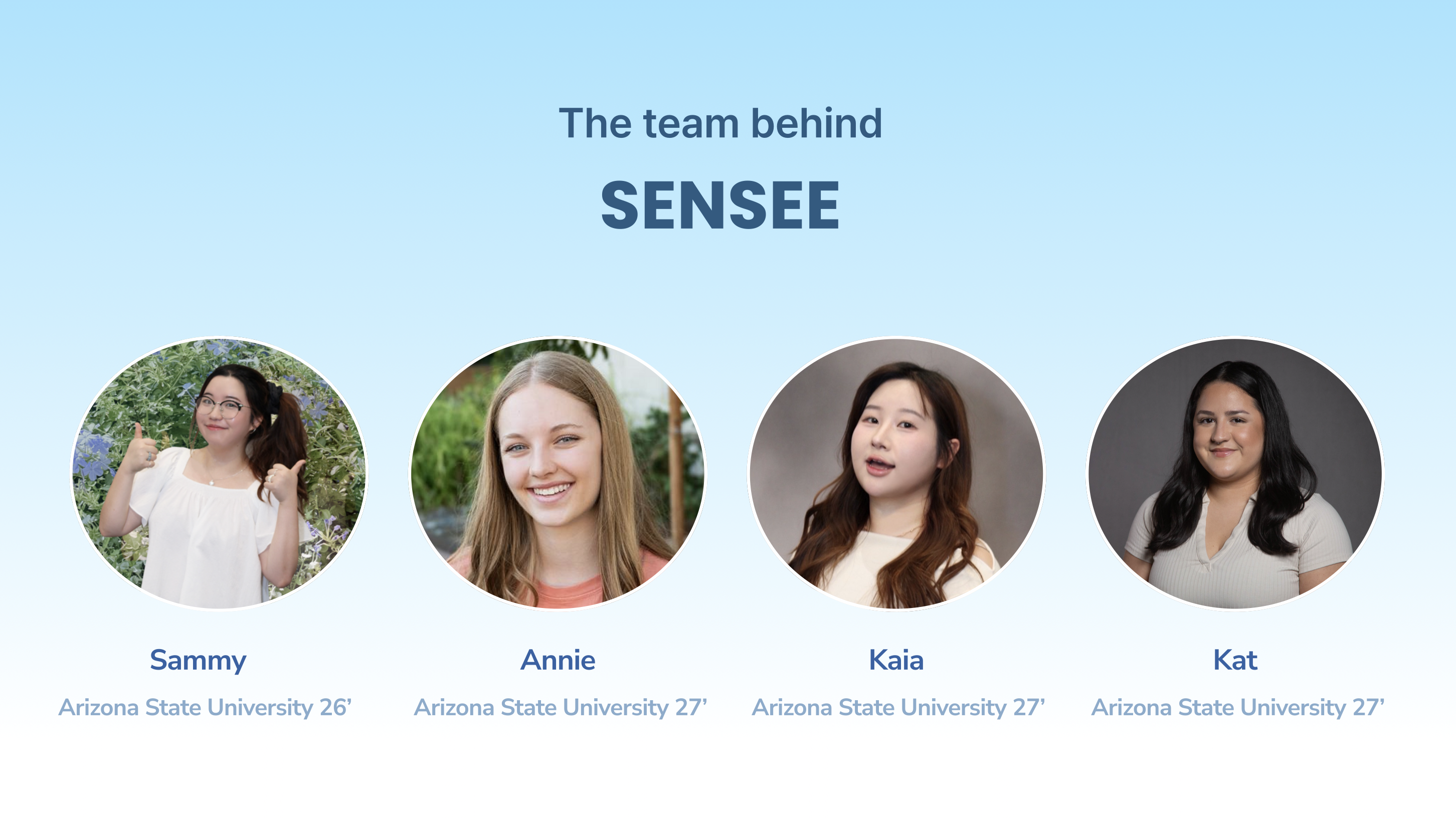
Sensee — Project Story
Inspiration
Sensee began with something deeply personal.
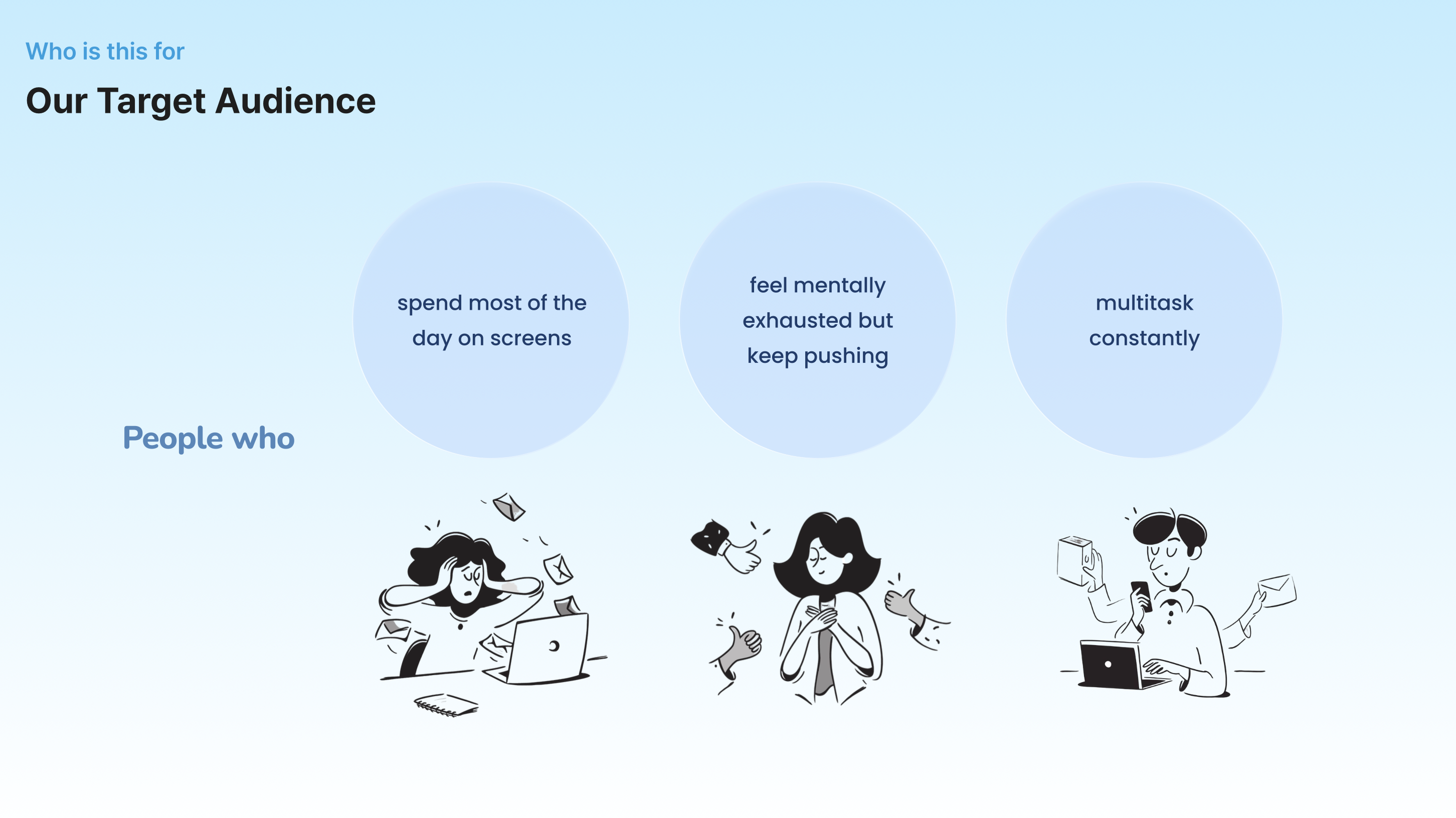
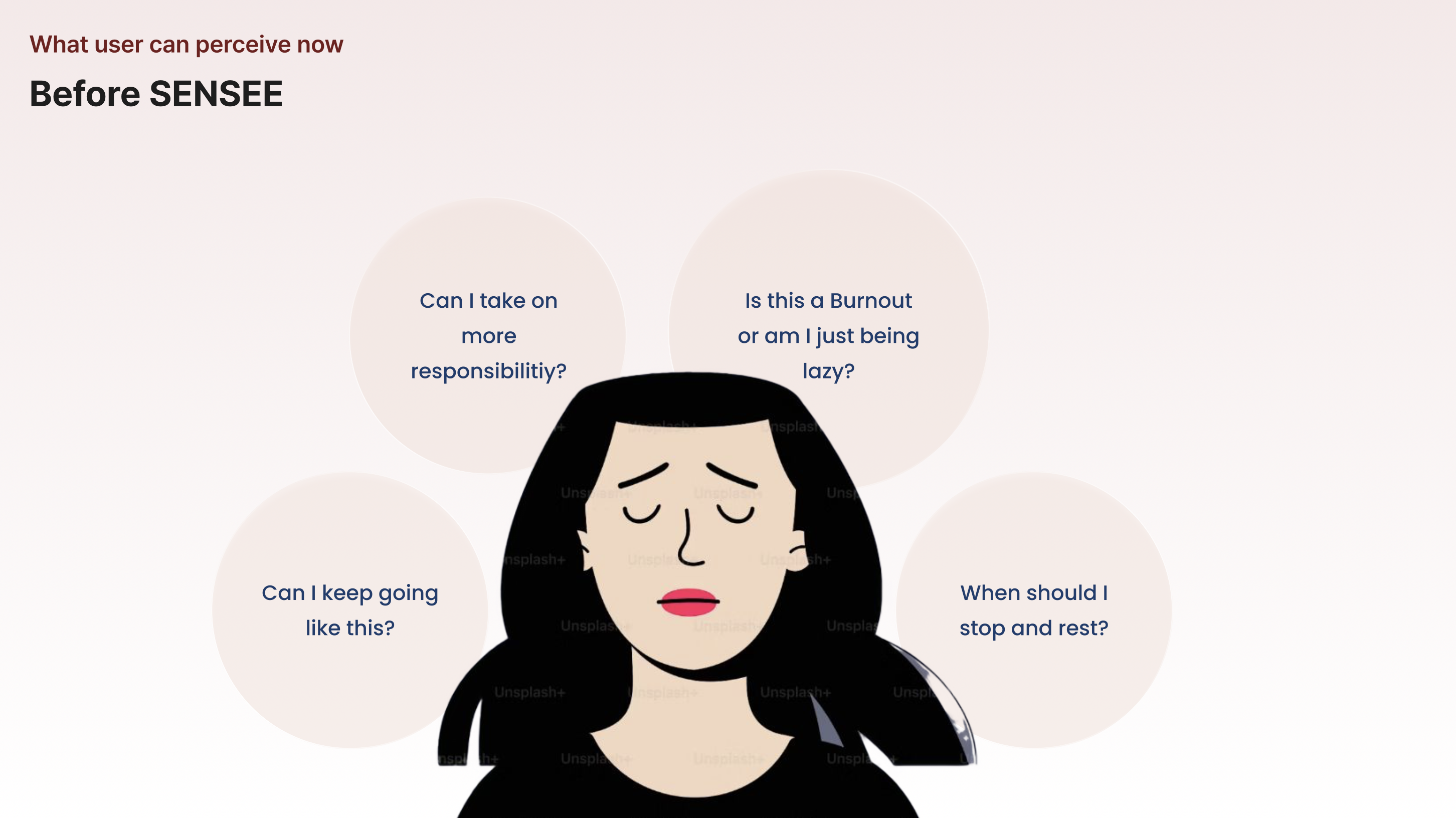
Several members of our team live with anxiety, depression, or fluctuating health conditions. Many of us share a familiar pattern: on days when we feel “pretty okay,” we say yes a lot. Yes to meetings, yes to events, yes to extra responsibilities. And then, the next day, we crash.
Not because something dramatic happened.
But because we pushed slightly past a limit we couldn’t clearly perceive.
We’ve also witnessed friends and family members with autoimmune conditions struggle to articulate what’s happening in their bodies. Doctor visits often end with, “I think I’ve been about the same,” even when something subtle has shifted. The issue isn’t that symptoms aren’t real, it’s that perceptual recalibration happens quietly.
We realized there is a gap we cannot consciously sense:
The difference between how we feel right now and how our baseline has gradually shifted over time.
That insight became our foundation.
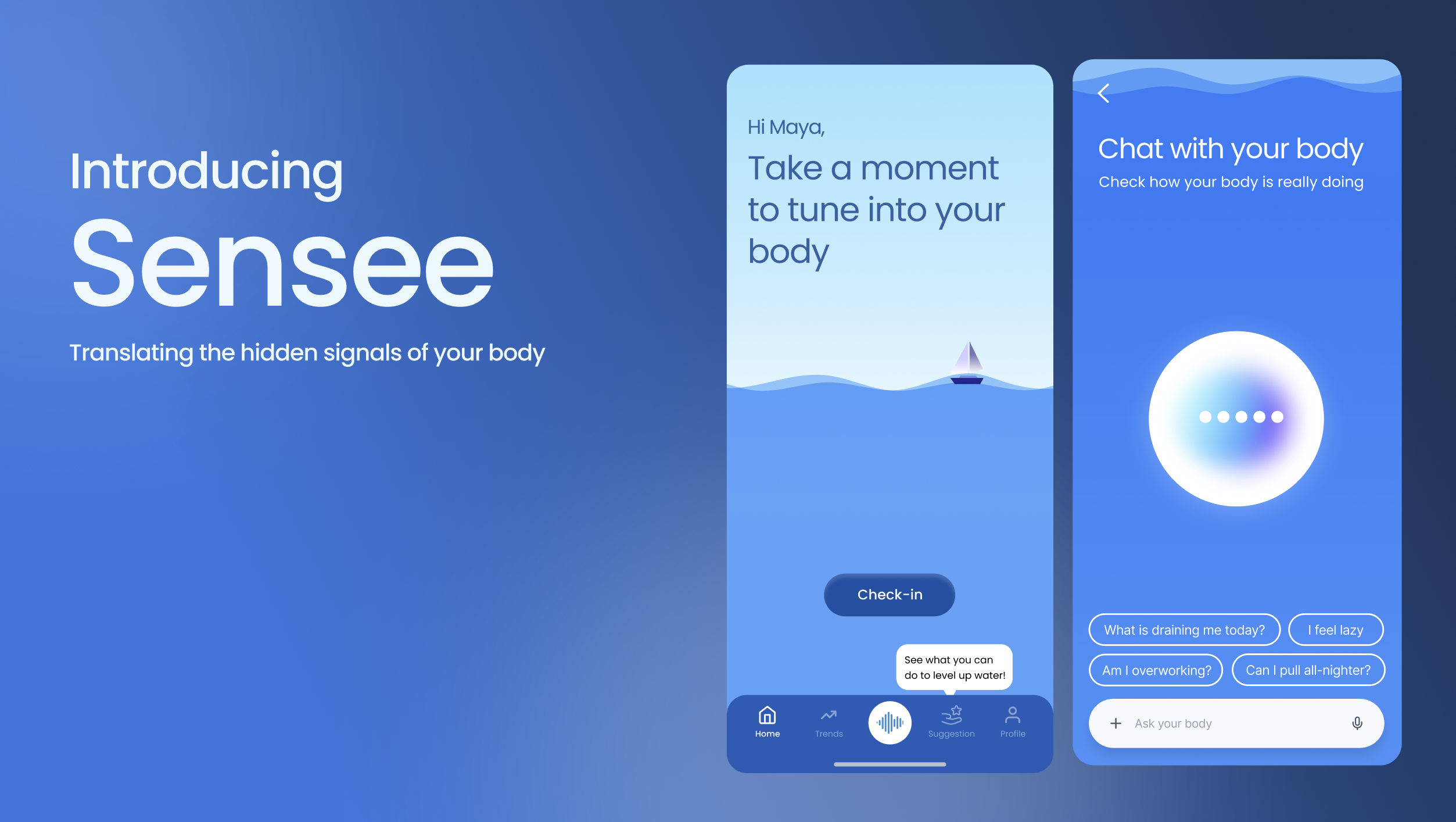
Visually, we drew inspiration from diving and ocean-based games where environments are shaped by depth, surface tension, and unseen currents. Water became our metaphor for fluctuation, pressure, and resilience. It allowed us to represent something serious in a way that felt calming and intuitive rather than clinical or overwhelming.
Sensee was inspired by lived experience and by a desire to design for a sense we’ve never had access to before.
What it does
Sensee is a speculative tool that tracks perceptual drift over time.
Humans possess over thirty distinct senses, including interoception: the ability to sense internal bodily state. But we lack a way to perceive when our perception itself has quietly recalibrated.
We call this missing capability:
Temporal Self-Perception: the awareness of how one’s internal baseline shifts longitudinally.
Sensee enables access to that sense.
Each day, users complete a single embodied interaction: they drag a waterline to represent how their body feels. A dotted line represents their rolling baseline, calculated from longitudinal check-ins.
When perception rises above or falls below that baseline, Sensee detects drift.
From there, the system:
- Detects divergence between perception and longitudinal pattern
- Enhances signal clarity by surfacing prioritized underlying factors (cognitive load, stress, recovery debt, physical strain)
- Influences behavior through small, actionable recovery adjustments
Rather than issuing alarms or assigning scores, Sensee shifts the environment subtly. It transforms invisible drift into something visible, legible, and actionable.
The goal is not diagnosis.
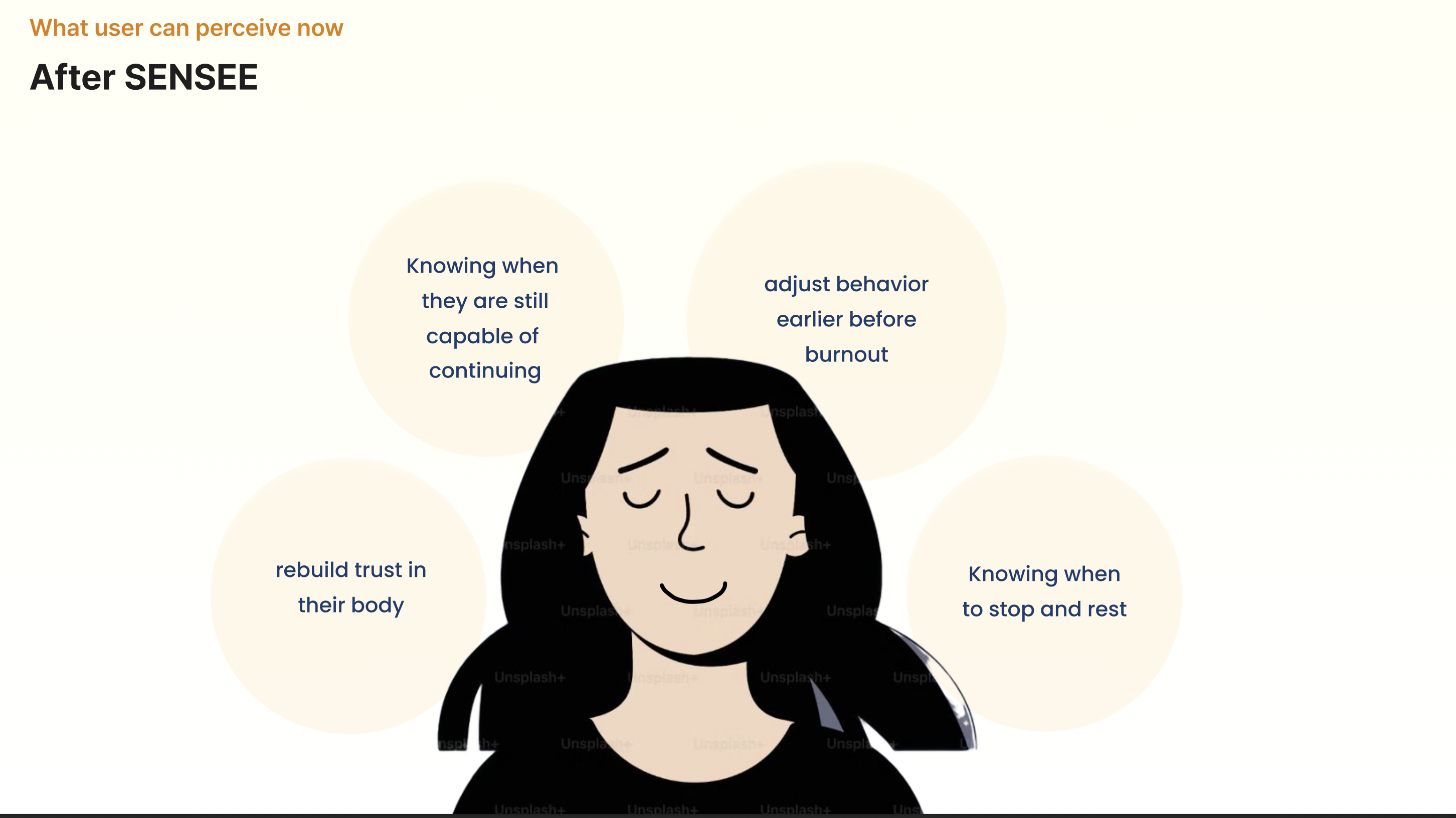
The goal is course correction, supporting emotional, mental, and physical well-being before a crash occurs.
How we built it
We began with research into interoception, perceptual adaptation, and longitudinal health tracking. We were particularly interested in how baseline shifts can go unnoticed because the nervous system recalibrates gradually.
We designed entirely in Figma, developing a cohesive visual system grounded in the water metaphor:
- A dynamic waterline representing perceived state
- A dotted baseline representing longitudinal pattern
- Subtle motion design to reinforce drift and stability
- Layered insights to prevent information overload
The daily interaction was intentionally constrained to a single gesture. We avoided numerical scales and streak systems to reduce shame-based tracking patterns and cognitive burden.
Using Figma Make, we translated static designs into interactive prototypes, focusing on:
- Gesture-based input
- Seamless motion transitions
- Detect → enhance → influence flow
- Accessibility considerations
- Local-first data principles
Every design decision was intentional. We removed features that felt novel but not necessary. We prioritized clarity over complexity.
Challenges we ran into
Time was our greatest constraint.
Team members were balancing interviews, travel, work schedules, and coursework during the hackathon. Coordinating ideation sessions while maintaining forward momentum required discipline.
As a team composed entirely of designers, we encountered an unexpected challenge: too many ideas.
We explored multiple interaction models and metaphors in depth. While this strengthened the concept, it also slowed execution. Midway through the sprint, we recognized that progress required delegation and trust. We shifted from collective refinement to distributed ownership, empowering individuals to lead specific components.
Technically, translating high-fidelity design into interactive behavior required iteration. Ensuring that motion, layering, and state transitions aligned precisely with design intent demanded careful refinement.
These challenges ultimately strengthened our collaboration and decision-making process.
Accomplishments that we're proud of
We’re most proud of the waterline metaphor and interaction model.
It transforms what could have been a conventional mood tracker into an embodied sensory experience. The boat, the waves, and the shifting waterline create a system that feels intuitive, memorable, and grounded in human behavior.
We’re proud that:
- The daily interaction is simple yet meaningful
- Motion design reinforces the conceptual model
- Information is layered intentionally to avoid overload
- The system avoids punitive tracking mechanisms
- The experience reflects real human fluctuation rather than idealized productivity
Most importantly, we’re proud that Sensee does not shame users for inconsistency. It reframes drift as information, not failure.
What we learned
We learned that strong design requires restraint.
Not every idea deserves to be built. In time-boxed environments, clarity matters more than perfection.
We learned to delegate effectively, trust each other’s judgment, and move forward without unanimous agreement on every micro-decision.
We also deepened our understanding of perception science. Researching emerging sensing technologies, including how subtle physiological signals can be detected through ambient systems, expanded our thinking about the future of quantified self-design.
Sensee strengthened both our design craft and our ability to collaborate under pressure.
What's next for Creative@asu
Sensee was built by Creative@asu: a student-led design organization at Arizona State University.
Our mission is to help students become career-ready in UX and product design while fostering a supportive, creative community.
Moving forward, we plan to:
- Continue hosting design challenges and workshops
- Provide portfolio mentorship and interview preparation
- Encourage speculative, human-centered design thinking
- Expand interdisciplinary collaboration across campus
Sensee represents what happens when students are empowered to explore meaningful problems with intention and rigor.
We’re excited to continue building and helping others design for the future of products that haven't yet been produced.
Built With
- figma
- make


Log in or sign up for Devpost to join the conversation.