-
-
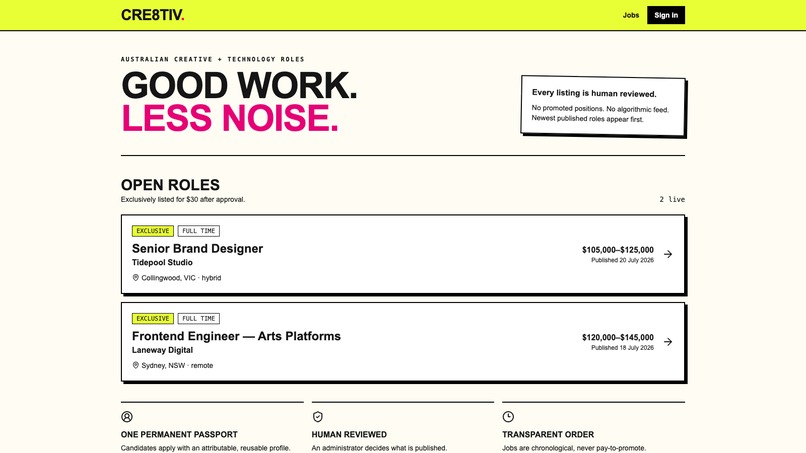
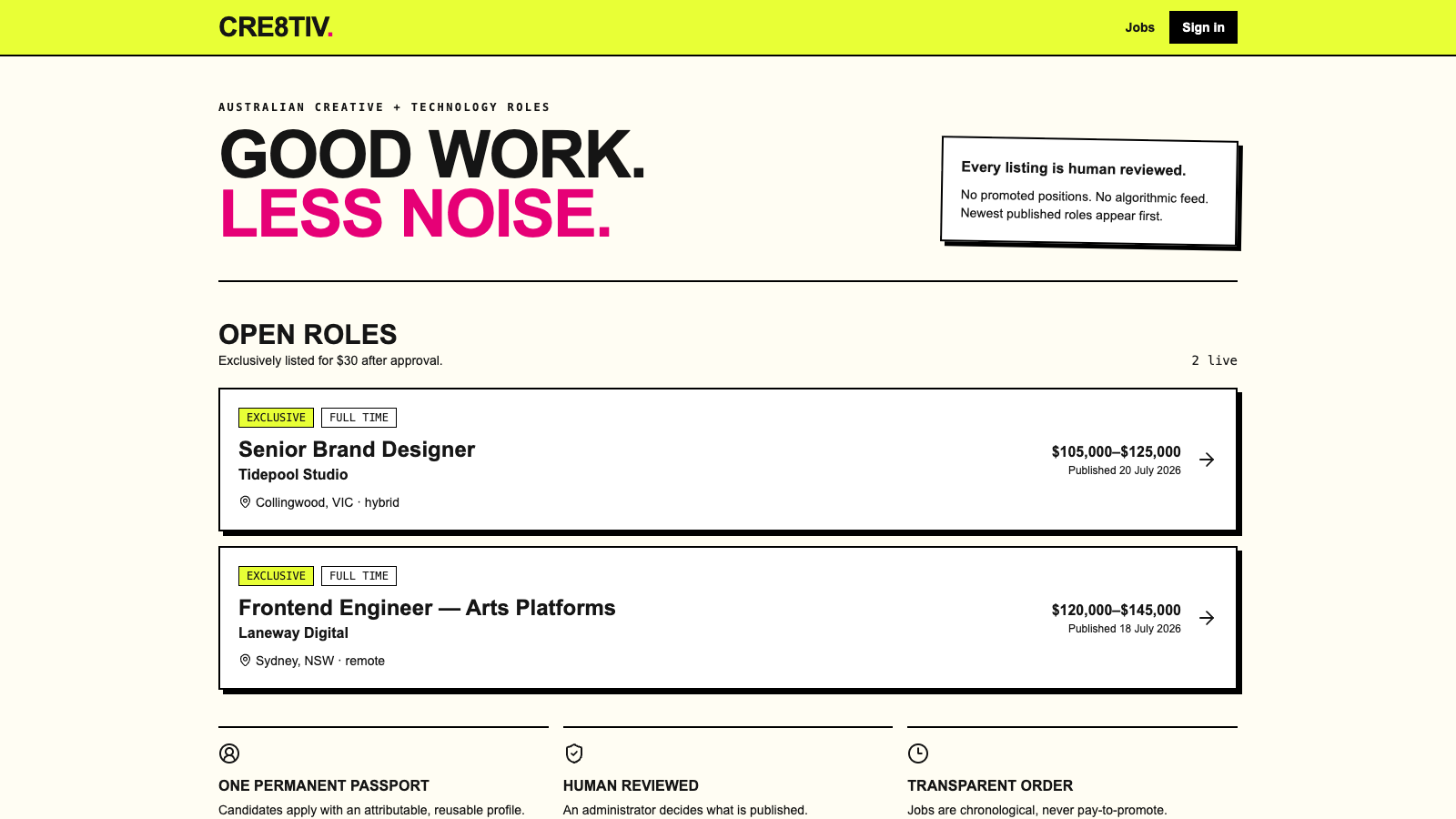
Job Listings
-
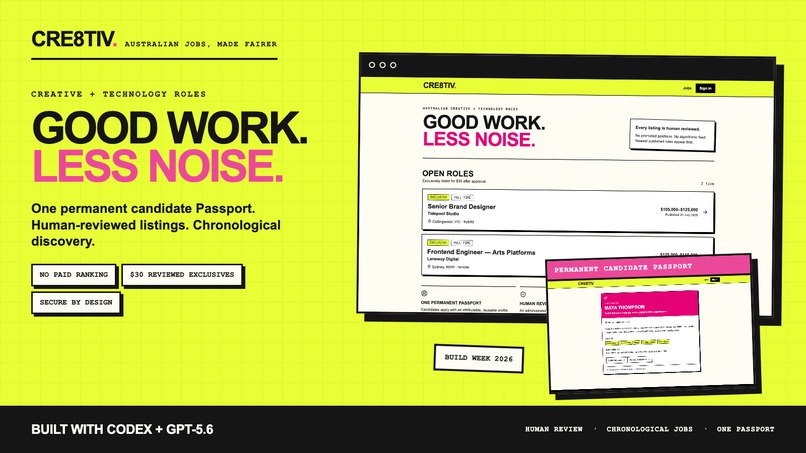
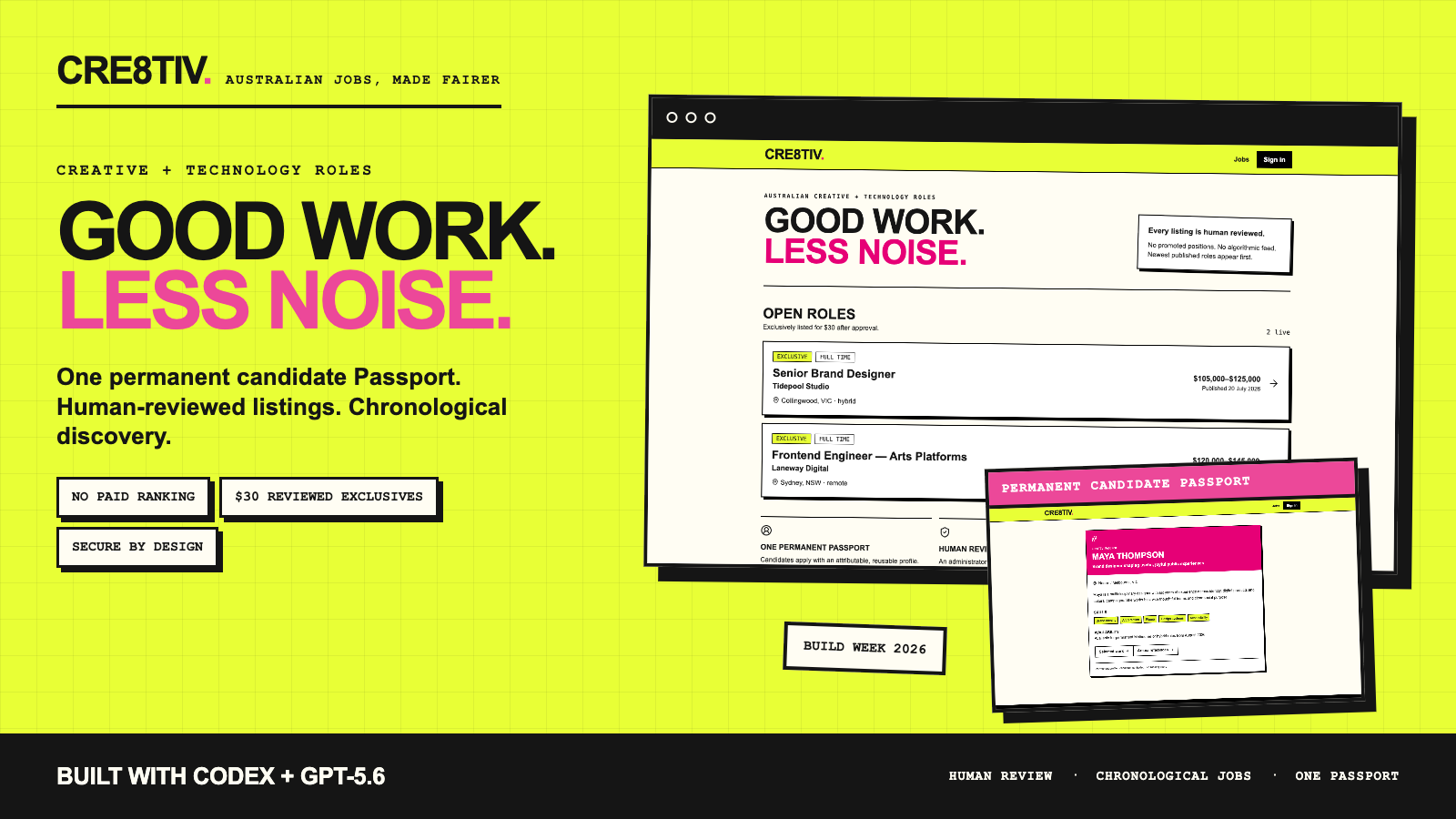
Hero image
-
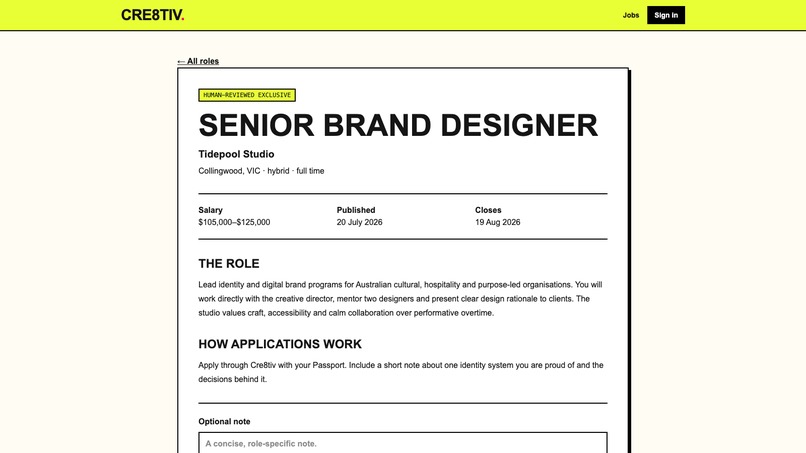
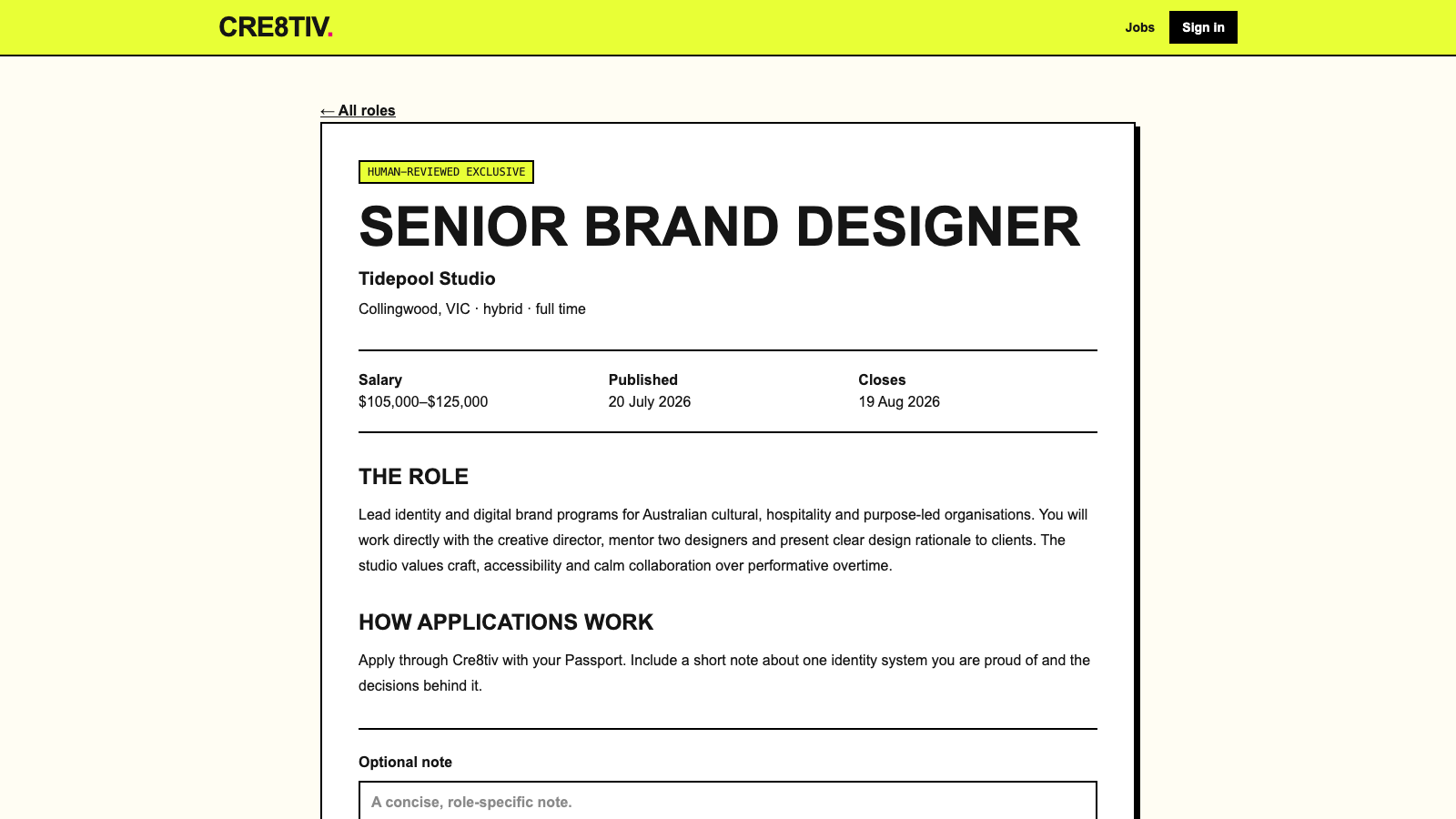
Job Ad
-
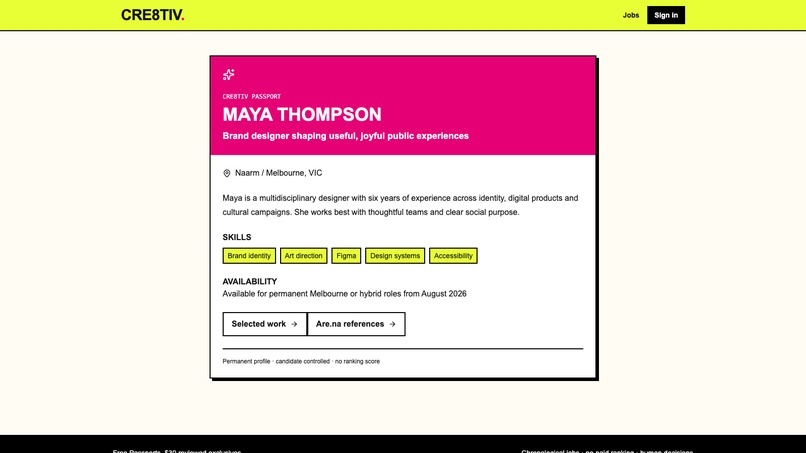
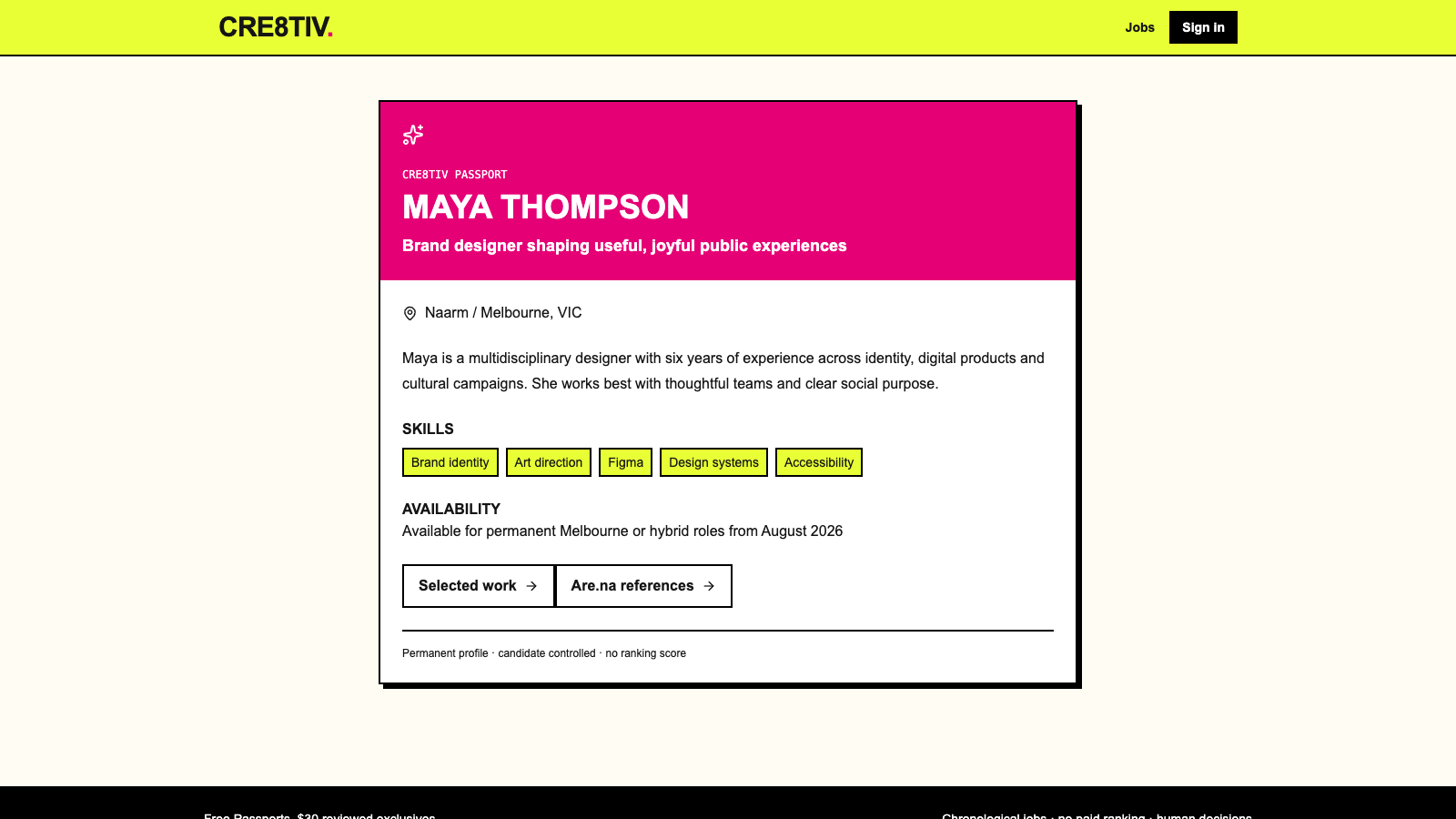
Candidate Passport
Inspiration
Creative work deserves something better than being squeezed through the same beige forms, ranked by a mystery algorithm and buried unless somebody pays to promote it.
Cre8tiv is my attempt at a simpler Australian alternative: job seekers never pay, local employers pay one reasonable flat fee, listings are reviewed by a person, and nobody can buy their way to the top.
What it does
Cre8tiv is a small but properly working slice of a creative and technology jobs platform.
Candidates can register for free, build a permanent public Passport and use it to apply for published roles. It is part lightweight portfolio, part reusable application identity, and hopefully one less résumé disappearing into the void.
Employers can create a profile, submit a $30 exclusive listing and see genuine registered applicants for their own jobs. Every listing waits for human approval before it goes live. The payment hand-off is simulated in this demo, so no unsuspecting credit card is harmed.
Jobs appear chronologically. There is no paid ranking, applicant scoring or algorithm deciding who deserves to be seen.
How I built it
This started as something I was tooling around with in Google AI Studio. The prototype looked promising, so I connected it to GitHub. GitHub then sent me the always-delightful email explaining that I had exposed a secret.
Not quite the launch announcement I had in mind.
I opened the repository in Codex and used GPT-5.6 to work out exactly what had gone wrong. Codex helped me audit and clean the repository, remove Firebase and the remaining Google scaffolding, move privileged work away from the browser, and rebuild the app around proper authentication and data ownership.
The finished Build Week version uses React, TypeScript, Vite and Tailwind on the frontend; Express on Vercel for the API; Better Auth for secure sessions; and Neon Postgres with Drizzle for the database.
Challenges I ran into
The big challenge was resisting the temptation to preserve everything just because the prototype looked finished.
Underneath the nice screens, it trusted browser state, mixed public and private information and had no secure route from listing a job to receiving an application. Fixing the exposed secret meant fixing the architecture around it—not just deleting one embarrassing line and hoping nobody noticed.
Accomplishments that I’m proud of
The whole core journey now works: candidate registration, public Passports, employer profiles, $30 listing submission, manual review, publication, protected applications and employer access to attributable applicants.
It also has migrations, fictional Australian demo data, permission tests, secret scanning and a public record of what existed before Build Week versus what Codex and GPT-5.6 helped me build.
What I learned
“Build an app” tools are brilliant for throwing ideas at a wall and seeing what might stick. A convincing prototype, however, is not automatically a secure product.
Codex still let me work conversationally, but it also helped me interrogate the code, test the decisions and turn the promising bit into something that genuinely runs.
What’s next
Cre8tiv is open source under Apache 2.0, so people can fork it, inspect it and have a play.
Next I would bring back more of the original prototype’s visual personality, expand the Passport, add a proper application Kanban, connect real payments and broaden the Australian job coverage.
The larger ambition is unchanged: build something genuinely useful for Aussie creatives and, ideally, put a little wind up the job-board monoliths.
Built With
- codex
- express.js
- neon
- react
- typescript
- vercel
- zod


Log in or sign up for Devpost to join the conversation.