-
-
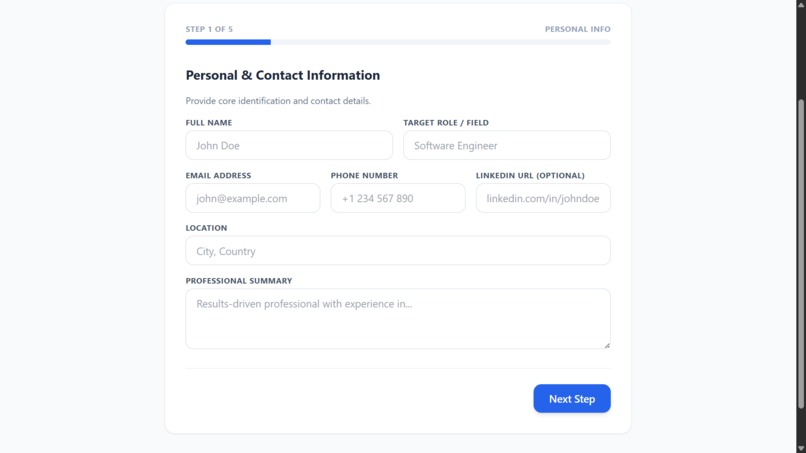
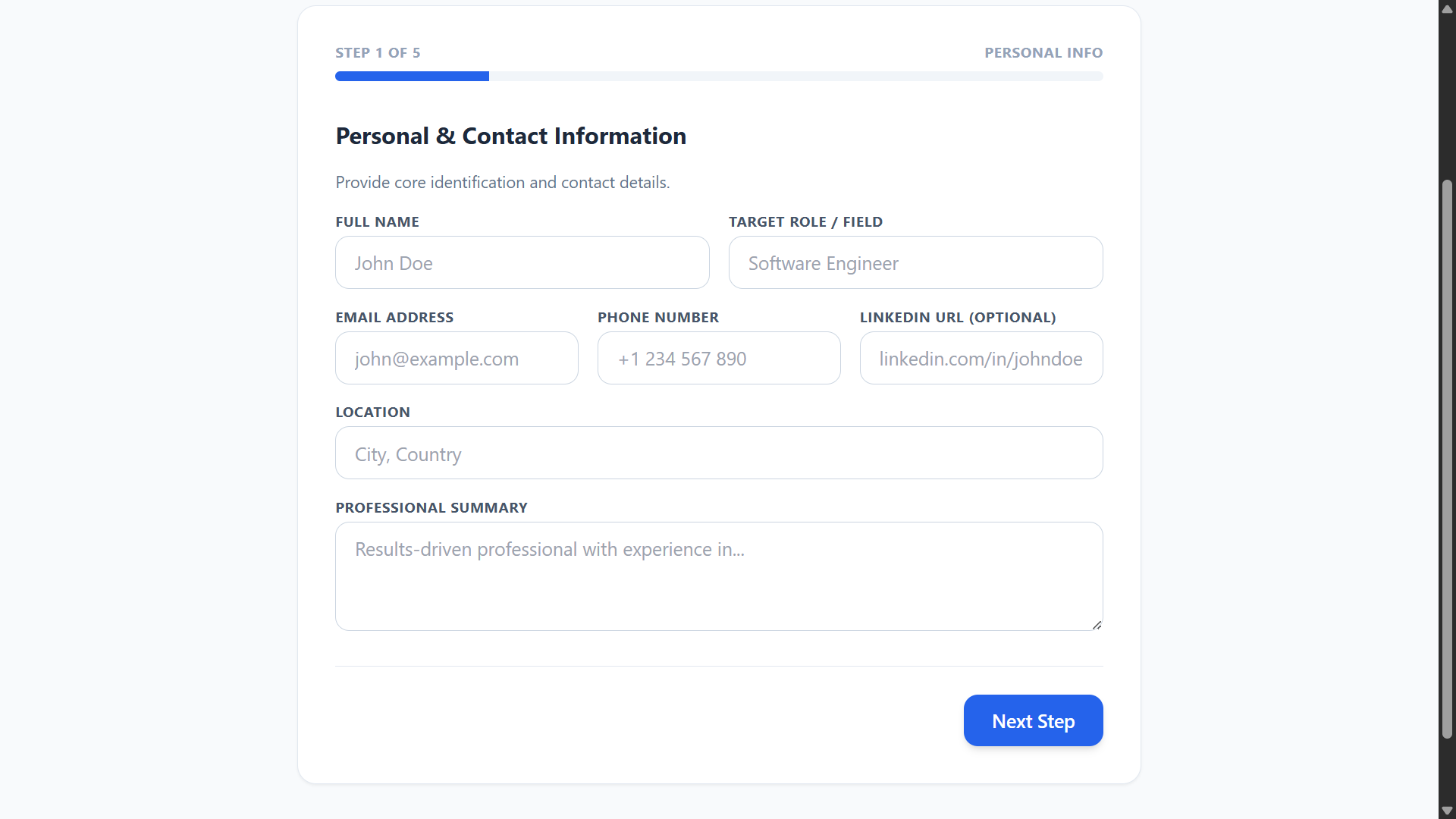
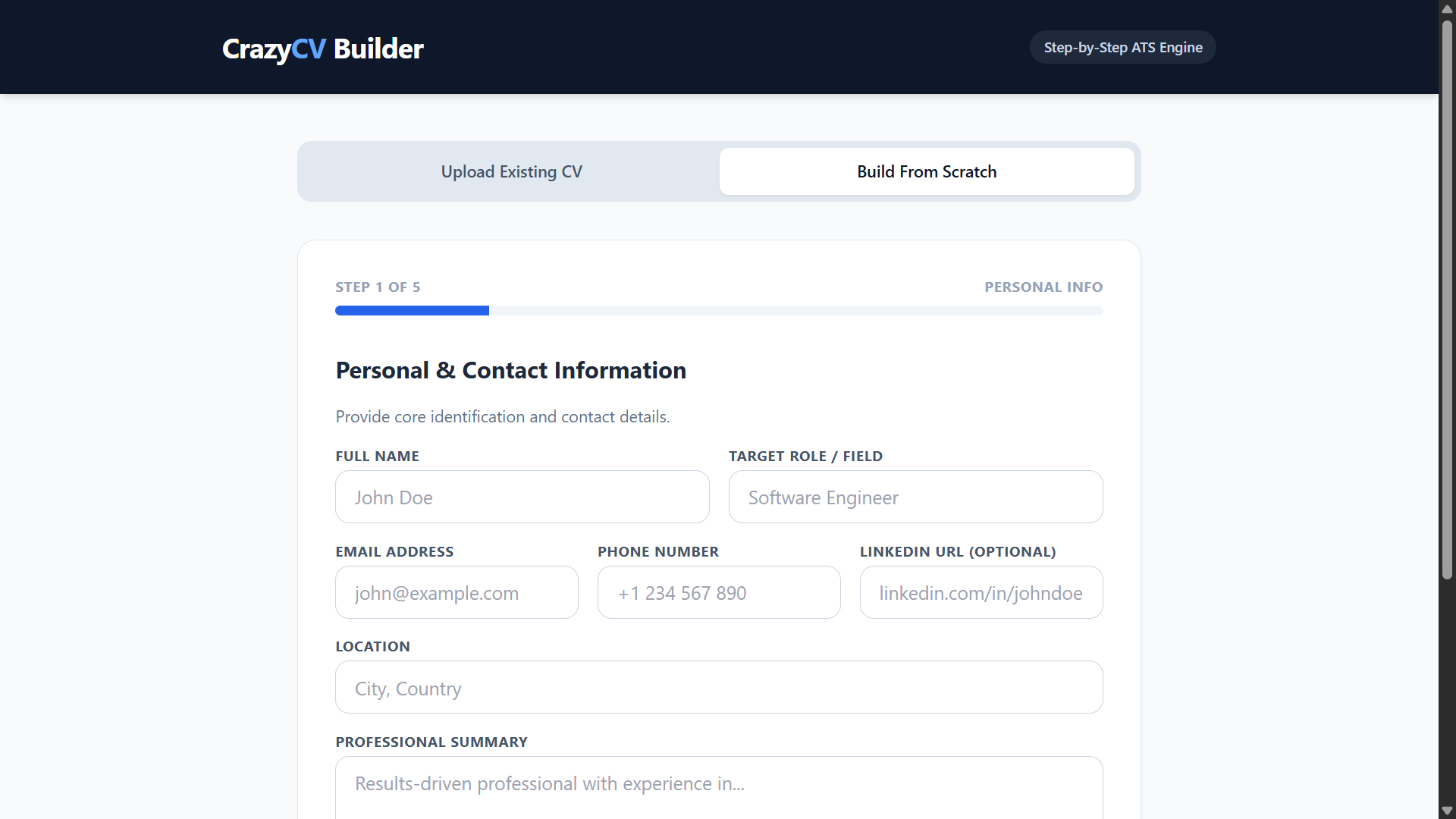
Building a new CV from scratch (Personal and contact information)
-
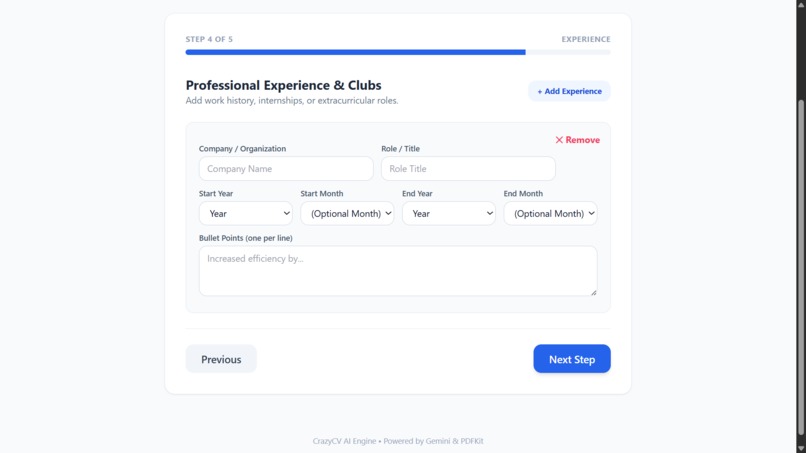
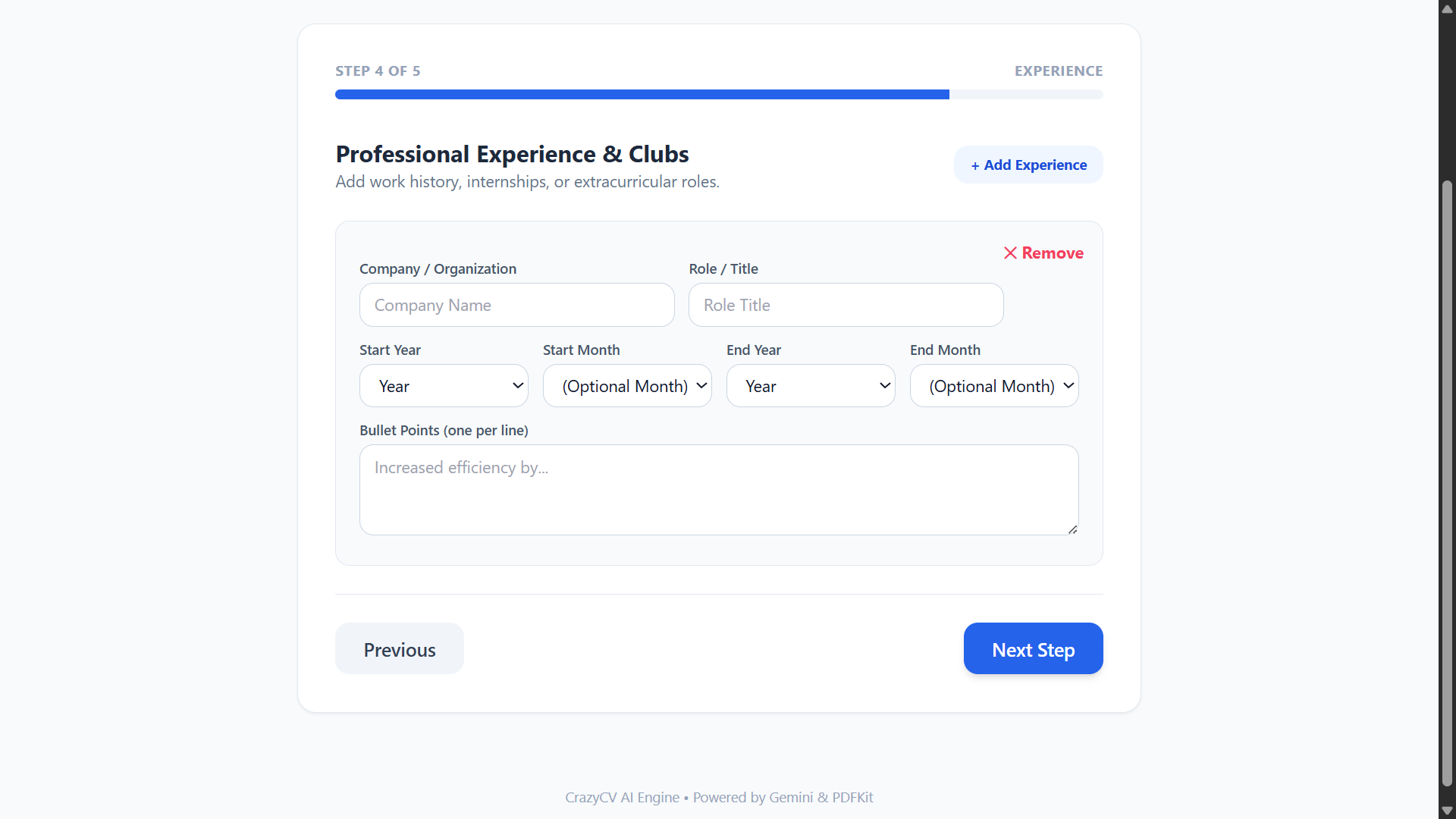
Building a new CV from scratch (Professional Experience & Clubs)
-
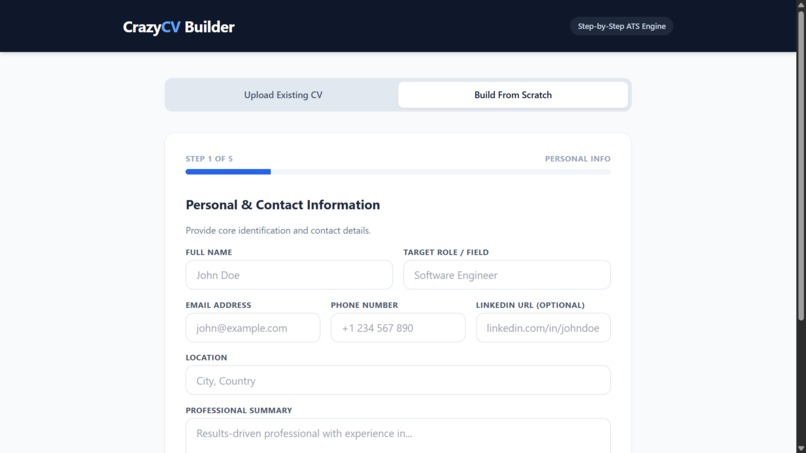
Building a new CV from scratch (Personal and contact information)
-
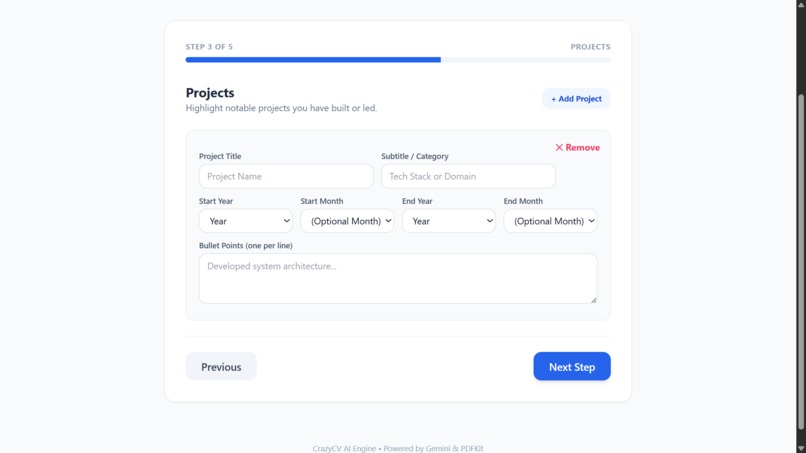
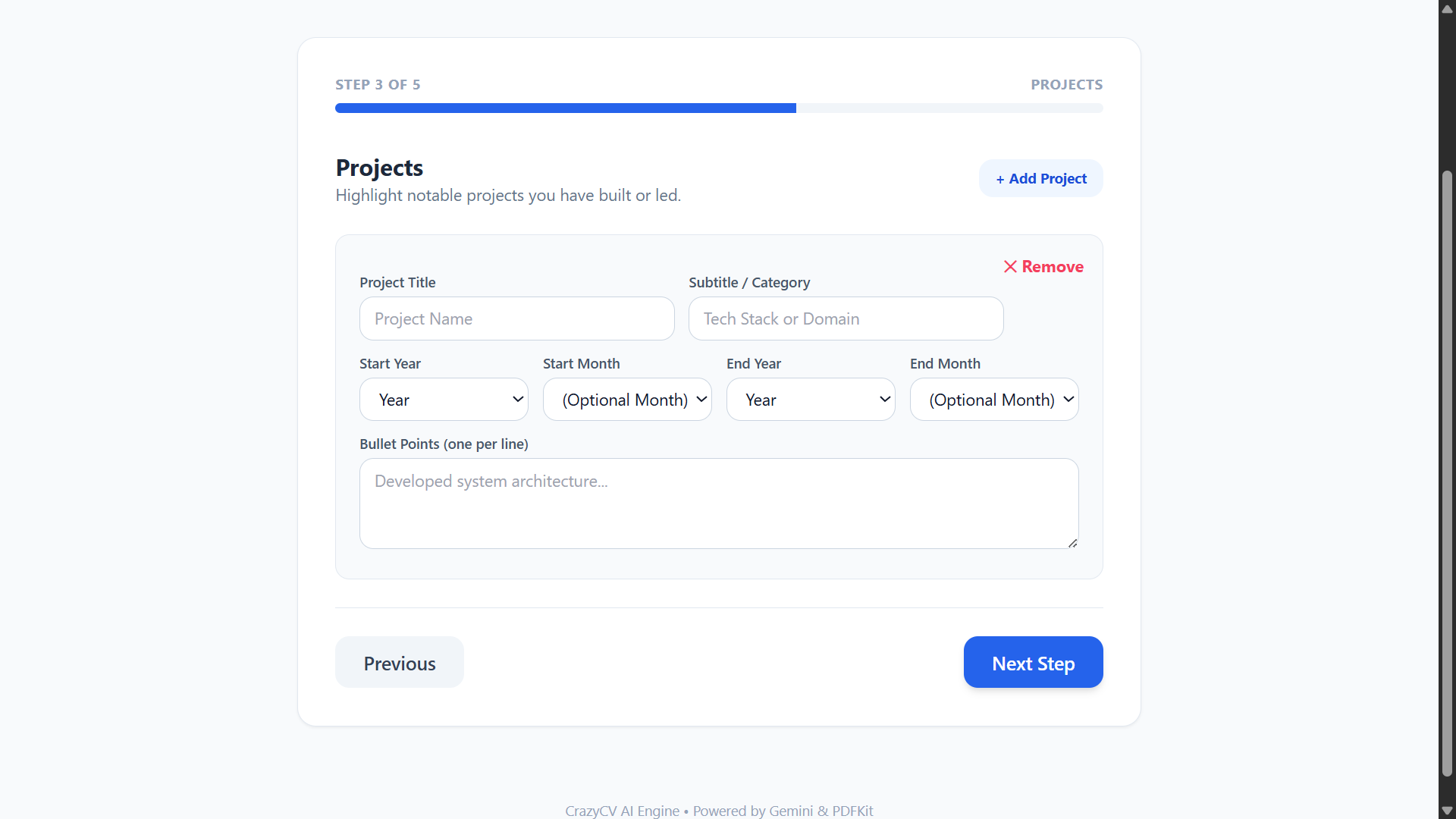
Building a new CV from scratch (Projects)
-
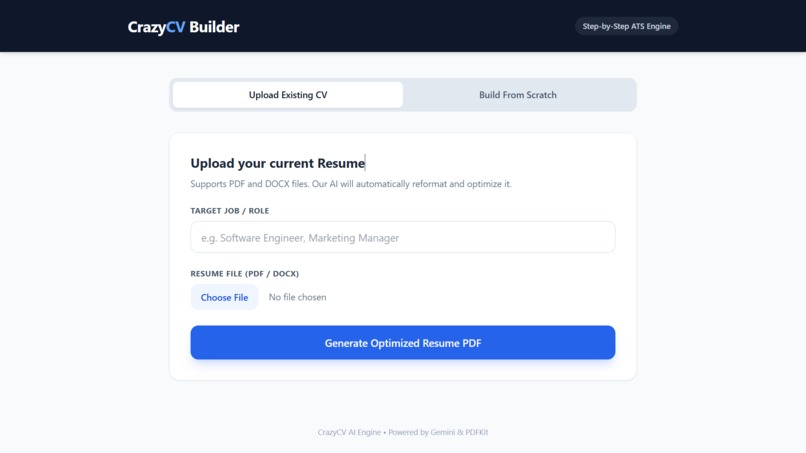
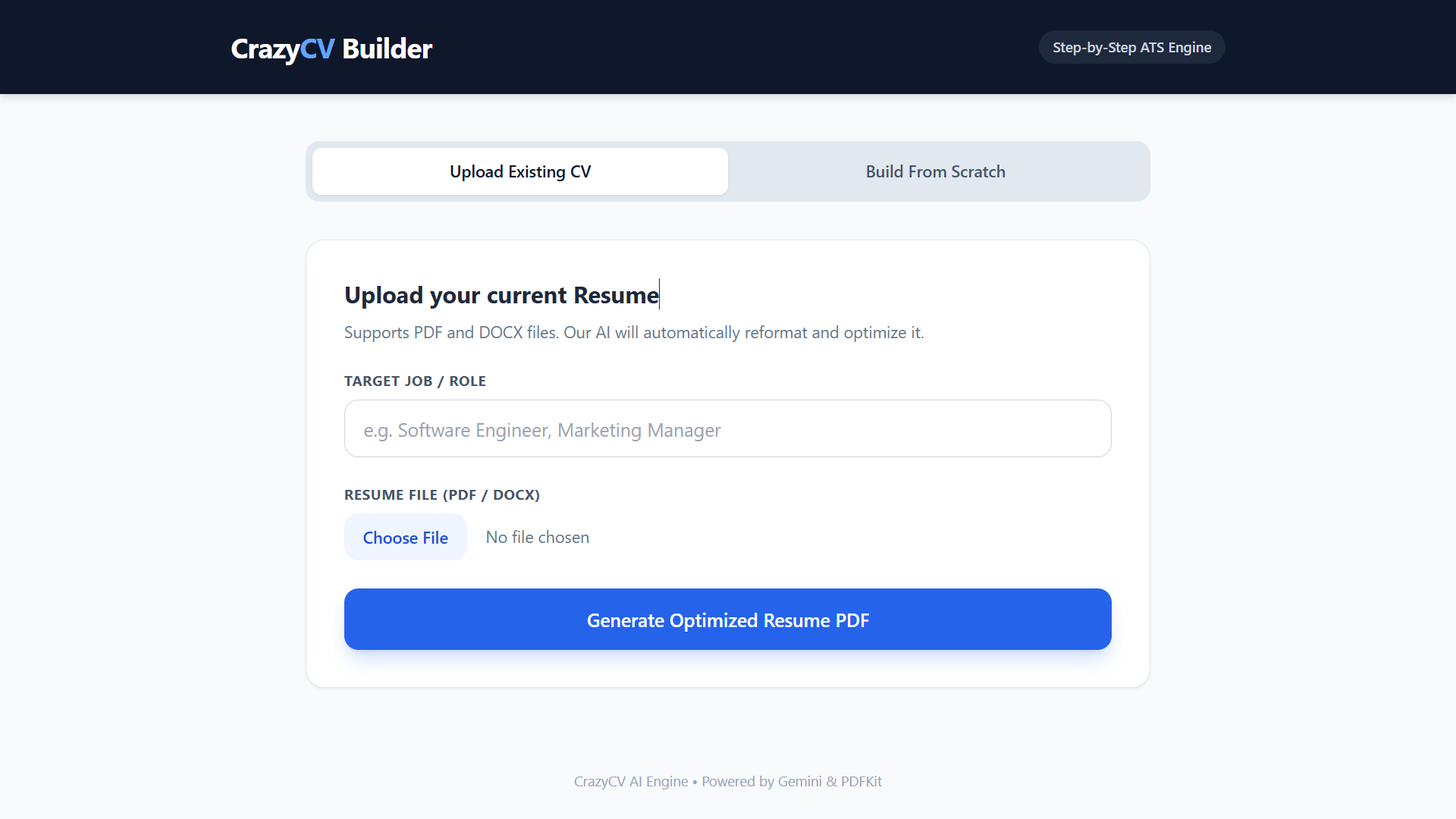
Uploading current CV and optimizing it using AI.
-
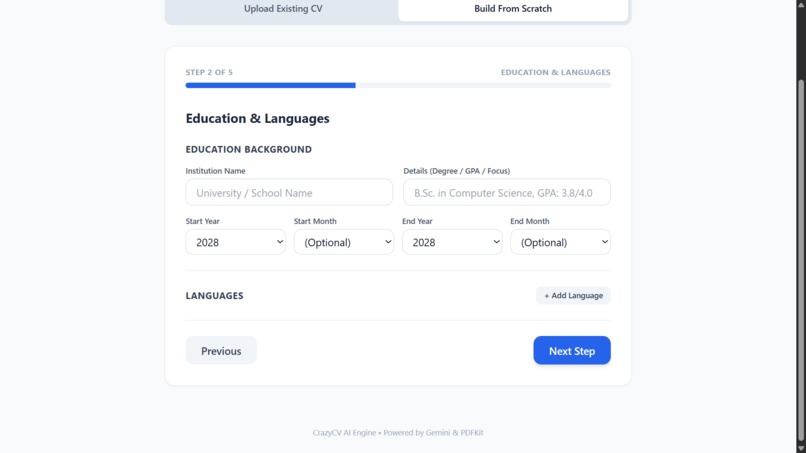
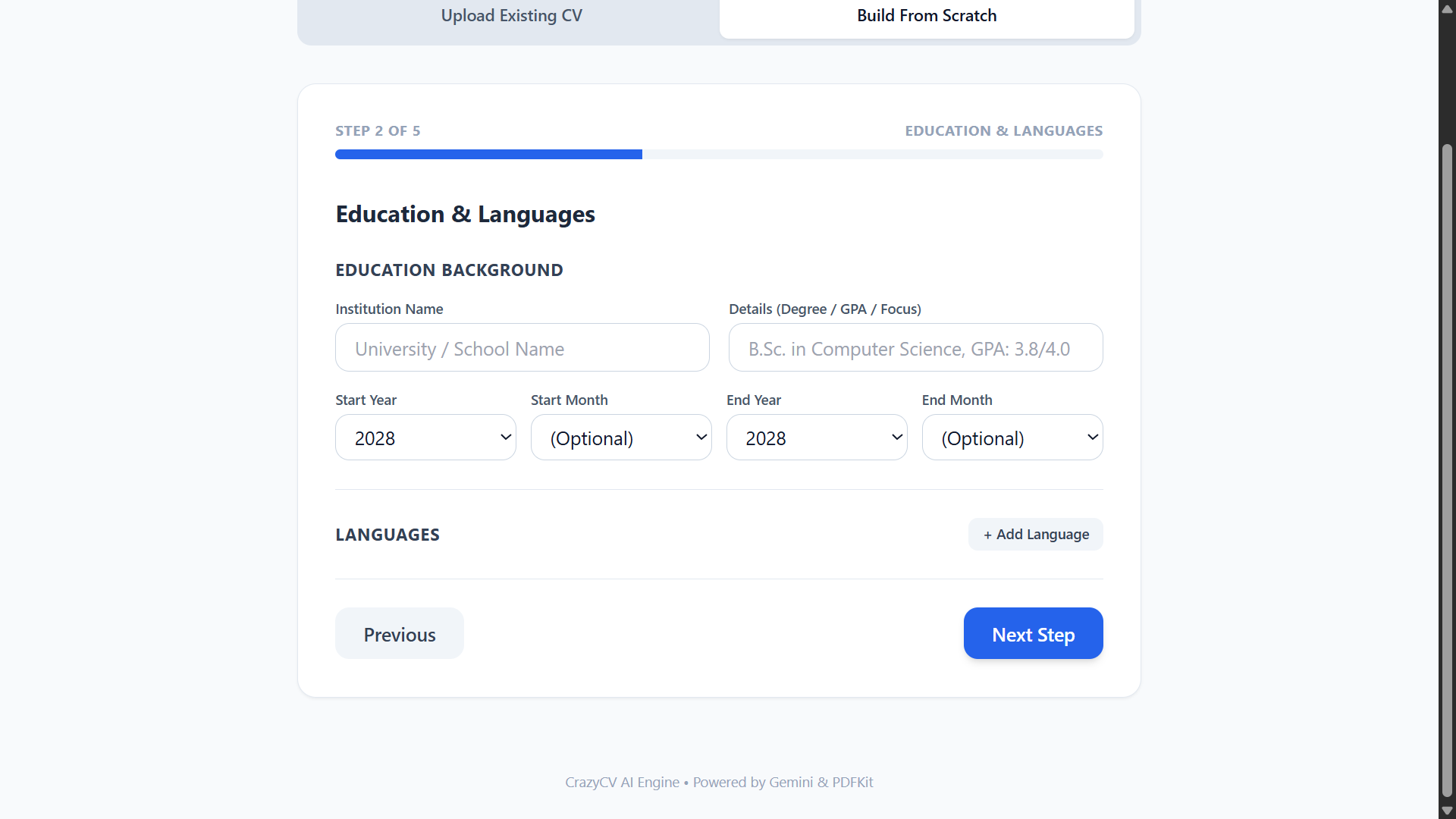
Building a new CV from scratch (Education and Languages)
-
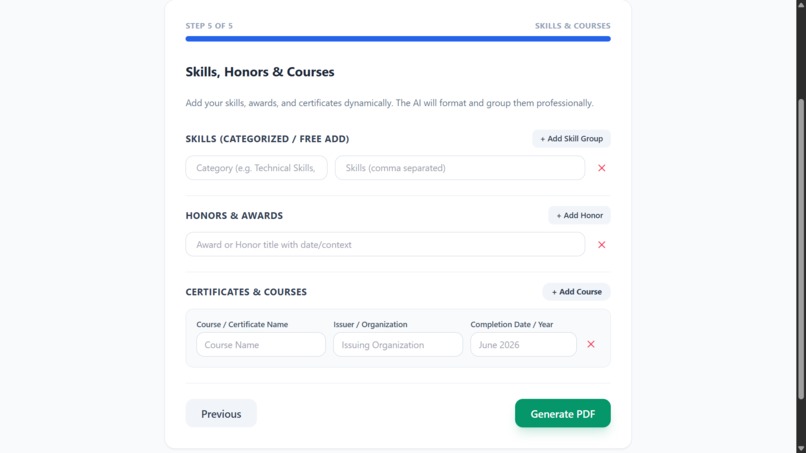
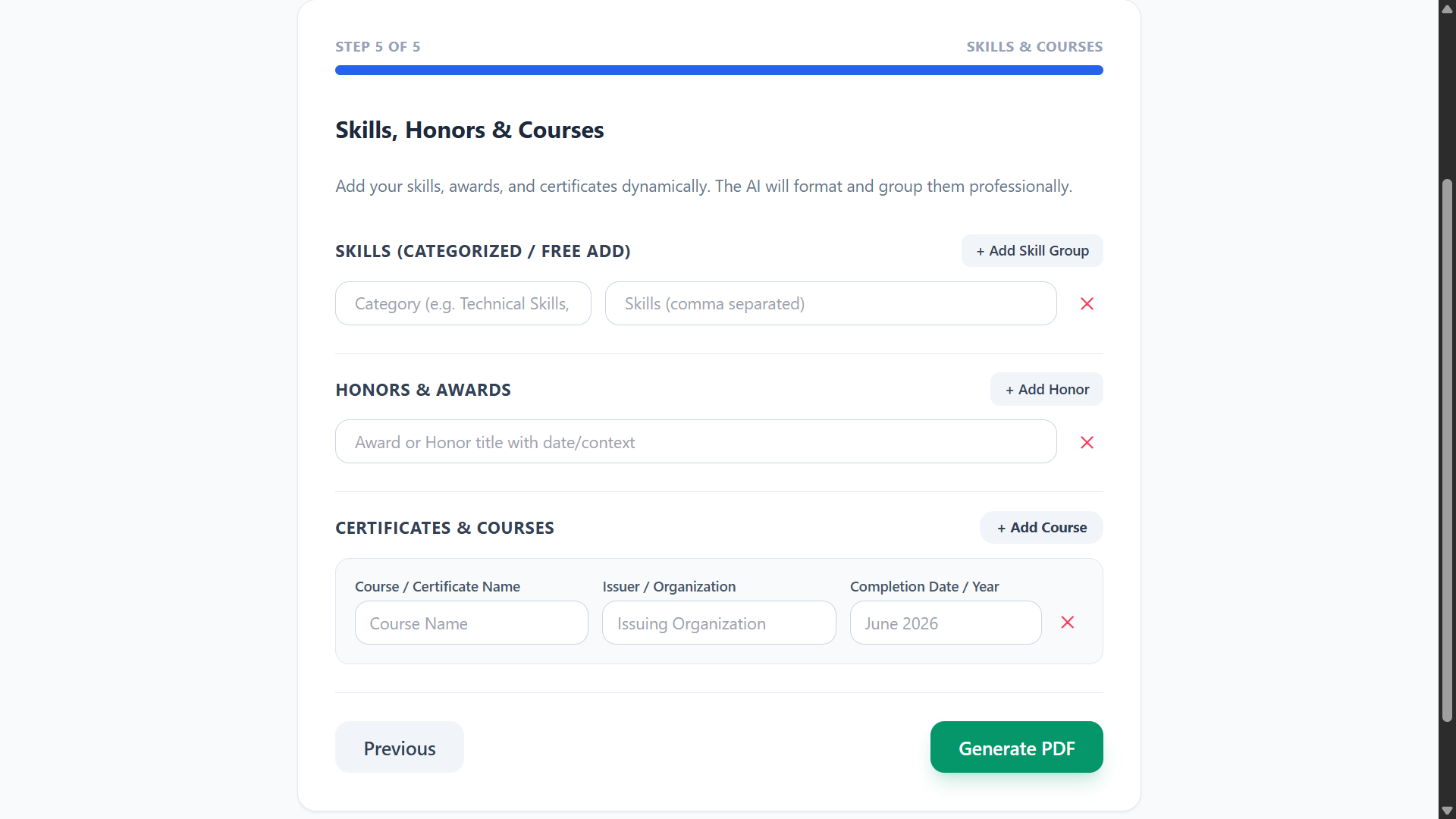
Building a new CV from scratch (Skills, Honors, and Courses)
-
Thumbnail
Inspiration
The idea for CrazyCV was born out of a common frustration shared by students, recent graduates, and job seekers everywhere: the black box of Applicant Tracking Systems (ATS) and the exhausting process of tailoring a resume for every single job application.
We noticed how many brilliant peers and tech enthusiasts struggle not because they lack skills or dedication, but because their resumes fail to translate their true potential into the precise formats and keywords that automated screening software demands. We wanted to eliminate that barrier completely. The goal was to build a smart, accessible career companion powered by modern artificial intelligence that actively analyzes, refines, and elevates a user's professional profile—transforming raw experiences into a polished, high-impact resume in a matter of seconds.
What it does
CrazyCV is an intelligent, AI-powered resume builder designed to bridge the gap between job seekers and modern recruitment technology. Key features include:
AI-Driven Content Enhancement: Transforms basic, unpolished job descriptions and project details into professional, action-driven achievement bullet points.
ATS Optimization: Structurally formats data to successfully bypass automated applicant tracking filters.
Instant Preview & Export: Provides a clean, responsive interface where users can view their optimized professional profile in real time.
How we built it
We designed CrazyCV as a full-stack web application focusing on speed, responsiveness, and seamless AI integration:
Backend: Built using Node.js and Express to handle routing, middleware, and server-side logic.
Intelligence Layer: Integrated the Google Gemini API to process user data, analyze professional trajectories, and generate context-aware resume phrasing.
Frontend: Developed with a clean, modern HTML/CSS/JavaScript interface optimized for user experience across devices.
Version Control & Tooling: Managed code structure, dependencies (package.json), and collaboration using Git and GitHub.
Challenges we ran into
Building an AI-driven web app came with its fair share of hurdles:
Structuring LLM Outputs: Ensuring that unstructured text generated by the AI mapped cleanly into predictable, renderable UI components without breaking layouts.
API Latency & Error Handling: Managing asynchronous requests and handling potential timeouts gracefully during heavy AI text generation cycles.
Deployment & Environment Setup: Configuring secure environment variables (GEMINI_API_KEY) and resolving remote repository synchronization nuances during initial cloud pushes.
Accomplishments that we're proud of
Successfully integrating a state-of-the-art LLM into a practical, real-world utility application.
Creating a smooth, frictionless user workflow that takes a user from rough notes to a professional resume in seconds.
Overcoming deployment and environment configuration challenges to get our production build up and running.
What we learned
Prompt Engineering Depth: We gained a deeper appreciation for how precise system prompts and context constraints drastically improve the consistency and professionalism of AI-generated text.
Backend Architecture: Strengthened our understanding of structuring clean Node.js APIs and managing secure environment credentials.
Iterative Problem Solving: Learned how to systematically troubleshoot deployment blocks, merge conflicts, and asynchronous JavaScript execution flows.
What's next for CrazyCV
Direct PDF Export: Implementing one-click download functionality for formatted PDF resumes.
Live ATS Scoring: Adding an intelligent keyword-matching calculator that scores resumes against specific job descriptions.
Multi-Template Support: Introducing customizable design layouts and user profile management to save multiple resume versions.

Log in or sign up for Devpost to join the conversation.