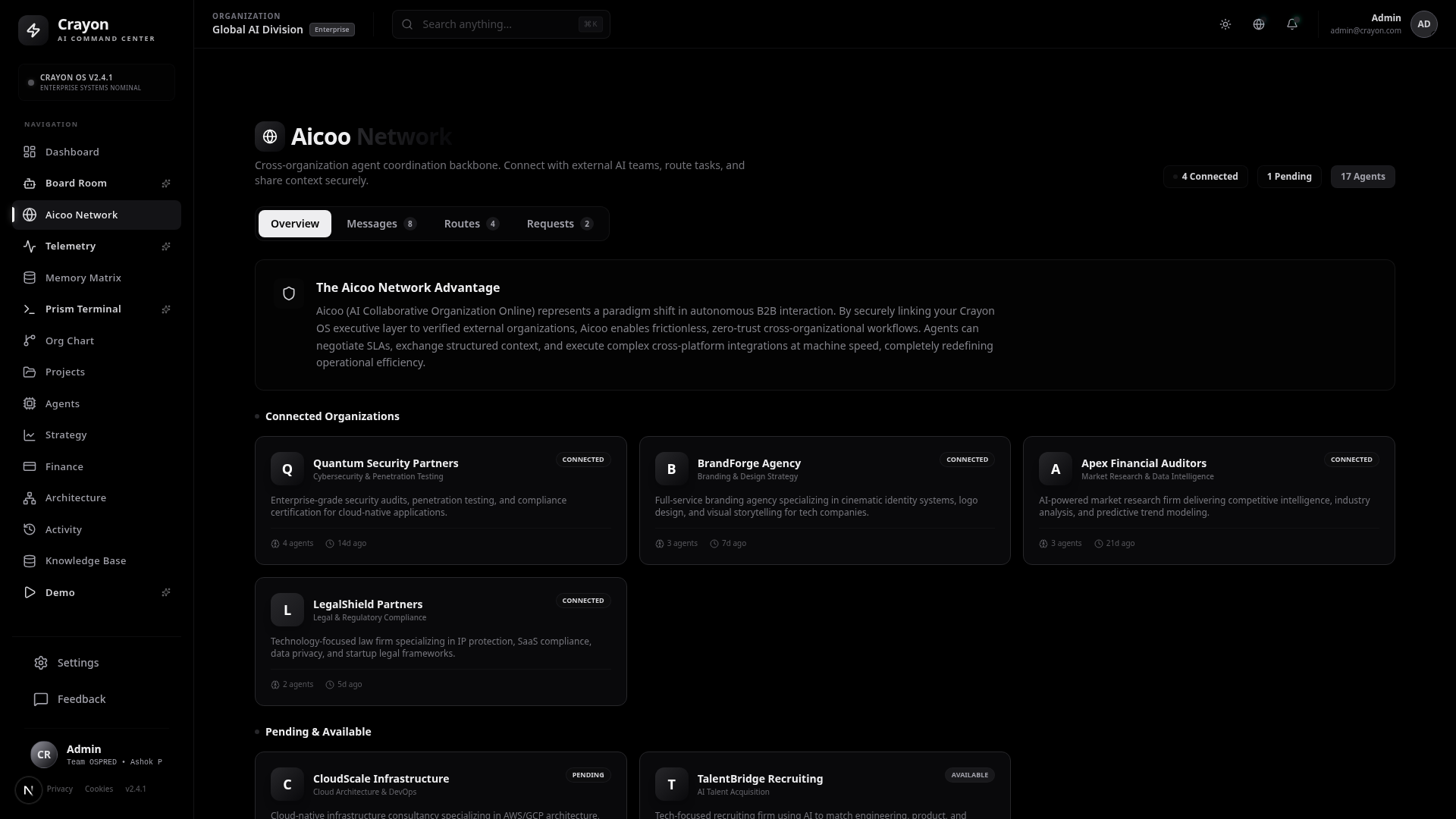
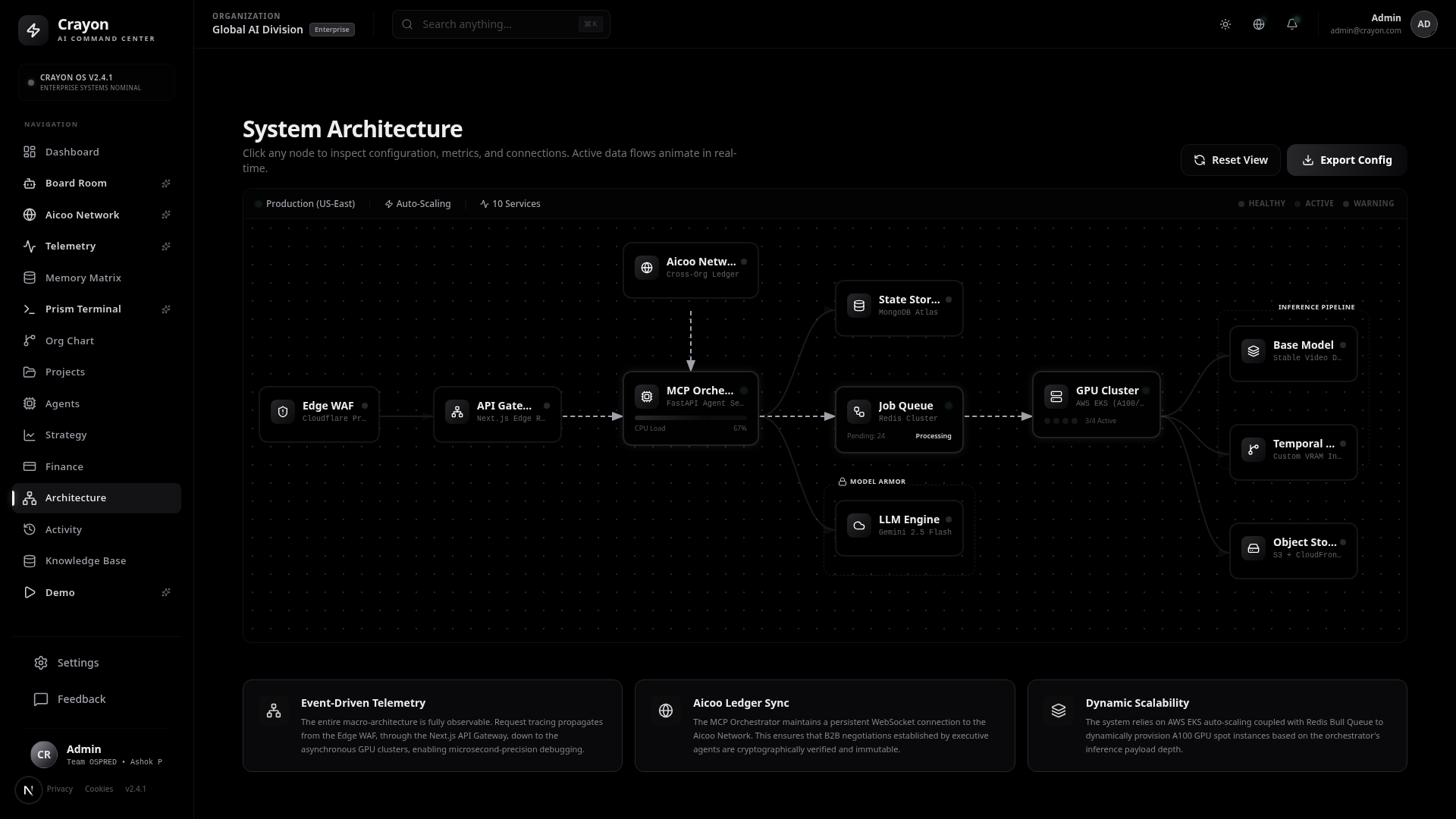
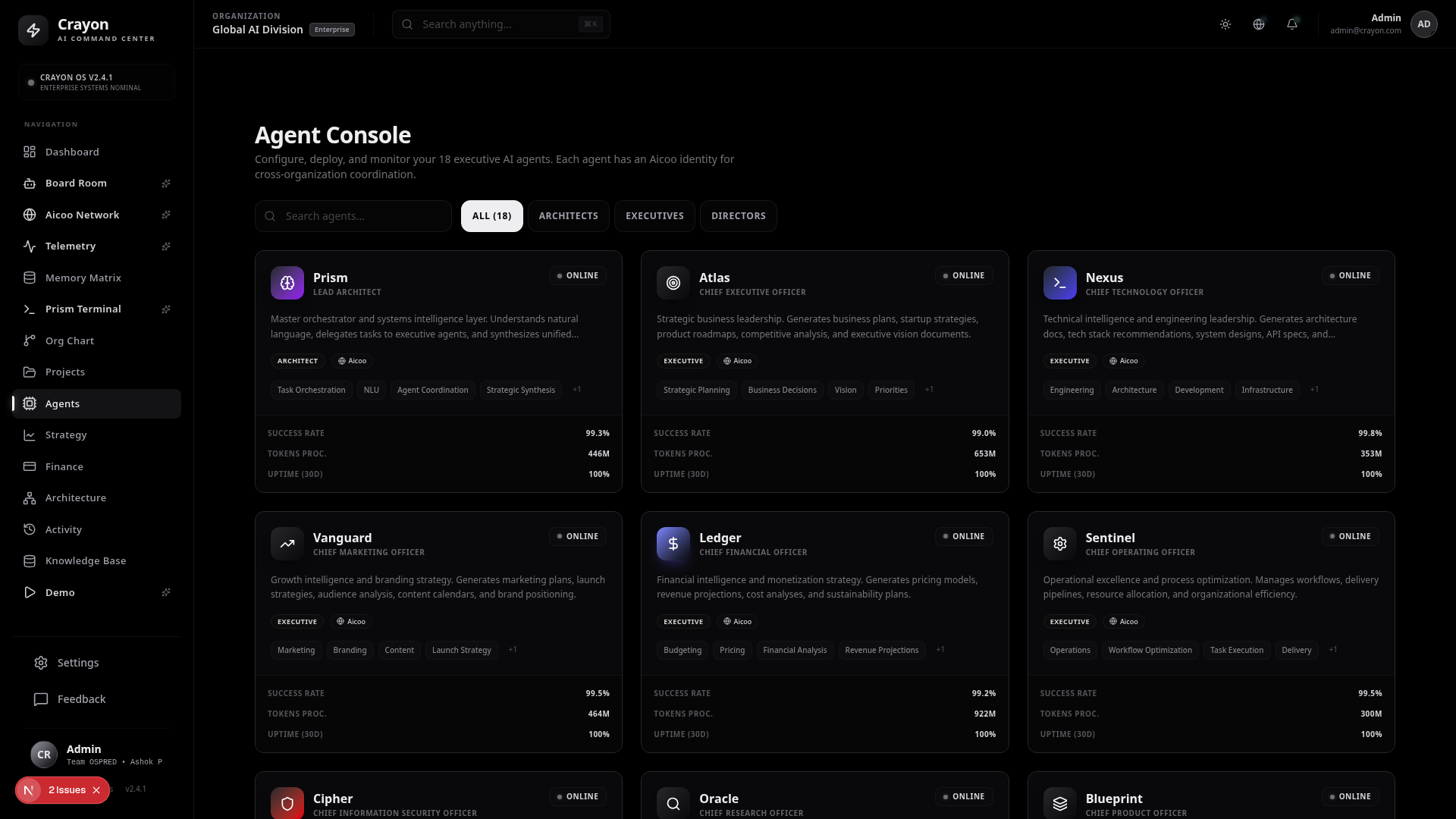
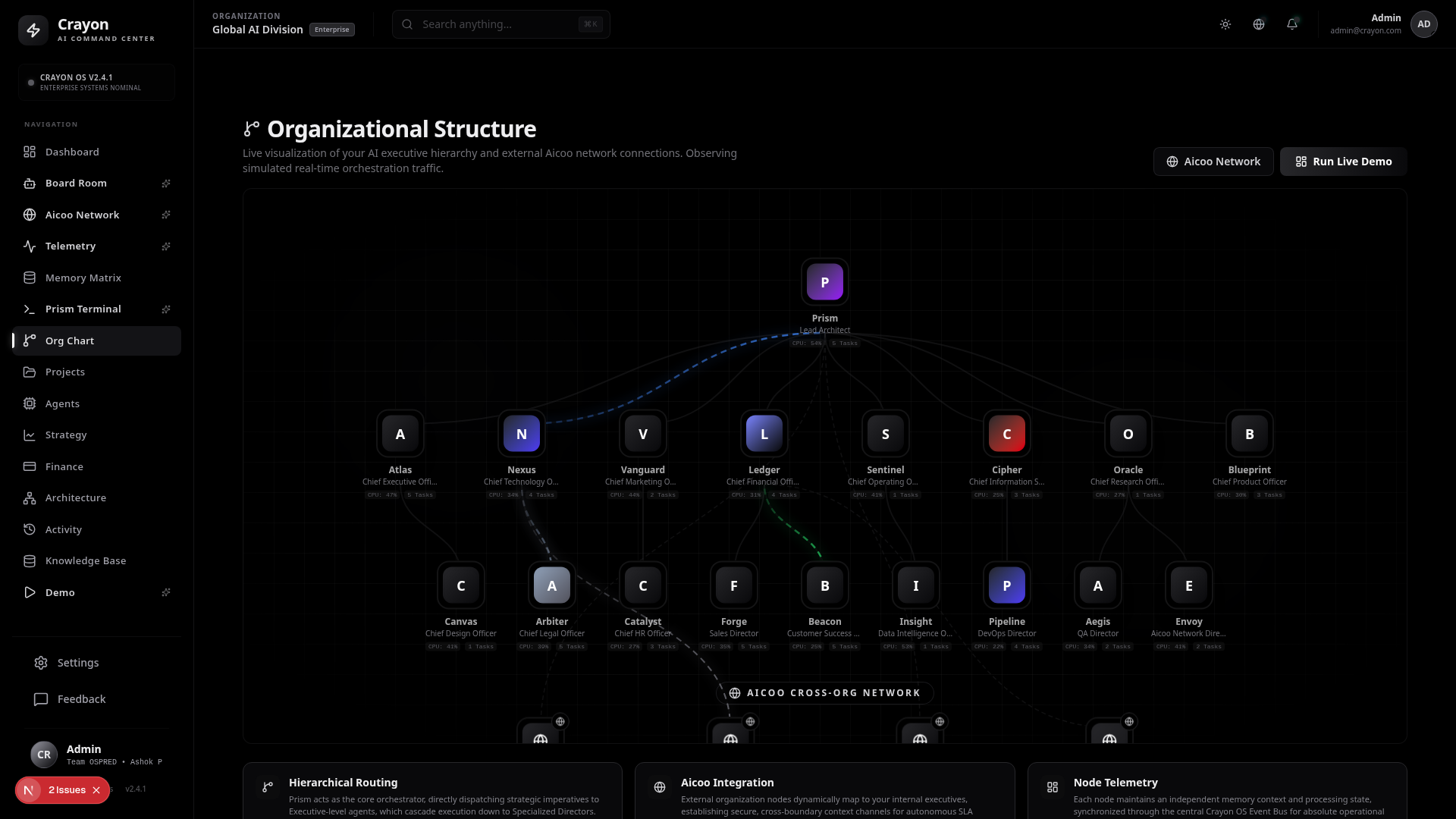
The Crayon OS Story
Engineered by Team OSPRED (Ashok P)
Inspiration
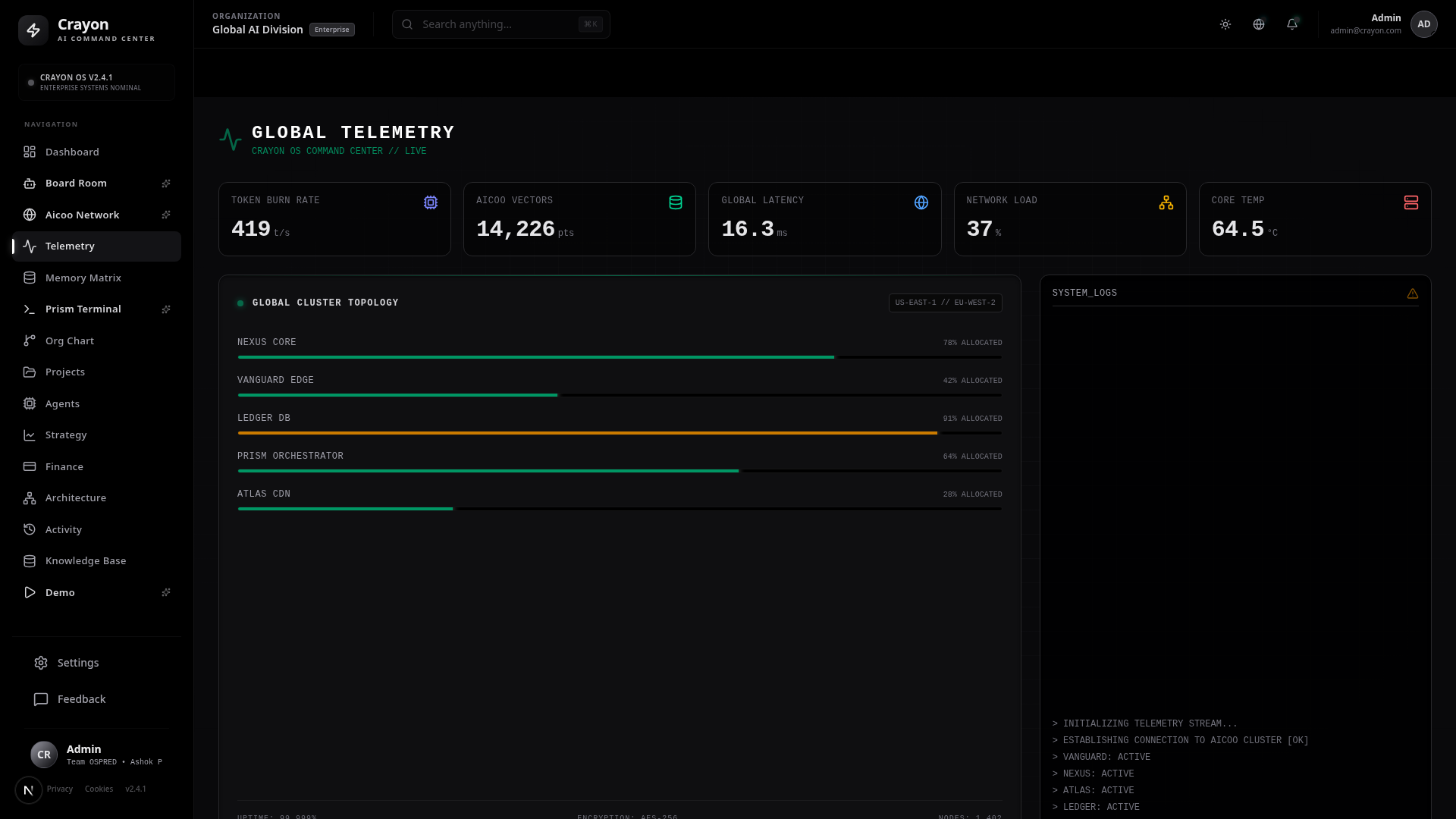
Current AI interfaces are inherently passive; you ask a single question, you get a single answer. We realized that founders, enterprise teams, and developers don't just need a chatbot—they need a specialized, autonomous workforce. Team OSPRED set out to solve the "blank canvas problem" of an empty chatbox and build a digital C-suite. We wanted to create an environment where a single prompt could rally an entire board of executive AI agents (CEO, CTO, CMO, CFO) to collaboratively architect, plan, and build a fully operational software enterprise in seconds.
What it does
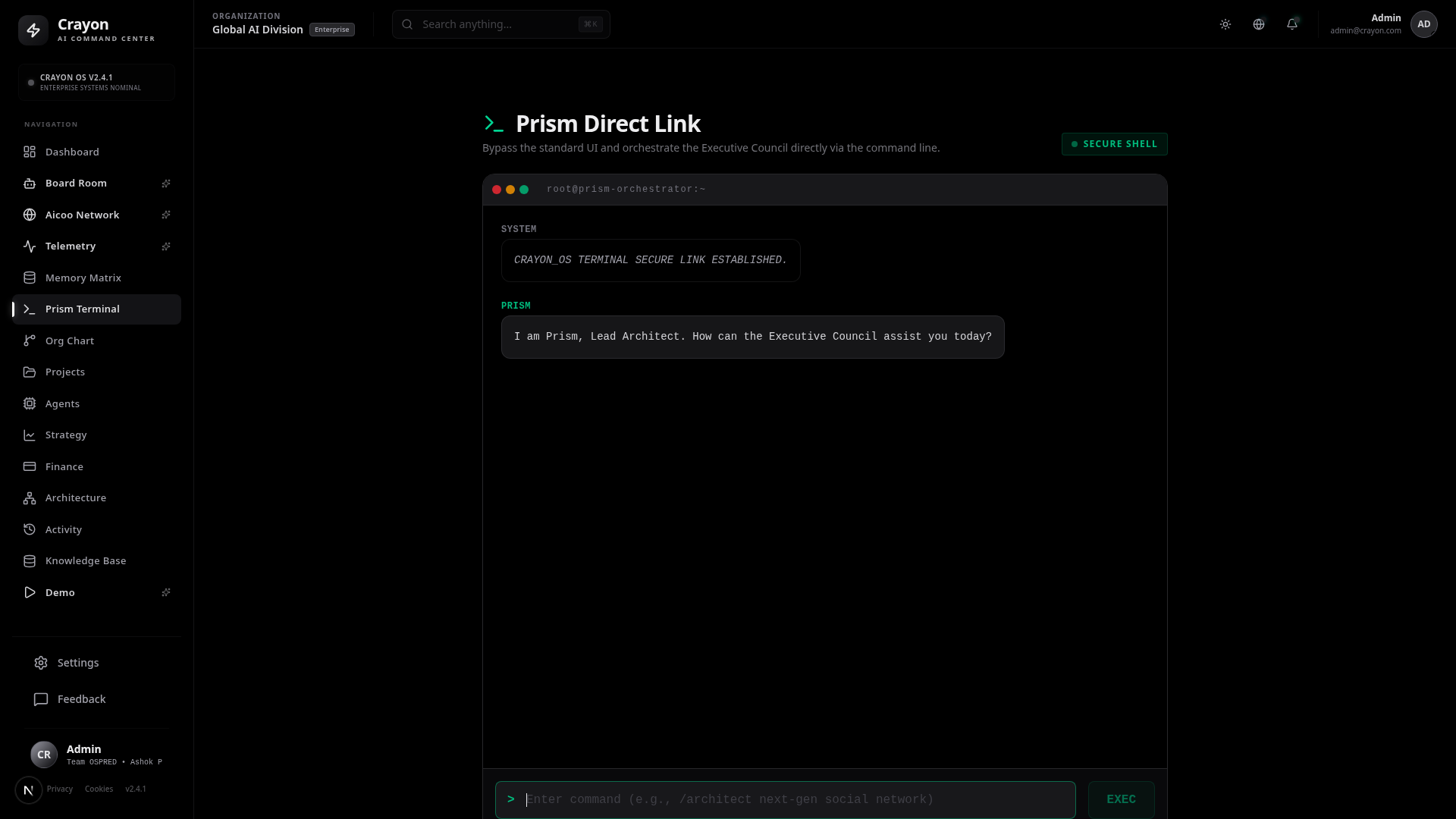
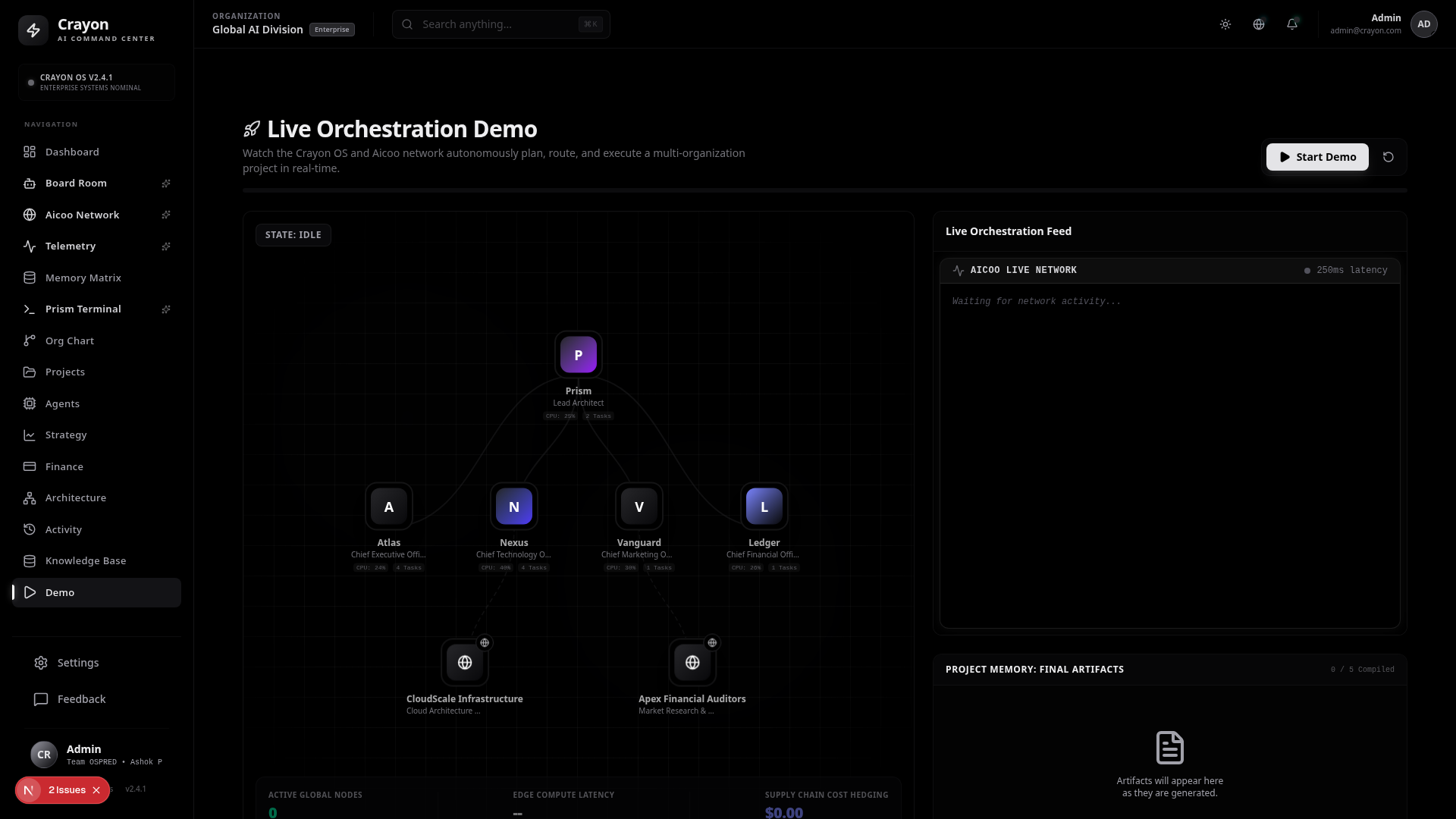
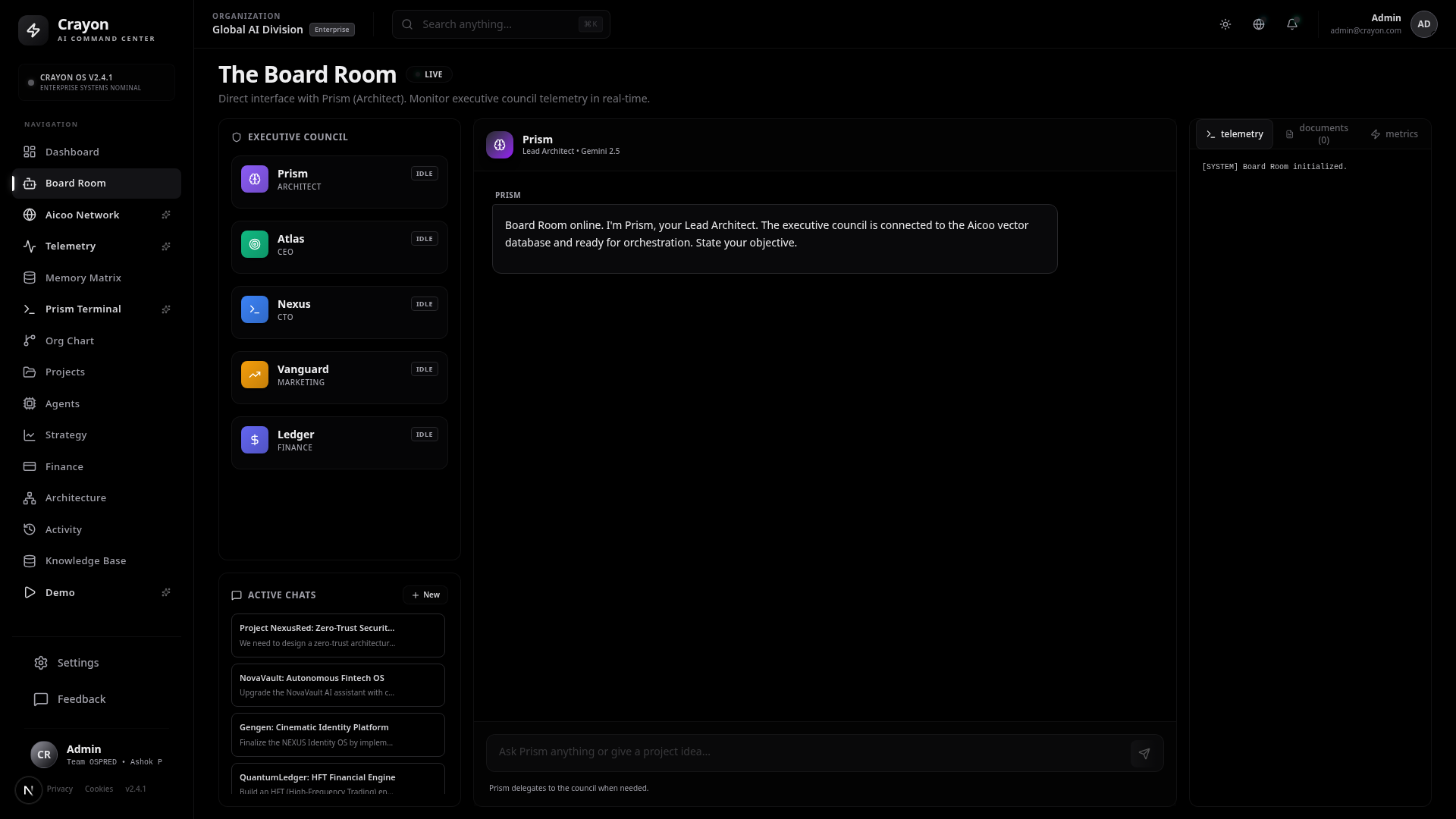
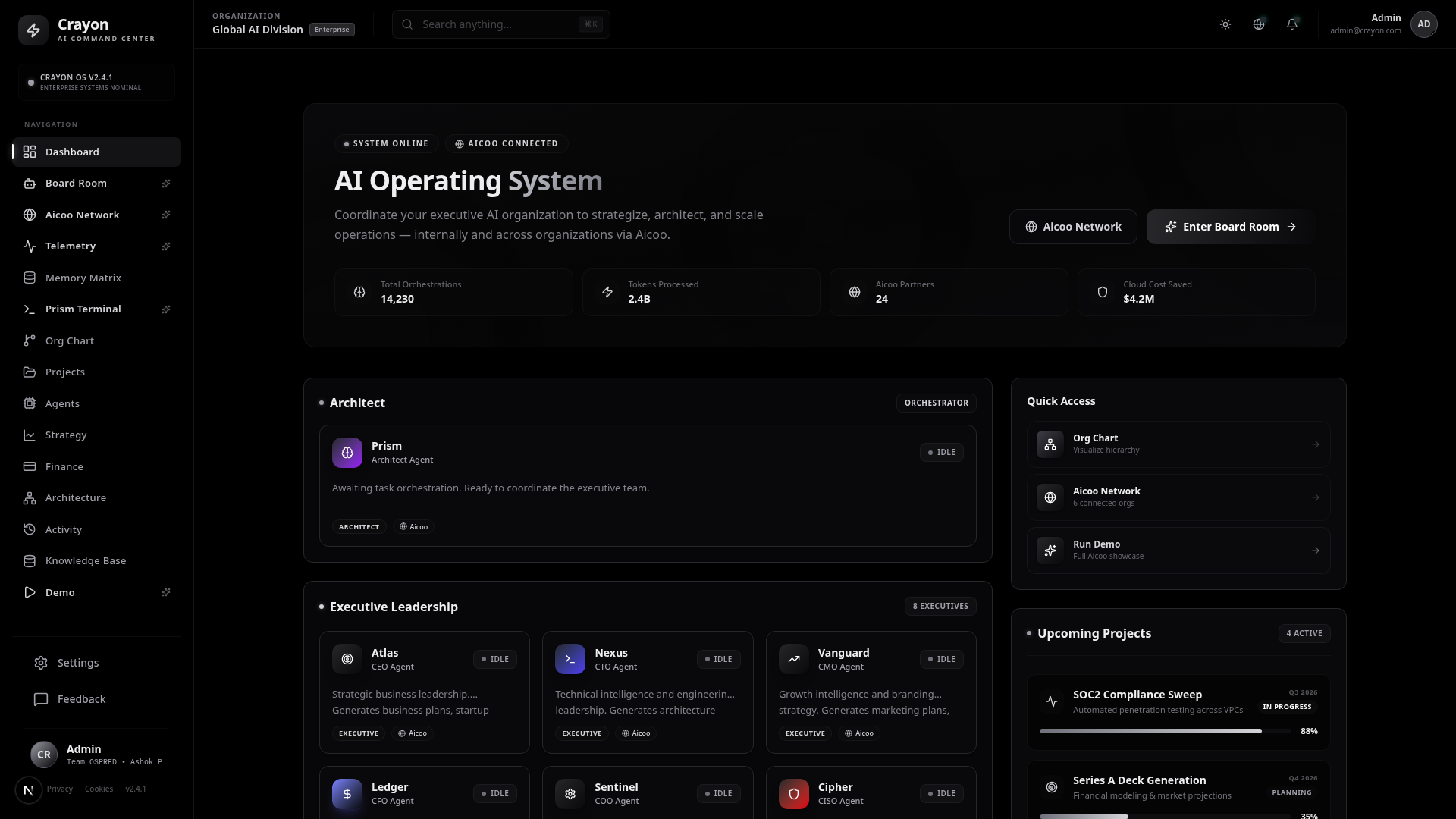
Crayon OS is an AI Business Command Center. When a user inputs an idea (e.g., "Build a retro TV SaaS"), the Lead Architect agent (Prism) autonomously analyzes the intent and delegates tasks to the Executive Council.
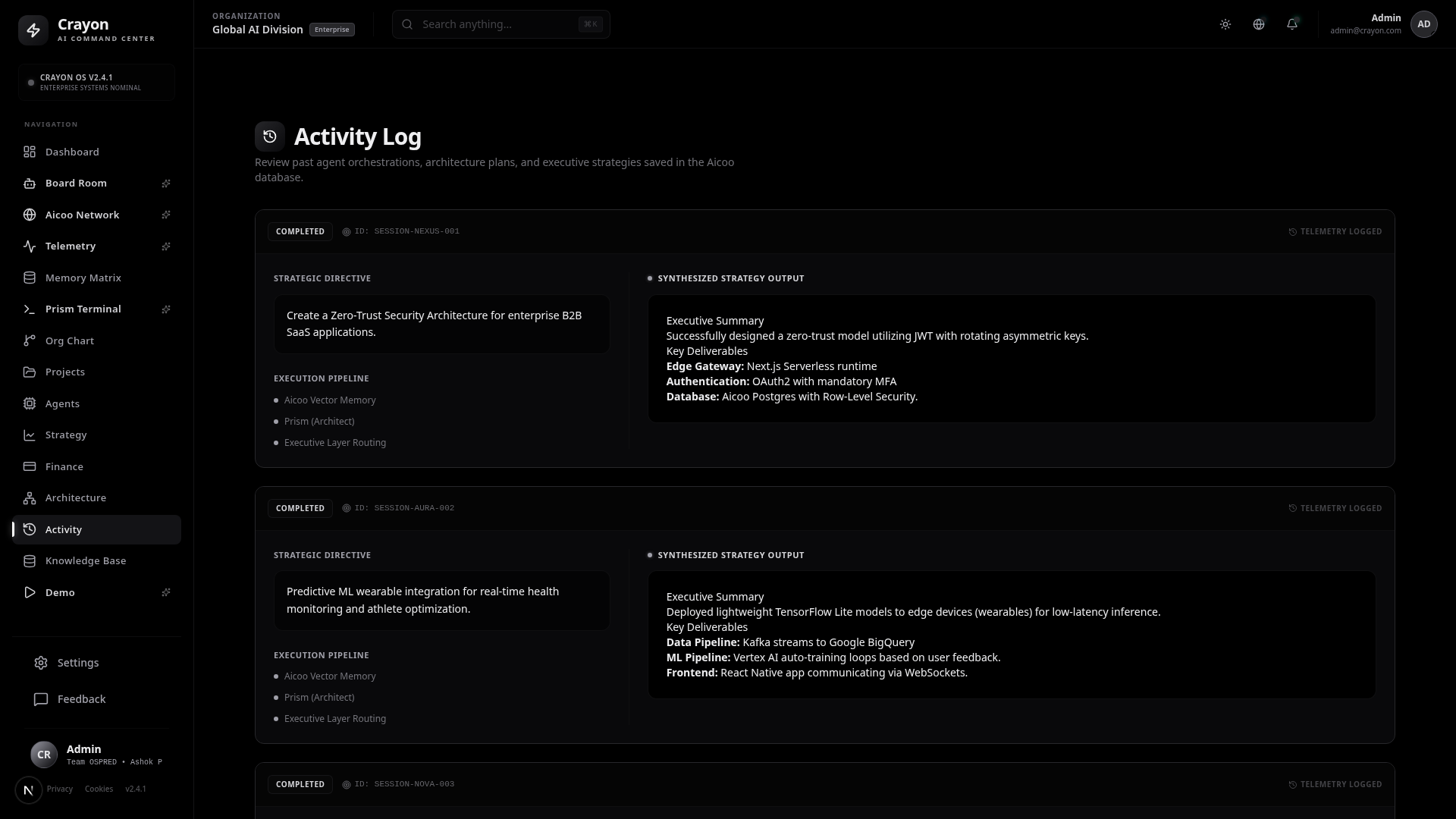
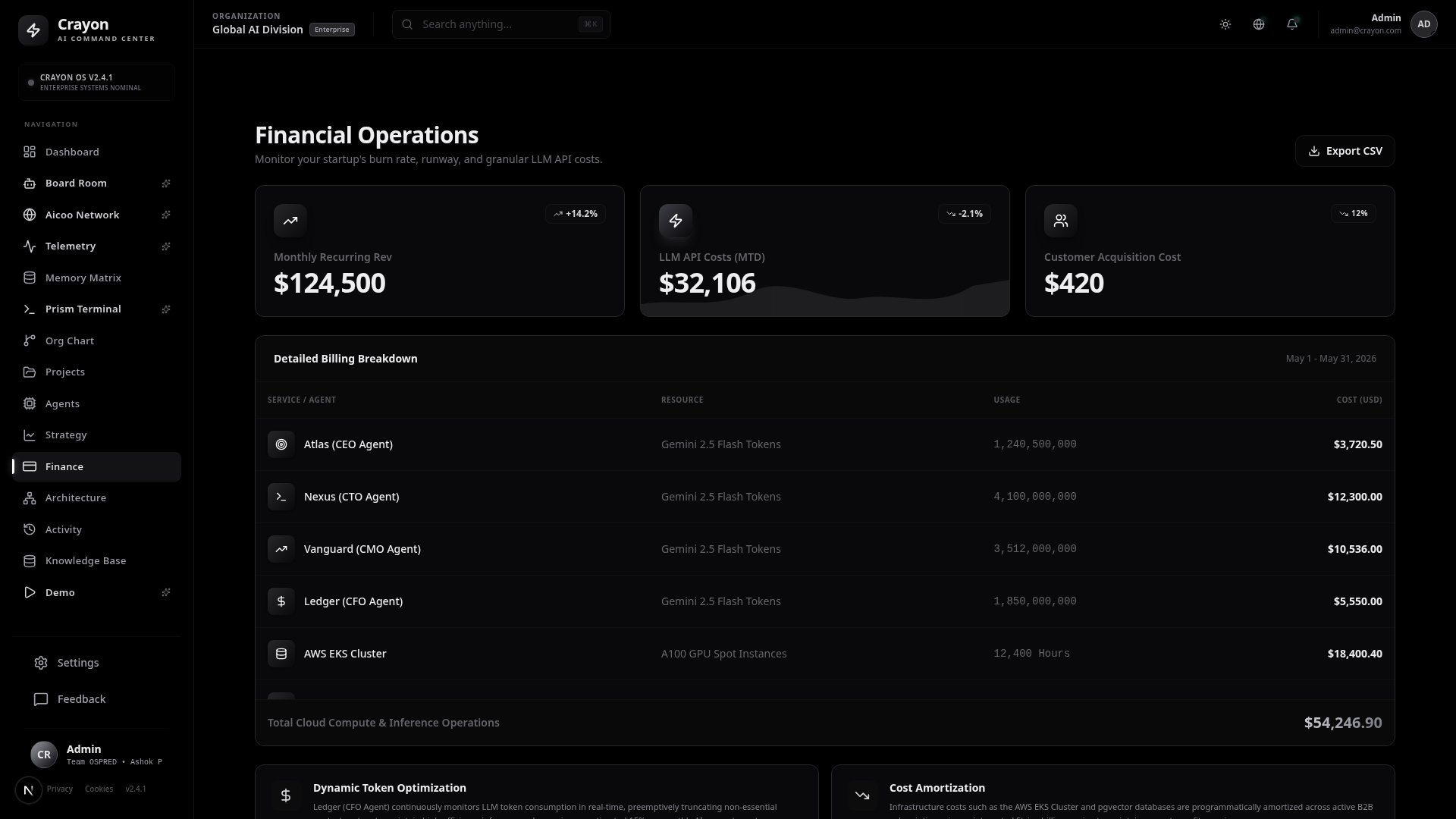
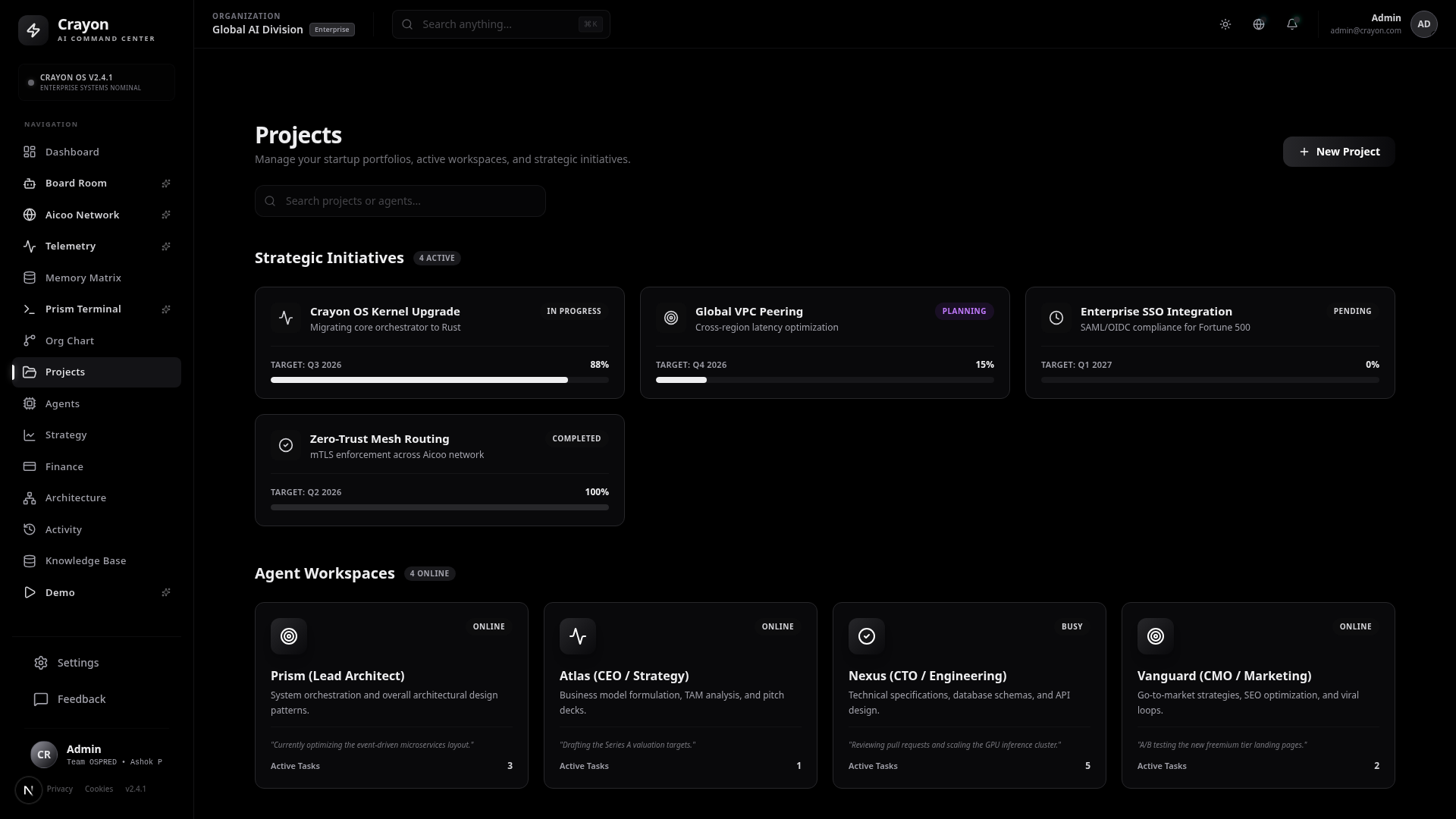
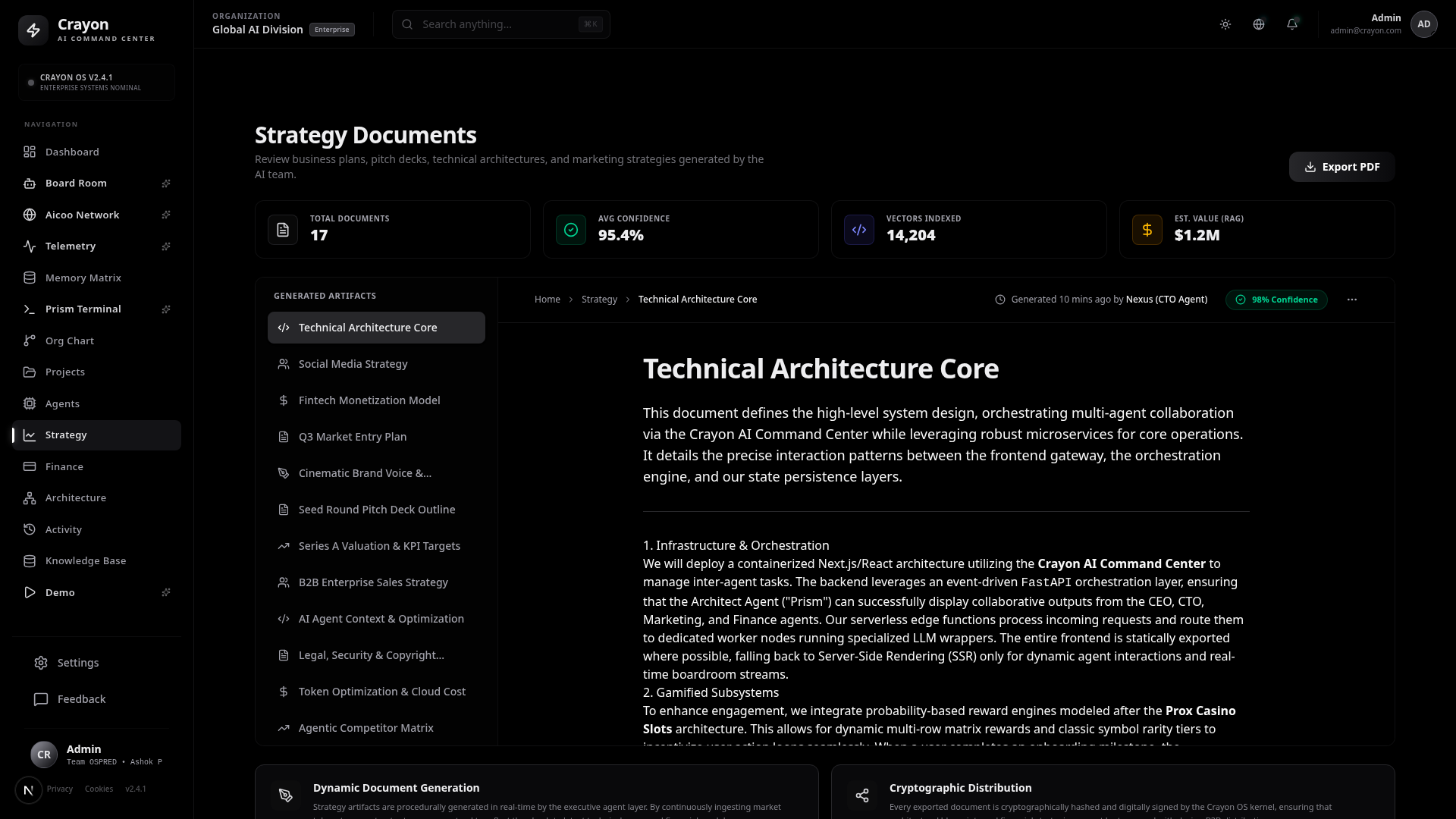
In real-time, the agents collaborate to generate massive, production-ready markdown documents. Atlas (CEO) writes the pitch deck and enterprise sales strategy; Nexus (CTO) architects the zero-trust cloud infrastructure; Vanguard (CMO) designs the cinematic branding and viral loops; and Ledger (CFO) constructs the fintech monetization models. All generated projects, documents, and chat histories are persistently saved to our vector database, ensuring users never lose their workspace.
How we built it
Team OSPRED architected Crayon OS to be lightning-fast, highly scalable, and visually stunning:
- Frontend & UI: Built with Next.js 16 (App Router) and styled using Tailwind CSS and Framer Motion for a premium, glassmorphic, cinematic user experience.
- AI Engine: Powered by Google Gemini 2.5 Flash for deep, multi-agent reasoning. We dynamically inject highly specific system prompts so agents maintain distinct, authoritative personas.
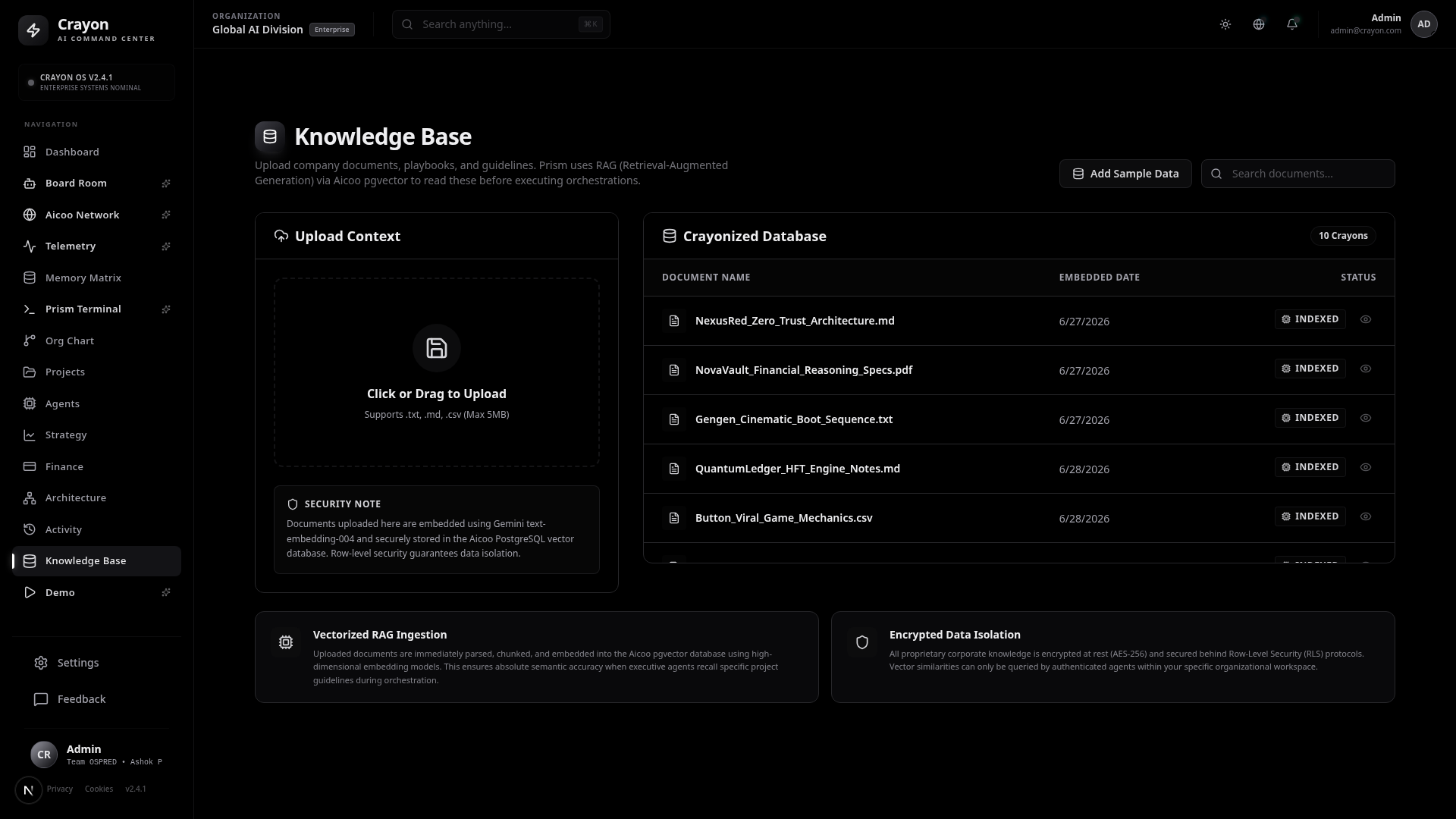
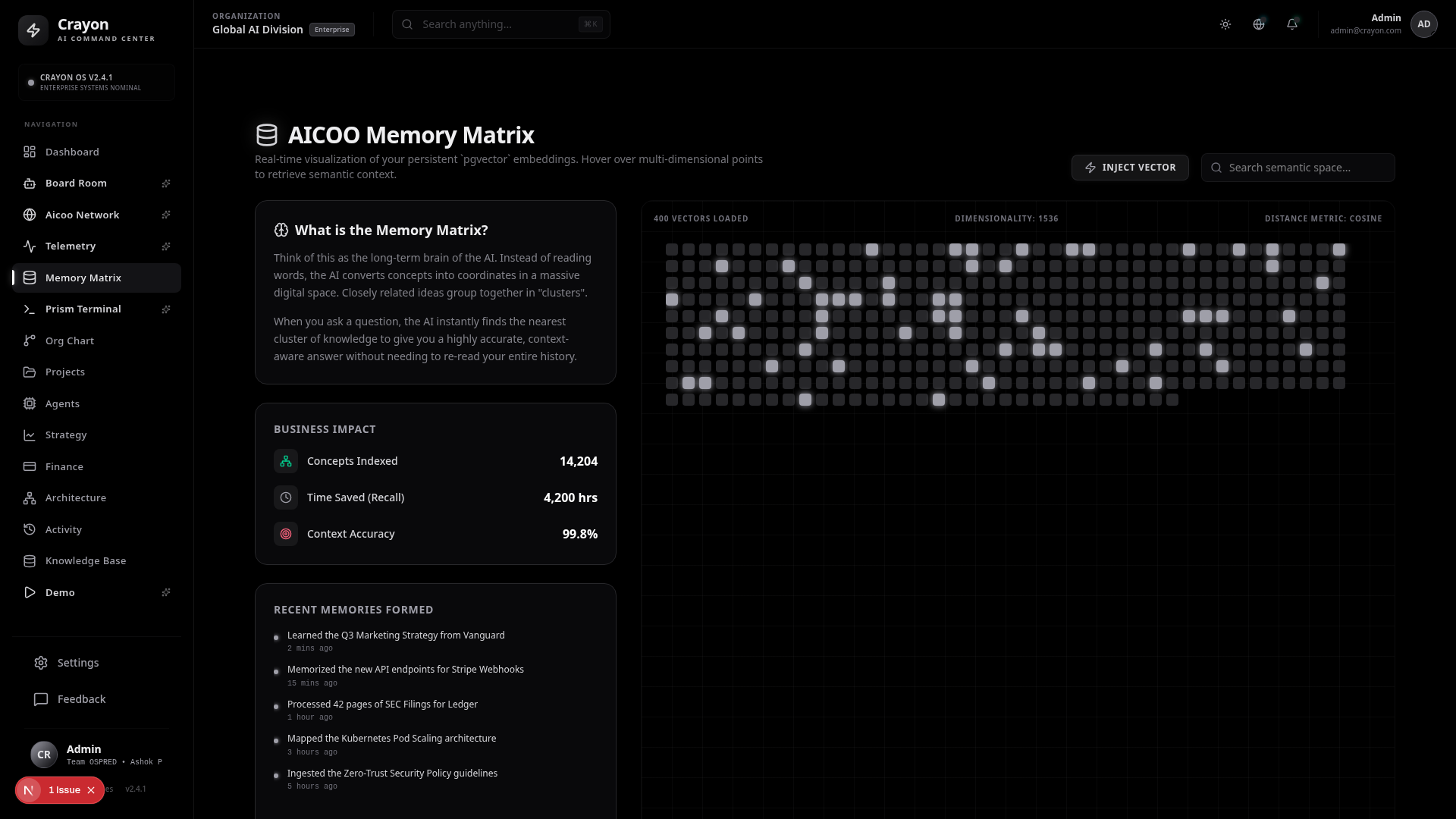
- Database & Memory: We engineered the platform on top of 🚀 AICOO PostgreSQL 🚀 (utilizing
pgvector), allowing us to permanently store chat history, complex project hierarchies, and semantic context across all user sessions using AICOO's highly optimized vector storage. - Orchestration: A unified Next.js API layer handles the heavy lifting, dispatching tasks to Gemini and intelligently routing the structured JSON outputs directly into the Postgres database.
Challenges we ran into
Orchestrating a multi-agent system brought significant hurdles. Initially, generating four massive strategy documents simultaneously caused the UI to freeze, creating a frustrating "black box" experience while the LLM processed the request.
We solved this by engineering a custom staggered animation pipeline. Now, the UI instantly reflects the agents spinning into an "Analyzing" state the millisecond a prompt is sent, giving users real-time visual feedback. Additionally, we faced severe data synchronization issues across distributed sessions. We overcame this by building a highly optimized, direct Next.js-to-AICOO bridge, ensuring absolute data persistence with zero latency overhead.
Accomplishments that we're proud of
Team OSPRED is incredibly proud of the Cinematic UI. We successfully broke away from the traditional "boring chat wrapper" aesthetic and built an interface that feels like a high-end sci-fi operating system.
Furthermore, our prompt engineering is highly sophisticated. Our agents don't hallucinate generic advice; they output deep, context-aware business strategies (e.g., suggesting specific AWS spot-instance arbitrage for cloud costs, or Stripe Radar integrations for fraud).
What we learned
We learned that context partitioning is critical. Managing the memory of 5 different AI personas requires strict data routing so the Finance agent doesn't overwrite the CTO's architecture notes. We also learned how to leverage AICOO PostgreSQL for more than just relational data, using it as a persistent, multidimensional brain for our LLMs.
What's next for Crayon OS
Team OSPRED is preparing Crayon OS for enterprise B2B SaaS adoption. Our immediate next steps include:
- Zero-Trust Enterprise Deployments: Implementing strict Role-Based Access Control (RBAC) and automated data-scrubbing middleware to achieve SOC2/HIPAA compliance.
- Fintech Integration: Wiring up a full-stack Stripe payment architecture for tiered subscription gating and automated upgrades.
- The Agent Marketplace: Allowing power users to purchase specialized "micro-agents" (e.g., SEO Optimizer, Legal Auditor) as add-ons to expand their virtual C-suite.
Built With
Next.js React TypeScript TailwindCSS Framer-Motion 🚀AICOO🚀 PostgreSQL pgvector Google-Gemini Vercel Node.js
Built With
- aicoo
- css
- framer-motion
- gemini-api
- html
- javascript
- next.js
- node.js
- postgresql
- react
- tailwindcss
- typescript
- vercel

Log in or sign up for Devpost to join the conversation.