-
-
Logo
-
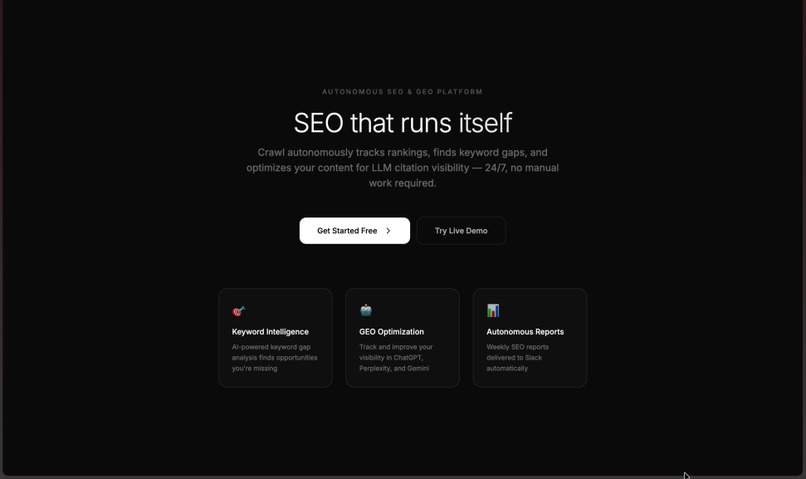
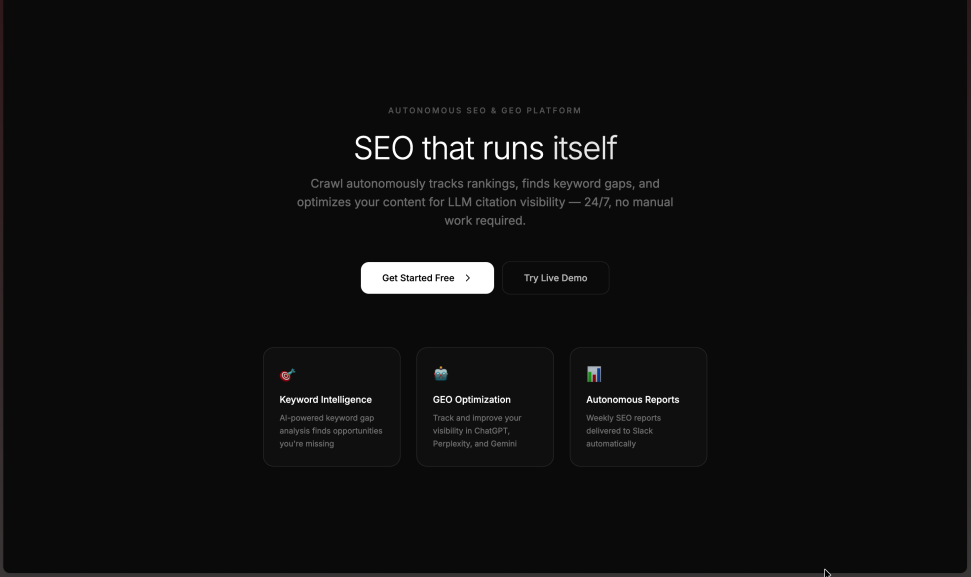
Landing page
-
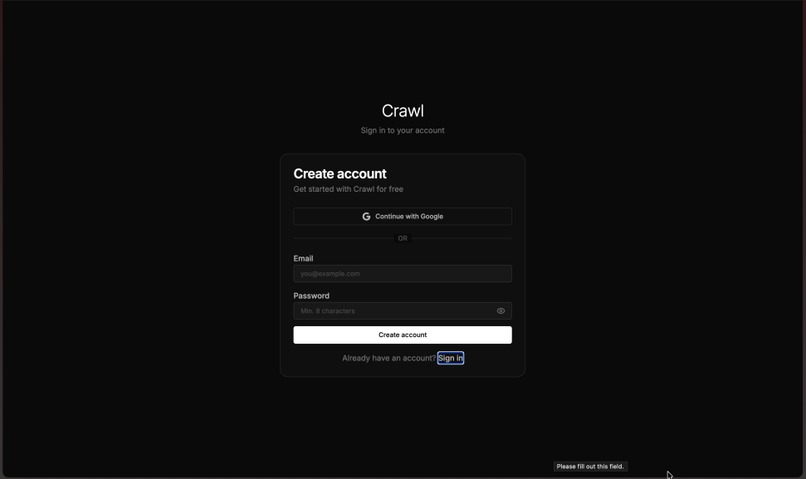
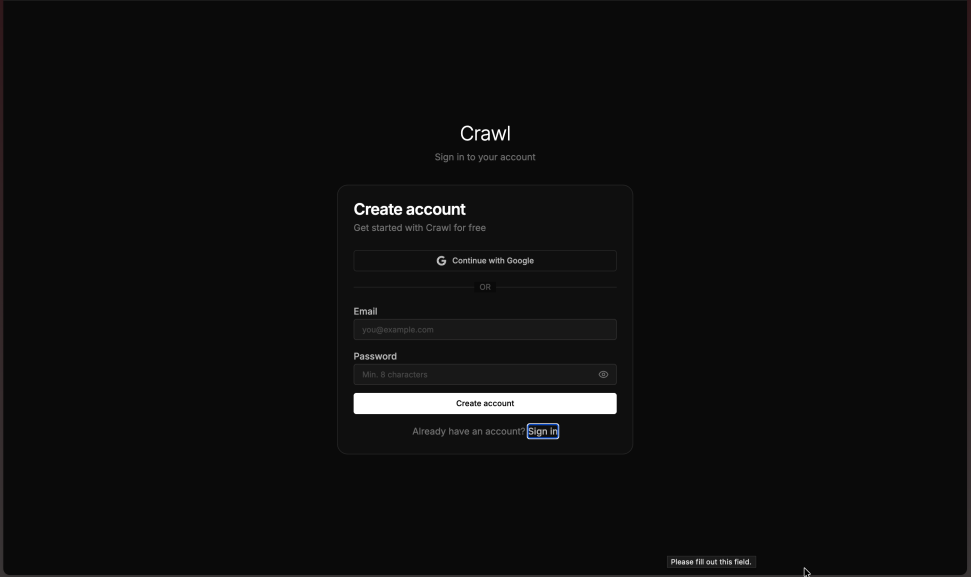
Register
-
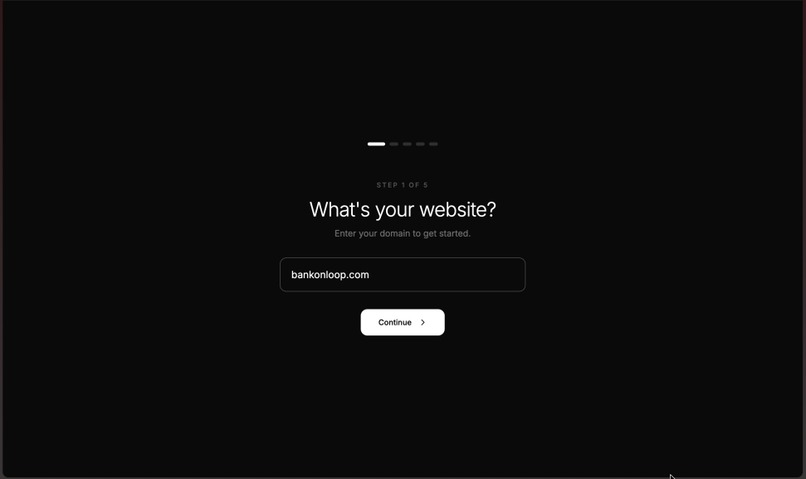
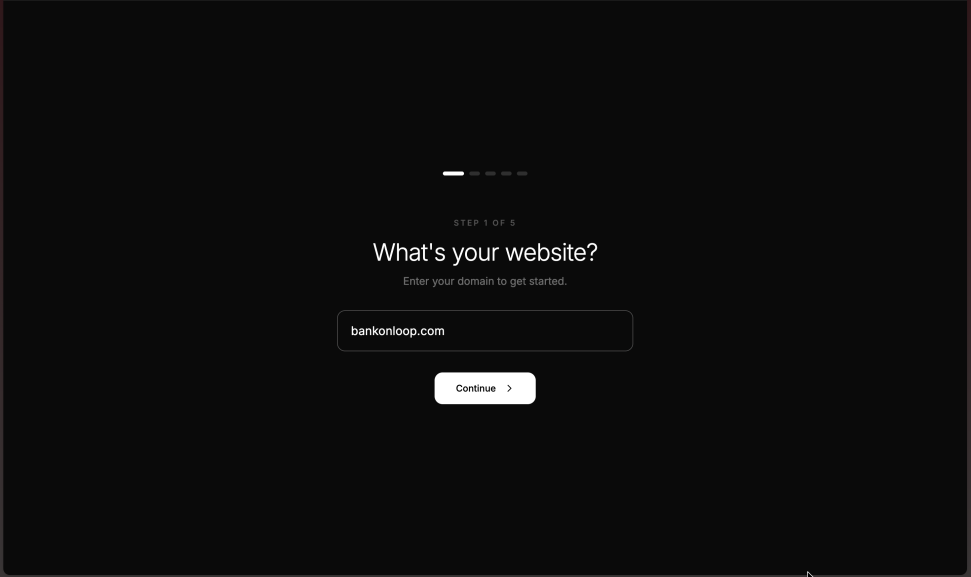
Onboarding
-
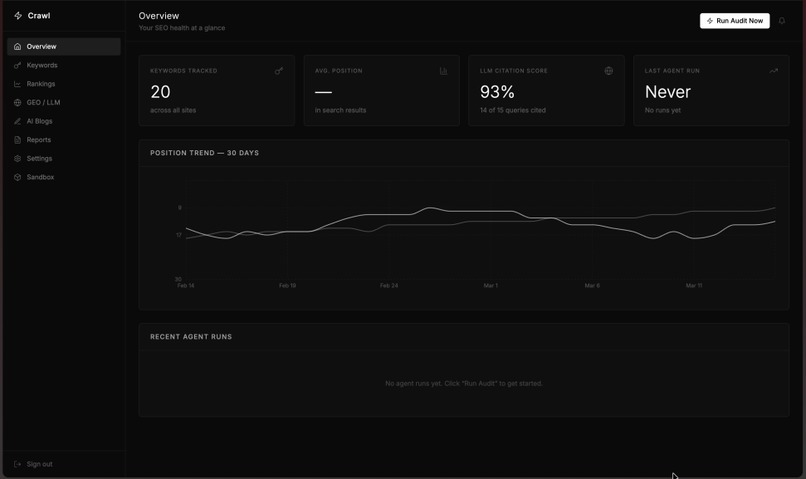
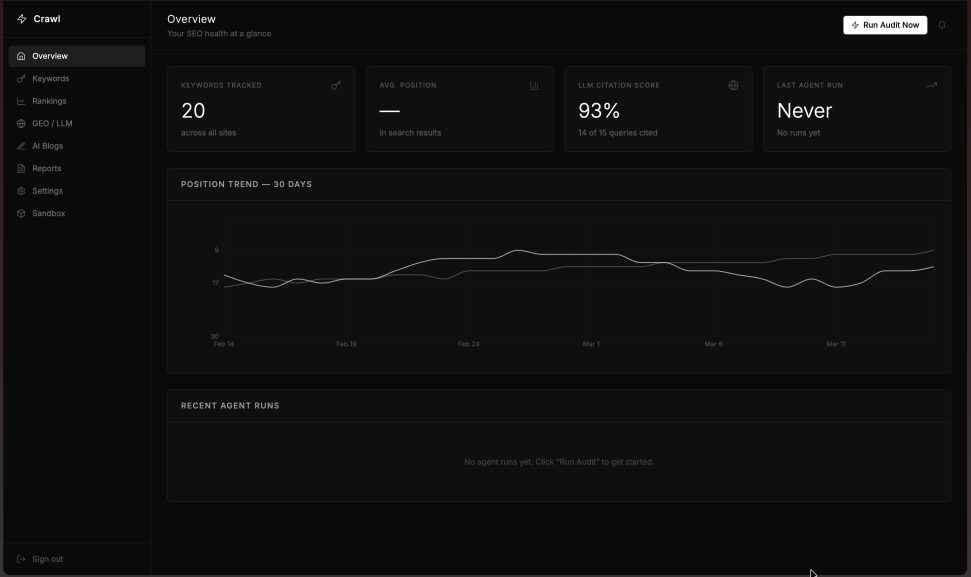
Overview
-
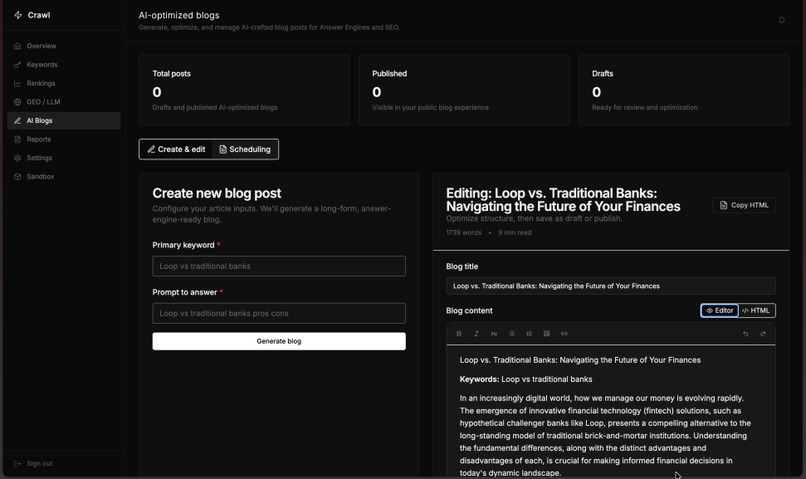
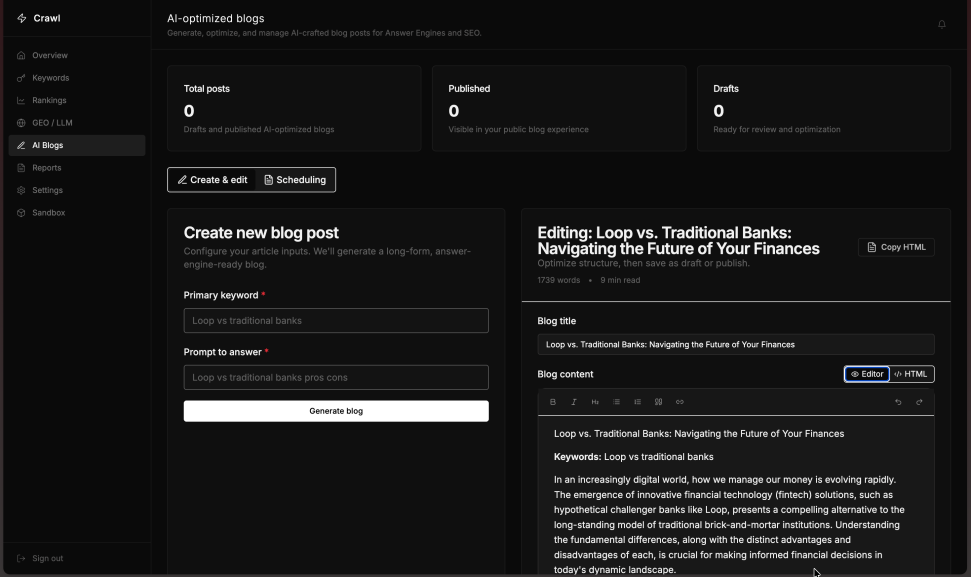
AI-Optimized Blog Posts
-
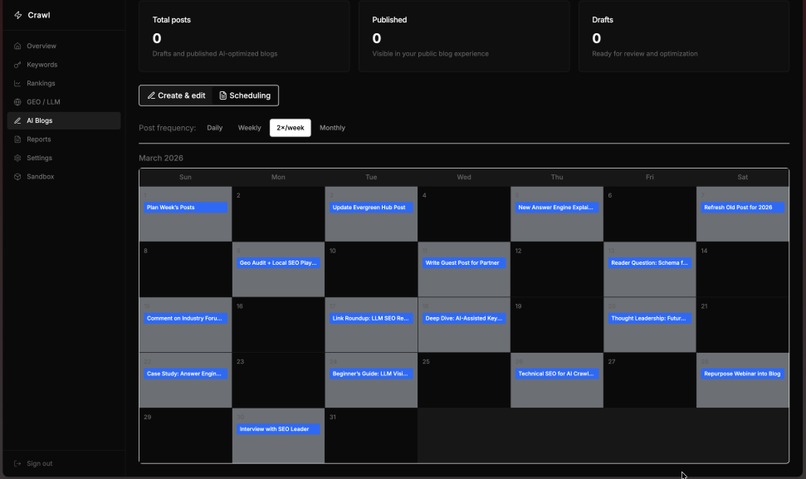
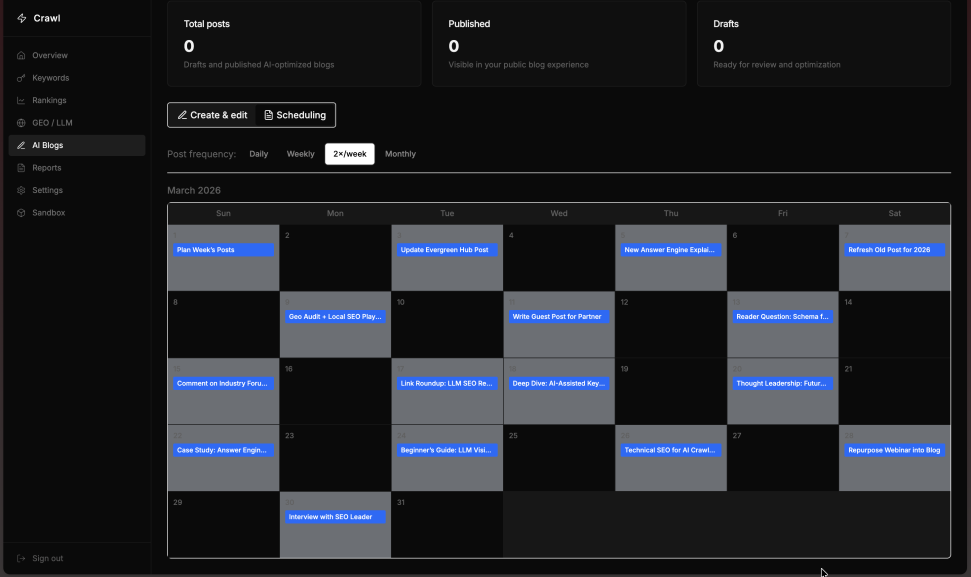
Scheduling/Calendar
-
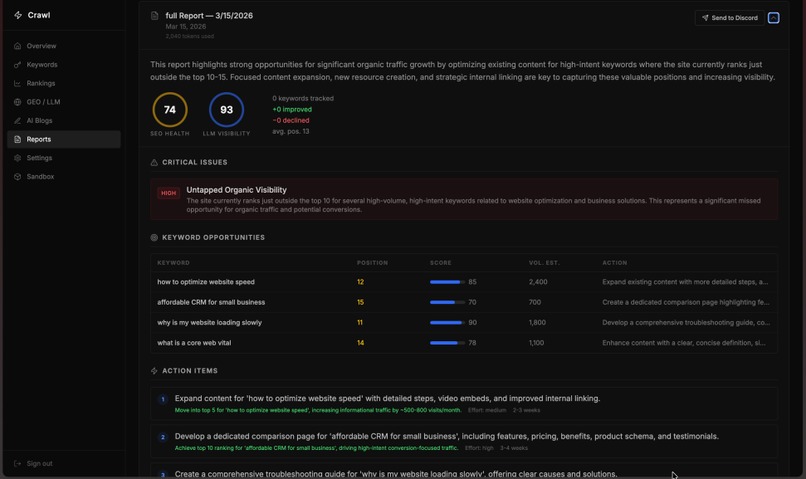
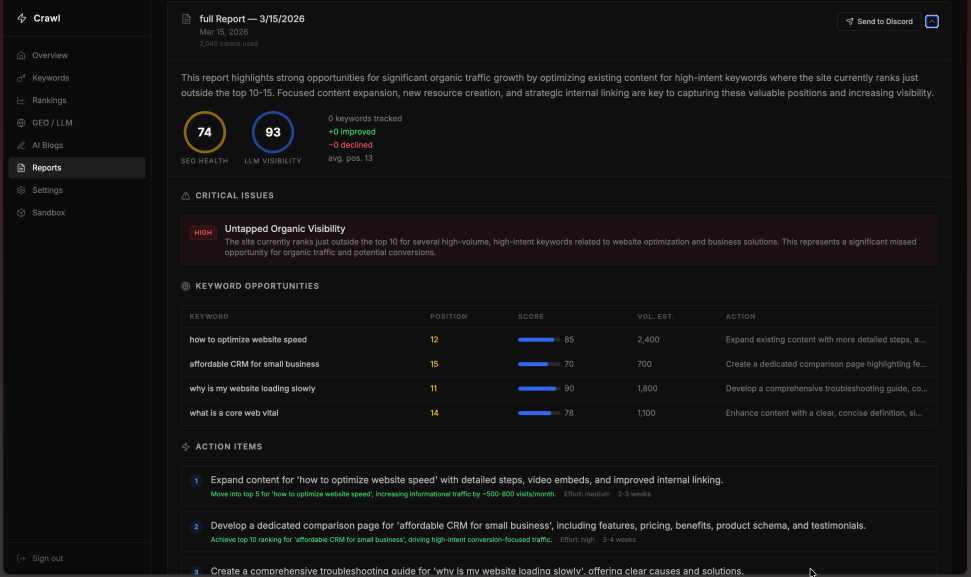
Reports
-
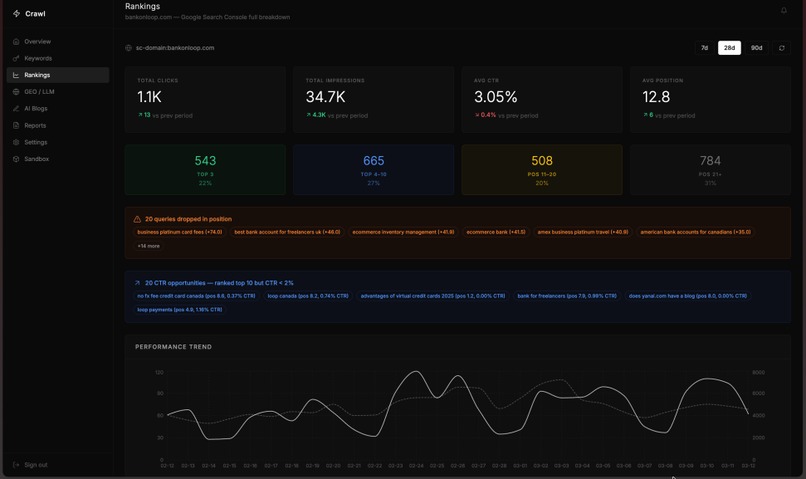
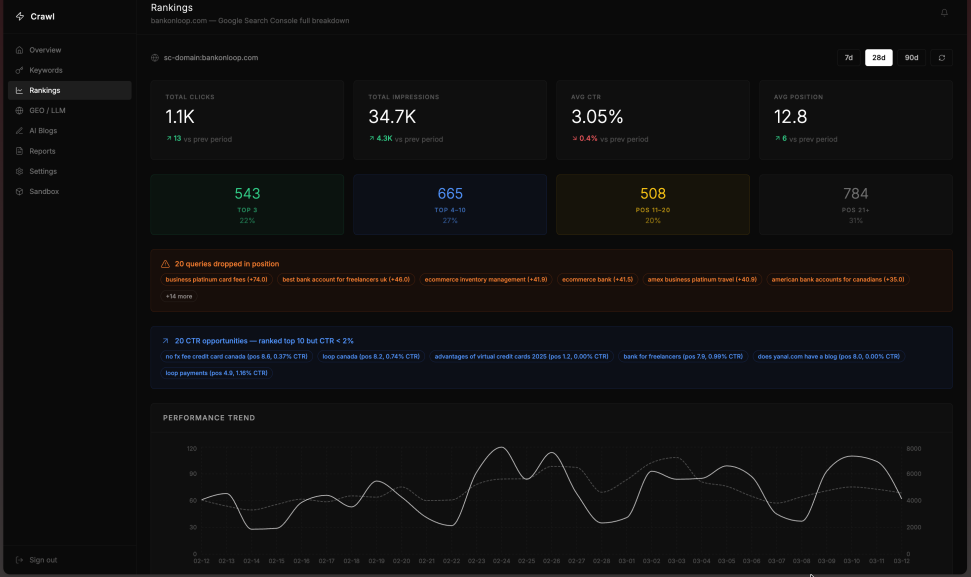
Rankings Page
-
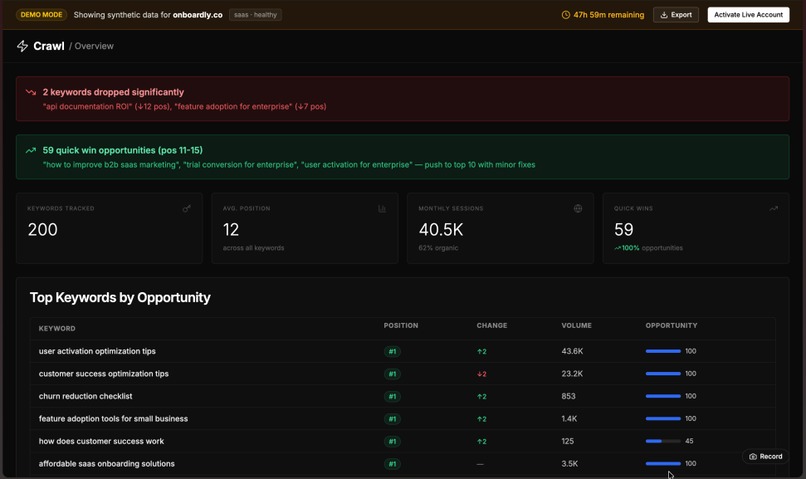
Sandbox Demo
-
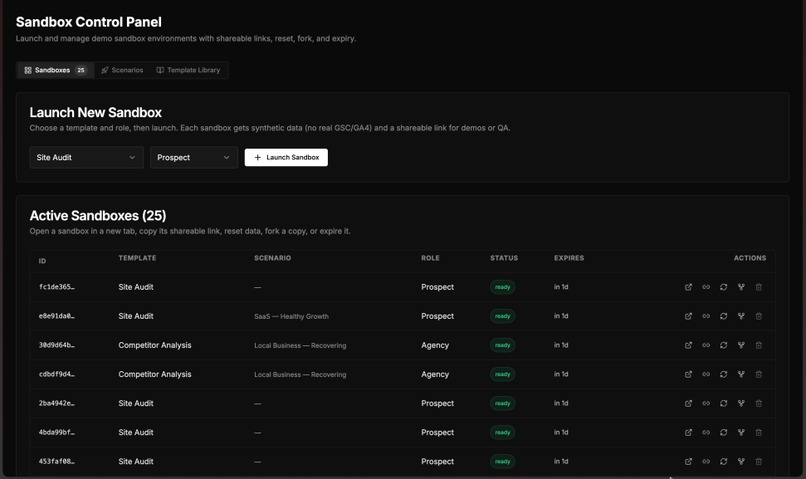
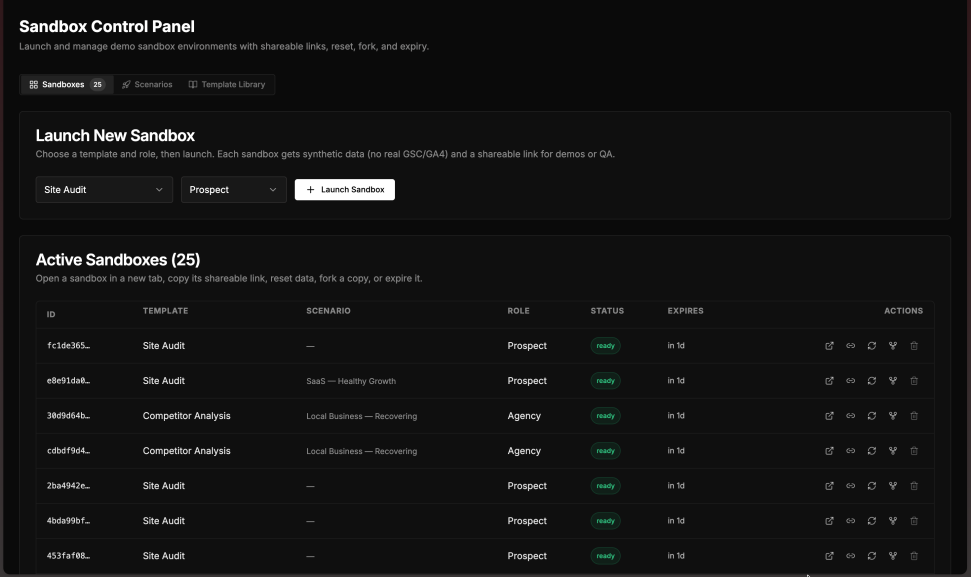
Sandbox Control Panel
Inspiration
A close friend of ours, started an SEO/GEO agency and eventually exited it. That story was a huge inspiration for us. It made us wonder: what if the entire SEO/GEO workflow could be automated?
That idea became OpenClaw --> an AI-native SEO agency in a box. Even though SEO tools are a crowded space, we believe there’s still room to rethink how the whole pipeline works when AI agents handle most of the execution.
Our friend is currently building at Clover Labs but always thinking about the next big thing. We wanted to build something that carries that same builder spirit forward.
What it does
Crawl runs your SEO and GEO automatically.
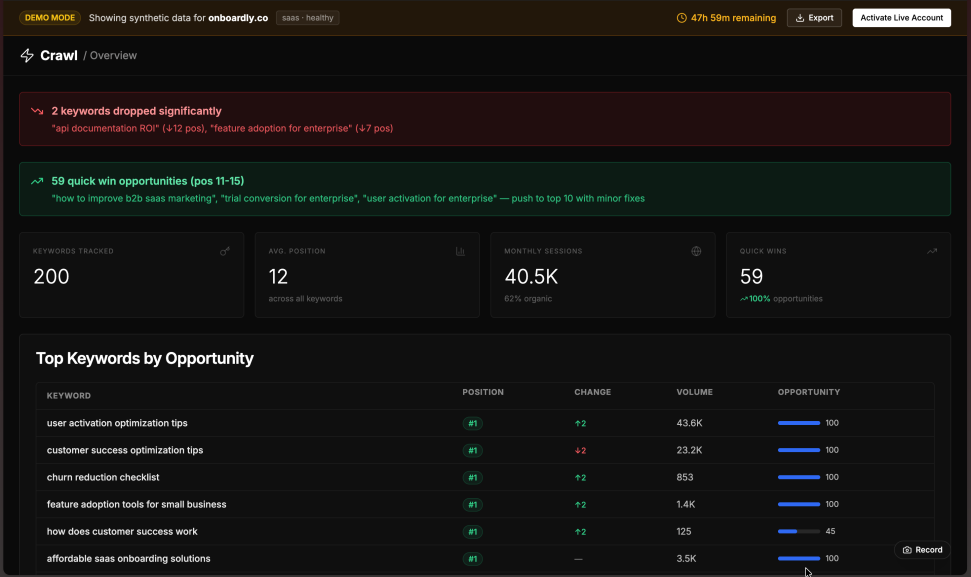
It connects to your Google Search Console to track search rankings, uses AI to identify keyword gaps, and measures how often AI tools like ChatGPT, Perplexity, and Gemini cite your content.
The platform includes:
- A dashboard for keywords, rankings, and GEO scores
- AI-generated blog posts driven by keyword data
- Automated reporting via Discord or Slack
- Continuous monitoring of AI citations and search performance
The idea is simple: set it up once, then let it run.
How we built it
The stack combines a modern web app with an AI agent backend:
Frontend
- Next.js dashboard
- TipTap editor
- Recharts + TanStack for data visualization
Backend
- Supabase for authentication and database
- Python agent system using FastAPI + LangChain/LangGraph
Infrastructure
- BullMQ + Redis for background job queues
- Google APIs for Analytics and Search Console
- Gemini for AI generation
Everything lives in a Turborepo monorepo, allowing the web app and shared services to stay synchronized.
Challenges we ran into
One of the biggest challenges was getting the OpenClaw architecture working reliably.
We also ran into a lot of friction setting up Google Cloud and Search Console integrations. Permissions, API quotas, and authentication flows required quite a bit of iteration before everything worked smoothly.
Making all the moving pieces; crawling, keyword analysis, GEO scoring, content generation, and reporting --> work together in a stable pipeline was another major challenge.
Accomplishments that we're proud of
We’re especially proud that the frontend feels clean and intuitive despite the complexity behind the scenes.
Other highlights include:
- Keeping token usage low so the system stays cost-efficient
- Building a fully connected pipeline from
crawl → keyword discovery → GEO analysis → AI blog generation → reporting - Implementing Discord webhook notifications
- Creating an AI agent audit system to track what the automation is doing internally
Seeing the entire system run end-to-end was a big milestone for us.
What we learned
We learned a lot about OpenClaw, AI automation systems, and integrating multiple services together.
Our friend already had deep expertise in SEO/GEO, but the rest of us had to learn the ecosystem from scratch.
While we’re not experts yet, we’ve come a long way in understanding how modern SEO and AI-driven discovery actually work.
What's next for Crawl
Our goal is to turn Crawl into a real platform.
We want to continue improving the automation, scaling the infrastructure, and treating it like a startup rather than just a project.
The dream path is simple:
Build → Grow → Apply to YC (!!!) → See how far it can go.
Badabing badabang.
AI USE: More than 70% generated with AI.
Built With
- autoprefixer
- bullmq
- class-variance-authority
- clsx
- cmdk
- date-fns
- eslint
- fastapi
- gemini
- google-analytics-api
- google-generative-ai
- google-search-console
- httpx
- javascript
- langchain
- langgraph
- lucide-react
- next-themes
- next.js
- ngrok
- node.js
- postcss
- pydantic
- python
- radix-ui
- react
- recharts
- redis
- slack-api
- supabase
- supabase-auth
- tailwind-merge
- tailwindcss
- tanstack-query
- tanstack-table
- tiptap
- turbo
- turborepo
- typescript
- upstash
- uvicorn
- vercel
- zod
- zustand


Log in or sign up for Devpost to join the conversation.