-
-
crave_storyboard
-
crave_research
Inspiration
Have you ever suddenly craved something sweet, spicy, or salty and wondered why? For a long time, we assumed cravings were random impulses. But as we began learning more about nutrition and gut health, we realized that cravings can often be signals from our body, responses to changes in energy levels, hormones, or gut microbiome activity.
This idea led us to imagine a future where people no longer have to guess what their body needs. What if technology could interpret these signals and translate them into clear, actionable insights? That vision became Crave - a system that transforms cravings into data and helps users make more informed food choices.
The Idea
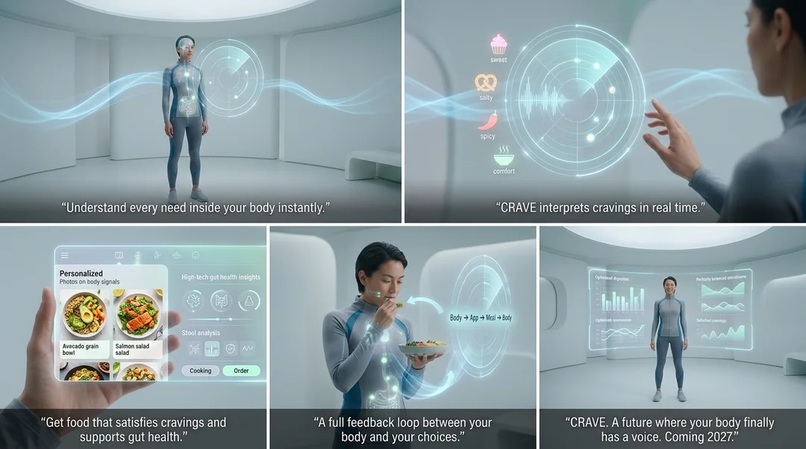
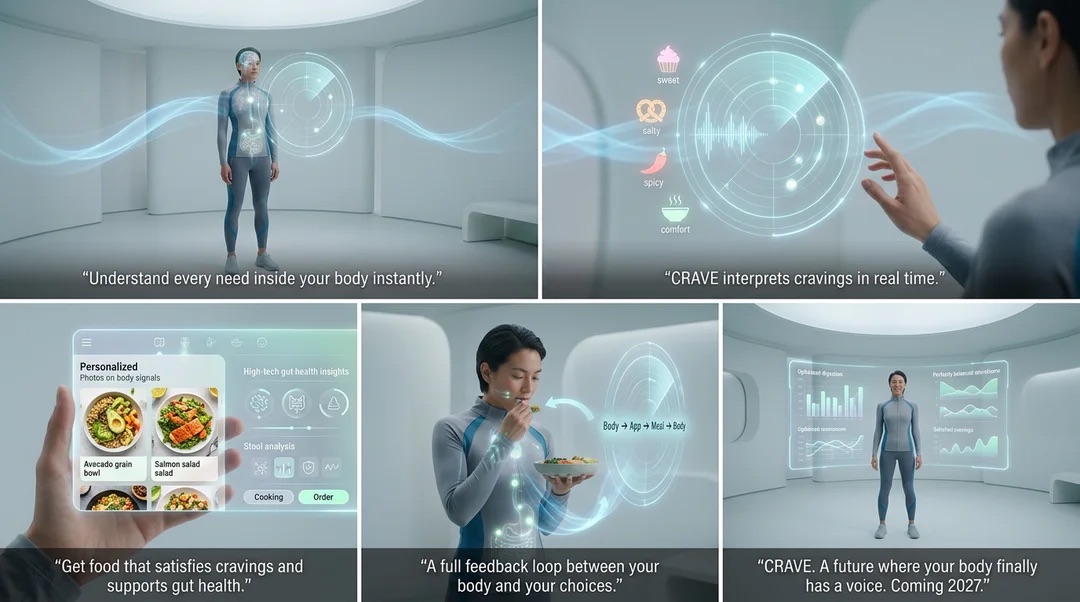
Crave is built on a simple belief: Cravings are not random. They are signals. The concept system imagines a future where biological signals from the body such as brain responses, endorphin activity, and gut health patterns can be interpreted using advanced sensors and data analysis. These signals are translated into insights through a radar-based interface that detects the type of craving a user is experiencing. Once a craving is identified, crave recommends foods that satisfy the craving while also supporting gut health and overall wellbeing.
What it does
Crave is a concept system that transforms cravings into actionable health insights. By interpreting biological signals from the brain and gut, the system detects the type of craving a user is experiencing and translates it into personalized food recommendations. The system uses a radar-style interface to visualize cravings such as sweet, salty, spicy, or comfort-based. Once a craving is detected, crave recommends dishes that satisfy the craving while also supporting gut health and balanced energy levels. Each recommended dish includes insights based on gut and stool analysis, helping users understand how the food may support digestion and microbiome health. Users can view preparation instructions, choose from multiple options, or order from recommended restaurants if they prefer not to cook. Crave also allows users to save meals to their favorites, making it easy to return to foods that work well for their body. Over time, the system learns from the body’s responses to food, creating a continuous feedback loop between biological signals and food choices.
How we built it
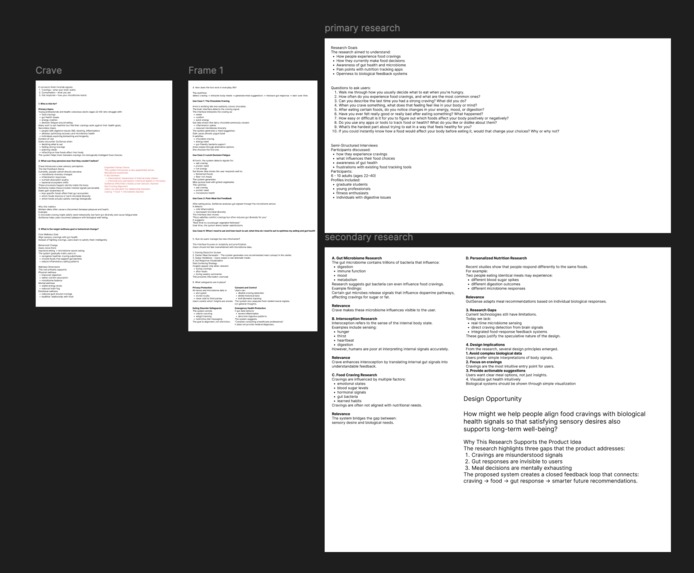
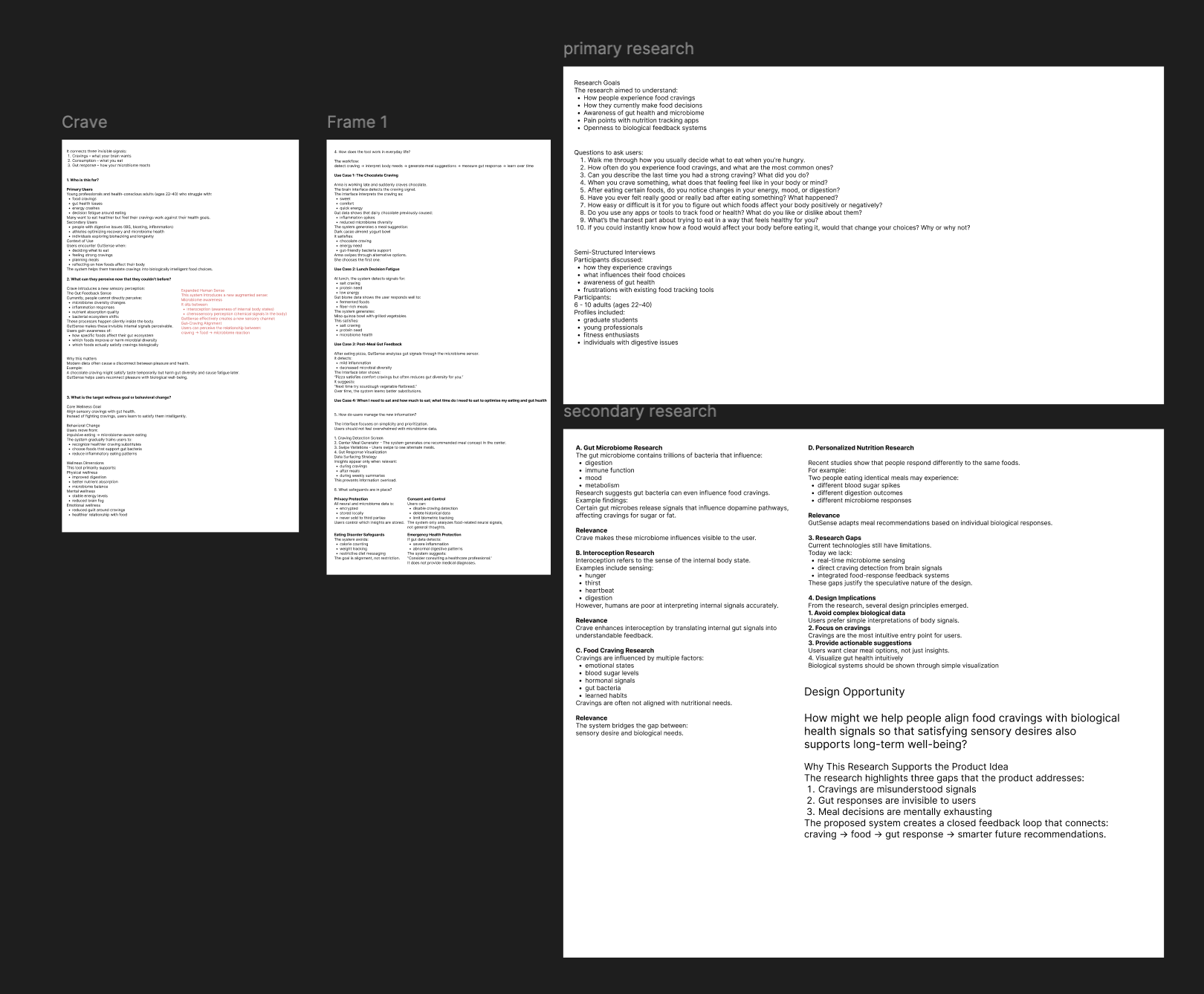
Crave was designed as a future-focused product concept centered around user experience and health technology. The process began with secondary research into food cravings, gut health, and microbiome science to better understand how biological signals influence eating behavior. We explored existing studies on the relationship between cravings, brain responses, and gut microbiome activity, as well as emerging technologies such as ingestible sensors and internal monitoring systems that could collect biological data in the future. Alongside this, we conducted primary research by exploring into how people make food decisions and discussing common experiences around cravings, food choices, and digestive health. These conversations revealed that many people experience strong cravings but often do not understand what their body is signaling or how to respond in a healthy way. Using insights from both research methods, we designed a system that interprets signals from the body and translates them into clear food guidance. The user experience was built around a radar-style interface that visually represents cravings and guides users toward food recommendations. The product flow was intentionally designed to be simple and intuitive: detect the craving, explain the signal, recommend foods, and track the body’s response. This structure creates a feedback loop where the system continuously learns from the user’s biological signals and improves recommendations over time.
Challenges we ran into
One of the biggest challenges was designing a system that feels innovative while still remaining believable and grounded in real-world health science. Because the concept explores future technologies like ingestible sensors and body signal monitoring, it was important to present these ideas in a way that feels realistic and useful. Another challenge was simplifying complex biological data. Signals from the brain, gut, and digestion can be difficult to interpret, so the interface needed to present this information in a clear and intuitive way for everyday users. Balancing functionality, simplicity, and scientific credibility required careful design decisions throughout the project.
Accomplishments that we're proud of
We are proud of creating a system that connects several complex ideas, cravings, gut health, and food decision-making into one cohesive product experience. The radar-based craving detection interface helps visualize biological signals in a way that is easy to understand. The food recommendation system also connects those signals to practical actions, such as cooking meals, ordering from restaurants, or saving foods for later.
Another accomplishment is the concept of the feedback loop, where the body’s response to food continuously improves the system’s recommendations. This idea helps position CRAVE as a long-term health companion rather than just a food suggestion tool.
What we learned
Through this project, we learned how closely connected cravings are to biological processes such as energy levels, hormone signals, and gut microbiome activity. We also learned how important it is to translate complex health data into simple, meaningful insights that users can act on. Designing for health technology requires balancing scientific understanding with clear and intuitive user experiences. Finally, we gained experience thinking about how emerging technologies could shape the future of personalized health and nutrition.
What's next for Crave
The next step for crave would be exploring real-world implementations of the sensing technology that powers the system. Advances in wearable devices, ingestible sensors, and microbiome tracking could make biological signal monitoring increasingly feasible. Future versions of crave could integrate with wearable health devices, expand microbiome analysis, and improve personalization through machine learning. The long-term vision is a system where people can continuously understand their body’s signals and make better food decisions based on real biological feedback. CRAVE imagines a future where people no longer have to guess what their body needs, they can understand it.
Built With
- figma
- figmamake


Log in or sign up for Devpost to join the conversation.