Inspiration
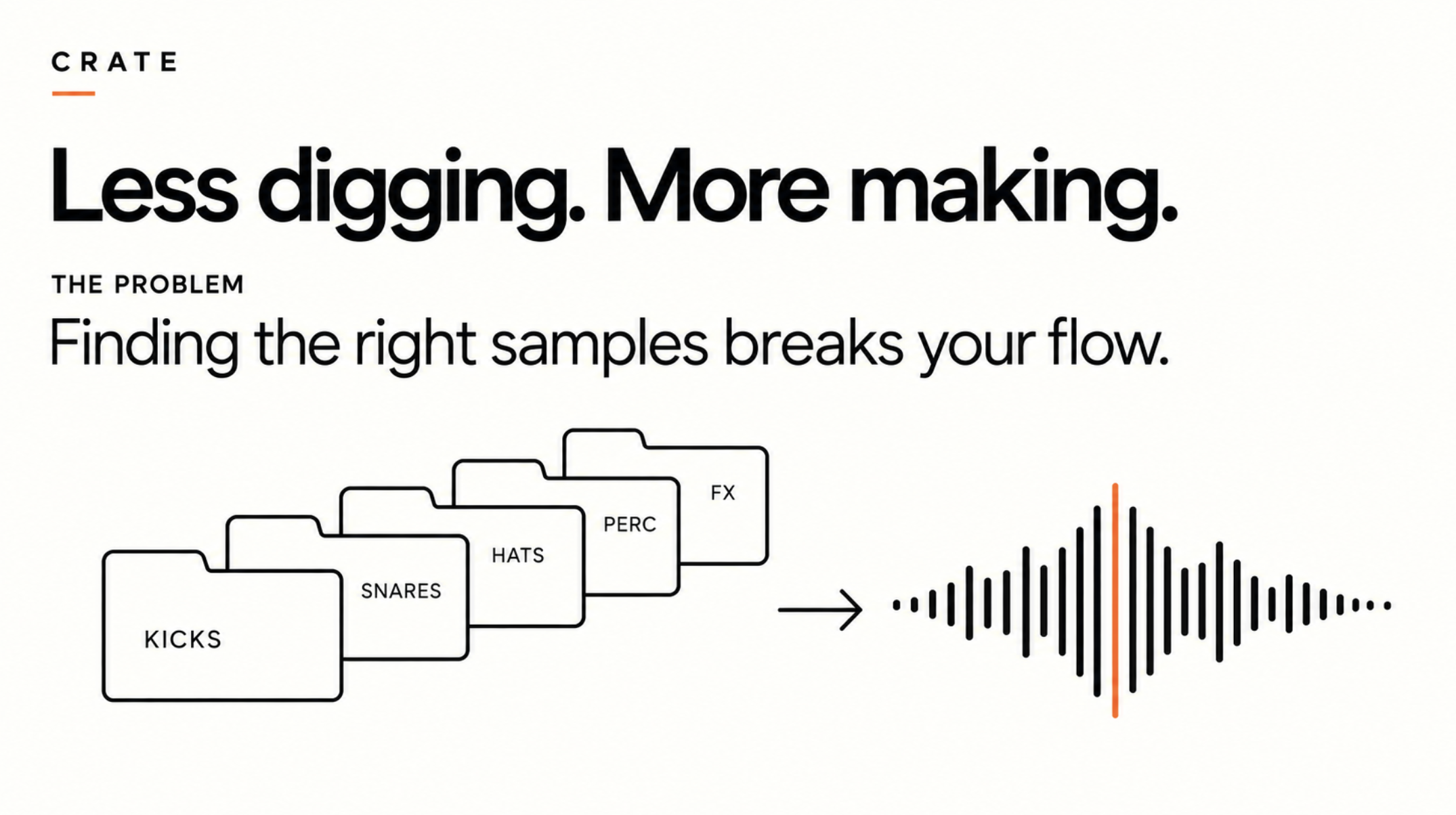
We wanted to bring the feel of an MPC to a phone: something you can tap, play, and experiment with. Finding the right samples can take longer than making the beat itself, so we started with a simple idea: describe what you’re going for and get straight to playing.
The iPhone Duo gave us another way to make it physical. What if folding your phone was part of the performance?
What it does
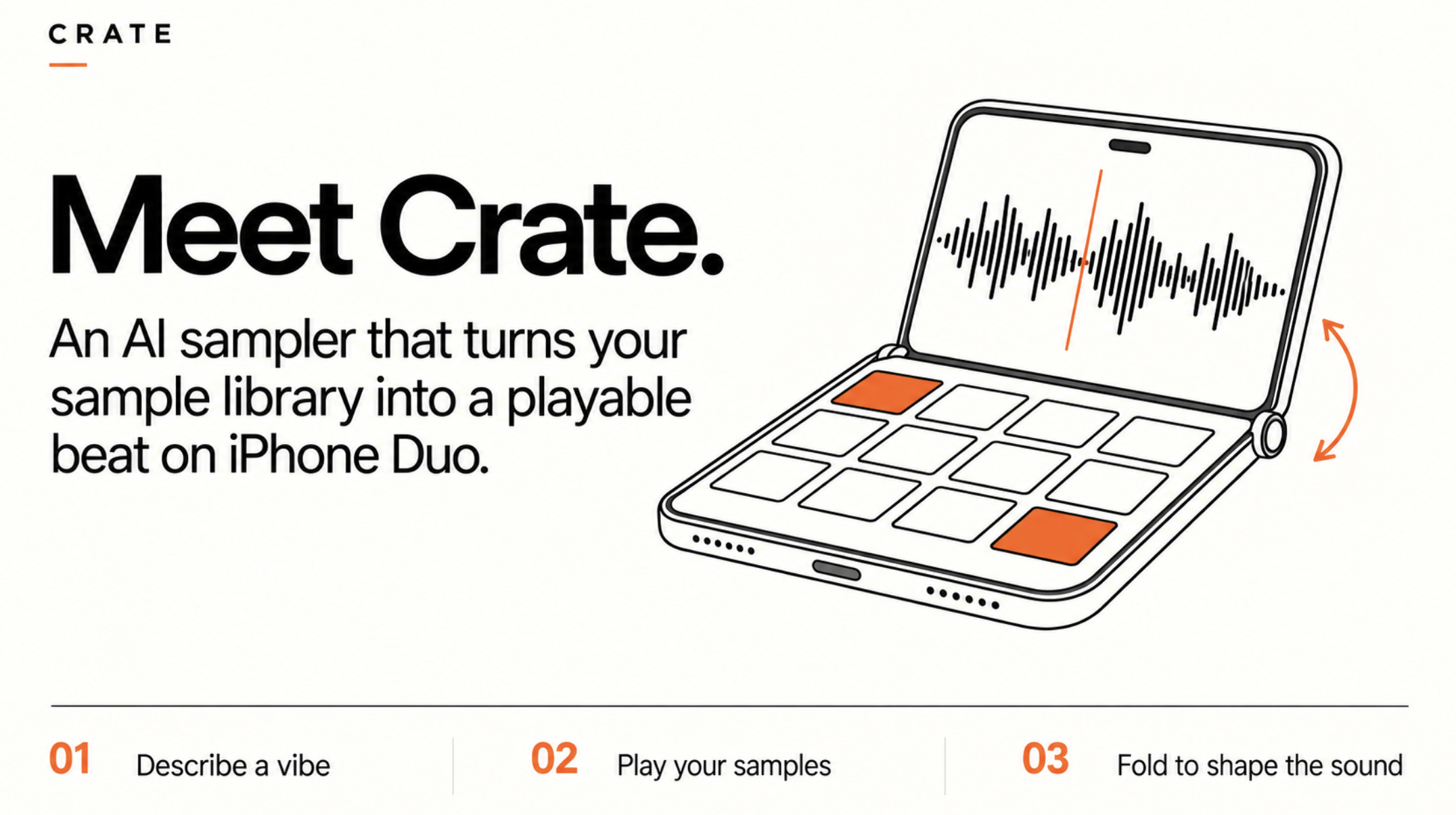
Crate is an AI-assisted sampler designed for iPhone Duo. You describe a vibe, and it finds sounds from your sample library to build a playable kit. The idea is to work with your samples, with AI helping choose and arrange them.
In laptop mode, the lower screen becomes your pad controller while the upper screen shows what’s happening. The outer screen gives the audience a view of the performance. Folding the phone controls effects, and snapping it open brings the beat back for a drop.
How we built it
We built Crate in Swift and SwiftUI, with separate components for the sampler, AI, sample library, and interface.
Our AI approach splits the work: TypeSafe’s Jev handles fast, structured musical decisions, while OpenAI models handle more involved arrangements and variations. Local sample retrieval supplies the sounds.
We used the Duo’s hinge updates and display APIs to connect the physical device to the music, including an audience-facing view on the outer screen.
Challenges we ran into
Timing was a big challenge. A musical tool needs to respond when you touch it, even when an AI request takes longer. We designed around keeping playback responsive and applying musical changes at bar boundaries.
We also had to think through the different screen layouts and orientations. The pads need to stay comfortable to reach, the display needs to remain readable, and the hinge needs to feel like a useful control.
Accomplishments that we're proud of
We’re proud of giving the fold a musical purpose. Using it to build tension and release a drop makes the device itself part of the instrument.
We also like how each screen has a role: controls for the performer, information above the pads, and visuals for the audience. That became the core of Crate’s design.
What we learned
Building a music tool made us think carefully about responsiveness. A clever feature only helps if it keeps you in the flow of playing.
We also learned how much new hardware changes interface design. Designing around the hinge and outer screen led us to ideas we wouldn’t have reached with a standard phone layout.
What's next for Crate - iPhone Duo MPC
We want to make it easy to import sample packs from Files, add stem separation, and let people resample their performances into new sounds.
We also want to test on a physical Duo, refine the hinge controls, and get feedback from producers about how Crate fits into their workflow.


Log in or sign up for Devpost to join the conversation.