-

Our Mascot Mini
-
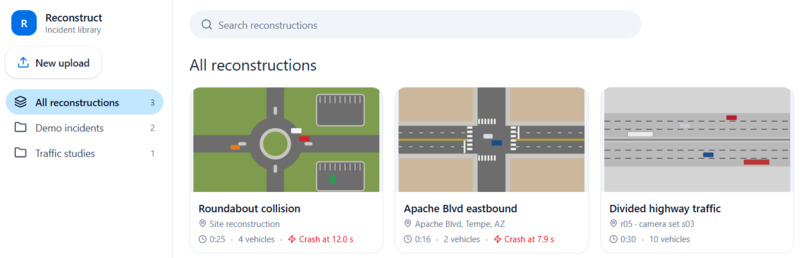
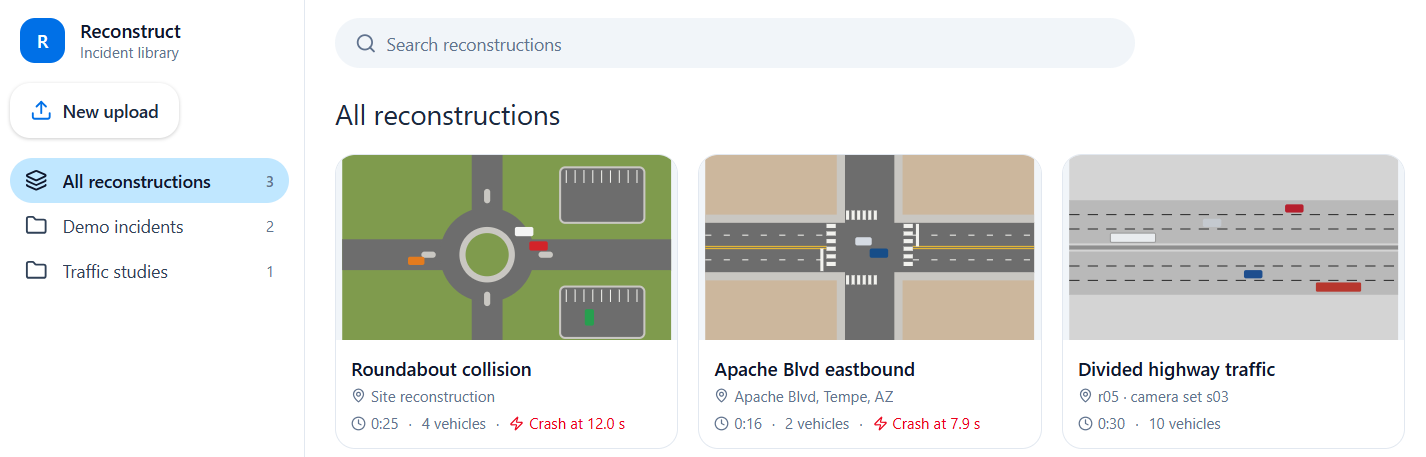
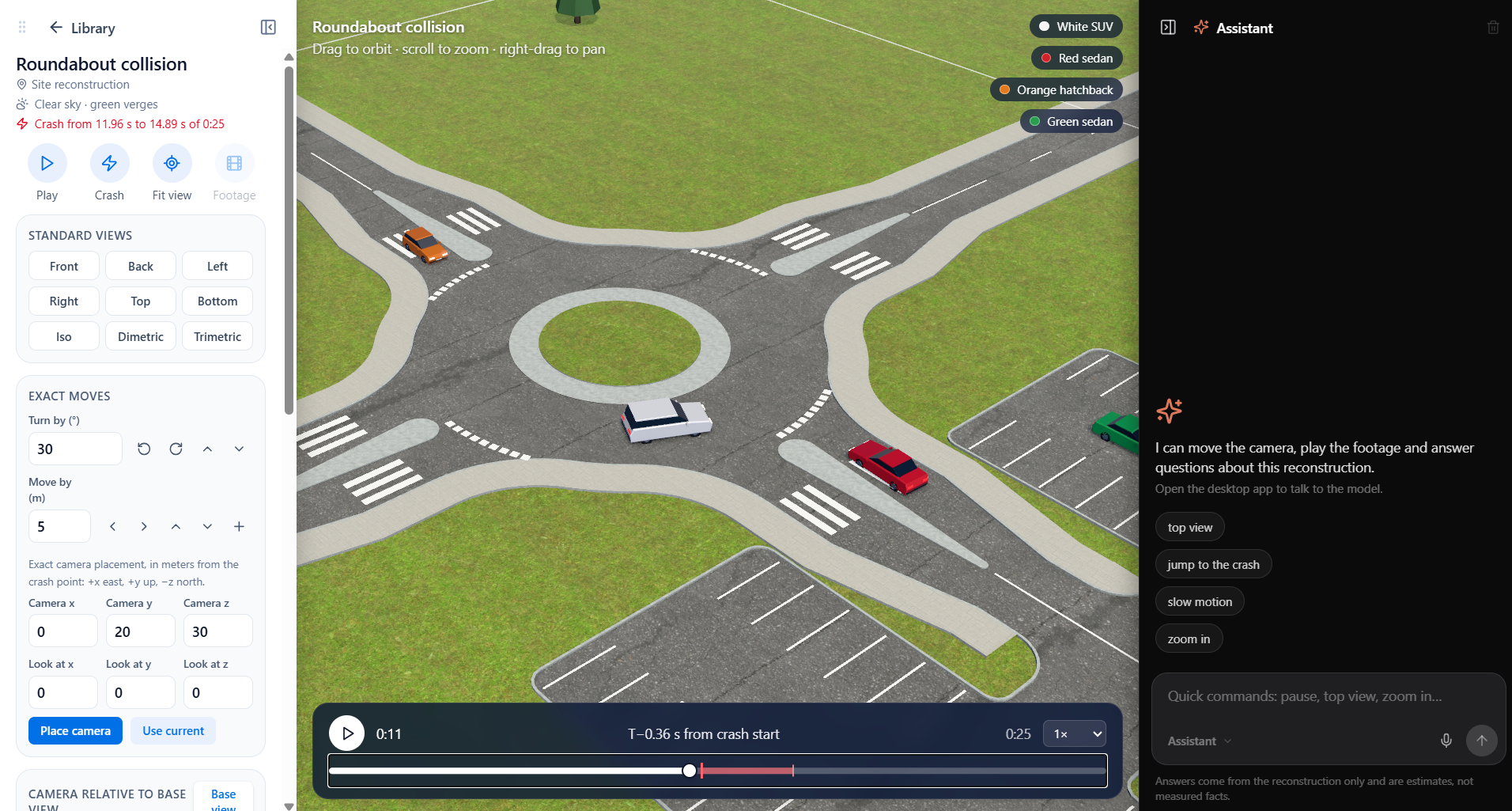
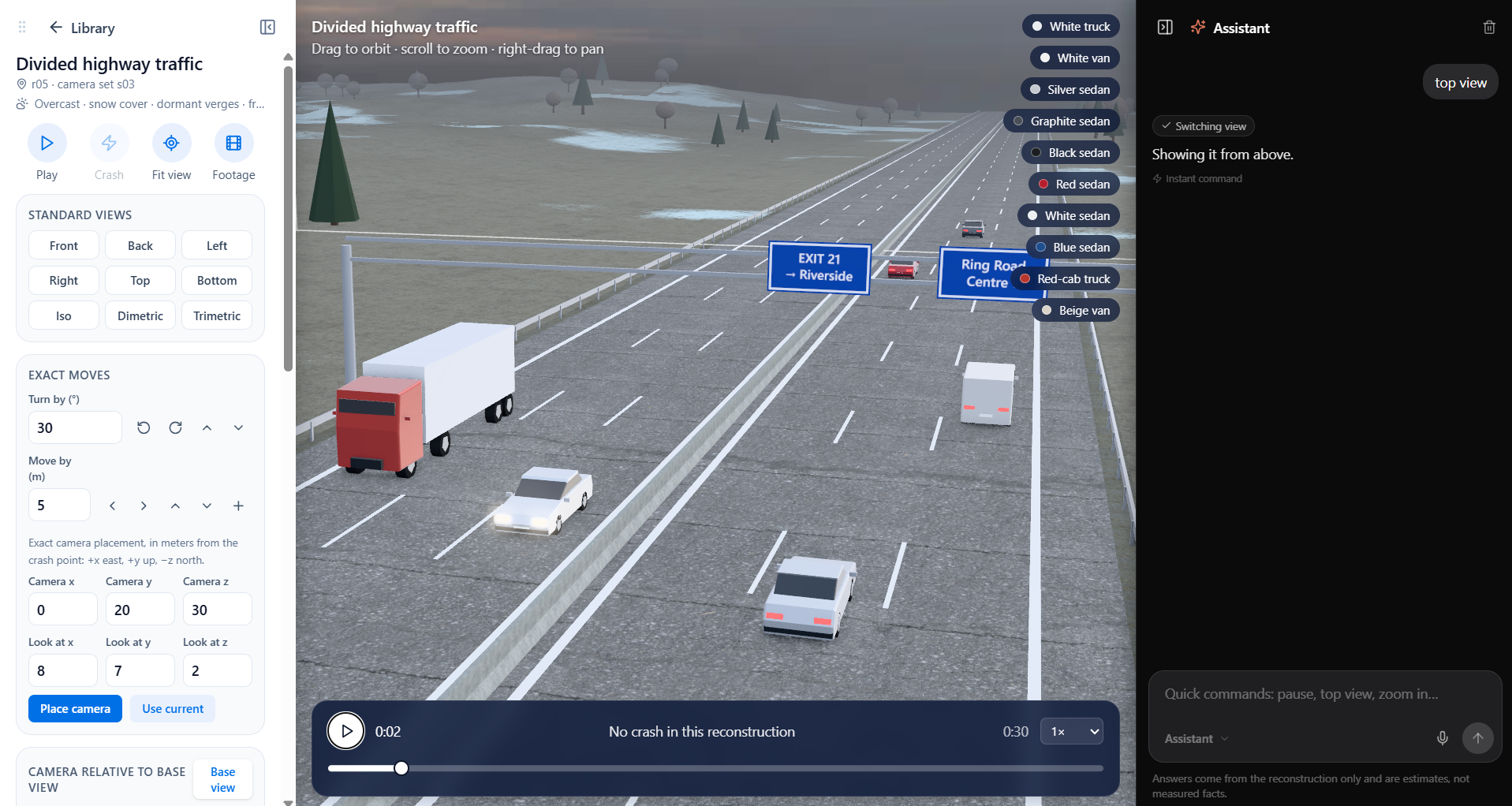
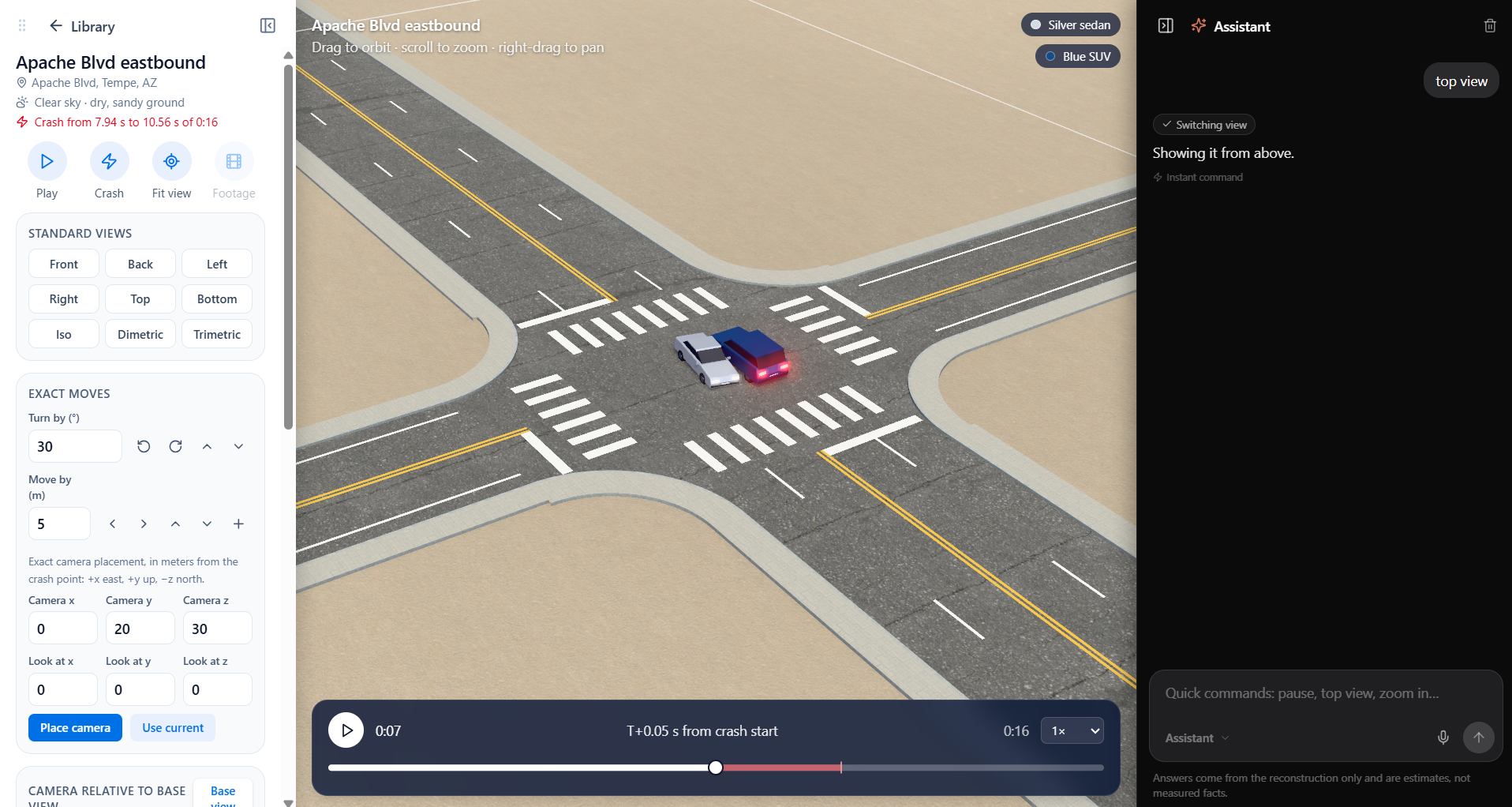
The Dashboard of our Project
-
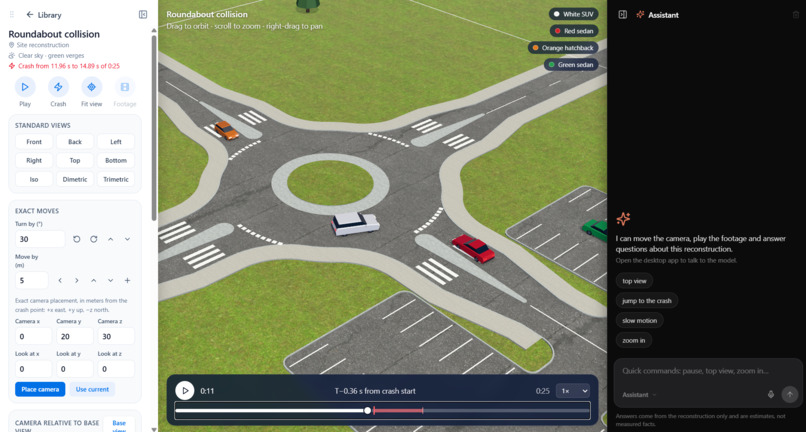
Car Crash on Roundabout Map
-
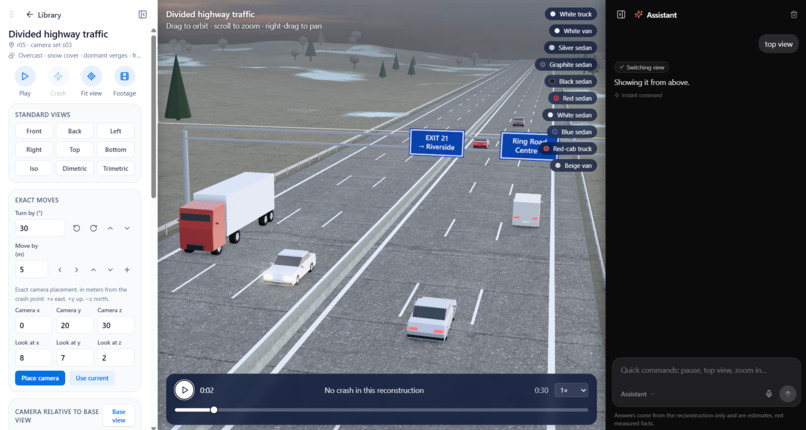
Cars Traveling on Highway
-
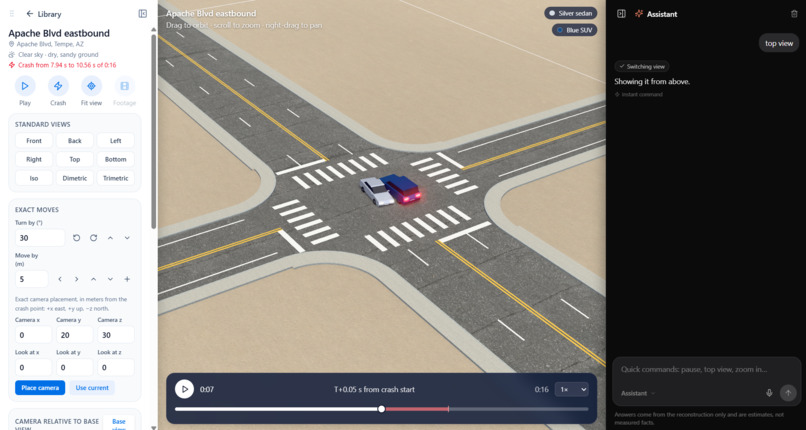
Car Crash on 4-Way Intersection

Inspiration
We started out wanting to make planning rooms and events easier. Our first idea was a 3D room-decor tool where you could scan a space, drop in furniture scraped from online stores, and send the design to a vendor, so nobody has to travel on-site. After analyzing competitors such as Visual Architectures, Room Scan, and Polycam, we found that 3D room capture was already crowded. But the same reconstruction technology had a much more urgent use: inspection and fraud. Traffic incidents are often reduced to a few conflicting accounts and flat footage, which leaves room for disputes and fraudulent claims. We wanted a way to rebuild what actually happened.
What it does
CRASHVZN turns video of a traffic incident into a 4D reconstruction: a 3D scene of the location that also moves through time. Investigators, insurers, and reviewers can replay and inspect the incident from any angle, rather than relying on a single camera view or conflicting accounts. [Add the exact flow your demo shows, e.g. upload footage → reconstruction → viewer.]
How we built it
- Frontend: TypeScript and React, with React Three Fiber to render the 3D scene in the browser
- Backend: Python and FastAPI, with endpoints to GET, POST, and DELETE database records
- Data and auth: MongoDB and local scene packages, with CLI credentials for the assisstant
- Reconstruction: OpenSplat and Gaussian splatting to turn video into 3D space, after researching OpenSplat and F3R
- Motion: a kinematics pipeline built on YOLO vehicle detection to track how vehicles move
- Prize-track tech: [List which of AWS, MongoDB Atlas, Gemini API, Supermemory you actually integrated and how, or delete this line.]
Challenges we ran into
- Pivoting mid-hackathon. We moved from 3D decor to inspection/fraud, then narrowed to traffic incidents, so we lost time on early work.
- Training data. Reconstructing a specific incident requires a large amount of video from multiple angles, which is very hard to find. Our CUDA-based OpenSplat setup didn't have enough to work with.
- Kinematics. The math and compute were demanding. We also had to keep the graphics from breaking physical laws, and the motion from breaking the graphics.
- YOLO occlusion. Our dataset's predefined bounding boxes occluded vehicles, making accurate kinematic vectors difficult to generate.
- Tooling and compute limits. OpenSplat installations took far too long; the Sol supercomputer experienced similar issues, and computational constraints forced us to switch to a different Gaussian splatting approach.
Accomplishments that we're proud of
- Taking on 4D reconstruction, a genuinely hard problem, in a single hackathon
- Pivoting based on real competitor research instead of building another room scanner
- Finding open-source tools that made the 4D structure achievable
- We ended these 24 hours with a real working demo of one video to its associated 3d render
What we learned
- How 3D reconstruction works, including Gaussian splatting, OpenSplat, and F3R
- How much data quality and quantity decide whether reconstruction works at all
- That detection models like YOLO can introduce errors (such as occlusion) that carry into everything built on top of them
- That in a time-limited build, compute and installation overhead matter as much as the idea, and that it pays to pivot early when something isn't feasible
What's next for CRASHVZN
- Move fully to a lighter Gaussian splatting pipeline that fits our compute limits
- Improve kinematics with better vehicle tracking that avoids the occlusion problem
- Build a dataset of multi-angle incident footage to train and test on
- Reach out to individuals and businesses who will likely benefit from this tool
- Design a hardware application for this system, such as a custom dashcam feeding constructable data to our databases
- Secure larger, more robust sets of traffic light data and footage
- Fine-tune the splatting model, measuring accuracy and precision over model iterations
Built With
- claude
- collaboration
- computers
- copilot
- cursor
- geminiapi
- grok
- json
- love
- mongodb
- opensource
- python
- react.js
- typescript


